

4 months 3 weeks ago
Nor need you question but that Pythagoras a long time before he found the demonstration for which he offered the Hecatomb, had been certain, that the square of the side subtending the right angle in a rectangle triangle, was equal to the square of the other two sides: and the certainty of the conclusion conduced not a little to the investigating of the demonstration, understanding me alwayes to mean in demonstrative Sciences.
▼
Source
Galileo Galilei, Dialogue Concerning the Two Chief World Systems (1632) as quoted in the Salusbury translation, The Systeme of the World: in Four Dialogues (1661) p. 38
4 months 3 weeks ago
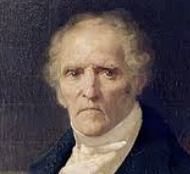
There was very little that prevented the vandalism of 1793 from suddenly producing a second revolution as marvelous as the first was horrible. The whole human race was approaching its release; the civilized, barbarian, and savage order would have disappeared forever if the Convention, which trampled down all prejudices, had not bowed down before the only one that had to be destroyed, the institution of marriage.
▼
Source
Charles Fourier: The Visionary and His World, J. Beecher (1986), p. 304-5
4 months 3 weeks ago
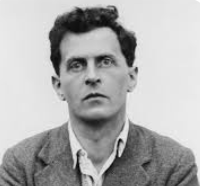
What is troubling us is the tendency to believe that the mind is like a little man within.
▼
Source
Remarks to John Wisdom, quoted in Zen and the Work of WIttgenstein by Paul Weinpaul in The Chicago Review Vol. 12, (1958), p. 70

4 months 3 weeks ago
The Art of Peace is not easy. It is a fight to the finish, the slaying of evil desires and all falsehood within. On occasion the Voice of Peace resounds like thunder, jolting human beings out of their stupor.
4 months 3 weeks ago
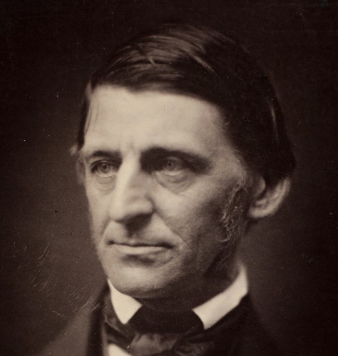
Nature is too thin a screen; the glory of the One breaks in everywhere.
▼
Source
p. 182
4 months 3 weeks ago
Finally we should note the basic assumption of the classical laboratory-namely, that nature is neither capricious nor secretive. If nature were capricious, she would tell one observer one thing and another observer a quite different thing... Also nature is not secretive, in the sense that she will not forever hide certain aspects of her being...
▼
Source
p. 57; as cited in: Carolyn Merchant (1982) "Isis' Consciousness Raised", in: Isis, Vol. 73, No. 3. (1982), pp. 398-409
4 months 3 weeks ago
Perhaps the only true dignity of man is his capacity to despise himself.
4 months 3 weeks ago
No quality of human nature is more remarkable, both in itself and in its consequences, than that propensity we have to sympathize with others, and to receive by communication their inclinations and sentiments, however different from, or even contrary to our own. This is not only conspicuous in children, who implicitly embrace every opinion propos'd to them; but also in men of the greatest judgment and understanding, who find it very difficult to follow their own reason or inclination, in opposition to that of their friends and daily companions. To this principle we ought to ascribe the great uniformity we may observe in the humours and turn of thinking of those of the same nation; and ’tis much more probable, that this resemblance arises from sympathy, than from any influence of the soil and climate, which, tho’ they continue invariably the same, are not able to preserve the character of a nation the same for a century together. A good-natur'd man finds himself in an instant of the same humour with his company; and even the proudest and most surly take a tincture from their countrymen and acquaintance. A chearful countenance infuses a sensible complacency and serenity into my mind; as an angry or sorrowful one throws a sudden dump upon me. Hatred, resentment, esteem, love, courage, mirth and melancholy; all these passions I feel more from communication than from my own natural temper and disposition. So remarkable a phaenomenon merits our attention, and must be trac'd up to its first principles.
▼
Source
Part 1, Section 11

4 months 3 weeks ago
The first and most necessary topic in philosophy is that of the use of moral theorems, such as, "We ought not to lie;" the second is that of demonstrations, such as, "What is the origin of our obligation not to lie;" the third gives strength and articulation to the other two, such as, "What is the origin of this is a demonstration." For what is demonstration? What is consequence? What contradiction? What truth? What falsehood? The third topic, then, is necessary on the account of the second, and the second on the account of the first. But the most necessary, and that whereon we ought to rest, is the first. But we act just on the contrary. For we spend all our time on the third topic, and employ all our diligence about that, and entirely neglect the first. (51).
4 months 3 weeks ago
It is very important to note that some 2,500 years ago at the least Pythagoras went from Samos to the Ganges to learn geometry…But he would certainly not have undertaken such a strange journey had the reputation of the Brahmins' science not been long established in Europe…
▼
Source
Voltaire, Riding the Indian Tiger, William Nobrega and Ashish Sinha. Quoted from Gewali, Salil (2013). Great Minds on India. New Delhi: Penguin Random House. Also in Sushama Londhe, [https://www.google.com/books/edition/A_Tribute_to_Hinduism/G3AMAQAAMAAJ?
4 months 3 weeks ago
We aspire not to equality but to domination. Countries inhabited by foreign races must become again countries of serfs, farm laborers, and factory workers. The goal is not to suppress inequities, but, rather, to amplify them and to make of them a matter of course.
▼
Source
as translated by Asselin Charles, in "Colonial Discourse Since Christopher Columbus," Journal of Black Studies, Vol. 26, No. 2 (November 1995), p. 147
4 months 3 weeks ago
What has to be accepted, the given, is — so one could say — forms of life.
▼
Source
Pt II, p. 226 of the 1968 English edition

4 months 3 weeks ago
Shah Alamgir, that high and mighty king, Pride and renown of Gurgan Timur’s line,In whom Islam attained a loftier fameAnd wider honour graced the Prophet’s Law,He the last arrow to our quiver leftIn the affray of Faith with Unbelief ;When that the impious seed of heresy,By Akbar nourished, sprang and sprouted fresh In Dara’s soul, the candle of the heart Was dimmed in every breast, no more secureAgainst corruption our CommunityContinued ; then God chose from IndiaThat humble-minded warrior, Alamgir,Religion to revive, faith to renew.The lightning of his sword set all ablazeThe harvest of impiety ; faith’s torchOnce more its radiance o’er our counsels shed.
▼
Source
The Secrets of Selflessness, Emperor Alamgir and the Tiger
4 months 3 weeks ago
No member of a crew is praised for the rugged individuality of his rowing.
▼
Source
Widely misattributed to Emerson on the Internet, this quote is actually taken from Alfred North Whitehead's essay "Harvard: The Future" (The Atlantic Monthly, September 1936.)
4 months 3 weeks ago
There are in the Exhibition some beautiful examples of such amongst the productions of other countries as well as of our own. They are made by the united labour of many women. The cost of a piece of lace will consist of:
4 months 3 weeks ago
Skepticism is the chastity of the intellect, and it is shameful to surrender it too soon or to the first comer: there is nobility in preserving it coolly and proudly through long youth, until at last, in the ripeness of instinct and discretion, it can be safely exchanged for fidelity and happiness.
▼
Source
The Works of George Santayana p. 65

4 months 3 weeks ago
How many mistakes power has committed! And how often has it ignored the means to conserve itself! Man is insatiable for power; he is infinite in his desires, and, always discontented with what he has, he loves only what he has not. People complain about the despotism of princes; they should complain about that of man. We are all born despots, from the most absolute monarch of Asia to the child who smothers a bird with his hand for the pleasure of seeing something in the world weaker than himself. There is no man who does not abuse power, and experience proves that the most abominable despots, if they come to seize the sceptre, will be precisely those who rant against despotism.
4 months 3 weeks ago
In all determinations of morality, this circumstance of public utility is ever principally in view; and wherever disputes arise, either in philosophy or common life, concerning the bounds of duty, the question cannot, by any means, be decided with greater certainty, than by ascertaining, on any side, the true interests of mankind. If any false opinion, embraced from appearances, has been found to prevail; as soon as farther experience and sounder reasoning have given us juster notions of human affairs, we retract our first sentiment, and adjust anew the boundaries of moral good and evil.
▼
Source
§ 2.17 : Of Benevolence, Pt. 2
4 months 3 weeks ago
We may... go to our... statement from Aristotle's treatise on the Pythagoreans, that according to them the universe draws in from the Unlimited time and breath and the void. The cosmic nucleus starts from the unit-seed, which generates mathematically the number-series and physically the distinct forms of matter. ...it feeds on the Unlimited outside and imposes form or limit on it. Physically speaking this Unlimited is [potential or] unformed matter... mathematically it is extension not yet delimited by number or figure. ...As apeiron in the full sense, it was... duration without beginning, end, or internal division—not time, in Plutarch's words, but only the shapeless and unformed raw material of time... As soon... as it had been drawn or breathed in by the unit, or limiting principle, number is imposed on it and at once it is time in the proper sense. ...the Limit, that is the growing cosmos, breathed in... imposed form on sheer extension, and by developing the heavenly bodies to swing in regular, repetitive circular motion... it took in the raw material of time and turned it into time itself.
▼
Source
W. K. C. Guthrie, A History of Greek Philosophy Vol. 1, "The Earlier Presocratics and the Pythagoreans" (1962)
4 months 3 weeks ago
Friendship ... flourishes not so much by kindnesses as by sincerity.
▼
Source
Part 3
4 months 3 weeks ago
Our greatest stupidities may be very wise.
▼
Source
p. 39e

4 months 3 weeks ago
The universal jargon, in the sense explained above, is the same for the child and for the adult. It is the same for a Robinson Crusoe as for a human society. If Robinson wants to join what is in a protocol of yesterday with what is in his protocol today, that is, if he wants to make use of language at all, he must make use of the ‘intersubjective’ language. The Robinson of yesterday and the Robinson of today stand precisely in the same relation in which Robinson stands to Friday.
▼
Source
p. 96

4 months 3 weeks ago
The human voice may be denominated the music of the mind; language, a figurative mode of expressing our ideas and sentiments. The effects of flowing from this beneficent endowment are overwhelming in contemplation and almost infinite in extent. It is principally instrumental to all the moral and physical improvements of man, and enables him to pour forth his otherwise invisible, inaudible, unfathomable thoughts, to his fellow-man and to his God.
▼
Source
Philosophical Magazine and Journal Of Science (July-December 1836), p. 346
4 months 3 weeks ago
"There is no God, and Mary is his mother." Often, almost certainly incorrectly, attributed to Santayana himself. More plausibly attributed to Robert Lowell, as a sardonic description of Santayana's philosophy.
▼
Source
Paul Mariani, "Lost Puritan: A Life of Robert Lowell" (1994), p. 159
4 months 3 weeks ago
The question is frequently asked: why there is a school of theology attached to every University? The answer is easy: It is, that the Universities may subsist, and that the instruction may not become corrupt. Originally, the Universities were only schools of theology, to which other faculties were joined, as subjects around their Queen. The edifice of public instruction, placed on such a foundation, has continued even to our day. Those who have subverted it among themselves, will repent it, in vain, for a long time to come. To burn a city, there is needed only a child or a madman; but to rebuild it, architects, materials, workmen, money, and especially time, will be required.
▼
Source
XXXVIII, p. 111
4 months 3 weeks ago
The admirers and followers of the Alcoran insist on the excellent moral precepts interspersed throughout that wild and absurd performance. But it is to be supposed, that the Arabic words, which correspond to the English, equity, justice, temperance, meekness, charity, were such as, from the constant use of that tongue, must always be taken in a good sense; and it would have argued the greatest ignorance, not of morals, but of language, to have mentioned them with any epithets, besides those of applause and approbation. But would we know, whether the pretended prophet had really attained a just sentiment of morals? Let us attend to his narration; and we shall soon find, that he bestows praise on such instances of treachery, inhumanity, cruelty, revenge, bigotry, as are utterly incompatible with civilized society. No steady rule of right seems there to be attended to; and every action is blamed or praised, so far only as it is beneficial or hurtful to the true believers.
▼
Source
Part I, Essay 23: Of The Standard of Taste
4 months 3 weeks ago
Never stay up on the barren heights of cleverness, but come down into the green valleys of silliness.
▼
Source
p. 76e

4 months 3 weeks ago
Cleverly assorted scraps of spurious science are inculcated upon the children to prove necessity of law; obedience to the law is made a religion; moral goodness and the law of the masters are fused into one and the same divinity. The historical hero of the schoolroom is the man who obeys the law, and defends it against rebels.
▼
Source
I

4 months 3 weeks ago
When some people urged that it is impossible for man to live like the animals owing to the tenderness of his flesh and because he is naked and unprotected, [Diogenes] would say in reply that men are so very tender because of their mode of life. ... Man’s ingenuity and his discovering and contriving so many helps to life had not been altogether advantageous to later generations, since men do not employ their cleverness to promote courage or justice, but to procure pleasure.
▼
Source
p. 267
4 months 3 weeks ago
To overcome oneself, to submit to circumstances, is a duty for everyone, but especially for women. A man, my dear child, is an animal. Unfortunately for your sex, extremely proud; but happily for this same sex, extremely foolish. It is necessary to use his foolishness against his pride. In ceding skilfully and with grace, it is necessary to make him believe that he will always be king. Then he is content to allow himself to be led. As soon as a woman cedes the sceptre, it is given back to her immediately. That is all there is to the catechism of this world. Never forget it. You know by heart the beatitudes of the Gospel; but it is not forbidden to know others, as, for example, Happy are mild women, for they will possess men. Submit therefore my dear Adèle; submit, caress, insinuate yourself; you will soon find some imbecile full of wit who will say in his heart: ‘Here is the one I need.’ If after you have wed he comes to discover that you are a bit impertinent, the evil is not great.
▼
Source
Letter to his daughter Adèle de Maistre, 14 December 1802, Œuvre critique, ix, p. 109
4 months 3 weeks ago
I think there is at least one moral theory of respectable lineage and good independent credentials that can accommodate such fairly minimal intuitions about us and animals. This is the theory Hume offers us. I do not consider Hume a forerunner of utilitarianism, and therefore what I shall go on to say in defense of Hume is not intended as a defense of any version of utilitarianism. I see Hume to be much closer to Aristotle than to Mill, to be offering us a theory about human virtues, not a theory about utility maximization and the duties that might involve.
▼
Source
Annette Baier, Knowing Our Place in the Animal World, in [https://books.google.it/books?id=JBPlBwAAQBAJ&pg=PA0 Ethics and Animals], edited by Harlan B. Miller and William H. Williams (Clifton, New Jersey: Humana Press, 1983. , p. 68
4 months 3 weeks ago
Wittgenstein was basically unscientific. He knew that science was partly driven by a desire to generalize, and he rejected generalization. Scientific questions were of no great interest to him; they merely addressed the working of the natural world. Wittgenstein spent much of his later life examining the way in which language may shape our reality. This is not a subject that is irrelevant to science.
▼
Source
Brian L. Silver, The Ascent of Science (1998)
4 months 3 weeks ago
When we ask for the abolition of the State and its organs we are always told that we dream of a society composed of men better than they are in reality. But no; a thousand times, no. All we ask is that men should not be made worse than they are, by such institutions!

4 months 3 weeks ago
It was a common saying of Myson that men ought not to investigate things from words, but words from things; for that things are not made for the sake of words, but words for things.
▼
Source
Myson, 3.

4 months 3 weeks ago
If you act externally with men in conformity with your rank, you should recognize, by a more secret but truer thought, that you have nothing naturally superior to them.
4 months 3 weeks ago
What we do want is so to arrange things that every human being born into the world shall be ensured the opportunity in the first instance of learning some useful occupation, and of becoming skill in it; next, that he shall be free to work at his trade without asking leave of master or owner, and without handing over to landlord or capitalist the lion's share of what he produces.
▼
Source
Ch. 4 : Expropriation
4 months 3 weeks ago
He used to teach that God is incorporeal, as Plato also asserted, and that his providence extends over all the heavenly bodies.
▼
Source
Aristotle, 13.

4 months 3 weeks ago
The Christian Scholastics... might have shown that God Himself said that He had "imprinted an active principle in the elements of matter (Gen. i; Is. lxvi).
▼
Source
Ch. V Concerning the Moving Force of Matter
4 months 3 weeks ago
If we do not secure the foundation, we cannot secure the edifice.
4 months 3 weeks ago
Well, since paradoxes are at hand, let us see how it might be demonstrated that in a finite continuous extension it is not impossible for infinitely many voids to be found.
▼
Source
Salviati, First Day, Stillman Drake translation (1974)

4 months 3 weeks ago
The Geschick of being: a child that plays... Why does it play, the great child of the world-play Heraclitus brought into view in the aiôn? It plays, because it plays. The "because" withers away in the play. The play is without "why." It plays since it plays. It simply remains a play: the most elevated and the most profound. But this "simply" is everything, the one, the only... The question remains whether and how we, hearing the movements of this play, play along and accommodate ourselves to the play.
▼
Source
The Principle of Reason (1955–1956) as translated by Reginald Lilly (1991)
4 months 3 weeks ago
In short, we may say that the theory of Malthus, by shaping into a pseudo-scientific form the secret desires of the wealth-possessing classes, became the foundation of a whole system of practical philosophy, which permeates the minds of both the educated and uneducated, and reacts, (as practical philosophy always does) upon the theoretical philosophy of our century.
4 months 3 weeks ago
Protagoras asserted that there were two sides to every question, exactly opposite to each other.
▼
Source
Protagoras, 3.
4 months 3 weeks ago
If one's organism is... the preeminent advantage, and the source of all others, education is the second. The best made brain would be a total loss without it...
4 months 3 weeks ago
The one primary and fundamental law of mental action consists in a tendency to generalisation. Feeling tends to spread ; connections between feelings awaken feelings; neighboring feelings become assimilated; ideas are apt to reproduce themselves. These are so many formulations of the one law of the growth of mind. When a disturbance of feeling takes place, we have a consciousness of gain, the gain of experience; and a new disturbance will be apt to assimilate itself to the one that preceded it. Feelings, by being excited, become more easily excited, especially in the ways in which they have previously been excited. The consciousness of such a habit constitutes a general conception. The cloudiness of psychological notions may be corrected by connecting them with physiological conceptions. Feeling may be supposed to exist, wherever a nerve-cell is in an excited condition. The disturbance of feeling, or sense of reaction, accompanies the transmission of disturbance between nerve-cells or from a nerve-cell to a muscle-cell or the external stimulation of a nerve-cell. General conceptions arise upon the formation of habits in the nerve-matter, which are molecular changes consequent upon its activity and probably connected with its nutrition.
4 months 3 weeks ago
The small are always dependent on the great; they are “small” precisely because they think they are independent. The great thinker is one who can hear what is greatest in the work of other “greats” and who can transform it in an original manner.
▼
Source
p. 35
4 months 3 weeks ago
Man lives very well upon flesh, you say, but, if he thinks this food to be natural to him, why does he not use it as it is, as furnished to him by Nature? But, in fact, he shrinks in horror from seizing and rending living or even raw flesh with his teeth, and lights a fire to change its natural and proper condition. … What is clearer than that man is not furnished for hunting, much less for eating, other animals? In one word, we seem to be admirably admonished by Cicero that man was destined for other things than for seizing and cutting the throats of other animals. If you answer that ‘that may be said to be an industry ordered by Nature, by which such weapons are invented,’ then, behold! it is by the very same artificial instrument that men make weapons for mutual slaughter. Do they this at the instigation of Nature? Can a use so noxious be called natural? Faculty is given by Nature, but it is our own fault that we make a perverse use of it.
▼
Source
Letter to Van Helmont, quoted in [https://archive.org/stream/ethicsofdietcate00will/ethicsofdietcate00will#page/n3/mode/2up The Ethics of Diet: A Catena of Authorities Deprecatory of the Practice of Flesh-eating] by Howard Williams (London: F. Pitman, 188
4 months 3 weeks ago
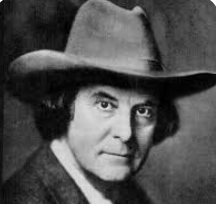
Responsibilities gravitate to the person who can shoulder them.
▼
Source
"J.B. Runs Things," Short Stories and Index: Elbert Hubbard's Selected Writings, Part 14 (1923), p. 278

4 months 3 weeks ago
Hegel’s theological discussion repeatedly asks what the true relation is between the individual man and a state that no longer satisfies his capacities but exists rather as an ‘estranged’ institution from which the active political interest of the citizens has disappeared. Hegel defined this state with almost the same categories as those of eighteenth century liberalism: the state rests on the consent of the individuals, it circumscribes their rights and duties and protects its members from those internal and external dangers that might threaten the perpetuation of the whole. P. 32
4 months 3 weeks ago
Third, consider the insistency of an idea. The insistency of a past idea with reference to the present is a quantity which is less, the further back that past idea is, and rises to infinity as the past idea is brought up into coincidence with the present.
CivilSimian.com created by AxiomaticPanic, CivilSimian, Kalokagathia