
4 months 3 weeks ago
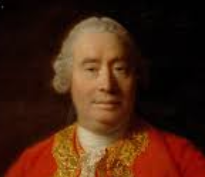
In all determinations of morality, this circumstance of public utility is ever principally in view; and wherever disputes arise, either in philosophy or common life, concerning the bounds of duty, the question cannot, by any means, be decided with greater certainty, than by ascertaining, on any side, the true interests of mankind. If any false opinion, embraced from appearances, has been found to prevail; as soon as farther experience and sounder reasoning have given us juster notions of human affairs, we retract our first sentiment, and adjust anew the boundaries of moral good and evil.
▼
Source
§ 2.17 : Of Benevolence, Pt. 2

4 months 3 weeks ago
We may... go to our... statement from Aristotle's treatise on the Pythagoreans, that according to them the universe draws in from the Unlimited time and breath and the void. The cosmic nucleus starts from the unit-seed, which generates mathematically the number-series and physically the distinct forms of matter. ...it feeds on the Unlimited outside and imposes form or limit on it. Physically speaking this Unlimited is [potential or] unformed matter... mathematically it is extension not yet delimited by number or figure. ...As apeiron in the full sense, it was... duration without beginning, end, or internal division—not time, in Plutarch's words, but only the shapeless and unformed raw material of time... As soon... as it had been drawn or breathed in by the unit, or limiting principle, number is imposed on it and at once it is time in the proper sense. ...the Limit, that is the growing cosmos, breathed in... imposed form on sheer extension, and by developing the heavenly bodies to swing in regular, repetitive circular motion... it took in the raw material of time and turned it into time itself.
▼
Source
W. K. C. Guthrie, A History of Greek Philosophy Vol. 1, "The Earlier Presocratics and the Pythagoreans" (1962)
4 months 3 weeks ago
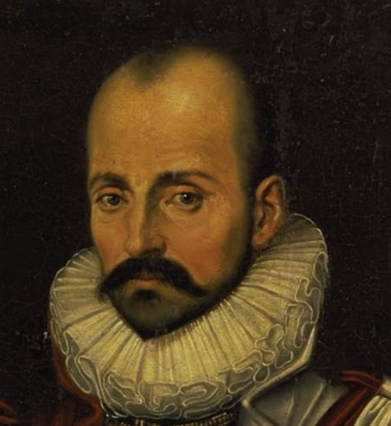
Friendship ... flourishes not so much by kindnesses as by sincerity.
▼
Source
Part 3
4 months 3 weeks ago
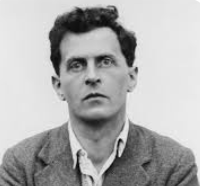
Our greatest stupidities may be very wise.
▼
Source
p. 39e

4 months 3 weeks ago
The universal jargon, in the sense explained above, is the same for the child and for the adult. It is the same for a Robinson Crusoe as for a human society. If Robinson wants to join what is in a protocol of yesterday with what is in his protocol today, that is, if he wants to make use of language at all, he must make use of the ‘intersubjective’ language. The Robinson of yesterday and the Robinson of today stand precisely in the same relation in which Robinson stands to Friday.
▼
Source
p. 96
4 months 3 weeks ago
The human voice may be denominated the music of the mind; language, a figurative mode of expressing our ideas and sentiments. The effects of flowing from this beneficent endowment are overwhelming in contemplation and almost infinite in extent. It is principally instrumental to all the moral and physical improvements of man, and enables him to pour forth his otherwise invisible, inaudible, unfathomable thoughts, to his fellow-man and to his God.
▼
Source
Philosophical Magazine and Journal Of Science (July-December 1836), p. 346
4 months 3 weeks ago
"There is no God, and Mary is his mother." Often, almost certainly incorrectly, attributed to Santayana himself. More plausibly attributed to Robert Lowell, as a sardonic description of Santayana's philosophy.
▼
Source
Paul Mariani, "Lost Puritan: A Life of Robert Lowell" (1994), p. 159

4 months 3 weeks ago
The question is frequently asked: why there is a school of theology attached to every University? The answer is easy: It is, that the Universities may subsist, and that the instruction may not become corrupt. Originally, the Universities were only schools of theology, to which other faculties were joined, as subjects around their Queen. The edifice of public instruction, placed on such a foundation, has continued even to our day. Those who have subverted it among themselves, will repent it, in vain, for a long time to come. To burn a city, there is needed only a child or a madman; but to rebuild it, architects, materials, workmen, money, and especially time, will be required.
▼
Source
XXXVIII, p. 111
4 months 3 weeks ago
The admirers and followers of the Alcoran insist on the excellent moral precepts interspersed throughout that wild and absurd performance. But it is to be supposed, that the Arabic words, which correspond to the English, equity, justice, temperance, meekness, charity, were such as, from the constant use of that tongue, must always be taken in a good sense; and it would have argued the greatest ignorance, not of morals, but of language, to have mentioned them with any epithets, besides those of applause and approbation. But would we know, whether the pretended prophet had really attained a just sentiment of morals? Let us attend to his narration; and we shall soon find, that he bestows praise on such instances of treachery, inhumanity, cruelty, revenge, bigotry, as are utterly incompatible with civilized society. No steady rule of right seems there to be attended to; and every action is blamed or praised, so far only as it is beneficial or hurtful to the true believers.
▼
Source
Part I, Essay 23: Of The Standard of Taste
4 months 3 weeks ago
Never stay up on the barren heights of cleverness, but come down into the green valleys of silliness.
▼
Source
p. 76e

4 months 3 weeks ago
Cleverly assorted scraps of spurious science are inculcated upon the children to prove necessity of law; obedience to the law is made a religion; moral goodness and the law of the masters are fused into one and the same divinity. The historical hero of the schoolroom is the man who obeys the law, and defends it against rebels.
▼
Source
I

4 months 3 weeks ago
When some people urged that it is impossible for man to live like the animals owing to the tenderness of his flesh and because he is naked and unprotected, [Diogenes] would say in reply that men are so very tender because of their mode of life. ... Man’s ingenuity and his discovering and contriving so many helps to life had not been altogether advantageous to later generations, since men do not employ their cleverness to promote courage or justice, but to procure pleasure.
▼
Source
p. 267
4 months 3 weeks ago
To overcome oneself, to submit to circumstances, is a duty for everyone, but especially for women. A man, my dear child, is an animal. Unfortunately for your sex, extremely proud; but happily for this same sex, extremely foolish. It is necessary to use his foolishness against his pride. In ceding skilfully and with grace, it is necessary to make him believe that he will always be king. Then he is content to allow himself to be led. As soon as a woman cedes the sceptre, it is given back to her immediately. That is all there is to the catechism of this world. Never forget it. You know by heart the beatitudes of the Gospel; but it is not forbidden to know others, as, for example, Happy are mild women, for they will possess men. Submit therefore my dear Adèle; submit, caress, insinuate yourself; you will soon find some imbecile full of wit who will say in his heart: ‘Here is the one I need.’ If after you have wed he comes to discover that you are a bit impertinent, the evil is not great.
▼
Source
Letter to his daughter Adèle de Maistre, 14 December 1802, Œuvre critique, ix, p. 109
4 months 3 weeks ago
I think there is at least one moral theory of respectable lineage and good independent credentials that can accommodate such fairly minimal intuitions about us and animals. This is the theory Hume offers us. I do not consider Hume a forerunner of utilitarianism, and therefore what I shall go on to say in defense of Hume is not intended as a defense of any version of utilitarianism. I see Hume to be much closer to Aristotle than to Mill, to be offering us a theory about human virtues, not a theory about utility maximization and the duties that might involve.
▼
Source
Annette Baier, Knowing Our Place in the Animal World, in [https://books.google.it/books?id=JBPlBwAAQBAJ&pg=PA0 Ethics and Animals], edited by Harlan B. Miller and William H. Williams (Clifton, New Jersey: Humana Press, 1983. , p. 68
4 months 3 weeks ago
Wittgenstein was basically unscientific. He knew that science was partly driven by a desire to generalize, and he rejected generalization. Scientific questions were of no great interest to him; they merely addressed the working of the natural world. Wittgenstein spent much of his later life examining the way in which language may shape our reality. This is not a subject that is irrelevant to science.
▼
Source
Brian L. Silver, The Ascent of Science (1998)
4 months 3 weeks ago
When we ask for the abolition of the State and its organs we are always told that we dream of a society composed of men better than they are in reality. But no; a thousand times, no. All we ask is that men should not be made worse than they are, by such institutions!

4 months 3 weeks ago
It was a common saying of Myson that men ought not to investigate things from words, but words from things; for that things are not made for the sake of words, but words for things.
▼
Source
Myson, 3.
4 months 3 weeks ago
If you act externally with men in conformity with your rank, you should recognize, by a more secret but truer thought, that you have nothing naturally superior to them.
4 months 3 weeks ago
What we do want is so to arrange things that every human being born into the world shall be ensured the opportunity in the first instance of learning some useful occupation, and of becoming skill in it; next, that he shall be free to work at his trade without asking leave of master or owner, and without handing over to landlord or capitalist the lion's share of what he produces.
▼
Source
Ch. 4 : Expropriation
4 months 3 weeks ago
He used to teach that God is incorporeal, as Plato also asserted, and that his providence extends over all the heavenly bodies.
▼
Source
Aristotle, 13.

4 months 3 weeks ago
The Christian Scholastics... might have shown that God Himself said that He had "imprinted an active principle in the elements of matter (Gen. i; Is. lxvi).
▼
Source
Ch. V Concerning the Moving Force of Matter
4 months 3 weeks ago
If we do not secure the foundation, we cannot secure the edifice.
4 months 3 weeks ago
Well, since paradoxes are at hand, let us see how it might be demonstrated that in a finite continuous extension it is not impossible for infinitely many voids to be found.
▼
Source
Salviati, First Day, Stillman Drake translation (1974)

4 months 3 weeks ago
The Geschick of being: a child that plays... Why does it play, the great child of the world-play Heraclitus brought into view in the aiôn? It plays, because it plays. The "because" withers away in the play. The play is without "why." It plays since it plays. It simply remains a play: the most elevated and the most profound. But this "simply" is everything, the one, the only... The question remains whether and how we, hearing the movements of this play, play along and accommodate ourselves to the play.
▼
Source
The Principle of Reason (1955–1956) as translated by Reginald Lilly (1991)
4 months 3 weeks ago
In short, we may say that the theory of Malthus, by shaping into a pseudo-scientific form the secret desires of the wealth-possessing classes, became the foundation of a whole system of practical philosophy, which permeates the minds of both the educated and uneducated, and reacts, (as practical philosophy always does) upon the theoretical philosophy of our century.
4 months 3 weeks ago
Protagoras asserted that there were two sides to every question, exactly opposite to each other.
▼
Source
Protagoras, 3.
4 months 3 weeks ago
If one's organism is... the preeminent advantage, and the source of all others, education is the second. The best made brain would be a total loss without it...
4 months 3 weeks ago
The one primary and fundamental law of mental action consists in a tendency to generalisation. Feeling tends to spread ; connections between feelings awaken feelings; neighboring feelings become assimilated; ideas are apt to reproduce themselves. These are so many formulations of the one law of the growth of mind. When a disturbance of feeling takes place, we have a consciousness of gain, the gain of experience; and a new disturbance will be apt to assimilate itself to the one that preceded it. Feelings, by being excited, become more easily excited, especially in the ways in which they have previously been excited. The consciousness of such a habit constitutes a general conception. The cloudiness of psychological notions may be corrected by connecting them with physiological conceptions. Feeling may be supposed to exist, wherever a nerve-cell is in an excited condition. The disturbance of feeling, or sense of reaction, accompanies the transmission of disturbance between nerve-cells or from a nerve-cell to a muscle-cell or the external stimulation of a nerve-cell. General conceptions arise upon the formation of habits in the nerve-matter, which are molecular changes consequent upon its activity and probably connected with its nutrition.
4 months 3 weeks ago
The small are always dependent on the great; they are “small” precisely because they think they are independent. The great thinker is one who can hear what is greatest in the work of other “greats” and who can transform it in an original manner.
▼
Source
p. 35
4 months 3 weeks ago
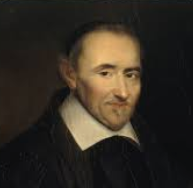
Man lives very well upon flesh, you say, but, if he thinks this food to be natural to him, why does he not use it as it is, as furnished to him by Nature? But, in fact, he shrinks in horror from seizing and rending living or even raw flesh with his teeth, and lights a fire to change its natural and proper condition. … What is clearer than that man is not furnished for hunting, much less for eating, other animals? In one word, we seem to be admirably admonished by Cicero that man was destined for other things than for seizing and cutting the throats of other animals. If you answer that ‘that may be said to be an industry ordered by Nature, by which such weapons are invented,’ then, behold! it is by the very same artificial instrument that men make weapons for mutual slaughter. Do they this at the instigation of Nature? Can a use so noxious be called natural? Faculty is given by Nature, but it is our own fault that we make a perverse use of it.
▼
Source
Letter to Van Helmont, quoted in [https://archive.org/stream/ethicsofdietcate00will/ethicsofdietcate00will#page/n3/mode/2up The Ethics of Diet: A Catena of Authorities Deprecatory of the Practice of Flesh-eating] by Howard Williams (London: F. Pitman, 188
4 months 3 weeks ago
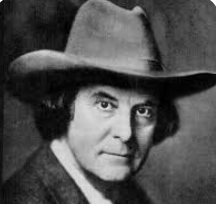
Responsibilities gravitate to the person who can shoulder them.
▼
Source
"J.B. Runs Things," Short Stories and Index: Elbert Hubbard's Selected Writings, Part 14 (1923), p. 278

4 months 3 weeks ago
Hegel’s theological discussion repeatedly asks what the true relation is between the individual man and a state that no longer satisfies his capacities but exists rather as an ‘estranged’ institution from which the active political interest of the citizens has disappeared. Hegel defined this state with almost the same categories as those of eighteenth century liberalism: the state rests on the consent of the individuals, it circumscribes their rights and duties and protects its members from those internal and external dangers that might threaten the perpetuation of the whole. P. 32
4 months 3 weeks ago
Third, consider the insistency of an idea. The insistency of a past idea with reference to the present is a quantity which is less, the further back that past idea is, and rises to infinity as the past idea is brought up into coincidence with the present.
4 months 3 weeks ago
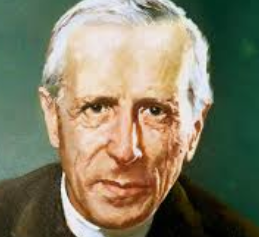
The truth is, indeed, that love is the threshold of another universe. Beyond the vibrations with which we are familiar, the rainbow-like range of its colours is still in full growth. But, for all the fascination that the lower shades have for us, it is only towards the "ultra" that the creation of light advances. It is in these invisible and, we might almost say, immaterial zones that we can look for true initiation into unity. The depths we attribute to matter are no more than the reflection of the peaks of spirit.
▼
Source
"The Evolution of Chastity" (1934), as translated by René Hague in Toward the Future (1975)
4 months 3 weeks ago
Do not take life too seriously – you will never get out of it alive.
▼
Source
p. 74
4 months 3 weeks ago
Hegel’s philosophy was an integral part of the culture which authoritarianism had to overcome. It is therefore no accident that the National Socialist assault on Hegel begins with the repudiation of his political theory. P. 411
4 months 3 weeks ago
An "Argument" is any process of thought reasonably tending to produce a definite belief. An "Argumentation" is an Argument proceeding upon definitely formulated premisses. If God Really be, and be benign, then, in view of the generally conceded truth that religion, were it but proved, would be a good outweighing all others, we should naturally expect that there would be some Argument for His Reality that should be obvious to all minds, high and low alike, that should earnestly strive to find the truth of the matter; and further, that this Argument should present its conclusion, not as a proposition of metaphysical theology, but in a form directly applicable to the conduct of life, and full of nutrition for man's highest growth. What I shall refer to as the N.A. — the Neglected Argument — seems to me best to fulfil this condition, and I should not wonder if the majority of those whose own reflections have harvested belief in God must bless the radiance of the N.A. for that wealth. Its persuasiveness is no less than extraordinary; while it is not unknown to anybody. Nevertheless, of all those theologians (within my little range of reading) who, with commendable assiduity, scrape together all the sound reasons they can find or concoct to prove the first proposition of theology, few mention this one, and they most briefly. They probably share those current notions of logic which recognise no other Arguments than Argumentations.
4 months 3 weeks ago
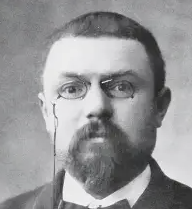
There is no science apart from the general. It may even be said that the very object of the exact sciences is to spare us these direct verifications.
▼
Source
Ch. I. (1905) Tr. George Bruce Halstead
4 months 3 weeks ago
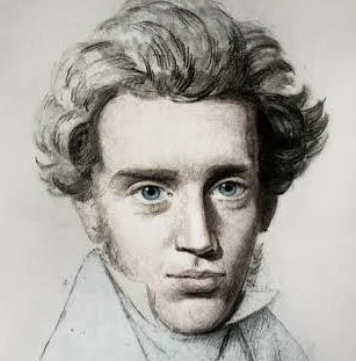
Oh, can I really believe the poet's tales, that when one first sees the object of one's love, one imagines one has seen her long ago, that all love like all knowledge is remembrance, that love too has its prophecies in the individual. ... it seems to me that I should have to possess the beauty of all girls in order to draw out a beauty equal to yours; that I should have to circumnavigate the world in order to find the place I lack and which the deepest mystery of my whole being points towards, and at the next moment you are so near to me, filling my spirit so powerfully that I am transfigured for myself, and feel that it's good to be here.
▼
Source
On Regine Olsen (2 February 1839)
4 months 3 weeks ago
Autonomy, actuality, irreversibility, and... transcendence are the four attributes of Omega. In this way... we... enclose the energy-complex of our universe. ...Contrary to the appearances still admitted by physics, the Great Stability is not at the bottom in the infra-elementary sphere, but at the top in the ultra-synthetic sphere. ...[E]ntirely by its tangential envelope ...the world goes on dissipating itself in a chance way into matter. By its radial nucleus it finds its shape and... consistency in gravitating against the tide of probability towards a divine focus of mind which draws it onward.Thus something in the cosmos escapes from entropy, and does so more and more.
4 months 3 weeks ago
The greatest mistake you can make in life is to be continually fearing you will make one.
4 months 3 weeks ago
As the great words of freedom and fulfillment are pronounced by campaigning leaders and politicians, on the screens and radios and stages, they turn into meaningless sounds which obtain meaning only in the context of propaganda, business, discipline, and relaxation. This assimilation of the ideal with reality testifies to the extent to which the ideal has been surpassed. It is brought down from the sublimated realm of the soul or the spirit or the inner man, and translated into operational terms and problems. Here are the progressive elements of mass culture. The perversion is indicative of the fact that advanced industrial society is confronted with the possibility of a materialization of ideals. The capabilities of this society are progressively reducing the sublimated realm in which the condition of man was represented, idealized, and indicted. Higher culture becomes part of the material culture. In this transformation, it loses the greater part of its truth.
▼
Source
pp. 57-58
4 months 3 weeks ago
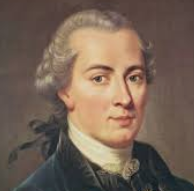
The body is a temple.
▼
Source
A lecture at Königsberg (1775), as quoted in A New Dictionary of Quotations on Historical Principles from Ancient and Modern Sources (1946) by H. L. Mencken, p. 1043
4 months 3 weeks ago
We have not a direct intuition of simultaneity, nor of the equality of two durations. If we think we have this intuition, this is an illusion. We replace it by the aid of certain rules which we apply almost always without taking count of them....We ...choose these rules, not because they are true, but because they are the most convenient, and we may recapitulate them as follows: "The simultaneity of two events, or the order of their succession, the equality of two durations, are to be so defined that the enunciation of the natural laws may be as simple as possible. In other words, all these rules, all these definitions, are only the fruit of an unconscious opportunism."
4 months 3 weeks ago
The Sophist demonstrates that everything is true and nothing is true.
▼
Source
p. 205

4 months 3 weeks ago
Monsters cannot be announced. One cannot say: 'here are our monsters', without immediately turning the monsters into pets.
▼
Source
Some Statements and Truisms about Neologisms, Newisms, Postisms, Parasitisms, and other small Seismisms, The States of Theory, ed. David Carroll, New York: Columbia University Press, 1989.

4 months 3 weeks ago
Man alone at the very moment of his birth, cast naked upon the naked earth, does she [Nature] abandon to cries and lamentations.
▼
Source
Book VII, sec. 2.
4 months 3 weeks ago
Whoever voluntarily undertakes the necessary office of rearing and educating, obtains the parental power without generation.
▼
Source
Book III, Ch. II, § II
4 months 3 weeks ago
This language controls by reducing the linguistic forms and symbols of reflection, abstraction, development, contradiction; by substituting images for concepts. It denies or absorbs the transcendent vocabulary; it does not search for but establishes and imposes truth and falsehood.
▼
Source
p. 103
4 months 3 weeks ago
Nature, therefore, is subject with absolute precision to all the precepts of geometry as to all the properties of space there demonstrated, this being the subjective condition, not hypothetically but intuitively given, of every phenomenon in which nature can ever be revealed to the senses.
CivilSimian.com created by AxiomaticPanic, CivilSimian, Kalokagathia