

4 months 3 weeks ago
When Sartre and I met not only did our backgrounds fuse, but also our solidity, our individual conviction that we were what we were made to be. In that framework we could not become rivals. Then, as the relationship between Sartre and me grew, I became convinced that I was irreplaceable in his life, and he in mine. In other words, we were totally secure in the knowledge that our relationship was also totally solid, again preordained, though, of course, we would have laughed at that word then. When you have such security it's easy not to be jealous. But had I thought that another woman played the same role as I did in Sartre's life, of course, I would have been jealous.
▼
Source
[http://www.marxists.org/reference/subject/ethics/de-beauvoir/1976/interview.htm Interview by John Gerassi in Society (January-February 1976)]
4 months 3 weeks ago
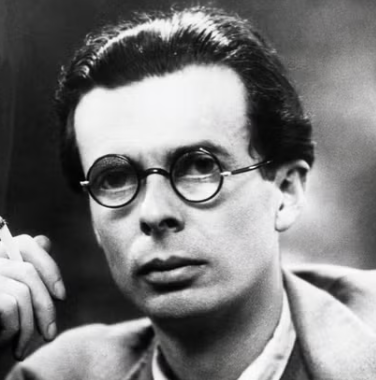
Never have so many been manipulated so much by so few.
▼
Source
Chapter 3 (pp. 19-20)
4 months 3 weeks ago
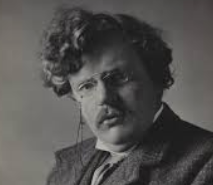
It is something to have wept as we have wept, It is something to have done as we have done, It is something to have watched when all men slept, And seen the stars which never see the sun. It is something to have smelt the mystic rose, Although it break and leave the thorny rods, It is something to have hungered once as those Must hunger who have ate the bread of gods.
▼
Source
The Great Minimum

4 months 3 weeks ago
What a hell of an economic system! Some are replete with everything while others, whose stomachs are no less demanding, whose hunger is just as recurrent, have nothing to bite on. The worst of it is the constrained posture need puts you in. The needy man does not walk like the rest; he skips, slithers, twists, crawls.

4 months 3 weeks ago
The painter is turning his eyes towards us only in so far as we happen to occupy the same position as his subject. We, the spectators, are an additional factor. Though greeted by that gaze, we are also dismissed by it, replaced by that which was always there before we were: the model itself. But, inversely, the painter's gaze, addressed to the void confronting him outside the picture, accepts as many models as there are spectators; in this precise but neutral place, the observer and the observed take part in a ceaseless exchange.
▼
Source
Las Menias
4 months 3 weeks ago
It is doubtless impossible to approach any human problems with a mind free from bias.
▼
Source
[http://books.google.com/books?id=kUW0AAAAIAAJ&q=%22It+is+doubtless+impossible+to+approach+any+human+problems+with+a+mind+free+from+bias%22&pg=PA20#v=onepage Introduction : Woman as Other]
4 months 3 weeks ago
We cannot deny its brilliance, its learning, its honest attempt to answer the big human question.
▼
Source
Anthony Burgess, Review of Huxley's Island, Yorkshire Post(1964)
4 months 3 weeks ago
Nothing is more terrible than a bed; since it is always waiting to be a death-bed.
▼
Source
Ch. I: "'The Myth of Stevenson'"
4 months 3 weeks ago
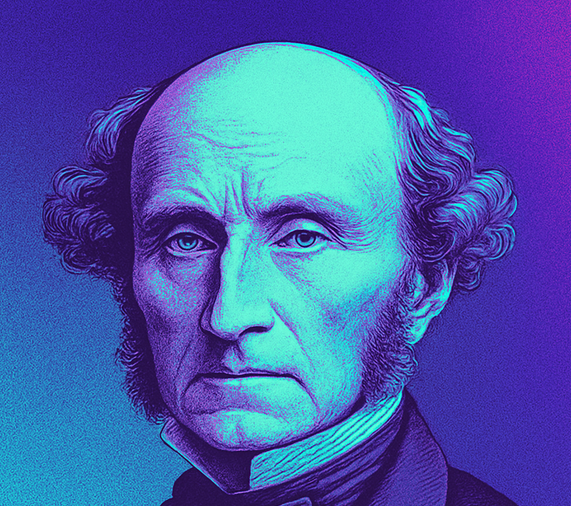
What I stated was, that the Conservative party was, by the law of its constitution, necessarily the stupidest party. Now, I do not retract this assertion; but I did not mean that Conservatives are generally stupid; I meant, that stupid persons are generally Conservative. I believe that to be so obvious and undeniable a fact that I hardly think any hon. Gentleman will question it. Now, if any party, in addition to whatever share it may possess of the ability of the community, has nearly the whole of its stupidity, that party, I apprehend, must by the law of its constitution be the stupidest party. And I do not see why hon. Gentlemen should feel that position at all offensive to them; for it ensures their being always an extremely powerful party.
▼
Source
In a Parliamentary debate with the Conservative MP, John Pakington (May 31, 1866). [https://api.parliament.uk/historic-hansard/commons/1866/may/31/committee-adjourned-debate#column_1592 Hansard, vol 183, col 1592]]. Pakington was referring to Footnote 3 t
4 months 3 weeks ago
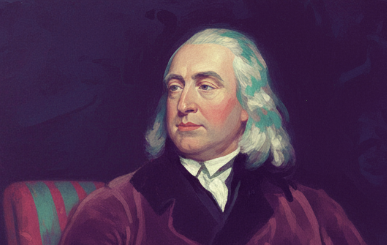
Ah! when will the yoke of Custom—Custom, the blind tyrant, of which all other tyrants make their slave—ah! when will that misery-perpetuating yoke be shaken off?—when, when will Reason be seated on her throne?
▼
Source
Plan of Parliamentary Reform, in the Form of a Catechism, with Reasons for Each Article: With an Introduction, Showing the Necessity of Radical, and the Inadequacy of Moderate, Reform (1817), quoted in The Works of Jeremy Bentham, Part X (1839), p. 495
4 months 3 weeks ago
Generally speaking, all the authorities exercising individual control function according to a double mode; that of binary division and branding (mad/sane; dangerous/harmless; normal/abnormal); and that of coercive assignment, of differential distribution (who he is; where he must be; how he is to be characterized' how he is to be recognized' how a constant surveillance is to be exercised over him in a individual way, etc.).
▼
Source
Part Four, Complete and austere institutions

4 months 3 weeks ago
Wonder is the feeling of a philosopher, and philosophy begins in wonder.
▼
Source
Theaetetus, 155d
4 months 3 weeks ago
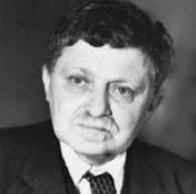
speaking metaphysically, the only genuine hope is hope in what does not depend on ourselves, hope springing from humility and not from pride.
4 months 3 weeks ago
I shall, without further discussion of the other theories, attempt to contribute something towards the understanding and appreciation of the Utilitarian or Happiness theory, and towards such proof as it is susceptible of. It is evident that this cannot be proof in the ordinary and popular meaning of the term. Questions of ultimate ends are not amenable to direct proof. Whatever can be proved to be good, must be so by being shown to be a means to something admitted to be good without proof.
▼
Source
Ch. 1
4 months 3 weeks ago
If there is a kind of "proof" of the sincerity of the parrhesiastes, it is his courage... Saying something dangerous—different from what the majority believes—is a strong indication that he is a parrhesiastes.
4 months 3 weeks ago
He who is a philosopher or lover of learning, and is entirely pure at departing, is alone permitted to reach the gods. And this is the reason, Simmias and Cebes, why the true votaries of philosophy abstain from all fleshly lusts, and endure and refuse to give themselves up to them—not because they fear poverty or ruin of their families, like the lovers of money, and the world in general; nor like the lovers of power and honor, because they dread the dishonor or disgrace of evil deeds.

4 months 3 weeks ago
Gods are condemned to live the dream of the imperishable.
4 months 3 weeks ago
I have no remembrance of the time when I began to learn Greek. I have been told that it was when I was three years old. My earliest recollection on the subject, is that of committing to memory what my father termed Vocables, being lists of common Greek words, with their signification in English, which he wrote out for me on cards. Of grammar, until some years later, I learnt no more than the inflexions of the nouns and verbs, but, after a course of vocables, proceeded at once to translation; and I faintly remember going through AEsop's Fables, the first Greek book which I read. The Anabasis, which I remember better, was the second. I learnt no Latin until my eighth year. At that time I had read, under my father's tuition, a number of Greek prose authors, among whom I remember the whole of Herodotus, and of Xenophon's Cyropaedia and Memorials of Socrates; some of the lives of the philosophers by Diogenes Laertius; part of Lucian, and Isocrates' ad Demonicum and ad Nicoclem. I also read, in 1813, the first six dialogues (in the common arrangement) of Plato, from the Euthyphron to the Theaetetus inclusive: which last dialogue, I venture to think, would have been better omitted, as it was totally impossible I should understand it. But my father, in all his teaching, demanded of me not only the utmost that I could do, but much that I could by no possibility have done. What he was himself willing to undergo for the sake of my instruction, may be judged from the fact, that I went through the whole process of preparing my Greek lessons in the same room and at the same table at which he was writing: and as in those days Greek and English lexicons were not, and I could make no more use of a Greek and Latin lexicon than could be made without having yet begun to learn Latin, I was forced to have recourse to him for the meaning of every word which I did not know. This incessant interruption, he, one of the most impatient of men, submitted to, and wrote under that interruption several volumes of his History and all else that he had to write during those years.
▼
Source
([https://archive.org/details/autobiography01mill/page/5/mode/1up pp. 5–6])
4 months 3 weeks ago
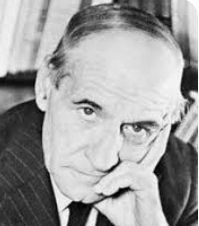
It must be emphasized that the warrior spirit is one thing and the military spirit quite another. Militarism was unknown in the Middle Ages. The soldier signifies the degeneration of the warrior, corrupted by the industrialist. The soldier is an armed industrialist, a bourgeois who has invented gunpowder. He was organized by the state to make war on the castles. With his coming, long-distance warfare appeared, the abstract war waged by cannon and machine gun.
4 months 3 weeks ago
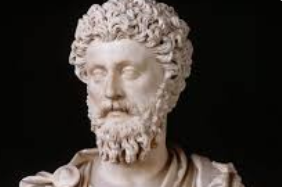
From Apollonius, true liberty, and unvariable steadfastness, and not to regard anything at all, though never so little, but right and reason: and always..that it was possible for the same man to be both vehement and remiss: a man not subject to be vexed, and offended with the incapacity of his scholars and auditors in his lectures and expositions.
▼
Source
I, 5
4 months 3 weeks ago
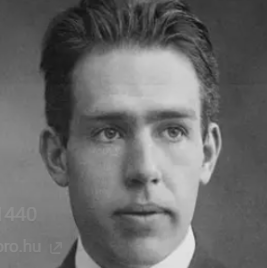
Even the mathematical framework helps nothing, I would first like to understand how Nature avoids the contradictions. (1927)
▼
Source
Quoted in Werner Heisenberg: Die Sprache der Atome (2010) by H. Rechenberg, p. 564.
4 months 3 weeks ago
The most serious flaw of Foucault's system is in the area of sex. I view his hurried, compulsive writing as a massive rationalist defense-formation to avoid thinking about (a) woman, (b) nature, (c) emotion, and (d) the sexual body. His attempt to make the body passive property of male society is an evasion of the universal fact so intolerable to him: that we are all born of human mothers. By turning women into ciphers, he miniaturizes and contains them.
▼
Source
Camille Paglia, "Junk Bonds and Corporate Raiders: Academe in the Hour of the Wolf," reprinted in Sex, Art and American Culture: New Essays (1992), p. 210
4 months 3 weeks ago
Those also who are remarkable for having led holy lives are released from this earthly prison, and go to their pure home which is above, and dwell in the purer earth; and those who have duly purified themselves with philosophy live henceforth altogether without the body, in mansions fairer far than these...

4 months 3 weeks ago
Whatever singularity, which wants to appropriate belonging itself, its own being-in-language, and thus rejects all identity and every condition of belonging, is the principal enemy of the State. Wherever these singularities peacefully demonstrate their being in common there will be Tiananmen, and, sooner or later, the tanks will appear.
▼
Source
page 86.
4 months 3 weeks ago
I did not know the way in which, among the ordinary English, the absence of interest in things of an unselfish kind, except occasionally in a special thing here and there, and the habit of not speaking to others, nor much even to themselves, about the things in which they do feel interest, causes both their feelings and their intellectual faculties to remain undeveloped, or to develope themselves only in some single and very limited direction; reducing them, considered as spiritual beings, to a kind of negative existence.
▼
Source
([https://archive.org/details/autobiography01mill/page/59/mode/1up p. 59])
4 months 3 weeks ago
The specialist serves as a striking concrete example of the species, making clear to us the radical nature of the novelty. For, previously, men could be divided simply into the learned and the ignorant, those more or less the one, and those more or less the other. But your specialist cannot be brought in under either of these two categories. He is not learned , for he is formally ignorant of all that does not enter into his speciality; but neither is he ignorant, because he is "a scientist," and "knows" very well his own tiny portion of the universe. We shall have to say that he is a learned ignoramus, which is a very serious matter, as it implies that he is a person who is ignorant, not in the fashion of the ignorant man, but with an the petulance of one who is learned in his own special line.
▼
Source
Chapter XII: The Barbarism Of "Specialisation"
4 months 3 weeks ago
Respect the faculty that forms thy judgments.
▼
Source
III, 9
4 months 3 weeks ago
If quantum theory has any philosophical importance at all, it lies in the fact that it demonstrates for a single, sharply defined science the necessity of dual aspects and complementary considerations. Niels Bohr has discussed this question with respect to many applications in physiology, psychology, and philosophy in general.
▼
Source
Max Born in [https://archive.org/stream/naturalphilosoph032159mbp#page/n137/search/sharply Natural Philosophy of Cause and Chance (1949) ch. 10, p. 127]
4 months 3 weeks ago
Prefer knowledge to wealth, for the one is transitory, and the other perpetual.
▼
Source
Actually from Isocrates, it can be found on [https://books.google.com/books?id=7DcHEAAAQBAJ&pg=PA213#v=onepage&q&f=false p. 213] of Classical Rhetoric in English, 1650-1800: A Critical Anthology, part of a 1703 translation of a letter Isocrates wrote to h
4 months 3 weeks ago
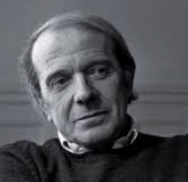
It is at work everywhere, functioning smoothly at times, at other times in firs and starts . It breathes, it heats, it eats. It shits and fucks. What a mistake to have ever said the id. Everywhere it is machines- real ones, not figurative ones: machines driving other machines, machines being driven by other machines, with all the necessary couplings and connections. An organ-machine is plugged into an energy-source-machine: the one produces a flow that the other interrupts The breast is a machine that produces milk, and the mouth a machine coupled to it.
▼
Source
The Desiring Machine
4 months 3 weeks ago
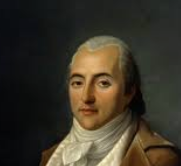
A religion of life had come to replace a religion of penance and emaciation, of fasting and prayer. The crucified body had risen in its turn and was no longer abashed Man had reached a harmonious unity: he had discovered that he is a single being not made, like a pendulum, of two different metals, that check each other; he realised that the foe in his members had ceased to exist.
▼
Source
Alexander Herzen, Childhood, Youth, and Exile
4 months 3 weeks ago
That the human mind has a certain order of possible progress, in which some things must precede others, an order which governments and public instructors can modify to some, but not to an unlimited extent: that all questions of political institutions are relative, not absolute, and that different stages of human progress not only will have, but ought to have, different institutions: That government is always either in the hands, or passing into the hands, of whatever is the strongest power in society, and that what this power is, does not depend on institutions, but institutions on it: That any general theory or philosophy of politics supposes a previous theory of human progress, and that this is the same thing with a philosophy of history.
▼
Source
([https://archive.org/details/autobiography01mill/page/162/mode/1up p. 162])
4 months 3 weeks ago
The demagogues, impresarios of alteracion, who have already caused the death of several civilizations, harass men so that they shall not reflect, see to it that they are kept herded together in crowds so that they cannot reconstruct their individuality in the one place where it can be reconstructed, which is in solitude.
▼
Source
p. 33
4 months 3 weeks ago
Does anything genuinely beautiful need supplementing? No more than justice does—or truth, or kindness, or humility. Are any of those improved by being praised? Or damaged by contempt? Is an emerald suddenly flawed if no one admires it? Or gold, or ivory, or purple? Lyres? Knives? Flowers? Bushes?
▼
Source
IV, 20(Hays translation)

4 months 3 weeks ago
if it is in our power to prevent something bad from happening, without thereby sacrificing anything of comparable moral importance, we ought, morally, to do it.
4 months 3 weeks ago
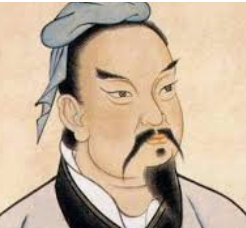
Fear is the true enemy, the only enemy.
▼
Source
Attributed implicitly to Sun Tzu by "William Riker" in the episode The Last Outpost of the TV program Star Trek: The Next Generation, but no source for this quote predates the episode's airing in 1987.

4 months 3 weeks ago
The man who has no inner life is the slave of his surroundings.
▼
Source
21 January 1866
4 months 3 weeks ago
Neither Hayek nor Mill accurately or consistently stated the libertarian standard for appropriate coercive involvement in the lives of others. This standard is exclusively to prevent harm to others.
▼
Source
Alan Ebenstein, Hayek's Journey: The Mind of Friedrich Hayek (2003), Ch. 12. Marx, Mill and Freud
4 months 3 weeks ago
The things you think about determine the quality of your mind. Your soul takes on the color of your thoughts.
▼
Source
The soul becomes dyed with the colour of its thoughts. | V, 16 (Hays translation)
4 months 3 weeks ago
when we make ethical judgments, we must go beyond a personal or sectional point of view and take into account the interests of all those affected, unless we have sound ethical grounds for doing otherwise. (...) The essence of the principle of equal consideration of interests is that we give equal weight in our moral deliberations to the like interests of all those affected by our actions. (...) an interest is an interest, whoever's interest it may be.
▼
Source
Ch. 2: Equality and Its Implications

4 months 3 weeks ago
Why lean upon a blind guide, if you have eyes of your own? Why be clothed by one who is naked, if you have put on Christ? Why use the shield of another, when the apostle gives you armour of your own? It would be better for him to learn from you to acknowledge the resurrection of the flesh, than for you from him to deny it; because if Christians must needs deny it, it would be sufficient if they did so from their own knowledge, without any instruction from the ignorant multitude.
▼
Source
De Resurrectione Carnis [Of the Resurrection of Flesh] Ch.1 as quoted in The Writings of Tertullian, [http://books.google.com/books?id=nlcPAQAAMAAJ Vol.2] Tr. Peter Holmes, as contained in Ante-Nicene Christian Library: Translations of the Writings of the

4 months 3 weeks ago
My Lord, I have insisted the more on this duty which men owe to their country, because I came out of England, and continue still, strongly affected with what I saw when I was there. Our government has approached, nearer than ever before, to the true principles of it, since the revolution of one thousand six hundred and eighty eight: and the accession of the present family to the throne, has given the fairest opportunities, as well as the justest reasons, for compleating the scheme of liberty, and improving it to perfection.
▼
Source
pp. 36-37
4 months 3 weeks ago
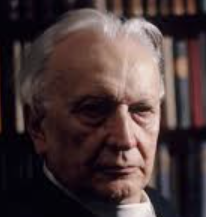
No one is guiltless...But no one is beyond the pale of human existence, provided he pays for his guilt.
4 months 3 weeks ago
Of things that are external, happen what will to that which can suffer by external accidents. Those things that suffer let them complain themselves, if they will; as for me, as long as I conceive no such thing, that that which is happened is evil, I have no hurt; and it is in my power not to conceive any such thing.
4 months 3 weeks ago
And so they upbraid the discipline of monogamy with being a heresy; nor is there any other cause whence they find themselves compelled to deny the Paraclete more than the fact that they esteem Him to be the institutor of a novel discipline, and a discipline which they find most harsh: so that this is already the first ground on which we must join issue in a general handling (of the subject), whether there is room for maintaining that the Paraclete has taught any such thing as can either be charged with novelty, in opposition to catholic tradition, or with burdensomeness, in opposition to the “light burden” of the Lord.
▼
Source
Chapter 2
4 months 3 weeks ago
The accomplishments of his mind, which was adorned with the choicest gifts that God has yet thought fit to bestow upon the children of men; a strong memory, a clear judgment, a vast range of wit and fancy, a thorough comprehension, an invincible eloquence, with a most agreeable elocution.
▼
Source
Jonathan Swift, An Inquiry into the Behaviour of the Queen's last Ministry, &c. (June 1715), quoted The Works of the Rev. Jonathan Swift, Volume 4, ed. Thomas Sheridan (1801), in p. 310
4 months 3 weeks ago
Look within. Within is the fountain of the good, and it will ever bubble up, if thou wilt ever dig.
▼
Source
VII, 59

4 months 3 weeks ago
He who would write heroic poems should make his whole life a heroic poem.
▼
Source
Life of Schiller.

4 months 3 weeks ago
One rule observed in their council is, never to debate a thing on the same day in which it is first proposed; for that is always referred to the next meeting, that so men may not rashly and in the heat of discourse engage themselves too soon, which might bias them so much that, instead of consulting the good of the public, they might rather study to support their first opinions, and by a perverse and preposterous sort of shame hazard their country rather than endanger their own reputation, or venture the being suspected to have wanted foresight in the expedients that they at first proposed; and therefore, to prevent this, they take care that they may rather be deliberate than sudden in their motions.
▼
Source
Ch. 3 : Of Their Magistrates
4 months 3 weeks ago
A community of free men cannot exist if its spiritual base is not solely law.
▼
Source
p. 43.
CivilSimian.com created by AxiomaticPanic, CivilSimian, Kalokagathia