
4 months 3 weeks ago
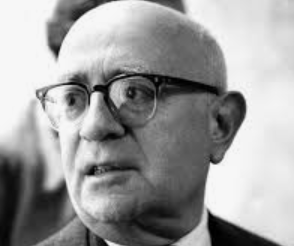
What appears as the positive is essentially the negative, i.e. the thing that is to be criticized.
▼
Source
p. 18
4 months 3 weeks ago
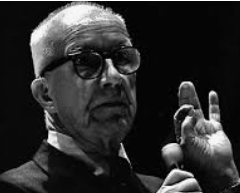
Relativity is inherently convergent, though convergent toward a plurality of centers of abstract truths. Degrees of accuracy are only degrees of refinement and magnitude in no way affects the fundamental reliability, which refers, as directional or angular sense, toward centralized truths. Truth is a relationship.
▼
Source
"The Designers and the Politicians" (1962), later published in Ideas and Integrities : A Spontaneous Autobiographical Disclosure (1969), p. 233, and The Buckminster Fuller Reader (1970), p. 305
4 months 3 weeks ago
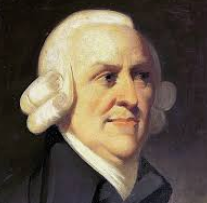
What the circumstances are, which, in modern Europe, have contributed to disturb this order of nature, and, in particular, to encourage the industry of towns, at the expense of that of the country, Mr. Smith has investigated with great ingenuity; and in such a manner, as to throw much new light on the history of that state of society which prevails in this quarter of the globe. His observations on this subject tend to show, that these circumstances were, in their first origin, the natural and the unavoidable result of the peculiar situation of mankind during a certain period; and that they took their rise, not from any general scheme of policy, but from the private interests and prejudices of particular orders of men.
▼
Source
Dugald Stewart, Account of the Life and Writings of Adam Smith, LL.D., quoted in The Works of Dugald Stewart, Vol. VII (1829), p. 57
4 months 3 weeks ago
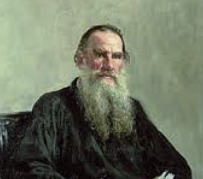
The whole world knows that virtue consists in the subjugation of one's passions, or in self-renunciation. It is not just the Christian world, against whom Nietzsche howls, that knows this, but it is an eternal supreme law towards which all humanity has developed, including Brahmanism, Buddhism, Confucianism, and the ancient Persian religion. And suddenly a man appears who declares that he is convinced that self-renunciation, meekness, submissiveness and love are all vices that destroy humanity (he has in mind Christianity, ignoring all the other religions).One can understand why such a declaration baffled people at first. But after giving it a little thought and failing to find any proof of the strange propositions, any rational person ought to throw the books aside and wonder if there is any kind of rubbish that would not find a publisher today. But this has not happened with Nietzsche´s books. The majority of pseudo-enlightened people seriously look into the theory of the Übermensch, and acknowledge its author to be a great philosopher, a descendant of Descartes, Leibniz and Kant. And all this has come about because the majority of pseudo-enlightened men of today object to any reminder of virtue, or to its chief premise: self-renunciation and love—virtues that restrain and condemn the animal side of their life. They gladly welcome a doctrine, however incoherently and disjointedly expressed, of egotism and cruelty, sanctioning the idea of personal happiness and superiority over the lives of others, by which they live.
▼
Source
Chapter 11
4 months 3 weeks ago
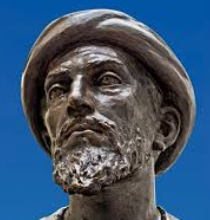
Transient bodies are only subject to destruction through their substance and not through their form, nor can the essence of their form be destroyed; in this respect they are permanent.
▼
Source
Ch.8

4 months 3 weeks ago
We may well call it black diamonds. Every basket is power and civilization. For coal is a portable climate. It carries the heat of the tropics to Labrador and the polar circle; and it is the means of transporting itself withersoever it is wanted. Watt and Stephenson whispered in the ear of mankind their secret, that a half-ounce of coal will draw two tons a mile, and coal carries coal, by rail and by boat, to make Canada as warm as Calcutta, and with its comfort brings its industrial power.
▼
Source
Wealth
4 months 3 weeks ago
Pollution is nothing but resources we're not harvesting. We allow them to disperse because we've been ignorant of their value. But if we got onto a planning planning basis, the government could trap pollutants in the stacks and spillages and get back more money than this would cost out of the stockpiled chemistries they'd be collecting. Margaret Mead gets cross with me when I talk like this because she says people are doing some very important things because they're worried and excited and I'm going to make them relax and stop doing those things. But we're dealing with something much bigger than we're accustomed to understanding, we're on a very large course indeed. You speak of racism, for example, and I tell you that there's no such thing as race. The point is that racism is the product of tribalism and ignorance and both are falling victim to communications and world-around literacy.
▼
Source
As quoted in [http://books.google.com/books?id=kVMEAAAAMBAJ&q=%22Pollution+is+nothing+but+resources+we're+not+harvesting+We+allow+them+to+disperse+because+we've+been+ignorant+of+their+value%22&pg=PA52#v=onepage "The View from the Year 2000"] by Barry Farr
4 months 3 weeks ago
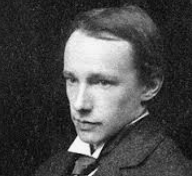
By far the most valuable things, which we know or can imagine, are certain states of consciousness, which may roughly be described as the pleasures of human intercourse and the enjoyment of beautiful objects. No one, probably, who has asked himself the question, has ever doubted that personal affection and the appreciation of what is beautiful in Art or Nature, are good in themselves; nor, if we consider strictly what things are worth having purely for their own sakes, does it appear probable that any one will think that anything else has nearly so much value as the things which are included under these two heads.
▼
Source
Principia Ethica (1903; revised edition, Cambridge University Press, 1993).
4 months 3 weeks ago
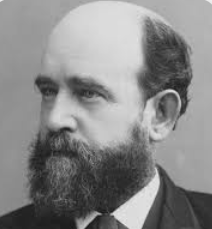
The great work of the present for every man, and every organization of men, who would improve social conditions, is the work of education — the propagation of ideas. It is only as it aids this that anything else can avail. And in this work every one who can think may aid — first by forming clear ideas himself, and then by endeavoring to arouse the thought of those with whom he comes in contact.
▼
Source
Ch. 21 : Conclusion
4 months 3 weeks ago
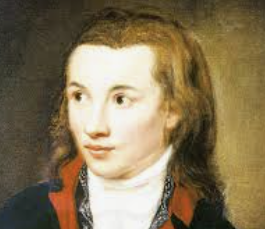
Nothing is more indispensable to true religiosity than a mediator that links us with divinity.
▼
Source
Fragment No. 74

4 months 3 weeks ago
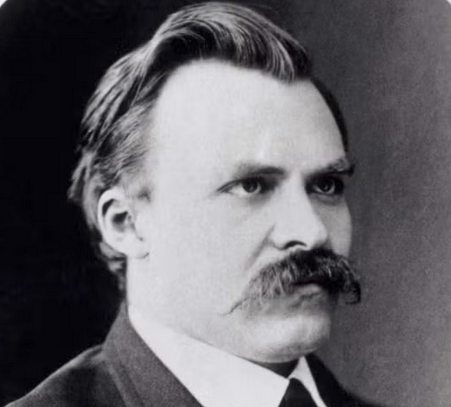
A questioner asks: If human nature is evil, then where do ritual and rightness come from? I reply: ritual and rightness are always created by the conscious activity of the sages.
▼
Source
Sources of Chinese Tradition (1999), vol. 1, p. 180
4 months 3 weeks ago
The artist — as the one who compels motion through art media toward art — cannot be simultaneously the absorptive instrument of art's own activity.
▼
Source
page 41
4 months 3 weeks ago
Division of labor is a justification for sloth.
▼
Source
p. 79
4 months 3 weeks ago
Those who observe the nature of the Universe and the commandments of the Law, and know their purpose, see clearly God's mercy and truth in everything; they seek, therefore, that which the Creator intended to be the aim of man, viz., comprehension. Forced also by claims of the body, they seek that which is necessary for the preservation of the body, "bread to eat and garment to clothe," and this is very little; but they seek nothing superfluous; with very slight exertion man can obtain it, so long as he is contented with that which is indispensable.
▼
Source
Ch.12
4 months 3 weeks ago
There is always a best way of doing everything, if it be to boil an egg. Manners are the happy ways of doing things; each once a stroke of genius or of love, — now repeated and hardened into usage. They form at last a rich varnish, with which the routine of life is washed, and its details adorned.
▼
Source
Behavior
4 months 3 weeks ago
The highest of generalizations is the synergetic integration of truth and love.
▼
Source
[http://www.rwgrayprojects.com/synergetics/s10/p0520.html#1005.50 1005.56]
4 months 3 weeks ago
A man is a man to the extent that he is a superman. A man should be defined by the sum of those tendencies which impel him to surpass the human condition.
▼
Source
Introduction
4 months 3 weeks ago
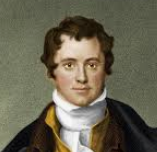
A sacred spark created by his breath, The immortal mind of man his image bears;A spirit living 'midst the forms of death, Oppressed, but not subdued, by mortal cares.
▼
Source
"Written After Recovery from a Dangerous Illness" (c. 1801), in John Ayrton Paris, The Life of Sir Humphry Davy (London: Henry Colburn and Richard Bentley, 1831) p. 84, and in John Davy (ed.) Collected Works, vol. 1 (London: Smith, Elder and Co, 1839) ch.
4 months 3 weeks ago
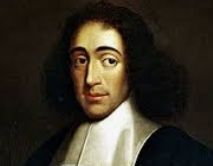
Speaking generally, he holds dominion, to whom are entrusted by common consent affairs of state — such as the laying down, interpretation, and abrogation of laws, the fortification of cities, deciding on war and peace, &c. But if this charge belong to a council, composed of the general multitude, then the dominion is called a democracy; if the council be composed of certain chosen persons, then it is an aristocracy ; and, if, lastly, the care of affairs of state, and, consequently, the dominion rest with one man, then it has the name of monarchy.
▼
Source
Ch. 2, Of Natural Right
4 months 3 weeks ago
Life is a disease of the spirit; a working incited by Passion. Rest is peculiar to the spirit.

4 months 3 weeks ago
A blow from your friend is better than a kiss from your enemy.
▼
Source
As quoted in Geary's Guide to the World's Great Aphorists (2007) by James Geary, p. 118
4 months 3 weeks ago
Where could we find an instance of cultural pathology which philosophy restored to health? If philosophy ever manifested itself as helpful, redeeming, or prophylactic, it was in a healthy culture. The sick, it made even sicker.
▼
Source
p. 27
4 months 3 weeks ago
I knew practically the whole of Lermontov by heart, and such writers as Chernyshevsky, Lev Tolstoi and Uspensky had, somehow, become part of my life.
▼
Source
Nadezhda Krupskaya [https://web.archive.org/web/20080321232230/http://www.rcgfrfi.easynet.co.uk/ww/lenin/bio-bks.htm "Reminiscences of Lenin by His Relatives"] (1956)
4 months 3 weeks ago
The theory that Divine Providence does not extend to man, and that there is no difference between man and other animals, implies very bad notions about God; it disturbs all social order, removes and destroys all the moral and intellectual virtues of man.
▼
Source
Ch.17
4 months 3 weeks ago
In the vaunted works of Art The master stroke is Nature's part.
▼
Source
Art
4 months 3 weeks ago
Love is metaphysical gravity.
4 months 3 weeks ago
Neither will the horse be adjudged to be generous, that is sumptuously adorned, but the horse whose nature is illustrious; nor is the man worthy who possesses great wealth, but he whose soul is generous.
▼
Source
"Pythagorean Ethical Sentences From Stobæus" (1904)
4 months 3 weeks ago
It is frequently expressed in all parts of Scripture, that the worship of the stars would be followed by absence of rain, devastation of the land, bad times, diseases, and shortness of life. But abandonment of that worship, and the return to the service of God, would be the cause of the presence of rain, fertility of the ground, good times, health and length of life. Thus Scripture teaches, in order that man should abandon idolatry, the reverse of that which idolatrous priests preached to the people, for, as has been shown by us, the principal object of the Law is to remove this doctrine, and to destroy its traces.
▼
Source
Ch.30
4 months 3 weeks ago
Consider what you have in the smallest chosen library. A company of the wisest and wittiest men that could be picked out of all civil countries, in a thousand years, have set in best order the results of their learning and wisdom. The men themselves were hid and inaccessible, solitary, impatient of interruption, fenced by etiquette; but the thought which they did not uncover to their bosom friend is here written out in transparent words to us, the strangers of another age.
▼
Source
Books
4 months 3 weeks ago
I never try to tell anybody else what to do, number one. And number two, I think that's what the individual is all about. Each one of us has something to contribute. This really depends on each one doing their own thinking, but not following any kind of rule that I can give out, any command. We're all on the frontier, we're all in a great mystery — incredibly mysterious. Each one possesses exactly what each one is working out, and what each one works out relates to their particular set of circumstances of any one day, or any one place around the world.
4 months 3 weeks ago
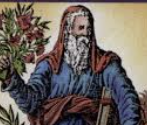
He is a priest before he is a philosopher, and he loves oracles, legends and revelations as an intuitive starting point for philosophical ideas. This gave him a character that was both mysterious and superstitious, which differs from that of the usual Greek philosophers, just as the importance given to the doctrines of the Chaldeans and Babylonian science differs from their method; while in this he is similar to the practice of the Gnostics. However, reading the treatises he composed reveals a very clear mind, a profound thinker, who in his exhortation to philosophy (composed in emulation of an early treatise by Aristotle) achieves a high level of awareness of the history of philosophy and poses and resolves concepts that are not insignificant in the context of Neoplatonism.
▼
Source
(“'School of Iamblichus”', XXX, pp. 186-187)
4 months 3 weeks ago
Wisdom thoroughly learned, will never be forgotten. Science is got by diligence; but Discretion and Wisdom cometh of GOD.
4 months 3 weeks ago
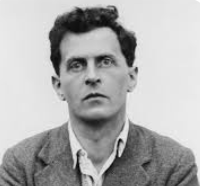
It is quite impossible for a proposition to state that it itself is true. (4.442)
▼
Source
Original German: Ein Satz kann unmöglich von sich selbst aussagen, dass er wahr ist.
4 months 3 weeks ago
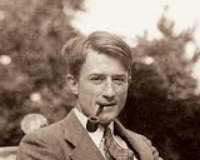
The general character and disposition of the Rationalist are, I think, not difficult to identify. At bottom he stands (he always stands) for independence of mind on all occasions, for thought free from obligation to any authority save the authority of 'reason'. His circumstances in the modern world have made him contentious: he is the enemy of authority, of prejudice, of the merely traditional, customary or habitual. His mental attitude is at once sceptical and optimistic: sceptical, because there is no opinion, no habit, no belief, nothing so firmly rooted or so widely held that he hesitates to question it and to judge it by what he calls his 'reason'; optimistic, because the Rationalist never doubts the power of his 'reason' (when properly applied) to determine the worth of a thing, the truth of an opinion or the propriety of an action.
4 months 3 weeks ago
We cannot overstate our debt to the Past, but the moment has the supreme claim. The Past is for us; but the sole terms on which it can become ours are its subordination to the Present. Only an inventor knows how to borrow, and every man is or should be an inventor. We must not tamper with the organic motion of the soul.
▼
Source
Quotation and Originality
4 months 3 weeks ago
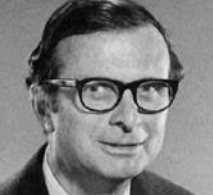
[C. West Churchman exposed the indifferentist position of some researchers — planners belonging to this school in the following terms:] And if our clients blow up the world, land us in starvation or totalitarianism, that is too bad, but we remained pure in heart to the last, didn't we?
▼
Source
p. 412 as cited in: Bogdan Mieczkowski, Oleg Zinam (1984) Bureaucracy, ideology, technology: quality of life East and West. p. 97
4 months 3 weeks ago
Friends were anxious to learn if I had had a near-death experience, and if so, what effect it had had on my longstanding public atheism. Had I had an epiphany? Was I going to follow in the footsteps of Ayer (who recovered his aplomb and insisted a few days later "what I should have said is that my experiences have weakened, not my belief that there is no life after death, but my inflexible attitude towards that belief"), or was my atheism still intact and unchanged? Yes, I did have an epiphany. I saw with greater clarity than ever before in my life that when I say "Thank goodness!" this is not merely a euphemism for "Thank God!" (We atheists don't believe that there is any God to thank.) I really do mean thank goodness! There is a lot of goodness in this world, and more goodness every day, and this fantastic human-made fabric of excellence is genuinely responsible for the fact that I am alive today. It is a worthy recipient of the gratitude I feel today, and I want to celebrate that fact here and now.
▼
Source
Daniel Dennett, in [http://edge.org/conversation/thank-goodness "THANK GOODNESS!" (2 November 2006)].
4 months 3 weeks ago
Show that you know this only—how you may never either fail to get what you desire or fall into what you avoid.
▼
Source
Book II, ch. 1, § 37
4 months 3 weeks ago
Pythagoras repeats our archaic doctrine when stating that the Ego (Nous) is eternal with Deity; that the soul only passed through various stages to arrive at divine excellence; while thumos returned to the earth, and even the phren, the lower Manas, was eliminated.
▼
Source
H.P. Blavatsky in The Key to Theosophy p. 91, (1889)
4 months 3 weeks ago
Hitherto men have speculated vaguely on the unity of universes; it is now about to be demonstrated by reasoning from the passional world to material, guided by the analogy which exists between the two.
▼
Source
L'attraction passioneé, Harmonian Man: Selected Writings of Charles Fourier, p. 54
4 months 3 weeks ago
We must plow through the whole of language.
▼
Source
Ch. 7 : Remarks on Frazer's Golden Bough, p. 131
4 months 3 weeks ago
Those who are possessed by nothing possess everything.
4 months 3 weeks ago
Shallow men believe in luck.
▼
Source
Worship
4 months 3 weeks ago
The systems approach is not a bad idea.
▼
Source
p. 232
4 months 3 weeks ago
In proportion as a man's interests become humane and his efforts rational, he appropriates and expands a common life, which reappears in all individuals who reach the same impersonal level of ideas.
▼
Source
Ch. VIII: Ideal Society
4 months 3 weeks ago
There is nothing in any object, consider'd in itself, which can afford us a reason for drawing a conclusion beyond it; [...] even after the observation of the frequent or constant conjunction of objects, we have no reason to draw any inference concerning any object beyond those of which we have had experience.
▼
Source
Part 3, Section 12
4 months 3 weeks ago
Men are disturbed, not by things, but by the principles and notions which they form concerning things.
4 months 3 weeks ago
Such things taught he, though advising above all things to speak the truth, for this alone deifies men. For as he had learned from the Magi, who call God Oremasdes, God's body is light, and his soul is truth. He taught much else, which he claimed to have learned from Aristoclea at Delphi.
▼
Source
Porphyry of Tyre, as translated by Kenneth Sylvan Guthrie in The Pythagorean Sourcebook and Library: An Anthology of Ancient Writings which Relate to Pythagoras and Pythagorean Philosophy (1919); also quoted in The Golden Chain: An Anthology of Pythagorea
4 months 3 weeks ago
To obey a rule, to make a report, to give an order, to play a game of chess, are customs (uses, institutions)
▼
Source
§ 199

4 months 3 weeks ago
"Muhammad of Arabia ascended the highest Heaven and returned. I swear by God that if I had reached that point, I should never have returned.” These are the words of a great Muslim saint, ‘Abd al-Quddūs of Gangoh. In the whole range of Sufi literature it will be probably difficult to find words which, in a single sentence, disclose such an acute perception of the psychological difference between the prophetic and the mystic types of consciousness. The mystic does not wish to return from the repose of “unitary experience”; and even when he does return, as he must, his return does not mean much for mankind at large.
▼
Source
[https://www.google.com/books/edition/The_Reconstruction_of_Religious_Thought/uCh14nl09jkC?hl=en The Reconstruction of Religious Thought in Islam] (1930), p. 99
CivilSimian.com created by AxiomaticPanic, CivilSimian, Kalokagathia