
4 months 3 weeks ago
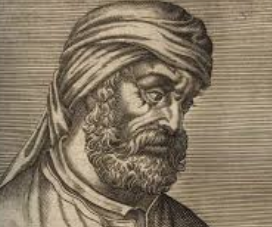
For this fact—that Gentiles are admissible to God’s Law—is enough to prevent Israel from priding himself on the notion that “the Gentiles are accounted as a little drop of a bucket,” or else as “dust out of a threshing-floor:” although we have God Himself as an adequate engager and faithful promiser, in that He promised to Abraham that “in his seed should be blest all nations of the earth;” and that out of the womb of Rebecca “two peoples and two nations were about to proceed,”—of course those of the Jews, that is, of Israel; and of the Gentiles, that is ours. Each, then, was called a people and a nation; lest, from the nuncupative appellation, any should dare to claim for himself the privilege of grace. For God ordained “two peoples and two nations” as about to proceed out of the womb of one woman: nor did grace make distinction in the nuncupative appellation, but in the order of birth; to the effect that, which ever was to be prior in proceeding from the womb, should be subjected to “the less,” that is, the posterior. For thus unto Rebecca did God speak: “Two nations are in thy womb, and two peoples shall be divided from thy bowels; and people shall overcome people, and the greater shall serve the less.” Accordingly, since the people or nation of the Jews is anterior in time, and “greater” through the grace of primary favour in the Law, whereas ours is understood to be “less” in the age of times, as having in the last era of the world attained the knowledge of divine mercy: beyond doubt, through the edict of the divine utterance, the prior and “greater” people—that is, the Jewish—must necessarily serve the “less;” and the “less” people—that is, the Christian—overcome the “greater.” For, withal, according to the memorial records of the divine Scriptures, the people of the Jews—that is, the more ancient—quite forsook God, and did degrading service to idols, and, abandoning the Divinity, was surrendered to images; while “the people” said to Aaron, “Make us gods to go before us.”
▼
Source
Chapter I.—Occasion of Writing. Relative Position of Jews and Gentiles Illustrated.

4 months 3 weeks ago
The French may improve their natural wealth and power by the improvement of trade and commerce. We can have no wealth, nor power by consequence, as Europe is now constituted, without the improvement of them, nor in any degree but proportionably to this improvement.
▼
Source
p. 186
4 months 3 weeks ago
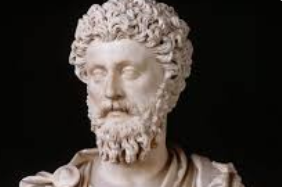
If the gods care not for me and for my children, There is a reason for it.
▼
Source
VII, 41

4 months 3 weeks ago
He that works and does some Poem, not he that merely says one, is worthy of the name of Poet.
▼
Source
Introduction to Cromwell's Letters and Speeches (1845).
4 months 3 weeks ago
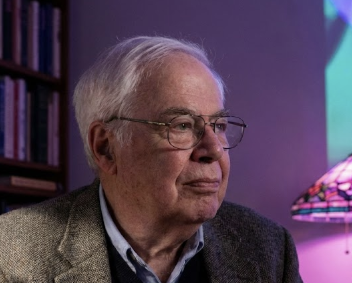
From Richard McKeon and Robert Brumsbaugh I learned to view the history of philosophy as a series, not of alternative solutions to the same problems, but of quite different sets of problems. From Rudolph Carnap and Carl Hempel I learned how pseudo-problems could be revealed as such by restarting them in the formal mode of speech. From Charles Hartshorne and Paul Weiss I learned how they could be so revealed by being translated into Whiteheadian or Hegelian terms.
▼
Source
Preface

4 months 3 weeks ago
Yea, marry, now it is somewhat, for now it is rhyme; before it was neither rhyme nor reason.
▼
Source
Advising an author to put his MS. into rhyme. Reported in Hoyt's (1922), p. 604 | :Rhyme nor reason. Said by Peele—Edward I. In As You Like It. Act III. Sc. 2. The Comedy of Errors. Act II. Sc. 2. The Merry Wives of Windsor. Act V. Sc. 5. Farce du Vendeur
4 months 3 weeks ago
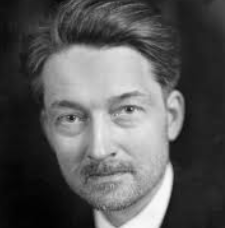
We have just seen that perfection and contemplation imply each other by reason of love which is at once the essence of perfecton and “the source, the execize and the end” of contemplation. One can also show this mutual implication by the stressing the fact that under the regime of the gifts of the Holy Spirit is the state proper to perfection and to contemplation all at once. Saint Thomas teaches that the gifts of the Holy Spirit are necessary for salvation, because we are too weak all by ourselves always to use as we should even the theological virtues and the infused moral virtues. For, as saint Bonavenure tell us, “the gifts immediately dispose one to contemplation”.
▼
Source
Liturgy and contemplation, chapter VI, p. 20
4 months 3 weeks ago
There are three relations [between thee and other things]: the one to the body which surrounds thee; the second to the divine cause from which all things come to all; and the third to those who live with thee.
▼
Source
VIII, 27
4 months 3 weeks ago
The barrenest of all mortals is the sentimentalist.
▼
Source
Characteristics.

4 months 3 weeks ago
They dwell altogether in the face, their endeavors are meer titillations, & their acquaintance with Nature is not at the heart.

4 months 3 weeks ago
Oh, Diamond! Diamond! thou little knowest what mischief thou hast done!
▼
Source
This is from an anecdote found in [http://www.gutenberg.org/files/15331/15331-h/15331-h.htm St. Nicholas magazine, Vol. 5, No. 4, (February 1878)] :
4 months 3 weeks ago
I reject, as you know, the "philosophy of Marxism," ....The general Marxian theory of "universal history," to the extent that it has any empirical content, seems to me disproved by modern historical and anthropological investigation.Marxian economics seems to me for the most part either false or obsolete or meaningless in application to contemporary economic phenomena. Those aspects of Marxian economics which retain validity do not seem to me to justify the theoretical structure of the economics.Not only do I believe it meaningless to say that "socialism is inevitable" and false that socialism is "the only alternative to capitalism"; I consider that on the basis of the evidence now available to us a new form of exploitive society (which I call "managerial society") is not only possible but is a more probable outcome of the present than socialism....On no ideological, theoretic or political ground, then, can I recognize, or do I feel, any bond or allegiance to the Workers Party (or to any other Marxist party). That is simply the case, and I can no longer pretend about it, either to myself or to others.
4 months 3 weeks ago
The happiness and unhappiness of the rational, social animal depends not on what he feels but on what he does; just as his virtue and vice consist not in feeling but in doing.
▼
Source
IX, 16

4 months 3 weeks ago
"The most interesting aspect of suffering is the sufferer's belief in its absoluteness. He believes he has a monopoly on suffering. I think that I alone suffer, that I alone have the right to suffer, although I also realize that there are modalities of suffering more terrible than mine, pieces of flesh falling from the bones, the body crumbling under one's very eyes, monstrous, criminal , shameful sufferings. One asks oneself, How can this be, and if it be, how can one still speak of finality and other such old wives' tales? Suffering moves me so much that I lose all my courage. I lose heart because I do not understand why there is suffering in the world.", in essay: the monopoly of suffering
4 months 3 weeks ago
With what scientific stoicism he walks through the land of wonders, unwondering.

4 months 3 weeks ago
The opposite of an idealist is too often a man without love.
4 months 3 weeks ago
Surely, So sir, this is not the Philosophers’ Stone, neither will I undertake to define it, but give me leave to speak to you in the language of Zoroaster: “Seek thou the channel of the Soule.”

4 months 3 weeks ago
Of the sixteen chapters which compose it, there are fifteen wholly employed in detecting the fallacy and ridicule to be found in the objects of human passions and inclinations, and in demolishing such obstacles as at first weaken, and afterwards extinguish, any knowledge of God in mankind ; Therefore, these chapters are merely preparatory to the sixteenth and last, wherein atheism is attacked, and perhaps routed, wherein the proofs of a God, such at least as weak man is capable of receiving, are produced ; wherein the providence of God is defended against the insults and complaints of free-thinkers.
▼
Source
On the purpose of writing Les Carácteres, Preface to La Bruyere's "Characters," p. v
4 months 3 weeks ago
Look at everything that exists, and observe that it is already in dissolution and change, and as it were putrefaction or dispersion, or that everything is so constituted in nature as to die.
▼
Source
X, 18
4 months 3 weeks ago
The terrifying experience and obsession of death, when preserved in consciousness, becomes ruinous. If you talk about death, you save part of yourself. But at the same time, something of your real self dies, because objectified meanings lose the actuality they have in consciousness.
4 months 3 weeks ago
France was long a despotism tempered by epigrams.
▼
Source
Pt. I, Bk. I, ch. 1.
4 months 3 weeks ago
Knowing whether or not one can live without appeal is all that interests me.
4 months 3 weeks ago
It must be thoroughly understood that war is a necessity, and that the more readily we accept it, the less will be the ardor of our opponents, and that out of the greatest dangers communities and individuals acquire the greatest glory.
▼
Source
Book I, 1.144-[3] | Variant translation: We must realize, too, that, both for cities and for individuals, it is from the greatest dangers that the greatest glory is to be won. | As translated by Rex Warner (1954).
4 months 3 weeks ago
What picture of American society is likely to be imprinted on the consciousness of average Europeans? Given what they read or hear every day from intellectuals and politicians, they can hardly have any choice in the unpleasant particulars, especially if they happen to be French. The picture repeatedly sketched for them is as follows: American society is entirely ruled by money. No other value, whether familial, moral, religious, civic, cultural, professional, or ethical has any potency in itself. Everything in America is a commodity, regarded and used exclusively for its material value. A person is judged solely by the worth of his bank account. Every U.S. President has been in the pockets of the oil companies, the military-industrial complex, the agricultural lobby, or the financial manipulators of Wall Street. America is the "jungle" par excellence of out-of-control, "savage" capitalism, where the rich are always becoming richer and fewer, while the poor are becoming poorer and more numerous. Poverty is the dominant social reality in America. Hordes of famished indigents are everywhere, while luxurious chauffeured limousines with darkened windows glide through the urban wilderness.
4 months 3 weeks ago
Leibniz’s theory on the subject as substantia ideans in the sense of a causative agent of decision and acts stands much closer to a materialist interpretation of history than does a philosophy which reduces the thinking subject to the role of subsuming protocol sentences under general propositions and deducing other sentences from them.
▼
Source
p. 149.
4 months 3 weeks ago
All those things at which thou wishest to arrive by a circuitous road, thou canst have now, if thou dost not refuse them to thyself.
▼
Source
XII, 1
4 months 3 weeks ago
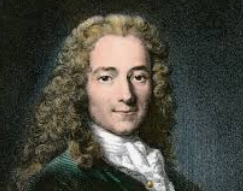
If this is the best of possible worlds, what then are the others?
4 months 3 weeks ago
Sadness makes you God's prisoner.
4 months 3 weeks ago
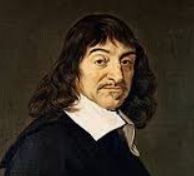
I could give here several other ways of tracing and conceiving a series of curved lines, each curve more complex than any preceding one, but I think the best way to group together all such curves and them classify them in order, is by recognizing the fact that all points of those curves which we may call "geometric," that is, those which admit of precise and exact measurement, must bear a definite relation to all points of a straight line, and that this relation must be expressed by a single equation. If this equation contains no term of higher degree than the rectangle of two unknown quantities, or the square of one, the curve belongs to the first and simplest class, which contains only the circle, the parabola, the hyperbola, and the ellipse; but when the equation contains one or more terms of the third or fourth degree in one or both of the two unknown quantities (for it requires two unknown quantities to express the relation between two points) the curve belongs to the second class; and if the equation contains a term of the fifth or sixth degree in either or both of the unknown quantities the curve belongs to the third class, and so on indefinitely.
▼
Source
Second Book
4 months 3 weeks ago
I here, on the very threshold, protest against it in reference to Paganism, and to all other isms by which man has ever for a length of time striven to walk in this world. They have all had a truth in them, or men would not have taken them up. Quackery and dupery do abound; in religions, above all in the more advanced decaying stages of religions, they have fearfully abounded: but quackery was never the originating influence in such things; it was not the health and life of such things, but their disease, the sure precursor of their being about to die! Let us never forget this.
4 months 3 weeks ago
You have already grasped that Sisyphus is the absurd hero. He is, as much through his passions as through his torture. His scorn of the gods, his hatred of death, and his passion for life won him that unspeakable penalty in which the whole being is exerted toward accomplishing nothing. This is the price that must be paid for the passions of this earth. Nothing is told us about Sisyphus in the underworld. Myths are made for the imagination to breathe life into them.
4 months 3 weeks ago
Men do not rest content with parrying the attacks of a superior, but often strike the first blow to prevent the attack being made.
▼
Source
Book VI, 6.18-[2]
4 months 3 weeks ago
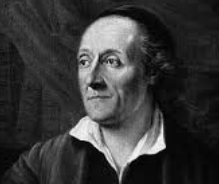
Who makes quick use of the moment is a genius of prudence.
▼
Source
No. 91
4 months 3 weeks ago
The basic ideals and concepts of rationalist metaphysics were rooted in the concept of the universally human, of mankind, and their formalization implies that they have been severed from their human content. How this dehumanization of thinking affects the very foundations of our civilization can be illustrated by analysis of the principle of the majority, which is inseparable from the principle of democracy. In the eyes of the average man, the principle of the majority is often not only a substitute for but an improvement upon objective reason: since men are after all the best judges of their own interests, the resolutions of a majority, it is thought, are certainly as valuable to a community as the intuitions of a so-called superior reason. … What does it mean to say that “a man knows his own interests best”—how does he gain this knowledge, what evidences that his knowledge is correct? In the proposition, “A man knows [his own interests] best,” there is an implicit reference to an agency that is not totally arbitrary … to some sort of reason underlying not only means but ends as well. If that agency should turn out to be again merely the majority, the whole argument would constitute a tautology. The great philosophical tradition that contributed to the founding of modern democracy was not guilty of this tautology, for it based the principles of government upon … the assumption that the same spiritual substance or moral consciousness is present in each human being. In other words, respect for the majority was based on a conviction that did not itself depend on the resolutions of the majority.
▼
Source
pp. 26-27.
4 months 3 weeks ago
Drama, combat, terror, numbness, and subservience – every day these things wipe out your sacred principles, whenever your mind entertains them uncritically or lets them slip in.
▼
Source
X. 9
4 months 3 weeks ago
God created woman only to tame man.
▼
Source
p. 41
4 months 3 weeks ago
Born in a prison, with burdens on our shoulders and our thoughts, we could not reach the end of a single day if the possibilities of ending it all did not incite us to begin the next day all over again.
4 months 3 weeks ago
Mahomet himself, after all that can be said about him, was not a sensual man. We shall err widely if we consider this man as a common voluptuary, intent mainly on base enjoyments, — nay on enjoyments of any kind. His household was of the frugalest; his common diet barley-bread and water: sometimes for months there was not a fire once lighted on his hearth. They record with just pride that he would mend his own shoes, patch his own cloak. A poor, hard-toiling, ill-provided man; careless of what vulgar men toil for.
4 months 3 weeks ago
The absurd ... is an experience to be lived through, a point of departure, the equivalent, in existence of Descartes' methodical doubt. Absurdism, like methodical doubt, has wiped the slate clean. It leaves us in a blind alley. But, like methodical doubt, it can, by returning upon itself, open up a new field of investigation, and in the process of reasoning then pursues the same course. I proclaim that I believe in nothing and that everything is absurd, but I cannot doubt the validity of my proclamation and I must at least believe in my protest. The first and only evidence that is supplied me, within the terms of the absurdist experience, is rebellion ... Rebellion is born of the spectacle of irrationality, confronted with an unjust and incomprehensible condition.
▼
Source
pp. 8 - 10 as quoted in Albert Camus and the Philosophy of the Absurd;(2002) by Avi Sagi, p. 44
4 months 3 weeks ago
Not within the leaf of pity writ.
▼
Source
Timon, scene iii
4 months 3 weeks ago
The matter of jurisprudence is positive law: law, simply and strictly so called : or law set by political superiors to political inferiors.
▼
Source
p. 1; opening line
4 months 3 weeks ago
All religions are more or less mixed with superstitions. Man is not reasonable enough to content himself with a pure and sensible religion, worthy of the Deity.
▼
Source
p. 139
4 months 3 weeks ago
Ennui is the echo in us of time tearing itself apart.
4 months 3 weeks ago
Is it not a right glorious thing, and set of things, this that Shakspeare has brought us? For myself, I feel that there is actually a kind of sacredness in the fact of such a man being sent into this Earth.
4 months 3 weeks ago
La vraie générosité envers l'avenir consiste à tout donner au présent.
▼
Source
Real generosity toward the future consists in giving all to the present. | Part 5: Thought at the Meridian (p. 313)
4 months 3 weeks ago
The world's biggest power is the youth and beauty of a woman.
4 months 3 weeks ago
Mechanical reproduction emancipates the work of art from its parasitical dependence on ritual. To an ever greater degree the work of art reproduced becomes the work of art designed for reproducibility. From a photographic negative, for example, one can make any number of prints; to ask for the “authentic” print makes no sense. But the instant the criterion of authenticity ceases to be applicable to artistic production, the total function of art is reversed. Instead of being based on ritual, it begins to be based on another practice – politics.
▼
Source
Das Kunstwerk im Zeitalter seiner Reproduzierbarkeit The Work of Art in the Age of Mechanical Reproduction (1935)
4 months 3 weeks ago
I want to block some common misunderstandings about "understanding": In many of these discussions one finds a lot of fancy footwork about the word "understanding."
4 months 3 weeks ago
The United States—bounded on the north by the Aurora Borealis, on the south by the precession of the equinoxes, on the east by the primeval chaos, and on the west by the Day of Judgment.
▼
Source
"Bounding the United States", attributed to Fiske in Bartlett's Familiar Quotations, 14th ed. (1968) p. 655, note. However, Fiske was himself quoting: | Among the legends of our late Civil War there is a story of a dinner-party given by the Americans resi
4 months 3 weeks ago
I disapprove of what you say, but I will defend to the death your right to say it.
▼
Source
Variants: | Monsieur l'abbé, I detest what you write, but I would give my life to make it possible for you to continue to write. | I wholly disapprove of what you say—and will defend to the death your right to say it. | Though these words are regularly at
CivilSimian.com created by AxiomaticPanic, CivilSimian, Kalokagathia