
4 months 3 weeks ago
Now I wonder what our knowledge has in common with God's knowledge according to those who treat God's knowledge... Is there anything else common to both besides the mere name? ...there is an essential distinction between His knowledge and ours, like the distinction between the substance of the heavens and that of the earth.
▼
Source
Ch.20
4 months 3 weeks ago
And striving to be man, the worm Mounts through all the spires of form.
▼
Source
May-Day
4 months 3 weeks ago
That's the basis of all politics: it has to be you or me, there's not enough for both of us. Survival of the fittest.

4 months 3 weeks ago
None can be free who is a slave to, and ruled by, his passions.
▼
Source
As quoted in Florilegium, XVIII, 23, as translated in Dictionary of Quotations (1906) by Thomas Benfield Harbottle, p. 368 | No one is free who has not obtained the empire of himself. | As translated by Nicholas Rowe(1732) | No man is free who cannot comm
4 months 3 weeks ago
We shouldn't teach great books; we should teach a love of reading. Knowing the contents of a few works of literature is a trivial achievement. Being inclined to go on reading is a great achievement.
▼
Source
As quoted in B. F. Skinner : The Man and His Ideas (1968) by Richard Isadore Evans, p. 73
4 months 3 weeks ago
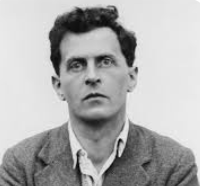
One often makes a remark and only later sees how true it is.
▼
Source
Journal entry (11 October 1914), p. 10e
4 months 3 weeks ago
It is namely distinctly stated in Scripture and handed down by tradition that the first commandments communicated to us did not include any law at all about burnt offering and sacrifice.
▼
Source
Ch.32
4 months 3 weeks ago
Alcohol, hashish, prussic acid, strychnine are weak dilutions. The surest poison is time.
▼
Source
Poetry and Imagination
4 months 3 weeks ago
We must progress to the stage of doing all the right things for all the right reasons instead of doing all the right things for all the wrong reasons.
4 months 3 weeks ago
"But to be hanged—is that not unendurable?" Even so, when a man feels that it is reasonable, he goes off and hangs himself.
▼
Source
Book I, ch. 2, § 3.
4 months 3 weeks ago
None but a Craftsman can judge of a craft.
4 months 3 weeks ago
This remark provides the key to the problem, how much truth there is in solipsism. For what the solipsist means is quite correct; only it cannot be said, but makes itself manifest. The world is my world: this is manifest in the fact that the limits of language (of that language which alone I understand) mean the limits of my world. (5.62)
4 months 3 weeks ago
Poetry is a sort of truancy, a dream within the dream of life, a wild flower planted among our wheat.
4 months 3 weeks ago
Respect the child. Be not too much his parent. Trespass not on his solitude.
▼
Source
Education
4 months 3 weeks ago
The comprehensiveness of OR’s aim is an example of a ‘systems’ approach, since ‘system’ implies an interconnected complex of functionally related components.
▼
Source
p. 7; cited in (2004, p. 210)
4 months 3 weeks ago
Why, then, do we wonder any longer that, although in material things we are thoroughly experienced, nevertheless in our actions we are dejected, unseemly, worthless, cowardly, unwilling to stand the strain, utter failures one and all?
▼
Source
Book II, ch. 16, § 18.
4 months 3 weeks ago
Pythagoras could not have been the discoverer of the relation, because... this property was known and used by scholars and artisans of Oriental lands thousands of years before Pythagoras... While deductive geometry is barely more than twenty-five hundred years old, empirical geometry is probably as old as civilization itself.
▼
Source
Tobias Dantzig, The Bequest of the Greeks (1955)
4 months 3 weeks ago
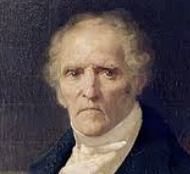
There is a class of writers who are ever boasting of the progress of civilization and of the human mind in modern times. If we were to credit their pretensions, we should be led to believe that the science of society had reached its highest degree of perfection, because old metaphysical and economic theories have been somewhat refined upon.In answer to their boasts of social progress, it is not sufficient to refer to the deeply-rooted social evils which exist, and which prey upon our boasted civilized social order. We will mention but a single one, the frightful increase of national debts and of taxation.
▼
Source
The Theory of Social Organization. Harmonian Man: Selected Writings of Charles Fourier
4 months 3 weeks ago
Philosophical problems can be compared to locks on safes, which can be opened by dialing a certain word or number, so that no force can open the door until just this word has been hit upon, and once it is hit upon any child can open it.
▼
Source
Ch. 9 : Philosophy, p. 175 | Variant: Philosophy is like trying to open a safe with a combination lock: each little adjustment of the dials seems to achieve nothing, only when everything is in place does the door open. | Conversation of 1930, in Personal
4 months 3 weeks ago
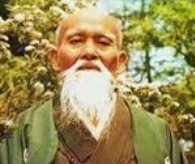
In our techniques we enter completely into, blend totally with, and control firmly an attack. Strength resides where one's ki is concentrated and stable; confusion and maliciousness arise when ki stagnates.
4 months 3 weeks ago
Self-trust is the first secret of success.
▼
Source
Success
4 months 3 weeks ago
To conceive of knowledge as a collection of information seems to rob the concept of all of its life. Knowledge resides in the user and not in the collection. It is how the user reacts to a collection of information that matters.
▼
Source
p. 10; cited in Daniel J. Power (2004) Decision Support Systems: Frequently Asked Questions, p. 23
4 months 3 weeks ago
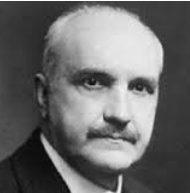
To know how just a cause we have for grieving is already a consolation.
▼
Source
Ch. IV.: Music
4 months 3 weeks ago
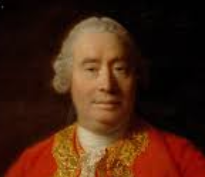
For my part, when I enter most intimately into what I call myself, I always stumble on some particular perception or other, of heat or cold, light or shade, love or hatred, pain or pleasure. I never can catch myself at any time without a perception, and never can observe any thing but the perception. When my perceptions are remov'd for any time, as by sound sleep; so long am I insensible of myself, and may truly be said not to exist. And were all my perceptions remov'd by death, and cou'd I neither think, nor feel, nor see, nor love, nor hate after the dissolution of my body, I shou'd be entirely annihilated, nor do I conceive what is farther requisite to make me a perfect non-entity. If any one upon serious and unprejudic'd reflexion, thinks he has a different notion of himself, I must confess I can reason no longer with him. All I can allow him is, that he may be in the right as well as I, and that we are essentially different in this particular. He may, perhaps, perceive something simple and continu'd, which he calls himself; tho' I am certain there is no such principle in me... But setting aside some metaphysicians of this kind, I may venture to affirm of the rest of mankind, that they are nothing but a bundle or collection of different perceptions, which succeed each other with an inconceivable rapidity, and are in a perpetual flux and movement.
▼
Source
Part 4, Section 6
4 months 3 weeks ago
If a man has reported to you, that a certain person speaks ill of you, do not make any defense (answer) to what has been told you: but reply, The man did not know the rest of my faults, for he would not have mentioned these only.
▼
Source
(33) [tr. George Long (1888)].
4 months 3 weeks ago
Inasmuch as I have begun to explain to you how much greater was my impulse to approach philosophy in my youth than to continue it in my old age, I shall not be ashamed to tell you what ardent zeal Pythagoras inspired in me. Sotion used to tell me why Pythagoras abstained from animal food, and why, in later times, Sextius did also. In each case, the reason was different, but it was in each case a noble reason. … Pythagoras … held that all beings were inter-related, and that there was a system of exchange between souls which transmigrated from one bodily shape into another. If one may believe him, no soul perishes or ceases from its functions at all, except for a tiny interval – when it is being poured from one body into another.
▼
Source
Seneca, Moral letters to Lucilius, CVIII, 17-19
4 months 3 weeks ago
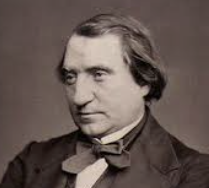
He whom God has touched will always be a being apart: he is, whatever he may do, a stranger among men; he is marked by a sign.
▼
Source
Oeuvres Complètes, vol. 3. L’Avenir de la Science (1890).
4 months 3 weeks ago
Does man think because he has found that thinking pays? Does he bring his children up because he has found it pays?
▼
Source
§ 467

4 months 3 weeks ago
The tyranny of imperialism struts abroad, covering its face under the masks of Democracy, Nationalism, Communism, Fascism and heaven knows what else besides. Under these masks, in every corner of the earth, the spirit of freedom and the dignity of man are being trampled underfoot in a way to which not even the darkest period of human history presents a parallel. The so-called statesmen to whom government and leadership of men was entrusted have proved demons of bloodshed, tyranny and oppression. ... After subjugating and establishing their dominion over weaker peoples, they have robbed them of their possessions, of their religions, their morals, of their cultural traditions and their literatures.
▼
Source
New Year's message broadcast on All-India Radio, 1938. Quoted in [https://www.google.com/books/edition/The_Political_Philosophy_of_Muhammad_Iqb/VrItm_F6wncC?hl=en The Political Philosophy of Muhammad Iqbal], p. 199.
4 months 3 weeks ago
Build a better mousetrap, and the world will beat a path to your door.
4 months 3 weeks ago
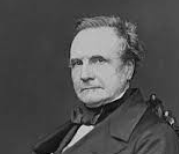
The errors which arise from the absence of facts are far more numerous and more durable than those which result from unsound reasoning respecting true data.
▼
Source
p. 156. Ch. 17 "Of Price as Measured by Money"
4 months 3 weeks ago
Liberalism has merely cleared a field in which every soul and every corporate interest may fight with every other for domination. Whoever is victorious in this struggle will make an end of liberalism; and the new order, which will deem itself saved, will have to defend itself in the following age against a new crop of rebels.
▼
Source
"The Irony of Liberalism"
4 months 3 weeks ago
The wiser nations are, the more public spirit they possess, the more perfect their political constitution, the fewer constitutional laws they have, for these laws are only props, and a building only needs props when it has become out of plumb or when it has been violently shaken by an external force. The most perfect constitution of antiquity was without contradiction that of Sparta, and Sparta has not left us a single line of its public law. It justly boasted of having written its laws only in the hearts of its children.
▼
Source
p. 84
4 months 3 weeks ago
Though experience be our only guide in reasoning concerning matters of fact; it must be acknowledged, that this guide is not altogether infallible, but in some cases is apt to lead us into errors.
▼
Source
Section 10 : Of Miracles Pt. 1
4 months 3 weeks ago
The concept of a harmonious universe ordered according to "the Great Chain of Being" — a chain that connects the continuum of matter, body, mind, soul and spirit — stands as one of the most fundamental ideas of western thought. … It continues to be a profound influence upon the deepest strata of our thought. And yet a major rift has appeared in the consciousness of our time because the theme of harmonia has not been translated into the realm of human conduct. The challenge of our time may be to revive it, and make divine harmony "the great theme" of the next millennium. Any success we have in accomplishing this will be based, in large part, on the achievements of Pythagoras.
4 months 3 weeks ago
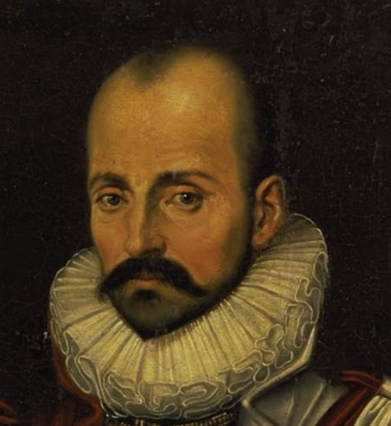
There is in our souls some native seed of reason, which, if nourished by good counsel and training, flowers into virtue, but which, on the other hand, if unable to resist the vices surrounding it, is stifled and blighted.
▼
Source
Part 2
4 months 3 weeks ago
If you use a trick in logic, whom can you be tricking other than yourself?
▼
Source
p. 24e

4 months 3 weeks ago
Overcoming magic often takes the form of theology. From animals and ancestors the path leads to all kinds of spirits. The hypothesis (which already appeared in the magical age) of the little man alongside man, the “soul', and of the special being, 'God', more and more often seeks a parallel process 'behind' processes. Whereas in the magical age, empirically given facts were linked with each other on the basis of primitive theories without the introduction of uncontrollable elements, now their introduction becomes essential.
▼
Source
p. 322
4 months 3 weeks ago
We may say most aptly that the Analytical Engine weaves algebraical patterns just as the Jacquard-loom weaves flowers and leaves.
▼
Source
Ada Lovelace, Notes on the Analytical Engine invented by Charles Babbage
4 months 3 weeks ago
The working of great administrations is mainly the result of a vast mass of routine, petty malice, self-interest, carelessness and sheer mistake. Only a residual fraction is thought.
▼
Source
Giorgio de Santillana (1902-1974) [http://books.google.com/books?id=34uQ6tlYHRgC&q=%22The+working+of+great+administrations+is+mainly+the+result+of+a+vast+mass+of+routine+petty+malice+self-interest+carelessness+and+sheer+mistake+Only+a+residual+fraction+is
4 months 3 weeks ago
The vices are very justly man's executioners.
▼
Source
Chapter X, p. 85
4 months 3 weeks ago
Avarice, the spur of industry, is so obstinate a passion, and works its way through so many real dangers and difficulties, that it is not likely to be scared by an imaginary danger, which is so small, that it scarcely admits of calculation. Commerce, therefore, in my opinion, is apt to decay in absolute governments, not because it is there less secure, but because it is less honourable.
▼
Source
Part I, Essay 12: Of Civil Liberty
4 months 3 weeks ago
You could attach prices to ideas. Some cost a lot some little. ... And how do you pay for ideas? I believe: with courage.
▼
Source
p. 60e

4 months 3 weeks ago
How is it that men who only yesterday were complaining quietly of their lot as they smoked their pipes, and the next moment were humbly saluting the local guard and gendarme whom they had just been abusing, — how is it that these same men a few days later were capable of seizing their scythes and their iron-shod pikes and attacking in his castle the lord who only yesterday was so formidable? By what miracle were these men, whose wives justly called them cowards, transformed in a day into heroes, marching through bullets and cannon balls to the conquest of their rights? How was it that words, so often spoken and lost in the air like the empty chiming of bells, were changed into actions? The answer is easy. Action, the continuous action, ceaselessly renewed, of minorities brings about this transformation. Courage, devotion, the spirit of sacrifice, are as contagious as cowardice, submission, and panic. What forms will this action take? All forms, — indeed, the most varied forms, dictated by circumstances, temperament, and the means at disposal. Sometimes tragic, sometimes humorous, but always daring; sometimes collective, sometimes purely individual, this policy of action will neglect none of the means at hand, no event of public life, in order to keep the spirit alive, to propagate and find expression for dissatisfaction, to excite hatred against exploiters, to ridicule the government and expose its weakness, and above all and always, by actual example, to awaken courage and fan the spirit of revolt.
4 months 3 weeks ago
Let us never forget, as all conventional history of philosophy conspires to make us forget, what the ‘great thinkers’ really are: proper objects, indeed, of pity, but even more, of horror.
▼
Source
[https://https://web.maths.unsw.edu.au/~jim/wrongthoughts.html The Plato Cult and Other Philosophical Follies], 1991. Page 185.
4 months 3 weeks ago
Religious beauty is superior to ideal beauty, since it is the ideal of the ideal.
▼
Source
p. 287
4 months 3 weeks ago
And is it possible, CLEANTHES, said PHILO, that after all these reflections, and infinitely more, which might be suggested, you can still persevere in your Anthropomorphism, and assert the moral attributes of the Deity, his justice, benevolence, mercy, and rectitude, to be of the same nature with these virtues in human creatures? His power we allow is infinite: whatever he wills is executed: but neither man nor any other animal is happy: therefore he does not will their happiness. His wisdom is infinite: He is never mistaken in choosing the means to any end: But the course of Nature tends not to human or animal felicity: therefore it is not established for that purpose. Through the whole compass of human knowledge, there are no inferences more certain and infallible than these. In what respect, then, do his benevolence and mercy resemble the benevolence and mercy of men? EPICURUS's old questions are yet unanswered. Is he willing to prevent evil, but not able? then is he impotent. Is he able, but not willing? then is he malevolent. Is he both able and willing? whence then is evil?
▼
Source
Philo to Cleanthes, Part X
4 months 3 weeks ago
Perhaps the best place to begin trying to understand Wittgenstein's character is with the photographs that exist of his face.
▼
Source
Colin McGinn, "My Wicked Heart", London Review of Books (22 November 1990)
4 months 3 weeks ago
If every Socialist will carry his thoughts back to an earlier date, he will no doubt remember the host of prejudices aroused in him when, for the first time, he came to the idea that abolishing the capitalist system and private appropriation of land and capital had become an historical necessity.The same feelings are today produced in the man who for the first time hears that the abolition of the State, its laws, its entire system of management, governmentalism and centralization, also becomes an historical necessity: that the abolition of the one without the abolition of the other is materially impossible. Our whole education — made, be it noted, by Church and State, in the interests of both — revolts at this conception.Is it less true for that? And shall we allow our belief in the State to survive the host of prejudices we have already sacrificed for our emancipation?

4 months 3 weeks ago
He said that there was one only good, namely, knowledge; and one only evil, namely, ignorance.
▼
Source
Socrates, 14.
CivilSimian.com created by AxiomaticPanic, CivilSimian, Kalokagathia