
4 months 3 weeks ago
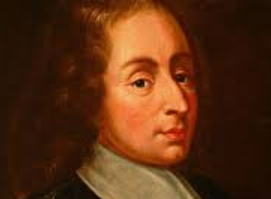
When I consider the short duration of my life, swallowed up in the eternity before and after, the small space which I fill, or even can see, engulfed in the infinite immensity of spaces whereof I know nothing, and which know nothing of me, I am terrified, and wonder that I am here rather than there, for there is no reason why here rather than there, or now rather than then. Who has set me here? By whose order and design have this place and time been destined for me?—Memoria hospitis unius diei prætereuntis.It is not well to be too much at liberty. It is not well to have all we want.How many kingdoms know nothing of us!The eternal silence of these infinite spaces alarms me.
▼
Source
"The Misery of Man Without God": "Man's Disproportion," [https://books.google.com/books?id=LbkIAAAAQAAJ The Thoughts of Blaise Pascal translated from the Text of M. Auguste Molinier] Tr. C. Kegan Paul (1885)

4 months 3 weeks ago
Education still remains the privilege of a small minority, for it is idle to talk of education when the workman’s child is forced at the age of thirteen, to go down in to the mine or to help his father on the farm. It is idle to talk of studies to the worker, who comes home in the evening crushed by excessive toil with its brutalizing atmosphere. Society is thus bound to remain divided into two hostile camps, and in such conditions, freedom is a vain word. The Radical begins by demanding a greater extension of political rights, but he soon sees the at breath of liberty leads to the uplifting of the proletariat, and then he turns round, changes his opinions, and reverts to repressive legislation and government by the sword.
▼
Source
Ch. 1 : Our Riches, p. 60

4 months 3 weeks ago
It was a saying of his that education was an ornament in prosperity and a refuge in adversity.
▼
Source
Aristotle, 9.
4 months 3 weeks ago
As soon as the soul has been made to perceive that a thing can conduct it to that which it loves supremely, it must inevitably embrace it with joy.
4 months 3 weeks ago
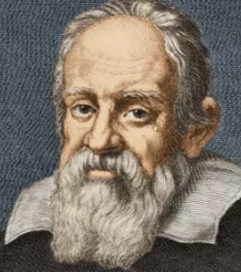
Among all the great men who have philosophized about this remarkable effect, I am more astonished at Kepler than at any other. Despite his open and acute mind, and though he has at his fingertips the motions attributed to the earth, he nevertheless lent his ear and his assent to the moon's dominion over the waters, to occult properties, and to such puerilities.
▼
Source
In regard to Kepler's belief of the moon affecting the tides of the Earth, p. 328

4 months 3 weeks ago
The desire to philosophize from the standpoint of standpointlessness, as a purportedly genuine and superior objectivity, is either childish, or, as is usually the case, disingenuous.
▼
Source
The Essence of Truth, 1931-32
4 months 3 weeks ago
All we can say now is, that, even now, 600 persons could easily live on a square mile; and that... 1,000 human beings—not idlers—living on 1,000 acres could easily, without... overwork, obtain... a luxurious vegetable and animal food, as well as the , wool, silk and hides necessary for their clothing. As to what may be obtained under still more perfect methods—also known but not yet tested on a large scale—is better to abstain from any forecast: so unexpected are the recent achievements of intensive culture.
4 months 3 weeks ago
One of the sophisms of Chrysippus was, "If you have not lost a thing, you have it."
▼
Source
Chrysippus, 11.

4 months 3 weeks ago
As a violin string or a harpsichord key vibrates and gives forth sound, so the cerebral fibres, struck by waves of sound, are stimulated to render or repeat the words that strike them.
4 months 3 weeks ago
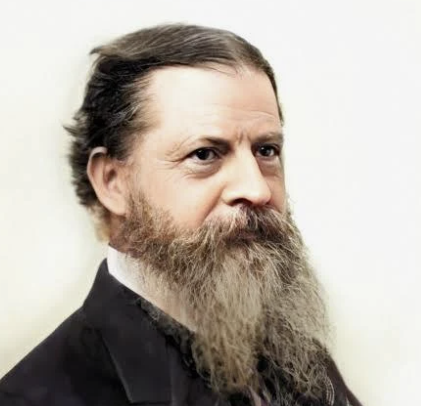
I have taken pains to make my distinction of icons, indices, and tokens clear, in order to enunciate this proposition: in a perfect system of logical notation signs of these several kinds must all be employed. Without tokens there would be no generality in the statements, for they are the only general signs; and generality is essential to reasoning. … But tokens alone do not state what is the subject of discourse ; and this can, in fact, not be described in general terms ; it can only be indicated. The actual world cannot be distinguished from a world of imagination by any description. Hence the need of pronoun and indices, and the more complicated the subject the greater the need of them.
4 months 3 weeks ago
One of the principal reasons that diverts those who are entering upon this knowledge so much from the true path which they should follow, is the fancy that they take at the outset that good things are inaccessible, giving them the name great, lofty, elevated, sublime. This destroys everything. I would call them low, common, familiar: these names suit it better; I hate such inflated expressions.
4 months 3 weeks ago
As a believing scientist it is my deep conviction that it is our task to search nature and the universe, as Galileo Galilei, the father of modern science, did, for the footprints of God.
▼
Source
, RAI Cultura, 2024
4 months 3 weeks ago
“For many, abstract thinking is toil; for me, on good days, it is feast and frenzy.” (XIV, 24) Abstract thinking a feast? The highest form of human existence? … “The feast implies: pride, exuberance, frivolity; mockery of all earnestness and respectability; a divine affirmation of oneself, out of animal plenitude and perfection—all obviously states to which the Christian may not honestly say Yes. The feast is paganism par excellence.” (WM, 916). For that reason, we might add that thinking never takes place in Christianity. That is to say, there is no Christian philosophy. There is no true philosophy that could be determined anywhere else than from within itself.
▼
Source
p. 5

4 months 3 weeks ago
We ought not to judge of men's merits by their qualifications, but by the use they make of them.
▼
Source
p. 556 (Wisdom)
4 months 3 weeks ago
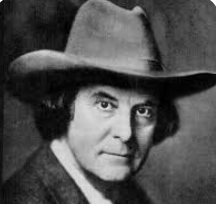
Never explain — your friends do not need it and your enemies will not believe you anyhow.
▼
Source
The Motto Book (1907)

4 months 3 weeks ago
In conditions of private property … “life-activity” stands in the service of property instead of property standing the service of free life-activity.
▼
Source
"The Foundations of Historical Materialism," Studies in Critical Philosophy (1972), p. 32
4 months 3 weeks ago
The development of the human mind has practically extinguished all feelings, except a few sporadic kinds, [like] sound, colors, smells, warmth, etc., which now appear to be disconnected and separate.
4 months 3 weeks ago
The universe of modern science, in its very 'meaninglessness', involves the gesture of 'traversing the fantasy', of abolishing the dark spot, the domain of the Unexplained which harbours fantasies and thus guarantees Meaning: instead, we get the meaningless mechanism. This is why, for Heidegger, modern science stands for metaphysical 'danger': it poses a threat to the universe of meaning. There is no meaning without some dark spot, without some forbidden/impenetrable domain into which we project fantasies which guarantee our horizon of meaning. Perhaps this very growing disenchantment with our actual social world accounts for the fascination exerted by cyberspace …
▼
Source
Slavoj Žižek, The Plague of Fantasies (London: Verso, 1997), p. 207
4 months 3 weeks ago
After so many great men have worked on this subject, I almost do not dare to say that I have discovered the universal principle upon which all these laws are based, a principle that covers both elastic and inelastic collisions and describes the motion and equilibrium of all material bodies.This is the principle of least action, a principle so wise and so worthy of the supreme Being, and intrinsic to all natural phenomena; one observes it at work not only in every change, but also in every constancy that Nature exhibits. In the collision of bodies, motion is distributed such that the quantity of action is as small as possible, given that the collision occurs. At equilibrium, the bodies are arranged such that, if they were to undergo a small movement, the quantity of action would be smallest.The laws of motion and equilibrium derived from this principle are exactly those observed in Nature. We may admire the applications of this principle in all phenomena: the movement of animals, the growth of plants, the revolutions of the planets, all are consequences of this principle. The spectacle of the universe seems all the more grand and beautiful and worthy of its Author, when one considers that it is all derived from a small number of laws laid down most wisely. Only thus can we gain a fitting idea of the power and wisdom of the supreme Being, not from some small part of creation for which we know neither the construction, usage, nor its relationship to other parts. What satisfaction for the human spirit in contemplating these laws of motion and equilibrium for all bodies in the universe, and in finding within them proof of the existence of Him who governs the universe!
4 months 3 weeks ago
Every spirit makes his own house, but as afterwards the house confines its spirit, you had better build well.
▼
Source
p. 16
4 months 3 weeks ago
The revolution, Stahl declared, is the ‘world-historic mark of our age.’ It would found ‘the entire State on the will of man instead of on the commandment and ordinance of God.’ p. 364
4 months 3 weeks ago
When the empirical investigator glories in his refusal to go beyond the specialized observation dictated by the traditions of his discipline, be they ever so inclusive, he is making a virtue out of a defense mechanism which insures him against questioning his presuppositions.
4 months 3 weeks ago
There never was a sounder logical maxim of scientific procedure than Ockham's razor: Entia non sunt multiplicanda praeter necessitatem. That is to say; before you try a complicated hypothesis, you should make quite sure that no simplification of it will explain the facts equally well. No matter if it takes fifty generations of arduous experimentation to explode the simpler hypothesis, and no matter how incredible it may seem that that simpler hypothesis should suffice, still fifty generations are nothing in the life of science, which has all time before it; and in the long run, say in some thousands of generations, time will be economized by proceeding in an orderly manner, and by making it an invariable rule to try the simpler hypothesis first. Indeed, one can never be sure that the simpler hypothesis is not the true one, after all, until its cause has been fought out to the bitter end. But you will mark the limitation of my approval of Ockham's razor. It is a sound maxim of scientific procedure. If the question be what one ought to believe, the logic of the situation must take other factors into account. Speaking strictly, belief is out of place in pure theoretical science, which has nothing nearer to it than the establishment of doctrines, and only the provisional establishment of them, at that. Compared with living belief it is nothing but a ghost. If the captain of a vessel on a lee shore in a terrific storm finds himself in a critical position in which he must instantly either put his wheel to port acting on one hypothesis, or put his wheel to starboard acting on the contrary hypothesis, and his vessel will infallibly be dashed to pieces if he decides the question wrongly, Ockham's razor is not worth the stout belief of any common seaman. For stout belief may happen to save the ship, while Entia non sunt multiplicanda praeter necessitatem would be only a stupid way of spelling Shipwreck. Now in matters of real practical concern we are all in something like the situation of that sea-captain.
▼
Source
Lecture II : The Universal Categories, §3. Laws: Nominalism, CP 5.60
4 months 3 weeks ago
We do not have and cannot have any means of discovering whether or not we are carried along in a uniform motion of translation.
▼
Source
L’état actuel et l’avenir de la physique mathematique (1904)
4 months 3 weeks ago
How close men, despite all their knowledge, usually live to madness? What is truth but to live for an idea? When all is said and done, everything is based on a postulate; but not until it no longer stands on the outside, not until one lives in it, does it cease to be a postulate. (Dialectic - Dispute)
▼
Source
Journals of Søren Kierkegaard 1A75, 1835
4 months 3 weeks ago
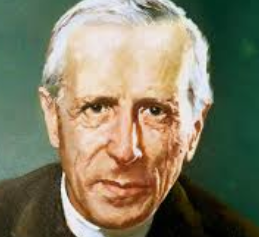
A glow ripples outward from the first spark of conscious reflection. The point of ignition grows larger. The fire spreads in ever widening circles till finally the whole planet is covered with incandescence. Only one interpretation, only one name can be found worthy of this grand phenomenon. Much more coherent and just as extensive as any preceding layer, it is really a new layer, the 'thinking layer', which, since its germination at the end of the period, has spread over and above the world of plants and animals. In other words, outside and above the biosphere there is the .
4 months 3 weeks ago
A pessimist is a man who has been compelled to live with an optimist.
4 months 3 weeks ago
Ascending modern rationalism, in its speculative as well as empirical form, shows a striking contrast between extreme critical radicalism in scientific and philosophic method on the one hand, and an uncritical quietism in the attitude toward established and functioning social institutions. Thus Descartes' ego cogitans was to leave the “great public bodies” untouched, and Hobbes held that “the present ought always to be preferred, maintained, and accounted best.” Kant agreed with Locke in justifying revolution if and when it has succeeded in organizing the whole and in preventing subversion. However, these accommodating concepts of Reason were always contradicted by the evident misery and injustice of the “great public bodies” and the effective, more or less conscious rebellion against them. Societal conditions existed which provoked and permitted real dissociation. from the established state of affairs; a private as well as political dimension was present in which dissociation could develop into effective opposition, testing its strength and the validity of its objectives. With the gradual closing of this dimension by the society, the self-limitation of thought assumes a larger significance. The interrelation between scientific-philosophical and societal processes, between theoretical and practical Reason, asserts itself "behind the back” of the scientists and philosophers. The society bars a whole type of oppositional operations and behavior; consequently, the concepts pertaining to them are rendered illusory or meaningless. Historical transcendence appears as metaphysical transcendence, not acceptable to science and scientific thought. The operational and behavioral point of view, practiced as a “habit of thought” at large, becomes the view of the established universe of discourse and action, needs and aspirations. The “cunning of Reason” works, as it so often did, in the interest of the powers that be. The insistence on operational and behavioral concepts turns against the efforts to free thought and behavior from the given reality and for the suppressed alternatives.
▼
Source
pp. 15-16
4 months 3 weeks ago
Peirce was a man of tremendous energy, producing a multitude of ideas, good, bad, and indifferent. He reminds on of a volcano spouting vast masses of rock, of which some, on examination, turn out to be nuggets of pure gold. He holds―and I confess that an examination of scientific inference has made me feel the force of this view―that man is adapted, by his congenital constitution, to the apprehension of natural laws which cannot be proved by experience, although experience is in conformity with them.
▼
Source
Bertrand Russell, Foreword to James K. Feibleman, An Introduction to Peirce's Philosophy (1946)
4 months 3 weeks ago
Behold... the only... rule we can follow: when a phenomenon appears... as the cause of another, we regard it as anterior. ...Therefore by cause... we define time; but...how do we recognize which is the cause and which the effect? We assume... the anterior fact, the antecedent, is the cause of the... consequent. It is then by time that we define cause. ...Shall we escape from this vicious circle?
4 months 3 weeks ago
But on the other hand, the understanding, reflection, is also a gift of God. What shall one do with it, how dispose of it if one is not to use it? And if one then uses it in fear and trembling not for one's own advantage but to serve the truth, if one uses it that way in fear and trembling and furthermore believing that it still is God who determines the issue in its eternal significance, venturing to trust in him, and with unconditional obedience yielding to what he makes use of it: is this not fear of God and serving God the way a person of reflection can, in the somewhat different way than the spontaneously immediate person, but perhaps more ardently. But if this is the case, does not a maieutic element enter into the relation to other man or to various other men. The maieutic is really only the expression for a superiority between man and man. That is exists cannot be denied-but existence presses far more powerfully upon the superior one precisely because he is a maieutic (because he has the responsibility) than upon the other. As far as I am concerned, there has been no lack of witnesses. All my upbuilding discourses are in fact in the form of direct communication. Consequently there can be a question only about this, something that has occupied me for a long time (already back in earlier journals): should I for one definitely explain myself as author, what I declare myself to be, how I from the beginning understood myself to be a religious author. But now is not the time to do it; I am also somewhat strained at the moment, I need more physical recreation.
▼
Source
JP VI 6234 (Pap. IX A 222 1848)
4 months 3 weeks ago
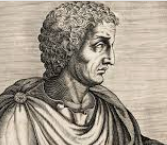
From the days of Father Bacchus to Alexander the Great, their kings are reckoned at 154, whose reigns extend over 6451 years and 3 months.
▼
Source
Pliny (VI. xxl.4-5), report about the Indians. quoted in K. D. Sethna, Ancient India in a New Light, 1990
4 months 3 weeks ago
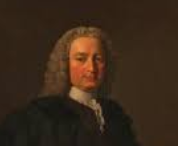
Wisdom denotes the pursuing of the best Ends by the best Means.
▼
Source
An Inquiry into the Original of our Ideas of Beauty and Virtue (1725), Treatise I, Sect. V
4 months 3 weeks ago
Institutionalized desublimation thus appears to be an aspect of the “conquest of transcendence” achieved by the one-dimensional society. Just as this society tends to reduce, and even absorb opposition (the qualitative difference!) in the realm of politics and higher culture, so it does in the instinctual sphere. The result is the atrophy of the mental organs for grasping the contradictions and the alternatives and, in the one remaining dimension of technological rationality, the Happy Consciousness comes to prevail.
▼
Source
p. 79
4 months 3 weeks ago
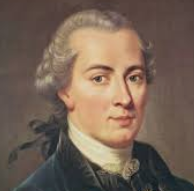
Now the maximum of perfection is called ideal, by Plato, Idea — for instance, his Idea of a Republic — and is the principle of all that is contained under the general notion of any perfection, inasmuch as the lesser grades are not thought determinable but by limiting the maximum. But God, the Ideal of perfection, and hence the principle of cognition, is also, as existing really, the principle of the creation of all perfection.
4 months 3 weeks ago
My hearers, this discourse has not wandered out into the world to look for conflict, it has not tried to get the better of anybody, it has not even tried to uphold anybody, as though there was battle without. It has spoken to you; not by way of explaining anything to you, but trying to speak secretly with you about your relationship to that secret wisdom mentioned in our text. Oh that nothing may upset you in respect to this, “neither life nor death nor things present nor things to come nor any other creature” (Romans 8:38) –not this discourse, which, though it may have profited you nothing, yet has striven for what after all is the first and the last, to help you have what the Scripture calls “faith in yourself before God” (Romans 14:22).
▼
Source
P. 173
4 months 3 weeks ago
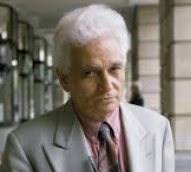
No text in the tradition seems as lucid concerning the way in which the political is becoming worldwide. concerning the irreducibility of the technical and the media in the current of the most thinking thought-and this goes beyond the railroad and the newspapers of the time whose powers were analyzed in such an incomparable way in the Manifesto. And few texts have shed so much light on law. international law. and nationalism.
▼
Source
Injunctions of Marx
4 months 3 weeks ago
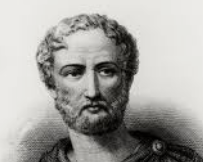
This expression of ours, "Father of a family."
▼
Source
Letter 19, 2.
4 months 3 weeks ago
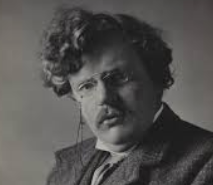
When people impute special vices to the Christian Church, they seem entirely to forget that the world (which is the only other thing there is) has these vices much more. The Church has been cruel; but the world has been much more cruel. The Church has plotted; but the world has plotted much more. The Church has been superstitious; but it has never been so superstitious as the world is when left to itself.
▼
Source
In The Illustrated London News (14 December 1907)
4 months 3 weeks ago
the society which projects and undertakes the technological transformation of nature alters the base of domination by gradually replacing personal dependence (of the slave on the master, the serf on the lord of the manor, the lord on the donor of the fief, etc.) with dependence on the “objective order of things” (on economic laws, the market etc.).
▼
Source
p. 144
4 months 3 weeks ago
All natural capacities of a creature are destined to evolve completely to their natural end.
▼
Source
First Thesis | Variant translations: | All natural capacities of a creature are destined sooner or later to be developed completely and in conformity with their end. | All natural capacities of a creature are destined to develop themselves completely and
4 months 3 weeks ago
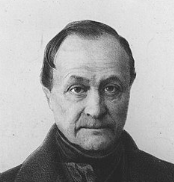
Reorganisation, irrespectively of God or king, by the worship of Humanity, systematically adopted. Man’s only right is to do his duty. The Intellect should always be the servant of the Heart, and should never be its slave.
▼
Source
Title Page
4 months 3 weeks ago
The two guides call out to a man early and late. And yet, no, for when remorse calls to a man it is always late. The call to find the way again by seeking out God in the confession of sins is always at the eleventh hour. Whether you are young or old, whether you have sinned much or little, whether you have offended much or neglected much, the guilt makes this call come at the eleventh hour. The inner agitation of the heart understands what remorse insists upon, that the eleventh hour has come. For in the sense of time, the old man's age is the eleventh hour; and the instant of death, the final moment in the eleventh hour. The indolent youth speaks of a long life that lies before him. The indolent old man hopes that his death is still a long way off. But repentance and remorse belong to the eternal in a man.
▼
Source
Søren Kierkegaard, Purity of Heart is to Will One Thing, 1847 p. 40-41
4 months 3 weeks ago
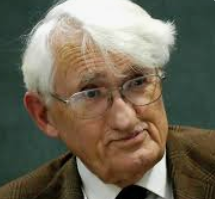
I would in fact tend to have more confidence in the outcome of a democratic decision if there was a minority that voted against it, than if it was unanimous… Social psychology has amply shown the strength of this bandwagon effect.
▼
Source
Habermas (1993) "Further reflections on the public sphere", in: Craig Calhoun Eds. Habermas and the Public Sphere. MIT Press. p. 441
4 months 3 weeks ago
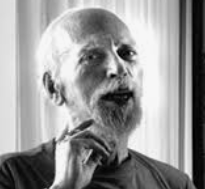
There is no governor anywhere; you are all absolutely free. There is no restraint that cannot be escaped. We are all absolutely free. If everybody could go into dhyana at will, nobody could be controlled — by fear of prison, by fear of whips or electroshock, by fear of death, even. All existing society is based on keeping those fears alive, to control the masses. Ten people who know would be more dangerous than a million armed anarchists.
▼
Source
Hugh Crane a.k.a. Cagliostro the Great, in Schrödinger's Cat Trilogy : The Trick Top Hat (1979)
4 months 3 weeks ago
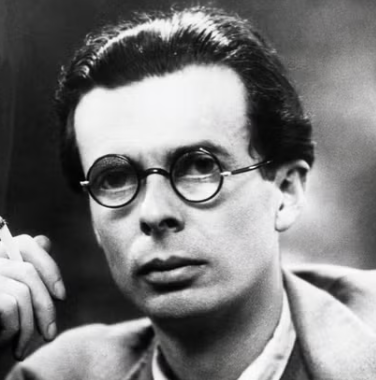
To his dog, every man is Napoleon; hence the constant popularity of dogs.
▼
Source
Reader's Digest (1934)
4 months 3 weeks ago
A puritan is a person who pours righteous indignation into the wrong things.
▼
Source
Interview, quoted in The New York Times (21 November 1930)
4 months 3 weeks ago
I have therefore found it necessary to deny knowledge in order to make room for faith.
4 months 3 weeks ago
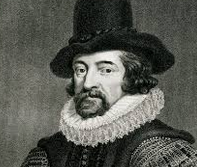
Some books are to be tasted, others to be swallowed, and some few to be chewed and digested; that is, some books are to be read only in parts; others to be read, but not curiously; and some few to be read wholly, and with diligence and attention.
▼
Source
Of Studies
4 months 3 weeks ago
This fact, that the opposite of sin is by no means virtue, has been overlooked. The latter is partly a pagan view, which is content with a merely human standard, and which for that very reason does not know what sin is, that all sin is before God. No, the opposite of sin is faith.
▼
Source
pp. 114 - 115
CivilSimian.com created by AxiomaticPanic, CivilSimian, Kalokagathia