
4 months 3 weeks ago
My mission is to suffer for all those who suffer without knowing it. I must pay for them, expiate their unconsciousness, their luck to be ignorant of how unhappy they are.
4 months 3 weeks ago
We are delighted to find a person who values us as we value ourselves, and distinguishes us from the rest of mankind, with an attention not unlike that with which we distinguish ourselves.
▼
Source
Section III, Chap. I.
4 months 3 weeks ago
A standing army, for instance, is incompatible with freedom; because subordination and rigour are the very sinews of military discipline; and despotism is necessary to give vigour to enterprise that one will directs. A spirit inspired by romantic notions of honour, a kind of morality founded on the fashion of the age, can only be felt by a few officers, whilst the main body must be moved by command, like the waves of the sea; for the strong wind of authority pushes the crowd of subalterns forward, they scarcely know or care why, with headlong fury.
▼
Source
Ch. 1
4 months 3 weeks ago
Men whose research is based on shared paradigms are committed to the same rules and standards for scientific practice. That commitment and the apparent consensus it produces are prerequisites for normal science, i.e., for the genesis and continuation of a particular research tradition.
▼
Source
p. 11 (2012 ed.)
4 months 3 weeks ago
What I liked was Thatcherism's Bolshevik aspect, which was to shake up the whole of Britain quite fundamentally, and if you read what I wrote in those years I think you might agree that in taking the view that I did then — that this was necessary and desirable — I never subscribed to the main delusion of the Thatcherites, which was that you could change everything and everything would remain the same. If what you wanted was a very anarchic, globalised, polyglot, mixed-up society in which most of the structures which had somehow been renewed from the Edwardian period to the Sixties were destroyed, then Thatcherism was what would do the job.
▼
Source
Quoted in Will Self, "John Gray: Forget everything you know," The Independent (2002-09-03)
4 months 3 weeks ago
The hero of my tale, whom I love with all the power of my soul, whom I have tried to portray in all his beauty, who has been, is, and will be beautiful, is Truth.
▼
Source
Sevastopol in May (1855), Ch. 16
4 months 3 weeks ago
When comparing human memory and computer memory it is clear that the human version has two distinct disadvantages. Firstly, as indeed I have experienced myself, due to aging, human memory can exhibit very poor short term recall.
▼
Source
in Hendricks, V: “500CC Computer Citations”, King’s College Publications, London,2005.
4 months 3 weeks ago
For it is owing to their wonder that men both now begin and at first began to philosophize; they wondered originally at the obvious difficulties, then advanced little by little and stated difficulties about the greater matters, e.g. about the phenomena of the moon and those of the sun and of the stars, and about the genesis of the universe. And a man who is puzzled and wonders thinks himself ignorant (whence even the lover of myth is in a sense a lover of Wisdom, for the myth is composed of wonders); therefore since they philosophized order to escape from ignorance, evidently they were pursuing science in order to know, and not for any utilitarian end.
▼
Source
Variant: [And] one who experiences a difficulty and who feels wonder thinks that he does not understand..., so that, if it is to escape ignorance that they have practised philosophy, then it is clearly for the sake of knowing, and not for any practical pu
4 months 3 weeks ago
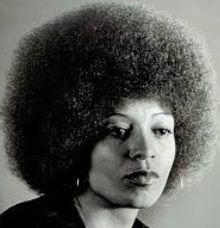
“Woman” was the test, but not every woman seemed to qualify. Black women, of course, were virtually invisible within the protracted campaign for woman suffrage. As for white working-class women, the suffrage leaders were probably impressed at first by the organizing efforts and militancy of their working-class sisters. But as it turned out, the working women themselves did not enthusiastically embrace the cause of woman suffrage.
4 months 3 weeks ago
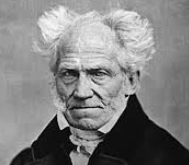
If children were brought into the world by an act of pure reason alone, would the human race continue to exist? Would not a man rather have so much sympathy with the coming generation as to spare it the burden of existence?
▼
Source
"On the Sufferings of the World"
4 months 3 weeks ago
We must live, you used to say, as if we were never going to die. — Didn't you know that's how everyone lives, including those obsessed with Death?
4 months 3 weeks ago
As soon as the land of any country has all become private property, the landlords, like all other men, love to reap where they never sowed, and demand a rent even for its natural produce.
▼
Source
Chapter VI, p. 60.
4 months 3 weeks ago
I never saw that great woman, Mary Wollstonecraft, but I l have read her eloquent and unanswerable arguments in behalf of the liberty of womankind. I have met and known most of the progressive women who came after her...a long galaxy of great women...There have been others also just as true and devoted to the cause — I wish I could name every one — but with such women consecrating their lives, failure is impossible!
▼
Source
Susan B. Anthony [https://speakingwhilefemale.co/womans-vote-anthony7/ speech] February 15, 1906 — 38th Annual Convention, National American Woman Suffrage Association, Baltimore MD
4 months 3 weeks ago
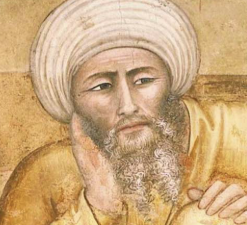
The double meaning has been given to suit people's diverse intelligence. The apparent contradictions are meant to stimulate the learned to deeper study.
▼
Source
Ch 2
4 months 3 weeks ago
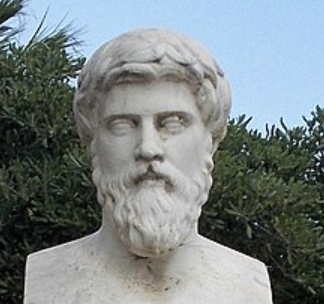
Being about to pitch his camp in a likely place, and hearing there was no hay to be had for the cattle, "What a life," said he, "is ours, since we must live according to the convenience of asses!"
▼
Source
37 Philip
4 months 3 weeks ago
It is because human needs are contradictory that no human life can be perfect. That does not mean that human life is imperfect. It means that the idea of perfection has no meaning.
▼
Source
'Modus Vivendi' (p.29)
4 months 3 weeks ago
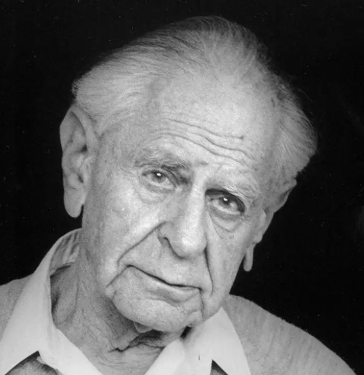
A principle of induction would be a statement with the help of which we could put inductive inferences into a logically acceptable form. In the eyes of the upholders of inductive logic, a principle of induction is of supreme importance for scientific method: "... this principle", says Reichenbach, "determines the truth of scientific theories. To eliminate it from science would mean nothing less than to deprive science of the power to decide the truth or falsity of its theories. Without it, clearly, science would no longer have the right to distinguish its theories from the fanciful and arbitrary creations of the poet's mind."Now this principle of induction cannot be a purely logical truth like a tautology or an analytic statement. Indeed, if there were such a thing as a purely logical principle of induction, there would be no problem of induction; for in this case, all inductive inferences would have to be regarded as purely logical or tautological transformations, just like inferences in inductive logic. Thus the principle of induction must be a synthetic statement; that is, a statement whose negation is not self-contradictory but logically possible. So the question arises why such a principle should be accepted at all, and how we can justify its acceptance on rational grounds.
▼
Source
Ch. 1 "A Survey of Some Fundamental Problems", Section 1: The Problem of Induction, pp. 4–5.
4 months 3 weeks ago
I longed for activity, instead of an even flow of existence. I wanted excitement and danger and the chance to renounce self for the sake of my love. I was conscious of a superabundance of energy which found no outlet in our quiet life. I had bouts of depression, which I tried to hide, as something to be ashamed of...My mind, even my senses were occupied, but there was another feeling – the feeling of youth and a craving for activity – which found no scope in our quiet life...So time went by, the snow piled higher and higher round the house, and there we remained together, always and for ever alone and just the same in each other's eyes; while somewhere far away amidst glitter and noise multitudes of people thrilled, suffered and rejoiced, without one thought of us and our existence which was ebbing away. Worst of all, I felt that every day that passed riveted another link to the chain of habit which was binding our life into a fixed shape, that our emotions, ceasing to be spontaneous, were being subordinated to the even, passionless flow of time... 'It's all very well ... ' I thought, 'it's all very well to do good and lead upright lives, as he says, but we'll have plenty of time for that later, and there are other things for which the time is now or never.' I wanted, not what I had got, but a life of challenge; I wanted feeling to guide us in life, and not life to guide us in feeling.
4 months 3 weeks ago
Men must always have distinguished (e.g. in judicial matters) between hearsay and seeing with one’s own eyes and have preferred what one has seen to what he has merely heard from others. But the use of this distinction was originally limited to particular or subordinate matters. As regards the most weighty matters—the first things and the right way—the only source of knowledge was hearsay.
▼
Source
p. 86
4 months 3 weeks ago
.... In a word, acts of any kind produce habits or characters of the same kind. Hence we ought to make sure that our acts are of a certain kind; for the resulting character varies as they vary. It makes no small difference, therefore, whether a man be trained in his youth up in this way or that, but a great difference, or rather all the difference.
▼
Source
Book II, 1103b
4 months 3 weeks ago
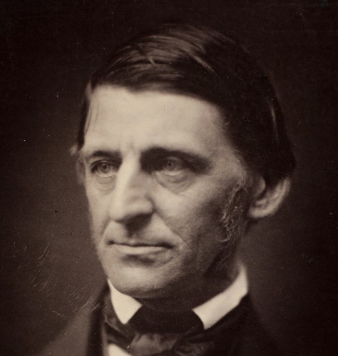
Literature is the effort of man to indemnify himself for the wrongs of his condition.
▼
Source
"Walter Savage Landor", from The Dial, xii (1841)
4 months 3 weeks ago
Critiques of the prison industrial complex undertaken by abolitionist activists and scholars are very much linked to critiques of the global persistence of racism. Antiracist and other social justice movements are incomplete with attention to the politics of imprisonment.
▼
Source
Chapter Five
4 months 3 weeks ago
The law of simplicity and naïveté applies to all fine art, for it is compatible with what is most sublime. True brevity of expression consists in a man only saying what is worth saying, while avoiding all diffuse explanations of things which every one can think out for himself; that is, it consists in his correctly distinguishing between what is necessary and what is superfluous. On the other hand, one should never sacrifice clearness, to say nothing of grammar, for the sake of being brief. To impoverish the expression of a thought, or to obscure or spoil the meaning of a period for the sake of using fewer words shows a lamentable want of judgment.
4 months 3 weeks ago
What is not heartrending is superfluous, at least in music.
4 months 3 weeks ago
His capital is continually going from him in one shape, and returning to him in another, and it is only by means of such circulation, or successive exchanges, that it can yield him any profit. Such capitals, therefore, may very properly be called circulating capitals.
▼
Source
Chapter I, p. 305.
4 months 3 weeks ago
This morning I thought, hence lost my bearings, for a good quarter of an hour.
4 months 3 weeks ago
All for ourselves, and nothing for other people, seems, in every age of the world, to have been the vile maxim of the masters of mankind.
▼
Source
Chapter IV, p. 448.
4 months 3 weeks ago
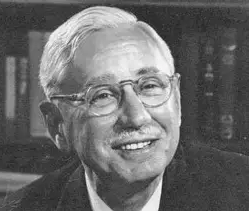
Perhaps the cause of our contemporary pessimism is our tendency to view history as a turbulent stream of conflicts — between individuals in economic life, between groups in politics, between creeds in religion, between states in war. This is the more dramatic side of history; it captures the eye of the historian and the interest of the reader. But if we turn from that Mississippi of strife, hot with hate and dark with blood, to look upon the banks of the stream, we find quieter but more inspiring scenes: women rearing children, men building homes, peasants drawing food from the soil, artisans making the conveniences of life, statesmen sometimes organizing peace instead of war, teachers forming savages into citizens, musicians taming our hearts with harmony and rhythm, scientists patiently accumulating knowledge, philosophers groping for truth, saints suggesting the wisdom of love. History has been too often a picture of the bloody stream. The history of civilization is a record of what happened on the banks.
▼
Source
As quoted in "The Gentle Philosopher" (2006) by John Little at Will Durant Foundation
4 months 3 weeks ago
And when the physician said, "Sir, you are an old man," "That happens," replied Pausanias, "because you never were my doctor."
▼
Source
Of Pausanias the Son of Phistoanax
4 months 3 weeks ago
Many people today hold to a Gnostic view of things without realizing the fact. Believing that human beings can be fully understood in the terms of scientific materialism, they reject any idea of free will. But they cannot give up hope of being masters of their destiny. So they have come to believe that science will somehow enable the human mind to escape the limitations that shape its natural condition. Throughout much of the world, and particularly in western countries, the Gnostic faith that knowledge can give humans a freedom no other creature can possess has become the predominant religion.
▼
Source
The Faith of Puppets: The Freedom of the Marionette (p. 9)
4 months 3 weeks ago
Is the ordinary person incompetent? No judgment is more decisive for one's political philosophy. It was perhaps the single most important difference in judgment between Plato and Aristotle.
▼
Source
Robert A. Dahl, After the Revolution? (1970; 1990), p. 26
4 months 3 weeks ago
Always remember that it is impossible to speak in such a way that you cannot be misunderstood: there will always be some who misunderstand you.
4 months 3 weeks ago
One can insult an honest man or an honest woman, but to tell a thief that he is a thief is merely la constation d'un fait [The establishing of a fact.]
▼
Source
Pt. IV, ch. 4
4 months 3 weeks ago
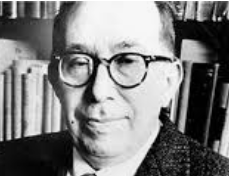
In 1938 Strauss moved to the United States, where after the war he occupied a chair at Chicago in the same period that Oakeshott was at the LSE. There he produced the remarkable series of works – in form, an oracular retrospect of the history of philosophy from Socrates to Nietzsche, in effect, a systematic political doctrine – which has since nurtured the most distinctive and strong-minded school of American conservatism. There were two principal themes in this oeuvre. A just political order must be grounded in immutable demands of natural right. Nature, however, is inherently unequal. The capacity to discover truth is restricted to a few, and to endure it exhibited by scarcely more. The best regime will therefore reflect differences in human excellence, and be led by an appropriate élite. But although the highest virtue is philosophical contemplation of the truth, this does not mean – contrary to a superficial reading of the Republic – that the just city will be ruled by philosophers. For philosophy gazes without faltering, not only at the necessary conditions of political order, discomfiting as these may be to demotic prejudice, but at the far more terrible realities of cosmic disorder: the absence of any divine authority, the delusion of any common morality, the transience of the earth and its species – every insight that religion must deny and society cannot survive. Unfolded at large, these truths would destroy the protective atmosphere of any civilisation and with it the conditions for the pursuit of philosophy itself. Esoteric wisdom and exoteric opinion must therefore remain distinct, on pain of mutual destruction. Leisured gentlemen instructed in rule – but not raised to truth – by philosophers should uphold a rational order of political stability against levelling temptations. Under their rule, theoretical knowledge could find institutional shelter, without dangerous side-effects on civic practice.
▼
Source
Perry Anderson, "The Intransigent Right: Michael Oakeshott, Leo Strauss, Carl Schmitt, Friedrich von Hayek" (1992)
4 months 3 weeks ago
I trust a good deal to common fame, as we all must. If a man has good corn, or wood, or boards, or pigs, to sell, or can make better chairs or knives, crucibles or church organs, than anybody else, you will find a broad hard-beaten road to his house, though it be in the woods.
▼
Source
February 1855
4 months 3 weeks ago
I learned a lot from the black arts movement. I loved reading black feminist thinkers on my own (outside of academia)—Audre Lorde, Barbara Smith, Angela Davis, June Jordan, bell hooks, etc.
▼
Source
Marilyn Chin [https://asianreviewofbooks.com/content/marilyn-chin-talks-to-jennifer-wong/ Interview] with Asian Review of Books (2020)
4 months 3 weeks ago
Is it conceivable to adhere to a religion founded by someone else?
4 months 3 weeks ago
The natural effort of every individual to better his own condition, when suffered to exert itself with freedom and security is so powerful a principle that it is alone, and without any assistance, not only capable of carrying on the society to wealth and prosperity, but of surmounting a hundred impertinent obstructions with which the folly of human laws too often incumbers its operations; though the effect of these obstructions is always more or less either to encroach upon its freedom, or to diminish its security.
▼
Source
Chapter V, paragraph 82.
4 months 3 weeks ago
Allow me, Gentlemen, to pose this question in a more serious manner. Do I need to tell you that it is not a question at first of the natural, physiological, ethnographic difference that exists between individuals, but of the social difference, that is produced by the economic organization of society? Give to all the children, from their birth, the same means of maintenance, education, and instruction; give then to all the men thus raised the same social milieu, the same means of earning their living by their own labor, and you will see then that many of these differences, that we believe to be natural differences, will disappear because they are nothing but the effect of an unequal division of the conditions of intellectual and physical development — of the conditions of life.
4 months 3 weeks ago
There is no greater drama in human record than the sight of a few Christians, scorned or oppressed by a succession of emperors, bearing all trials with a fierce tenacity, multiplying quietly, building order while their enemies generated chaos, fighting the sword with the word, brutality with hope, and at last defeating the strongest state that history has known. Caesar and Christ had met in the arena, and Christ had won.
▼
Source
Chapter 30, part 1, p. 652
4 months 3 weeks ago
A hymn is the praise of God with song; a song is the exultation of the mind dwelling on eternal things, bursting forth in the voice.
▼
Source
[http://dhspriory.org/thomas/english/PsalmsAquinas/ThoPs0.htm Commentary on the Psalms] (c. 1273), Introduction

4 months 3 weeks ago
The Pythagoreans made kindness to beasts a training in humanity and pity.
▼
Source
3, 20, 7
4 months 3 weeks ago
When we enter a new situation in life and are confronted by a new person, we bring with us the prejudices of the past and our previous experiences of people. These prejudices we project upon the new person. Indeed, getting to know a person is largely a matter of withdrawing projections; of dispelling the smoke screen of what we imagine he is like and replacing it with the reality of what he is actually like.
▼
Source
Anthony Storr as quoted in The Observer (12 July 1970)
4 months 3 weeks ago
If there may be doubts for men and for a childless woman as to the way to, fulfil the will of God, for a mother that path is firmly and clearly defined, and if she fulfils it humbly with a simple heart she stands on the highest point of perfection a human being can attain, and becomes for all a model of that complete performance of God's will which all desire. Only a mother can before her death tranquilly say to Him who sent her into this world, and Whom she has served by bearing and bringing up children whom she has loved more than herself - only she having served Him in the way appointed to her can say with tranquillity, Now lettest Thou Thy servant depart in peace. And that is the highest perfection to which, as to the highest good, men aspire.
4 months 3 weeks ago
In the social body as in every organized body — that is, one in which the parts are arranged in certain relationships to each other relative to a given end — the cessation of vital functions does not come from the annihilation of their parts, but from their displacement and the disturbances of their relationships.
4 months 3 weeks ago
What would we really know the meaning of? The meal in the firkin; the milk in the pan; the ballad in the street; the news of the boat; the glance of the eye; the form and the gait of the body; — show me the ultimate reason of these matters; show me the sublime presence of the highest spiritual cause lurking, as always it does lurk, in these suburbs and extremities of nature; let me see every trifle bristling with the polarity that ranges it instantly on an eternal law; and the shop, the plough, and the ledger, referred to the like cause by which light undulates and poets sing; — and the world lies no longer a dull miscellany and lumber-room, but has form and order; there is no trifle; there is no puzzle; but one design unites and animates the farthest pinnacle and the lowest trench.
▼
Source
par. 40
4 months 3 weeks ago
Philosophy is not a matter of knowledge; it is a matter of understanding, that is to say, of organizing what is known.
▼
Source
[https://books.google.com/books/about/What_I_Believe.html?id=bQnZcFiCz8QC&pg=PA14 What I Believe] (2006), p. 14
4 months 3 weeks ago
Political thought and political instinct prove themselves theoretically and practically in the ability to distinguish friend and enemy. The high points of politics are simultaneously the moments in which the enemy is, in concrete clarity, recognized as the enemy.
4 months 3 weeks ago
Every tax, however, is to the person who pays it a badge, not of slavery but of liberty. It denotes that he is a subject to government, indeed, but that, as he has some property, he cannot himself be the property of a master.
▼
Source
Chapter II, Part II, p. 927.
4 months 3 weeks ago
Some communities will be abandoned, others will struggle along, others will split, others will flourish, gain members, and be duplicated elsewhere. Each community must win and hold the voluntary adherence of its members. No pattern is imposed on everyone, and the result will be one pattern if and only if everyone voluntarily chooses to live in accordance with that pattern of community.
▼
Source
Ch. 10 : A Framework for Utopia; Design Devices and Filter Devices, p. 316
CivilSimian.com created by AxiomaticPanic, CivilSimian, Kalokagathia