
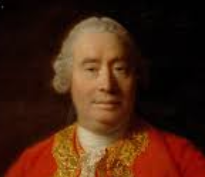
4 months 3 weeks ago
The same good sense, that directs men in the ordinary occurrences of life, is not hearkened to in religious matters, which are supposed to be placed altogether above the cognizance of human reason.
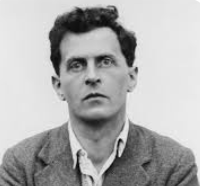
4 months 3 weeks ago
For a truly religious man nothing is tragic.
▼
Source
Conversation of 1930

4 months 3 weeks ago
Take any work on astronomy of the last century, or the beginning of ours. You will no longer find in it, it goes without saying, our tiny planet placed in the center of the universe. But you will meet at every step the idea of a central luminary — the sun — which by its powerful attraction governs our planetary world. From this central body radiates a force guiding the course of the planets, and maintaining the harmony of the system. Issued from a central agglomeration, planets have, so to say, budded from it; they owe their birth to this agglomeration; they owe everything to the radiant star that represents it still: the rhythm of their movements, their orbits set at wisely regulated distances, the life that animates them and adorns their surfaces. And when any perturbation disturbs their course and makes them deviate from their orbits, the central body re-establishes order in the system; it assures and perpetuates its existence.This conception, however, is also disappearing as the other one did. After having fixed all their attention on the sun and the large planets, astronomers are beginning to study now the infinitely small ones that people the universe. And they discover that the interplanetary and interstellar spaces are peopled and crossed in all imaginable directions by little swarms of matter, invisible, infinitely small when taken separately, but all-powerful in their numbers.

4 months 3 weeks ago
Solon gave the following advice: "Consider your honour, as a gentleman, of more weight than an oath. Never tell a lie. Pay attention to matters of importance."
▼
Source
Solon, 12.

4 months 3 weeks ago
[Maistre] fulminated as a littérateur, even as a grammarian, and his frenzies not only failed to diminish his passion for the correct and elegant formulation but augmented it even more. An epileptic temperament infatuated with the trifles of the Word: trances and boutades, convulsions and bagatelles, grace and a foaming mouth – everything combined to compose a pamphleteering universe at whose heart he harried ‘error’ with blows of invective, those ultimatums of impotence.
▼
Source
Emil Cioran, "Joseph de Maistre: An Essay on Reactionary Thought" in Anathemas and Admirations (1987), p. 70
4 months 3 weeks ago
I freely admit that the remembrance of David Hume was the very thing that many years ago first interrupted my dogmatic slumber and gave a completely different direction to my researches in the field of speculative philosophy.
▼
Source
Immanuel Kant, Prolegomena to Any Future Metaphysics (1783), Preface
4 months 3 weeks ago
The State is only one of the forms assumed by society in the course of history. Why then make no distinction between what is permanent and what is accidental?
▼
Source
I
4 months 3 weeks ago
There is a written and an unwritten law. The one by which we regulate our constitutions in our cities is the written law; that which arises from customs is the unwritten law.
▼
Source
Plato, 51.
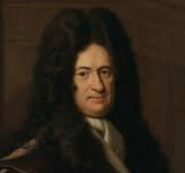
4 months 3 weeks ago
To love is to be delighted by the happiness of someone, or to experience pleasure upon the happiness of another. I define this as true love.
▼
Source
The Elements of True Piety (c. 1677), [http://books.google.com/books?id=oFoCY3xJ8nkC&dq The Shorter Leibniz Texts (2006)] edited by Lloyd H. Strickland, p. 189
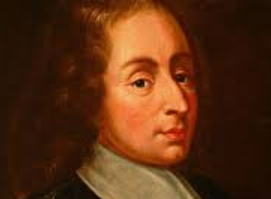
4 months 3 weeks ago
If it is pleasing to observe in nature her desire to paint God in all his works, in which we see some traces of him because they are his images, how much more just is it to consider in the productions of minds the efforts which they make to imitate the essential truth, even in shunning it, and to remark wherein they attain it and wherein they wander from it, as I have endeavored to do in this study.
4 months 3 weeks ago
Copernicus never discusses matters of religion or faith, nor does he use argument that depend in any way upon the authority of sacred writings which he might have interpreted erroneously. ... He did not ignore the Bible, but he knew very well that if his doctrine were proved, then it could not contradict the Scriptures when they were rightly understood.
4 months 3 weeks ago
While science devotes its chief attention to industrial pursuits, a limited number of lovers of nature and a legion of workers... unknown to posterity have created of late a quite new agriculture, as superior to modern farming, as farming is superior to the old three fields system of our ancestors. Science seldom guided them, and sometimes misguided... they proceeded in the empirical way; but... they have opened a new field of experimental research for the physiology of plants. They have created a totally new agriculture. They smile when we boast about the rotation system having permitted us to take from the field one crop every year, or four crops every three years, because their ambition is to have 6 and 9 crops from the very same plot of land during the twelve months. They do not understand our talk about good and bad soils because they make the soils themselves, and make it in such quantities as to be compelled yearly to sell some of it: otherwise it would raise up the level of their gardens by half an inch every year. They aim at cropping not 5 or 6 tons of grass on the acre, as we do, but from 50 to 100 tons of various vegetables on the same space; not £5 worth of hay but £100 worth of vegetables, of the plainest description, cabbage and carrots, and more than £200 worth under intensive horticultural treatments. This is where agriculture is going now.
4 months 3 weeks ago
When asked what he would take to let a man give him a blow on the head, he said, "A helmet."
▼
Source
Diogenes, 6.

4 months 3 weeks ago
The human body is a machine which winds its own springs.
4 months 3 weeks ago
It is terrible to see how a single unclear idea, a single formula without meaning, lurking in a young man’s head, will sometimes act like an obstruction … in an artery, hindering the nutrition of the brain, and condemning its victim to pine away in the fullness of his intellectual vigor and in the midst of intellectual plenty.
▼
Source
"How to make our ideas clear,” Popular Science Monthly, Vol. 12 (January 1878)
4 months 3 weeks ago
As to the objection that these rules are common in the world, that it is necessary to define every thing and to prove every thing, and that logicians themselves have placed them among their art, I would that the thing were true and that it were so well known... But so little is this the case, that, geometricians alone excepted, who are so few in number that they are a single in a whole nation and long periods of time, we see no others that know it.
4 months 3 weeks ago
I esteem myself happy to have as great an ally as you in my search for truth. I will read your work … all the more willingly because I have for many years been a partisan of the Copernican view because it reveals to me the causes of many natural phenomena that are entirely incomprehensible in the light of the generally accepted hypothesis. To refute the latter I have collected many proofs, but I do not publish them, because I am deterred by the fate of our teacher Copernicus who, although he had won immortal fame with a few, was ridiculed and condemned by countless people (for very great is the number of the stupid).
▼
Source
Letter to Johannes Kepler (1596), as quoted in The Story of Civilization : The Age of Reason Begins, 1558-1648 (1935) by Will Durant, p. 603

4 months 3 weeks ago
Der Tod ist die Möglichkeit der schlechthinnigen Daseinsunmöglichkeit.
▼
Source
Death is the possibility of the absolute impossibility of Dasein. | Macquarrie & Robinson translation
4 months 3 weeks ago
The Preservationist holds that, to save others from suffering truly serious losses, like the loss of life or limb, often it's wrong to lie, and to cheat, and to steal, even though nobody will ever suffer much from your doing any of that. By contrast, the Liberationist holds that, when necessary to lessen serious suffering, then, provided nobody suffers seriously in consequence of your so doing, it's always morally good to do all those unruly things and more.
▼
Source
p. 13
4 months 3 weeks ago
Just step aside for me to enjoy the sunshine.
▼
Source
Actually said by his namesake Diogenes of Sinope, when asked by Alexander the Great if there was anything he wanted. | Plutarch, Parallel Lives, "Alexander", ch. 14, section 4.
4 months 3 weeks ago
The last chapter... bears the title, " Narratives which prove that all Ideas are derived from the Senses." ...Everywhere the consequence is drawn that only the education he receives through the senses makes man man, and gives him what we call the soul, while no development of the mind from within outwards ever takes place.
4 months 3 weeks ago
What distinct meaning can attach to saying that an idea in the past in any way affects an idea in the future, from which it is completely detached?
4 months 3 weeks ago
I see the situation of man in the world of planetary technicity not as an inexitricable and inescapable destiny, but I see the task of thought precisely in this, that within its own limits it helps man as such achieve a satisfactory relationship to the essence of technicity. National Socialism did indeed go in this direction. Those people, however, were far too poorly equipped for thought to arrive at a really explicit relationship to what is happening today and has been underway for the past 300 years.
▼
Source
As translated by William Richardson in Risk and Meaning, Nicolas Bouleau (translated by Dené Oglesby and Martin Crossley), ed. Springer, 2011 , page 102.
4 months 3 weeks ago
The refraction of light agrees with the grand principle that Nature always uses the simplest means to accomplish its effects. From this principle, can be derived whenever light passes from one medium to another, the ratio of the sine of the angle of refraction to the sine of the angle of refraction equals the inverse ratio of the speeds at which light moves in each medium.But this "budget", this expense of action that Nature minimizes in the refraction of light, is it also minimized in the direct propagation and reflection of light? Yes, it always has the smallest possible value.
4 months 3 weeks ago
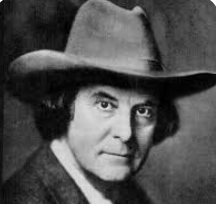
I AM an Anarchist. All good men are Anarchists. All cultured, kindly men; all gentlemen; all just men are Anarchists. Jesus was an Anarchist. A Monarchist is one who believes a monarch should govern. A Plutocrat believes in the rule of the rich. A Democrat holds that the majority should dictate. An Aristocrat thinks only the wise should decide; while an Anarchist does not believe in government at all. Richard Croker is a Monarchist; Mark Hanna a Plutocrat; Cleveland a Democrat; Cabot Lodge an Aristocrat; William Penn, Henry D. Thoreau, Bronson Alcott and Walt Whitman were Anarchists. An Anarchist is one who minds his own business. An Anarchist does not believe in sending warships across wide oceans to kill brown men, and lay waste rice fields, and burn the homes of people who are fighting for liberty. An Anarchist does not drive women with babes at their breasts and other women with babes unborn, children and old men into the jungle to be devoured by beasts or fever or fear, or die of hunger, homeless, unhouseled and undone. Destruction, violence, ravages, murder, are perpetrated by statute law.

4 months 3 weeks ago
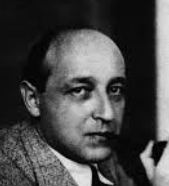
The will is a unity of two different aspects or moments: first, the individual’s ability to abstract from every specific condition and, by negating it, to return to the absolute liberty of the pure ego; secondly, the individual’s act of freely adopting a concrete condition, freely affirming his existence as a particular, limited ego. P. 185
4 months 3 weeks ago
A modern theory of knowledge which takes account of the relational as distinct from the merely relative character of all historical knowledge must start with the assumption that there are spheres of thought in which it is impossible to conceive of absolute truth existing independently of the values and position of the subject and unrelated to the social context. Even a god could not formulate a proposition on historical subjects like 2 x 2 = 4, for what is intelligible in history can be formulated only with reference to problems and conceptual constructions which themselves arise in the flux of historical experience.
4 months 3 weeks ago
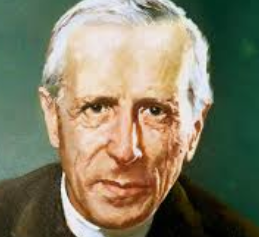
Were the ends of a person already explicit, there would be no room for development, for growth, for life; and consequently there would be no personality. The mere carrying out of predetermined purposes is mechanical. This remark has an application to the philosophy of religion. It is that genuine evolutionary philosophy, that is, one that makes the principle of growth a primordial element of the universe, is so far from being antagonistic to the idea of a personal creator, that it is really inseparable from that idea; while a necessitarian religion is in an altogether false position and is destined to become disintegrated. But a pseudo-evolutionism which enthrones mechanical law above the principle of growth is at once scientifically unsatisfactory, as giving no possible hint of how the universe has come about, and hostile to all hopes of personal relations to God.
4 months 3 weeks ago
If THIS book is to be properly understood, it must be read not as a work on metaphysics, still less as a... theological essay, but purely and simply as a scientific treatise.
4 months 3 weeks ago
I have no perfect panacea for human ills. And even if I had I would not attempt to present a system of philosophy between the soup and fish, but this much I will say: The distinctively modern custom of marital bundling is the doom of chivalry and death of passion. It wears all tender sentiment to a napless warp, and no wonder is it that the novelist, without he has a seared and bitter heart, hesitates to follow the couple beyond the church door. There is no greater reproach to our civilization than the sight of men joking the boy whose heart is pierced by the first rays of a life-giving sun, or of our expecting a girl to blush because she is twice God's child today she was yesterday.
▼
Source
p. 57
4 months 3 weeks ago
The category “society” itself expressed the acute conflict between the social and political sphere—society as antagonistic to the state. Similarly, “individual,” “class,” “private,” “family” denoted spheres and forces not yet integrated with the established conditions—spheres of tension and contradiction. With the growing integration of industrial society, these categories are losing their critical connotation, and tend to become descriptive, deceptive, or operational terms. An attempt to recapture the critical intent of these categories, and to understand how the intent was cancelled by the social reality, appears from the outset to be regression from a theory joined with historical practice to abstract, speculative thought: from the critique of political economy to philosophy. This ideological character of the critique results from the fact that the analysis is forced to proceed from a position “outside” the positive as well as negative, the productive as well as destructive tendencies in society.
▼
Source
p. xlvi
4 months 3 weeks ago
Every man is fully satisfied that there is such a thing as truth, or he would not ask any question.
▼
Source
Vol. V, par. 211
4 months 3 weeks ago
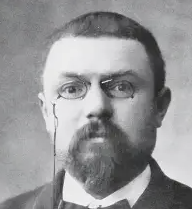
The mathematician is born, not made.
4 months 3 weeks ago
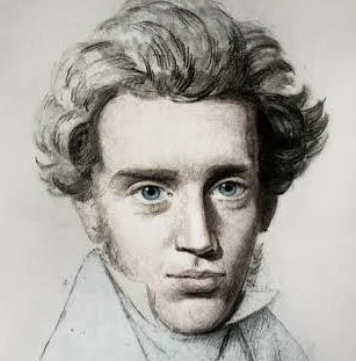
Deep within every human being there still lives the anxiety over the possibility of being alone in the world, forgotten by God, overlooked among the millions and millions in this enormous household. One keeps this anxiety at a distance by looking at the many round about who are related to him as kin and friends, but the anxiety is still there, nevertheless, and one hardly dares think of how he would feel if all this were taken away.
▼
Source
Journals VII 1A 363
4 months 3 weeks ago
All the communions of a life-time are one communion.All the communions of all men now living are one communion.All the communions of all men, present, past and future, are one communion.
▼
Source
The Divine Milieu, p. 124
4 months 3 weeks ago
Soon shall thy arm, Uɴᴄᴏɴǫᴜᴇʀ'ᴅ Sᴛᴇᴀᴍ! afarDrag the slow barge, or drive the rapid car;Or on wide-waving wings expanded bearThe flying-chariot through the fields of air.—Fair crews triumphant, leaning from above,Shall wave their fluttering kerchiefs as they move;Or warrior-bands alarm the gaping crowd,And armies shrink beneath the shadowy cloud.
▼
Source
[Steam Power], The Botanic Garden (1791), Part i, Canto i, ll. 289-296.
4 months 3 weeks ago
The present stage redefines the possibilities of man and nature in accordance with the new means available for their realization.
▼
Source
p. 65
4 months 3 weeks ago
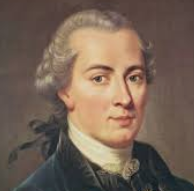
As everybody likes to be honoured, so people imagine that God also wants to be honoured. They forget that the fulfilment of duty towards men is the only honour adequate to him. Thus is formed the conception of a religion of worship, instead of a merely moral religion. … Apart from moral conduct, all that man thinks himself able to do in order to become acceptable to God is mere superstition and religious folly. If once a man has come to the idea of a service which is not purely moral, but is supposed to be agreeable to God himself, or capable of propitiating him, there is little difference between the several ways of serving him. For all these ways are of equal value. … Whether the devotee accomplishes his statutory walk to the church, or whether he undertakes a pilgrimage to the sanctuaries of Loretto and Palestine, whether he repeats his prayer-formulas with his lips, or like the Tibetan, uses a prayer-wheel … is quite indifferent. As the illusion of thinking that a man can justify himself before God in any way by acts of worship is religious superstition, so the illusion that he can obtain this justification by the so-called intercourse with God is religious mysticism (Schwärmerei). Such superstition leads inevitably to sacerdotalism (Pfaffenthum) which will always be found where the essence is sought not in principles of morality, but in statutory commandments, rules of faith and observances.
▼
Source
As quoted in German Thought, From The Seven Years' War To Goethe's Death : Six Lectures (1880) by Karl Hillebrand, p. 208
4 months 3 weeks ago
You wanted God's ideas about what was best for you to coincide with your ideas, but you also wanted him to be the almighty Creator of heaven and earth so that he could properly fulfill your wish. And yet, if he were to share your ideas, he would cease to be the almighty Father.
▼
Source
Søren Kierkegaard, Eighteen Upbuilding Discourses, Hong p. 37

4 months 3 weeks ago
The history of metaphysics, like the history of the West, is the history of these metaphors and metonymies. It’s matrix—If you will pardon me for demonstrating so little and for being elliptical in order to come more quickly to my principle theme—is the determination of Being as presence in all sense of this word.
▼
Source
Structure, Sign and Play
4 months 3 weeks ago
Always act in such a way as to secure the love of your neighbour.
▼
Source
Book XVIII, sec. 44.
4 months 3 weeks ago
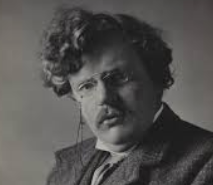
The centre of every man's existence is a dream. Death, disease, insanity, are merely material accidents, like toothache or a twisted ankle. That these brutal forces always besiege and often capture the citadel does not prove that they are the citadel.
▼
Source
Twelve Types (1903) "Sir Walter Scott"
4 months 3 weeks ago
The ontological concept of truth is in the centre of a logic which may serve as a model of pre- technological rationality. It is the rationality of a two-dimensional universe of discourse which, contrasts with the of thought and behavior that develop in the execution of the technological project.
▼
Source
p. 130
4 months 3 weeks ago
The spurious axioms of the third kind from conditions proper to the subject whence they are transferred rashly to the object are plentiful, not, as in those of the Second Class, because the only way to the intellectual concept lies through the sensuous data, but because only by aid of the latter can the concept be applied to that which is given by experience, that is, can we know whether something is contained under a certain intellectual concept or not. To this class belongs the threadbare one of the schools: whatever exists contingently does at some time not exist. This spurious principle springs from the poverty of the intellect, having insight frequently into the nominal, rarely into the real, marks of contingency or necessity.
4 months 3 weeks ago
The immediacy of falling in love recognizes but one immediacy that is ebenburtig (of equal standing), and this is a religious immediacy; falling in love is too virginal to recognize any confidant other than God. But the religious is a new immediacy, has reflection in between-otherwise, paganism would actually be religious and Christianity not. That the religious is a new immediacy every person easily understands who is satisfied with following the honest path of ordinary common sense. And although I imagine I have but few readers, I confess nevertheless that I do imagine my readers to be among these, since I am far from wanting to instruct the admired ones, who make systematic discoveries a la Niels Klim, who have left their good skin in order to put on the “real appearance.”
▼
Source
Stages on Life's Way, p. 161-162
4 months 3 weeks ago
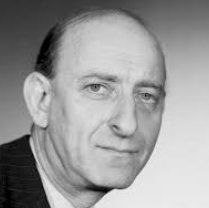
The optimism of the Left was created and maintained by a strong feeling: admiration for the power of reason, certainty that the application of science to industry would revolutionise the order of human society and the condition of its individual members. The ancestral aspiration towards human brotherhood was united with faith in practical science in order to inspire either nationalism or socialism or both.
▼
Source
The Opium of Intellectuals (1955), Conclusion: The End of the Ideological Age?
4 months 3 weeks ago
It is terrible to contemplate how few politicians are hanged.
▼
Source
In The Cleveland Press (1 March 1921)
4 months 3 weeks ago
While more conventional thinkers insisted that technology would create more leisure time, Marcuse warned that it would instead imprison people in unoriginal lives devoid of creative thinking. He warned that the though technology appeared to to help the dissenter, it would actually be used to muffle protest. People were being anesthetized into a complacency that was mistaken for happiness. Goods and services were rendering mankind useless and incapable of real thought. There was an increase in media, but it espoused less and less variety of ideas. People in today's world who "surf" through eighty or more television stations, only to find less there than when they had only four choices, might be beginning to grasp Marcuse's vision for a technological age in which people think they have more choices but the choices lack significant differences. In an age of abundance, when technology has made individuals extraordinarily efficient, why do people spend even more time working, and why is so much work mindless instead of stimulating? One of the first Marxists to lose faith in the Soviet system, Marcuse saw the West as also in a state of "unfreedom" and often suggested that revolution may be the only path to true freedom. Marcuse, the aging professor, seemed to warm to the role of guru to the student radicals. He frequently discussed their movements. He warned Abbie Hoffman on "flower power" that "flowers have no power" other than the force of the people that cultivate them—one of the few occasions on which Hoffman had no reply. But as Marcuse freely admitted, many of the young rebels who talked about his ideas had never read him. His work is written in the German dialectic tradition. Marcuse achieved popularity without ever developing an accessible writing style. Luis Gonzalez de Alba, one of the student leaders in Mexico, described finally sitting down to read some Marcuse simply because President Gustavo Díaz Ordez had accused the movement of being influenced by the philosopher: "I opened One-Dimensional Man and got as far as page five. Eros and Civilization had been a terrible bore. And now I had to read another of Marcuse's books, all because Diaz Ordaz had happened to mention the 'philosophers of destruction.'"
▼
Source
Mark Kurlansky, 1968: The Year that Rocked the World (2004), p. 108-109, ISBN 0-345-45581-9
4 months 3 weeks ago
Even if there never have been actions arising from such pure sources, what is at issue here is not whether this or that happened; that, instead, reason by itself and independently of all appearances commands what ought to happen; that, accordingly, actions of which the world has perhaps so far given no example, and whose very practicability might be very much doubted by one who bases everything on experience, are still inflexibly commanded by reason … because … duty … lies, prior to all experience, in the idea of a reason determing the will by means of apriori grounds.
4 months 3 weeks ago
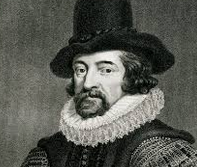
In the system of Copernicus there are found many and great inconveniences; for both the loading of the earth with triple motion is very incommodious, and the separation of the sun from the company of the planets, with which it has so many passions in common, is likewise a difficulty, and the introduction of so much immobility into nature, by representing the sun and stars as immovable, especially being of all bodies the highest and most radiant, and making the moon revolve about the earth in an epicycle, and some other assumptions of his, are the speculations of one who cares not what fictions he introduces into nature, provided his calculations answer. But if it be granted that the earth moves, it would seem more natural to suppose that there is no system at all, but scattered globes (…) than to constitute a system of which the sun is the centre. And this the consent of ages and of antiquity has rather embraced and approved. For the opinion concerning the motion of the earth is not new, but revived from the ancients (…) whereas the opinion that the sun is the centre of the world and immovable is altogether new (…) and was first introduced by Copernicus. (…) But if the earth moves, the stars may either be stationary, as Copernicus thought or, as it is far more probable, and has been suggested by Gilbert, they may revolve each round its own centre in its own place, without any motion of its centre, as the earth itself does (…). But either way, there is no reason why there should not be stars above stars til they go beyond our sight.
▼
Source
Descriptio Globi Intellectualis (1653, written ca. 1612), Chap. 6, as quoted in "Description of the Intellectual Globe," The Works of Francis Bacon (1889), Vol. 4, ed. , , Douglas Denon Heath, [https://books.google.com/books?id=lsILAAAAIAAJ&pg=PA517 pp. 5
CivilSimian.com created by AxiomaticPanic, CivilSimian, Kalokagathia