
4 months 3 weeks ago
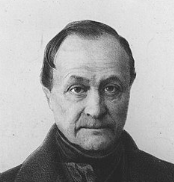
Catholicism minus Christianity.
▼
Source
T. H. Huxley, on the ideas of Comte.
4 months 3 weeks ago
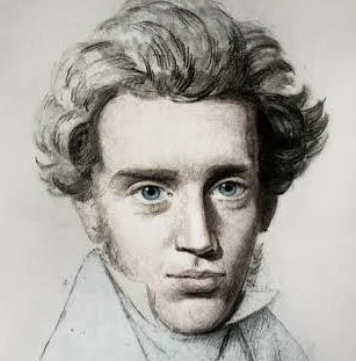
Does a Human Being Have the Right to Let Himself Be Put to Death for the Truth?
4 months 3 weeks ago
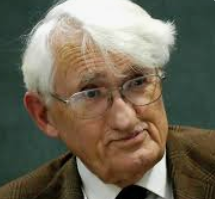
I shall develop the thesis that anyone acting communicatively must, in performing any speech act, raise universal validity claims and suppose that they can be vindicated.
▼
Source
p. 22
4 months 3 weeks ago
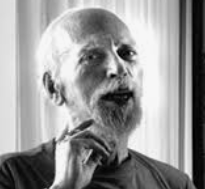
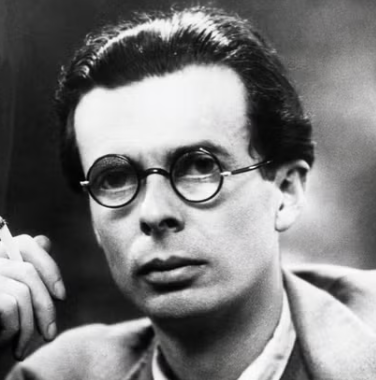
I don't believe anything, but I have many suspicions.
▼
Source
[http://www.rawilson.com/thoughts.html "RAW Thoughts" at rawilson.com]
4 months 3 weeks ago
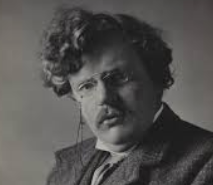
That men do not learn very much from the lessons of history is the most important of all the lessons that history has to teach.
▼
Source
"[http://www.christiebooks.com/ChristieBooksWP/2013/11/a-case-of-voluntary-ignorance-by-aldous-huxley/ A Case of Voluntary Ignorance]" in Collected Essays (1959)
4 months 3 weeks ago
There is a road from the eye to the heart that does not go through the intellect. Men do not quarrel about the meaning of sunsets; they never dispute that the hawthorn says the best and wittiest thing about the spring.
▼
Source
"A Defence of Heraldry"
4 months 3 weeks ago
The inscrutable wisdom through which we exist is not less worthy of veneration in respect to what it denies us than in respect to what it has granted.
4 months 3 weeks ago
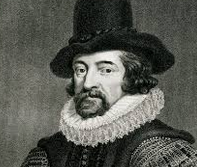
For the inquisition of Final Causes is barren, and like a virgin consecrated to God produces nothing.
▼
Source
Book III, viii
4 months 3 weeks ago
That a woman is presented as a teacher, as a prototype of piety, cannot amaze anyone who knows that piety or godliness is fundamentally womanliness. ... from a woman you learn concern for the one thing needful, from Mary, sister of Lazarus, who sat silent at Christ's feet with her heart's choice: the one thing needful. P. 149
4 months 3 weeks ago
Many tribal peoples have both all-male and all-female secret societies, which help maintain the cultural values or reality tunnel. Freemasonry is certainly the largest, and probably the oldest, and still the most controversial of the all-male secret societies surviving in our world. No two scholars can even agree on how old it is, much less on how "good" or "evil" it is. … Although Masonry is often denounced as either a political or religious "conspiracy", Freemasons are forbidden to discuss either politics or religion within the lodge. Gary Dryfoos of the Massachusetts Institute of technology, who maintains, always stresses these points and also offers personal testimony that after many years as a Mason, including high ranks, he has not yet been asked to engage in pagan or Satanic rituals or plot for any reason for or against any political party. The more rabid anti-Masons, of course, dismiss such testimony as flat lies. The enemies of Masonry, who are usually Roman Catholics or Fundamentalist Protestants, insist that the rites of the order contain "pagan" elements, e.g., the Yule festival, the Spring Solstice festival, the dead-and-resurrected martyr (Jesus, allegedly historical, to Christians; Hiram, admittedly allegorical, to Masons). All these and many other elements in Christianity and Masonry have a long prehistory in paganism, as documented in the 12 volumes of Sir James George Frazer's Golden Bough. The major offense of Masonry to orthodox churches is that it, like our First Amendment, encourages equal tolerance for all religions, and this tends, somewhat, to lessen dogmatic allegiance to any one religion. Those who insist you must accept their dogma fervently and renounce all others as devilish errors, correctly see this Masonic tendency as inimitable to their faith.
▼
Source
Freemasonry, p. 187; in the final sentence here, inimitable perhaps should be "inimicable"
4 months 3 weeks ago
To aspire to be superhuman is a most discreditable admission that you lack the guts, the wit, the moderating judgment to be successfully and consummately human.
▼
Source
“Spinoza’s Worm,” p. 75
4 months 3 weeks ago
Round the birth of "Pickwick" broke one of those literary quarrels that were too common in the life of Dickens.... He turned people into mortal enemies whom he might have turned very easily into immortal jokes.
▼
Source
Ch 4: "The Pickwick Papers"
4 months 3 weeks ago
The notion that one will not survive a particular catastrophe is, in general terms, a comfort since it is equivalent to abolishing the catastrophe.
▼
Source
The Message to the Planet (1989) p. 532.
4 months 3 weeks ago
The man of principles has character. Of him we know definitely what to expect. He does not act on the basis of his instinct, but on the basis of his will. Therefore, without being redundant one can classify characteristics according to a person's faculty of desire (what is practical), as a) his nature, or natural talent, b) his temperament, or disposition, and c) his general character, or mode of thinking.
▼
Source
Kant, Immanuel (1996), page 195
4 months 3 weeks ago
It is not possible to run a course aright when the goal itself has not been rightly placed.
▼
Source
Aphorism 81
4 months 3 weeks ago
This is approximately the way Christendom relates to the essentially Christian, the unconditioned. After seventeen, eighteen detours and running all around someone finally has his finite existence assured, and then we receive a sermon about Seek first the kingdom of God. Is this sobriety or is this intoxication? p. 112
4 months 3 weeks ago
After the new forms are introduced into the language, it is possible to formulate with their help internal questions and possible answers to them. A question of this kind may be either empirical or logical; accordingly a true answer is either factually true or analytic.
▼
Source
Ch. 3. What does acceptance of a kind of entities mean?
4 months 3 weeks ago
More than twenty-five centuries have passed since that which has been called the Perennial Philosophy was first committed to writing; and in the course of those centuries it has found expression, now partial, now complete, now in this form, now in that, again and again. In Vedanta and Hebrew prophecy, in the Tao Teh King and the Platonic dialogues, in the Gospel according to St. John and Mahayana theology, in Plotinus and the Areopagite, among the Persian Sufis and the Christian mystics of the Middle Ages and the Renaissance — the Perennial Philosophy has spoken almost all the languages of Asia and Europe and has made use of the terminology and traditions of every one of the higher religions. But under all this confusion of tongues and myths, of local histories and particularist doctrines, there remains a Highest Common Factor, which is the Perennial Philosophy in what may be called its chemically pure state. This final purity can never, of course, be expressed by any verbal statement of the philosophy, however undogmatic that statement may be, however deliberately syncretistic. The very fact that it is set down at a certain time by a certain writer, using this or that language, automatically imposes a certain sociological and personal bias on the doctrines so formulated. It is only in the act of contemplation when words and even personality are transcended, that the pure state of the Perennial Philosophy can actually be known. The records left by those who have known it in this way make it abundantly clear that all of them, whether Hindu, Buddhist, Hebrew, Taoist, Christian, or Mohammedan, were attempting to describe the same essentially indescribable Fact.
4 months 3 weeks ago
"I swear to you, then," said MacIan, after a pause. "I swear to you that nothing shall come between us. I swear to you that nothing shall be in my heart or in my head till our swords clash together. I swear it by the God you have denied, by the Blessed Lady you have blasphemed; I swear it by the seven swords in her heart. I swear it by the Holy Island where my fathers are, by the honour of my mother, by the secret of my people, and by the chalice of the Blood of God." The atheist drew up his head. "And I," he said, "give my word."
▼
Source
Part II: "The Religion of the Stipendiary Magistrate", last paragraphs
4 months 3 weeks ago
For Kant, there are no different religions, but rather different forms of belief in divine revelation [...] among which Christianity, as far as we know, is the most appropriate.
▼
Source
Marcello Pera, Perché dobbiamo dirci cristiani, p. 43; quoted in Alessandro Roveri, [http://www.ilponterivista.com/article_view.php?intId=10 La conversione di Marcello Pera al cattolicesimo], Il ponte, January-February 2009
4 months 3 weeks ago
The Great Reform of Philosophy and Method, in which Bacon so eloquently called upon men to unite their exertions in his day, has, even in ours, been very imperfectly carried into effect. And even if his plan had been fully executed, it would now require to be pursued and extended.
▼
Source
William Whewell, History of the Inductive Sciences (1837)
4 months 3 weeks ago
It has been said that love robs those who have it of their wit, and gives it to those who have none.
▼
Source
Paradoxe sur le Comédien (1773-1777)
4 months 3 weeks ago
Asked to prove a questioner's existence, Morgenbesser shot back, "Who's asking?"
▼
Source
[https://web.archive.org/web/20040821091507/http://daily.nysun.com/Repository/getmailfiles.asp?Style=OliveXLib:ArticleToMail&Type=text/html&Path=NYS/2004/08/03&ID=Ar01400 Remembering Sidney Morgenbesser,] by Gary Shapiro in 'The New York Sun' 3 August 200
4 months 3 weeks ago
It had been, when I read it, only a vaguely pregnant piece of nonsense. Now it was all as clear as day, as evident as Euclid. Of course the Dharma-Body of the Buddha was the hedge at the bottom of the garden. At the same time, and no less obviously, it was these flowers, it was anything that I—or rather the blessed Not-I, released for a moment from my throttling embrace—cared to look at.
▼
Source
describing his experiment with mescaline, pp. 18-19
4 months 3 weeks ago
Talk about the pews and steeples And the cash that goes therewith!But the souls of Christian peoples... Chuck it, Smith!
▼
Source
Antichrist, or the Reunion of Christendom
4 months 3 weeks ago
Reason is to the philosopher what grace is to the Christian.Grace causes the Christian to act, reason the philosopher. Other men are carried away by their passions, their actions not being preceded by reflection: these are the men who walk in darkness. On the other hand, the philosopher, even in his passions, acts only after reflection; he walks in the dark, but by a torch. The philosopher forms his principles from an infinity of particular observations. Most people adopt principles without thinking of the observations that have produced them, they believe the maxims exist, so to speak, by themselves. But the philosopher takes maxims from their source; he examines their origin; he knows their proper value, and he makes use of them only in so far as they suit him. Truth is not for the philosopher a mistress who corrupts his imagination and whom he believes to be found everywhere; he contents himself with being able to unravel it where he can perceive it. He does not confound it with probability; he takes for true what is true, for false what is false, for doubtful what is doubtful, and probable what is only probable. He does more, and here you have a great perfection of the philosopher: when he has no reason by which to judge, he knows how to live in suspension of judgment... The philosophical spirit is, then, a spirit of observation and exactness, which relates everything to true principles...
▼
Source
Article on Philosophy, Vol. 25, p. 667, as quoted in Main Currents of Western Thought : Readings in Western European Intellectual History from the Middle Ages to the Present (1978) by Franklin Le Van Baumer | Variant translation: Reason is to the philosop

4 months 3 weeks ago
But what then is this confrontation below the language of reason? Where might this interrogation lead, following not reason in its horizontal becoming, but seeking to retrace in time this constant verticality, which, the length of Western culture, confronts it with what it is not, measuring it with its own extravagance?
▼
Source
Preface to 1961 edition

4 months 3 weeks ago
He had not applauded, he had remained seated, but he had looked at her steadily. From the depths of eternity he had looked at her and Rosalind became immortal. If I could believe him, she thought, if only I could believe him!
▼
Source
P. 30
4 months 3 weeks ago
The indispensible is not necessarily the desirable.
▼
Source
Chapter 6 (p. 48)
4 months 3 weeks ago
Say that a thing is so, according to the Pope or the Bible, and it will be dismissed as a superstition without examination. But preface your remark merely with "they say" or "don't you know that?" or try (and fail) to remember the name of some professor mentioned in some newspaper; and the keen rationalism of the modern mind will accept every word you say.
4 months 3 weeks ago
The most dangerous madmen are those created by religion, and … people whose aim is to disrupt society always know how to make good use of them on occasion.
4 months 3 weeks ago
We must first rid ourselves of the illusion that penality is above all (if not exclusively) a means of reducing crime and that, in this role, according to the social forms, the political systems or beliefs, it may be severe or lenient, tend towards expiation of obtaining redress, towards the pursuit of individuals or the attribution of collective responsibility. We must analyse rather the ‘concrete systems of punishment’, study them as social phenomena that cannot be accounted for by the juridical structure of society alone, nor by its fundamental ethical choices; we must situate them in their field of operation, in which the punishment of crime is not the sole element; we must show that punitive measures are not simply ‘negative’ mechanisms that make it possible to repress, to prevent, to exclude, to eliminate; but that they are linked to a whole series of positive and useful effects which it is their task to support (and, in this sense,although legal punishment is carried out in order to punish offences, one might say that the definition of offences and their prosecution are carried out in turn in order to maintain the punitive mechanisms and their functions).
▼
Source
Chapter One, The body of the condemned, pp. 24
4 months 3 weeks ago
The humanity of tomorrow will be living in its flesh and in its conscious liberty; that time will be its present and it will in turn prefer it. New relations of flesh and sentiment of which we have no conception will arise between the sexes; already, indeed, there have appeared between men and women friendships, rivalries, complicities, comradeships — chaste or sensual — which past centuries could not have conceived.
4 months 3 weeks ago
When people stop believing in God, they don't believe in nothing — they believe in anything.
▼
Source
This quotation actually comes from page 211 of Émile Cammaerts' book The Laughing Prophet: The Seven Virtues and G. K. Chesterton (1937) in which he quotes Chesterton as having Father Brown say, in "The Oracle of the Dog" (1923): "It's the first effect of
4 months 3 weeks ago
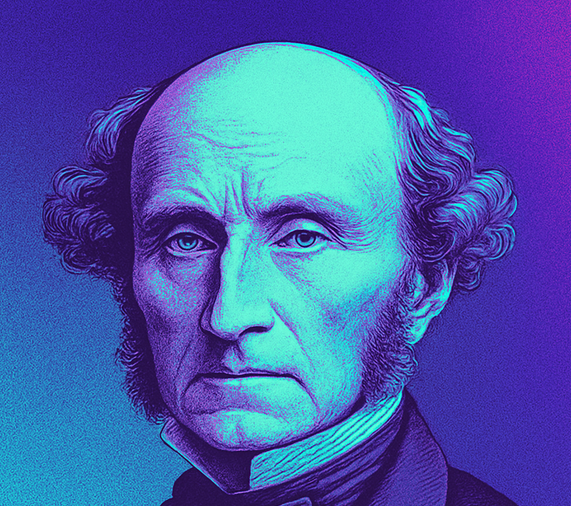
Society can and does execute its own mandates: and if it issues wrong mandates instead of right, or any mandates at all in things with which it ought not to meddle, it practises a social tyranny more formidable than many kinds of political oppression, since, though not usually upheld by such extreme penalties, it leaves fewer means of escape, penetrating much more deeply into the details of life, and enslaving the soul itself. Protection, therefore, against the tyranny of the magistrate is not enough: there needs protection also against the tyranny of the prevailing opinion and feeling; against the tendency of society to impose, by other means than civil penalties, its own ideas and practices as rules of conduct on those who dissent from them; to fetter the development, and, if possible, prevent the formation, of any individuality not in harmony with its ways, and compel all characters to fashion themselves upon the model of its own.
▼
Source
Ch. 1: Introductory
4 months 3 weeks ago
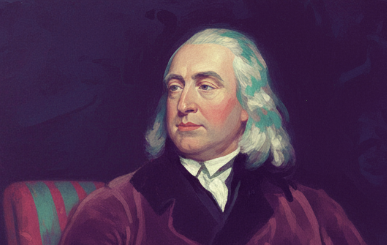
Nature has placed mankind under the governance of two sovereign masters, pain and pleasure. It is for them alone to point out what we ought to do, as well as to determine what we shall do. On the one hand the standard of right and wrong, on the other the chain of causes and effects, are fastened to their throne. They govern us in all we do, in all we say, in all we think: every effort we can make to throw off our subjection, will serve but to demonstrate and confirm it. In words a man may pretend to abjure their empire: but in reality he will remain subject to it all the while. The principle of utility recognizes this subjection, and assumes it for the foundation of that system, the object of which is to rear the fabric of felicity by the hands of reason and of law. Systems which attempt to question it, deal in sounds instead of sense, in caprice instead of reason, in darkness instead of light.
▼
Source
Ch. 1: Of the Principle of Utility
4 months 3 weeks ago
Homosexuality appears as one of the forms of sexuality when it was transposed from the practice of sodomy onto a kind of interior androgyny, a hermaphroditism of the soul. The sodomite had been a temporary aberration; the homosexual was now a species.
▼
Source
Vol I: La volonté de savoir

4 months 3 weeks ago
Whence come wars, and fighting, and factions? whence but from the body and the lusts of the body? For wars are occasioned by the love of money, and money has to be acquired for the sake and in service of the body; and in consequence of all these things, the time which ought to be given to philosophy is lost.
4 months 3 weeks ago
Being good is the same as being a philosopher. If you obey your father, you will follow the will of a man; if you choose the philosopher's life, the will of God. It is plain, therefore, that your duty lies in the pursuit of philosophy.
▼
Source
Fragment 16 "What is the best provision for old age," in Moral Exhortation (1986), p. 32
4 months 3 weeks ago
The utilitarian doctrine is, that happiness is desirable, and the only thing desirable, as an end; all other things being only desirable as means to that end.
▼
Source
Ch. 4
4 months 3 weeks ago
Power without limitation is directly related to madness. The man who exercises power is wise only insofar as there exists someone who can use parrhesia to criticize him, thereby putting some limit to his power, to his command.
4 months 3 weeks ago
Then I heard someone who had a book of Anaxagoras, as he said, out of which he read that the mind was the disposer and cause of all... and I said to myself: If mind is the disposer, mind will dispose all for the best, and put each particular in the best place; and I argued that if anyone desired to find out the cause of the generation or destruction of anything, he must find out what state of being or suffering or doing was best for that thing, and therefore a man had only consider the best for himself and others, and then he would also know the worse, for that the same science comprised both.

4 months 3 weeks ago
Freedom is a demagogue.
4 months 3 weeks ago
My state of mind was not humility, but neither was it arrogance. I never thought of saying to myself, I am, or I can do, so and so. I neither estimated myself highly nor lowly. I did not estimate myself at all. If I thought anything about myself, it was that I was rather backward in my studies, since I always found myself so, in comparison with what my father expected from me. I assert this with confidence, though it was not the impression of various persons who saw me in my childhood. They, as I have since found, thought me greatly and disagreeably self-conceited; probably because I was disputatious, and did not scruple to give direct contradictions to things which I heard said. I suppose I acquired this bad habit from having been encouraged in an unusual degree to talk on matters beyond my age, and with grown persons, while I never had inculcated in me the usual respect for them. My father did not correct this ill-breeding and impertinence, probably from not being aware of it, for I was always too much in awe of him to be otherwise than extremely subdued and quiet in his presence.
▼
Source
([https://archive.org/details/autobiography01mill/page/33/mode/1up pp. 33–34])
4 months 3 weeks ago
It would be wrong to suppose that the man of any particular period always looks upon past times as below the level of his own, simply because they are past. It is enough to recall that to the seeming of Jorge Manrique, "Any time gone by was better."… From A.D. 150 on, this impression of a shrinking of vitality, of a falling from position, of decay and loss of pulse shows itself increasingly in the Roman Empire. Had not Horace already sung: "Our fathers, viler than our grandfathers, begot us who are even viler, and we shall bring forth a progeny more degenerate still"? Horace, Odes, III.6]
▼
Source
Chap. III: The Height Of The Times
4 months 3 weeks ago
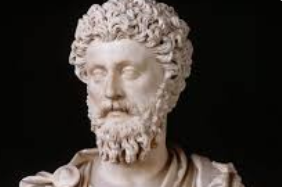
This thou must always bear in mind, what is the nature of the whole...
▼
Source
Τούτων ἀεὶ μεμνῆσθαι, τίς ἡ τῶν ὅλων φύσις | II, 9
4 months 3 weeks ago
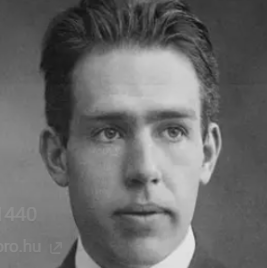
Every sentence I utter must be understood not as an affirmation, but as a question.
▼
Source
As quoted in A Dictionary of Scientific Quotations (1991) by Alan L. Mackay, p. 35
4 months 3 weeks ago
Order and discipline are the most important things in an army, and without them it is impossible to have any other service of the troops than of a confused heap of stones, bricks, timber, and tiles; but when everything is in its due place, as in a building, when the foundations and the covering are made of materials that will not grow rotten, and which no wet can damage, such as are stones and tiles, and when the bricks and timber are employed in their due places in the body of the edifice, they altogether make a house, which we value among our most considerable enjoyments.
▼
Source
Memorabilia III.1
4 months 3 weeks ago
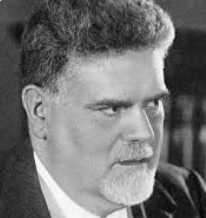
Gentlemen: Fascism is a party, a political doctrine. But Fascism, while being a party, a political doctrine is above all a total conception of life. So the fascist, whether his is writing in newspapers or reading them, going about his private life or talking to others, looking to the future or remembering the past and the past of his people, must always remember he is a Fascist. Thus he fulfills what can really be said to be the main characteristic of Fascism, to take life seriously. Life is toil, is effort, is sacrifice, is hard work.
▼
Source
Che cosa è il fascismo: Discorsi e polemiche (“What is Fascism?”), Florence: Vallecchi, (1925) pp. 38-39
4 months 3 weeks ago
The speaker with whom I was most struck, though I dissented from nearly every word he said, was Thirlwall, the historian, since Bishop of St. David's, then a Chancery barrister, unknown except by a high reputation for eloquence acquired at the before the era of Austin and Macaulay. His speech was in answer to one of mine. Before he had uttered ten sentences, I set him down as the best speaker I had ever heard, and I have never since heard any one whom I placed above him.
▼
Source
([https://archive.org/details/autobiography01mill/page/125/mode/1up p. 125])
CivilSimian.com created by AxiomaticPanic, CivilSimian, Kalokagathia