
4 months 3 weeks ago
If there is a state, then necessarily there is domination and consequently slavery. A state without slavery, open or camouflaged, is inconceivable — that is why we are enemies of the state.
4 months 3 weeks ago
Here and everywhere is the struggle for existence, life inextricably enmeshed with war. All life living at the expense of life, every organism eating other organisms forever.
▼
Source
Ch. 4 : On Old Age

4 months 3 weeks ago
Man reaches the highest point of his knowledge about God when he knows that he knows him not, inasmuch as he knows that that which is God transcends whatsoever he conceives of him.
▼
Source
q. 7, art. 5, ad 14
4 months 3 weeks ago
A distribution is just if it arises from another just distribution by legitimate means.
▼
Source
Ch. 7 : Distributive Justice, Section I, The Entitlement Theory, p. 151
4 months 3 weeks ago
"Historically, Helchitsky attributes the degeneration of Christianity to the times of Constantine the Great, whom the Pope Sylvester admitted into the Christian Church with all his heathen morals and life. Constantine, in his turn, endowed the Pope with worldly riches and power. From that time forward these two ruling powers were constantly aiding one another to strive for nothing but outward glory. Divines and ecclesiastical dignitaries began to concern themselves only about subduing the whole world to their authority, incited men against one another to murder and plunder, and in creed and life reduced Christianity to a nullity. Helchitsky denies completely the right to make war and to inflict the punishment of death; every soldier, even the 'knight,' is only a violent evil doer—a murderer."
▼
Source
Chapter I, The Doctrine of Non-resistance to Evil by Force has been Professed by a Minority of Men from the Very Foundation of Christianity
4 months 3 weeks ago
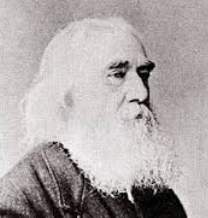
A man is none the less a slave because he is allowed to choose a new master once in a term of years. Neither are a people any the less slaves because permitted periodically to choose new masters. What makes them slaves is the fact that they now are, and are always hereafter to be, in the hands of men whose power over them is, and always is to be, absolute and irresponsible. The right of absolute and irresponsible dominion is the right of property, and the right of property is the right of absolute, irresponsible dominion. The two are identical; the one necessarily implying the other. Neither can exist without the other. If, therefore, Congress have that absolute and irresponsible lawmaking power, which the Constitution — according to their interpretation of it — gives them, it can only be because they own us as property. If they own us as property, they are our masters, and their will is our law. If they do not own us as property, they are not our masters, and their will, as such, is of no authority over us. But these men who claim and exercise this absolute and irresponsible dominion over us, dare not be consistent, and claim either to be our masters, or to own us as property. They say they are only our servants, agents, attorneys, and representatives. But this declaration involves an absurdity, a contradiction. No man can be my servant, agent, attorney, or representative, and be, at the same time, uncontrollable by me, and irresponsible to me for his acts. It is of no importance that I appointed him, and put all power in his hands. If I made him uncontrollable by me, and irresponsible to me, he is no longer my servant, agent, attorney, or representative. If I gave him absolute, irresponsible power over my property, I gave him the property. If I gave him absolute, irresponsible power over myself, I made him my master, and gave myself to him as a slave. And it is of no importance whether I called him master or servant, agent or owner. The only question is, what power did I put into his hands? Was it an absolute and irresponsible one? or a limited and responsible one?
▼
Source
p. 24; the first sentence here is widely paraphrased as: A man is no less a slave because he is allowed to choose a new master once in a term of years.
4 months 3 weeks ago
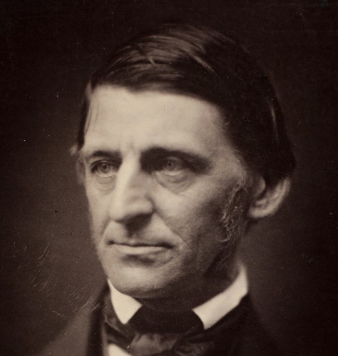
Our condition is like that of the poor wolves: if one of the flock wound himself, or so much as limp, the rest eat him up incontinently. That serene Power interposes the check upon the caprices and officiousness of our wills.
4 months 3 weeks ago
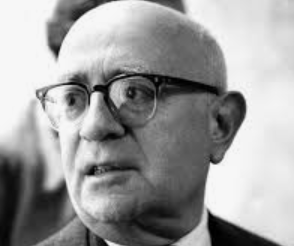
The aim of jazz is the mechanical reproduction of a regressive moment, a castration symbolism. 'Give up your masculinity, let yourself be castrated,' the eunuchlike sound of the jazz band both mocks and proclaims, 'and you will be rewarded, accepted into a fraternity which shares the mystery of impotence with you, a mystery revealed at the moment of the initiation rite.
▼
Source
"Perennial Fashion — Jazz" (1978), Prisms, p. 129, as translated by Samuel Weber and Shierry Weber (1981)
4 months 3 weeks ago
Choose the course which you adopt with deliberation; but when you have adopted it, then persevere in it with firmness.
4 months 3 weeks ago
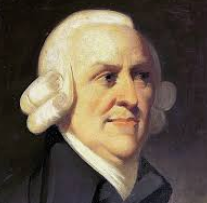
The key insight of Adam Smith's Wealth of Nations is misleadingly simple: if an exchange between two parties is voluntary, it will not take place unless both believe they will benefit from it. Most economic fallacies derive from the neglect of this simple insight, from the tendency to assume that there is a fixed pie, that one party can gain only at the expense of another.
▼
Source
Milton Friedman, Free to Choose: A Personal Statement (1981), p. 5.
4 months 3 weeks ago
The assertion that art may be good art and at the same time incomprehensible to a great number of people is extremely unjust, and its consequences are ruinous to art itself...it is the same as saying some kind of food is good but most people can't eat it.
4 months 3 weeks ago
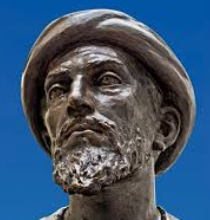
When a man reflects on these things, studies all these created beings, from the angels and spheres down to human beings and so on, and realizes the divine wisdom manifested in them all, his love for God will increase, his soul will thirst, his very flesh will yearn to love God. He will be filled with fear and trembling, as he becomes conscious of his lowly condition, poverty, and insignificance, and compares himself with any of the great and holy bodies; still more when he compares himself with any one of the pure forms that are incorporeal and have never had association with any corporeal substance. He will then realize that he is a vessel full of shame, dishonor, and reproach, empty and deficient.
▼
Source
Book 1 (Sefer HaMadda), 4.12
4 months 3 weeks ago
Earth laughs in flowers to see her boastful boys Earth-proud, proud of the earth which is not theirs; Who steer the plough, but can not steer their feet Clear of the grave.
▼
Source
Hamatreya
4 months 3 weeks ago
The important thing is not the planning of an Index Verborum Prohibitorum of current noble nouns, but rather the examination of their linguistic function.
▼
Source
p. 6
4 months 3 weeks ago
It could be that the total scenario for human beings is an insoluble mystery until we die, followed by nothing at all.
4 months 3 weeks ago
To have never done any thing but make the eighteenth part of a pin, is a sorry account for a human being to give of his existence.
▼
Source
Jean-Baptiste Say (1803) A Treatise On Political Economy. (Fourth Edition, 1855), Book I, Chapter VIII, p. 98.
4 months 3 weeks ago
He crossed his hands on his breast, as he used to do when a child, raised his eyes and said:"Lord, help me, teach me; come and enter within me and purify me of all this abomination."He prayed, asked God to help him and purify him, while that which he was praying for had already happened. Not only did he feel the freedom, vigor and gladness of life, but he also felt the power of good. He felt himself capable of doing the best that man can do.
▼
Source
Ch. 28
4 months 3 weeks ago
To give a full explanation of the mystic passages of the Bible is contrary to the law and to reason; besides, my knowledge of them is based on reasoning, not on divine inspiration [and is therefore not infallible]. ...It is... possible that my view is wrong, and that I misunderstand passages referred to. ...Those, however, for whom this treatise has been composed, will, on reflecting on it and thoroughly examining each chapter, obtain a clear insight into all that has been clear and intelligible to me. This is the utmost that can be done in treating this subject so to be useful to all without fully explaining it.
▼
Source
Introduction
4 months 3 weeks ago
Men are what their mothers made them.
▼
Source
Fate
4 months 3 weeks ago
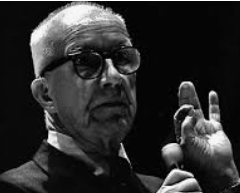
SPACESHIP EARTH: Earth is an automated Spaceship speeding rotatively at 66,000 miles per hour around the sun, which in turn, is on its own course at 6.0 kilometers per second within the Galactic Nebula. The awareness of Earth's mobile patterning within the cosmos gives the perspective needed to deal with the overall evolutionary event-patterning aboard our spherical space-vehicle Earth, rather than the minute details. The automated events transpiring aboard Earth lend powerful advantages to those who comprehend the automation and attempt to work with it in the most long-term, humanly advantageous ways rather than ignorantly attempting to control or oppose it. Both Earth's and humanity's automation are biological. p. 102
4 months 3 weeks ago
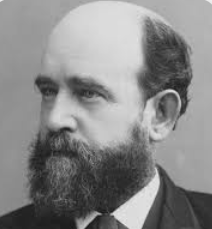
The intelligence required for the solving of social problems is not a thing of the mere intellect. It must be animated with the religious sentiment and warm with sympathy for human suffering. It must stretch out beyond self-interest, whether it be the self-interest of the few or of the many. It must seek justice. For at the bottom of every social problem we will find a social wrong.
▼
Source
Ch. 1 : The Increasing Importance of Social Questions
4 months 3 weeks ago
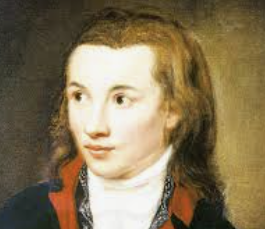
Denotation by means of sounds and markings is a remarkable abstraction. Three letters designate God for me; several lines a million things. How easy becomes the manipulation of the universe here, how evident the concentration of the intellectual world! Language is the dynamics of the spiritual realm. One word of command moves armies; the word Liberty entire nations.
▼
Source
Fragment No. 2

4 months 3 weeks ago
Learning proceeds until death and only then does it stop. ... Its purpose cannot be given up for even a moment. To pursue it is to be human, to give it up to be a beast.
▼
Source
Readings in Classical Chinese Philosophy (2001), p. 258
4 months 3 weeks ago
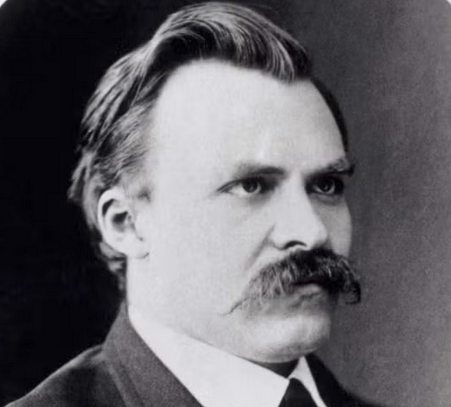
May I really say it! All truths are bloody truths to me—take a look at my previous writings.
▼
Source
Notebooks (Summer 1880) 4[271]
4 months 3 weeks ago
What are wanted for the Indian as for the Englishman, the Frenchman, the German, and the Russian, are not Constitutions and Revolutions, nor all sorts of Conferences and Congresses, nor the many ingenious devices for submarine navigation and aerial navigation, nor powerful explosives, nor all sorts of conveniences to add to the enjoyment of the rich, ruling classes; nor new schools and universities with innumerable faculties of science, nor an augmentation of papers and books, nor gramophones and cinematographs, nor those childish and for the most part corrupt stupidities termed art — but one thing only is needful: the knowledge of the simple and clear truth which finds place in every soul that is not stupefied by religious and scientific superstitions — the truth that for our life one law is valid — the law of love, which brings the highest happiness to every individual as well as to all mankind. Free your minds from those overgrown, mountainous imbecilities which hinder your recognition of it, and at once the truth will emerge from amid the pseudo-religious nonsense that has been smothering it: the indubitable, eternal truth inherent in man, which is one and the same in all the great religions of the world. It will in due time emerge and make its way to general recognition, and the nonsense that has obscured it will disappear of itself, and with it will go the evil from which humanity now suffers.
4 months 3 weeks ago
Galen, in the third section of his book, "The Use of the Limbs," says correctly that it would be in vain to expect to see living beings formed of the blood of menstruous women and the semen virile, who will not die, will never feel pain, or will move perpetually, or shine like the sun. This dictum of Galen is part of the following more general proposition:—Whatever is formed of matter receives the most perfect form possible in that species of matter; in each individual case the defects are in accordance with that individual matter.
▼
Source
Compare Gottfried Leibniz argument for the "best of all possible worlds" in his Essays on the Goodness of God, the Freedom of Man and the Origin of Evil | Ch.12
4 months 3 weeks ago
Good is a good doctor, but Bad is sometimes a better.
▼
Source
Considerations by the Way
4 months 3 weeks ago
There are progressive degrees of synergy, called synergy-of-synergies, which are complexes of behavior aggregates holistically unpredicted by the separate behaviors of any of their subcomplex components. Any subcomplex aggregate is only a component aggregation of an even greater event aggregation whose comprehensive behaviors are never predicted by the component aggregates alone. There is a synergetic progression in Universe—a hierarchy of total complex behaviors entirely unpredicted by their successive subcomplexes' behaviors. It is manifest that Universe is the maximum synergy-of-synergies, being utterly unpredicted by any of its parts.
▼
Source
[http://www.rwgrayprojects.com/synergetics/s01/p5000.html 150.01]
4 months 3 weeks ago
We cannot think with precision unless in our own minds we use words with precision.
▼
Source
General Introduction
4 months 3 weeks ago
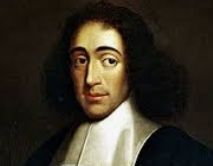
All the better; they do not force me to do anything that I would not have done of my own accord if I did not dread scandal. But since they want it that way, I enter gladly on the path that is opened to me, with the consolation that my departure will be more innocent than was the exodus of the early Hebrews from Egypt.
▼
Source
Statement after his excommunication from Jewish society, attributed by Lucas, in The Oldest Biography of Spinoza (1970) by A. Wolf; also in Spinoza: A Life (1999) by Steven Nadler
4 months 3 weeks ago
If on the one hand the Scholastics and Alchemists seem to be utterly at variance, and the Eclectics on the other hand quite at one, yet, strictly examined, it is altogether the reverse. The former, in essentials, are indirectly of one opinion; namely, as regards the non-dependence, and infinite character of Meditation, they both set out from the Absolute: whilst the Eclectic and limited sort are essentially at variance; and agree only in what is deduced. The former are infinite but uniform, the latter bounded but multiform; the former have genius, the latter talent; those have Ideas, these have knacks (Handgriffe); those are heads without hands, these are hands without heads. The third stage is for the Artist, who can be at once implement and genius. He finds that that primitive Separation in the absolute Philosophical Activities' (between the Scholastic, and the "rude, intuitive Poet") 'is a deeper-lying Separation in his own Nature; which Separation indicates, by its existence as such, the possibility of being adjusted, of being joined: he finds that, heterogeneous as these Activities are, there is yet a faculty in him of passing from the one to the other, of changing his polarity at will. He discovers in them, therefore, necessary members of his spirit; he observes that both must be united in some common Principle. He infers that Eclecticism is nothing but the imperfect defective employment of this principle.

4 months 3 weeks ago
There are men and gods, and beings like Pythagoras.
▼
Source
Of himself, as quoted in A History of Western Philosophy (1945) by Bertrand Russell
4 months 3 weeks ago
To those human beings who are of any concern to me I wish suffering, desolation, sickness, ill-treatment, indignities — I wish that they should not remain unfamiliar with profound self-contempt, the torture of self-mistrust, the wretchedness of the vanquished: I have no pity for them, because I wish them the only thing that can prove today whether one is worth anything or not — that one endures.
▼
Source
Sec 910 (Autumn 1887, KSA 12.513)
4 months 3 weeks ago
I started out very quiet and I beat Mr. Turgenev. Then I trained hard and I beat Mr. de Maupassant. I've fought two draws with Mr. Stendhal, and I think I had an edge in the last one. But nobody's going to get me in any ring with Mr. Tolstoy unless I'm crazy or I keep getting better.
▼
Source
Ernest Hemingway in The New Yorker (13 May 1950)
4 months 3 weeks ago
Another fundamental principle taught by the Law of Moses is this: Wrong cannot be ascribed to God in any way whatever; all evils and afflictions as well as all kinds of happiness of man, whether they concern one individual or a community, are distributed according to justice; they are the result of strict judgement that admits no wrong whatever.
▼
Source
Ch.17
4 months 3 weeks ago
Daughters of Time, the hypocritic Days, Muffled and dumb like barefoot dervishes, And marching single in an endless file, Bring diadems and fagots in their hands.
▼
Source
Days
4 months 3 weeks ago
Whether it is to be Utopia or Oblivion will be a touch-and-go relay race right up to the final moment. . . . Humanity is in 'final exam' as to whether or not it qualifies for continuance in [the] Universe[.]
4 months 3 weeks ago
"Memory is a field full of psychological ruins," wrote French philosopher Gaston Bachelard. For some that may be true, but memory is also a field of healing that has the capacity to restore the world, not only for the one person who recollects, but for cultures as well. When a person says "I remember," all things are possible.
▼
Source
Linda Hogan (writer) The Woman Who Watches Over the World: A Native Memoir (2001)
4 months 3 weeks ago
You will know that wretched men are the cause of their own suffering, who neither see nor hear the good that is near them, and few are the ones who know how to secure release from their troubles. Such is the fate that harms their minds; like pebbles they are tossed about from one thing to another with cares unceasing. For the dread companion Strife harms them unawares, whom one must not walk behind, but withdraw from and flee.
▼
Source
As quoted in Divine Harmony: The Life and Teachings of Pythagoras by John Strohmeier and Peter Westbrook (1999)
4 months 3 weeks ago
If you crush a cockroach, you're a hero. If you crush a beautiful butterfly, you're a villain. Morals have aesthetic criteria.
▼
Source
[https://www.goodreads.com/quotes/11842662-if-you-crush-a-cockroach-you-re-a-hero-if-you Sometimes attributed to Nietzsche], the quote appears in none of his works, the likely origin is a [https://x.com/samalmightysam/status/278540504386371584 2012 tweet]
4 months 3 weeks ago
You will find that there is no other difference of opinion as regards any portions of the Universe, except that the philosophers believe in the Eternity of the Universe and we believe in the Creation. Note this.
▼
Source
Ch.25
4 months 3 weeks ago
The end of the human race will be that it will eventually die of civilization.
▼
Source
Civilization
4 months 3 weeks ago
I have been a deliberate half-century-fused inciter of a cool-headed, natural, gestation-rate-paced revolution, armed with physically demonstrable livingry levers with which altogether to elevate all humanity to realization of an inherently sustainable, satisfactory-to-all, ever higher standard of living. Critical threshold-crossing of the inevitable revolution is already underway.
4 months 3 weeks ago
The dyad gets its name from passing through or asunder; for the dyad is the first to have separated itself from the monad, whence also it is called "daring." For when the monad manifests unification, the dyad steals in and manifests separation.
▼
Source
On the Dyad
4 months 3 weeks ago
Attempt nothing above thy strength!
4 months 3 weeks ago
There are occasions when a worthless, insignificant book acquires significance as a scrap of litmus paper exposing a culture's intellectual state. Such a book is Beyond Freedom and Dignity by B.F. Skinner.... The book itself is like Boris Karloff's embodiment of Frankenstein's monster: a corpse patched with nuts, bolts and screws from the junkyard of philosophy (Pragmatism, Social Darwinism, Positivism, Linguistic Analysis, with some nails by Hume, threads by Russell, and glue by the New York Post). The book's voice, like Karloff's, is an emission of inarticulate, moaning growls — directed at a special enemy: "Autonomous Man."
▼
Source
Ayn Rand, The Ayn Rand Letter, Vol. 1, No. 8 (17 January 1972)
4 months 3 weeks ago
The world is all that is the case. (1)
▼
Source
Original German: Die Welt ist alles, was der Fall ist.
4 months 3 weeks ago
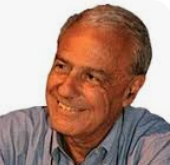
Philosophy in the strong, classical sense shares with religion the object, truth, the Absolute in and of itself, and is therefore properly a stripping away, a removal of everything that is relative and accidental, in order to get to the essential. This concerns first and foremost ourselves, according to the precept of the Delphic Apollo: ‘Know thyself’. It is the ‘sculpting of one's own statue’ that Plotinus speaks of, removing the marble that covers it and prevents it from coming to light.
4 months 3 weeks ago
The gods sell anything to everybody at a fair price.
▼
Source
Quotation and Originality
4 months 3 weeks ago
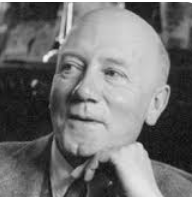
Reflecting on my experience, I find myself agreeing with the eminent Cambridge philosopher, Dr. C. D. Broad, “that we should do well to consider much more seriously than we have hitherto been inclined to do the type of theory which Bergson put forward in connection with memory and sense perception. The suggestion is that the function of the brain and nervous system and sense organs is in the main eliminative and not productive. Each person is at each moment capable of remembering all that has ever happened to him and of perceiving everything that is happening everywhere in the universe. The function of the brain and nervous system is to protect us from being overwhelmed and confused by this mass of largely useless and irrelevant knowledge, by shutting out most of what we should otherwise perceive or remember at any moment, and leaving only that very small and special selection which is likely to be practically useful.”
▼
Source
Aldous Huxley The Doors of Perception (1954)
CivilSimian.com created by AxiomaticPanic, CivilSimian, Kalokagathia