
4 months 3 weeks ago
For any community and those living in it, only that is true which can be communicated to all. Hence universal communicability is unconsciously accepted as the source and criterion of those truths that promote life through communal means. Truth is that which our conventional social code accepts as effective in promoting the purposes of the group. … This community will condemn as a “liar” the person who misuses its unconsciously accepted, and therefore valid, metaphors. … Community members are obliged to “lie” in accordance with fixed convention. To put it otherwise, they must be truthful by playing with the conventionally marked dice. To fail to pay in the coin of the realm is to tell forbidden lies, for, on this view, whatever transcends conventional truth is a falsehood. To tell lies of this kind is to sacrifice the world of meanings upon which the endurance of his community rests. Conversely, there are forbidden truths: This same threat to the continuance of the community is also counteracted by relentlessly preventing anyone from thinking and uttering unconventional but authentic truths.
▼
Source
pp. 187-188
4 months 3 weeks ago
Πάντα ἀλλήλοις ἐπιπέπλεκται καὶ ἡ σύνδεσις ἱερά, καὶ σχεδόν τι οὐδὲν ἀλλότριον ἄλλο ἄλλωι· συγκατατέτακται γὰρ καὶ συγκοσμεῖ τὸν αὐτὸν κόσμον. κόσμος τε γὰρ εἷς ἐξ ἁπάντων καὶ θεὸς εἷς δι᾽ ἁπάντων καὶ οὐσία μία καὶ νόμος εἷς, λόγος κοινὸς πάντων τῶν νοερῶν ζώιων, καὶ ἀλήθεια μία, εἴγε καὶ τελειότης μία τῶν ὁμογενῶν καὶ τοῦ αὐτοῦ λόγου μετεχόντων ζώιων.
▼
Source
All things are implicated with one another, and the bond is holy; and there is hardly anything unconnected with any other things. For things have been co-ordinated, and they combine to make up the same universe. For there is one universe made up of all th
4 months 3 weeks ago
Heretics do away with marriages; Psychics accumulate them. The former marry not even once; the latter not only once. What dost thou, Law of the Creator? Between alien eunuchs and thine own grooms, thou complainest as much of the over-obedience of thine own household as of the contempt of strangers.
▼
Source
Chapter 1

4 months 3 weeks ago
I think Mr. secretary St. John the greatest young man I ever knew: wit, capacity, beauty, quickness of apprehension, good learning, and an excellent taste; the best orator in the house of commons, admirable conversation, good nature, and good manners; generous, and a despiser of money. His only fault is, talking to his friends in way of complaint of too great load of business, which looks a little like affectation; and he endeavours too much to mix the fine gentleman, and the man of pleasure, with the man of business. What truth and sincerity he may have, I know not.
▼
Source
Jonathan Swift, Letter XXXIII (23 October 1711), A Journal to Stella, quoted in The Works of Jonathan Swift, containing additional letters, tracts, and poems, with notes, and a life of the author, by W. Scott, Volume II (1824), pp. 405–406
4 months 3 weeks ago
Why then dost thou choose to act in the same way? and why dost thou not leave these agitations which are foreign to nature, to those who cause them and those who are moved by them? And why art thou not altogether intent upon the right way of making use of things which happen to thee? for then thou wilt use them well, and they will be material for thee. Only attend to thyself, and resolve to be a good man in every act which thou doest; and remember...
▼
Source
VII, 58

4 months 3 weeks ago
Humor is properly the exponent of low things; that which first renders them poetical to the mind. The man of Humor sees common life, even mean life, under the new light of sportfulness and love ; whatever has existence has a charm for him. Humor has justly been regarded as the finest perfection of poetic genius. He who wants it, be his other gifts what they may, has only half a mind; an eye for what is above him, not for what is about him or below him. Now, among all writers of any real poetic genius, we cannot recollect one who, in this respect, exhibits such total deficiency as Schiller. In his whole writings there is scarcely any vestige of it, scarcely any attempt that way. His nature was without Humor; and he had too true a feeling to adopt any counterfeit in its stead. Thus no drollery or caricature, still less any barren mockery, which, in the hundred cases are all that we find passing current as Humor, discover themselves in Schiller. His works are full of labored earnestness; he is the gravest of all writers.
▼
Source
"Schiller", first published in Fraser's Magazine (1831).

4 months 3 weeks ago
I think putting thieves to death is not lawful; and it is plain and obvious that it is absurd and of ill consequence to the commonwealth that a thief and a murderer should be equally punished; for if a robber sees that his danger is the same if he is convicted of theft as if he were guilty of murder, this will naturally incite him to kill the person whom otherwise he would only have robbed; since, if the punishment is the same, there is more security, and less danger of discovery, when he that can best make it is put out of the way; so that terrifying thieves too much provokes them to cruelty.
▼
Source
Ch. 1 : Discourses of Raphael Hythloday, of the Best State of a Commonwealth
4 months 3 weeks ago
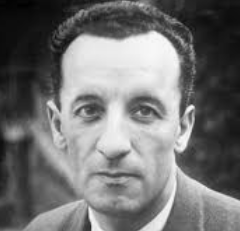
The supernatural light of the spirit is the only night from which the spirit can emerge alive.
▼
Source
p. 288.
4 months 3 weeks ago
By becoming the pure subject who knows the world objectively, man ultimately realizes that absolute consciousness with respect to which the body and individual existence are no longer anything but objects; death is deprived of meaning. Reduced to the status of object of consciousness, the body could not be conceived as an intermediary between "things" and the consciousness which knows them.
▼
Source
p. 204
4 months 3 weeks ago
The universal nature has no external space; but the wondrous part of her art is that though she has circumscribed herself, everything which is within her which appears to decay and to grow old and to be useless she changes into herself, and again makes other new things from these very same, so that she requires neither substance from without nor wants a place into which she may cast that which decays. She is content then with her own space, and her own matter, and her own art.
▼
Source
VIII, 50
4 months 3 weeks ago
We have the greatest admiration for this learned doctor: with what scientific stoicism he walks through the land of wonders, unwondering; like a wise man through some huge, gaudy, imposing Vauxhall, whose fire-works, cascades and symphonies, the vulgar may enjoy and believe in,—but where he finds nothing real but the saltpetre, pasteboard and catgut.
4 months 3 weeks ago
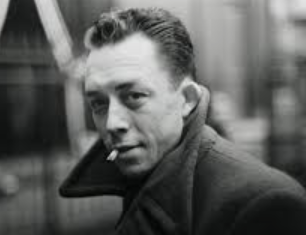
We turn our backs on nature; we are ashamed of beauty. Our wretched tragedies have a smell of the office clinging to them, and the blood that trickles from them is the color of printer's ink.
▼
Source
"Helen's Exile" (1948)
4 months 3 weeks ago
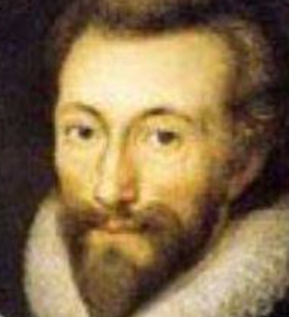
This is my advice but how welcome to thee I know not.
4 months 3 weeks ago
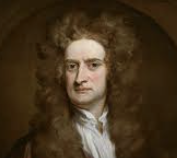
After the same Manner in Geometry, if a Line drawn any certain Way be reckon'd for Affirmative, then a Line drawn the contrary Way may be taken for Negative: As if AB be drawn to the right, and BC to the left; and AB be reckon'd Affirmative, then BC will be Negative; because in the drawing it diminishes AB...
4 months 3 weeks ago
Diffused knowledge immortalizes itself.
▼
Source
Vindiciæ Gallicæ (1791).
4 months 3 weeks ago
Why dost thou not pray... to give thee the faculty of not fearing any of the things which thou fearest, or of not desiring any of the things which thou desirest, or not being pained at anything, rather than pray that any of these things should not happen or happen?
▼
Source
IX, 40
4 months 3 weeks ago
What we want is not freedom but its appearances. It is for these simulacra that man has always striven. And since freedom, as has been said, is no more than a sensation, what difference is there between being free and believing ourselves free?
4 months 3 weeks ago
Close thy Byron; open thy Goethe.
▼
Source
Bk. I, ch. 9.
4 months 3 weeks ago
I may not have been sure about what really did interest me, but I was absolutely sure about what didn't.
4 months 3 weeks ago
For the love of gain would reconcile the weaker to the dominion of the stronger, and the possession of capital enabled the more powerful to reduce the smaller cities to subjection.
▼
Source
Book I, 1.8-[3]
4 months 3 weeks ago
Some men speak one moment before they think; others tediously study everything they say, and in conversation bore us as painfully as was the travail of their mind; they are, as it were, made up of phrases and quaint expressions, whilst their gestures are as affected as their behaviour. They call themselves "purists," and do not venture to say the most trifling word not in use, however expressive it may be. Nothing comes from them worth remembering, nothing is spontaneous and unrestrained; they speak correctly, but they are very tiresome.
▼
Source
15
4 months 3 weeks ago
In the case of all things which have a certain constitution, whatever harm may happen to any of them, that which is affected becomes consequently worse; but in like case, a man becomes both better... and more worthy of praise, by making the right use of these accidents.
▼
Source
X, 33
4 months 3 weeks ago
To suffer is the great modality of taking the world seriously.
4 months 3 weeks ago
The difference between Orthodoxy or Mydoxy and Heterodoxy or Thy-doxy.
▼
Source
Pt. II, Bk. IV, ch. 2.
4 months 3 weeks ago
A man is more a man through the things he keeps to himself than through those he says.
▼
Source
Conquest
4 months 3 weeks ago
Fire signals of an attack were also raised toward Thebes, but the Plataeans in the city at once displayed a number of others, prepared beforehand for this very purpose, in order to render the enemy's signals unintelligible, and to prevent his friends from getting a true idea of what was happening and coming to his aid before their comrades who had gone out should have made good their escape and be in safety.
▼
Source
Book III, 3.22-[7]-[8] (See also: Spoofing attack).
4 months 3 weeks ago
It seems, moreover, that my argument has some relevance to choices we must make even now. There are some species of large predatory animals, such as the Siberian tiger, that are currently on the verge of extinction. If we do nothing to preserve it, the Siberian tiger as a species may soon become extinct. The number of extant Siberian tigers has been low for a considerable period. Any ecological disruption occasioned by their dwindling numbers has largely already occurred or is already occurring. If their number in the wild declines from several hundred to zero, the impact of their disappearance on the ecology of the region will be almost negligible. Suppose, however, that we could repopulate their former wide-ranging habitat with as many Siberian tigers as there were during the period in which they flourished in their greatest numbers, and that that population could be sustained indefinitely. That would mean that herbivorous animals in the extensive repopulated area would again, and for the indefinite future, live in fear and that an incalculable number would die in terror and agony while being devoured by a tiger. In a case such as this, we may actually face the kind of dilemma I called attention to in my article, in which there is a conflict between the value of preserving existing species and the value of preventing suffering and early death for an enormously large number of animals.
▼
Source
"[https://opinionator.blogs.nytimes.com/2010/09/28/predators-a-response/ Predators: A Response]", The New York Times, 28 Sept. 2010
4 months 3 weeks ago
If this truth has once and for all been discarded and men have decided for integral adjustment, if reason has been purged of all morality regardless of cost, and has triumphed over all else, no one may remain outside and look on. The existence of one solitary "unreasonable" man elucidates the shame of the entire nation. His existence testifies to the relativity of the system of radical self-preservation that has been posited as absolute.
▼
Source
p. 45.
4 months 3 weeks ago
Put an end once for all to this discussion of what a good man should be, and be one.
▼
Source
X. 16,
4 months 3 weeks ago
I asked my guide how it was possible the judicious part of them could suffer such incoherent prating? "We are obliged," said he, "to suffer it, because no one knows, when a brother rises up to hold forth, whether he will be moved by the spirit or by folly. In this uncertainty, we listen patiently to every one. We even allow our women to speak in public; two or three of them are often inspired at the same time, and then a most charming noise is heard in the Lord's house." "You have no priests, then?" said I. "No, no, friend," replied the Quaker; "heaven make us thankful!" Then opening one of the books of their sect, he read the following words in an emphatic tone: "'God forbid we should presume to ordain any one to receive the Holy Spirit on the Lord's day, in exclusion to the rest of the faithful!' These are the main particulars that I have been able to gather, concerning the doctrine of the Quakers. In the ensuing pages you will find some account of their history, which is still more singular than their opinions. -->
▼
Source
Further account of his conversations with Andrew Pit
4 months 3 weeks ago
A harmonious being cannot believe in God. Saints, criminals, and paupers have launched him, making him available to all unhappy people.
4 months 3 weeks ago
In the Greek geometry the idea of motion was wanting but with Descartes it became a very fruitful conception. ...This geometric idea of co-ordinate representation, together with the algebraic idea of two variables in one equation having an indefinite number of simultaneous values, furnished a method for the study of loci, which is admirable for the generality of its solutions. Thus the entire conic sections of Apollonius is wrapped up and contained in a single equation of the second degree.
4 months 3 weeks ago
Mark at present so much; what the essence of Scandinavian and indeed of all Paganism is: a recognition of the forces of Nature as godlike, stupendous, personal Agencies,—as Gods and Demons. Not inconceivable to us. It is the infant Thought of man opening itself, with awe and wonder, on this ever-stupendous Universe. To me there is in the Norse system something very genuine, very great and manlike. A broad simplicity, rusticity, so very different from the light gracefulness of the old Greek Paganism, distinguishes this Scandinavian System. It is Thought; the genuine Thought of deep, rude, earnest minds, fairly opened to the things about them; a face-to-face and heart-to-heart inspection of the things,—the first characteristic of all good Thought in all times. Not graceful lightness, half-sport, as in the Greek Paganism; a certain homely truthfulness and rustic strength, a great rude sincerity, discloses itself here.
4 months 3 weeks ago
Even before the bomb, one did not breathe too easily in this tortured world. Now we are given a new source of anguish; it has all the promise of being our greatest anguish ever. There can be no doubt that humanity is being offered its last chance. Perhaps this is an occasion for the newspapers to print a special edition. More likely, it should be cause for a certain amount of reflection and a great deal of silence.
4 months 3 weeks ago
And the rarest dangers are those in which failure brings little loss and success the greatest advantage.
▼
Source
Book VII, 7.68-[3]
4 months 3 weeks ago
He who, when called upon to speak a disagreeable truth, tells it boldly and has done, is both bolder and milder than he who nibbles in a low voice, and never ceases nibbling.
▼
Source
No. 302
4 months 3 weeks ago
Thought must be judged by something that is not thought, by its effect on production or its impact on social conduct, as art today is being ultimately gauged in every detail by something that is not art, be it box-office or propaganda value.
▼
Source
describing the pragmatist view, p. 51.
4 months 3 weeks ago
No form of Nature is inferior to Art; for the arts merely imitate natural forms.
▼
Source
Meditations. xi. 10.
4 months 3 weeks ago
We can not always oblige, but we can always speak obligingly.
▼
Source
p. 69
4 months 3 weeks ago
By capitulating to life, this world has betrayed nothingness. . . . I resign from movement, and from my dreams. Absence! You shall be my sole glory. . . . Let "desire" be forever stricken from the dictionary, and from the soul! I retreat before the dizzying farce of tomorrows. And if I still cling to a few hopes, I have lost forever the faculty of hoping.
4 months 3 weeks ago
Curious, if we will reflect on it, this of having no books. Except by what he could see for himself, or hear of by uncertain rumor of speech in the obscure Arabian Desert, he could know nothing. The wisdom that had been before him or at a distance from him in the world, was in a manner as good as not there for him. Of the great brother souls, flame-beacons through so many lands and times, no one directly communicates with this great soul. He is alone there, deep down in the bosom of the Wilderness; has to grow up so,—alone with Nature and his own Thoughts. But, from an early age, he had been remarked as a thoughtful man.
4 months 3 weeks ago
"Then we understand that rebellion cannot exist without a strange form of love. Those who find no rest in God or in history are condemned to live for those who, like themselves, cannot live; in fact, for the humiliated."
4 months 3 weeks ago
Assume that the new elite were clearly and simply to proclaim its intentions which are to supplant the old elite; no one would come to its assistance, it would be defeated before having fought a battle. On the contrary, it appears to be asking nothing for itself, well knowing that without asking anything in advance it will obtain what it wants as a consequence of its victory.
▼
Source
p. 92.
4 months 3 weeks ago
Dualism makes the problem insoluble; materialism denies the existence of any phenomenon to study, and hence of any problem.
▼
Source
Consciousness and Language (2002) p. 47.
4 months 3 weeks ago
My answer to the question "Why do we philosophize?" is as follows. We philosophize for the same reason that we move and speak and laugh and eat and love. In other words, we philosophize because man is a philosophical animal.… We may be as sceptical as we please. Our very scepticism is the confession of an implicit philosophy.
▼
Source
Chapter I
4 months 3 weeks ago
"Well! sage Evhemere, what have you seen in all your travels?" "Follies!"
▼
Source
p. 197
4 months 3 weeks ago
Nothing proves that we are more than nothing.
4 months 3 weeks ago
The rudest heathen that worshipped Canopus, or the Caabah Black-Stone, he, as we saw, was superior to the horse that worshipped nothing at all! Nay there was a kind of lasting merit in that poor act of his; analogous to what is still meritorious in Poets: recognition of a certain endless divine beauty and significance in stars and all natural objects whatsoever.
4 months 3 weeks ago
Capital punishment is the most premeditated of murders, to which no criminal's deed, however calculated, can be compared. For there to be an equivalency, the death penalty would have to punish a criminal who had warned his victim of the date on which he would inflict a horrible death on him and who, from that moment onward, had confined him at his mercy for months. Such a monster is not to be encountered in private life.
4 months 3 weeks ago
Good breeding in cattle depends on physical health, but in men on a well-formed character.
▼
Source
Freeman (1948), p. 151 | Variant: Strength of body is nobility only in beasts of burden, strength of character is nobility in man. | Durant (1939), Ch. XVI, §II, p. 354; citing C. Bakewell, Sourcebook in Ancient Philosophy, New York, 1909, "Fragment 57" |
CivilSimian.com created by AxiomaticPanic, CivilSimian, Kalokagathia