
4 months 3 weeks ago
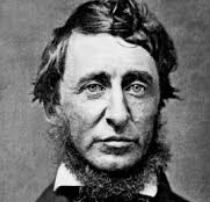
Indeed I am inclined to go so far as to say that the one cause for which one may properly make war is the cause of peace.
▼
Source
"Non-Resistance and The Present War - A Reply to Mr. Russell," International Journal of Ethics (April 1915), vol. 25, no. 3, pp. 307-316
4 months 3 weeks ago
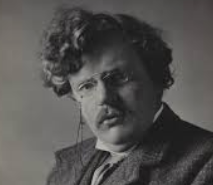
Either criticism is no good at all (a very defensible position) or else criticism means saying about an author the very things that would have made him jump out of his boots.
▼
Source
Appreciations and Criticisms of the Works of Charles Dickens (1911) Ch. 6: "Old Curiosity Shop"

4 months 3 weeks ago
Now precisely because Galilean science is, in the formation of its concepts, the technic of a specific Lebenswelt, it does not and cannot transcend this Lebenswelt. It remains essentially within the basic experiential framework and within the universe of ends set by this reality.
▼
Source
p. 164
4 months 3 weeks ago
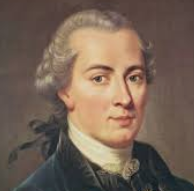
The greatest problem for the human race, to the solution of which Nature drives man, is the achievement of a universal civic society which administers law among men.
▼
Source
Fifth Thesis

4 months 3 weeks ago
I confess that I have as vast contemplative ends, as I have moderate civil ends: for I have taken all knowledge to be my province; and if I could purge it of two sorts of rovers, whereof the one with frivolous disputations, confutations, and verbosities, the other with blind experiments and auricular traditions and impostures, hath committed so many spoils, I hope I should bring in industrious observations, grounded conclusions, and profitable inventions and discoveries; the best state of that province. This, whether it be curiosity, or vain glory, or nature, or (if one take it favourably) philanthropia, is so fixed in my mind as it cannot be removed. And I do easily see, that place of any reasonable countenance doth bring commandment of more wits than of a man's own; which is the thing I greatly affect.
▼
Source
Letter to William Cecil, 1st Baron Burghley (ca. 1593), published in The Works of Francis Bacon: Baron of Verulam, Viscount St. Alban, and Lord High Chancellor of England, 14 Vols. (1870), James Spedding, Robert L. Ellis, Douglas D. Heath, editors, Vol. V
4 months 3 weeks ago
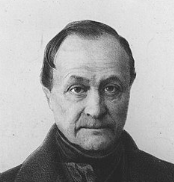
There are three successive states of morality answering to the three principal stages of human life; the personal, the domestic, and the social stage.
▼
Source
p. 104
4 months 3 weeks ago
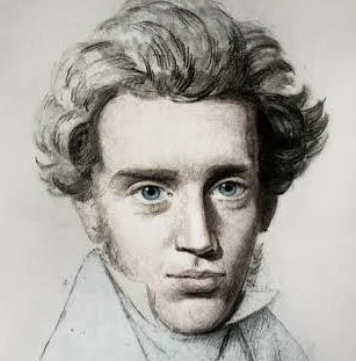
Forgetting when God does it in relation to sin, is the opposite of creating, since to create is to bring forth from nothing and to forget is to take back into nothing. What is hidden from my eyes, that I have never seen; but what is hidden behind my back, that I have seen. The one who loves forgives in this way; he forgives, he forgets, he blots out the sin, in love he turns toward the one he forgives; but when he turns toward him, he of course, cannot see what is lying behind his back.
▼
Source
p. 296
4 months 3 weeks ago
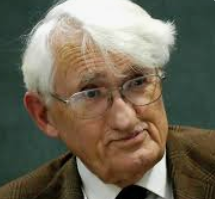
The usage of the words “public" and “public sphere” betrays a multiplicity of concurrent meanings. Their origins go back to various historical phases and, when applied synchronically to the conditions of a bourgeois society that is industrially advanced and constituted as a social-welfare state, they fuse into a clouded amalgam. Yet the very conditions that make the inherited language seem inappropriate appear to require these words, however confused their employment.
▼
Source
p. 1 as cited in: Gandy, M (1997) "Ecology, modernity and the intellectual legacy of the Frankfurt School". In: Light, A and Smith, JM, (eds.) Space, Place and Environmental Ethics. p. 240
4 months 3 weeks ago
My early work is politically anarchist fiction, in that I was an anarchist for a long period of time. I'm not an anarchist any longer, because I've concluded that anarchism is an impractical ideal. Nowadays, I regard myself as a libertarian. I suppose an anarchist would say, paraphrasing what Marx said about agnostics being "frightened atheists," that libertarians are simply frightened anarchists. Having just stated the case for the opposition, I will go along and agree with them: yes, I am frightened. I'm a libertarian because I don't trust the people as much as anarchists do. I want to see government limited as much as possible; I would like to see it reduced back to where it was in Jefferson's time, or even smaller. But I would not like to see it abolished. I think the average American, if left totally free, would act exactly like Idi Amin. I don't trust the people any more than I trust the government.
▼
Source
"Robert Anton Wilson: Searching For Cosmic Intelligence" - interview by Jeffrey Elliot (1980)
4 months 3 weeks ago
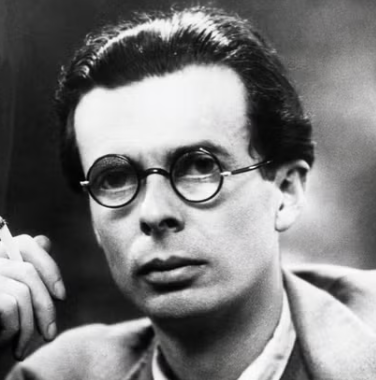
A totally unmystical world would be a world totally blind and insane.
▼
Source
Grey Eminence (1940)
4 months 3 weeks ago
A stiff apology is a second insult.
▼
Source
[http://books.google.com/books?id=2mpaAAAAMAAJ&q=%22A+stiff+apology+is+a+second+insult%22&pg=PA121#v=onpage "The Real Dr. Johnson"], The Common Man (1950)
4 months 3 weeks ago
Psychologists have hitherto failed to realize that imagination is a necessary ingredient of perception itself.
▼
Source
A 120
4 months 3 weeks ago
It is manifest that there is no danger at all in the proportion or quantity of knowledge, how large soever, lest it should make it swell or out-compass itself; no, but it is merely the quality of knowledge, which, be it in quantity more or less, if it be taken without the true corrective thereof, hath in it some nature of venom or malignity, and some effects of that venom, which is ventosity or swelling. This corrective spice, the mixture whereof maketh knowledge so sovereign, is charity, which the Apostle immediately addeth to the former clause; for so he saith, "Knowledge bloweth up, but charity buildeth up".
▼
Source
Book I
4 months 3 weeks ago
Self-accusation is the possibility of justification. The tax collector accused himself. There was no one else who accused him. It was not civic justice that seized him by the chest and said, “You are a criminal”: it was not the people whom he perhaps cheated who beat him on the breast and said, “You are a cheater” – but he beat his own breast and said, "God be merciful to me, a sinner. He accused himself, that he was a sinner before God.
▼
Source
Three Discourses at Friday Communion November 14, 1849 Hong translation 1997 P. 132
4 months 3 weeks ago
There are periods of history when the visions of madmen and dope fiends are a better guide to reality than the common-sense interpretation of data available to the so-called normal mind. This is one such period, if you haven't noticed already.
▼
Source
Part I : The Eye in the Pyramid, p. 32
4 months 3 weeks ago
Confronted, when the weather is fine and I am in propitious emotional circumstances, with certain landscapes, certain works of art, certain human beings, I know, for the time being, that God's in his heaven and all's right with the world. On other occasions, skies and destiny being inclement, I am no less immediately certain of the malignant impersonality of an uncaring universe. Every human being has had similar experiences. This being so, the sensible thing to do would be to accept the facts and frame a metaphysic to fit them. But with that talent for doing the wrong thing, that genius for perversity, so characteristically human, men have preferred, especially in recent times, to take another course. They have either denied the existence of these psychological facts; or if they have admitted them, have done so only to condemn as evil all such experiences as cannot be reconciled in a logical system with whatever particular class of experiences they have chosen, arbitrarily, to regard as "true" and morally valuable. Every man tries to pretend that he is consistently one kind of person and does his best consistently to worship one kind of God. And this despite the fact that he experiences diversity and actually feels himself in contact with a variety of divinities.
▼
Source
“One and Many,” pp. 3–4
4 months 3 weeks ago
It is amusing to think how much conservative ingenuity has been wasted in the defence of the House of Lords by men who were desperately endeavouring to prove that the House of Lords consisted of clever men. There is one really good defence of the House of Lords [...] and that is, that the House of Lords, in its full and proper strength, consists of stupid men. It really would be a plausible defence of that otherwise indefensible body to point out that the clever men in the Commons, who owed their power to cleverness, ought in the last resort to be checked by the average man in the Lords, who owed their power to accident.

4 months 3 weeks ago
Writing is like getting married. One should never commit oneself until one is amazed at one's luck.
▼
Source
The Black Prince (1973); 2003, p. 10.
4 months 3 weeks ago
The Palestinians living among us have, for the most part, earned a not unfounded reputation for being cheaters, because of their spirit of usury since their exile. Certainly, it seems strange to conceive of a nation of cheaters; but it is just as odd to think of a nation of merchants, the great majority of whom, bound by an ancient superstition that is recognized by the State they live in, seek no civil dignity and try to make up for this loss by the advantage of duping the people among whom they find refuge, and even one another. The situation could not be otherwise, given a whole nation of merchants, as non-productive members of society (for example, the Jews in Poland).
▼
Source
[https://books.google.ca/books?id=nRArBgAAQBAJ&pg=PA77 page 77 of 6 December 2012 publication by Springer Science & Business Media], translation by Mary J. Gregor (The Hague: Martinus Nijhoff, 1974) | [https://books.google.ca/books?id=4EmqLCWUFvEC&pg=PA23
4 months 3 weeks ago
There are four classes of Idols which beset men's minds. To these for distinction's sake I have assigned names — calling the first class, Idols of the Tribe; the second, Idols of the Cave; the third, Idols of the Market-Place; the fourth, Idols of the Theater.
▼
Source
Aphorism 39
4 months 3 weeks ago
When you are reading God's Word, it is not the obscure passages that bind you but what you understand, and with that you comply at once. If you understood only one single passage in all of Holy Scripture, well, then you must do that first of all, but you do not first have to sit down and ponder the obscure passages.
▼
Source
Soren Kierkegaard, For Self-Examination, Hong p. 29
4 months 3 weeks ago
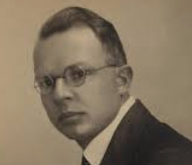
Logic is not concerned with human behavior in the same sense that physiology, psychology, and social sciences are concerned with it. These sciences formulate laws or universal statements which have as their subject matter human activities as processes in time. Logic, on the contrary, is concerned with relations between factual sentences (or thoughts). If logic ever discusses the truth of factual sentences it does so only conditionally, somewhat as follows: if such-and-such a sentence is true, then such-and-such another sentence is true. Logic itself does not decide whether the first sentence is true, but surrenders that question to one or the other of the empirical sciences.
▼
Source
Rudolf Carnap (1937) cited in: Irving J. Lee (1967) The Language of Wisdom and Folly: Background Readings in Semantics. International Society for General Semantics, p. 44
4 months 3 weeks ago
The end cannot justify the means for the simple and obvious reason that the means employed determine the nature of the ends produced.
▼
Source
Ch. 1, p. 10 [2012 reprint]
4 months 3 weeks ago
Ireland is a country in which the political conflicts are at least genuine; they are about something. They are about patriotism, about religion, or about money: the three great realities. In other words, they are concerned with what commonwealth a man lives in, or with what universe a man lives in, or with how he is to manage to live in either.
▼
Source
"The Irishman"
4 months 3 weeks ago
A person who already displays … cruelty to animals is also no less hardened towards men. We can already know the human heart, even in regard to animals.
▼
Source
Part II, p. 212
4 months 3 weeks ago
Alonso of Aragon was wont to say in commendation of age, that age appears to be best in four things — old wood best to burn, old wine to drink, old friends to trust, and old authors to read.
▼
Source
No. 97

4 months 3 weeks ago
The natural law is an instrument for progress, not a weapon of revolution.
4 months 3 weeks ago
And, oddly enough, even at times when the current style permitted a treatment of the less epileptic aspects of religion, no fully adequate rendering of the contemplative life was ever achieved in the plasdc arts of Christendom. The peace that passes all understanding was often sung and spoken; it was hardly ever painted or carved. Thus, in the writings of St. Bernard, of Albertus Magnus, of Eckhart and Tauler and Ruysbroeck one may find passages that express very clearly the nature and significance of mystical contemplation. But the saints who figure in medieval painting and sculpture tell us next to nothing about this anticipation of the beatific vision. There are no equivalents of those Far Eastern Buddhas and Bodhisattvas who incarnate, in stone and paint, the experience of ultimate reality.
4 months 3 weeks ago
The rich are the scum of the earth in every country.
▼
Source
Ch. XV: "The Songs of the Car Club"
4 months 3 weeks ago
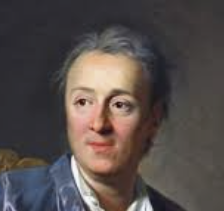
[Jews are] angry and brutish people, vile and vulgar men, slaves worthy of the yoke [Talmudism] which you bear... Go, take back your books and remove yourselves from me. [ The Talmud ] taught the Jews to steal the goods of Christians, to regard them as savage beasts, to push them over the precipice... to kill them with impunity and to utter every morning the most horrible imprecations against them.
▼
Source
See [https://books.google.com.br/books?id=gGR4DQAAQBAJ&pg=PT587 The Jews: A History], Second Edition, by John Efron, Steven Weitzman and Matthias Lehmann

4 months 3 weeks ago
I'm very proud that some people think that I'm a danger for the intellectual health of students. When people start thinking of health in intellectual activities, I think there is something wrong. In their opinion I am a dangerous man, since I am a crypto-Marxist, an irrationalist, a nihilist.
▼
Source
Truth, Power, Self : An Interview with Michel Foucault (25 October 1982)

4 months 3 weeks ago
I tore myself away from the safe comfort of certainties through my love for truth — and truth rewarded me.
▼
Source
All Said and Done (1972), p. 16
4 months 3 weeks ago
Democracy can hardly be expected to flourish in societies where political and economic power is being progressively concentrated and centralized. But the progress of technology has led and is still leading to just such a concentration and centralization of power.
▼
Source
Chapter 3 (p. 19)
4 months 3 weeks ago
And he smiles, but not as Sultans smile, and settles back the blade.... (But Don John of Austria rides home from the Crusade.)
▼
Source
Lepanto
4 months 3 weeks ago
If your little savage were left to himself and be allowed to retain all his ignorance, he would in time join the infant’s reasoning to the grown man’s passion, he would strangle his father and sleep with his mother.
4 months 3 weeks ago
Between the fine point of the brush and the steely gaze, the scene is about to yield up its volume.
▼
Source
Las Meninas
4 months 3 weeks ago
The present enshrines the past—and in the past all history has been made by men.
▼
Source
[http://books.google.com/books?id=kUW0AAAAIAAJ&q=%22The+present+enshrines+the+past+and+in+the+past+all+history+has+been+made+by+men%22&pg=PA122#v=onepage Introduction : Woman as Other]
4 months 3 weeks ago
Medical science has made such tremendous progress that there is hardly a healthy human left.
▼
Source
It appears in multiple anti-vaccination books, all by Trung Nguyen and a co-writer, circa 2018. In September 2021 it is echoed everywhere, including medical-journal articles (on various subjects), with no source given. Right above the Aldous Huxley "quote
4 months 3 weeks ago
Yet he is right enough about there being a white magic, if he only knows where to look for it.
4 months 3 weeks ago
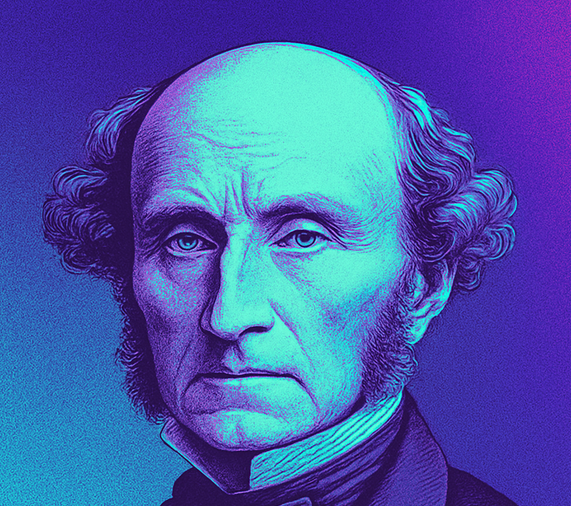
What is called the Law of Nations is not properly law, but a part of ethics: a set of moral rules, accepted as authoritative by civilized states. It is true that these rules neither are nor ought to be of eternal obligation, but do and must vary more or less from age to age, as the consciences of nations become more enlightened, and the exigences of political society undergo change. But the rules mostly were at their origin, and still are, an application of the maxims of honesty and humanity to the intercourse of states. They were introduced by the moral sentiments of mankind, or by their sense of the general interest, to mitigate the crimes and sufferings of a state of war, and to restrain governments and nations from unjust or dishonest conduct towards one another in time of peace. Since every country stands in numerous and various relations with the other countries of the world, and many, our own among the number, exercise actual authority over some of these, a knowledge of the established rules of international morality is essential to the duty of every nation, and therefore of every person in it who helps to make up the nation, and whose voice and feeling form a part of what is called public opinion. Let not any one pacify his conscience by the delusion that he can do no harm if he takes no part, and forms no opinion. Bad men need nothing more to compass their ends, than that good men should look on and do nothing. He is not a good man who, without a protest, allows wrong to be committed in his name, and with the means which he helps to supply, because he will not trouble himself to use his mind on the subject. It depends on the habit of attending to and looking into public transactions, and on the degree of information and solid judgment respecting them that exists in the community, whether the conduct of the nation as a nation, both within itself and towards others, shall be selfish, corrupt, and tyrannical, or rational and enlightened, just and noble.
▼
Source
Inaugural Address Delivered to the University of St. Andrews, Feb. 1st 1867 (1867) [http://books.google.com/books?id=DFNAAAAAcAAJ&pg=PA36 p. 36.]
4 months 3 weeks ago
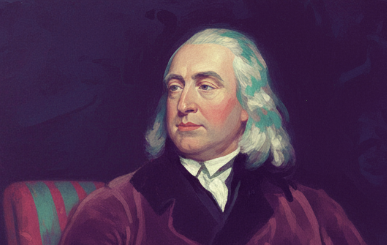
Judges of elegance and taste consider themselves as benefactors to the human race, whilst they are really only the interrupters of their pleasure … There is no taste which deserves the epithet good, unless it be the taste for such employments which, to the pleasure actually produced by them, conjoin some contingent or future utility: there is no taste which deserves to be characterized as bad, unless it be a taste for some occupation which has mischievous tendency.
▼
Source
Théorie des peines et des récompenses (1811); translation by Richard Smith, The Rationale of Reward, J. & H. L. Hunt, London, 1825, Bk. 3, Ch. 1
4 months 3 weeks ago
A real subjection is born mechanically from a fictitious relation. So it is not necessary to use force to constrain the convict to good behavior, the madman to calm, the worker to work, the schoolboy to application, the patient to the observation of the regulations
▼
Source
Part Four, Complete and austere institutions

4 months 3 weeks ago
Has a philosopher like you failed to discover that our country is more to be valued and higher and holier far than mother or father or any ancestor, and more to be regarded in the eyes of the gods and of men of understanding?
▼
Source
Crito
4 months 3 weeks ago
The great pessimists in the history of thought [...] have prepared our minds to understand that despair can be what it was for Nietzsche (though on an infra-ontological level and in a domain fraught with mortal dangers) the springboard to the loftiest affirmation.
4 months 3 weeks ago
Among a people without fellow-feeling, especially if they read and speak different languages, the united public opinion, necessary to the working of the representative government, cannot exist.
▼
Source
Ch. XVI: Of Nationality, As Connected with Representative Government (p. 382)
4 months 3 weeks ago
In the Greek conception of parrhesia... truth-having is guaranteed by the possession of... moral qualities... required... to know... and... convey such truth...
4 months 3 weeks ago
But the soul which has been polluted, and is impure at the time of her departure, and is the companion and servant of the body always, and is in love with and fascinated by the body and by the desires and pleasures of the body, until she is led to believe that the truth exists only in bodily form, which a man may touch and see and taste and use for the purposes of his lusts—the soul, I mean, accustomed to hate and fear and avoid the intellectual principle, which to the bodily eye is dark and invisible, and can be attained only by philosophy—do you suppose that such a soul as this will depart pure and unalloyed?

4 months 3 weeks ago
What does winter or autumn or spring or summer know of memory. They know nothing of memory. They know that seasons pass and return. They know that they are seasons. That they are time. And they know how to affirm themselves. And they know how to impose themselves. And they know how to maintain themselves, What does autumn know of summer. What sorrows do seasons have. None hate. None love. They just pass.
4 months 3 weeks ago
But he, with these burthens on him, planned, commenced, and completed, the History of India; and this in the course of about ten years, a shorter time than has been occupied (even by writers who had no other employment) in the production of almost any other historical work of equal bulk, and of anything approaching to the same amount of reading and research. And to this is to be added, that during the whole period, a considerable part of almost every day was employed in the instruction of his children: in the case of one of whom, myself, he exerted an amount of labour, care, and perseverance rarely, if ever, employed for a similar purpose, in endeavouring to give, according to his own conception, the highest order of intellectual education.
▼
Source
([https://archive.org/details/autobiography01mill/page/4/mode/1up p. 4])
4 months 3 weeks ago
Hatred is a feeling which leads to the extinction of values.
▼
Source
Cited in the Oxford Dictionary of Quotations by Subject, ed. Susan Ratcliffe (2010), p. 223
CivilSimian.com created by AxiomaticPanic, CivilSimian, Kalokagathia