

4 months 3 weeks ago
The means of production being the collective work of humanity, the product should be the collective property of the race. Individual appropriation is neither just nor serviceable. All belongs to all. All things are for all men, since all men have need of them, since all men have worked in the measure of their strength to produce them, and since it is not possible to evaluate every one's part in the production of the world's wealth. All things are for all. Here is an immense stock of tools and implements; here are all those iron slaves which we call machines, which saw and plane, spin and weave for us, unmaking and remaking, working up raw matter to produce the marvels of our time. But nobody has the right to seize a single one of these machines and say, "This is mine; if you want to use it you must pay me a tax on each of your products," any more than the feudal lord of medieval times had the right to say to the peasant, "This hill, this meadow belong to me, and you must pay me a tax on every sheaf of corn you reap, on every rick you build." All is for all! If the man and the woman bear their fair share of work, they have a right to their fair share of all that is produced by all, and that share is enough to secure them well-being. No more of such vague formulas as "The Right to work," or "To each the whole result of his labour." What we proclaim is The Right to Well-Being: Well-Being for All!
▼
Source
Variant: All things for all men, since all men have need of them, since all men worked to produce them in the measure of their strength, and since it is not possible to evaluate everyone's part in the production of the world's wealth... All is for all!

4 months 3 weeks ago
Old age is the harbor of all ills.
▼
Source
Bion, 47.
4 months 3 weeks ago
Although the whole of this life were said to be nothing but a dream and the physical world nothing but a phantasm, I should call this dream or phantasm real enough, if, using reason well, we were never deceived by it.
▼
Source
As quoted in The World of Mathematics (1956) by J. R. Newman, p. 1832
4 months 3 weeks ago
All men are almost led to believe not of proof, but by attraction. This way is base, ignoble, and irrelevant; every one therefore disavows it. Each one professes to believe and even to love nothing but what he knows to be worthy of belief and love.
4 months 3 weeks ago
I tell you that if natural bodies have it from Nature to be moved by any movement, this can only be circular motion, nor is it possible that Nature has given to any of its integral bodies a propensity to be moved by straight motion. I have many confirmations of this proposition, but for the present one alone suffices, which is this. I suppose the parts of the universe to be in the best arrangement, so that none is out of its place, which is to say that Nature and God have perfectly arranged their structure. This being so, it is impossible for those parts to have it from Nature to be moved in straight, or in other than circular motion, because what moves straight changes place, and if it changes place naturally, then it was at first in a place preternatural to it, which goes against the supposition. Therefore, if the parts of the world are well ordered, straight motion is superfluous and not natural, and they can only have it when some body is forcibly removed from its natural place, to which it would then return by a straight line, for thus it appears that a part of the earth does [move] when separated from its whole. I said "it appears to us," because I am not against thinking that not even for such an effect does Nature make use of straight line motion.
▼
Source
A note on this statement is included by Stillman Drake in his Galileo at Work, His Scientific Biography (1981): Galileo adhered to this position in his Dialogue at least as to the "integral bodies of the universe." by which he meant stars and planets, her
4 months 3 weeks ago
All this wonderful culture has entirely developed in the second half of the nineteenth century. Before that, it was quite primitive. But now the Paris gardener not only defies the soil—he would grow the same crops on an ashphalt pavement—he defies the climate. His walls, which are built to reflect light and to protect the wall-trees from the northern winds, his wall-tree shades and glass protectors, his frames and pépinières have made a real garden, a rich Southern garden, out of the suburbs of Paris. He has given to Paris the 'two degrees less of latitude' after which a French scientific writer was longing; he supplies his city with mountains of grapes and fruit at any season; and in the early spring he inundates and perfumes it with flowers. But he does not only grow articles of luxury. The culture of plain vegetables on a large scale is spreading every year; and the results are so good that there are now practical maraîchers who venture to maintain that if all the food, animal and vegetable, necessary for 4,500,000 inhabitants of the departments of Seine and had to be grown in their own territory (3,520 square miles), it could be grown without resorting to any other methods of culture than those already in use—methods already tested on a large scale and proved to be successful.
4 months 3 weeks ago
When Zeno was asked what a friend was, he replied, "Another I."
▼
Source
Zeno, 19.

4 months 3 weeks ago
In general, the form and the structure of the brains of quadrupeds are almost the same as those of the brain of man...
4 months 3 weeks ago
It has never been in my power to study anything, — mathematics, ethics, metaphysics, gravitation, thermodynamics, optics, chemistry, comparative anatomy, astronomy, psychology, phonetics, economics, the history of science, whist, men and women, wine, metrology, except as a study of semeiotic.
▼
Source
Letter to Victoria (23 December 1908)
4 months 3 weeks ago
The method of not erring is sought by all the world. The logicians profess to guide it, the geometricians alone attain it, and apart from science, and the imitations of it, there are no true demonstrations.
4 months 3 weeks ago
Wine is a mixture of moisture and light.
▼
Source
As quoted in Lorenzo Magalotti's Scientific and Scholarly Letter (1721)

4 months 3 weeks ago
There is no information about the thingness of the thing without knowledge of the kind of truth in which the thing stands. But there is no information about this truth of the thing without knowledge of the thingness of the thing whose truth is in question. Where are we to get a foothold? The ground slips away under us. Perhaps we are already close to falling into the well. At any rate the housemaids are already laughing. p. 27

4 months 3 weeks ago
Despair is like forward children, who, when you take away one of their playthings, throw the rest into the fire for madness. It grows angry with itself, turns its own executioner, and revenges its misfortunes on its own head.
▼
Source
p. 123 (Despair)
4 months 3 weeks ago
There are three basic problems: how a mind can know the world of nature, how it is possible for one mind to know another, and how it is possible to know the contents of our own minds without resort to observation or evidence. It is a mistake, I shall urge, to suppose that these questions can be collapsed into two, or taken into isolation.
▼
Source
Davidson. Subjective, Intersubjective, Objective, (2001) p. 208, as cited in: Dermot Moran (ed). The Routledge Companion to Twentieth Century Philosophy, (2008), p. 681
4 months 3 weeks ago
In fact, this infinitesimally spread-out consciousness is a direct feeling of its contents as spread out. In an infinitesimal interval we directly perceive the temporal sequence of its beginning, middle, and end... Now upon this interval follows another, whose beginning is the middle of the former, and whose middle is the end of the former. Here we have an immediate perception of the temporal sequence of its beginning, middle and end, or say, of the second, third, and fourth instants.
4 months 3 weeks ago
Ask professional philosophers of today to name the five most significant philosophers of the twentieth century and, whether they love him or loathe him, most will include Heidegger on the list.
▼
Source
Stephen Hicks, Nietzsche and the Nazis (2007), Occam's Razor, p. 10
4 months 3 weeks ago
One should not be deceived by philosophical works that pretend to be mathematical, but are merely dubious and murky metaphysics. Just because a philosopher can recite the words lemma, theorem and corollary doesn't mean that his work has the certainty of mathematics. That certainty does not derive from big words, or even from the method used by geometers, but rather from the utter simplicity of the objects considered by mathematics.
4 months 3 weeks ago
The sad thing about the optimist is his state of mind concerning himself.

4 months 3 weeks ago
Marx explains the alienation of labor as exemplified in, first, the relation of the worker to the product of his labor and, second, the relation of the worker to his own activity. P. 276
4 months 3 weeks ago
At this point in history when all things which concern man and the structure and elements of history itself are suddenly revealed to us in a new light, it behooves us in our scientific thinking to become masters of the situation, for it is not inconceivable that sooner than we suspect, as has often been the case before in history, this vision may disappear, the opportunity may be lost, and the world will once again present a static, uniform, and inflexible countenance.
4 months 3 weeks ago
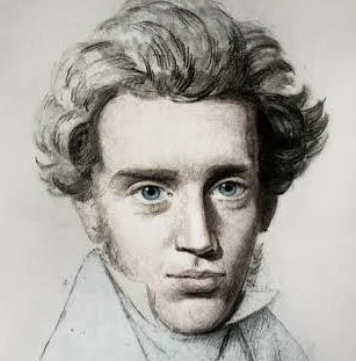
Be it understood, then, that what we have to do, as students of phenomenology, is simply to open our mental eyes and look well at the phenomenon and say what are the characteristics that are never wanting in it, whether that phenomenon be something that outward experience forces upon our attention, or whether it be the wildest of dreams, or whether it be the most abstract and general of the conclusions of science. The faculties which we must endeavor to gather for this work are three. The first and foremost is that rare faculty, the faculty of seeing what stares one in the face, just as it presents itself, unreplaced by any interpretation, unsophisticated by any allowance for this or for that supposed modifying circumstance. This is the faculty of the artist who sees for example the apparent colors of nature as they appear. When the ground is covered by snow on which the sun shines brightly except where shadows fall, if you ask any ordinary man what its color appears to be, he will tell you white, pure white, whiter in the sunlight, a little greyish in the shadow. But that is not what is before his eyes that he is describing; it is his theory of what ought to be seen. The artist will tell him that the shadows are not grey but a dull blue and that the snow in the sunshine is of a rich yellow. That artist's observational power is what is most wanted in the study of phenomenology. The second faculty we must strive to arm ourselves with is a resolute discrimination which fastens itself like a bulldog upon the particular feature that we are studying, follows it wherever it may lurk, and detects it beneath all its disguises. The third faculty we shall need is the generalizing power of the mathematician who produces the abstract formula that comprehends the very essence of the feature under examination purified from all admixture of extraneous and irrelevant accompaniments.
▼
Source
Lecture II : The Universal Categories, § 1 : Presentness, CP 5.41 - 42
4 months 3 weeks ago
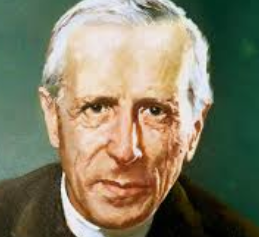
The reason I cannot really say that I positively enjoy nature is that I do not quite realize what it is that I enjoy. A work of art, on the other hand, I can grasp. I can — if I may put it this way — find that Archimedian point, and as soon as I have found it, everything is readily clear for me. Then I am able to pursue this one main idea and see how all the details serve to illuminate it.
▼
Source
Journals of Søren Kierkegaard 1A 8, 1834
4 months 3 weeks ago
To connect the two energies, of the body and the soul, in a coherent manner: science has provisionally decided to ignore the question... caught up as we are here in the logic of a system where the within of things has just as much or... more value than their without... we must advance.
4 months 3 weeks ago
I am not sure just what the unpardonable sin is, but I believe it is a disposition to evade the payment of small bills.
▼
Source
p. 146
4 months 3 weeks ago
The spontaneous reproduction of superimposed needs by the individual does not establish autonomy; it only testifies to the efficacy of the control.
▼
Source
p. 8
4 months 3 weeks ago
Our whole past experience is continually in our consciousness, though most of it sunk to a great depth of dimness. I think of consciousness as a bottomless lake, whose waters seem transparent, yet into which we can clearly see but a little way.
▼
Source
Vol. VII, par. 547
4 months 3 weeks ago
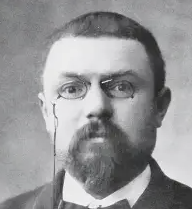
In physical reality one cause does not produce a given effect, but a multitude of distinct causes contribute to produce it, without our having any means of discriminating the part of each of them. ...Causes which have produced a certain effect will never be reproduced except approximately.
4 months 3 weeks ago
Death cannot explain itself. The earnestness consists precisely in this, that the observer must explain it to himself.
▼
Source
Pap VI B 120:13 1845
4 months 3 weeks ago
Joy is the most infallible sign of the presence of God.
▼
Source
Though often attributed to Chardin, it is found in Letters to His Fiancée (1937), by Léon Bloy, p. 57. "For the people who know the Bible and Tradition and the complete history of humanity, Joy is the most infallible sign of the presence of God and that i
4 months 3 weeks ago
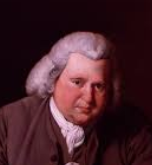
No radiant pearl which crested Fortune wears,No gem that twinkling hangs from Beauty's ears,Not the bright stars which Night's blue arch adorn,Nor rising suns that gild the vernal morn,Shine with such lustre as the tear that flowsDown Virtue's manly cheek for others' woes.
▼
Source
The Botanic Garden (1791), Part ii, Canto iii, l. 459.
4 months 3 weeks ago
Society … can afford to grant more than before because its interests have become the innermost drives of its citizens.
▼
Source
p. 72
4 months 3 weeks ago
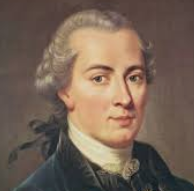
I come now to another part of my system, and because it suggests a lofty idea of the plan of creation, it appears to me as the most seductive. The sequence of ideas that led us to it is very simple and natural. They are as follows: let us imagine a system of stars gathered together in a common plane, like those of the Milky Way, but situated so far away from us that even with the telescope we cannot distinguish the stars composing it; let us assume that its distance, compared to that separating us from the stars of the Milky Way, is the same proportion as the Milky Way is to the distance from the earth to the sun; such a stellar world will appear to the observer, who contemplates it at so enormous a distance, only as a little spot feebly illumined and subtending a very small angle; its shape will be circular, if its plane is perpendicular to the line of sight, elliptical, if it is seen obliquely. The faintness of its light, its form, and its appreciable diameter will obviously distinguish such a phenomenon from the isolated stars around it.We do not need to seek far in the observations of astronomers to meet with such phenomena. They have been seen by various observers, who have wondered at their strange appearance, have speculated about them, and have suggested some times the most amazing explanations, sometimes theories which were more rational, but which had no more foundation than the former. We refer to the nebulæ, or, more precisely, to a particular kind of celestial body which M. de Maupertius describes as follows:"These are small luminous patches, only slightly more brilliant than the dark background of the sky; they have this in common, that their shapes are more or less open elipses; and their light is far more feeble than that of any other objects to be perceived in the heavens."...It is much more natural and reasonable to assume that a nebula is not a unique and solitary sun, but a system of numerous suns, which appear crowded, because of their distance, into a space so limited that their light, which would be imperceptible were each of them isolated, suffices, owing to their enormous numbers, to give a pale and uniform luster. Their analogy with our own system of stars; their form, which is precisely what it should be according to our theory; the faintness of their light, which denotes an infinite distance; all are in admirable accord and lead us to consider these elliptical spots as systems of the same order as our own—in a word, to be Milky Ways similar to the one whose constitution we have explained. And if these hypotheses, in which analogy and observation consistently lend mutual support, have the same merit as formal demonstrations, we must consider the existence of such systems as demonstrated...We see that scattered through space out to infinite distances, there exist similar systems of stars [nebulous stars, nebulæ], and that creation, in the whole extent of its infinite grandeur, is everywhere organized into systems whose members are in relation with one another.... A vast field lies open to discoveries, and observations alone will give the key.
▼
Source
Free translation, as quoted by Edwin Powell Hubble, The Realm of the Nebulae (1936)
4 months 3 weeks ago
Not merely in the realm of commerce but in the world of ideas as well our age is organizing a regular clearance sale. Everything is to be had at such a bargain that it is questionable whether in the end there is anybody who will want to bid. Every speculative price-fixer who conscientiously directs attention to the significant march of modern philosophy, every Privatdocent, tutor, and student, every crofter and cottar goes further. Perhaps it would be untimely and ill-timed to ask them where they are going.
▼
Source
Preface

4 months 3 weeks ago
2) "the a of différance also recalls that spacing is temporization, the detour and postponement by means of which intuition, perception, consummation - in a word, the relationship to the present, the reference to a present reality, to a being - are always deferred. Deferred by virtue of the very principle of difference which holds that an element functions and signifies, takes on or conveys meaning, only by referring to another past or future element in an economy of traces. This economic aspect of différance, which brings into play a certain not conscious calculation in a field of forces, is inseparable from the more narrowly semiotic aspect of différance.
▼
Source
p. 28
4 months 3 weeks ago
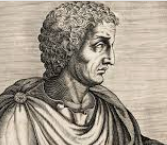
It was a custom with Apelles, to which he most tenaciously adhered, never to let any day pass, however busy he might be, without exercising himself by tracing some outline or other,—a practice which has now passed into a proverb. It was also a practice with him, when he had completed a work, to exhibit it to the view of the passers-by in his studio, while he himself, concealed behind the picture, would listen to the criticisms…. Under these circumstances, they say that he was censured by a shoemaker for having represented the shoes with one latchet too few. The next day, the shoemaker, quite proud at seeing the former error corrected, thanks to his advice, began to criticise the leg; upon which Apelles, full of indignation, popped his head out and reminded him that a shoemaker should give no opinion beyond the shoes, —a piece of advice which has equally passed into a proverbial saying.
▼
Source
Book XXXV, sec. 84.
4 months 3 weeks ago
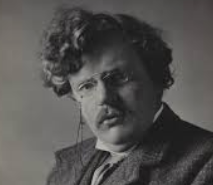
The Christ-child stood at Mary's knee, His hair was like a crown,And all the flowers looked up at him, And all the stars looked down.
▼
Source
A Christmas Carol, st. 4. The Wild Knight, &c., 2nd ed. (1906)
4 months 3 weeks ago
The supremacy of thought (consciousness) also pronounces the impotence of thought in an empirical world which philosophy transcends and corrects — in thought. The rationality in the name of which philosophy passed its judgments obtained that abstract and general purity” which made it immune against the world in which one had to live. With the exception of the materialistic “heretics,” philosophic thought was rarely afflicted by the afflictions of human existence. Paradoxically, it is precisely the critical intent in philosophic thought which leads to the idealistic purifications critical intent which aims at the empirical world as a whole, and not merely at certain modes of thinking or behaving within it. Defining its concepts in terms of potentialities which are of an essentially different order of thought and existence, the philosophic critique finds itself blocked by the reality from which it dissociates itself, and proceeds to construct a realm of Reason purged from empirical contingency. The two dimensions of thought — that of the essential and that of — the apparent truths — no longer interfere with each other, and their concrete dialectical relation becomes an abstract epistemological or ontological relation. The judgments passed on the given reality are replaced by propositions defining the general forms of thought, objects of thought, and relations between thought and its objects. The subject of thought becomes the pure and universal form of subjectivity, from which all particulars are removed.
▼
Source
pp. 135-136
4 months 3 weeks ago
The guardians who have kindly undertaken the supervision will see to it that by far the largest part of mankind, including the entire "beautiful sex," should consider the step into maturity, not only as difficult but as very dangerous. After having made their domestic animals dumb and having carefully prevented these quiet creatures from daring to take any step beyond the lead-strings to which they have fastened them, these guardians then show them the danger which threatens them, should they attempt to walk alone.
4 months 3 weeks ago
Is there anything we cannot contrive to call the demands of the times, and is there anything that does not acquire a certain prestige by being the demand of the times? But for decisive religious categories to become the demand for the times is eo ipso a contradiction. “The times” is too abstract a category to be able as claimant to demand the decisive religious categories that belong specifically to individuality and particularity; loud collective demands en mass for what can be shared only by the single individual in particularity, in solitariness, in silence, cannot be made.
▼
Source
Two Ages: The Age of Revolution and the Present Age. A Literary Review. By Soren Kierkegaard, 1846 edited and translated by Howard V. Hong and Edna H. Hong 1978 Princeton University Press P. 21

4 months 3 weeks ago
I shall maintain that there simply is no such thing as philosophical knowledge, nor any philosophical way of knowing anything, and defend the humble point that philosophy is indeed the love of wisdom.
▼
Source
The Review of Metaphysics (June, 1968) [https://www.jstor.org/stable/20124689] p. 615
4 months 3 weeks ago
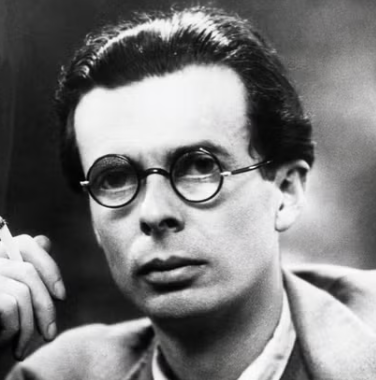
What the cinema can do better than literature or the spoken drama is to be fantastic.
▼
Source
"Where are the Movies Moving?" in Essays Old and New (1926)
4 months 3 weeks ago
The whole modern world has divided itself into Conservatives and Progressives. The business of Progressives is to go on making mistakes. The business of Conservatives is to prevent mistakes from being corrected. Even when the revolutionist might himself repent of his revolution, the traditionalist is already defending it as part of his tradition. Thus we have two great types — the advanced person who rushes us into ruin, and the retrospective person who admires the ruins. He admires them especially by moonlight, not to say moonshine. Each new blunder of the progressive or prig becomes instantly a legend of immemorial antiquity for the snob. This is called the balance, or mutual check, in our Constitution.
▼
Source
In The Illustrated London News (1924)
4 months 3 weeks ago
Natural science is throughout either a pure or an applied doctrine of motion.
▼
Source
Preface, Tr. Bax (1883)
4 months 3 weeks ago
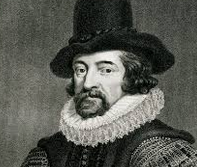
Jews hate the name of Christ and have a secret and innate rancor against the people among whom they live.
▼
Source
See [https://books.google.com.br/books?id=-bIAEAAAQBAJ&pg=PT190 Silent Truth] by Mark Edwards
4 months 3 weeks ago
What, exactly, have the errors of exegesis and philosophy done in order to confuse Christianity, and how have they confused Christianity? Quite briefly and categorically, they have simply forced back the sphere of paradox-religion into the sphere of aesthetics, and in consequence have succeeded in brings Christian terminology to such a pass that terms which, so long as they remain within their sphere, are qualitative categories, can be put to almost any use as clever expressions.
▼
Source
Of The Difference Between A Genius And An Apostle, Alexander Dru translation 1962 p. 89
4 months 3 weeks ago
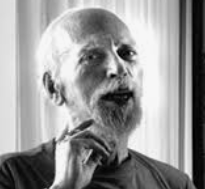
Existence is larger than any model that is not itself the exact size of existence (which has no size...)
▼
Source
Nature's God
4 months 3 weeks ago
Who lives longer? the man who takes heroin for two years and dies, or a man who lives on roast beef, water and potatoes 'till 95? One passes his 24 months in eternity. All the years of the beefeater are lived only in time.
▼
Source
The Shortcut: 20 Stories To Get You From Here To There (2006) by Kevin A Fabiano, p. 179
4 months 3 weeks ago
When we reverence anything in the mature, it is their virtues or their wisdom, and this is an easy matter. But we reverence the faults and follies of children. We should probably come considerably nearer to the true conception of things if we treated all grown-up persons, of all titles and types, with precisely that dark affection and dazed respect with which we treat the infantile limitations.
▼
Source
A Defence of Baby-Worship
4 months 3 weeks ago
There is needed, no doubt, a body of servants (ministerium) of the invisible church, but not officials (officiales), in other words, teachers but not dignitaries, because in the rational religion of every individual there does not yet exist a church as a universal union (omnitudo collectiva).
▼
Source
Book IV, Part 1, Section 1, “The Christian religion as a natural religion”
4 months 3 weeks ago
Touching the secrets of the heart and the successions of time, doth make a just and sound difference between the manner of the exposition of the Scriptures and all other books. For it is an excellent observation which hath been made upon the answers of our Saviour Christ to many of the questions which were propounded to Him, how that they are impertinent to the state of the question demanded: the reason whereof is, because not being like man, which knows man's thoughts by his words, but knowing man's thoughts immediately, He never answered their words, but their thoughts. Much in the like manner it is with the Scriptures, which being written to the thoughts of men, and to the succession of all ages, with a foresight of all heresies, contradictions, differing estates of the Church, yea, and particularly of the elect, are not to be interpreted only according to the latitude of the proper sense of the place, and respectively towards that present occasion whereupon the words were uttered, or in precise congruity or contexture with the words before or after, or in contemplation of the principal scope of the place; but have in themselves, not only totally or collectively, but distributively in clauses and words, infinite springs and streams of doctrine to water the Church in every part. And therefore as the literal sense is, as it were, the main stream or river, so the moral sense chiefly, and sometimes the allegorical or typical, are they whereof the Church hath most use; not that I wish men to be bold in allegories, or indulgent or light in allusions: but that I do much condemn that interpretation of the Scripture which is only after the manner as men use to interpret a profane book.
▼
Source
XXV. (17)
CivilSimian.com created by AxiomaticPanic, CivilSimian, Kalokagathia