
5 months ago
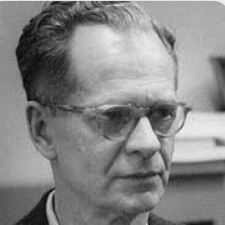
A person who has been punished is not thereby simply less inclined to behave in a given way; at best, he learns how to avoid punishment.
▼
Source
Beyond Freedom and Dignity (1971)
5 months ago
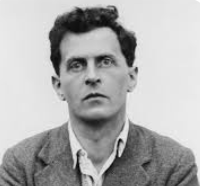
It is one of the chief skills of the philosopher not to occupy himself with questions which do not concern him.
▼
Source
Journal entry (1 May 1915)
5 months ago
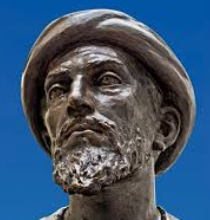
Teach your tongue to say "I do not know" and you will progress.
▼
Source
This is actually from the Talmud (Tractate Berachot 4a)
5 months ago
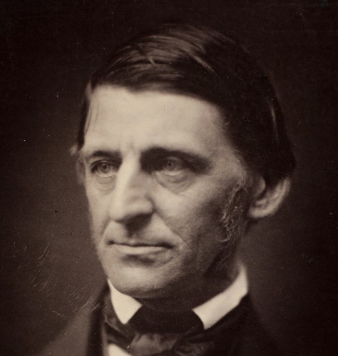
Don't say things. What you are stands over you the while, and thunders so that I cannot hear what you say to the contrary.
▼
Source
Social Aims; sometimes condensed to "What you do speaks so loud that I cannot hear what you say."
5 months ago
This book is his bible... the distilled wisdom of a lifetime spent contemplating the universe from angles and directions never before suspected.
▼
Source
Arthur C. Clarke, on Synergetics, as quoted in [http://books.google.com/books?id=yySY9lDdGqcC&pg=PA14 New Scientist, Vol. 66, No. 945 (17 April 1975), p. 146]
5 months ago
I hate relativism. I hate relativism more than I hate anything else, excepting, maybe, fiberglass powerboats... surely, surely, no one but a relativist would drive a fiberglass powerboat.
▼
Source
Précis of The Modularity of Mind, 1985.

5 months ago
When you close your doors, and make darkness within, remember never to say that you are alone, for you are not alone; nay, God is within, and your genius is within. And what need have they of light to see what you are doing?
▼
Source
Book I, ch. 14, § 13–14.

5 months ago
Evil destroyeth itself.
5 months ago
Death is not an event in life: we do not live to experience death. If we take eternity to mean not infinite temporal duration but timelessness, then eternal life belongs to those who live in the present. Our life has no end in just the way in which our visual field has no limits. (6.4311)
▼
Source
Der Tod ist kein Ereignis des Lebens. Den Tod erlebt man nicht. Wenn man unter Ewigkeit nicht unendliche Zeitdauer, sondern Unzeitlichkeit versteht, dann lebt der ewig, der in der Gegenwart lebt. Unser Leben ist ebenso endlos, wie unser Gesichtsfeld grenz
5 months ago
According to liberal political theory, as first formulated by John Locke, any individual citizen, oppressed by the rulers of the state, has a right to disobey their commands, break their laws, even rebel and seek to replace the rulers and change the laws.
▼
Source
"The Obligation to Disobey," Ethics, Vol. 77, No. 3 (April 1967), p. 163
5 months ago
What strength belongs to every plant and animal in nature. The tree or the brook has no duplicity, no pretentiousness, no show. It is, with all its might and main, what it is, and makes one and the same impression and effect at all times. All the thoughts of a turtle are turtles, and of a rabbit, rabbits. But a man is broken and dissipated by the giddiness of his will; he does not throw himself into his judgments; his genius leads him one way but 't is likely his trade or politics in quite another.
▼
Source
"The Natural History of Intellect", p. 46
5 months ago
We have overwhelming evidence that available information plus analysis does not lead to knowledge. The management science team can properly analyse a situation and present recommendations to the manager, but no change occurs. The situation is so familiar to those of us who try to practice management science that I hardly need to describe the cases.
▼
Source
C. West Churchman, "Managerial acceptance of scientific recommendations" in California Management Review, Vol 7 (1964), p. 33; cited in Management Systems (1971), by Peter P. Schoderbek, p. 199
5 months ago
Whatever you would make habitual, practice it; and if you would not make a thing habitual, do not practice it, but accustom yourself to something else.
▼
Source
Book II, ch. 18, § 4.
5 months ago
Pythagoras is the founder of European culture in the Western Mediterranean sphere.
▼
Source
Benjamin Farrington, Greek Science: Its Meaning for Us (1953)
5 months ago
IT is but too true, that for five and twenty centuries since the political and moral sciences have been cultivated, they have done nothing for the happiness of mankind. They have tended only to increase human perversity, to perpetuate indigence, and to reproduce the same evils under different forms. After all their fruitless attempts to ameliorate the social order, there remains to the authors of these sciences only the conviction their utter incompetency. The problem of human happiness is one which they have been wholly unable to solve. Meanwhile a universal restlessness attests that mankind has not attained to the destiny to which nature would lead it, and this restlessness would seem to presage some great event m which shall radically change its social condition. The nations of the earth harassed by misfortune, and so deceived by political empirics, still hope for a better future, and resemble the invalid who looks for a miraculous cure. Nature whispers in the ear of the human race, that for it is reserved a happiness, the means of attaining which are now unknown, and that some marvelous discovery will be made, which will suddenly dispel the darkness that now enshrouds the social world.
5 months ago
This is not for me, I want an entirely rural spot.
▼
Source
C 1920, expressing displeasure at a village that had a park with a fountain.
5 months ago
One should be prepared to receive ninety-nine percent of an enemy's attack and stare death right in the face in order to illumine the Path.
5 months ago
Nature is the best posture-master.
▼
Source
p. 167
5 months ago
Common to all these enemies is that none of them accepts the reality of the "whole system": we do not exist in such a system. Furthermore, in the case of morality, religion, and aesthetics, at least a part of our reality reality as human is not "in" any system, and yet it plays a central role in our lives. To me these enemies provide a powerful way of learning about the systems approach, precisely because they enable the rational mind to step outside itself and to observe itself (from the vantage point of the enemies).
▼
Source
p. 24; Partly as cited in: Reynolds, Martin (2003). "Social and Ecological Responsibility: A Critical Systemic Perspective." In: Critical Management Studies Conference 'Critique and Inclusively: Opening the Agenda'; in the stream OR/Systems Thinking for S
5 months ago
Oblivious of Democritus, the unwilling materialists of our day have generally been awkwardly intellectual and quite incapable of laughter. If they have felt anything, they have felt melancholy. Their allegiance and affection were still fixed on those mythical sentimental worlds which they saw to be illusory. The mechanical world they believed in could not please them, in spite of its extent and fertility. Giving rhetorical vent to their spleen and prejudice, they exaggerated nature's meagreness and mathematical dryness. When their imagination was chilled they spoke of nature, most unwarrantably, as dead, and when their judgment was heated they took the next step and called it unreal.
▼
Source
Ch. 3 "Mechanism"
5 months ago
Grief and disappointment give rise to anger, anger to envy, envy to malice, and malice to grief again, till the whole circle be completed.
▼
Source
Part 1, Section 4
5 months ago
Never call yourself a philosopher, nor talk a great deal among the unlearned about theorems, but act conformably to them. Thus, at an entertainment, don't talk how persons ought to eat, but eat as you ought. For remember that in this manner Socrates also universally avoided all ostentation. And when persons came to him and desired to be recommended by him to philosophers, he took and recommended them, so well did he bear being overlooked. So that if ever any talk should happen among the unlearned concerning philosophic theorems, be you, for the most part, silent. For there is great danger in immediately throwing out what you have not digested. And, if anyone tells you that you know nothing, and you are not nettled at it, then you may be sure that you have begun your business. For sheep don't throw up the grass to show the shepherds how much they have eaten; but, inwardly digesting their food, they outwardly produce wool and milk. Thus, therefore, do you likewise not show theorems to the unlearned, but the actions produced by them after they have been digested. (46).
5 months ago
Pythagoras was a man; and with all his imperfections on his head, we shall look among the race of men, for his better, in yain, yea, for his equal, or his second, but in vain. Pythagoras was entirely a Deist, a steady maintainer of the unity of God, and of the eternal obligations of moral virtue. No Christian writings, even to this day, can compete in sublimity and grandeur with what this illustrious philosopher has laid down concerning God, and the end of all our actions; and it is likely, says Bayle, that he would have carried his orthodoxy much farther, had he had the courage to expose himself to martyrdom.
▼
Source
Robert Taylor, The Diegesis (1829) p. 222
5 months ago
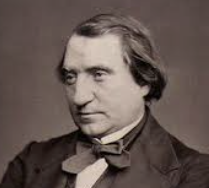
Jesus, in some respects, was an anarchist, for he had no idea of civil government. That government seems to him purely and simply an abuse.
▼
Source
Ch. 7.
5 months ago
If God had looked into our minds he would not have been able to see there whom we were speaking of.
▼
Source
Pt II, p. 217

5 months ago
Every land which belongs to God is our land.
▼
Source
As quoted in Islam and Nationalism, Dr. Ali Mohammed Naqvi. | Variant: "All land belongs to Muslims, because it belongs to their God." in : JPRS Report: Near East & South Asia, 93067 Foreign Broadcast Information Service, 1993 [https://books.google.com/bo
5 months ago
The purpose of life is not to be happy. It is to be useful, to be honorable, to be compassionate, to have it make some difference that you have lived and lived well.
▼
Source
Attributed to Emerson in Life's Instructions for Wisdom, Success, and Happiness (2000) by H. Jackson Brown Jr., as well as numerous online sources since, the article [https://quoteinvestigator.com/2014/11/29/purpose/ "The Purpose of Life Is Not To Be Happ
5 months ago
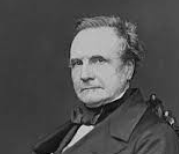
ENGLAND has invited the civilized world to meet in its great commercial centre; asking it, in friendly rivalry, to display for the common advantage of all, those objects which each country derives from the gifts of nature, and on which it confers additional utility by processes of industrial art.This invitation, universally accepted, will bring from every quarter a multitude of people greater than has yet assembled in any western city: these welcome visitors will enjoy more time and opportunity for observation than has ever been afforded on any previous occasion. The statesman and the philosopher, the manufacturer and the merchant, and all enlightened observers of human nature, may avail themselves of the opportunity afforded by their visit to this Diorama of the Peaceful Arts, for taking a more correct view of the industry, the science, the institutions, and the government of this country. One object of these pages is, to suggest to such inquirers the agency of those deeper seated and less obvious causes which can be detected only by lengthened observation, and to supply them with a key to explain many of the otherwise incomprehensible characteristics of England.
▼
Source
p. v-vi: Preface
5 months ago
Profound skepticism is favorable to conventions, because it doubts that the criticism of conventions is any truer than they are.
▼
Source
"On My Friendly Critics"
5 months ago
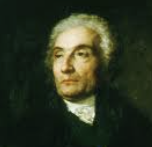
It is always necessary to call men back to history, which is the first master in politics, or more exactly the only master.
▼
Source
p. 120
5 months ago
The Christian Religion not only was at first attended with miracles, but even at this day cannot be believed by any reasonable person without one. Mere reason is insufficient to convince us of its veracity: and whoever is moved by Faith to assent to it, is conscious of a continued miracle in his own person, which subverts all the principles of his understanding, and gives him a determination to believe what is most contrary to custom and experience.
▼
Source
Section 10 : Of Miracles Pt. 2
5 months ago
We know that he (Pythagoras) went to India to be instructed; but the capacity of the learner determines his degree of proficiency, and if Pythagoras on his return had so little knowledge in geometry as to consider the forty-seventh of Euclid as a great discovery, he certainly was entirely incapable of acquiring the Indian method of calculation, through his deficiency of preparatory knowledge… each teacher, or head of sect that drew his knowledge from Indian sources, might conceal his instructions to be reckoned an inventor.
▼
Source
Reuben Burrow quoted in Dharampal, Collected Writings. Vol. I. Indian Science and Technology in the Eighteenth Century, 2000 quoted from Bhaskar Kamble, The Imperishable Seed: How Hindu Mathematics Changed the World and why this History was Erased, Garuda

5 months ago
Tyrants would distribute largess, a bushel of wheat, a gallon of wine, and a sesterce: and then everybody would shamelessly cry, “Long live the King!” The fools did not realize that they were merely recovering a portion of their own property, and that their ruler could not have given them what they were receiving without having first taken it from them.
▼
Source
Part 2
5 months ago
People nowadays think that scientists exist to instruct them, poets, musicians, etc. to give them pleasure. The idea that these have something to teach them — that does not occur to them.
▼
Source
p. 36e

5 months ago
In the interest of scientific work, more and more formulations in the unified language of unified science are becoming increasingly precise. No term of unified science, however, is free from imprecision, since all terms are based on terms that are essential for protocol statements, whose imprecision must be immediately obvious to everyone.
▼
Source
p. 91
5 months ago
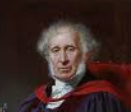
Truth has no greater enemy than its unwise defenders, and no warmer friends than those who, receiving it in a meek and tolerant spirit, respect the conscientious convictions of others, and seek, in study and in prayer, for the best solution of mysterious and incomprehensible revelations.
▼
Source
In his Memoirs of the Life, Writings, and Discoveries of Sir Isaac Newton, vol. 2 (Edinburgh: 1855)
5 months ago
But what a perfection of rottenness in a philosophy!
▼
Source
William James, of Santayana's The Interpretations of Poetry and Religion (1900), in a letter to George H. Palmer (1900), as quoted in George Santayana : A Biography (2003) by John McCormick
5 months ago
Nothing great has great beginnings.
▼
Source
XXIII, p. 73
5 months ago
A propensity to hope and joy is real riches: One to fear and sorrow, real poverty.
▼
Source
Part I, Essay 18: The Sceptic
5 months ago
Schiller writes in a letter [to Goethe, 17 December 1795] of a ‘poetic mood’. I think I know what he means, I think I am familiar with it myself. It is the mood of receptivity to nature and one in which one's thoughts seem as vivid as nature itself.
▼
Source
p. 75e

5 months ago
If on the morrow of the revolution, the masses of the people have only phrases at their service, if they do not recognize, by clear and blinding facts, that the situation has been transformed to their advantage, if the overthrow ends only in a change of persons and forumlae, nothing will have been achieved. … In order that the revolution should be something more than a word, in order that the reaction should not lead us back tomorrow to the situation of yesterday, the conquest of today must be worth the trouble of defending; the poor of yesterday must not be the poor today.
▼
Source
As quoted in Anarchism : A History Of Libertarian Ideas And Movements (2004) by George Woodcock | Variant: The poor of yesterday must not be poor tomorrow.

5 months ago
You are devoted to interests from which it is impossible to gain intelligence or prudence or a proper disposition of reverence toward the gods, but only stupid contention, unbridled ambition, vain grief, senseless joy, and raillery and extravagance.
▼
Source
Discourse 32, J. Cohoon and H. Crosby, trans. (1940), p. 177
5 months ago
Bacon's philosophy resembles this religion, which protests continually: it is entirely negative and thinks only to contradict. In indulging himself without measure in this natural inclination, he ends by contradicting himself without perceiving it, and by insulting in others his own most characteristic traits. Thus he blames abstractions without respite, and he makes only abstractions, in always coming back to his middle, general, and most general axioms, and in maintaining that individual instances do not merit the philosopher's attention. He never ceases to shower abuse on the science of words, and he only makes words. He upsets all the received nomenclature to substitute for them new terms, baroque or poetic, or both. With Bacon, neologism is a real disease, and always he believes he has acquired an idea when he has invented a word. He looks with pity at the alchemy that was fully operative in his time, and all his physics is only another alchemy quite babbling and wholly similar to children who talk a lot and produce nothing, as he said very well and very badly with respect to the ancient Greeks.
▼
Source
p. 317
5 months ago
The role of reason is not to make us wise but to reveal our ignorance
▼
Source
Commonly attributed to Hume, but without any apparent basis.
5 months ago
He lives in the same kind of tense excitement as I do, hardly able to sit still or read a book. He was talking about Beethoven — how a friend described going to Beethoven's door and hearing him 'cursing and howling and singing' over his new fugue; after a whole hour Beethoven at last came to the door, looking as if he had been fighting the devil, and had eaten nothing for 36 hours because his cook and parlour-maid had been away from his rage. That's the sort of man to be.
▼
Source
Bertrand Russell, letter to Lady Ottoline on April 23, 1912, quoted in Brian McGuinness, Young Ludwig: Wittgenstein's life, 1889-1921 (1988)
5 months ago
Has not experience demonstrated quite recently that Jack the Ripper performed his exploits under the eye of the London police — a most active force — and that he only left off killing when the population of Whitechapel itself began to give chase to him?And in our every-day relations with our fellow-citizens, do you think that it is really judges, gaolers, and police that hinder anti-social acts from multiplying? The judge, ever ferocious, because he is a maniac of law, the accuser, the informer, the police spy, all those interlopers that live from hand to mouth around the Law Courts, do they not scatter demoralization far and wide into society? Read the trials, glance behind the scenes, push your analysis further than the exterior facade of law courts, and you will come out sickened.

5 months ago
He used to say that it was better to have one friend of great value than many friends who were good for nothing.
▼
Source
Anarcharsis, 5.
5 months ago
The whole title by which you possess your property, is not a title of nature but of a human institution.
5 months ago
We are beginning to see that government by majorities means abandoning all the affairs of the country to the tide-waiters who make up the majorities in the House and in election committees; to those, in a word, who have no pinion of their own.
▼
Source
Ch. 3 : Anarchist Communism, p. 81
5 months ago
Another of his sayings was, that education was the best viaticum of old age.
▼
Source
Aristotle, 9.
CivilSimian.com created by AxiomaticPanic, CivilSimian, Kalokagathia