
5 months ago
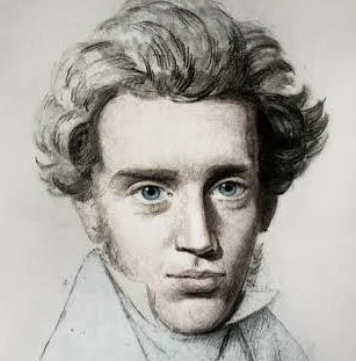
Posito I assume and when I say posito, I have the right to assume the unlikely; therefore posito, I assume that Mr. A.A., whose promises supposedly have not weakened him, went to work and wrote the system. Posito, I assume, and when I say posito, I have the right to assume what is more unreasonable than the most unreasonable; therefore; posito, I assume that if Mr. A.A. did not write the system, then Mr. B.B. wrote it-then what? Let us linger for a moment on this thought, with which, of course, we have all been familiar for several years: the thought of the prospect for the hope of the system. Therefore, in order to be very brief, posito, I assume that the system appeared here in Copenhagen, then what? Then one would indeed have to read it, unless Mr. C.C. would instantly be kind and philanthropic enough to promise a summary of the system and also position us in the point of view; then we would again be saved by the promise. If this does not happen, then of course one would have to read it. How troublesome, and who would finally benefit from that?
▼
Source
Prefaces, Nichol, 1997 p. 39-40
5 months ago
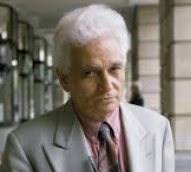
The time is out of joint. The world is going badly. It is worn but its wear no longer counts. Old age or youth-one no longer counts in that way. The world has more than one age. We lack the measure of the measure. We no longer realize the wear, we no longer take account of it as of a single age in the progress of history. Neither maturation, nor crisis, nor even agony. Something else. What is happening is happening to age itself, it strikes a blow at the teleological order of history. What is coming, in which the untimely appears, is happening to time but it does not happen in time. Contretemps. The time is out of joint. Theatrical speech, Hamlet's speech before the theater of the world, of history, and of politics. The age is off its hinges. Everything, beginning with time, seems out of kilter, unjust, dis-adjusted. The world is going very badly, it wears as it grows, as the Painter also says at the beginning of Timon of Athens (which is Marx's play, is it not). For, this time, it is a painter's speech, as if he were speaking of a spectacle or before a tableau: "How goes the world?-It wears, sir, as it grows.
▼
Source
Wear and Tears (tableu of a ageless world)
5 months ago
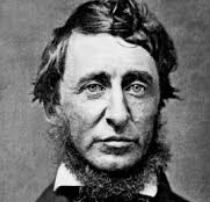
In reviewing the several levels of life which morality defines, we may observe two types of universal value. The lower values m relation to the higher are indispensable. There is no health without satisfaction, no achievement without health, no rational intercourse without achievement, and no true religion except as the perfecting and completing of a rational society. The higher values, on the other hand, are more universal than the lower in that they surpass these in validity, and are entitled to preference. Thus the lower values are ennobled by the higher, while the higher are given body and meaning by the lower. Satisfaction derives dignity from being controlled by the motive of good-will, while the moral kingdom at large derives its wealth, its pertinence to life, and its incentive, from the great manifold of particular interests which it conserves and fosters.
▼
Source
[https://books.google.com/books?id=TjdWAAAAMAAJ The Moral Economy] (1909)
5 months ago
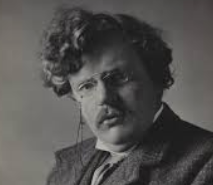
The whole difference between construction and creation is exactly this: that a thing constructed can only be loved after it is constructed; but a thing created is loved before it exists, as the mother can love the unborn child.
▼
Source
Appreciations and Criticisms of the Works of Charles Dickens (1911) Ch. 2: "Pickwick Papers"

5 months ago
The scientific abstraction from concreteness, the quantification of qualities which yield exactness as well as universal validity, involve a specific concrete experience of the Lebenswelt—a specific mode of “seeing” the world. And this “seeing,” in spite of its “pure,” disinterested character, is seeing within a purposive, practical context. It is anticipating (Voraussehen) and projecting (Vorhaben). Galilean science is the science of methodical, systematic anticipation and projection. But—and this is decisive—of a specific anticipation and projection—namely, that which experiences, comprehends, and shapes the world) in terms of calculable, predictable relationships among exactly identifiable units. In this project, universal quantifiability is a prerequisite for the domination of nature. Individual, non-quantifiable qualities stand in the way of an organization of men and things in accordance with the measurable power to be extracted from them. But this is a specific, socio-historical project, and the consciousness which undertakes this project is the hidden subject of Galilean science.
▼
Source
[describing the view of Husserl] p. 164
5 months ago
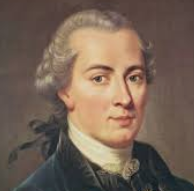
The means employed by Nature to bring about the development of all the capacities of men is their antagonism in society, so far as this is, in the end, the cause of a lawful order among men.
▼
Source
Fourth Thesis
5 months ago
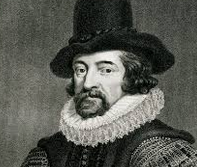
Libraries are as the shrine where all the relics of the ancient saints, full of true virtue, and that without delusion or imposture, are preserved and reposed.
5 months ago
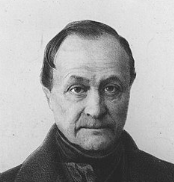
It was under Catholic Feudalism that they were first united; a union for which their incorporation into the Roman empire had prepared them, and which was finally organized by the incomparable genius of Charlemagne.
▼
Source
p. 88
5 months ago
Spontaneous love can reach the point of despair, shows that it is in despair, that even when it is happy it loves with the power of despair.
▼
Source
p. 40
5 months ago
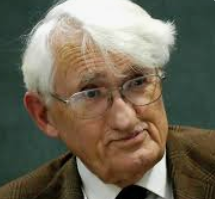
This investigation aims to analyze the type "bourgeois public sphere". Its particular approach is required, to begin with, by the difficulties specific to an object whose complexity precludes exclusive reliance on the specialized methods of a single discipline. Rather, the category. "public sphere" must be investigated within the broad field formerly reflected in the perspective of the traditional science of "politics."' When particular social-scientific discipline, this object disintegrates. The problems that result from fusing aspects of sociology and economics, of constitutional law and political science, and of social and intellectual history are obvious: given the present state of differentiation and specialization in the social sciences, scarcely anyone will be able to master several, let alone all, of these disciplines.
▼
Source
p.xvii
5 months ago
The Western World has been brainwashed by Aristotle for the last 2,500 years. The unconscious, not quite articulate, belief of most Occidentals is that there is one map which adequately represents reality. By sheer good luck, every Occidental thinks he or she has the map that fits. Guerrilla ontology, to me, involves shaking up that certainty. I use what in modern physics is called the "multi-model" approach, which is the idea that there is more than one model to cover a given set of facts. As I've said, novel writing involves learning to think like other people. My novels are written so as to force the reader to see things through different reality grids rather than through a single grid. It's important to abolish the unconscious dogmatism that makes people think their way of looking at reality is the only sane way of viewing the world. My goal is to try to get people into a state of generalized agnosticism, not agnosticism about God alone, but agnosticism about everything. If one can only see things according to one's own belief system, one is destined to become virtually deaf, dumb, and blind. It's only possible to see people when one is able to see the world as others see it. That's what guerrilla ontology is — breaking down this one-model view and giving people a multi-model perspective.
▼
Source
[http://www.rawilsonfans.com/articles/Starship.htm "Robert Anton Wilson: Searching For Cosmic Intelligence" - interview with Jeffrey Elliot (1980)]
5 months ago
As for 'taking sides' — the choice, it seems to me, is no longer between two users of violence, two systems of dictatorship. Violence and dictatorship cannot produce peace and liberty; they can only produce the results of violence and dictatorship, results with which history has made us only too sickeningly familiar. The choice now is between militarism and pacifism. To me, the necessity of pacifism seems absolutely clear.
▼
Source
Authors Take Sides on the Spanish War (1937) edited by Nancy Cunard and published by the Left Review
5 months ago
Half the trouble about the modern man is that he is educated to understand foreign languages and misunderstand foreigners.
▼
Source
[http://books.google.com/books?id=9_m6AAAAIAAJ&q=%22Half+the+trouble+about+the+modern+man+is+that+he+is+educated+to+understand+foreign+languages+and+misunderstand+foreigners%22&pg=PA322#v=onepage The Autobiography of G. K. Chesterton] (1936)
5 months ago
Thoughts without content are empty, intuitions without concepts are blind. The understanding can intuit nothing, the senses can think nothing. Only through their unison can knowledge arise.
▼
Source
A 51, B 75
5 months ago
The greatest error of all the rest is the mistaking or misplacing of the last or farthest end of knowledge: for men have entered into a desire of learning and knowledge, sometimes upon a natural curiosity and inquisitive appetite; sometimes to entertain their minds with variety and delight; sometimes for ornament and reputation; and sometimes to enable them to victory of wit and contradiction; and most times for lucre and profession; and seldom sincerely to give a true account of their gift of reason, to the benefit and use of men: as if there were sought in knowledge a couch whereupon to rest a searching and restless spirit; or a tarrasse, for a wandering and variable mind to walk up and down with a fair prospect; or a tower of state, for a proud mind to raise itself upon; or a fort or commanding ground, for strife and contention; or a shop, for profit or sale; and not a rich storehouse, for the glory of the Creator and the relief of man's estate.
▼
Source
Book I, v, 11
5 months ago
Let us then in the brief prescribed moments simply consider the tax collector. Throughout all the ages he has been presented as the prototype of an honest and God-fearing churchgoer. Yet is seems to me that he is even more closely related to going to Communion, he who said, “God, be merciful to me, a sinner.” Is it not as if he were now going to Communion, he of whom it is said, “He went home to his house justified” – is it not as if he now went home from Communion!
▼
Source
Three Discourses at Friday Communion November 14, 1849 Hong translation 1997 P. 128
5 months ago
Various medical authorities swarm in and out of here predicting I have between two days and two months to live. I think they are guessing. I remain cheerful and unimpressed. I look forward without dogmatic optimism but without dread. I love you all and I deeply implore you to keep the lasagna flying. Please pardon my levity, I don't see how to take death seriously. It seems absurd.
▼
Source
[http://robertantonwilson.blogspot.com/2007/01/do-not-go-gently-into-that-good-night.html "Do Not Go Gently Into That Good Night" final blog entry (6 January 2007)]
5 months ago
Jehovah, Allah, the Trinity, Jesus, Buddha, are names for a great variety of human virtues, human mystical experiences, human remorses, human compensatory fantasies, human terrors, human cruelties. If all men were alike, all the world would worship the same God.
▼
Source
“One and Many,” p. 3
5 months ago
There is no such thing on earth as an uninteresting subject; the only thing that can exist is an uninterested person.
5 months ago
Almost anything that consoles us is a fake.
▼
Source
The Sovereignty of Good (1970) p. 59.
5 months ago
For instance, if you have by a lie hindered a man who is even now planning a murder, you are legally responsible for all the consequences. But if you have strictly adhered to the truth, public justice can find no fault with you, be the unforeseen consequence what it may. It is possible that whilst you have honestly answered Yes to the murderer’s question, whether his intended victim is in the house, the latter may have gone out unobserved, and so not have come in the way of the murderer, and the deed therefore have not been done; whereas, if you lied and said he was not in the house, and he had really gone out (though unknown to you) so that the murderer met him as he went, and executed his purpose on him, then you might with justice be accused as the cause of his death. For, if you had spoken the truth as well as you knew it, perhaps the murderer while seeking for his enemy in the house might have been caught by neighbours coming up and the deed been prevented.
5 months ago
Further, it will not be amiss to distinguish the three kinds and, as it were, grades of ambition in mankind. The first is of those who desire to extend their own power in their native country, a vulgar and degenerate kind. The second is of those who labor to extend the power and dominion of their country among men. This certainly has more dignity, though not less covetousness. But if a man endeavor to establish and extend the power and dominion of the human race itself over the universe, his ambition (if ambition it can be called) is without doubt both a more wholesome and a more noble thing than the other two. Now the empire of man over things depends wholly on the arts and sciences. For we cannot command nature except by obeying her.
▼
Source
Aphorism 129
5 months ago
Imagine a lover who has received a letter from his beloved – I assume that God's Word is just as precious to you as this letter is to the lover. I assume that you read and think you ought to read God's Word in the same way the lover reads this letter.
▼
Source
Soren Kierkegaard, For Self-Examination, Hong p. 26
5 months ago
When I met Wittgenstein, I saw that Schlick's warnings were fully justified. But his behavior was not caused by any arrogance. In general, he was of a sympathetic temperament and very kind; but he was hypersensitive and easily irritated. Whatever he said was always interesting and stimulating and the way in which he expressed it was often fascinating. His point of view and his attitude toward people and problems, even theoretical problems, were much more similar to those of a creative artist than to those of a scientist; one might almost say, similar to those of a religious prophet or a seer. When he started to formulate his view on some specific problem, we often felt the internal struggle that occurred in him at that very moment, a struggle by which he tried to penetrate from darkness to light under an intense and painful strain, which was even visible on his most expressive face. When finally, sometimes after a prolonged arduous effort, his answers came forth, his statement stood before us like a newly created piece of art or a divine revelation. Not that he asserted his views dogmatically … But the impression he made on us was as if insight came to him as through divine inspiration, so that we could not help feeling that any sober rational comment of analysis of it would be a profanation.
▼
Source
Rudolf Carnap, as quoted in The Philosophy of Rudolf Carnap (1963) by Paul Arthur Schilpp, p. 25, and in Ludwig Wittgenstein : The Duty of Genius (1991) by Ray Monk, p. 244
5 months ago
Technological progress has merely provided us with more efficient means for going backwards.
▼
Source
Ch. 1, p. 9 [2012 reprint]. Also in "Tomorrow and Tomorrow and Tomorrow" in Adonis and the Alphabet (1956); later in Collected Essays (1959), p. 293
5 months ago
A man must be orthodox upon most things, or he will never even have time to preach his own heresy.
▼
Source
"The Problem of a Preface"
5 months ago
Suicide evokes revulsion with horror, because everything in nature seeks to preserve itself: a damaged tree, a living body, an animal; and in man, then, is freedom, which is the highest degree of life, and constitutes the worth of it, to become now a principium for self-destruction? This is the most horrifying thing imaginable. For anyone who has already got so far as to be master, at any time, over his own life, is also master over the life of anyone else; for him, the door stands open to every crime, and before he can be seized he is ready to spirit himself away out of the world. So suicide evokes horror, in that a man thereby puts himself below the beasts. We regard a suicide as a carcase, whereas we feel pity for one who meets his end through fate.
▼
Source
Part II, p. 146
5 months ago
Sir Amice Pawlet, when he saw too much haste made in any matter, was wont to say. "Stay a while, that we may make an end the sooner."
▼
Source
No. 76
5 months ago
I know of no other great writer in the whole nineteenth century, perhaps even in the whole of world literature, to whom I respond with less happiness and with a more profound sense that I am on trial and found wanting, unless it were Søren Kierkegaard.
5 months ago
The conflict is not really between royalty and democracy. It is between both and plutocracy, which, having destroyed the royal power by frank force under democratic pretexts, has bought and swallowed democracy.
5 months ago
Progress and Nationalism—those were the two great ideas He put into their heads. Progress—the theory that you can get something for nothing; the theory that you can gain in one field without paying for your gain in another; the theory that you alone understand the meaning of history; the theory that you know what’s going to happen fifty years from now; the theory that, in the teeth of all experience, you can foresee all the consequences of your present actions; the theory that Utopia lies just ahead and that, since ideal ends justify the most abominable means, it is your privilege and duty to rob, swindle, torture, enslave and murder all those who, in your opinion (which is, by definition, infallible), obstruct the onward march to the earthly paradise. Remember that phrase of Karl Marx’s: ‘Force is the midwife of Progress.’ He might have added—but of course Belial didn’t want to let the cat out of the bag at that early stage of the proceedings—that Progress is the midwife of Force. Doubly the midwife, for the fact of technological progress provides people with the instruments of ever more indiscriminate destruction, while the myth of political and moral progress serves as the excuse for using those means to the very limit. I tell you, my dear sir, an undevout historian is mad. The longer you study modern history, the more evidence you find of Belial’s Guiding Hand.
▼
Source
Dr. Poole, p. 94 of Bantam 1958 edition [https://archive.org/details/apeessence00huxl/page/94/mode/2up?view=theater]
5 months ago
There is no great harm in the theorist who makes up a new theory to fit a new event. But the theorist who starts with a false theory and then sees everything as making it come true is the most dangerous enemy of human reason.
▼
Source
Ch. IX: "The Higher Criticism and Mr. Hibbs"

5 months ago
Happiest are the people who give most happiness to others.
▼
Source
As quoted in Happyology by Harald W. Tietze, p. 28

5 months ago
I don't feel that it is necessary to know exactly what I am. The main interest in life and work is to become someone else that you were not in the beginning. If you knew when you began a book what you would say at the end, do you think that you would have the courage to write it? What is true for writing and for a love relationship is true also for life. The game is worthwhile insofar as we don't know what will be the end. My field is the history of thought. Man is a thinking being.
▼
Source
Truth, Power, Self : An Interview with Michel Foucault (25 October 1982)

5 months ago
But presently I began to bubble with happiness. No, my daughters' absence did not sadden me at all—quite the reverse. I could drive as fast or as slowly as I liked, go where I liked, stop when the whim took me. I made up my mind to spend the week wandering about. I get up as soon as it is light. The car is waiting for me in the street or in the courtyard like a faithful animal; it is wet with dew; I wipe its eyes, and full of delight I tear away through the growing sunlight.
▼
Source
The Woman Destroyed [La Femme rompue] (1967)
5 months ago
Liberty, as we all know, cannot flourish in a country that is permanently on a war footing, or even a near war footing. Permanent crisis justifies permanent control of everybody and everything by the agencies of central government.
▼
Source
Chapter 1 (p. 14)
5 months ago
Cervantes on his galley sets the sword back in the sheath, (Don John of Austria rides homeward with a wreath.)
▼
Source
Lepanto
5 months ago
We swallow greedily any lie that flatters us, but we sip only little by little at a truth we find bitter.
5 months ago
Absurdity destroys the and of the enumeration by making impossible the in where the things enumerated would be divided up.
▼
Source
Preface
5 months ago
When an individual (or a group of individuals) is kept in a situation of inferiority, the fact is that he is inferior. But the significance of the verb to be must be rightly understood here; it is in bad faith to give it a static value when it really has the dynamic Hegelian sense of "to have become." Yes, women on the whole are today inferior to men; that is, their situation affords them fewer possibilities. The question is: should that state of affairs continue? Many men hope that it will continue; not all have given up the battle.
▼
Source
Introduction : Woman as Other
5 months ago
The only good that I can see in the demonstration of the truth of "Spiritualism" is to furnish an additional argument against suicide. Better live a crossing-sweeper than die and be made to talk twaddle by a "medium" hired at a guinea a séance.
▼
Source
T. H. Huxley in Life and Letters Volume 1, p. 249
5 months ago
'I'm afraid I'm a practical man,' said the doctor with gruff humour, 'and I don't bother much about religion and philosophy.' 'You'll never be a practical man till you do,' said Father Brown. 'Look here, doctor; you know me pretty well; I think you know I'm not a bigot. You know I know there are all sorts in all religions; good men in bad ones and bad men in good ones.
5 months ago
The application of algebra to geometry... far more than any of his metaphysical speculations, has immortalized the name of Descartes, and constitutes the greatest single step ever made in the progress of the exact sciences.
▼
Source
An Examination of Sir William Hamilton's Philosophy (1865) as quoted in 5th ed. (1878) [https://books.google.com/books?id=ojQNAQAAMAAJ&pg=PA617 p. 617.]
5 months ago
Want keeps pace with dignity. Destitute of the lawful means of supporting his rank, his dignity presents a motive for malversation, and his power furnishes the means.
▼
Source
[http://books.google.com/books?id=W2lYAAAAMAAJ&pg=PA246&dq=malversation&hl=en&ei=TQlHTKuqHYfJnAespJjOBA&sa=X&oi=book_result&ct=result&resnum=28&ved=0CKsBEOgBMBs4ZA#v=onepage&q=malversation&f=false The Rationale of Reward (1811)]
5 months ago
We are aware of all the inconveniences of prison, and that it is dangerous when it is not useless. And yet one cannot 'see' how to replace it. It is the detestable solution, which one seems unable to do without.
▼
Source
Part Four, Complete and austere institutions

5 months ago
One should never do wrong in return, nor mistreat any man, no matter how one has been mistreated by him.
▼
Source
Plato, Crito 49c–d (translated by G.M.A. Grube)
5 months ago
the world we live in permits - and may even seem to counsel - absolute dispair, yet it is only such a world that can give rise to an unconquerable hope.
5 months ago
In a really equal democracy, every or any section would be represented, not disproportionately, but proportionately. ... Unless they are, there is not equal government, but a government of inequality and privilege: one part of the people rule over the rest: there is a part whose fair and equal share of influence in the representation is withheld from them, contrary to all just government, but, above all, contrary to the principle of democracy, which professes equality as its very root and foundation.
▼
Source
Ch. VII: Of True and False Democracy; Representation of All, and Representation of the Majority only (p. 248)
5 months ago
The second characteristic of parrhesia... there is always an exact coincidence between belief and truth.
5 months ago
The soul is in the very likeness of the divine, and immortal, and intelligible, and uniform, and indissoluble, and unchangeable; and the body is in the very likeness of the human, and mortal, and unintelligible, and multiform, and dissoluble, and changeable.
CivilSimian.com created by AxiomaticPanic, CivilSimian, Kalokagathia