
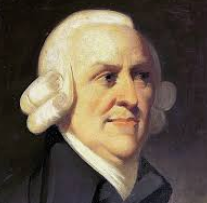
5 months ago
Consumption is the sole end and purpose of all production; and the interest of the producer ought to be attended to, only so far as it may be necessary for promoting that of the consumer.
▼
Source
Chapter VIII, p. 719.
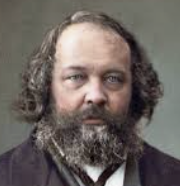
5 months ago
The first revolt is against the supreme tyranny of theology, of the phantom of God. As long as we have a master in heaven, we will be slaves on earth.
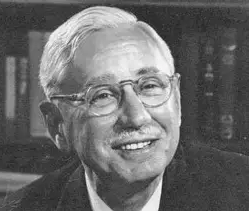
5 months ago
Life is that which is discontent, which struggles and seeks, which suffers and creates.
▼
Source
Ch. 1 : Our life begins

5 months ago
The greatness of the human being consists in this: that it is capable of the universe.
▼
Source
q. 1, art. 2, ad 4

5 months ago
One of the most erudite as well as one of the most spiritual, of the literati of any age or people, and certainly the most estimable of all the extant Greek philosophers after the days of Plutarch.
▼
Source
Howard Williams, [http://www.ivu.org/history/williams/porphyry.html The Ethics of Diet]
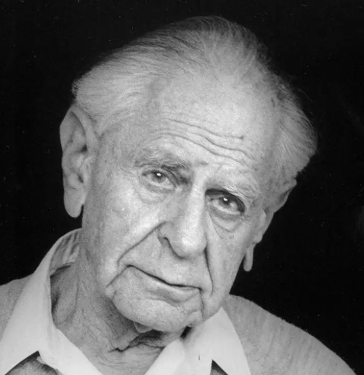
5 months ago
Through my association with Popper I experienced a great liberation in escaping from the rigid conventions that are generally held with respect to scientific research. ... When one is liberated from these restrictive dogmas, scientific investigation becomes an exciting adventure opening up new visions; and this attitude has, I think, been reflected in my own scientific life since that time.
▼
Source
John Eccles, "Under the spell of the synapse," The Neurosciences: Paths of Discovery ed. F. G. Worden, J. P. Swazey, G. Adelman (1976)
5 months ago
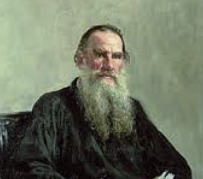
Slavery exists in full vigor, but we do not perceive it, just as in Europe at the end of the Eighteenth Century the slavery of serfdom was not perceived.People of that day thought that the position of men obliged to till the land for their lords, and to obey them, was a natural, inevitable, economic condition of life, and they did not call it slavery.It is the same among us: people of our day consider the position of the laborer to be a natural, inevitable economic condition, and they do not call it slavery. And as, at the end of the Eighteenth Century, the people of Europe began little by little to understand that what formerly seemed a natural and inevitable form of economic life-namely, the position of peasants who were completely in the power of their lords-was wrong, unjust and immoral, and demanded alteration, so now people today are beginning to understand that the position of hired workmen, and of the working classes in general, which formerly seemed quite right and quite normal, is not what it should be, and demands alteration.
▼
Source
Chapter 8: Slavery Exists Among Us
5 months ago
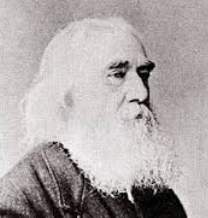
Those who are capable of tyranny are capable of perjury to sustain it.
▼
Source
An Essay on the Trial by Jury, Boston, MA: John P. Jewett and Company, Cleveland, Ohio: Jewett, Proctor & Worthington (1852) p. 14 [http://www.gutenberg.org/files/32984/32984-h/32984-h.htm]
5 months ago
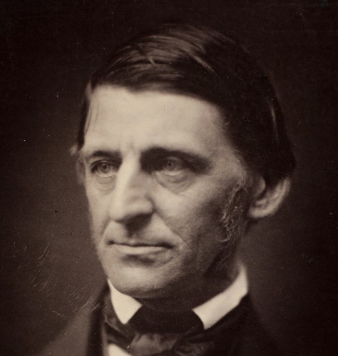
The sublime is excited in me by the great stoical doctrine, Obey thyself.
▼
Source
p. 14
5 months ago
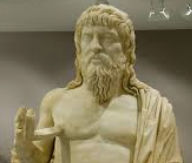
The natural philosopher Heraclitus said that man is naturally irrational. If this is true, as it is true, then everyone who enjoys futile glory should hide his face.
▼
Source
to Euphrates, Epp. Apoll. 18
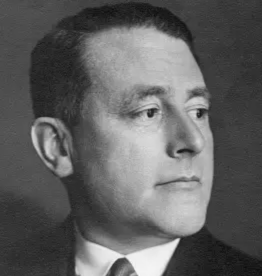
5 months ago
In a community, the constitution of which provides for a legislator and a law, it is the concern of the legislator and of the laws given by him to ascertain the mediation through calculable and attainable rules and to prevent the terror of the direct and automatic enactment of values. That is a very complicated problem, indeed. One may understand why law-givers all along world history, from Lycurgus to Solon and Napoleon have been turned into mythical figures. In the highly industrialized nations of our times, with their provisions for the organization of the lives of the masses, the mediation would give rise to a new problem. Under the circumstances, there is no room for the law-giver, and so there is no substitute for him. At best, there is only a makeshift which sooner or later is turned into a scapegoat, due to the unthankful role it was given to play.A jurist who interferes, and wants to become the direct executor of values should know what he is doing. He must recall the origins and the structure of values and dare not treat lightly the problem of the tyranny of values and of the unmediated enactment of values. He must attain a clear understanding of the modern philosophy of values before he decides to become valuator, revaluator, upgrader of values. As a value-carrier and value-sensitive person, he must do that before he goes on to proclaim the positings of a subjective, as well as objective, rank-order of values in the form of pronouncements with the force of law.
5 months ago
That of beaver skins, of beaver wool, and of gum Senega, has been subjected to higher duties; Great Britain, by the conquest of Canada and Senegal, having got almost the monopoly of those commodities.
▼
Source
Chapter II, Part II, Article IV, p. 954-955.
5 months ago
One persistent strand in utopian thinking, as we have often mentioned, is the feeling that there is some set of principles obvious enough to be accepted by all men of good will, precise enough to give unambiguous guidance in particular situations, clear enough so that all will realize its dictates, and complete enough to cover all problems which actually arise. Since I do not assume that there are such principles, I do not presume that the political realm will whither away. The messiness of the details of a political apparatus and the details of how it is to be controlled and limited do not fit easily into one's hopes for a sleek, simple utopian scheme.
▼
Source
Ch. 10 : A Framework for Utopia; Utopian Means and Ends, p. 330
5 months ago
But one no longer wonders when one realizes that in the higher classes there is an unerring instinct of what tends to maintain and of what tends to destroy the organization by virtue of which they enjoy their privileges. The fashionable lady had certainly not reasoned out that if there were no capitalists and no army to defend them, her husband would have no fortune, and she could not have her entertainments and her ball-dresses. And the artist certainly does not argue that he needs the capitalists and the troops to defend them, so that they may buy his pictures. But instinct, replacing reason in this instance, guides them unerringly. And it is precisely this instinct which leads all men, with few exceptions, to support all the religious, political, and economic institutions which are to their advantage.
▼
Source
Chapter XII, Conclusion—Repent Ye, for the Kingdom of Heaven is at Hand
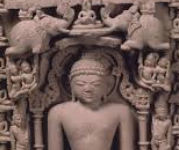
5 months ago
A living body is not merely an integration of limbs and flesh but it is the abode of the soul which potentially has perfect perception (Anant-darshana), perfect knowledge (Anant-jnana), perfect power (Anant-virya), and perfect bliss (Anant-sukha).
▼
Source
As quoted in Jainism and Indian Civilization (2004) by Raj Pruthi, p. 24.
5 months ago
Talents differ; all is well and wisely put; If I cannot carry forests on my back, Neither can you crack a nut.
▼
Source
Fable
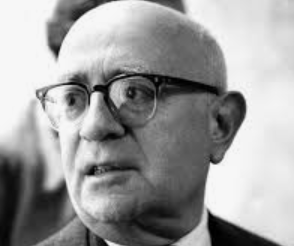
5 months ago
All the world's not a stage.
▼
Source
E. Jephcott, trans. (1974), § 94

5 months ago
Could this reaction against the personal by [analytic] philosophers … be, at bottom, one of fear? … Are … bright people … blindly afraid of their own precarious identity and unspeakable vulnerability as particular bodily beings?
▼
Source
p. xiii
5 months ago
It is worth remembering that Adam Smith, the founder of classical economics, was first and foremost a philosopher. He strove to be a moralist and in doing so, became an economist. When he published The Theory of Moral Sentiments in 1759, modern capitalism was just getting under way. Smith was entranced by the sweeping changes wrought by this new force, but it wasn’t just the numbers that interested him. It was the human effect, the fact that economic forces were vastly changing the way a person thought and behaved in a given situation. What might lead one person to cheat or steal while another didn’t? How would one person’s seemingly innocuous choice, good or bad, affect a great number of people down the line? In Smith’s era, cause and effect had begun to wildly accelerate; incentives were magnified tenfold. The gravity and shock of these changes were as overwhelming to the citizens of his time as the gravity and shock of modern life may seem to us today.
▼
Source
Steven D. Levitt and Stephen J. Dubner, [https://www.google.com/books/edition/Freakonomics/mXQVbIRkHegC?hl=en&gbpv=1&printsec=frontcover Freakanomics], Introduction: The Hidden Side of Everything
5 months ago
After Plotinus, says Schassler, fifteen centuries passed without the slightest scientific interest for the world of beauty and art. ...In reality, nothing of the kind happened. The science of aesthetics ... neither did nor could vanish, because it never existed. ... the Greeks were so little developed that goodness and beauty seemed to coincide. On that obsolete Greek view of life the science of aesthetics was invented by men of the eighteenth century, and especially shaped and mounted in Baumgarten's theory. The Greeks (as anyone may read in Bénard's book on Aristotle and Walter's work on Plato) never had a science of aesthetics.
5 months ago
The key to the understanding and to the full comprehension of all that the Prophets have said is found in the knowledge of the figures, their general ideas, and the meaning of each word they contain.
5 months ago
Thought is the property of him who can entertain it, and of him who can adequately place it.
▼
Source
Shakespeare; or, The Poet
5 months ago
The World Game is a precisely defined design science process for arriving at economic, technological and social insights pertinent to humanity’s future involvement aboard our planet Earth. The processes consist of mathematical procedures not only as incisive and complex as those involved in celestial navigation, or astro-ballistics, or the space program, but even more so-for, in addition to all the variables common to those sciences and The World Game, the latter involves also all the variables governing the planning of the programs of the industrialization of both Russia and China....The World Game is seven times more complex than China’s quarter century industrialization and thirty-five times more complex than was Russia’s industrialization problem. The World Game must find the specific means of making five billion humans a total economic and physical success at the earliest possible moment without anyone being advantaged at the expense of another.
5 months ago
It is true that wealth has been greatly increased, and that the average of comfort, leisure, and refinement has been raised; but these gains are not general. In them the lowest class do not share. I do not mean that the condition of the lowest class has nowhere nor in anything been improved; but that there is nowhere any improvement which can be credited to increased productive power. I mean that the tendency of what we call material progress is in nowise to improve the condition of the lowest class in the essentials of healthy, happy human life. Nay, more, that it is still further to depress the condition of the lowest class. The new forces, elevating in their nature though they be, do not act upon the social fabric from underneath, as was for a long time hoped and believed, but strike it at a point intermediate between top and bottom. It is as though an immense wedge were being forced, not underneath society, but through society. Those who are above the point of separation are elevated, but those who are below are crushed down.
▼
Source
Introductory : The Problem
5 months ago
Economic liberalism
5 months ago
Fate and temperament are the names of a concept.
▼
Source
As quoted in Demian (1972) by Hermann Hesse, trans. W.J. Strachan
5 months ago
People continued — regardless of all that leads man forward — to try to unite the incompatibles : the virtue of love, and what is opposed to love, namely, the restraining of evil by violence. And such a teaching, despite its inner contradiction, was so firmly established that the very people who recognize love as a virtue accept as lawful at the same time an order of life based on violence and allowing men not merely to torture but even to kill one another.
▼
Source
III
5 months ago
The so-called evils are evils only in relation to a certain thing, and that which is evil in relation to a certain existing thing, either includes the non-existence of that thing or the non-existence of some of its good conditions.
▼
Source
Ch.10
5 months ago
The measure of a master is his success in bringing all men round to his opinion twenty years later.
▼
Source
Culture
5 months ago
We must start with scientific fundamentals, and that means with the data of experiments and not with assumed axioms predicated only upon the misleading nature of that which only superficially seems to be obvious. It is the consensus of great scientists that science is the attempt to set in order the facts of experience.
5 months ago
My primary object is to defend and advance a principle in which I see the only possible relief from much that enthralls and degrades and distorts, turning light to darkness and good to evil, rather than to gage a philosopher or weigh a philosophy. Yet the examination I propose must lead to a decisive judgment upon both.
▼
Source
Introduction : The Reason for the Examination
5 months ago
The seat of the soul is where the inner world and the outer world meet. Where they overlap, it is in every point of the overlap.

5 months ago
The most momentous thing in human life is the art of winning the soul to good or to evil.
▼
Source
As quoted in Lives and Opinions of Eminent Philosophers, as translated by Robert Drew Hicks (1925) | Variant translation: The most momentous thing in human life is the art of winning the soul to good or evil. | As quoted in Ionia, a Quest (1954) by Freya
5 months ago
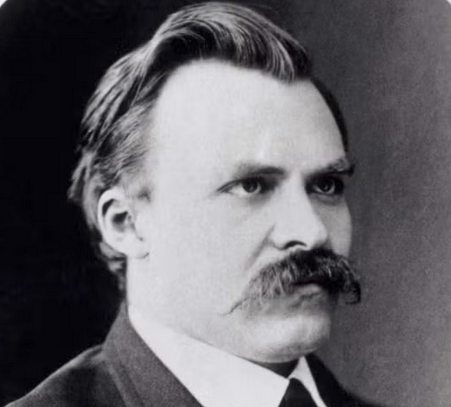
There is nothing to life that has value, except the degree of power—assuming that life itself is the will to power.
▼
Source
[http://nietzsche.holtof.com/Nietzsche_the_will_to_power/the_will_to_power_book_I.htm Book 1, sec. 55 (10 June 1887)]
5 months ago
An arrogant person considers himself perfect. This is the chief harm of arrogance. It interferes with a person's main task in life—becoming a better person.
▼
Source
p. 110
5 months ago
If the whole earth is infinitely small in comparison with the sphere of the stars, what is man compared with all these created beings? How, then, could any one of us imagine that these things exist for his sake and benefit, and that they are his tools! This is a result of an examination of the corporeal beings: how much more so will be the result of an examination of the Intelligences!
▼
Source
Ch.14
5 months ago
None shall rule but the humble, And none but Toil shall have.
▼
Source
Boston Hymn
5 months ago
There's a built-in resistance to letting humanity be a success. Each one claims that their system is the best one for coping with inadequacy. We have to make them all obsolete. We need to find within technology that there is something we can do which is capable of taking care of everybody, and to demonstrate that this is so. That's what geodesic domes are about and that's what my whole life has been about.Don't fight forces, use them.
5 months ago
The subconscious is ceaselessly murmuring, and it is by listening to these murmurs that one hears the truth.
▼
Source
Ch. 2, sect. 2
5 months ago
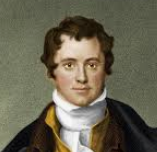
In September, 1807, our illustrious chemist applied his great principle to the analyses of potash, the vegetable alkali. Some had supposed it to consist of lime and hydrogen; others conjectured that it might contain nitrogen; and Mr Davy himself conceived that it might consist of phosphorus, or sulphur united to nitrogen. After failing with strong aqueous solutions, and also with dry potash, from its being a non-conductor, he employed fused potash, and in this case inflammable matter was separated by the voltaic influence. He then tried 'a piece of potash moistened, and in this instance inflammable matter was developed.' On the 6th of October he found that the matter instantly burned when it touched water, and swam on its surface, reproducing potash.' In dry oxygen gas likewise it burnt into 'perfectly dry potash.' In like manner, Mr Davy succeeded in decomposing soda; and when he had thus proved that the two fixed alkalis were metallic oxides, he immediately supposed that the earths, which were so much more like to metallic oxides than the fixed alkalis, would be easily decomposed.
5 months ago
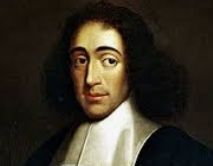
I will never forget that, in the hurricane of my adolescence, I found refuge in the deep nest of the Ethics.
▼
Source
Romain Rolland, in his autobiography
5 months ago
Man consists in Truth. If he exposes Truth, he exposes himself. If he betrays Truth, he betrays himself. We speak not here of lies, but of acting against Conviction.
5 months ago
Step not beyond the beam of the balance.
▼
Source
Symbol 14
5 months ago
On the heights it is warmer than people in the valleys suppose, especially in winter. The thinker recognizes the full import of this simile.
5 months ago
He was a revolutionary in his thinking and later in life he was an activist and reformer; he was best known as Russia's greatest moral authority, and his teachings on civil disobedience have inspired Gandhi, Martin Luther King, Jr. and countless others. He was, and still is, an author to be reckoned with.
▼
Source
[http://www.oprah.com/article/oprahsbookclub/annkarenina/anna_author_bio Brief biography] at Oprah's Book Club
5 months ago
The words of God are justified, as I will show, by the fact that Job abandoned his first very erroneous opinion, and himself proved that it was an error. It is the opinion which suggests itself as plausible at first thought, especially in the minds of those who meet with mishap, well knowing that they have not merited them through sins. This is admitted by all, and therefore this opinion was assigned to Job. But he is represented to hold this view only so long as he was without wisdom, and knew God only by tradition, in the same manner as religious people generally know Him. As soon as he had acquired a true knowledge of God, he confessed that there is undoubtedly true felicity in the knowledge of God; it is attained by all who acquire that knowledge, and no earthly trouble can disturb it. So long as Job's knowledge of God was based on tradition and communication, and not on research, he believed that such imaginary good as is possessed in health, riches, and children, was the utmost that men can attain; this was the reason why he was in perplexity, and why he uttered the... opinions, and this is also the meaning of his words: "I have heard of thee by the hearing of the ear; but now mine eye seeth thee. Wherefore I abhor myself, and repent because of dust and ashes" (xlii. 5, 6); that is to say, he abhorred all that he had desired before, and that he was sorry that he had been in dust and ashes; comp. "and he sat down among the ashes" (ii. 8) On account of this last utterance, which implies true perception, it is said afterwards in reference to him, "for you have not spoken of me the thing that is right, as my servant Job hath."
▼
Source
Ch.23
5 months ago
We boil at different degrees.
▼
Source
Eloquence
5 months ago
There is so much stupid information, misinformation around. You can't really get anywhere until you get out from under all that.

5 months ago
Wait for the appointed hour.
▼
Source
As quoted in The Lives of the Sophists by Eunapius ([http://www.goddess-athena.org/Encyclopedia/Friends/Iamblichus/index.htm online exerpt])
5 months ago
Order thyself so, that thy Soul may always be in good estate; whatsoever become of thy body.
CivilSimian.com created by AxiomaticPanic, CivilSimian, Kalokagathia