
5 months ago
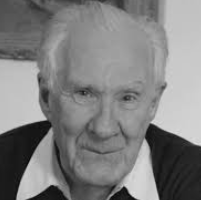
Since its Parmenidean organization, ontology has built the portico of its ruined temple out of the following experience: what presents itself is essentially multiple; what presents itself is essentially one. The reciprocity of the one and being is certainly the inaugural axiom of philosophy - Leibniz formulation is excellent; 'What is not a being is not a being - yet it is also its impasse; an impasse in which the revolving doors of Plato's Parmenides introduce us to the singular joy of never seeing the moment of conclusion arrive. For if being is one, then one must posit that what is not one, the multiple, is not . But this is unacceptable for thought because what is presented is multiple and one cannot see how there could be an access to being outside all presentation. If presentation is not, does it still make sense to designate what presents (itself) as being? On the other hand, if presentation is, then the multiple necessarily is.
▼
Source
Meditation One: The One and the Multiple: a priori conditions of any possible ontology
5 months ago
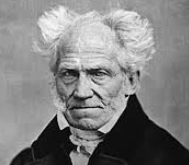
Life is a business that does not cover the costs.
▼
Source
Vol II "On the Vanity and Suffering of Life"

5 months ago
Without the faculty of forgetting, our past would weigh so heavily on our present that we should not have the strength to confront another moment, still less to live through it. Life would be bearable only to frivolous natures, those in fact who do not remember.

5 months ago
For Cromwell, the primary authority is Mr. Carlyle's "Life and Letters," an invaluable store of documents, edited with the care of an antiquarian and the genius of a poet.
▼
Source
John Richard Green, A Short History of the English People (1874), p. 530
5 months ago
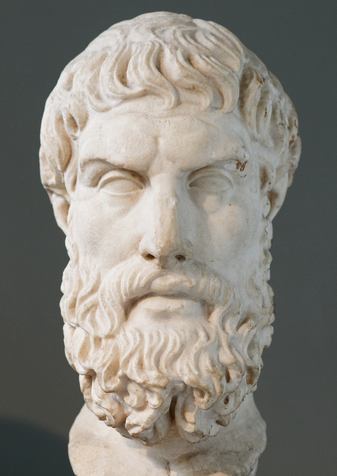
Of all the means which wisdom acquires to ensure happiness throughout the whole of life, by far the most important is friendship.
5 months ago
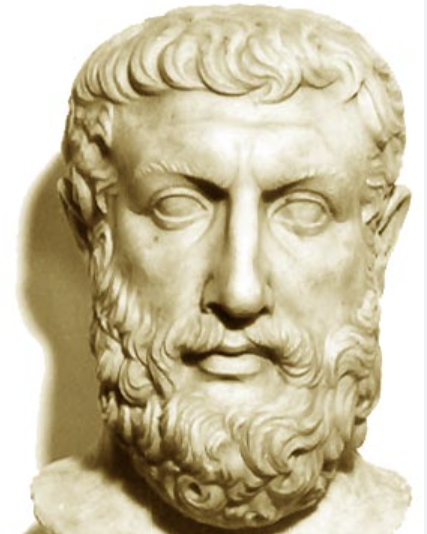
To prevent nothingness from being, Parmenides asserts that things are nothing. Parmenides, who first appears on the path of Day, which runs far from the path that the West has travelled, takes the first step along the path of Night in the West, the path along which things are thought and experienced as nothing. Parmenides is the tragic sower who sows both the seed of truth and the seed of Madness. (p. 77)
5 months ago
"Racist" is a confusing word, and it should be clarified. Men have no special rights simply because they belong to one race or another. When you say "men," you have already imbued them with all their rights.
▼
Source
Variant translation: Men have no special right because they belong to one race or another: the word man defines all rights.

5 months ago
Cicero’s style is a key to the success of De officiis, and not just the literary style, but the political and intellectual style. Regulus aside, the demands of duty generally stretch only as far as the well-educated, well-to-do man is likely to follow. Thus, he insists, in a famous metaphor that Machiavelli later stood on its head, that courage is necessary but the courage of a human being is not the ferocity of the lion, just as wisdom is necessary but the intelligence of the human being is not the cunning of the fox.
5 months ago
If from the wilderness the righteous and honest John were actually to come who, clothed in skins and living on locusts and untouched by all the terrible mischief, were meanwhile to apply himself with a pure heart and in all seriousness to the investigation of truth and to offer the fruits thereof, what kind of reception would he have to expect from those businessmen of the chair, who are hired for State purposes and with wife and family have to live on philosophy, and whose watchword is, therefore, Primum vivere, deinde philosophari [first live and then philosophize]? These men have accordingly taken possession of the market and have already seen to it that here nothing is of value except what they allow; consequently merit exists only in so far as they and their mediocrity are pleased to acknowledge it. They thus have on a leading rein the attention of that small public, such as it is, that is concerned with philosophy. For on matters that do not promise, like the productions of poetry, amusement and entertainment but only instruction, and financially unprofitable instruction at that, that public will certainly not waste its time, effort, and energy, without first being thoroughly assured that such efforts will be richly rewarded. Now by virtue of its inherited belief that whoever lives by a business knows all about it, this public expects an assurance from the professional men who from professor’s chairs and in compendiums, journals, and literary periodicals, confidently behave as if they were the real masters of the subject. Accordingly, the public allows them to sample and select whatever is worth noting and what can be ignored. My poor John from the wilderness, how will you fare if, as is to be expected, what you bring is not drafted in accordance with the tacit convention of the gentlemen of the lucrative philosophy? They will regard you as one who has not entered in the spirit of the game and thus threatens to spoil the fun for all of them; consequently, they will regard you as their common enemy and antagonist. Now even if what you bring were the greatest masterpiece of the human mind, it could never find favor in their eyes. For it would not be drawn up ad normam conventionis [according to the current pattern]; and so it would not be such as to enable them to make it the subject of their lectures from the chair in order to make a living from it. It never occurs to a professor of philosophy to examine a new system that appears to see whether it is true; but he at once tests it merely to see whether it can be brought into harmony with the doctrines of the established religion, with government plans, and with the prevailing views of the times.
▼
Source
Sämtliche Werke, Bd. 5, pp. 160-161, E. Payne, trans. (1974) Vol. 1, pp. 148-149
5 months ago
The more you are a victim of contradictory impulses, the less you know which to yield to. To lack character — precisely that and nothing more.
5 months ago
Men of action, above all those whose actions are guided by love, live forever. Other famous men, those of much talk and few deeds, soon evaporate. Action is the dignity of greatness.
5 months ago
Since... nature is a principle of motion and mutation... it is necessary that we should not be ignorant of what motion is... But motion appears to belong to things continuous; and the infinite first presents itself to the view in that which is continuous. ...Frequently ...those who define the continuous, employ the nature or the infinite, as if that which is divisible to infinity is continuous.
▼
Source
Book III, Ch. I, pp. 135-136.

5 months ago
Capitalism is an exploitative system, as Marx has argued so cogently, and as anyone who studies the inequalities within and between the countries of the world today must see. It is therefore a priori likely that its ideology conceals realities that if known would make the exploited militant.
▼
Source
p. 85
5 months ago
As the biggest library if it is in disorder is not as useful as a small but well-arranged one, so you may accumulate a vast amount of knowledge but it will be of far less value to you than a much smaller amount if you have not thought it over for yourself; because only through ordering what you know by comparing every truth with every other truth can you take complete possession of your knowledge and get it into your power. You can think about only what you know, so you ought to learn something; on the other hand, you can know only what you have thought about.
▼
Source
Vol. 2, Ch. 22, § 257 "On Thinking for Yourself" as translated in Essays and Aphorisms(1970) as translated by R. J. Hollingdale | Variant translation: Just as the largest library, badly arranged, is not so useful as a very moderate one that is well arrang
5 months ago
To think that so many have succeeded in dying!
5 months ago
In this consists the difference between the character of a miser and that of a person of exact economy and assiduity. The one is anxious about small matters for their own sake; the other attends to them only in consequence of the scheme of life which he has laid down to himself.
▼
Source
Chap. VI.

5 months ago
If women be educated for dependence; that is, to act according to the will of another fallible being, and submit, right or wrong, to power, where are we to stop?
▼
Source
Ch. 3

5 months ago
Scientists work from models acquired through education and through subsequent exposure to the literature often without quite knowing or needing to know what characteristics have given these models the status of community paradigms
▼
Source
p. 46

5 months ago
Liberals tend to regard being subjects of the Queen as an insult to their dignity. But at least the archaic structures by which we are ruled do not force us to define ourselves by blood, soil or faith, and we are protected from the poisonous politics of identity.
▼
Source
[http://www.guardian.co.uk/commentisfree/2007/jul/29/comment.politics1 "Monarchy is the key to our liberty,"], The Observer (2007-07-29)
5 months ago
A man can live and be healthy without killing animals for food; therefore, if he eats meat, he participates in taking animal life merely for the sake of his appetite. And to act so is immoral.
▼
Source
Writings on Civil Disobedience and Nonviolence (1886)
5 months ago
All political action aims at either preservation or change. When desiring to preserve, we wish to prevent a change for the worse; when desiring to change, we wish to bring about something better. All political action is then guided by some thought of better or worse.
▼
Source
"What Is Political Philosophy" in The Journal of Politics, 19(3) (Aug. 1957) by the Southern Political Science Association, p. 343
5 months ago
If, then, in the sphere of action there is some one end which we desire for its own sake, and for the sake of which we desire every thing else; and if we do not choose every thing for the sake of something else, for this would go on without limit, and our desire would be idle and futile, it is clear that this must be the supreme good, and the best thing of all.
▼
Source
(Bk I, Ch I)

5 months ago
As a rule, white abolitionists either defended the industrial capitalists or expressed no conscious class loyalty at all. This unquestioning acceptance of the capitalist economic system was evident in the program of the women’s rights movement as well. If most abolitionists viewed slavery as a nasty blemish which needed to be eliminated, most women’s righters viewed male supremacy in a similar manner—as an immoral flaw in their otherwise acceptable society. The leaders of the women’s rights movement did not suspect that the enslavement of Black people in the South, the economic exploitation of Northern workers and the social oppression of women might be systematically related.
5 months ago
Hatred comes from the heart; contempt from the head; and neither feeling is quite within our control.
▼
Source
"Psychological Observations"
5 months ago
Everything is nothing, including the consciousness of nothing.
5 months ago
We rarely hear, it has been said, of the combinations of masters, though frequently of those of the workman. But whoever imagines, upon this account, that masters rarely combine, is as ignorant of the world as of the subject.
▼
Source
Chapter VIII, p. 80.
5 months ago
Aristodemus, a friend of Antigonus, supposed to be a cook's son, advised him to moderate his gifts and expenses. "Thy words," said he, "Aristodemus, smell of the apron."
▼
Source
44 Antigonus I
5 months ago
In the life of the academic mind, the owl of Minerva seldom flies as early as the dusk.
▼
Source
'Definition of the Political Thought of Tlön' (p.91)
5 months ago
I believe that the advance of science depends upon the free competition of thought, and thus upon freedom, and that it must come to an end if freedom is destroyed (though it may well continue for some time in some fields, especially in technology).
▼
Source
Ch. 10 "Corroboration, or How a Theory Stands up to Tests", section 85: The Path of Science, p. 279, note 2.
5 months ago
Each visitor performed the ceremony of greeting this old aunt whom not one of them knew, not one of them wanted to know, and not one of them cared about; Anna Pávlovna observed these greetings with mournful and solemn interest and silent approval. The aunt spoke to each of them in the same words, about their health and her own, and the health of Her Majesty, "who, thank God, was better today." And each visitor, though politeness prevented his showing impatience, left the old woman with a sense of relief at having performed a vexatious duty and did not return to her the whole evening.
▼
Source
Bk. I, Ch. II
5 months ago
The problem inherent in the surface of things, and only in the surface of things, is the heart of things.
▼
Source
p. 13
5 months ago
Therefore only an utterly senseless person can fail to know that our characters are the result of our conduct.
▼
Source
Book III, 5.12 | Variant: Now not to know that it is from the exercise of activities on particular objects that states of character are produced is the mark of a thoroughly senseless person.

5 months ago
Always put the best interpretation on a tenet. Why not on Christianity, wholesome, sweet, and poetic? It is the record of a pure and holy soul, humble, absolutely disinterested, a trutn-speaker, and bent on serving, teaching, and uplifting men. Christianity taught the capacity, the element, to Jove the All-perfect without a stingy bargain for personal happiness. It taught that to love him was happiness,—to love him in other’s virtues.
5 months ago
If, however, we shift our attention from the prison, perceived as an isolated institution, to the set of relationships that comprise the prison industrial complex, it may be easier to think about alternatives. In other words, a more complicated framework may yield more options than if we simply attempt to discover a single substitute for the prison system.
▼
Source
Chapter Six
5 months ago
One who believes that the pain in the world outweighs the joy, and expresses that unhappy conviction, only adds to the pain. Schopenhauer is an enemy to the race. Even if he earnestly believed that this is the most wretched of possible worlds, he should not promulgate a doctrine which robs men of the incentive to fight with circumstance. If Life gave him ashes for bread, it was his fault. Life is a fair field, and the right will prosper if we stand by our guns.
▼
Source
Helen Keller, in Optimism (1903)
5 months ago
When you get over an infatuation, to fall for someone ever again seems so inconceivable that you imagine no one, not even a bug, that is not mired in disappointment.
5 months ago
Though the profusion of Government must undoubtedly have retarded the natural progress of England to wealth and improvement, it has not been able to stop it.
▼
Source
Chapter III.
5 months ago
Impossible for me to know whether or not I take myself seriously. The drama of detachment is that we cannot measure its progress. We advance into a desert, and we never know where we are in it.
5 months ago
Goods can serve many other purposes besides purchasing money, but money can serve no other purpose besides purchasing goods.
▼
Source
Chapter I, p. 471.
5 months ago
Everywhere, especially in France and England, social and religious societies are being formed which are wholly alien to the world of present-day politics, societies that derive their life from new sources quite unknown to us and that grow and diffuse themselves without fanfare. The people, the poor class, which without doubt constitutes the greatest part of humanity; the class whose rights have already been recognized in theory but which is nevertheless still despised for its birth, for its ties with poverty and ignorance, as well as indeed with actual slavery – this class, which constitutes the true people, is everywhere assuming a threatening attitude and is beginning to count the ranks of its enemy, far weaker in numbers than itself, and to demand the actualization of the right already conceded to it by everyone. All people and all men are filled with a kind of premonition, and everyone whose vital organs are not paralyzed faces with shuddering expectation the approaching future which will utter the redeeming word. Even in Russia, the boundless snow-covered kingdom so little known, and which perhaps also has a great future in store, even in Russia dark clouds are gathering, heralding storm. Oh, the air is sultry and pregnant with lightning. And therefore we call to our deluded brothers: Repent, repent, the Kingdom of the Lord is at hand!
▼
Source
"The Reaction in Germany" (1842)
5 months ago
History is a process of rebarbarization. A people made vigorous by arduous physical conditions of life, and driven by the increasing exigencies of survival, leaves its native habitat, moves down upon a less vigorous people, conquers, displaces, or absorbs it. Habits of resolution and activity developed in a less merciful environment now rapidly produce an economic surplus; and part of the resources so accumulated serve as capital in a campaign of imperialist conquest. The growing surplus generates a leisure class, scornful of physical activity and adept in the arts of luxury. Leisure begets speculation; speculation dissolves dogma and corrodes custom, develops sensitivity of perception and destroys decision of action. Thought, adventuring in a labyrinth of analysis, discovers behind society the individual; divested of its normal social function it turns inward and discovers the self. The sense of common interest, of commonwealth, wanes; there are no citizens now, there are only individuals. From afar another people, struggling against the forces of an obdurate environment, sees here the cleared forests, the liberating roads, the harvest of plenty, the luxury of leisure. It dreams, aspires, dares, unites, invades. The rest is as before. Rebarbarization is rejuvenation. The great problem of any civilization is how to rejuvenate itself without rebarbarization.
5 months ago
My very own Plutarch – so perfect, so outstanding a judge of human actions.
▼
Source
Michel de Montaigne, 'On drunkenness', The Complete Essays, translated by M. A. Screech (1991; 2003), p. 389
5 months ago
The modern world inherits the Christian view in which salvation is played out in history. In Christian myth human events follow a design known only to God; the history of humankind is an ongoing story of redemption. This is an idea that informs virtually all of western thought – not least when it is intensely hostile to religion. From Christianity onwards, human salvation would be understood (at least in the west) as involving movement through time. All modern philosophies in which history is seen as a process of human emancipation – whether through revolutionary change or incremental improvement – are garbled versions of this Christian narrative, itself a garbled version of the original message of Jesus.
▼
Source
The Faith of Puppets: The Revelation of Philip K. Dick (p. 60)
5 months ago
It appears to me that there can be no question, that Aristotle stands forth, not only as the greatest figure in antiquity, but as the greatest intellect that has ever appeared upon the face of this earth.
▼
Source
George J. Romanes, as quoted in "The most important question in the world.": Is mankind advancing? (1910), p. 38
5 months ago
[E]ven serious students are misled by the myth of the subject.
5 months ago
My reason will still not understand why I pray, but I shall still pray, and my life, my whole life, independently of anything that may happen to me, is every moment of it no longer meaningless as it was before, but has an unquestionable meaning of goodness with which I have the power to invest it.'
▼
Source
Pt. VIII, ch. 19
5 months ago
For Strauss, every philosopher at all times is in the situation of political persecution, and hence has to construct a specific way of writing, which on its surface is “exoteric,” that is, meant for the general, unsophisticated reader, yet is “esoteric” in its hidden message, accessible only to few “thoughtful” and “careful” readers capable of understanding the true message of and behind a text by “reading between the lines”. True philosophers, then, including Plato, “must conceal their opinions from all but philosophers, either by limiting themselves to oral instruction of a carefully selected group of pupils, or by writing about the most important subject by means of ‘brief indication’”.
▼
Source
Dmitri Nikulin, "Plato: Testimonia et Fragmenta" in The other Plato : the Tübingen interpretation of Plato’s inner-academic teachings edited by Dmitri Nikulin
5 months ago
The believing we do something when we do nothing is the first illusion of tobacco.
▼
Source
1859
5 months ago
Angela Davis has profoundly influenced the discourses on social justice in relationship to race, gender, and class nationally and internationally through her writings and her role in organizations such as the Communist Party and the Student Nonviolent Coordinating Committee (SNCC) in the past, and her more recent activism through the prison abolitionist organization Critical Resistance, along with being an honorary co-chair for the Women's March during 2017.
▼
Source
Sharon Lynette Jones Introduction to Conversations with Angela Davis Edited by Sharon Lynette Jones (2021)
5 months ago
Lucidity is not necessarily compatible with life, actually not at all.
CivilSimian.com created by AxiomaticPanic, CivilSimian, Kalokagathia