
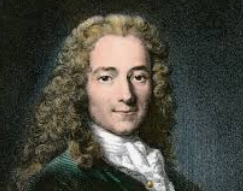
5 months ago
God is a circle whose center is everywhere and circumference nowhere.
▼
Source
For a discussion of this quotation, which is uncertain in origin but was quoted long before Voltaire, see the following: [http://symbio.trick.ca/HomeSashaOnePageBible]

5 months ago
I dream of wanting — and all I want seems to me worthless.
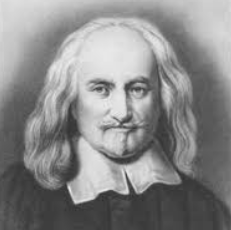
5 months ago
Art goes... imitating that Rationall and most excellent worke of Nature, Man. For by Art is created that great Leviathan called a Common-Wealth or State, (in latine Civitas) which is but an Artificiall Man; though of greater stature and strength than the Naturall, for whose protection and defence it was intended; and in which the Soveraignty is an Artificiall Soul, as giving life and motion to the whole body; The Magistrates, and other Officers of Judicature and Execution, artificiall Joynts; Reward and Punishment (by which fastned to the seate of the Soveraignty, every joynt and member is moved to performe his duty) are the Nerves, that do the same in the Body Naturall; The Wealth and Riches of all the particular members, are the Strength; Salus Populi (the peoples safety) its Businesse; Counsellors, by whom all things needfull for it to know, are suggested unto it, are the Memory; Equity and Lawes, an artificiall Reason and Will; Concord, Health; Sedition, Sicknesse; and Civill war, Death. Lastly, the Pacts and Covenants, by which the parts of this Body Politique were at first made, set together, and united, resemble that Fiat, or the Let us make man, pronounced by God in the Creation.
▼
Source
The Introduction

5 months ago
Certainly the Art of Writing is the most miraculous of all things man has devised.
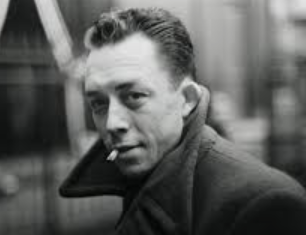
5 months ago
I had gotten very much involved in the writings of the so-called Existentialists. Camus. Sartre. I retreated into myself and rejected practically everything outside. Only in the artificial surroundings of an isolated, virtually all-white college campus could I have allowed myself to cultivate this nihilistic attitude. It was as if in order to fight off the unreal quality of my environment, I leaped desperately into another equally unreal mode of living.
▼
Source
Angela Davis: An Autobiography (2022)
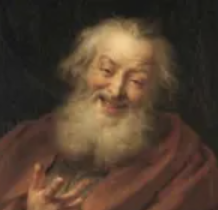
5 months ago
Strength and beauty are the blessings of youth; temperance, however, is the flower of old age.
▼
Source
Fragment quoted in H. Diels and W. Kranz (eds.) Die Fragmente der Vorsokratiker, Vol. II (1952), no. 294; reference taken from Webster's New World Dictionary of Quotations (2005), p. 261
5 months ago
The decline of religion in modern times means simply that religion is no longer the uncontested center and ruler of man's life, and that the Church is no longer the final and unquestioned home and asylum of his being.
▼
Source
Chapter Two, The Encounter With Nothingness, p. 20
5 months ago
The strength of faith is... no proof of the objective truth of faith.
5 months ago
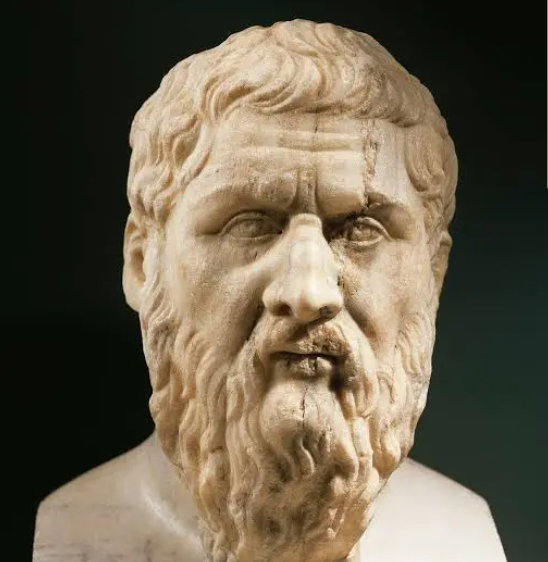
The attempt to separate everything from everything else is not only not in good taste but also shows that a man is utterly uncultivated and unphilosophical. The complete separation of each thing from all is the utterly final obliteration of all discourse. For our power of discourse is derived from the interweaving of the classes or ideas with one another.
▼
Source
259d-e
5 months ago
But though much may be said to Excuse the Chymists when they write Darkly, and Ænigmatically, about the Preparation of their Elixir, and Some few other grand Arcana, the divulging of which they may upon Grounds Plausible enough esteem unfit; yet when they pretend to teach the General Principles of Natural Philosophers, this Equivocall Way of Writing is not to be endur'd. For in such Speculative Enquiries, where the naked Knowledge of the Truth is the thing Principally aim'd at, what does he teach me worth thanks that does not, if he can, make his Notion intelligible to me, but by Mystical Termes, and Ambiguous Phrases darkens what he should clear up; and makes me add the Trouble of guessing at the sence of what he Equivocally expresses, to that of examining the Truth of what he seems to deliver.
5 months ago
No longer ask me for my program: isn't breathing one?
5 months ago
Hereby it is manifest, that during the time men live without a common Power to keep them all in awe, they are in that conditions called Warre; and such a warre, as is of every man, against every man.
▼
Source
The First Part, Chapter 13, p. 62
5 months ago
To this man life is already as earnest and awful, and beautiful and terrible, as death.
5 months ago
The friendship of one wise man is better than the friendship of a host of fools.

5 months ago
Suffice it to say that the God of Israel loves those who disobey for the sake of what is right, and is capable of being pleased when a man has used his freedom to wrestle with him and to prevail, so long as the path on behalf of which he struggles ultimately proves to be the right one in God’s eyes.
5 months ago
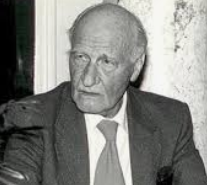
"We work in order to be at leisure." […] Doesn't this statement appear almost immoral to the man or woman of the world of "total work"? Is it not an attack on the basic principles of human society?Now I have not merely constructed a sentence to prove a point. The statement was actually made — by Aristotle [Nichomachean Ethics X, 7 (1177b4–6)]. Yes, Aristotle: the sober, industrious realist, and the fact that he said it, gives the statement special significance. What he says in a more literal translation would be: "We are not-at-leisure in order to be-at-leisure." For the Greeks, "not-leisure" was the word for the world of everyday work; and not only to indicate its "hustle and bustle," but the work itself. The Greek language had only this negative term for it (ά-σχολία), as did Latin (neg-otium).The context not only of this sentence but also of another one from Aristotle's Politics (stating that the "pivot" around which everything turns is leisure [Politics VII, 3 (1337b33)]) shows that these notions were not considered extraordinary, but only self-evident. […] Could this also imply that people in our day no longer have direct access to the original meaning of leisure?
▼
Source
pp. 4–5
5 months ago
Zeus, the god of gods, who rules according to law, and is able to see into such things, perceiving that an honourable race was in a woeful plight, and wanting to inflict punishment on them, that they might be chastened and improve, collected all the gods into their most holy habitation, which, being placed in the centre of the world, beholds all created things. And when he had called them together, he spake as follows— [** The rest of the Dialogue of Critias has been lost]
5 months ago
Boyle was the first to formulate our present conception of an element in contradistinction to that of the Greeks and the schoolmen who influenced the theories of the iatro-chemists. In the sense understood by him, the Aristotelian elements were not true elements, nor were the salt, sulphur, and mercury of the school of Paracelsus.
5 months ago
What does the future, that half of time, matter to the man who is infatuated with eternity?
5 months ago
To say he hath spoken to him in a Dream, is no more then to say he dreamed that God spake to him; which is not of force to win beleef from any man, that knows dreams are for the most part naturall, and may proceed from former thoughts; and such dreams as that, from selfe conceit, and foolish arrogance, and false opinion of a mans own goodlinesse, or other vertue, by which he thinks he hath merited the favour of extraordinary Revelation. To say he hath seen a Vision, or heard a Voice, is to say, that he dreamed between sleeping and waking: for in such manner a man doth many times naturally take his dream for a vision, as not having well observed his own slumbering. To say he speaks by supernaturall Inspiration, is to say he finds an ardent desire to speak, or some strong opinion of himself, for which hee can alledge no naturall and sufficient reason. So that though God Almighty can speak to a man, by Dreams, Visions, Voice, and Inspiration; yet he obliges no man to beleeve he hath so done to him that pretends it; who (being a man) may erre, and (which is more) may lie.
▼
Source
The Third Part, Chapter 32
5 months ago
[I]t is a most important social act; nay, at bottom, the one important social act. Given the men a People choose, the People itself, in its exact worth and worthlessness, is given. A heroic people chooses heroes, and is happy; a valet or flunkey people chooses sham-heroes, what are called quacks, thinking them heroes, and is not happy.
5 months ago
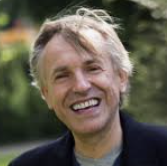
It is hard to imagine an experience more horrific than being eaten alive. Most of us would prefer not to imagine what it must feel like. Note that the photographer here had to persuade the park ranger to violate the park rules and put the baby elephant out of his misery.By analogy, suppose it were lawful to visit Third World countries for photoshoots but illegal to "interfere" and help a stricken human baby. Is there a fundamental difference between "ethical" intervention to help humans and "sentimental" pleas to "interfere" and help non-humans? Should we encourage the preservation of life-forms such as the hyena in their current guise? Or do the value judgements underlying the "science" of conservation biology need to be re-examined?
▼
Source
"[https://www.abolitionist.com/reprogramming/elephant-hyenas.html Hyenas Eat Baby Elephant Alive: The Case for Intervention]"
5 months ago
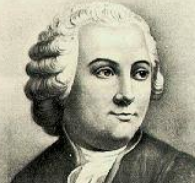
It is not true that on an exchange of commodities we give value for value. On the contrary, each of the two contracting parties in every case, gives a less for a greater value. … If we really exchanged equal values, neither party could make a profit. And yet, they both gain, or ought to gain. Why? The value of a thing consists solely in its relation to our wants. What is more to the one is less to the other, and vice versa. … It is not to be assumed that we offer for sale articles required for our own consumption. … We wish to part with a useless thing, in order to get one that we need; we want to give less for more. … It was natural to think that, in an exchange, value was given for value, whenever each of the articles exchanged was of equal value with the same quantity of gold. … But there is another point to be considered in our calculation. The question is, whether we both exchange something superfluous for something necessary.
▼
Source
Le Commerce et le Gouvernement (1776), as quoted in Marx's Capital, Vol. I, Ch. 5.
5 months ago
Now one may ask, How could a Christian philosophy have something over a non-Christian philosophy, if it does not reach to a higher level of solutions, if it cannot get handy answers, if the problems and questions are still there? Well, perhaps a greater truth could be present in its ability to see the world in its truly mysterious character, in its inexhaustablity. It could even be the case that here, in the very experience of being as a mystery, that it is not to be grasped in the hand as a "well-rounded truth" — herein is reality more deeply and truly grasped than in any transparent system that may charm the mind of the student with its clarity and simplicity. And this is the claim of Christian philosophy: to be truer, precisely because of its recognition of the mysterious character of the world.In no way, then, does philosophy become easier. Plato appears to have discovered and felt that too — if a certain interpretation of Plato is correct, maintaining that Plato understood philosophy to be something tragic for this reason, that it must constantly have recourse to mythos, since the teaching of philosophy can never close itself into a system.
▼
Source
pp. 127–128 | The "interpretation of Plato" referred to is that of Gerhard Krüger, Einsicht und Leidenschaft (Frankfurt, 1939), p. 301.
5 months ago
Magic consists of, and is acquired by the worship of the gods.
▼
Source
Quoted by H.P. Blavatsky, in [http://theosophy.org/Blavatsky/Theosophical%20Glossary/Thegloss.htm The Theosophical Glossary,] (1892)
5 months ago
The multiplication of our kind borders on the obscene; the duty to love them, on the preposterous.
5 months ago
Human virtue, if we went down to the roots of it, is not so rare. The materials of human virtue are everywhere abundant as the light of the sun: raw materials,—O woe, and loss, and scandal thrice and threefold, that they so seldom are elaborated, and built into a result! that they lie yet unelaborated, and stagnant in the souls of wide-spread dreary millions, fermenting, festering; and issue at last as energetic vice instead of strong practical virtue!
5 months ago
If we don't address the genetic causes of suffering (physical and mental) we will find ourselves in 500 years enjoying material abundance via nanotech, living in a perfect democracy, colonizing space, and still sitting around wondering "Why are we miserable so much of the time? Why can't we all just get along? Why are we not all happy?"
▼
Source
[https://qualiacomputing.com/2018/10/07/david-pearce-in-sf/ David Pearce in SF], Qualia Computing, 7 Oct. 2018
5 months ago
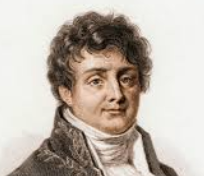
We shall now consider that peculiar heat which our globe had at the time of the formation of the planets, and which continues to be dissipated at the surface under the influence of the low temperature of the planetary space.
5 months ago
It has always been correct to praise Plato, but not to understand him.
▼
Source
Bertrand Russell; History of Western Philosophy, Chapter XIII: The Sources of Plato's Opinions
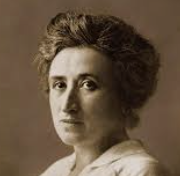
5 months ago
If democracy has become superfluous or annoying to the bourgeoisie, it is on the contrary necessary and indispensable to the working class. It is necessary to the working class because it creates the political forms (autonomous administration, electoral rights, etc.) which will serve the proletariat as fulcrums in its task of transforming bourgeois society. Democracy is indispensable to the working class because only through the exercise of its democratic rights, in the struggle for democracy, can the proletariat become aware of its class interests and its historic task.
▼
Source
Ch.8
5 months ago
Psychoanalysis will be entirely discredited one of these days, no doubt about it. Which will not keep it from destroying our last vestiges of naivete. After psychoanalysis, we can never again be innocent.
5 months ago
If the young aspirant is not rich enough for Parliament, and is deterred by the basilisks or otherwise from entering on Law or Church, and cannot altogether reduce his human intellect to the beaverish condition, or satisfy himself with the prospect of making money,—what becomes of him in such case, which is naturally the case of very many, and ever of more? In such case there remains but one outlet for him, and notably enough that too is a talking one: the outlet of Literature, of trying to write Books. Since, owing to preliminary basilisks, want of cash, or superiority to cash, he cannot mount aloft by eloquent talking, let him try it by dexterous eloquent writing. Here happily, having three fingers, and capital to buy a quire of paper, he can try it to all lengths and in spite of all mortals: in this career there is happily no public impediment that can turn him back; nothing but private starvation—which is itself a finis or kind of goal—can pretend to hinder a British man from prosecuting Literature to the very utmost, and wringing the final secret from her: "A talent is in thee; No talent is in thee." To the British subject who fancies genius may be lodged in him, this liberty remains; and truly it is, if well computed, almost the only one he has.
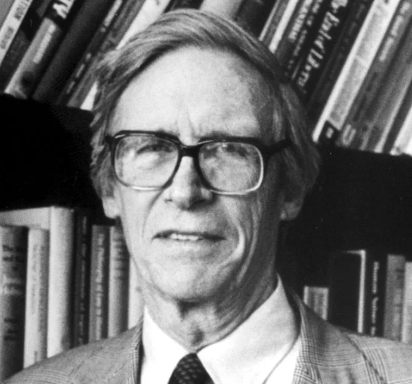
5 months ago
Our concern is solely with the basic structure of society and its major institutions and therefore with the standard cases of social justice.
▼
Source
Chapter II, Section 10, pg. 58
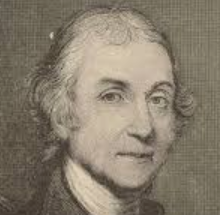
5 months ago
Most of the early Christian writers thought the text "I and my Father are one," was to be understood of an unity or harmony of disposition only. Thus Tertullian observes, that the expression is unum, one thing, not one person; and he explains it to mean unity, likeness, conjunction, and of the love that the Father bore to the Son. Origen says, "let him consider that text, 'all that believed were of one heart and of one soul,' and then he will understand this, 'I and my Father are one.'"
▼
Source
Part I : The History of Opinions Relating to Jesus Christ, § III : The Supremacy was always ascribed to the Father before the Council Of Nice
5 months ago
The Eastern-European born revolutionaries Rosa Luxemburg and Emma Goldman, the most famous examples, marched onto the pages of radical history and represented a new kind of Jewish woman, at odds with the balebuste of old.
▼
Source
Carole B. Balin, To Reveal Our Hearts: Jewish Women Writers in Tsarist Russia (2000)
5 months ago
There was a time when time did not yet exist. ... The rejection of birth is nothing but the nostalgia for this time before time.
5 months ago
I think he once told us his first short clothes were a hull made mostly or wholly of leather. We all only laughed, for it is now long ago. Thou dear father! Through what stern obstructions was thy way to manhood to be forced, and for us and for our travelling to be made smooth!
5 months ago
The fundamental criterion for judging any procedure is the justice of its likely results.
▼
Source
Chapter IV, Section 37, p. 230
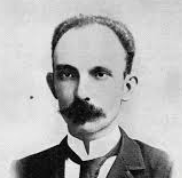
5 months ago
Many houses were still full of light when, at the close of March 22, the people of the Círculo returned to their homes, which were gladdened with a fleeting gladness by an hour of justice — for there are still many slaves, black and white, in Puerto Rico!
▼
Source
"The Abolition of Slavery in Puerto Rico" (1893)
5 months ago
Since its Parmenidean organization, ontology has built the portico of its ruined temple out of the following experience: what presents itself is essentially multiple; what presents itself is essentially one. The reciprocity of the one and being is certainly the inaugural axiom of philosophy - Leibniz formulation is excellent; 'What is not a being is not a being - yet it is also its impasse; an impasse in which the revolving doors of Plato's Parmenides introduce us to the singular joy of never seeing the moment of conclusion arrive. For if being is one, then one must posit that what is not one, the multiple, is not . But this is unacceptable for thought because what is presented is multiple and one cannot see how there could be an access to being outside all presentation. If presentation is not, does it still make sense to designate what presents (itself) as being? On the other hand, if presentation is, then the multiple necessarily is.
▼
Source
Meditation One: The One and the Multiple: a priori conditions of any possible ontology
5 months ago
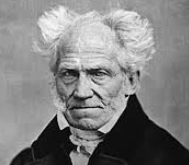
Life is a business that does not cover the costs.
▼
Source
Vol II "On the Vanity and Suffering of Life"
5 months ago
Without the faculty of forgetting, our past would weigh so heavily on our present that we should not have the strength to confront another moment, still less to live through it. Life would be bearable only to frivolous natures, those in fact who do not remember.
5 months ago
For Cromwell, the primary authority is Mr. Carlyle's "Life and Letters," an invaluable store of documents, edited with the care of an antiquarian and the genius of a poet.
▼
Source
John Richard Green, A Short History of the English People (1874), p. 530
5 months ago
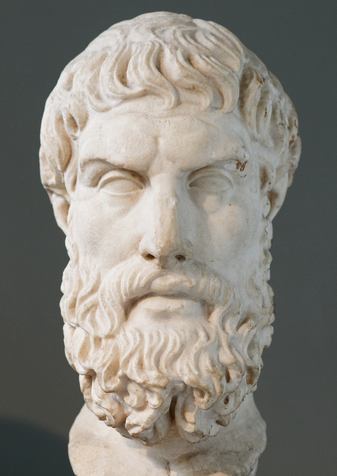
Of all the means which wisdom acquires to ensure happiness throughout the whole of life, by far the most important is friendship.
5 months ago
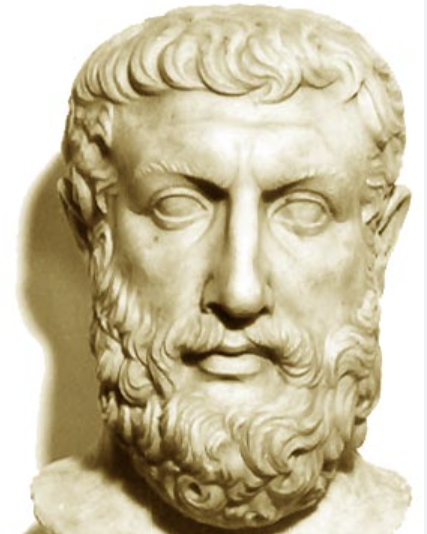
To prevent nothingness from being, Parmenides asserts that things are nothing. Parmenides, who first appears on the path of Day, which runs far from the path that the West has travelled, takes the first step along the path of Night in the West, the path along which things are thought and experienced as nothing. Parmenides is the tragic sower who sows both the seed of truth and the seed of Madness. (p. 77)
5 months ago
"Racist" is a confusing word, and it should be clarified. Men have no special rights simply because they belong to one race or another. When you say "men," you have already imbued them with all their rights.
▼
Source
Variant translation: Men have no special right because they belong to one race or another: the word man defines all rights.

5 months ago
Cicero’s style is a key to the success of De officiis, and not just the literary style, but the political and intellectual style. Regulus aside, the demands of duty generally stretch only as far as the well-educated, well-to-do man is likely to follow. Thus, he insists, in a famous metaphor that Machiavelli later stood on its head, that courage is necessary but the courage of a human being is not the ferocity of the lion, just as wisdom is necessary but the intelligence of the human being is not the cunning of the fox.
5 months ago
If from the wilderness the righteous and honest John were actually to come who, clothed in skins and living on locusts and untouched by all the terrible mischief, were meanwhile to apply himself with a pure heart and in all seriousness to the investigation of truth and to offer the fruits thereof, what kind of reception would he have to expect from those businessmen of the chair, who are hired for State purposes and with wife and family have to live on philosophy, and whose watchword is, therefore, Primum vivere, deinde philosophari [first live and then philosophize]? These men have accordingly taken possession of the market and have already seen to it that here nothing is of value except what they allow; consequently merit exists only in so far as they and their mediocrity are pleased to acknowledge it. They thus have on a leading rein the attention of that small public, such as it is, that is concerned with philosophy. For on matters that do not promise, like the productions of poetry, amusement and entertainment but only instruction, and financially unprofitable instruction at that, that public will certainly not waste its time, effort, and energy, without first being thoroughly assured that such efforts will be richly rewarded. Now by virtue of its inherited belief that whoever lives by a business knows all about it, this public expects an assurance from the professional men who from professor’s chairs and in compendiums, journals, and literary periodicals, confidently behave as if they were the real masters of the subject. Accordingly, the public allows them to sample and select whatever is worth noting and what can be ignored. My poor John from the wilderness, how will you fare if, as is to be expected, what you bring is not drafted in accordance with the tacit convention of the gentlemen of the lucrative philosophy? They will regard you as one who has not entered in the spirit of the game and thus threatens to spoil the fun for all of them; consequently, they will regard you as their common enemy and antagonist. Now even if what you bring were the greatest masterpiece of the human mind, it could never find favor in their eyes. For it would not be drawn up ad normam conventionis [according to the current pattern]; and so it would not be such as to enable them to make it the subject of their lectures from the chair in order to make a living from it. It never occurs to a professor of philosophy to examine a new system that appears to see whether it is true; but he at once tests it merely to see whether it can be brought into harmony with the doctrines of the established religion, with government plans, and with the prevailing views of the times.
▼
Source
Sämtliche Werke, Bd. 5, pp. 160-161, E. Payne, trans. (1974) Vol. 1, pp. 148-149
5 months ago
The more you are a victim of contradictory impulses, the less you know which to yield to. To lack character — precisely that and nothing more.
CivilSimian.com created by AxiomaticPanic, CivilSimian, Kalokagathia