

5 months ago
I purpose now, while the impression is more pure and clear within me, to mark down the main things I can recollect of my father. To myself, if I live to after-years, it may be instructive and interesting, as the past grows ever holier the farther we leave it. My mind is calm enough to do it deliberately, and to do it truly. The thought of that pale earnest face which even now lies stiffened into death in that bed at Scotsbrig, with the Infinite all of worlds looking down on it, will certainly impel me. It is good to know how a true spirit will vindicate itself with truth and freedom through what obstructions soever; how the acorn cast carelessly into the wilder-ness will make room for itself and grow to be an oak. This is one of the cases belonging to that class, "the lives of remarkable men," in which it has been said, "paper and ink should least of all be spared." I call a man remarkable who becomes a true workman in this vineyard of the Highest. Be his work that of palace-building and kingdom-founding, or only of delving and ditching, to me it is no matter, or next to none. All human work is transitory, small in itself, contemptible. Only the worker thereof, and the spirit that dwelt in him, is significant. I proceed without order, or almost any forethought, anxious only to save what I have left and mark it as it lies in me.
5 months ago
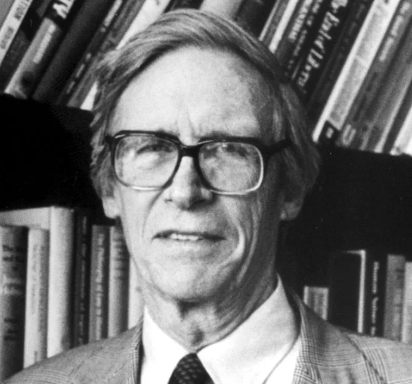
Yet it seems extraordinary that the justice of increasing the expectations of the better placed by a billion dollars, say, should turn on whether the prospects of the least favored increase or decrease by a penny.
▼
Source
Chapter III, Section 26, pg. 157
5 months ago
A knowledge of different literatures is the best way to free one's self from the tyranny of any of them.
▼
Source
On Oscar Wilde (1882)
5 months ago
Fear of death pushed Seven Sleepers into a cave, Made Noah and his son build a ship; Nor did Moses and Adam think it pleasant to die Though they were promised paradise.
▼
Source
Translation of Kevin Blankinship[https://www.jadaliyya.com/Details/32488]
5 months ago
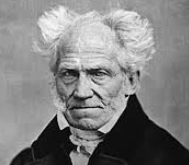
This art is music. It stands quite apart from all the others. In it we do not recognize the copy, the repetition, of any Idea of the inner nature of the world. Yet it is such a great and exceedingly fine art, its effect on man's innermost nature is so powerful, and it is so completely and profoundly understood by him in his innermost being as an entirely universal language, whose distinctness surpasses even that of the world of perception itself, that in it we certainly have to look for more than that exercitium arithmeticae occultum nescientis se numerare animi [exercise in arithmetic in which the mind does not know it is counting] which Leibniz took it to be.
▼
Source
Vol. I, Ch. III, The World As Representation: Second Aspect, as translated by Eric F. J. Payne (1958)

5 months ago
Everything exists; nothing exists. Either formula affords a like serenity. The man of anxiety, to his misfortune, remains between them, trembling and perplexed, forever at the mercy of a nuance, incapable of gaining a foothold in the security of being or in the absence of being.
5 months ago
It was very good of God to let Carlyle and Mrs. Carlyle marry one another and so make only two people miserable instead of four.
▼
Source
Samuel Butler, Letter to Eliza Savage, 21 November 1884, in Letters between Samuel Butler and E.M.A. Savage, 1871-1885 (1935)
5 months ago
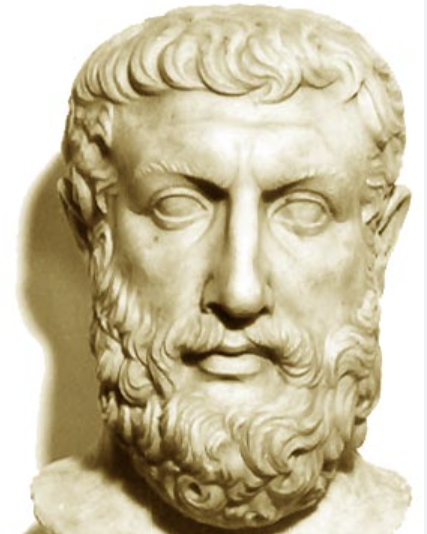
From this inheritance contemporary philosophers have continued to draw profit. Parmenides is their earliest ancestor whose work contains explicit and self-conscious argumentation. The severe conceptual difficulties posed for the first time in his verses are of perennial interest, and many of them remain in the forefront of discussion today. Recent study has thus brought his thought, in the words of another critic, "astonishingly close to some contemporary preoccupations." He should be viewed not only as "the most original and important philosopher before Socrates" but as the first extant author deserving to be called a philosopher in a present-day sense of the word.
▼
Source
David Gallop, in Parmenides of Elea : Fragments (1991), p. 3
5 months ago
The idea that seems to be presupposed by the doctrine of the veil of ignorance—namely, that one can in some way get a better grasp or understanding of the power relations in society and how they work by covering them up, ignoring them, or simply wishing them away—seems very naïve. … To think that an appropriate point of departure for understanding the political world is our intuitions of what is “just,” without reflecting on where those intuitions come from, how they are maintained, and what interests they might serve, seems to exclude from the beginning the very possibility that these intuitions might themselves be “ideological.”
▼
Source
Raymond Geuss, Philosophy and Real Politics (2008), p. 90
5 months ago
The general holds back his cavalry to a pace that suits his infantry, for if its infantry is left behind, the cavalry will be surrounded by the enemy.

5 months ago
This is appropriate. Justice is the most 'political' or institutional of the virtues. The legitimacy of a state rests upon its claim to do justice. … Doing justice is not the primary purpose of the family, the classroom, the small business, even though a father, teacher, or employer ought to behave justly towards children, pupils, or employees when rearing them, teaching them, . and employing them.
5 months ago
Philosophy … is a science, and as such has no articles of faith; accordingly, in it nothing can be assumed as existing except what is either positively given empirically, or demonstrated through indubitable conclusions.
▼
Source
Vol I
5 months ago
Every thought derives from a thwarted sensation.
5 months ago
Goebbels told Schwerin von Krosigk [in April 1945 in the Führerbunker] how he had recently been reading aloud to the Fuehrer, to solace him in his universal discomfiture. He was reading from his favourite book, Carlyle's History of Frederick the Great; and the chapter he was reading described "how the great king himself no longer saw any way out of his difficulties, no longer had any plan; how all his generals and ministers were convinced that his downfall was at hand; how the enemy was already counting Prussia as destroyed; how the future hung dark before him, and in his last letter to his minister, Count Finckenstein, he gave himself one last respite: if there was no change by February 15th, he would give it up and take poison. 'Brave king!' says Carlyle, 'wait yet a little while, and the days of your suffering will be over. Already the sun of your good fortune stands behind the clouds, and soon will rise upon you.' On February 12th the Czarina died; the Miracle of the House of Brandenburg had come to pass." At this touching tale, said Goebbels, "tears stood in the Fuehrer's eyes."
▼
Source
Hugh Trevor-Roper, The Last Days of Hitler (1947), pp. 106-107
5 months ago
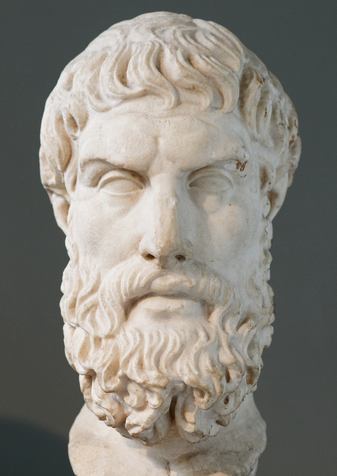
Sobriety, as opposed to inebriety and gluttony, is of admirable use in teaching men that nature is satisfied with a little, and enabling them to content themselves with simple and frugal fare.
5 months ago
One just principle from the depths of a cave is more powerful than an army.
5 months ago
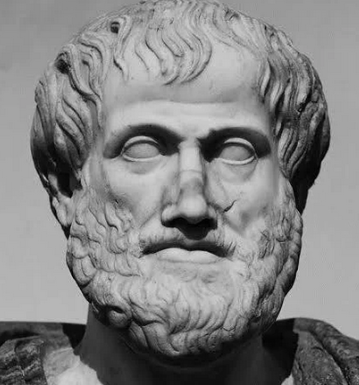
The science which has to do with nature clearly concerns itself for the most part with bodies and magnitudes and their properties and movements, but also with the principles of this sort of substance, as many as they may be.
▼
Source
On the Heavens Book I, pg. 1 (350 BCE)
5 months ago
The bringing down of one of the most oppressive regimes, that of the Shah monarchy, was a remarkable event of twentieth century. Whether one finds the outcome of the Revolution in terms of the establishment of an Islamic Republic under the dominance of Ulama (Islamic clerics, in narrow, contemporary sense) agreeable or disappointing, a most remarkable aspect of this revolution that has become an object of interest of observers of contemporary events is the mass movement that underlies the revolution. Indeed, the kind of mass participation - in terms of both absolute and relative magnitude - in the movement leading to the revolution is still unprecedented.While the role of the Ulama, especially that of Imam Khomeini, received overwhelming attention worldwide, there were other powerful influences that shaped the ethos of the revolution. One such source of influence was Dr. Ali Shariati. A sociologist, trained at Sorbonne University (France), he was gunned down in United Kingdom by Savak for his anti-monarchy stance and popular influence among the modern educated and youth of pre-revolutionary Iran.
▼
Source
Mohammad Omar Farooq. "[http://globalwebpost.com/farooqm/writings/islamic/ali_shariati.html Humanity and the People Power: A Tribute to Dr. Ali Shariati]," at globalwebpost.com, September 2000.
5 months ago
Means at our disposal should be regarded as a bulwark against the many evils and misfortunes that can occur. We should not regard such wealth as a permission or even an obligation to procure for ourselves the pleasures of the world.
▼
Source
E. Payne, trans. (1974) Vol. 1, p. 348
5 months ago
Nothing deserves to be undone, doubtless because nothing deserved to be done.
5 months ago
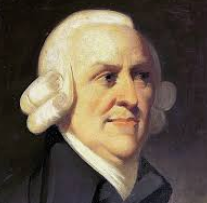
Society and conversation, therefore, are the most powerful remedies for restoring the mind to its tranquillity, if, at any time, it has unfortunately lost it; as well as the best preservatives of that equal and happy temper, which is so necessary to self-satisfaction and enjoyment. Men of retirement and speculation, who are apt to sit brooding at home over either grief or resentment, though they may often have more humanity, more generosity, and a nicer sense of honour, yet seldom possess that equality of temper which is so common among men of the world.
▼
Source
Section I, Chap. III.
5 months ago
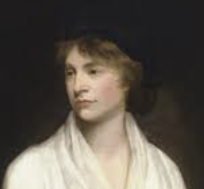
The endeavor to keep alive any hoary establishment beyond its natural date is often pernicious and always useless.
▼
Source
The French Revolution, Bk. V, ch. 4 (1794)
5 months ago
If a demarcation criterion exists (we must not, I think, seek a sharp or decisive one), it may lie just in that part of science which Sir Karl ignores.
▼
Source
"Logic of Discovery or Psychology of Research?", Criticism and the growth of knowledge edited by Imre Lakatos and Alan Musgrave (1970)
5 months ago
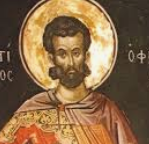
"If, therefore, any one makes the accusation, and furnishes proof that the said men [Christians] do anything contrary to the laws, you shall adjudge punishments in proportion to the offences. And this, by Hercules, you shall give special heed to, that if any man shall, through mere calumny, bring an accusation against any of these persons [Christians], you shall award to him more severe punishments in proportion to his wickedness."
▼
Source
The first apology of Justin, chapter LXVIII. In ANF1, that is, Roberts A, Donaldson J and Coxe AC (1885) Ante-Nicene Fathers, Vol 1. [Justin quotes from a letter of c122AD from the Emperor Hadrian to Minucius Fundanus. ANF1 footnote: "Generally credited a
5 months ago
The brain is not responsible for any of the sensations.. the correct view [is] that the seat and source of sensation is the region of the heart….the motions of pleasure and pain, and generally all sensation plainly have their source in the heart.
▼
Source
Book II, Part 10

5 months ago
Nat Turner and John Brown were political prisoners in their time. The acts for which they were charged and subsequently hanged, were the practical extensions of their profound commitment to the abolition of slavery.
5 months ago
Men are by nature merely indifferent to one another; but women are by nature enemies.
▼
Source
Vol. 2 "On Women" as translated in Essays and Aphorisms (1970), as translated by R. J. Hollingdale
5 months ago
As soon as one returns to Doubt (if it could be said that one has ever left it), undertaking anything at all seems not so much useless as extravagant. Doubt works deep within you like a disease, or even more effectively, like a faith.
5 months ago
The difference between the most dissimilar characters, between a philosopher and a common street porter, for example, seems to arise not so much from nature, as from habit, custom, and education.
▼
Source
Chapter II, p. 17.
5 months ago
Friendship and domestic happiness are continually praised; yet how little is there of either in the world, because it requires more cultivation of mind to keep awake affection, even in our own hearts, than the common run of people suppose. Besides, few like to be seen as they really are; and a degree of simplicity, and of undisguised confidence, which, to uninterested observers, would almost border on weakness, is the charm, nay the essence of love or friendship, all the bewitching graces of childhood again appearing.
▼
Source
Letter 12
5 months ago
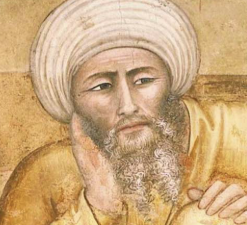
If we admit the existence of the prophetic mission, by putting the idea of possibility, which is in fact ignorance, in place of certainty, and make miracles a proof of the truth of man who claims to be a prophet it becomes necessary that they should not be used by a person, who says that they can be performed by others than prophets, as the Mutakallimun do.
▼
Source
Part 2: The Advent of the Prophets; Opening sentence
5 months ago
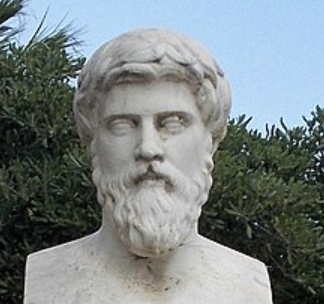
He is a fool who lets slip a bird in the hand for a bird in the bush.
▼
Source
Of Garrulity (Tr. Goodwin)

5 months ago
Might there not be a connection between the attempt to eradicate religion and the loss of freedom? It is unlikely that Mao, who launched his assault on the people and culture of Tibet with the slogan "Religion is poison," would have agreed that his atheist world-view had no bearing on his policies.
5 months ago
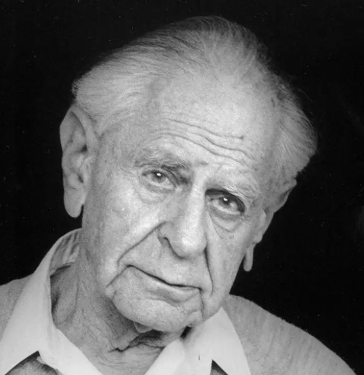
I think so badly of philosophy that I don't like to talk about it. ... I do not want to say anything bad about my dear colleagues, but the profession of teacher of philosophy is a ridiculous one. We don't need a thousand of trained, and badly trained, philosophers — it is very silly. Actually most of them have nothing to say.
▼
Source
As quoted in "At 90, and Still Dynamic : Revisiting Sir Karl Popper and Attending His Birthday Party" by Eugene Yue-Ching Ho, in Intellectus 23 (Jul-Sep 1992)
5 months ago
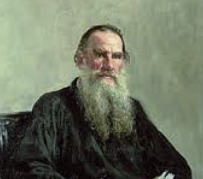
All violence consists in some people forcing others, under threat of suffering or death, to do what they do not want to do.
▼
Source
[http://www.calebjohnson.org/lawoflove.pdf The Law of Love and the Law of Violence (1908)]
5 months ago
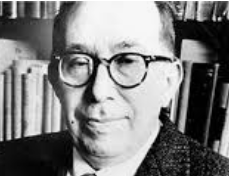
History teaches us that a given view has been abandoned in favor of another by all men, or by all competent men, or perhaps by only the most vocal men; it does not teach us whether the change was sound or whether the rejected view deserved to be rejected. Only an impartial analysis of the view in question—an analysis that is not dazzled by the victory or stunned by the defeat of the adherents of the view concerned—could teach us anything regarding the worth of the view and hence regarding the meaning of the historical change.
▼
Source
p. 19
5 months ago
Life seems to be common even to plants, but we are seeking what is peculiar to man. Let us exclude, therefore, the life of nutrition and growth. Next there would be a life of perception, but it also seems to be common even to the horse, the ox, and every animal. There remains, then, an active life of the element that has a rational principle; of this, one part has such a principle in the sense of being obedient to one, the other in the sense of possessing one and exercising thought. And, as "life of the rational element" also has two meanings, we must state that life in the sense of activity is what we mean; for this seems to be the more proper sense of the term. Now if the function of man is an activity of soul which follows or implies a rational principle, and if we say "so-and-so" and "a good so-and-so" have a function which is the same in kind, e.g. a lyre, and a good lyre-player, and so without qualification in all cases, eminence in respect of goodness being added to the name of the function (for the function of a lyre-player is to play the lyre, and that of a good lyre-player is to do so well): if this is the case, and we state the function of man to be a certain kind of life, and this to be an activity or actions of the soul implying a rational principle, and the function of a good man to be the good and noble performance of these, and if any action is well performed when it is performed in accordance with the appropriate excellence: if this is the case, human good turns out to be activity of soul in accordance with virtue, and if there are more than one virtue, in accordance with the best and most complete. But we must add "in a complete life." For one swallow does not make a summer, nor does one day; and so too one day, or a short time, does not make a man blessed and happy.
▼
Source
Book I, 1098a; §7 as translated by W. D. Ross | Variants: | One swallow does not a summer make. | As quoted in A History of Ancient Philosophy: From the Beginning to Augustine (1998) by Karsten Friis Johansen, p. 382 | One swallow (they say) no Sommer dot
5 months ago
I am not suggesting that the abolition of slavery and the lease system has produced an era of equality and justice. On the contrary, racism surreptitiously defines social and economic structures in ways that are difficult to identify and thus are much more damaging.
▼
Source
Chapter Two
5 months ago
So that it will be found that the fundamental fault in the character of women is that they have no “sense of justice .” This arises from their deficiency in the power of reasoning already referred to, and reflection, but is also partly due to the fact that Nature has not destined them, as the weaker sex, to be dependent on strength but on cunning; this is why they are instinctively crafty, and have an ineradicable tendency to lie.
▼
Source
On Women
5 months ago
Every utopia about to be realized resembles a cynical dream.
5 months ago
Good roads, canals, and navigable rivers, by diminishing the expence of carriage, put the remote parts of the country more nearly upon a level with those of the neighbourhood of the town. They are upon that the greatest of all improvements.
▼
Source
Chapter XI, Part I, p. 174.
5 months ago
Cato instigated the magistrates to punish all offenders, saying that they that did not prevent crimes when they might, encouraged them. Of young men, he liked them that blushed better than those who looked pale.
▼
Source
Cato the Elder
5 months ago
Before Christianity suicide was not in any way troubling. Our lives were our own, and when we tired of them we were at liberty to end them. One might think that as Christianity has declined, this freedom would be reclaimed. Instead secular creeds have sprung up, in which each person’s life belongs to everyone else. To hand back the gift of life because it does not please is still condemned as a kind of blasphemy, though the offended deity is now humanity instead of God.
▼
Source
Sweet Morality (p. 231-2)
5 months ago
A rationalist, as I use the word, is a man who attempts to reach decisions by argument and perhaps, in certain cases, by compromise, rather than by violence. He is a man who would rather be unsuccessful in convincing another man by argument than successful in crushing him by force, by intimidation and threats, or even by persuasive propaganda.
5 months ago
At the approach of danger there are always two voices that speak with equal force in the heart of man: one very reasonably tells the man to consider the nature of the danger and the means of avoiding it; the other even more reasonable says that it is too painful and harassing to think of the danger, since it is not a man's power to provide for everything and escape from the general march of events; and that it is therefore better to turn aside from the painful subject till it has come, and to think of what is pleasant. In solitude a man generally yields to the first voice; in society to the second.
▼
Source
Bk. X, ch. 17
5 months ago
Liberal education is the necessary endeavor to found an aristocracy within democratic mass society.
▼
Source
“What is liberal education,” p. 5
5 months ago
Homer has taught all other poets the art of telling lies skillfully.
▼
Source
1460a.19 | Variant: It is Homer who has chiefly taught other poets the art of telling lies skillfully.
5 months ago
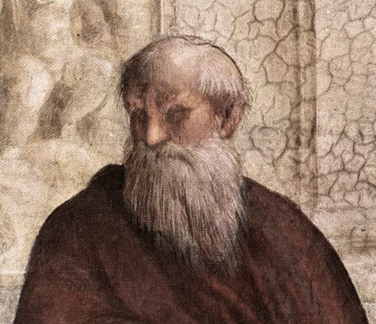
When they write incantations, and utter them as to the stars, not only to the bodies and souls of these, but also to things superior to soul, what do they effect? They answer, charms, allurements, and persuasions, so that the stars hear the words addressed to them, and are drawn down; if any one of us knows how in a more artificial manner to utter these incantations, sounds, aspirations of the voice, and hissings, and such other particulars as in their writings are said to possess a magical power. ...They likewise pretend that they can expel disease. And if, indeed, they say that they effect this by temperance and an orderly mode of life, they speak rightly, and conformably to philosophers. But now when they assert that diseases are daemons, and that they are able to expel these by words, and proclaim that they possess this ability, they may appear to the multitude to be more venerable, who admire the powers of magicians; but they will not persuade intelligent men that diseases have not their causes either from labours, or satiety, or indigence, or putrefaction, and in short from mutations which either have an external or internal origin. This, however, is manifest from the cure of diseases. For disease is deduced downward, so as to pass away externally, either through a flux of the belly, or the operation of medicine. Disease, also, is cured by letting of blood and fasting. ...The disease ...is something different from the daemon. ...The manner, however, in which these things are asserted by the Gnostics, and on what account is evident; since for the sake of this, no less than of other things, we have mentioned these daemons. ...And this must every where be considered, that he who pursues our form of philosophy, will, besides all other goods, genuinely exhibit simple and venerable manners, in conjunction with the possession of wisdom, and will not endeavour to become insolent and proud; but will possess confidence accompanied with reason, much security and caution, and great circumspection.
5 months ago
There are two sentences inscribed upon the Delphic oracle, hugely accommodated to the usages of man's life: "Know thyself," and "Nothing too much;" and upon these all other precepts depend.
5 months ago
The most important feature of natural selection is that it is a process of drift. Evolution has no end-point or direction, so if the development of society is an evolutionary process it is one that is going nowhere.
▼
Source
An Old Chaos: Humanism and Flying Saucers (p. 78)
CivilSimian.com created by AxiomaticPanic, CivilSimian, Kalokagathia