
5 months ago
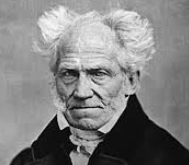
As the biggest library if it is in disorder is not as useful as a small but well-arranged one, so you may accumulate a vast amount of knowledge but it will be of far less value to you than a much smaller amount if you have not thought it over for yourself; because only through ordering what you know by comparing every truth with every other truth can you take complete possession of your knowledge and get it into your power. You can think about only what you know, so you ought to learn something; on the other hand, you can know only what you have thought about.
▼
Source
Vol. 2, Ch. 22, § 257 "On Thinking for Yourself" as translated in Essays and Aphorisms(1970) as translated by R. J. Hollingdale | Variant translation: Just as the largest library, badly arranged, is not so useful as a very moderate one that is well arrang
5 months ago
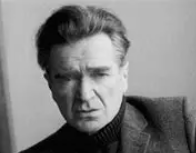
To think that so many have succeeded in dying!
5 months ago
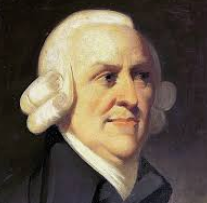
In this consists the difference between the character of a miser and that of a person of exact economy and assiduity. The one is anxious about small matters for their own sake; the other attends to them only in consequence of the scheme of life which he has laid down to himself.
▼
Source
Chap. VI.

5 months ago
If women be educated for dependence; that is, to act according to the will of another fallible being, and submit, right or wrong, to power, where are we to stop?
▼
Source
Ch. 3
5 months ago
Scientists work from models acquired through education and through subsequent exposure to the literature often without quite knowing or needing to know what characteristics have given these models the status of community paradigms
▼
Source
p. 46

5 months ago
Liberals tend to regard being subjects of the Queen as an insult to their dignity. But at least the archaic structures by which we are ruled do not force us to define ourselves by blood, soil or faith, and we are protected from the poisonous politics of identity.
▼
Source
[http://www.guardian.co.uk/commentisfree/2007/jul/29/comment.politics1 "Monarchy is the key to our liberty,"], The Observer (2007-07-29)
5 months ago
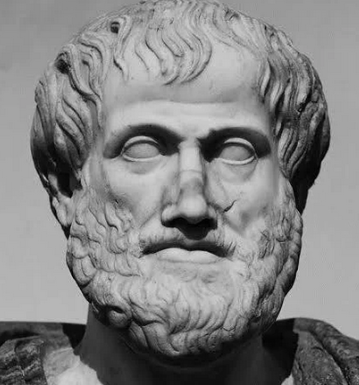
If, then, in the sphere of action there is some one end which we desire for its own sake, and for the sake of which we desire every thing else; and if we do not choose every thing for the sake of something else, for this would go on without limit, and our desire would be idle and futile, it is clear that this must be the supreme good, and the best thing of all.
▼
Source
(Bk I, Ch I)
5 months ago
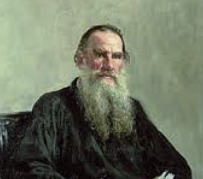
A man can live and be healthy without killing animals for food; therefore, if he eats meat, he participates in taking animal life merely for the sake of his appetite. And to act so is immoral.
▼
Source
Writings on Civil Disobedience and Nonviolence (1886)
5 months ago
All political action aims at either preservation or change. When desiring to preserve, we wish to prevent a change for the worse; when desiring to change, we wish to bring about something better. All political action is then guided by some thought of better or worse.
▼
Source
"What Is Political Philosophy" in The Journal of Politics, 19(3) (Aug. 1957) by the Southern Political Science Association, p. 343

5 months ago
As a rule, white abolitionists either defended the industrial capitalists or expressed no conscious class loyalty at all. This unquestioning acceptance of the capitalist economic system was evident in the program of the women’s rights movement as well. If most abolitionists viewed slavery as a nasty blemish which needed to be eliminated, most women’s righters viewed male supremacy in a similar manner—as an immoral flaw in their otherwise acceptable society. The leaders of the women’s rights movement did not suspect that the enslavement of Black people in the South, the economic exploitation of Northern workers and the social oppression of women might be systematically related.
5 months ago
Hatred comes from the heart; contempt from the head; and neither feeling is quite within our control.
▼
Source
"Psychological Observations"
5 months ago
Everything is nothing, including the consciousness of nothing.
5 months ago
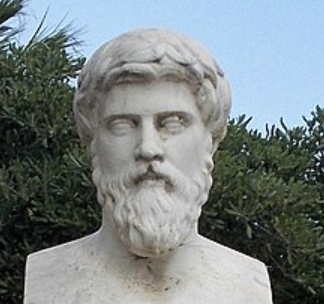
We rarely hear, it has been said, of the combinations of masters, though frequently of those of the workman. But whoever imagines, upon this account, that masters rarely combine, is as ignorant of the world as of the subject.
▼
Source
Chapter VIII, p. 80.
5 months ago
Aristodemus, a friend of Antigonus, supposed to be a cook's son, advised him to moderate his gifts and expenses. "Thy words," said he, "Aristodemus, smell of the apron."
▼
Source
44 Antigonus I
5 months ago
In the life of the academic mind, the owl of Minerva seldom flies as early as the dusk.
▼
Source
'Definition of the Political Thought of Tlön' (p.91)
5 months ago
Therefore only an utterly senseless person can fail to know that our characters are the result of our conduct.
▼
Source
Book III, 5.12 | Variant: Now not to know that it is from the exercise of activities on particular objects that states of character are produced is the mark of a thoroughly senseless person.
5 months ago
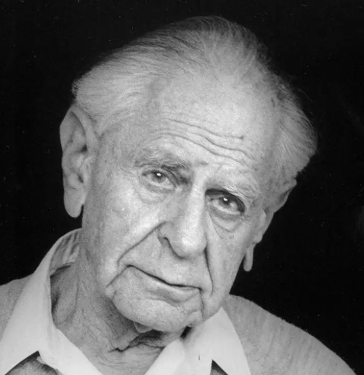
I believe that the advance of science depends upon the free competition of thought, and thus upon freedom, and that it must come to an end if freedom is destroyed (though it may well continue for some time in some fields, especially in technology).
▼
Source
Ch. 10 "Corroboration, or How a Theory Stands up to Tests", section 85: The Path of Science, p. 279, note 2.
5 months ago
Each visitor performed the ceremony of greeting this old aunt whom not one of them knew, not one of them wanted to know, and not one of them cared about; Anna Pávlovna observed these greetings with mournful and solemn interest and silent approval. The aunt spoke to each of them in the same words, about their health and her own, and the health of Her Majesty, "who, thank God, was better today." And each visitor, though politeness prevented his showing impatience, left the old woman with a sense of relief at having performed a vexatious duty and did not return to her the whole evening.
▼
Source
Bk. I, Ch. II
5 months ago
The problem inherent in the surface of things, and only in the surface of things, is the heart of things.
▼
Source
p. 13
5 months ago
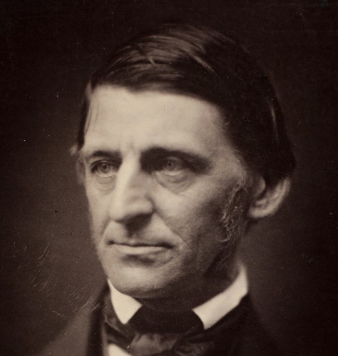
Always put the best interpretation on a tenet. Why not on Christianity, wholesome, sweet, and poetic? It is the record of a pure and holy soul, humble, absolutely disinterested, a trutn-speaker, and bent on serving, teaching, and uplifting men. Christianity taught the capacity, the element, to Jove the All-perfect without a stingy bargain for personal happiness. It taught that to love him was happiness,—to love him in other’s virtues.
5 months ago
If, however, we shift our attention from the prison, perceived as an isolated institution, to the set of relationships that comprise the prison industrial complex, it may be easier to think about alternatives. In other words, a more complicated framework may yield more options than if we simply attempt to discover a single substitute for the prison system.
▼
Source
Chapter Six
5 months ago
One who believes that the pain in the world outweighs the joy, and expresses that unhappy conviction, only adds to the pain. Schopenhauer is an enemy to the race. Even if he earnestly believed that this is the most wretched of possible worlds, he should not promulgate a doctrine which robs men of the incentive to fight with circumstance. If Life gave him ashes for bread, it was his fault. Life is a fair field, and the right will prosper if we stand by our guns.
▼
Source
Helen Keller, in Optimism (1903)
5 months ago
When you get over an infatuation, to fall for someone ever again seems so inconceivable that you imagine no one, not even a bug, that is not mired in disappointment.
5 months ago
Though the profusion of Government must undoubtedly have retarded the natural progress of England to wealth and improvement, it has not been able to stop it.
▼
Source
Chapter III.
5 months ago
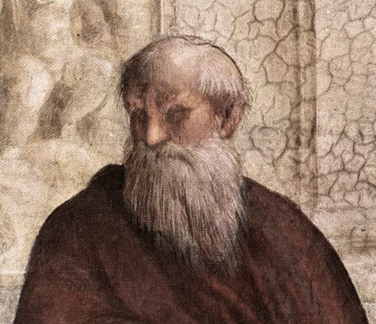
When they write incantations, and utter them as to the stars, not only to the bodies and souls of these, but also to things superior to soul, what do they effect? They answer, charms, allurements, and persuasions, so that the stars hear the words addressed to them, and are drawn down; if any one of us knows how in a more artificial manner to utter these incantations, sounds, aspirations of the voice, and hissings, and such other particulars as in their writings are said to possess a magical power. ...They likewise pretend that they can expel disease. And if, indeed, they say that they effect this by temperance and an orderly mode of life, they speak rightly, and conformably to philosophers. But now when they assert that diseases are daemons, and that they are able to expel these by words, and proclaim that they possess this ability, they may appear to the multitude to be more venerable, who admire the powers of magicians; but they will not persuade intelligent men that diseases have not their causes either from labours, or satiety, or indigence, or putrefaction, and in short from mutations which either have an external or internal origin. This, however, is manifest from the cure of diseases. For disease is deduced downward, so as to pass away externally, either through a flux of the belly, or the operation of medicine. Disease, also, is cured by letting of blood and fasting. ...The disease ...is something different from the daemon. ...The manner, however, in which these things are asserted by the Gnostics, and on what account is evident; since for the sake of this, no less than of other things, we have mentioned these daemons. ...And this must every where be considered, that he who pursues our form of philosophy, will, besides all other goods, genuinely exhibit simple and venerable manners, in conjunction with the possession of wisdom, and will not endeavour to become insolent and proud; but will possess confidence accompanied with reason, much security and caution, and great circumspection.
5 months ago
There are two sentences inscribed upon the Delphic oracle, hugely accommodated to the usages of man's life: "Know thyself," and "Nothing too much;" and upon these all other precepts depend.
5 months ago
The most important feature of natural selection is that it is a process of drift. Evolution has no end-point or direction, so if the development of society is an evolutionary process it is one that is going nowhere.
▼
Source
An Old Chaos: Humanism and Flying Saucers (p. 78)
5 months ago
We are what we repeatedly do. Excellence, then, is not an act, but a habit.
▼
Source
Variant: We are what we repeatedly do, therefore excellence is not an act, but a habit. | Source: Will Durant, The Story of Philosophy: The Lives and Opinions of the World's Greatest Philosophers (1926), reprinted in Simon & Schuster/Pocket Books, 1991, ]
5 months ago
It seems to me certain that more people are killed out of righteous stupidity than out of wickedness.
▼
Source
p. 368
5 months ago
There was no answer, except the general answer life gives to all the most complex and insoluble questions. That answer is: one must live for the needs of the day, in other words, become oblivious. To become oblivious in dreams was impossible now, at least till night-time; it was impossible to return to that music sung by carafe-women; and so one had to become oblivious in the dreams of life.
▼
Source
Pt. 1, ch. 2
5 months ago
Political philosophy has lost its credibility in proportion as politics itself has become more philosophic than ever in a sense.
5 months ago
The sky is the daily bread of the eyes.
▼
Source
May 25, 1843
5 months ago
The color line about which Du Bois spoke is not nearly as clear as it was at the time. Racialization processes are now far more complicated. Class is an important category to consider as it intersects with race and gender. The prominence of Black middle classes today combined with the putative eradication of racism within the legal sphere means that we have to think in a much more complicated way about the structures of racism and how they continue to inform US society. We need to develop an analysis that incorporates gender and class and sexuality, as well.
5 months ago
One would have to be as unenlightened as an angel or an idiot to imagine that the human escapade could turn out well.
5 months ago
The sneaking arts of underling tradesmen are thus erected into political maxims for the conduct of a great empire; for it is the most underling tradesmen only who make it a rule to employ chiefly their own customers. A great trader purchases his good always where they are cheapest and best, without regard to any little interest of this kind.
▼
Source
Chapter III, Part II, p. 530.
5 months ago
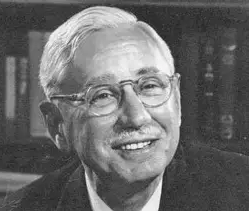
There is but one way to bring about the triumph of liberty, of justice, and of peace in Europe's international relations, to make civil war impossible between the different peoples who make up the European family; and that is the formation of the United States of Europe.
5 months ago
Never had a colony or a possession made so a great sacrifice for the master country. Every Hindu conscious of India looked forward hopefully now, as a reward for this bloody loyalty, to the admission of his country into the fellowship of free dominions under the English flag. After the war, Lloyd George, then Premier, declared with unstatesmanlike, clarity that Britain intended always to rule India, that there must always, remain in India "a steel frame" of British power and British dominance. This was the best traditions of imperialistic hypocrisy. The Montagu-Chelmsform reform fell short of promises. Dr. Rutherford, a Member of Parliament, wrote: "Never in the history of the world was such a hoax perpetrated upon a great people as England perpetrated upon India, when in return for India's invaluable service during the War, we gave to the Indian nation such a discreditable, disgraceful, undemocratic, tyrannical constitution. (source: The Case for India - By Will Durant Simon and Schuster, New York. 1930 p. 123-128).

5 months ago
Thus Angels' Bread is madeThe Bread of man today:The Living Bread from HeavenWith figures doth away:O wondrous gift indeed!The poor and lowly mayUpon their Lord and Master feed.
▼
Source
Sacris Solemniis Juncta Sint Gaudia (Matins hymn for Corpus Christi), stanza 6 (Panis Angelicus)

5 months ago
Soul, indeed, is a certain medium between an impartible essence, and an essence which is divisible about bodies. But intellect is an impartible essence alone. And qualities and material forms are divisible about bodies. Not everything which acts on another, effects that which it does effect by approximation and contact; but those natures which effect any thing by approximation and contact, use approximation accidentally.
▼
Source
5 - 6
5 months ago
The belief in a political Utopia is especially dangerous. This is possibly connected with the fact that the search for a better world, like the investigation of our environment, is (if I am correct) one of the oldest and most important of all the instincts.
5 months ago
Is not the reason of the confidence of the positive, critical, experimental scientists, and of the reverent attitude of the crowd towards their doctrines, still the same? At first it seems strange how the theory of evolution (which, like the redemption in theology, serves the majority as a popular expression of the whole new creed) can justify people in their injustice, and it seems as if the scientific theory dealt only with facts and did nothing but observe facts. But that only seems so. It seemed just the same in the case of theological doctrine: theology, it seemed, was only occupied with dogmas and had no relation to people's lives, and it seemed the same with regard to philosophy, which appeared to be occupied solely with transcendental reasonings. But that only seemed so. It was just the same with the Hegelian doctrine on a large scale and with the particular case of the Malthusian teaching.
5 months ago
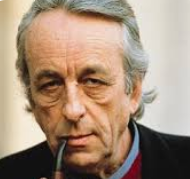
While speaking in ideology, and from within ideology we have to outline a discourse which tries to break with ideology, in order to dare to be the beginning of a scientific (i.e. subject-less) discourse on ideology.
▼
Source
p. 117
5 months ago
But genius looks forward: the eyes of men are set in his forehead, not in his hindhead: man hopes: genius creates.
▼
Source
par. 18

5 months ago
Truly … as accidental as my Life may be, or as that random Humour is, which governs it; I know nothing, after all, so real or substantial as My-Self. Therefore if there be that Thing you call a Substance, I take for granted I am one. But for anything further relating to this Question, you know my Sceptick Principles: I determine neither way.
▼
Source
Vol. 2, p. 83; Part 3, Sect. 1 "Philocles to Palemon".
5 months ago
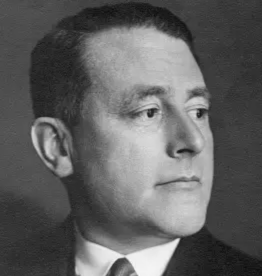
War as the most extreme political means discloses the possibility which underlies every political idea, namely, the distinction of friend and enemy.
5 months ago
Lands for the purposes of pleasure and magnificence, parks, gardens, public walks, &c. possessions which are every where considered as causes of expence, not as sources of revenue, seem to be the only lands which, in a great and civilized monarchy, ought to belong the crown.
▼
Source
Chapter II, Part I, p. 891.
5 months ago
The people should never be deceived, under any pretext or for any purpose. It would not only be criminal but detrimental to the revolutionary cause, for deception of any kind, by its very nature, is shortsighted, petty, narrow, always sewn with rotten threads, so that it inevitably tears and is exposed.
▼
Source
"Appendix A"
5 months ago
A sensation is the feeling of an external stimulus or an internal condition.
▼
Source
Ch. 6 : Our Souls
5 months ago
Prostitution in towns is like the sewer in a palace; take away the sewers and the palace becomes an impure and stinking place.
▼
Source
This quote, frequently attributed to Aquinas, is actually a paraphrase of a passage (itself an elaborate paraphrase of Augustine) by Ptolemy of Lucca in his continuation of an unfinished work by Aquinas. The passage from Ptolemy reads: "Thus, Augustine sa
5 months ago
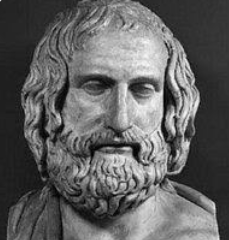
You, Socrates, began by saying that virtue can't be taught, and now you are insisting on the opposite, trying to show that all things are knowledge, justice, soundness of mind, even courage, from which it would follow that virtue most certainly can be taught.
▼
Source
Quoted in Plato, Protagoras, sec. 361a–b. Translated by C. C. W. Taylor, Plato: 'Protagoras (Oxford, 1976) p. 56
CivilSimian.com created by AxiomaticPanic, CivilSimian, Kalokagathia