
5 months ago
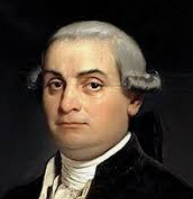
No man can be judged a criminal until he be found guilty; nor can society take from him the public protection, until it have been proved that he has violated the conditions on which it was granted. What right, then, but that of power, can authorise the punishment of a citizen, so long as there remains any doubt of his guilt? The dilemma is frequent. Either he is guilty, or not guilty. If guilty, he should only suffer the punishment ordained by the laws, and torture becomes useless, as his confession is unnecessary. If he be not guilty, you torture the innocent; for, in the eye of the law, every man is innocent, whose crime has not been proved.
5 months ago
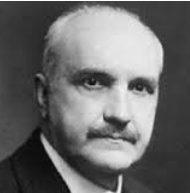
England is the paradise of individuality, eccentricity, heresy, anomalies, hobbies, and humors.
▼
Source
"The British Character"
5 months ago
Nations are barbarian in their infancy but not savage. The barbarian is a proportional mean between the savage and the citizen. He already possesses no end of knowledge: he has habitations, some agriculture, domestic animals, laws, a cult, regular tribunals; he lacks only the sciences.
▼
Source
p. 25
5 months ago
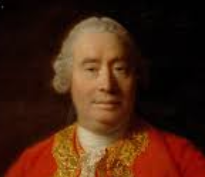
The most perfect philosophy of the natural kind only staves off our ignorance a little longer: as perhaps the most perfect philosophy of the moral or metaphysical kind serves only to discover larger portions of it. Thus the observation of human blindness and weakness is the result of all philosophy, and meets us at every turn, in spite of our endeavours to elude or avoid it.
▼
Source
Section 4 : Sceptical Doubts Concerning The Operations of The Understanding

5 months ago
If we carefully trace the terms nazar, and nazaret, throughout the best known works of ancient writers, we will meet them in connection with “Pagan” as well as Jewish adepts. Thus, Alexander Polyhistor says of Pythagoras that he was a disciple of the Assyrian Nazarrt, whom some suppose to be Ezekiel. Diogenes Laertius states most positively that Pythagoras, after being initiated into all the Mysteries of the Greeks and barbarians, “went into Egypt and afterward visited the Chaldeans and Magi;” and Apuleius maintains that it was Zoroaster who instructed Pythagoras. (p. 140)
▼
Source
The Veil of Isis, Part 1, Science.
5 months ago
A new word is like a fresh seed sown on the ground of the discussion.
▼
Source
p. 2e

5 months ago
Although what is called ‘philosophical speculation’ is undoubtedly on the decline, many of the practically minded have not yet freed themselves from a method of reasoning, which, in the last analysis, has its roots in theology and metaphysics. No science which pretends to be exact can accept an untested theory or doctrine; yet even in an exact science there is often an admixture of magic, theology, and philosophy. It is one of the tasks of our time to aid scientific reasoning to attain its goal without hindrance. Whoever undertakes this is concerned not so much with ‘philosophy,’ properly speaking, as with ‘anti-philosophy.’ For him there is but one science with subdivisions — a unified science of sciences. We have a science that deals with rocks, another that deals with plants, a third that deals with animals, but we need a science that unites them all.
▼
Source
Otto Neurath (1931) "Physicalism: The Philosophy of the Viennese Circle," in: The Monist, Vol. 41, No. 4 (October, 1931), pp. 618-623; Lead paragraph

5 months ago
Emerson broke away from all conditions of age or country and represented nothing except intelligence itself.
▼
Source
George Santayana, The Genteel Tradition in American Philosophy (1911), p. 50
5 months ago
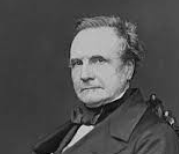
There is nothing in the nature of a miracle that should render it incredible: its credibility depends upon the nature of the evidence by which it is supported. An event of extreme probability will not necessarily command our belief unless upon a sufficiency of proof; and so an event which we may regard as highly improbable may command our belief if it is sustained by sufficient evidence. So that the credibility or incredibility of an event does not rest upon the nature of the event itself, but depends upon the nature and sufficiency of the proof which sustains it.
▼
Source
"Passages from the life of a philosopher", Appendix: Miracle. Note (A), p. 88
5 months ago
There is nothing impossible in the existence of the supernatural: its existence seems to me decidedly probable.
▼
Source
The Genteel Tradition at Bay (1931)
5 months ago
You, masters of the earth – princes, kings, emperors, powerful majesties, invincible conquerors – simply try to make the people go on such-and-such a day each year to a given place to dance. I ask little of you, but I dare give you a solemn challenge to succeed, whereas the humblest missionary will succeed and be obeyed two thousand years after his death. Every year the people gather around some rustic temple in the name of St John, St Martin, St Benedict, etc.; they come, animated by a feverish and yet innocent eagerness; religion sanctifies their joy and the joy embellishes religion; they forget their troubles; on leaving they think of the pleasure that they will have on the same day the following year, and the date is set in their minds.
5 months ago
The whole is a riddle, an aenigma, an inexplicable mystery. Doubt, uncertainty, suspence of judgment appear the only result of our most accurate scrutiny, concerning this subject. But such is the frailty of human reason, and such the irresistible contagion of opinion, that even this deliberate doubt could scarcely be upheld; did we not enlarge our view, and opposing one species of superstition to another, set them a quarrelling; while we ourselves, during their fury and contention, happily make our escape, into the calm, though obscure, regions of philosophy.
▼
Source
Part XV - General corollary
5 months ago
A History of Western Philosophy#Chapter III. Pythagoras
5 months ago
If life becomes hard to bear we think of a change in our circumstances. But the most important and effective change, a change in our own attitude, hardly even occurs to us, and the resolution to take such a step is very difficult for us.
▼
Source
p. 53e

5 months ago
More than a century has passed since science laid down sound propositions as to the origins of the universe, but how many have mastered them or possess the really scientific spirit of criticism? A few thousands at the outside, who are lost in the midst of hundreds of millions still steeped in prejudices and superstitions worthy of savages, who are consequently ever ready to serve as puppets for religious impostors.
5 months ago
With respect to animal diet, let it be considered, that taking away the lives of animals, in order to convert them into food, does great violence to the principles of benevolence and compassion. This appears from the frequent hard-heartedness and cruelty found amongst those persons whose occupations engage them in destroying animal life, as well as from the uneasiness which others feel in beholding the butchery of animals.
▼
Source
Observations on Man (1749; 6th edition, 1834), Part II, Chapter III, Section II.
5 months ago
If you wish to extinguish that enthusiasm, which inspires great thoughts, and impels to noble enterprises;—if you wish to render men's hearts cold, and unfeeling; and to substitute egotism in the room of generous, and ardent, patriotism,—if you wish to do this, only take away from the people their faith, and make them philosophers.
▼
Source
p. 61
5 months ago
If reason (I mean abstract reason, derived from inquiries a priori) be not alike mute with regard to all questions concerning cause and effect, this sentence at least it will venture to pronounce, That a mental world, or universe of ideas, requires a cause as much, as does a material world, or universe of objects; and, if similar in its arrangement, must require a similar cause. For what is there in this subject, which should occasion a different conclusion or inference? In an abstract view, they are entirely alike; and no difficulty attends the one supposition, which is not common to both of them.
▼
Source
Philo to Cleanthes, Part IV
5 months ago
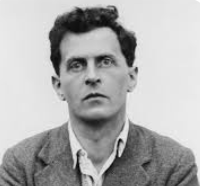
I can well understand why children love sand.
▼
Source
Although this quote has been attributed to Wittgenstein in Wittgenstein's Mistress by David Markson, there is no verifiable source from Wittgenstein that it can be traced back to.
5 months ago
A different conception of society, very different from that which now prevails, is in process of formation. Under the name of Anarchy, a new interpretation of the past and present life of society arises, giving at the same time a forecast as regards its future, both conceived in the same spirit as the above-mentioned interpretation in natural sciences. Anarchy, therefore, appears as a constituent part of the new philosophy, and that is why Anarchists come in contact, on so many points, with the greatest thinkers and poets of the present day.In fact, it is certain that in proportion as the human mind frees itself from ideas inculcated by minorities of priests, military chiefs and judges, all striving to establish their domination, and of scientists paid to perpetuate it, a conception of society arises, in which conception there is no longer room for those dominating minorities. A society entering into possession of the social capital accumulated by the labor of preceding generations, organizing itself so as to make use of this capital in the interests of all, and constituting itself without reconstituting the power of the ruling minorities. It comprises in its midst an infinite variety of capacities, temperaments and individual energies: it excludes none. It even calls for struggles and contentions; because we know that periods of contests, so long as they were freely fought out, without the weight of constituted authority being thrown on the one side of the balance, were periods when human genius took its mightiest flight and achieved the greatest aims. Acknowledging, as a fact, the equal rights of all its members to the treasures accumulated in the past, it no longer recognizes a division between exploited and exploiters, governed and governors, dominated and dominators, and it seeks to establish a certain harmonious compatibility in its midst — not by subjecting all its members to an authority that is fictitiously supposed to represent society, not by trying to establish uniformity, but by urging all men to develop free initiative, free action, free association. It seeks the most complete development of individuality combined with the highest development of voluntary association in all its aspects, in all possible degrees, for all imaginable aims; ever changing, ever modified associations which carry in themselves the elements of their durability and constantly assume new forms, which answer best to the multiple aspirations of all.

5 months ago
One of his sayings was, "Even the gods cannot strive against necessity."
▼
Source
Pittacus, 4.
5 months ago
In every page of David Hume, there is more to be learned than from Hegel's, Herbart's and Schleiermacher's complete philosophical works.
▼
Source
Arthur Schopenhauer, in: Arthur Schopenhauer (2016) The World As Will And Idea: 3 vols in 1. p. 721
5 months ago
Either the State for ever, crushing individual and local life, taking over in all fields of human activity, bringing with it its wars and its domestic struggles for power, its palace revolutions which only replace one tyrant by another, and inevitably at the end of this development there is … death! Or the destruction of States, and new life starting again in thousands of centers on the principle of the lively initiative of the individual and groups and that of free agreement. The choice lies with you!
▼
Source
X, Closing lines
5 months ago
Bion insisted on the principle that "The property of friends is common."
▼
Source
Bion, 9.
5 months ago
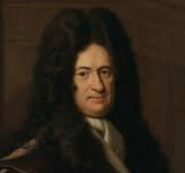
It is an extremely useful thing to have knowledge of the true origins of memorable discoveries, especially those that have been found not by accident but by dint of meditation. It is not so much that thereby history may attribute to each man his own discoveries and others should be encouraged to earn like commendation, as that the art of making discoveries should be extended by considering noteworthy examples of it.
▼
Source
Opening paragraph of Historia et Origo Calculi Differentialis (1714) Commercium epistolicum D. Joannis Collins et aliorum de analysi promota, see also Mathematische Schriften, Ed. C. I. Gerhardt, Georg Olms Verlag (1971) vol. 5, pp. 392–410; Tr. J. M. Chi

5 months ago
No one is ignorant that there are two avenues by which opinions are received into the soul, which are its two principal powers: the understanding and the will.
5 months ago
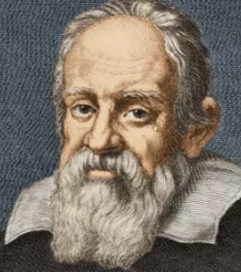
Whence do you have it that the terrestrial globe is so heavy? For my part, either I do not know what heaviness is, or the terrestrial globe is neither heavy nor light, as likewise all other globes of the universe. Heaviness to me (and I believe to Nature) is that innate tendency by which a body resists being moved from its natural place and by which, when forcibly removed therefrom, it spontaneously returns there. Thus a bucketful of water raised on high and set free, returns to the sea; but who will say that the same water remains heavy in the sea, when being set free there, does not move?
5 months ago
The above results are obtained with the help of warm frames, thousands of glass bells, and so on. But even without such costly things, with only 36 yards of frames for seedlings, vegetables are grown in the open air to the value of £200 per acre. ...In such cases the high selling prices of crops are not due to the high prices fetched by early vegetables in winter; they are entirely due to the high crops of the plainest ones.
5 months ago
Diogenes said once to a person who was showing him a dial, "It is a very useful thing to save a man from being too late for supper."
▼
Source
Menedemus, 3.

5 months ago
The, diverse states of the soul are always correlative with those of the body.
5 months ago
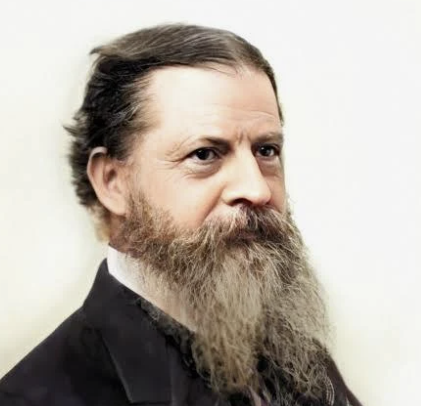
I define a Sign as anything which is so determined by something else, called its Object, and so determines an effect upon a person, which effect I call its Interpretant, that the latter is thereby mediately determined by the former.
▼
Source
Letter to Victoria, Lady Welby (1908) SS 80-81
5 months ago
Logic has borrowed, perhaps, the rules of geometry, without comprehending their force... it does not thence follow that they have entered into the spirit of geometry, and I should be greatly averse... to placing them on a level with that science that teaches the true method of directing reason.
5 months ago
Alas! Your dear friend and servant Galileo has been for the last month hopelessly blind; so that this heaven, this earth, this universe, which I by my marvelous discoveries and clear demonstrations had enlarged a hundred thousand times beyond the belief of the wise men of bygone ages, henceforward for me is shrunk into such a small space as is filled by my own bodily sensations.
▼
Source
Letter to Élie Diodati (2 January 1638), as translated in The Private Life of Galileo : Compiled primarily from his correspondence and that of his eldest daughter, Sister Maria Celeste (1870) by Mary Allan-Olney, p. 279

5 months ago
The particularity (Jeweiligkeit) of the places and their manifoldness are grounded in space, and the particularity of the time points is grounded in time. That basic characteristic of the thing, that essential determination of the thingness of the thing to be this one (je dieses), is grounded in the essence of space and time. Our question "What is a thing?" includes, therefore, the questions "What is space?" and "What is time?" It is customary The particularity (Jeweiligkeit) os the places. p. 16

5 months ago
The certain way to be cheated is to fancy one's self more cunning than others.
▼
Source
p. 86 (Conceit)
5 months ago
I thought... that the fact that in characterizing truth for a language it is necessary to put words into relations with objects was enough to give some grip for the idea of correspondence; but this now seems to me a mistake. The mistake is in a way only a misnomer, but terminological infelicities have a way of breeding conceptual confusion, and so it is here. Correspondence theories have always been conceived as providing an explanation or analysis of truth, and this, a Tarski-style theory of truth, certainly does not do.
▼
Source
Donald Davidson (1990, p. 135), as cited in: Simon Evnine (1991) Donald Davidson. p. 137
5 months ago
Consciousness must essentially cover an interval of time; for if it did not, we could gain no knowledge of time, and not merely no veracious cognition of it, but no conception whatever. We are therefore, forced to say that we are immediately conscious through an infinitesimal interval of time.
5 months ago
When, in the summer of 1953, that is, still during my university studies in Bonn, I read a recently published lecture by Heidegger from the year 1935, the Introduction to Metaphysics, the jargon, the choice of terminology and the style told me at once that the spirit of fascism was manifested in these motives, thoughts and phrases. The book really unsettled me because I had regarded myself up till then as a student of Heidegger. The newspaper article, in which I poured out my great political and philosophical disappointment the same weekend, is therefore entitled: “Thinking with Heidegger against Heidegger”. At the time it was impossible to know that Heidegger had written anti-Semitic letters to his wife as early as 1916 and that he had become a convinced Nazi long before 1933. The fact that he had remained an unrepentant Nazi, however, could be known by 1953 at the latest.
▼
Source
Jürgen Habermas, in conversation with Michaël Foessel, "[https://www.eurozine.com/critique-and-communication-philosophys-missions/ Critique and communication: Philosophy's missions]" (16 October 2015)
5 months ago
Despite the disorder observed in Nature, one finds enough traces of the wisdom and power of its Author that one cannot fail to recognize Him.
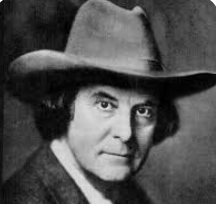
5 months ago
The happiest mortals on earth are ladies who have been bereaved by the loss of their husbands.
▼
Source
p. 10

5 months ago
The transition from Hegel to Marx is, in all respects, a transition to an essentially different order of truth, no to be interpreted in terms of philosophy. We shall see that all the philosophical concepts of Marxian theory are social and economic categories, whereas Hegel’s social and economic categories are all philosophical concepts.
▼
Source
P. 258
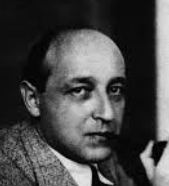
5 months ago
Conflicting intellectual positions may actually come to supplement one another. It is imperative in the present transitional period to make use of the intellectual twilight which dominates our epoch and in which all values and points of view appear in their genuine relativity. We must realize once and for all that the meanings which make up our world are simply an historically determined and continuously developing structure in which man develops, and are in no sense absolute.
5 months ago
A certain maxim of Logic which I have called Pragmatism has recommended itself to me for diverse reasons and on sundry considerations. Having taken it as my guide for most of my thought, I find that as the years of my knowledge of it lengthen, my sense of the importance of it presses upon me more and more. If it is only true, it is certainly a wonderfully efficient instrument. It is not to philosophy only that it is applicable. I have found it of signal service in every branch of science that I have studied. My want of skill in practical affairs does not prevent me from perceiving the advantage of being well imbued with pragmatism in the conduct of life.
▼
Source
Lecture I : Pragmatism : The Normative Sciences, CP 5.14
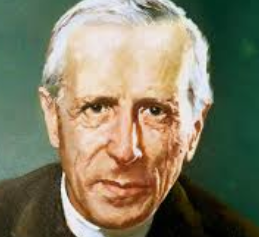
5 months ago
Nowhere... is the need more urgent of building a bridge between the... the physical and the moral...
5 months ago
The newspapers print what the people want, and thus does the savage still swing his club and flourish his spear.
▼
Source
p. 142
5 months ago
Under the rule of a repressive whole, liberty can be made into a powerful instrument of domination. The range of choice open to the individual is not the decisive factor in determining the degree of human freedom, but what can be chosen and what is chosen by the individual.
▼
Source
p. 7
5 months ago
Mere imagination would indeed be mere trifling; only no imagination is mere.
▼
Source
Vol. VI, par. 286
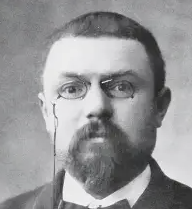
5 months ago
What postulate do we implicitly admit? It is that the duration of two identical phenomena is the same; or... that the same causes take the same time to produce the same effects. ...Is it impossible that experiment may some day contradict our postulate?
5 months ago
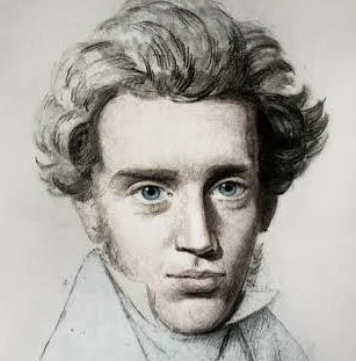
So it happens at times that a person believes that he has a world-view, but that there is yet one particular phenomenon that is of such a nature that it baffles the understanding, and that he explains differently and attempts to ignore in order not to harbor the thought that this phenomenon might overthrow the whole view, or that his reflection does not possess enough courage and resolution to penetrate the phenomenon with his world-view.
▼
Source
Pap. V B 53:20 1844 The Concept of Anxiety, Nichol p. 188
5 months ago
We are not human beings having a spiritual experience; we are spiritual beings having a human experience.
▼
Source
This is attributed to Pierre Teilhard de Chardin in The Joy of Kindness (1993), by Robert J. Furey, p. 138; but it is attributed to G. I. Gurdjieff in Beyond Prophecies and Predictions: Everyone's Guide To The Coming Changes (1993) by Moira Timms, p. 62;
CivilSimian.com created by AxiomaticPanic, CivilSimian, Kalokagathia