

5 months ago
I am incapable of conceiving infinity, and yet I do not accept finity. I want this adventure that is the context of my life to go on without end.
▼
Source
Pt. 2, Ch. 2: Time, activity, history, p. 412
5 months ago
A man can never quite understand a boy, even when he has been the boy.
▼
Source
Wisdom and Innocence: A Life of G.K. Chesterton, Joseph Pearce
5 months ago
He who knows only his own side of the case, knows little of that. His reasons may be good, and no one may have been able to refute them. But if he is equally unable to refute the reasons on the opposite side; if he does not so much as know what they are, he has no ground for preferring either opinion.
▼
Source
Ch. II: Of the Liberty of Thought and Discussion
5 months ago
The day has been, I grieve to say in many places it is not yet past, in which the greater part of the species, under the denomination of slaves, have been treated by the law exactly upon the same footing as, in England for example, the inferior races of animals are still. The day may come when the rest of the animal creation may acquire those rights which never could have been withholden from them but by the hand of tyranny. The French have already discovered that the blackness of the skin is no reason why a human being should be abandoned without redress to the caprice of a tormentor. It may one day come to be recognized that the number of legs, the villosity of the skin, or the termination of the os sacrum are reasons equally insufficient for abandoning a sensitive being to the same fate. What else is it that should trace the insuperable line? Is it the faculty of reason, or perhaps the faculty of discourse? But a full-grown horse or dog is beyond comparison a more rational, as well as a more conversable animal, than an infant of a day or a week or even a month, old. But suppose they were otherwise, what would it avail? The question is not Can they reason?, nor Can they talk?, but Can they suffer?
▼
Source
Ch. 17: Of the Limits of the Penal Branch of Jurisprudence

5 months ago
The question here is the same as the question I addressed with regard to madness, disease, delinquency and sexuality. In all of these cases, it was not a question of showing how these objects were for a long time hidden before being finally discovered, nor of showing how all these objects are only wicked illusions or ideological products to be dispelled in the light of reason finally having reached its zenith. It was a matter of showing by what conjunctions a whole set of practices—from the moment they become coordinated with a regime of truth—was able to make what does not exist (madness, disease, delinquency, sexuality, etcetera), nonetheless become something.
▼
Source
Lecture 1, January 10, 1979, p. 19

5 months ago
And when you see a man who is repining at the approach of death, is not his reluctance a sufficient proof that he is not a lover of wisdom, but a lover of the body, and probably at the same time a lover of either money or power, or both?
5 months ago
Uniform ideas originating among entire peoples unknown to each other must have a common ground of truth.
▼
Source
The New Science 144 (1744)
5 months ago
In early times, the great majority of the male sex were slaves, as well as the whole of the female. And many ages elapsed, some of them ages of high cultivation, before any thinker was bold enough to question the rightfulness, and the absolute social necessity, either of the one slavery or of the other.
▼
Source
Ch. 1
5 months ago
It is a sign of wisdom to be able to use parrhesia without falling into the garrulousness of athuroglossos... One of the problems... how to distinguish that which must be said from that which should be kept silent.
5 months ago
I thought that as I had failed in the contemplation of true existence, I ought to be careful that I did not lose the eye of my soul; as people may injure their bodily eye by observing and gazing on the sun during an eclipse, unless they take the precaution of looking at the image reflected in the water, or in some similar medium. ...I was afraid that my soul might be blinded altogether if I looked at things with my eyes or tried by the help of my senses to apprehend them. And I thought that I had better had recourse to ideas, and seek in them truth in existence. I dare to say that the simile is not perfect—for I am far from admitting that he who contemplates existence through the medium of ideas, sees them only "through a glass darkly," any more than he who sees them in their working and effects.

5 months ago
Originality is going back to the place where you were what you were—and finding an empty chair. Would you gladly sit on it? No, thank you. It is empty for a reason. That’s where my ass was. Not where my head is now.
5 months ago
My father's rejection of all that is called religious belief, was not, as many might suppose, primarily a matter of logic and evidence: the grounds of it were moral, still more than intellectual. He found it impossible to believe that a world so full of evil was the work of an Author combining infinite power with perfect goodness and righteousness.
▼
Source
([https://archive.org/details/autobiography01mill/page/39/mode/1up pp. 39–40])
5 months ago
As one advances in life, one realises more and more that the majority of men — and of women — are incapable of any other effort than that strictly imposed on them as a reaction to external compulsion. And for that reason, the few individuals we have come across who are capable of a spontaneous and joyous effort stand out isolated, monumentalised, so to speak, in our experience. These are the select men, the nobles, the only ones who are active and not merely reactive, for whom life is a perpetual striving, an incessant course of training. Training = askesis. These are the ascetics.
▼
Source
Chap. VII: Noble Life And Common Life, Or Effort And Inertia
5 months ago
No state sorrier than that of the man who keeps up a continual round, and pries into "the secrets of the nether world," as saith the poet, and is curious in conjecture of what is in his neighbour's heart.
▼
Source
II, 13
5 months ago
It is not enough to be wrong, one must also be polite.
▼
Source
As quoted in The Genius of Science: A Portrait Gallery (2000) by Abraham Pais, p. 24
5 months ago
Bad men live that they may eat and drink, whereas good men eat and drink that they may live.
▼
Source
Plutarch Moralia, How the Young Man Should Study Poetry | Variant translation: Base men live to eat and drink, and good men eat and drink to live.
5 months ago
Our natures are, indeed, elusively insubstantial — notoriously less stable and less inherent than the natures of other things. And insofar as this is the case, sincerity itself is bullshit.
5 months ago
I had always heard it maintained by my father, and was myself convinced, that the object of education should be to form the strongest possible associations of the salutary class; associations of pleasure with all things beneficial to the great whole, and of pain with all things hurtful to it.
▼
Source
([https://archive.org/details/autobiography01mill/page/136/mode/1up p. 136])
5 months ago
Tell me to what you pay attention and I will tell you who you are.
▼
Source
p. 94.
5 months ago
Disturbance comes only from within—from our own perceptions.
▼
Source
IV, 4 (Hays translation)
5 months ago
Socrates therefore had something of human wisdom... But many of his actions are not only undeserving of praise, but also most deserving of censure, in which things he most resembled those of his own class. Out of these I will select one which may be judged of by all. Socrates used this well-known proverb:‘That which is above us is nothing to us.’... The same man swore by a dog and a goose... Oh buffoon (as Zeno the Epicurean says), senseless, abandoned, desperate man! If he wished to scoff at religion — madman, if he did this seriously, so as to esteem a most base animal as God! For who can dare to find fault with the superstitions of the Egyptians, when Socrates confirmed them at Athens by his authority? But was it not a mark of consummate vanity, that before his death he asked his friends to sacrifice for him a cock which he had vowed to Aesculapius? He evidently feared lest he should be put upon his trial before Rhadamanthus, the judge, by Aesculapius on account of the vow. I should consider him most mad if he had died under the influence of disease. But since he did this in his sound mind, he who thinks that he was wise is himself of unsound mind.
▼
Source
Lactantius, Institutiones Divinae, b. 3, c. 20.

5 months ago
Christianity, if it is to triumph over pantheism, must absorb it. To our pusillanimous eyes Jesus would have borne the marks of a hateful pantheism, for he confirmed the Biblical phrase "ye are gods," and so would St. Paul, who tells us that we are of "the race of God." Our century wants a new theology — that is to say, a more profound explanation of the nature of Christ and of the light which it flashes upon heaven and upon humanity.
▼
Source
1 October 1849
5 months ago
Experience has taught me that those who give their time to the absorbing claims of what is called society, not having leisure to keep up a large acquaintance with the organs of opinion, remain much more ignorant of the general state either of the public mind, or of the active and instructed part of it, than a recluse who reads the newspapers need be.
▼
Source
([https://archive.org/details/autobiography01mill/page/262/mode/1up p. 262])
5 months ago
“Those who have forgotten where the road leads.” “They are at odds with what is all around them”—the all-directing logos. And “they find alien what they meet with every day.”
▼
Source
IV, 46(Hays translation)
5 months ago
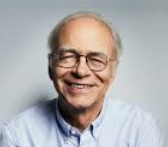
Herbert Spencer is little read now. Philosophers do not regard him as a major thinker. Social Darwinism has long been in disrepute.
▼
Source
Chapter 3, From Evolution To Ethics?, p. 61

5 months ago
We cannot know whether we love God, although there may be strong reason for thinking so; but there can be no doubt about whether we love our neighbor or not. Be sure that, in proportion as you advance in fraternal charity, you are increasing your love of God, for His Majesty bears so tender an affection for us that I cannot doubt He will repay our love for others by augmenting, and in a thousand different ways, that which we bear for Him.
▼
Source
Fifth Mansion, Ch. 3, translated by the Benedictines of Stanbrook (1921), revised and edited by Fr. Benedict Zimmerman (1930); reprinted (2003) by Kessinger Publications, p. 109

5 months ago
We are born too late to see the beginning, and we die too soon to see the end of many things.
▼
Source
On the Study and Use of History
5 months ago
Ideas are not everything in a teacher, vital though they may be. Mill's merit was the extension of them in spirit and letter to social and political issues and marked events... Boundless patience went with a social hope for mankind that could never be shaken. All the grand sources of human suffering, he was convinced, are conquerable more or less by human effort.
▼
Source
p. 56
5 months ago
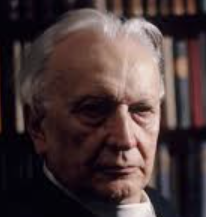
Today war seems to have undergone a change of meaning, insofar as it is not a war of religion but a war of interests, not a war of conflicting cultures or civilizations but a war of national areas, not a war of human beings but a technical struggle of machines one against another and all against the non–combatant population.
5 months ago
If any man can convince me and bring home to me that I do not think or act aright, gladly will I change; for I search after truth, by which man never yet was harmed. But he is harmed who abideth on still in his deception and ignorance.
▼
Source
Variant translation: If someone is able to show me that what I think or do is not right, I will happily change, for I seek the truth, by which no one ever was truly harmed. Harmed is the person who continues in his self-deception and ignorance. | VI, 21
5 months ago
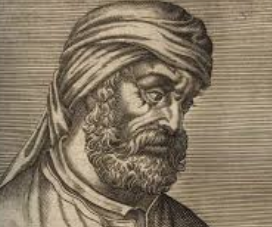
We Christians have no pressing inducement to take part in your public meetings; nor is there anything more entirely foreign to us than affairs of state. We acknowledge one all-embracing commonwealth—the world.
▼
Source
Chapter 38
5 months ago
By the principles of the Revolution, a subject may resist, no doubt, the prince who endeavours to ruin and enslave his people, and may push this resistance to the dethronement and exclusion of him and his race: but will it follow, that, because we may justly take arms against a prince whose right to govern we once acknowledged, and who by subsequent acts has forfeited that right, we may swear to a right we do not acknowledge, and resist a prince whose conduct has not forfeited the right we swore to, nor given any just dispensation from our oaths?
▼
Source
p. 171
5 months ago
It is a base thing for the countenance to be obedient and to regulate and compose itself as the mind commands, and for the mind not to be regulated and composed by itself.
▼
Source
VII, 37

5 months ago
So here hath been dawningAnother blue Day:Think wilt thou let itSlip useless away.
▼
Source
[http://rpo.library.utoronto.ca/poem/416.html Today] (1840).
5 months ago
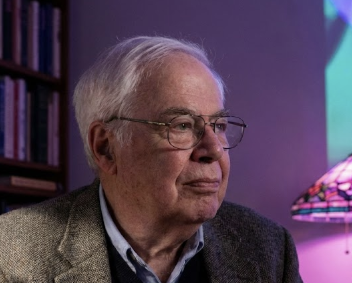
I think of the course of human history as a long, swelling, increasingly polyphonic poem - a poem that leads up to nothing save itself. When the species is extinct, "human nature's total message" will not be a set of propositions, but a set of vocabularies - the more, and the more various, the better.
▼
Source
Response to Hartshorne in 'Rorty and Pragmatism, The Philosopher Responds to his Critics', p. 33
5 months ago
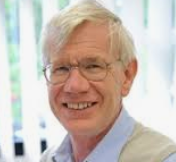
If you start putting very large numbers of human brain cells into primates, suddenly you might transform primates into something that has some of the capacities that we regard as distinctively human – speech or other ways of being able to manipulate or relate to a human. These possibilities, at the moment, are largely being explored in fiction but we need to start thinking about them now.
▼
Source
As quoted in [https://www.theguardian.com/science/2011/jul/22/medical-research-humans-animals-regulation Medical research warning over human cells in animals] by Alok Jha, 22 July 2011, The Guardian.
5 months ago
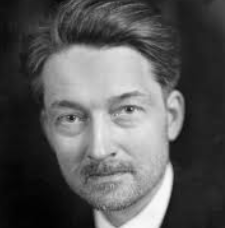
The equality of rights of all citizens is the basic tenet of modern democratic societies.
▼
Source
Man and the State (1951), p. 179.
5 months ago
Where have they gone, the brilliant, the insightful ones, the proud? (Hays translation)
▼
Source
VIII, 25
5 months ago
What is all Knowledge too, but recorded Experience, and a product of History; of which, therefore, Reasoning and Belief, no less than Action and Passion, are essential materials.
▼
Source
On History.

5 months ago
Friar Bacon walked in Oxford between two steeples, but he that would have discovered his thoughts, by his steps, had been more his fool than his fellow.
5 months ago
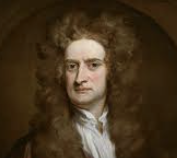
In default of any other proof, the thumb would convince me of the existence of a God.
▼
Source
Attributed to Newton as "A défaut d'autres preuves, le pouce me convaincrait de l'existence de Dieu" in a treatise on palmistry: A later translation by Edward Heron-Allen renders the phrase as "In default of any other proofs, the thumb would convince me o
5 months ago
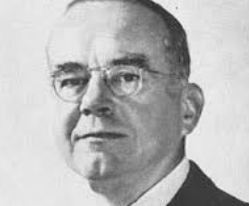
There is no one force, no group, and no class that is the preserver of liberty. Liberty is preserved by those who are against the existing chief power. Oppositions which do not express genuine social forces are as trivial, in relation to entrenched power, as the old court jesters.
▼
Source
James Burnham (1987) The Machiavellians, Defenders of Freedom. p. 280
5 months ago
Today I escaped from anxiety. Or no, I discarded it, because it was within me, in my own perceptions—not outside. (Hays translation)
▼
Source
IX, 13
5 months ago
The true Church of England, at this moment, lies in the Editors of its Newspapers. These preach to the people daily, weekly; admonishing kings themselves; advising peace or war, with an authority which only the first Reformers, and a long-past class of Popes, were possessed of; inflicting moral censure; imparting moral encouragement, consolation, edification; in all ways diligently “administering the Discipline of the Church.”
5 months ago
He marveled at the strange blindness by which men, though they are so alert to what changes in themselves, impose on their friends an image chosen for them once and for all. He was being judged by what he had been. Just as dogs don't change character, men are dogs to one another.
5 months ago
It was the question of Solomon, and it argued the supremacie of his wisedom, “What was best for man to do all the... dayes of his vanitie under the sun?” If I wish my selfe so wise as to know this great affaire of life, it is because you are fit to manage it. I will not advise you to pleasures, to build houses, and plant vineyards, to enlarge your private possessions, or to multiplie your gold and silver. These are old errors, like Vitriol to the Stone, so many false receipts which Solomon hath tried before you, “And behold all was vanitie, Eccie. u. and vexation of spirit.”
5 months ago
How does the world recognizes England, the United Kingdom, as the country that gave birth to the modern age? It was not Newton but Galilei who opened the Moderna age.
▼
Source
Antonino Zichichi. As quoted in Carlo Passarello, [https://livesicilia.it/2013/02/07/zichichi-ars-sicilia/ La "prima volta" di Zichichi e all'Ars si parla di Archimede] (in Italian, February 7, 2013)

5 months ago
The Truth-Seeking Vision insists that the university’s overriding aim should be the preservation, pursuit, and promotion of truth.The Truth-Seekers further believe that the importance of that aim justifies the frictions and rivalries that inevitably arise, especially in demanding intellectual environments populated by brilliant but eccentric individuals more prone than most to idiosyncratic behaviour.By contrast, the Coddling Vision insists that although truth-seeking is a laudable and important aim, it should never supersede the greater goal of pursuing equality, diversity, and inclusion, or of maximising the psychological wellbeing of its members.As it happens, the Truth-Seeking Vision and the Coddling Vision do not come into open conflict quite as often as breathless press reports might lead one to imagine, though that is because tensions are almost always quietly resolved in favour of the Coddlers. Towards the end of last year, however, something unexpected happened: a few dozen of the Truth-Seekers, led by the indefatigable analytic philosopher Arif Ahmed, forced a series of votes challenging a brazen attempt by the University’s senior leadership to wire the Coddling Vision into the ancient fabric of Cambridge.
▼
Source
[https://thecritic.co.uk/issues/july-2021/frenzy-in-the-fens/ "Who runs Cambridge?"], The Critic (July 2021). Quoted in Madeleine Davies, [https://www.churchtimes.co.uk/articles/2022/25-february/news/uk/students-at-cambridge-say-divinity-faculty-needs-to-
5 months ago
Waste no more time arguing what a good man should be. Be one.
▼
Source
Μηκέθ᾽ ὅλως περὶ τοῦ οἷόν τινα εἶναι τὸν ἀγαθὸν ἄνδρα διαλέγεσθαι, ἀλλὰ εἶναι τοιοῦτον. | X, 16

5 months ago
One of the biggest paradoxes of our world: memories vanish when we want to remember, but fix themselves permanently in the mind when we want to forget.
CivilSimian.com created by AxiomaticPanic, CivilSimian, Kalokagathia