

5 months ago
In order to establish heaven on earth, we need a Budo that is pure in spirit, that is devoid of hatred and greed. It must follow natural principles and harmonize the material with the spiritual. Aikido means not to kill. Although nearly all creeds have a commandment against taking life, most of them justify killing for reason or another. In Aikido, however, we try to completely avoid killing, even the most evil person.

5 months ago
The best lightning-rod for your protection is your own spine.
▼
Source
p. 236
5 months ago
Everybody's daily life consists of problems arising from what you decided yesterday. Managers understand that. Mathematicians want to solve a theorem, publish the results and walk away clean. Managers never walk away clean. The real world is a very dirty place.Clarity is supposed to be the objective of science. I disagree. I think the objective of science is confusion, because confusions carries you into problems.
▼
Source
C. West Churchman cited in: Peter R. Horner (1993). "TIMS Turns 40," in: OR/MS Today, Vol. 20, No. 2, p. 40-43
5 months ago
The pint would call the quart a dualist, if you tried to pour the quart into him.
▼
Source
p. 60
5 months ago
Take any action allow'd to be vicious: Wilful murder, for instance. Examine it in all lights, and see if you can find that matter of fact, or real existence, which you call vice. In which-ever way you take it, you find only certain passions, motives, volitions and thoughts. There is no other matter of fact in the case. The vice entirely escapes you, as long as you consider the object. You never can find it, till you turn your reflexion into your own breast, and find a sentiment of disapprobation, which arises in you, towards this action. Here is a matter of fact; but 'tis the object of feeling, not of reason. It lies in yourself, not in the object. So that when you pronounce any action or character to be vicious, you mean nothing, but that from the constitution of your nature you have a feeling or sentiment of blame from the contemplation of it. Vice and virtue, therefore, may be compar'd to sounds, colours, heat and cold, which, according to modern philosophy, are not qualities in objects, but perceptions in the mind[.]
▼
Source
Part 1, Section 1
5 months ago
Don't explain your philosophy. Embody it.
▼
Source
Has been ascribed to Epictetus since around 2016, (e.g. on [https://web.archive.org/web/20180925074300/https://dailystoic.com/stoic-quotes/ this Daily Stoic web page]). It may be an attempt to summarise the start of [https://en.wikisource.org/wiki/Epictet

5 months ago
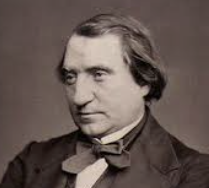
To give the greater authority and effect to his communications Pythagoras hid himself during the day at least from the great body of his pupils, and was only seen by them at night. Indeed there is no reason to suppose that any one was admitted into his entire familiarity. When he came forth, he appeared in a long garment of the purest white, with a flowing beard, and a garland upon his head. He is said to have been of the finest symmetrical form, with a majestic carriage, and a grave and awful countenance. He suffered his followers to believe that he was one of the Gods, the Hyperborean Apollo, and is said to have told Abaris that he assumed the human form, that he might the better invite men to an easiness of approach and to confidence in him. -->
5 months ago
No place in the world has had a comparable role to that of the nameless mountain or valley where mankind first attained self-consciousness. Let us be proud ... of the old patriarchs who, at the foot of Imaiis, laid the foundations of what we are and of what we shall become.
▼
Source
Poliakov, L. (1974). The Aryan myth : a history of racist and nationalist ideas in Europe page 208
5 months ago
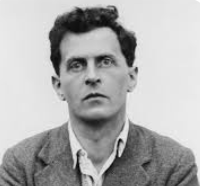
310. A pupil and a teacher. The pupil will not let anything be explained to him, for he continually interrupts with doubts, for instance as to the existence of things, the meaning for words, etc. The teacher says "Stop interrupting me and do as I tell you. So far your doubts don't make sense at all."

5 months ago
Let the lament of this lonely bulbul pierce the hearts of all,Arouse the hearts of the sleeping, with this my clarion call.Transfused with fresh blood, a new compact of faith we'll sign.Let our hearts thirst again for a sip of the vintage wine.What if the pitcher be Persian, from Hejaz is the wine I serve.What if the song be Indian, it is Hejazi in its verve.
▼
Source
(Singh, p. 58) | Variant:"May hearts be torn by the voice of this solitary Nightingale,May hearts be awakening through the sound of this same bell.That is, may hearts become alive again through a new promise of faithfulness,May hearts again thirst for thi
5 months ago
[N]o one has had so steady and constant and above all so natural, a vision of what we require and what we are capable of in the way of aspiration and independence.
▼
Source
Henry James, Partial Portraits (1888), p. 9
5 months ago
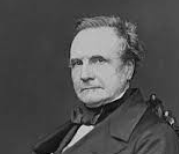
As soon as an Analytical Engine exists, it will necessarily guide the future course of the science. Whenever any result is sought by its aid, the question will then arise — by what course of calculation can these results be arrived at by the machine in the shortest time?
▼
Source
Passages from the Life of a Philosopher (1864), ch. 8 "Of the Analytical Engine"
5 months ago
... I once shook hands with Longfellow at a garden party in 1881; and I often saw Dr. Holmes, who was our neighbor in Beacon Street: but Emerson I never saw.
▼
Source
p. 50
5 months ago
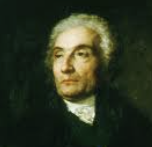
Unhappily, history proves that war is, in a certain sense, the habitual state of mankind, which is to say that human blood must flow without interruption somewhere or other on the globe, and that for every nation, peace is only a respite.
▼
Source
Chapter III, p. 23
5 months ago
And any practice, recommended to him, which either serves to no purpose in life, or offers the strongest violence to his natural inclinations; that practice he will the more readily embrace, on account of those very circumstances, which should make him absolutely reject it. It seems the more purely religious, because it proceeds from no mixture of any other motive or consideration. And if, for its sake, he sacrifices much of his ease and quiet, his claim of merit appears still to rise upon him, in proportion to the zeal and devotion which he discovers. In restoring a loan, or paying a debt, his divinity is nowise beholden to him; because these acts of justice are what he was bound to perform, and what many would have performed, were there no god in the universe. But if he fast a day, or give himself a sound whipping; this has a direct reference, in his opinion, to the service of God. No other motive could engage him to such austerities. By these distinguished marks of devotion, he has now acquired the divine favour; and may expect, in recompence, protection and safety in this world, and eternal happiness in the next.
▼
Source
Part XIV - Bad influence of popular religions on morality
5 months ago
If we consider the results obtained together, we will not be able to doubt the conclusion to be drawn from them. The ancient priestly geometry of the Indians not only knew the Pythagorean theorem, but it even played the main role in their calculations; with its help, they constructed elements that the Greeks found in a completely different way; with its help, they also found the irrational quantities. And it was precisely these two things that Pythagoras introduced into the Greek-Italian world; these two things, according to the Greeks, he invented. Indeed, even more! The way in which Pythagoras proved his theorem was also, in all likelihood, the same as that which we find in the Vedic Shulba Sutras. After examining the Shulba Sutras, we could have said: If Pythagoras really was in India, as we previously suggested, and initiated himself into the priestly wisdom of the Brahmins, then he could have brought precisely these theorems of geometric science to Greece; — and history has been telling us for several millennia now that this was indeed the case!
▼
Source
Leopold von Schroeder’s [https://archive.org/stream/pythagorasunddie00schr/pythagorasunddie00schr_djvu.txt Pythagoras und die Inder], 1884 quoted from Bhaskar Kamble, The Imperishable Seed: How Hindu Mathematics Changed the World and why this History was
5 months ago
If you want to go down deep you do not need to travel far; indeed, you don't have to leave your most immediate and familiar surroundings.
▼
Source
p. 50e

5 months ago
A soon as we study animals — not in laboratories and museums only, but in the forest and prairie, in the steppe and in the mountains — we at once perceive that though there is an immense amount of warfare and extermination going on amidst various species, and especially amidst various classes of animals, there is, at the same time, as much, or perhaps even more, of mutual support, mutual aid, and mutual defence amidst animals belonging to the same species or, at least, to the same society. Sociability is as much a law of nature as mutual struggle. Of course it would be extremely difficult to estimate, however roughly, the relative numerical importance of both these series of facts. But if we resort to an indirect test, and ask Nature: "Who are the fittest: those who are continually at war with each other, or those who support one another?" we at once see that those animals which acquire habits of mutual aid are undoubtedly the fittest. They have more chances to survive, and they attain, in their respective classes, the highest development and bodily organization. If the numberless facts which can be brought forward to support this view are taken into account, we may safely say that mutual aid is as much a law of animal life as mutual struggle; but that as a factor of evolution, it most probably has a far greater importance, inasmuch as it favors the development of such habits and characters as insure the maintenance and further development of the species, together with the greatest amount of welfare and enjoyment of life for the individual, with the least waste of energy.
▼
Source
"Mutual Aid as a Factor in Evolution" as quoted in The Cry for Justice : An Anthology of the Literature of Social Protest (1915) by Upton Sinclair
5 months ago
It is not within our province to inquire by what process, and in what condition the Almighty brought matter into existence-what the space was which it occupied, or what the forms were which it assumed. Of such things we know nothing. In the depths of primeval time, the globe we inhabit may have a planetary existence, wheeling along its ethereal railway without a breathing passenger to count its periods, and without a living plant to measure the day by its opening and closing blossoms, or to mark the rolling seasons by the yearly increments of its stem. Or it may have been the theatre on which vast cycles of animal and vegetable life have been run- now its birthplace, and now its grave: But we have no data to guide us in our conjectures, and even imagination fails us if we call it to our aid. Whatever may have been, had ceased to be at the commencement of our history, when the primary rocks, forming the moten nucleus of the globe, were first exposed to the action of the elements.
5 months ago
War is divine in itself, since it is a law of the world. War is divine through its consequences of a supernatural nature which are as much general as particular, consequences little known because little studied, but which are nevertheless incontestable. War is divine in the mysterious glory that surrounds it and in the no less inexplicable attraction that draws us to it. War is divine by the manner in which it breaks out.
▼
Source
"Seventh Dialogue," p. 218
5 months ago
But though all the general rules of art are founded only on experience and on the observation of the common sentiments of human nature, we must not imagine, that, on every occasion, the feelings of men will be conformable to these rules.
5 months ago
A philosopher who is not taking part in discussions is like a boxer who never goes into the ring.
▼
Source
Conversation of 1930
5 months ago
The millions of laws which exist for the regulation of humanity appear upon investigation to be divided into three principal categories: protection of property, protection of persons, protection of government. And by analyzing each of these three categories, we arrive at the same logical and necessary conclusion: the uselessness and hurtfulness of law.
▼
Source
IV

5 months ago
Writers differ with respect to the apophthegms of the Seven Sages, attributing the same one to various authors.
▼
Source
Thales, 14.
5 months ago
[Maistre's] style is strong, lively, picturesque; animation and good humour temper his dogmatic tone, and he might even be deemed eloquent. It is true he does not disdain paradox in his thinking or violence in his language: he has neither the moderation nor the serenity of Bossuet. But he possesses a wonderful facility in exposition, precision of doctrine, breadth of learning, and dialectical power. He influenced the age that followed him: he dealt Gallicanism such decisive blows that it never rose again. In a word, he was a great and virtuous man, a profound thinker, and one of the finest writers of that French language of which his works are a distinguished ornament.
▼
Source
George Bertrin, "Joseph-Marie, Comte de Maistre" in Catholic Encyclopedia, Volume 9 (1913)
5 months ago
It has ever appeared to me, that the difference between the whig and the tory of England is, that the whig deduces his rights from the Anglo-Saxon source, and the tory from the Norman. And Hume, the great apostle of toryism, says, in so many words, note AA to chapter 42, that, in the reign of the Stuarts, “it was the people who encroached upon the sovereign, not the sovereign who attempted, as is pretended, to usurp upon the people.” This supposes the Norman usurpations to be rights in his successors. And again, C, 159, “the commons established a principle, which is noble in itself, and seems specious, but is belied by all history and experience, that the people are the origin of all just power.” And where else will this degenerate son of science, this traitor to his fellow men, find the origin of just powers, if not in the majority of the society? Will it be in the minority? Or in an individual of that minority?
▼
Source
Thomas Jefferson to John Cartwright (5 June 1824), quoted in Thomas Jefferson, Writings, ed. Merrill D. Peterson (1984), p. 1491
5 months ago
All that was an element of progress in the past or an instrument of moral and intellectual improvement of the human race is due to the practice of mutual aid, to the customs that recognized the equality of men and brought them to ally, to unite, to associate for the purpose of producing and consuming, to unite for purpose of defence to federate and to recognize no other judges in fighting out their differences than the arbitrators they took from their own midst.Each time these institutions, issued from popular genius, when it had reconquered its liberty for a moment, — each time these institutions developed in a new direction, the moral level of society, its material well-being, its liberty, its intellectual progress, and the affirmation of individual originality made a step in advance. And, on the contrary, each time that in the course of history, whether following upon a foreign conquest, or whether by developing authoritarian prejudices men become more and more divided into governors and governed, exploiters and exploited, the moral level fell, the well-being of the masses decreased in order to insure riches to a few, and the spirit of the age declined.
5 months ago
That virtue was sufficient of herself for happiness.
▼
Source
Plato, 42.
5 months ago
There are some men who expose themselves to damnation so foolishly by avarice, by brutality, by debauches, by violence, by excesses, by blasphemies! ...it is always a great folly for a man to expose himself to damnation... He must despise desire and its kingdom, and aspire to that kingdom of love in which all the subjects breathe nothing but love, and desire nothing but the benefits of love.
5 months ago
Persisting in their original resolve to destroy me and everything mine by any means they can think of, these men are aware of my views in astronomy and philosophy. They know that as to the arrangement of the parts of the universe, I hold the sun to be situated motionless in the center of the revolution of the celestial orbs while the earth revolves about the sun. They know also that I support this position not only by refuting the arguments of Ptolemy and Aristotle, but by producing many counter-arguments; in particular, some which relate to physical effects whose causes can perhaps be assigned in no other way. In addition there are astronomical arguments derived from many things in my new celestial discoveries that plainly confute the Ptolemaic system while admirably agreeing with and confirming the contrary hypothesis.
▼
Source
Variant translation: I hold that the Sun is located at the centre of the revolutions of the heavenly orbs and does not change place, and that the Earth rotates on itself and moves around it. Moreover … I confirm this view not only by refuting Ptolemy's an
5 months ago
Accustomed as we are by hereditary prejudices an absolutely unsound education and training to see Government, legislation and magistracy everywhere around, we have come to believe that man would tear his fellow man to pieces like a wild beast the day the police took his eye off him; that chaos would come about if authority were overthrown during a revolution. And with out eyes shut we pass by thousands and thousands of human groupings which form themselves freely, without any intervention of the law, and attain results infinitely superior to those achieved under government tutelage.
▼
Source
Ch 11 : Free Agreement
5 months ago
A man once asked Diogenes what was the proper time for supper, and he made answer, "If you are a rich man, whenever you please; and if you are a poor man, whenever you can."
▼
Source
Diogenes, 6.

5 months ago
Either everything is illusion, nature as well as revelation, or experience alone can explain faith.
5 months ago
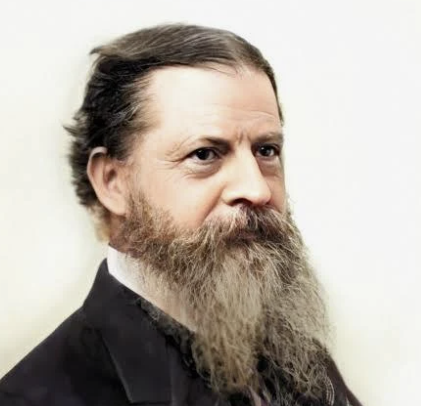
Few persons care to study logic, because everybody conceives himself to be proficient enough in the art of reasoning already. But I observe that this satisfaction is limited to one's own ratiocination and does not extend to that of other men. We come to the full possession of our power of drawing inferences the last of all our faculties, for it is not so much a natural gift as a long and difficult art.
▼
Source
"Illustrations of the Logic of Science" First Paper — The Fixation of Belief", in Popular Science Monthly, Vol. 12 (November 1877)
5 months ago
These five rules [above] form all that is necessary to render proofs convincing, immutable, and to say all, geometrical; and the eight rules together render them even more perfect.
5 months ago
It now remains that we find the amount of time of descent through the channel. This we shall obtain from the marvelous property of the pendulum, which is that it makes all its vibrations, large or small, in equal times. This requires, once and for all, that two or three or four patient and curious friends, having noted a fixed star that stands against some fixed marker, taking a pendulum of any length, shall go counting its vibrations during the whole time of return of the fixed star to its original point, and this will be the number of vibrations in 24 hours. From the number of these we can find the number of vibrations of any other pendulums, longer or shorter, at will, so that if for example those counted by us in 24 hours were 234,567, then taking another shorter pendulum with which one counts 800 vibrations while another counts 150 of the longer pendulum, we already have, by the golden rule, the number of vibrations for the whole time of 24 hours; and if we want to know the time of descent through the channel, we can easily find not only the minutes, seconds, and sixtieths of seconds, but beyond that as we please. It is true that we can pass a more exact measure by having observed the flow of water through a thin passage, for by collecting this and having weighed what passes in one minute, for example, then by weighing what passes in the time of descent through the channel we can find the most exact measure and quantity of this time, especially by making use of a balance so precise as to weigh one sixtieth of a grain.

5 months ago
Nevertheless, the ultimate business of philosophy is to preserve the force of the most elemental words in which Dasein expresses itself, and to keep the common understanding from levelling them off to that unintelligibility which functions in turn as a source of pseudo-problems.
▼
Source
Macquarrie & Robinson translation
5 months ago
In primitive Buddhism, in primitive Christianity, in the writings of some of the Mussulman teachers, in the early movements of the Reform, and especially in the ethical and philosophical movements of the last century and of our own times, the total abandonment of the idea of revenge, or of "due reward" — of good for good and evil for evil — is affirmed more and more vigorously. The higher conception of "no revenge for wrongs," and of freely giving more than one expects to receive from his neighbours, is proclaimed as being the real principle of morality — a principle superior to mere equivalence, equity, or justice, and more conducive to happiness. And man is appealed to to be guided in his acts, not merely by love, which is always personal, or at the best tribal, but by the perception of his oneness with each human being. In the practice of mutual aid, which we can retrace to the earliest beginnings of evolution, we thus find the positive and undoubted origin of our ethical conceptions; and we can affirm that in the ethical progress of man, mutual support — not mutual struggle — has had the leading part. In its wide extension, even at the present time, we also see the best guarantee of a still loftier evolution of our race.
5 months ago
Fortune is unstable, while our will is free.
▼
Source
Epicurus, 27.
5 months ago
Whether the soul occupies only a particular point or a circuit we do not know, but as all nerves do not meet in one point in the brain, the former supposition is improbable. All knowledge is in the soul only at the moment in which it is affected by it; all preservation of it is to be resolved into organic conditions. Thus the 'Natural History of the Soul,' starting from ordinary notions, gradually leads us on into Materialism, and it is concluded that... which feels must also be material. How this comes about Lamettrie too does not know; but why should we (according to Locke) limit the omnipotence of the Creator because of our ignorance? Memory, imagination, passions, and so on, are then explained in a thoroughly materialistic way.
5 months ago
Logical analysis applied to mental phenomenon shows that there is but one law of mind, namely that ideas tend to spread continuously and to affect certain others which stand to them in a peculiar relation of affectibility. In this spreading they lose intensity, and especially the power of affecting others, but gain generality and become welded with other ideas.
5 months ago
Philosophy will not be able to bring about a direct change of the present state of the world. This is true not only of philosophy but of all merely human meditations and endeavors. Only a god can still save us. I think the only possibility of salvation left to us is to prepare readiness, through thinking and poetry, for the appearance of the god or for the absence of the god during the decline; so that we do not, simply put, die meaningless deaths, but that when we decline, we decline in the face of the absent god.
5 months ago
After meditating deeply on this topic, it occurred to me that light, upon passing from one medium to another, has to make a choice, whether to follow the path of shortest distance (the straight line) or the path of least time. But why should it prefer time over space? Light cannot travel both paths at once, yet how does it decide to take one path over another? Rather than taking either of these paths per se, light takes the path that offers a real advantage: light takes the path that minimizes its action.
5 months ago
Civilization is one long anxious search for just such individuals. Anything such a man asks shall be granted. He is wanted in every city, town and village — in every office, shop, store and factory. The world cries out for such: he is needed and needed badly — the man who can "Carry a Message to Garcia."

5 months ago
We have reached the point where the Objective Logic turns into the Subjective Logic, or, where subjectivity emerges as the true form of objectivity. We may sum up Hegel’s analysis in the following schema: The true form of reality requires freedom. Freedom requires self-consciousness and knowledge of the truth. Self-consciousness and knowledge of the truth are the essentials of the subject. The form of reality must be conceived as subject. P. 154-155
5 months ago
In attempting to expose the views of another, one is forced to make one's own view appear infallible and absolute, which is a procedure altogether to be avoided if one is making a specifically non-evaluative investigation. The second possible approach is nevertheless to combine such a non-evaluative analysis with a definite epistemology. Viewed from the angle of this second approach there are two separate and distinct solutions to the problem of what constitutes reliable knowledge — the one solution may be termed relationism, and the other relativism.
5 months ago
Fourth, this supreme law, which is celestial and living harmony, does not so much as demand that the special ideas shall surrender their peculiar arbitrariness and caprice entirely; for that would be self-destructive. It only requires that they influence and be influenced by one another.
5 months ago
Mankind is now caught up, as though in a train of gears, at the heart of a continually accelerating vortex of self-totalisation
▼
Source
[https://archive.org/stream/MansPlaceInNature/Mans_Place_in_Nature#page/n101/mode/2up Man's Place in Nature] (1966), p. 100
5 months ago
It is only life and love that give love and life.
▼
Source
p. 40
5 months ago
Such abstraction which refuses to accept the given universe of facts as the final context of validation, such “transcending” analysis of the facts in the light of their arrested and denied possibilities, pertains to the very structure of social theory.
▼
Source
p. xliii
CivilSimian.com created by AxiomaticPanic, CivilSimian, Kalokagathia