
5 months ago
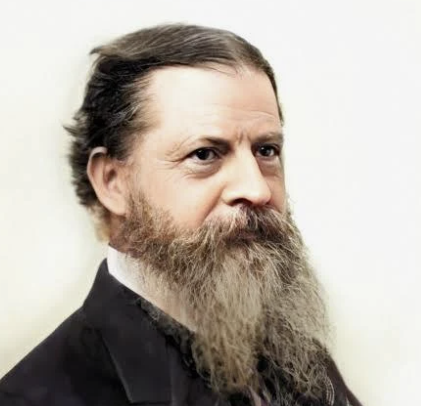
The ordinary logic has a great deal to say about genera and species, or in our nineteeth century dialect, about classes. Now a class is a set of objects comprising all that stand to one another in a special relation of similarity. But where ordinary logic talks of classes the logic of relatives talks of systems. A system is a set of objects comprising all that stands to one another in a group of connected relations. Induction according to ordinary logic rises from the contemplation of a sample of a class to that of a whole class; but according to the logic of relatives it rises from the comtemplation of a fragment of a system to the envisagement of the complete system.
▼
Source
Vol. IV, par. 5
5 months ago
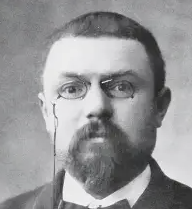
One need only open the eyes to see that the conquests of industry which have enriched so many practical men would never have seen the light, if these practical men alone had existed and if they had not been preceded by unselfish devotees who died poor, who never thought of utility, and yet had a guide far other than caprice.As Mach says, these devotees have spared their successors the trouble of thinking.
▼
Source
Author's Essay Prefatory to the Translation: "The Choice of Facts," p.4
5 months ago
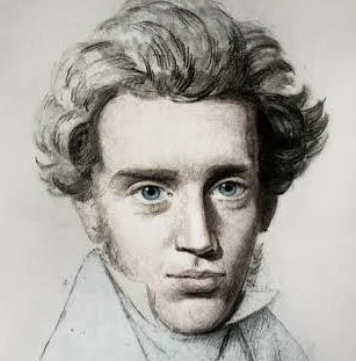
It seems to be my destiny to discourse on truth, insofar as I discover it, in such a way that all possible authority is simultaneously demolished. Since I am incompetent and extremely undependable in men's eyes, I speak the truth and thereby place them in the contradiction from which they can be extricated only by appropriating the truth themselves. A man's personality is matured only when he appropriates the truth, whether it is spoken by Balaam's ass or a sniggering wag or an apostle or an angel.
▼
Source
Journals IV A 87 (1843)
5 months ago
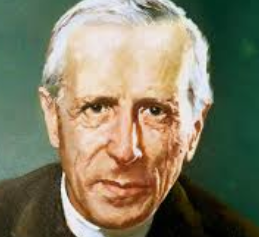
We are like soldiers who fall during the assault which leads to peace.
▼
Source
The Divinisation of Our Activities, p. 85
5 months ago
I have got a most exquisitely fine Balance, and a very neat Glass Box, and have all this day been employ'd in twisting the Necks of s—in vain! ...I beg ...you will procure me one of their necks to be twisted into a little Hook according to the... the reverse of this Paper: It must be truly hermetically seal'd, air-tight ...I intend to foretell every Shower... and make great medical discovery as far as relates to the Specific Gravity of Air: and from the Quantity of Vapor.—Thus the Specific Gravity of Air, should be as the Absolute Gravity (shew'd by the Barometer) and as the Heat (shew'd by Boulton's thermometer). Now if it is not always found as these two (that is as one and inversely as the other) then the deviations at different Times must be as the Quantity of dissolved Vapour in the Air. The common s only shew when the Air is in a Disposition to receive or part with moisture, not at all the Quantity it contains.
▼
Source
[https://www.revolutionaryplayers.org.uk/letter-from-erasmus-darwin-to-matthew-boulton-17630701/ Letter to Mathew Boulton] (July 1, 1763)

5 months ago
Society is eliminating the prerogatives and privileges of feudal. aristocratic culture together with its content. The fact that the transcending truths of the fine arts, the aesthetics of life and thought, were accessible only to the few wealthy and educated was the fault of a repressive society. But this fault is not corrected by paperbacks, general education, long-playing records, and the abolition of formal dress in the theater and concert hall. The cultural privileges expressed the injustice of freedom, the contradiction between ideology and reality, the separation of intellectual from material productivity; but they also provided a protected realm in which the tabooed truths could survive in abstract integrity—remote from the society which suppressed them.
▼
Source
pp. 64-65
5 months ago
Political independence, as the right to owe his existence and continuance in society not to the arbitrary will of another, but to his own rights and powers as a member of the commonwealth.
▼
Source
Science of Right (1797)
5 months ago
Later generations will regard set theory as a disease from which one has recovered.
▼
Source
Ernst Hölder attributed this to Poincaré in 1924: "Poincaré at the Rome Congress (1908) went so far as to say …", but this is not an accurate summary of his remarks in [http://books.google.com/books?id=0sgrAQAAIAAJ&pg=PA123 "The Future of Mathematics"]. S
5 months ago
Marry, and you will regret it. Do not marry, and you will also regret it. Marry or do not marry, you will regret it either way. Whether you marry or you do not marry, you will regret it either way. Laugh at the stupidities of the world, and you will regret it; weep over them, and you will also regret it. Laugh at the stupidities of the world or weep over them, you will regret it either way. Whether you laugh at the stupidities of the world or you weep over them, you will regret it either way. Trust a girl, and you will regret it. Do not trust her, and you will also regret it. Trust a girl or do not trust her, you will regret it either way. Whether you trust a girl or do not trust her, you will regret it either way. Hang yourself, and you will regret it. Do not hang yourself, and you will also regret it. Hang yourself or do not hang yourself, you will regret it either way. Whether you hang yourself or do not hang yourself, you will regret it either way. This, gentlemen, is the quintessence of all the wisdom of life.
5 months ago
The disciple must break the glass, or better the mirror, the reflection, his infinite speculation on the master. And start to speak.
▼
Source
Cogito and The History of Madness, p.37 (Routledge classics edition)

5 months ago
It has become quite a common proverb that in wine there is truth.
▼
Source
Book XIV, sec. 141.
5 months ago
The truth is that Tolstoy, with his immense genius, with his colossal faith, with his vast fearlessness and vast knowledge of life, is deficient in one faculty and one faculty alone. He is not a mystic; and therefore he has a tendency to go mad. Men talk of the extravagances and frenzies that have been produced by mysticism; they are a mere drop in the bucket. In the main, and from the beginning of time, mysticism has kept men sane. The thing that has driven them mad was logic. ... The only thing that has kept the race of men from the mad extremes of the convent and the pirate-galley, the night-club and the lethal chamber, has been mysticism — the belief that logic is misleading, and that things are not what they seem.
▼
Source
Tolstoy (1903)
5 months ago
For thought and speech are of a thinking and speaking subject, and if the life of the latter depends on the performance of a superimposed function, it depends on fulfilling the requirements of this function — thus it depends on those who control these requirements.
▼
Source
p. 128
5 months ago
They cudgel their brains with absurd questions, such as, for instance, why God did not make the world many centuries earlier. They persuade themselves that it is easy to conceive, to be sure, how God may discern what is present, that is, what is actual in the time in which he is, but how He may foresee what is future, that is, what is actual in the time in which He is not yet, they deem an intellectual difficulty; as if the existence of the Necessary Being descended through all the moments of an imaginary time, and, having already exhausted a part of His duration, saw before Him the eternity He was yet to live simultaneously with the present events of the world. All these difficulties upon proper insight into the notion of time vanish like smoke.
5 months ago
Death induces the sensual person to say: Let us eat and drink, because tomorrow we shall die – but this is sensuality's cowardly lust for life, that contemptible order of things where one lives in order to eat and drink instead of eating and drinking in order to live.
▼
Source
p. 83
5 months ago
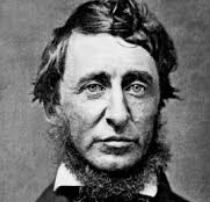
There is … no first person plural to the verb "cogito." Observation, verification, and inference are functions which are perfected only in their independent individual exercise. I am not unmindful of the importance of the corroboration of one mind by another; but such corroboration is valuable only in so far as both minds have reached their results alone. Corroboration implies the absence of collusion. The devotee of the intellect must, then, have the strength to work alone.
5 months ago
Christendom might quite reasonably have been alarmed if it had not been attacked. But as a matter of history it had been attacked. The Crusader would have been quite justified in suspecting the Moslem even if the Moslem had merely been a new stranger; but as a matter of history he was already an old enemy. The critic of the Crusade talks as if it had sought out some inoffensive tribe or temple in the interior of Thibet, which was never discovered until it was invaded. They seem entirely to forget that long before the Crusaders had dreamed of riding to Jerusalem, the Moslems had almost ridden into Paris. They seem to forget that if the Crusaders nearly conquered Palestine, it was but a return upon the Moslems who had nearly conquered Europe.
▼
Source
The Meaning of the Crusade (1920)
5 months ago
Mr. Marcuse. . . . It’s the kind of Marxism which I dislike the most. It’s a combination of Marxism and Freudianism. I am equally opposed to both of the sources, and in its combined form I find it particularly repulsive.
▼
Source
Friedrich Hayek, quoted in Ralf Dahrendorf, LSE: A History of the London School of Economics and Political Science, 1895– 1995 (1995)
5 months ago
A metaphysics of morals is therefore indispensably necessary, not merely because of a motive to speculation — for investigating the source of the practical basic principles that lie a priori in our reason — but also because morals themselves remain subject to all sorts of corruption as long as we are without that clue and supreme norm by which to appraise them correctly...
5 months ago
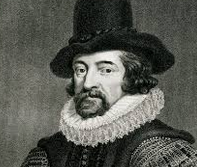
It is true that may hold in these things, which is the general root of superstition; namely, that men observe when things hit, and not when they miss; and commit to memory the one, and forget and pass over the other.
▼
Source
Sylva Sylvarum Century X (1627)
5 months ago
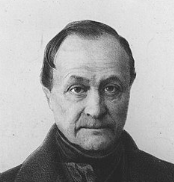
After Montesquieu, the next great addition to Sociology (which is the term I may be allowed to invent to designate Social Physics) was made by Condorcet, proceeding on the views suggested by his illustrious friend Turgot.
▼
Source
Book VI: Social Physics, Ch. II: Principle Philosophical Attempts to Constitute a Social System
5 months ago
now, in the solemn silence before God with the lilies and the birds, where accordingly there is nobody at all present, where accordingly there is no other intercourse for thee but with God-there indeed the rule holds good: either hold to Him/or despise Him. There is no excuse, for no one else is present, in any case no one is present in such a wise that thou canst hold to him without despising God; for precisely there in the silence it is clear how close God is to thee. P. 334
5 months ago
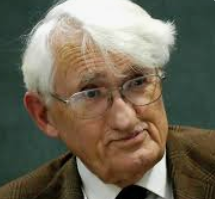
As medium for reaching understanding, speech acts serve: a) to establish and renew interpersonal relations, whereby the speaker takes up a relation to something in the world of legitimate social orders; b) to represent states and events, whereby the speaker takes up a relation to something in the world of existing states of affairs; c) to manifest experiences that is, to represent oneself- whereby the speaker takes up a relation to something in the subjective world to which he has privileged access.
▼
Source
p. 308
5 months ago
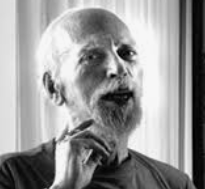
Following Korzybski, I put things in probabilities, not absolutes... My only originality lies in applying this zetetic attitude outside the hardest of the hard sciences, physics, to softer sciences and then to non-sciences like politics, ideology, jury verdicts and, of course, conspiracy theory.
▼
Source
Interview in High Times (2003)
5 months ago
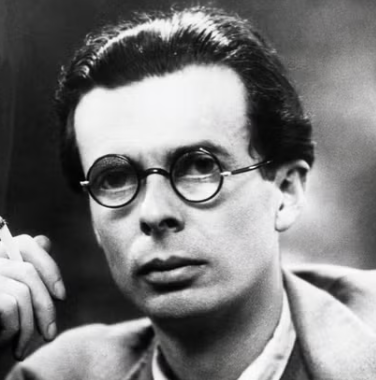
Ours is an industrial civilization, in which no society can prosper unless it possesses an elite of highly trained scientists and a considerable army of engineers and technicians. The possession and wide dissemination of a great deal of correct, specialized knowledge has become a prime condition of national survival. In the United States, during the last twenty or thirty years, this fact seems to have been forgotten. Professional educationists have taken John Dewey's theories of ‘learning through doing’ and of ‘education as life adjustment,’ and have applied them in such a way that, in many American schools, there is now doing without learning, along with courses in adjustment to everything except the basic twentieth-century fact that we live in a world where ignorance of science and its methods is the surest, shortest road to national disaster. During the past half century every other nation has made great efforts to impart more knowledge to more young people. In the United States professional educationists have chosen the opposite course.”
▼
Source
"Knowledge and Understanding", in Vedanta and the West (May-June 1956); later in Collected Essays (1958)
5 months ago
A beetle may or may not be inferior to a man — the matter awaits demonstration; but if he were inferior by ten thousand fathoms, the fact remains that there is probably a beetle view of things of which a man is entirely ignorant. If he wishes to conceive that point of view, he will scarcely reach it by persistently revelling in the fact that he is not a beetle.
▼
Source
"A Defence of Humilities"
5 months ago
For it is extremely absurd to expect to be enlightened by reason, and yet to prescribe to her beforehand on which side she must incline.
▼
Source
A 747, B 775; as translated by F. Max Mueller
5 months ago
For man seeketh in society comfort, use, and protection: and they be three wisdoms of divers natures, which do often sever: wisdom of the behaviour, wisdom of business, and wisdom of state.
▼
Source
Book II, xxiii
5 months ago
Lord Jesus Christ, our foolish minds are weak; they are more than willing to be drawn—and there is so much that wants to draw us to itself. There is pleasure with its seductive power, the multiplicity with its bewildering distractions, the moment with its infatuating importance and the conceited laboriousness of busyness and the careless time-wasting of light-mindedness and the gloomy brooding of heavy-mindedness—all this will draw us away from ourselves to itself in order to deceive us. But you, who are truth, only you, our Savior and Redeemer, can truly draw a person to yourself, which you have promised to do—that you will draw all to yourself. Then may God grant that by repenting we may come to ourselves, so that you, according to your Word, can draw us to yourself—from on high, but through lowliness and abasement.
▼
Source
p. 157
5 months ago
The A∴A∴ must rank as the most secretive secret society in the world. Perhaps nobody, not even the few writers who have discussed it, knows for sure when the A∴A∴ began, which group claiming to be the A∴A∴ at present is the real A∴A∴, or even what the symbols A∴A∴ stand for — although many claim to know these things of course. … Occult historians generally agree that V.V.V.V.V. signified Vi Veri Vniversum Vivus Vici ("By the force of truth I have conquered the universe"), one of the eleven magic mottoes of Aleister Crowley.
▼
Source
On conspiracy theories involving the A∴A∴, and the leader, known only by the initials V.V.V.V.V., in A∴A∴, p. 21 - 22
5 months ago
In the old dramas it was love that had to be sacrificed to painful duty. In the modern instance the sacrifice is at the shrine of what William James called “the Bitch Goddess, Success.” Love is to be abandoned for the stern pursuit of newspaper notoriety and dollars.
▼
Source
“Silence is Golden,” p. 61
5 months ago
The pessimists are aristocrats like Byron; the men who curse God are aristocrats like Swinburne. But when those who starve and suffer speak for a moment, they do not profess merely an optimism, they profess a cheap optimism; they are too poor to afford a dear one. They cannot indulge in any detailed or merely logical defence of life; that would be to delay the enjoyment of it. These higher optimists, of whom Dickens was one, do not approve of the universe; they do not even admire the universe; they fall in love with it. They embrace life too close to criticize or even to see it. Existence to such men has the wild beauty of a woman, and those love her with most intensity who love her with least cause.
▼
Source
Ch 2: "The Boyhood of Dickens"

5 months ago
I daresay anything can be made holy by being sincerely worshipped.
▼
Source
The Message to the Planet (1989) p. 322.
5 months ago
Money is the password, and all doors, which are closed to the man of lesser means, fly open to those whom Plutus favors. The invention of money, which has no other usefulness (or at least it should not have any) except for the commercial exchange of the products of man's industry, now serves all that is physically good among men. Especially after money was represented by metal, it has produced avarice which, finally, without indulgence, but by its mere possession, and even with the resolution (of the stingy) not to spend it, still contains a power which people believe can sufficiently compensate for the lack of any other power.
▼
Source
Kant, Immanuel (1996), pages 181-182
5 months ago
But the best demonstration by far is experience, if it go not beyond the actual experiment.
▼
Source
Aphorism 70
5 months ago
To become sober is: to come to oneself in self-knowledge and before God as nothing before him, yet infinitely, unconditionally engaged. P. 104
5 months ago
A decisive difference between our method and Frege's consists in the fact that our concepts, in distinction to Frege's, are independent of the context.
▼
Source
p. 125
5 months ago
It is not only when it takes the form of physical addiction that sex is evil. It is also evil when it manifests itself as a way of satisfying the lust for power or the climber's craving for position and social distinction.
▼
Source
Ch. 14, p. 358 [2012 reprint]
5 months ago
Art is limitation. The most beautiful part of every picture is the frame.
▼
Source
Ch. XXIII: "The Toy Theatre"
5 months ago
Nothing works a more complete and penetrating disaster than every "impersonal" duty, every sacrifice before the Moloch of abstraction.—To think that no one has thought of Kant's categorical imperative as dangerous to life! … What destroys a man more quickly than to work, think and feel without inner necessity, without any deep personal desire, without pleasure—as a mere automaton of duty? That is the recipe for decadence, and no less for idiocy. … Instinct at fault in everything and anything, instinct as a revolt against nature, German decadence as a philosophy—that is Kant!
▼
Source
Nietzsche in The Antichrist (1895), section 11, H. L. Mencken's translation
5 months ago
He never took a pride, as in the humour of some, in putting any of his guests, or that otherwise discours'd with him, to the blush; but was ever ready to countenance and encourage their abilities, whatever they were. Neither was he one that would appropriate the discourse to himself alone, but left a liberty to the rest of the company to take their turns; wherein he took pleasure to hear a man speak in his own faculty, and would draw him on, and allure him to discourse upon such a subject. And for himself, he despised no man's observations; but would light his torch at any man's candle.
▼
Source
William Rawley, "The Life Of the Honourable Author" in Lord Bacon's Essays, &c. Vol. II (London: 1720), pp. xiii–xiv. Cf. Francis Osborne, Advice to a Son: "Thus he [Lord Bacon] did not only learn himself, but gratify such as taught him; who looked upon t
5 months ago
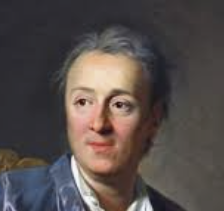
There is no kind of harassment that a man may not inflict on a woman with impunity in civilized societies.
▼
Source
"On Women" (1772), as translated in Selected Writings (1966) edited by Lester G. Crocker
5 months ago
A proposed response to Heidegger's ontological query "Why is there something rather than nothing?" – "And if there were nothing? You'd still be complaining!"
▼
Source
[https://books.google.co.uk/books?id=3Cx720fWi4kC&pg=PA29&source=gbs_toc_r&cad=4#v=onepage&q&f=false There are two errors in the the title of this book: A sourcebook of philosophical puzzles, paradoxes and problems], Robert M. Martin, p. 4, ISBN 1-55111-4
5 months ago
All that the conscious ego can do is to formulate wishes, which are then carried out by forces which it controls very little and understands not at all.
5 months ago
It is all as of old, the empty clangour, The scrawled on a five-foot page, The huckster who, mocking holy anger, Painfully paints his face with rage. * * * We that fight till the world is free, We have no comfort in victory; We have read each other as Cain his brother, We know each other, these slaves and we.
▼
Source
A Song of Defeat
5 months ago
This is a work that cannot be completed except by a society of men of letters and skilled workmen, each working separately on his own part, but all bound together solely by their zeal for the best interests of the human race and a feeling of mutual good will.
▼
Source
Article on Encyclopedia, as translated in The Many Faces of Philosophy : Reflections from Plato to Arendt (2001), "Diderot", p. 237

5 months ago
The gesture that divides madness is the constitutive one, not the science that grows up in the calm that returns after the division has been made.
▼
Source
Preface to 1961 edition

5 months ago
He walks in the street, a picture of modesty in his felt hat and his gabardine suit, and all the while he's thinking, "I'm immortal." The world is his, time is his, and I'm nothing but an insect.
▼
Source
Regina to herself, p. 28
5 months ago
Unlike the masses, intellectuals have a taste for rationality and an interest in facts.
▼
Source
Chapter 5 (p. 43)
5 months ago
Wait and see whether the religion of the Servile State is not in every case what I say: the encouragement of small virtues supporting capitalism, the discouragement of the huge virtues that defy it.
▼
Source
p. 37
CivilSimian.com created by AxiomaticPanic, CivilSimian, Kalokagathia