
5 months ago
Some of my readers may find themselves thinking that the mere fact that millions of human beings, including many highly intelligent and deeply thoughtful ones, have had strongly held religious beliefs is itself a reason for giving them serious intellectual attention — not necessarily for believing them, of course, but for finding them interesting and for treating them with respect. I would agree with this if the reasons given for them commanded respect. But I have yet to encounter such reasons. What are claimed as proofs are not proofs, and all such "proofs" have long since been discredited, the most important of them by Christians themselves, such as Kant. Yet they go on being trotted out: assertions are made without evidence; mutually contradictory claims proliferate; historical knowledge is defied; mistranslations abound; language is used in a way that slithers unacknowledged between literal meaning and metaphor; the whole vocabulary rests on unsecured presuppositions. Superstitions and belief in magic are perennial in just the same way as religion, and something near to being universal among mankind; and why this is so may be interesting, but in most cases the beliefs themselves are devoid of interesting content, at least to me.
▼
Source
p. 346
5 months ago
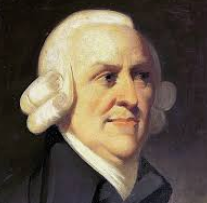
Adam Smith was the first academic economist; and his career is not very different from that of many economists in the last hundred and fifty years.
▼
Source
Eric Roll (1938) A History Of Economic Thought, Chapter IV, p. 144.
5 months ago
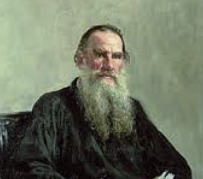
"Let people judge me as they please—I can deceive them, but I cannot deceive myself."And he suddenly understood that the disgust which he had lately felt toward everybody ... was disgust with himself.
▼
Source
Ch. 28
5 months ago
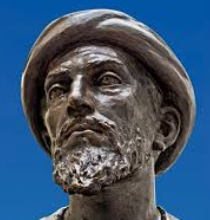
[T]he principal part in the human body, namely, the heart, is in constant motion, and is the source of every motion noticed in the body; it rules over the other members, and communicates to them through its own pulsations the force required for their functions. The outermost sphere by its motion rules in a similar way over all other parts of the universe, and supplies all things with their special properties. Every motion in the universe has thus its origin in the motion of that sphere; and the soul of every animated being derives its origin from the soul of that same sphere.
5 months ago
You have just dined, and however scrupulously the slaughterhouse is concealed in the graceful distance of miles, there is complicity.
▼
Source
Fate
5 months ago
I will give you one very simple example of synergy. All our metallic alloys are synergetic. We will examine chrome-nickel steel. The outstanding characteristic of metallic strength is its ability to cohere in one piece. We test the metals tensile strength per square inch of cross section of the tested sample. The very high number of pounds-per-square-inch tensile strength of chrome-nickel steel has changed our whole economy because it retained its structural integrity at so high a temperature as to make possible the jet engine which has halved the time it takes to fly around the world. The prime constituents are chromium, nickel, and iron. We will take the highest ultimate tensile strength of those three. p. 14
5 months ago
There is, and always has been, a widespread belief among the more comfortable classes that the poverty and suffering of the masses are due to their lack of industry, frugality, and intelligence. This belief, which at once soothes the sense of responsibility and flatters by its suggestion of superiority, is probably even more prevalent in countries like the United States, where all men are politically equal, and where, owing to the newness of society, the differentiation into classes has been of individuals rather than of families, than it is in older countries, where the lines of separation have been longer, and are more sharply, drawn. It is but natural for those who can trace their own better circumstances to the superior industry and frugality that gave them a start, and the superior intelligence that enabled them to take advantage of every opportunity, to imagine that those who remain poor do so simply from lack of these qualities. But whoever has grasped the laws of the distribution of wealth, as in previous chapters they have been traced out, will see the mistake in this notion. The fallacy is similar to that which would be involved in the assertion that every one of a number of competitors might win a race. That any one might is true; that every one might is impossible. For, as soon as land acquires a value, wages, as we have seen, do not depend upon the real earnings or product of labor, but upon what is left to labor after rent is taken out; and when land is all monopolized, as it is everywhere except in the newest communities, rent must drive wages down to the point at which the poorest paid class will he just able to live and reproduce, and thus wages are forced to a minimum fixed by what is called the standard of comfort — that is, the amount of necessaries and comforts which habit leads the working classes to demand as the lowest on which they will consent to maintain their numbers. This being the case, industry, skill, frugality, and intelligence can avail the individual only in so far as they are superior to the general level just as in a race speed can avail the runner only in so far as it exceeds that of his competitors. If one man work harder, or with superior skill or intelligence than ordinary, he will get ahead; but if the average of industry, skill, or intelligence be brought up to the higher point, the increased intensity of application will secure but the old rate of wages, and he who would get ahead must work harder still.
5 months ago
Friends, the soil is poor, we must sow seeds in plenty for us to garner even modest harvests.
▼
Source
Motto

5 months ago
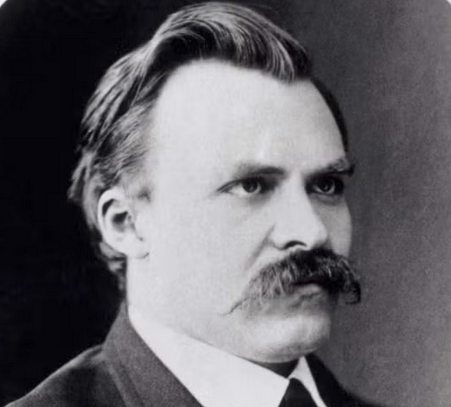
Human nature is evil, and goodness is caused by intentional activity.
▼
Source
Quoted in: Fayek S. Hourani (2012) Daily Bread for Your Mind and Soul, p. 336
5 months ago
The modern scientific counterpart to belief in God is the belief in the universe as an organism: this disgusts me. This is to make what is quite rare and extremely derivative, the organic, which we perceive only on the surface of the earth, into something essential, universal, and eternal! This is still an anthropomorphizing of nature!
▼
Source
KSA 9,11 [201]
5 months ago
If only people freed themselves from their beliefs in all kinds of Ormuzds, Brahmas, Sabbaoths, and their incarnation as Krishnas and Christs, from beliefs in Paradises and Hells, in reincarnations and resurrections, from belief in the interference of the Gods in the external affairs of the universe, and above all, if they freed themselves from belief in the infallibility of all the various Vedas, Bibles, Gospels, Tripitakas, Korans, and the like, and also freed themselves from blind belief in a variety of scientific teachings about infinitely small atoms and molecules and in all the infinitely great and infinitely remote worlds, their movements and origin, as well as from faith in the infallibility of the scientific law to which humanity is at present subjected: the historic law, the economic laws, the law of struggle and survival, and so on, — if people only freed themselves from this terrible accumulation of futile exercises of our lower capacities of mind and memory called the "Sciences", and from the innumerable divisions of all sorts of histories, anthropologies, homiletics, bacteriologics, jurisprudences, cosmographies, strategies — their name is legion — and freed themselves from all this harmful, stupefying ballast — the simple law of love, natural to man, accessible to all and solving all questions and perplexities, would of itself become clear and obligatory.
▼
Source
VI
5 months ago
In accordance with the divine wisdom, genesis can only take place through destruction, and without destruction of the individual members of the species the species themselves would not exist permanently. Thus the true kindness, and beneficence, and goodness of God is clear.
▼
Source
Ch.12
5 months ago
Conversation is an art in which a man has all mankind for his competitors, for it is that which all are practising every day while they live.
▼
Source
Considerations by the Way
5 months ago
The words synergy (syn-ergy) and energy (en-ergy) are companions. Energy studies are familiar. Energy relates to differentiating out subfunctions of nature, studying objects isolated out of the whole complex of Universe—for instance, studying soil minerals without consideration of hydraulics or of plant genetics. But synergy represents the integrated behaviors instead of all the differentiated behaviors of nature's galaxy systems and galaxy of galaxies.
▼
Source
[http://www.rwgrayprojects.com/synergetics/s01/p0100.html 105.00]
5 months ago
Under existing conditions in the civilized world, the great struggle among men is for the possession of wealth. Would it not then be irrational to expect that the science which treats of the production and distribution of wealth should be exempt from the influence of that struggle? Macaulay has well said that if any large pecuniary interest were concerned in disputing the attraction of gravitation, that most obvious of all facts would not yet be accepted. What, then, can we look for in the teaching of a science which directly concerns the most powerful of "vested rights" — which deals with rent and wages and interest, with taxes and tariffs, with privileges and franchises and subsidies, with currencies and land tenures and public debts, with the ideas on which trade unions are based and the pleas by which combinations of capitalists are defended? Economic truth, under existing conditions, has not merely to overcome the inertia of indolence or habit; it is in its very nature subject to suppressions and distortions from the influence of the most powerful and vigilant interests. It has not merely to make its way; it must constantly stand on guard.
▼
Source
General Introduction
5 months ago
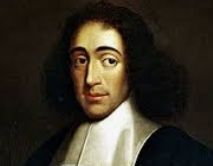
Nature is satisfied with little; and if she is, I am also.
▼
Source
As quoted in The Story of Philosophy (1933) by Will Durant, p. 176
5 months ago
Common Logic is the Grammar of the higher Speech, that is, of Thought; it examines merely the relations of ideas to one another, the Mechanics of Thought, the pure Physiology of ideas. Now logical ideas stand related to one another, like words without thoughts. Logic occupies itself with the mere dead Body of the Science of Thinking. — Metaphysics, again, is the Dynamics of Thought; treats of the primary Powers of Thought; occupies itself with the mere Soul of the Science of Thinking. Metaphysical ideas stand related to one another, like thoughts without words. Men often wondered at the stubborn Incompletibility of these two Sciences; each followed its own business by itself; there was a want everywhere, nothing would suit rightly with either. From the very first, attempts were made to unite them, as everything about them indicated relationship; but every attempt failed; the one or the other Science still suffered in these attempts, and lost its essential character. We had to abide by metaphysical Logic, and logical Metaphysic, but neither of them was as it should be.

5 months ago
It is better wither to be silent, or to say things of more value than silence. Sooner throw a pearl at hazard than an idle or useless word; and do not say a little in many words, but a great deal in a few.
▼
Source
As quoted in A Dictionary of Thoughts: Being a Cyclopedia of Laconic Quotations from the Best Authors of the World, both Ancient and Modern (1908) by Tyron Edwards, p. 525
5 months ago
The rights a man arrogates to himself are related to the duties he imposes on himself, to the tasks to which he feels equal. The great majority of men have no right to existence, but are a misfortune to higher men.
▼
Source
Sec. 872 (Notebook W I 1. Spring 1884, KGW VII, 2.97-8, KSA 11.101-2)
5 months ago
One need not accept all that Tolstoy says — some of his facts are not accurately stated — to realize the central truth of his indictment of the present system, which is to understand and act upon the irresistible power of the soul over the body, of love, which is an attribute of the soul, over the brute or body force generated by the stirring in us of evil passions. There is no doubt that there is nothing new in what Tolstoy preaches. But his presentation of the old truth is refreshingly forceful. His logic is unassailable. And above all he endeavours to practice what he preaches. He preaches to convince. He is sincere and in earnest. He commands attention.
▼
Source
Mohandas Karamchand Gandhi (19 November 1909), in his Introduction to the publication of Tolstoy's A Letter to a Hindu (1908)
5 months ago
This [fourth] theory likewise implies contradictions and absurdities. The absurdities are these: The fact that some persons are born with defects, although they have not sinned previously, is ascribed to the wisdom of God, it being better for those persons to be in such a condition than to be in a normal state, though we do not see why it is better; and they do not suffer thereby any punishment at all, but, on the contrary, enjoy God's goodness. In a similar manner the slaughter of the pious is explained as being for them the source of an increase in reward in future life. They go even further in their absurdities.
▼
Source
Ch.17
5 months ago
Deep in the man sits fast his fate To mould his fortunes, mean or great.
▼
Source
Fate
5 months ago
All of humanity is in peril of extinction if each one of us does not dare, now and henceforth, always to tell only the truth, and all the truth, and to do so promptly — right now.
5 months ago
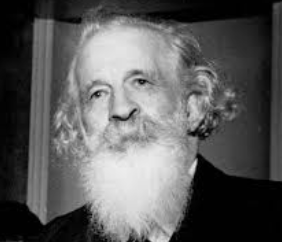
Two half philosophers will probably never a whole metaphysician make.
▼
Source
A Retrospective Glance at the Lifework of a Master of Books
5 months ago
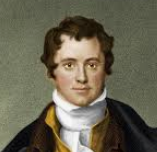
The modern method of production of sodium is based, therefore, as regards principles upon the conjoint labours of Davy and Faraday. ...These principles took their present form of application at the hands of... Hamilton Y. Castner... It is by Castner's process that all the sodium of to-day is manufactured.
5 months ago
Meditate upon my counsels; love them; follow them; To the divine virtues will they know how to lead thee. I swear it by the One who in our hearts engraved The sacred Tetrad, symbol immense and pure, Source of Nature and model of the Gods.
▼
Source
As translated by Fabre d'Olivet
5 months ago
Those who dance appear insane to those who cannot hear the music.
▼
Source
First recorded appearance: Germaine de Staël's On Germany (1813). ". . . sometimes even in the habitual course of life, the reality of this world disappears all at once, and we feel ourselves in the middle of its interests as we should at a ball, where we
5 months ago
Know that the difficulties which lead to confusion in the question what is the purpose of the Universe or of any of its parts, arise from two causes: first, man has an erroneous idea of himself, and believes that the whole world exists only for his sake; secondly, he is ignorant both about the nature of the sublunary world, and about the Creator's intention to give existence to all beings whose existence is possible, because existence is undoubtedly good.
▼
Source
Ch.25
5 months ago
There is no knowledge that is not power.
▼
Source
Old Age
5 months ago
When blimp photographs are taken of giant stadia packed full of rock-concert or football fans, we get an idea of what 100,000 people look like. We all think of Hiroshima as the worst single killing of humans by humans. That was about a 75,000-capacity-coliseum-full. Each day of each year, year after year, a 75,000-capacity-stadiumfull of around-the-world humans perish from starvation or its side effects, despite an annual average 5-percent world food-production overage of the amount of food adequate for the total world's population. This daily kill of innocents dwarfs the awful Auschwitz killing.
5 months ago
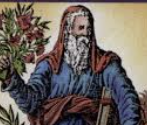
The Pythagoreans called the monad "intellect" because they thought that intellect was akin to the One; for among the virtues, they likened the monad to moral wisdom; for what is correct is one. And they called it "being," "cause of truth," "simple," "paradigm," "order," "concord," "what is equal among the greater and the lesser," "the mean between intensity and slackness," "moderation in plurality," "the instant now in time," and moreover they call it "ship," "chariot," "friend," "life," "happiness."
▼
Source
On the Monad
5 months ago
Let thy mind rule thy tongue!
5 months ago
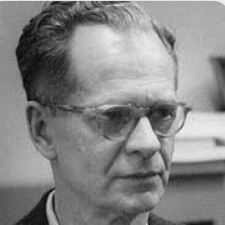
For practical or theoretical reasons, dictators, Organization Men and certain scientists are anxious to reduce the maddening diversity of men's natures to some kind of manageable uniformity. In the first flush of his Behaviouristic fervour, J. B. Watson roundly declared that he could find "no support for hereditary patterns of behaviour, nor for special abilities (music, art, etc.) which are supposed to run in families." And even today we find a distinguished psychologist, Professor B.F. Skinner of Harvard, insisting that, "as scientific explanation becomes more and more comprehensive, the contribution which may be claimed by the individual himself appears to approach zero. Man's vaunted creative powers, his achievements in art, science and morals, his capacity to choose and our right to hold him responsible for the consequences of his choice — none of these is conspicuous in the new scientific self-portrait.
▼
Source
Aldous Huxley, "Brave New World Revisited" (1958)
5 months ago
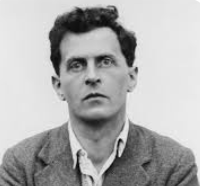
The aim of the book is to set a limit to thought, or rather — not to thought, but to the expression of thoughts: for in order to be able to set a limit to thought, we should have to find both sides of the limit thinkable (i.e. we should have to be able to think what cannot be thought). It will therefore only be in language that the limit can be set, and what lies on the other side of the limit will simply be nonsense.
▼
Source
Preface
5 months ago
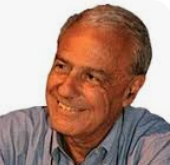
Interviewer: How do philosophy and theology coexist in you? Vannini: Since the age of reason, I have felt a certain love and interest for deeply philosophical and theological issues, according to the Hegelian interpretation that philosophy has the absolute in common with religion.
5 months ago
Each man is a hero and an oracle to somebody.
▼
Source
Quotation and Originality
5 months ago
Induction is the glory of science and the scandal of philosophy.
▼
Source
Broad, C.D. (1926). The philosophy of Francis Bacon: An address delivered at Cambridge on the occasion of the Bacon tercentenary, 5 October, 1926. Cambridge: University Press, p. 67. The quotation is a paraphrase of the concluding sentence in the monograp
5 months ago
The criterion which we use to test the genuineness of apparent statements of fact is the criterion of verifiability. We say that a sentence is factually significant to any given person, if, and only if, he knows how to verify the proposition which it purports to express — that is, if he knows what observations would lead him, under certain conditions, to accept the proposition as being true, or reject it as being false.
▼
Source
p. 16.
5 months ago
"If the room is smoky, if only moderately, I will stay; if there is too much smoke I will go. Remember this, keep a firm hold on it, the door is always open."
▼
Source
Book I, ch. 25, § 18.
5 months ago
These thinkers seem to consider that number is the principle both as matter for things and as constituting their attributes and permanent states.
▼
Source
Aristotle (c. 330 BC) as quoted by Sir Thomas Little Heath, A History of Greek Mathematics, [https://books.google.com/books?id=h4JsAAAAMAAJ Vol. 1], p.67, citing Metaph. A. 5, 986 a 16.
5 months ago
All repressed passion produces its counter-passion which is as malevolent as the natural passion would be beneficial.
▼
Source
Le nouveau monde amoureux
5 months ago
But ordinary language is all right.
▼
Source
p. 28

5 months ago
Each and every master, regardless of the era or the place, heard the call and attained harmony with heaven and earth. There are many paths leading to the top of Mount Fuji, but there is only one summit — love.
▼
Source
Morihei Ueshiba, as quoted in You Can Save the Earth: 7 Reasons Why and 7 Simple Ways, a Philosophy for the Future (2008) by Hatherleigh, Sean K. Smith, and Andrew Flach, p. 92
5 months ago
[The Upanishads and the Vedas] haunt me. In them I have found eternal compensation, unfathomable power, unbroken peace.
▼
Source
Quoted in S. Londhe, A Tribute to Hinduism (2008)
5 months ago
The scientist has to have a way of thinking about the environment of a system that is richer and more subtle than a mere looking at for boundaries. He does this by noting that, when we say that something lies ‘outside’ the system, we mean that system can do relatively little about its characteristics or its behavior. Environment, in effect, makes up the things and people that are ‘fixed’ or ‘given’, from the system’s point of view.
▼
Source
p. 35
5 months ago
Progress, far from consisting in change, depends on retentiveness. When change is absolute there remains no being to improve and no direction is set for possible improvement: and when experience is not retained, as among savages, infancy is perpetual. Those who cannot remember the past are condemned to repeat it.
▼
Source
This famous statement has produced many paraphrases and variants: | Those who cannot learn from history are doomed to repeat it. | Those who do not remember their past are condemned to repeat their mistakes. | Those who do not read history are doomed to r
5 months ago
As to the Approbation or Esteem of those Blockheads who call themselves the Public, & whom a Bookseller, a Lord, a Priest, or a Party can guide, I do most heartily despise it.
▼
Source
Letter 138, To Gilbert Elliot of Minto; August 9, 1757
5 months ago
For he who is unmusical is a child in music; he who is without letters is a child in learning; he who is untaught, is a child in life.
▼
Source
Book III, ch. 19, § 6.
5 months ago
The Ionians were optimistic, heathenly materialists... Every philosopher of the period seems to have had his own theory regarding the nature of the universe around him. ...The sixth century scene evokes the image of an orchestra expectantly tuning up, each player absorbed in his own instrument only, deaf to the caterwaulings of the others. Then there is a dramatic silence, the conductor enters the stage, raps three times with his baton, and harmony emerges from the chaos. The maestro is Pythagoras of Samos, whose influence on the ideas, and thereby on the destiny, of the human race was probably greater than that of any single man before or after him.
▼
Source
Arthur Koestler, The Sleepwalkers: A History of Man's Changing Vision of the Universe (1959, 1963)
5 months ago
For a large class of cases — though not for all — in which we employ the word meaning it can be explained thus: the meaning of a word is its use in the language.
▼
Source
§ 43, this has often been quoted as simply: The meaning of a word is its use in the language.
CivilSimian.com created by AxiomaticPanic, CivilSimian, Kalokagathia