
4 months 3 weeks ago
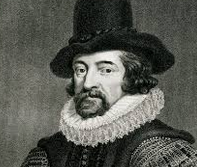
They are ill discoverers that think there is no land, when they can see nothing but sea.
▼
Source
Book II, vii, 5
4 months 3 weeks ago
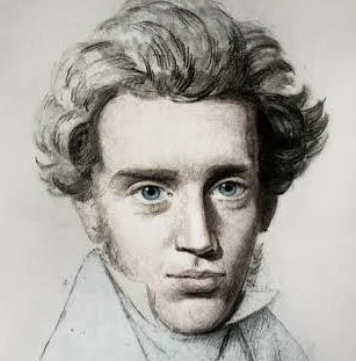
Editor’s Preface In this book, originating in the year 1848, the requirement for being a Christian is forced up by the pseudonymous author to the supreme ideality. Yet the requirement should indeed be stated, presented, and heard. From the Christian point of view, there ought to be no scaling down of the requirement, nor suppression of it-instead of a personal admission and confession. The requirement should be heard-and I understand what is said as spoken to me alone—so that I might learn not only to resort to grace but to resort to it in relation to the use of grace. S.K.
▼
Source
p. xii
4 months 3 weeks ago
Animals outline their territories with their excretions, humans outline their territories by ink excretions on paper.
▼
Source
Ch. 4 : The Anal Emotional Territiorial Circuit, p. 68
4 months 3 weeks ago
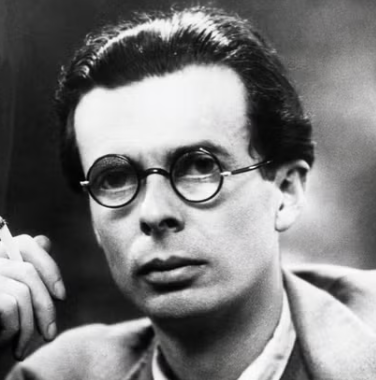
There has been a general trend in recent times toward a Unitarian mythology and the worship of one God. This is the tendency which it is customary to regard as spiritual progress. On what grounds? Chiefly, so far as one can see, because we in the Twentieth Century West are officially the worshippers of a single divinity. A movement whose consummation is Us must be progressive. Quod erat demonstrandum.
▼
Source
“One and Many,” p. 16
4 months 3 weeks ago
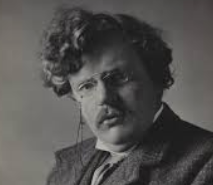
We are then able to answer in some manner the question, "Why have we no great men?" We have no great men chiefly because we are always looking for them. We are connoisseurs of greatness, and connoisseurs can never be great; we are fastidious, that is, we are small. When Diogenes went about with a lantern looking for an honest man, I am afraid he had very little time to be honest himself. And when anybody goes about on his hands and knees looking for a great man to worship, he is making sure that one man at any rate shall not be great.
▼
Source
Ch 1: "The Dickens Period"
4 months 3 weeks ago
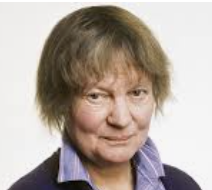
Stuart was not dismayed by his sexual feelings about the boy.
▼
Source
The Good Apprentice (1985), p. 247.
4 months 3 weeks ago
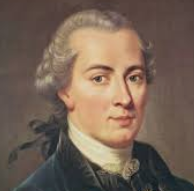
The guidelines for achieving wisdom consist of three leading maxims: 1) Think for yourself; 2) (in communication with other people) Put yourself in the place of the other person; 3) Always think by remaining faithful to your own self.
▼
Source
Kant, Immanuel (1996), page 95
4 months 3 weeks ago
The human understanding when it has once adopted an opinion (either as being the received opinion or as being agreeable to itself) draws all things else to support and agree with it. And though there be a greater number and weight of instances to be found on the other side, yet these it either neglects and despises, or else by some distinction sets aside and rejects, in order that by this great and pernicious predetermination the authority of its former conclusions may remain inviolate.
▼
Source
Aphorism 46
4 months 3 weeks ago
As soon as the discourse is about a holy spirit, about believing in the holy spirit, how many do you think believe in that? Or when the discourse is about an evil spirit that should be renounced: how many do you think believe in such a thing? How can this be? Is it perhaps because the subject becomes too earnest when it is the holy spirit? For I can talk about, believe in, the spirit of the age, the spirit of the world, and the like and do not thereby need to think of anything specific. It is a kind of spirit, but I am not absolutely bound by what I say. And not being bound by what one says is highly prized.
▼
Source
Soren Kierkegaard, For Self-Examination, Hong p. 74
4 months 3 weeks ago
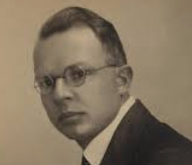
Logic is the last scientific ingredient of Philosophy; its extraction leaves behind only a confusion of non-scientific, pseudo problems.
▼
Source
p. 22
4 months 3 weeks ago
Christian philosophers have found no difficulty in justifying imperialism, war, the capitalist system, the use of torture, the censorship of the press and ecclesiastical tyrannies of every sort, from the tyranny of Rome to the tyrannies of Geneva and New England.
▼
Source
Ch. 14, p. 315 [2012 reprint]
4 months 3 weeks ago
We have passed the age of the demagogue, the man who has little to say and says it loud. We have come to the age of the mystagogue or don, the man who has nothing to say, but says it softly and impressively in an indistinct whisper.
▼
Source
"The Philosopher"
4 months 3 weeks ago
If the truth shall kill them, let them die.
▼
Source
Generally attributed to Kant on social media, this is actually from a quotation by Ayn Rand paraphrasing Kant. Cited in [http://books.google.com/books?id=d0tbAAAAMAAJ&q=%22If+the+truth+shall+kill+them,+let+them+die.%22&dq=%22If+the+truth+shall+kill+them,+
4 months 3 weeks ago
What then remains but that we still should cry Not to be born, or, being born, to die?
4 months 3 weeks ago
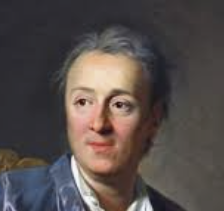
If you want me to believe in God, you must make me touch him.
▼
Source
Portraying a fictional conversation of Nicholas Saunderson with a priest, in ' Lettre sur les aveugles [Letter about the Blind] (1749), as quoted in Diderot and the Encyclopædists (1897) by John Morley, p. 92. Publication of this work resulted in Diderot
4 months 3 weeks ago
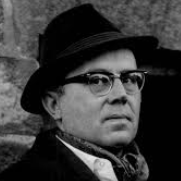
Kirk was an artist, a visionary, almost a prophet.
▼
Source
David Frum, “Russell Kirk” in The New Criterion (1994:16)
4 months 3 weeks ago
And suddenly I had an inkling of what it must feel like to be mad.
4 months 3 weeks ago
My friends, we will not go again or ape an ancient rage,Or stretch the folly of our youth to be the shame of age,
▼
Source
Ch. XXI: "The Road to Roundabout" ("The Rolling English Road", l. 19)
4 months 3 weeks ago
Superstition is more injurious to God than atheism.

4 months 3 weeks ago
What all these people are doing is not aggressive; they are inventing new possibilities of pleasure with strange parts of their body — through the eroticization of the body. I think it's ... a creative enterprise, which has as one of its main features what I call the desexualization of pleasure.
▼
Source
In reference to Sadism and Masochism, as quoted in Who's Who in Contemporary Gay & Lesbian History: From World War II to the Present Day (2001) by Robert Aldrich and Gary Wotherspoon

4 months 3 weeks ago
She was beautiful, with a beauty so severe and so solitary that at first it was startling. "Ah! If only there were two of me," she thought, "one doing the talking and one listening, one living and one watching, how I would love myself. I'd envy no one."
▼
Source
p. 5
4 months 3 weeks ago
By means of ever more effective methods of mind-manipulation, the democracies will change their nature; the quaint old forms— elections, parliaments, Supreme Courts and all the rest—will remain. The underlying substance will be a new kind of non-violent totalitarianism. All the traditional names, all the hallowed slogans will remain exactly what they were in the good old days. Democracy and freedom will be the theme of every broadcast and editorial—but democracy and freedom in a strictly Pickwickian sense. Meanwhile the ruling oligarchy and its highly trained elite of soldiers, policemen, thought-manufacturers and mind-manipulators will quietly run the show as they see fit.
▼
Source
Chapter 3, p. 25
4 months 3 weeks ago
Even the tyrant never rules by force alone; but mostly by fairy tales. And so it is with the modern tyrant, the great employer. The sight of a millionaire is seldom, in the ordinary sense, an enchanting sight: nevertheless, he is in his way an enchanter. As they say in the gushing articles about him in the magazines, he is a fascinating personality. So is a snake. At least he is fascinating to rabbits; and so is the millionaire to the rabbit-witted sort of people that ladies and gentlemen have allowed themselves to become.
▼
Source
p. 19
4 months 3 weeks ago
In any country where talent and virtue produce no advancement, money will be the national god. Its inhabitants will either have to possess money or make others believe that they do. Wealth will be the highest virtue, poverty the greatest vice. Those who have money will display it in every imaginable way. If their ostentation does not exceed their fortune, all will be well. But if their ostentation does exceed their fortune they will ruin themselves. In such a country, the greatest fortunes will vanish in the twinkling of an eye. Those who don't have money will ruin themselves with vain efforts to conceal their poverty. That is one kind of affluence: the outward sign of wealth for a small number, the mask of poverty for the majority, and a source of corruption for all.
4 months 3 weeks ago
It was an important moment. The old partners of the spectacle of punishment, the body and the blood, gave way. A new character came of the scene, masked. It was the end of a certain kind of tragedy; comedy began, with shadow play, faceless voices, impalpable entities. The apparatus of punitive justice must now bite into this bodiless reality.
▼
Source
pp. 17
4 months 3 weeks ago
Woman is an existent who is called upon to make herself object; as subject she has an aggressive element in her sensuality which is not satisfied on the male body: hence the conflicts that her eroticism must somehow overcome.
▼
Source
Bk. 2, Pt.. 3, Ch. 4: The Lesbian. P. 445 (1974 Vintage edition)
4 months 3 weeks ago
Above all, it is to my husband that I owe my deepest thanks. At times, when intensely absorbed by a new idea, I would enthusiastically jot it down in an English that was not very English. His harshest criticism then would be, "Stop a minute-your English is getting just a little too eccentric!" There was never criticism without advice; there was always that extraordinary feeling of good will which is constantly present in him and of which, on this occasion, he gave with particular abundance.
▼
Source
Laura Archera Huxley Acknowledgements for You are not the Target (1963)
4 months 3 weeks ago
In the matter of reforming things, as distinct from deforming them, there is one plain and simple principle; a principle which will probably be called a paradox. There exists in such a case a certain institution or law; let us say, for the sake of simplicity, a fence or gate erected across a road. The more modern type of reformer goes gaily up to it and says, "I don't see the use of this; let us clear it away." To which the more intelligent type of reformer will do well to answer: "If you don't see the use of it, I certainly won't let you clear it away. Go away and think. Then, when you can come back and tell me that you do see the use of it, I may allow you to destroy it." This paradox rests on the most elementary common sense. The gate or fence did not grow there. It was not set up by somnambulists who built it in their sleep. It is highly improbable that it was put there by escaped lunatics who were for some reason loose in the street. Some person had some reason for thinking it would be a good thing for somebody. And until we know what the reason was, we really cannot judge whether the reason was reasonable. It is extremely probable that we have overlooked some whole aspect of the question, if something set up by human beings like ourselves seems to be entirely meaningless and mysterious. There are reformers who get over this difficulty by assuming that all their fathers were fools; but if that be so, we can only say that folly appears to be a hereditary disease. But the truth is that nobody has any business to destroy a social institution until he has really seen it as an historical institution. If he knows how it arose, and what purposes it was supposed to serve, he may really be able to say that they were bad purposes, or that they have since become bad purposes, or that they are purposes which are no longer served. But if he simply stares at the thing as a senseless monstrosity that has somehow sprung up in his path, it is he and not the traditionalist who is suffering from an illusion.
▼
Source
Ch. IV: The Drift From Domesticity
4 months 3 weeks ago
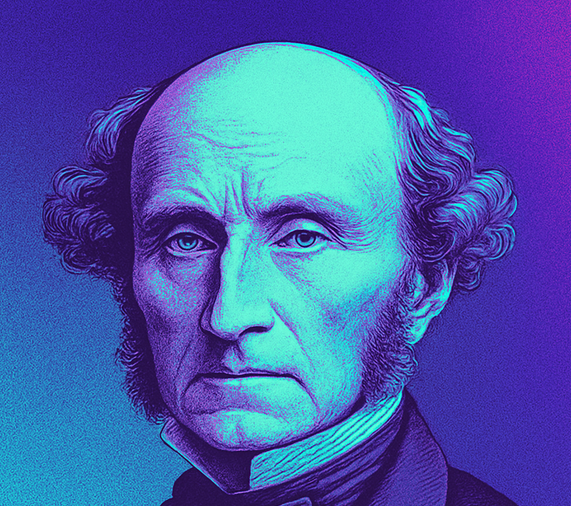
Everybody knows that the same sum of money is of much greater value to a poor man that to a rich one. Give £10 a year to the man who has but £10 a year, you double his income, and you nearly double his enjoyments. Add £10 more, you do not add to his enjoyments so much as you did by the first £10. The third £10 is less valuable than the second, and the fourth less valuable than the third. To the possessor of £1,000 a year the addition of £10 would be scarcely perceptible; to the possessor of £10,000 it would not be worth slooping for.The richer a man is the less he is benefited by any further addition to his income. The man of £4,000 a year has four times the income of the man who has but £1,000; but does anybody suppose that he has four times the happiness?
▼
Source
John Stuart Mill, Primogeniture, in The Collected Works of John Stuart Mill, Toronto, 1988, vol. 26, p. 336
4 months 3 weeks ago
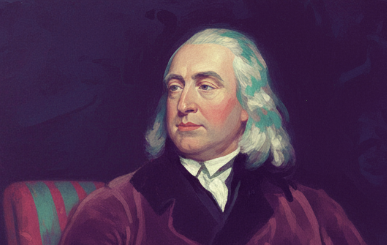
Rights are, then, the fruits of the law, and of the law alone. There are no rights without law—no rights contrary to the law—no rights anterior to the law. Before the existence of laws there may be reasons for wishing that there were laws—and doubtless such reasons cannot be wanting, and those of the strongest kind;—but a reason for wishing that we possessed a right, does not constitute a right. To confound the existence of a reason for wishing that we possessed a right, with the existence of the right itself, is to confound the existence of a want with the means of relieving it. It is the same as if one should say, everybody is subject to hunger, therefore everybody has something to eat.
▼
Source
Pannomial Fragments (c. 1831), quoted in The Works of Jeremy Bentham, Vol. III (1838), p. 221
4 months 3 weeks ago
The man described for us, whom we are invited to free, is already in himself the effect of a subjection much more profound than himself. A 'soul' inhabits him and brings him to existence...the soul is the effect and instrument of political anatomy; the soul is the prison of the body.

4 months 3 weeks ago
How singular is the thing called pleasure, and how curiously related to pain, which might be thought to be the opposite of it; for they never come to a man together, and yet he who pursues either of them is generally compelled to take the other. They are two, and yet they grow together out of one head or stem.
4 months 3 weeks ago
No philosopher would be willing to accept the idea of philosophy as a way of escape, but might there not be a question of the philosopher being in duty bound to refuse to accept a world, like our real world here, of disorder and crime where the values of the mind and spirit can no longer find a home?
▼
Source
p. 116
4 months 3 weeks ago
The utilitarian morality does recognise in human beings the power of sacrificing their own greatest good for the good of others. It only refuses to admit that the sacrifice is itself a good. A sacrifice which does not increase, or tend to increase, the sum total of happiness, it considers as wasted. The only self-renunciation which it applauds, is devotion to the happiness, or to some of the means of happiness, of others; either of mankind collectively, or of individuals within the limits imposed by the collective interests of mankind.
▼
Source
Ch. 2
4 months 3 weeks ago
[T]he function of parrhesia... has the function of criticism: criticism of the interlocutor or of the speaker...
4 months 3 weeks ago
As there are misanthropists, or haters of men, there are also misologists or haters of ideas, and both spring from the same cause, which is ignorance of the world. Misanthropy arises from too great confidence of inexperience; you trust a man and think him altogether true and good and faithful, and then in a little while he turns out to be false and knavish; and then another and another, and when this has happened several times to a man, especially within the circle of his most trusted friends, as he deems them, and he has often quarreled with them, he at last hates all men, and believes that no one has any good in him at all. ...The reason is that a man, having to deal with other men, has no knowledge of them; for if he had knowledge he would have known the true state of the case, that few are the good and few the evil, and that the great majority are in the interval between them.

4 months 3 weeks ago
What is dignity? The measure of liberty.
4 months 3 weeks ago
There is no author to whom my father thought himself more indebted for his own mental culture, than Plato, or whom he more frequently recommended to young student. I can bear similar testimony in regard to myself. The Socratic method, of which the Platonic dialogues are the chief example, is unsurpassed as a discipline for correcting the errors, and clearing up the confusions incident to the intellectus sibi permissus...
▼
Source
([https://archive.org/details/autobiography01mill/page/21/mode/1up pp. 21–22])
4 months 3 weeks ago
Were art to redeem man, it could do so only by saving him from the seriousness of life and restoring him to an unexpected boyishness. The symbol of art is seen again in the magic flute of the Great God Pan which makes the young goats frisk at the edge of the grove. All modern art begins to appear comprehensible and in a way great when it is interpreted as an attempt to instill youthfulness into an ancient world.
▼
Source
"Art a Thing of No Consequence"
4 months 3 weeks ago
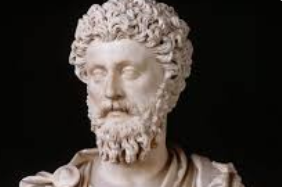
Whatever this is that I am, it is flesh and a little spirit and an intelligence.
▼
Source
This that I am, whatever it be, is mere flesh and a little breathe and the ruling Reason (Haines translation) | This Being of mine, whatever it really is, consists of a little flesh, a little breath, and the part which governs. | A little flesh, a little
4 months 3 weeks ago
However far the phenomena transcend the scope of classical physical explanation, the account of all evidence must be expressed in classical terms. The argument is that simply by the word "experiment" we refer to a situation where we can tell others what we have done and what we have learned and that, therefore, the account of the experimental arrangement and of the results of the observations must be expressed in unambiguous language with suitable application of the terminology of classical physics.
▼
Source
Niels Bohr, "Discussions with Einstein on Epistemological Problems in Atomic Physics," in , Albert Einstein: Philosopher Scientist (1949) pp. 199-241.
4 months 3 weeks ago
Foucault's achievement in so quickly building such an enthralling account of the operation of power in society is all the more remarkable when one remembers the dominant hold that Marxist and neo-Marxist accounts had in the Anglophone academy in the 1970s and even into the 1980s. The key to his success probably lies in the fact that he did not initially present his insights in abstract terms but instead allowed them to emerge from his painstaking histories of various knowledge endeavours, or sciences, particularly psychiatry, psychology, penology, and sexology. Without bludgeoning his readers, Foucault allowed them to see mostly power where others would see mostly science.
▼
Source
Gary Wickham, "Foucault and the Promise of Power without Dogma", in Routledge International Handbook of Contemporary Social and Political Theory (2011) edited by Gerard Delanty and Stephen P. Turner
4 months 3 weeks ago
What do you say about making a libation out of this cup to any god? ...I may and I must pray to the gods to prosper my journey from this to that other world—may this, then, which is my prayer, be granted to me. [Then holding the cup to his lips, quite readily and cheerfully he drank off the poison. And hitherto most of us had been able to control their sorrow; but now, when we saw him drinking, and saw too, that he had finished the draft, we could no longer forbear, and in spite of myself my own tears were flowing fast; so that I covered my face and wept over myself, for certainly I was not weeping over him, but at my own calamity at having lost such a companion. Nor was I the first, for Crito, when he found himself unable to restrain his tears, had got up, and moved away, and I followed; and at that moment, Apollodorus, who had been weeping all the time, broke out in a loud cry which made cowards of us all. Socrates alone retained his calmness:] What is this strange outcry? ...I sent away the women mainly in order that they might not offend in this way, for I have heard that a man should die in peace. Be quiet then, and have patience.
4 months 3 weeks ago
The Fascist, on the other hand, conceives philosophy as a philosophy of practice (”praxis”). That concept was the product of certain Marxist and Sorellian inspirations (many Fascists and the Duce, himself, received their first intellectual education in the school of Marx and Sorel)—as well as the influence of contemporary Italian idealistic doctrines from which Fascist mentality drew substance and achieved maturity.
▼
Source
“The Philosophy of Fascism,” first published in English in the Spectator, November 1928, pp. 36-37. Reprinted in Origins and Doctrine of Fascism, A. James Gregor, translator and editor, Transaction Publishers (2003) p. 33
4 months 3 weeks ago
Like Coleridge, he might plead as a set-off that he had been to many persons, through his conversation, a source not only of much instruction but of great elevation of character. On me his influence was most salutary. It was moral in the best sense. He took a sincere and kind interest in me, far beyond what could have been expected towards a mere youth from a man of his age, standing, and what seemed austerity of character. There was in his conversation and demeanour a tone of high-mindedness which did not show itself so much, if the quality existed as much, in any of the other persons with whom at that time I associated. My intercourse with him was the more beneficial, owing to his being of a different mental type from all other intellectual men whom I frequented...
▼
Source
([https://archive.org/details/autobiography01mill/page/75/mode/1up pp. 75-76])
4 months 3 weeks ago
That Marxism should triumph in Russia, where there is no industry, would be the greatest contradiction that Marxism could undergo. But there is no such contradiction, for there is no such triumph. Russia is Marxist more or less as the Germans of the Holy Roman Empire were Romans.
▼
Source
Chapter XIV: Who Rules The World?
4 months 3 weeks ago
If you do the job in a principled way, with diligence, energy and patience, if you keep yourself free of distractions, and keep the spirit inside you undamaged, as if you might have to give it back at any moment— If you can embrace this without fear or expectation—can find fulfillment in what you're doing now, as Nature intended, and in superhuman truthfulness (every word, every utterance)—then your life will be happy. —
▼
Source
III, 12 (Hays translation)
4 months 3 weeks ago
Exercise till the mind feels delight in reposing from the fatigue.
▼
Source
First appearance on google books is C. Edwards Lester's 1845 English translation of Ansaldo Ceba's book Il Cittadino di Repubblica, translated as The Citizen of a Republic, which on [https://books.google.com/books?id=82rDFVelj_oC&pg=PA92#v=onepage&q&f=fal

4 months 3 weeks ago
I can find no words for what I feel. My consciousness is withdrawn into itself; I hear my heart beating, and my life passing. It seems to me that I have become a statue on the banks of the river of time, that I am the spectator of some mystery, and shall issue from it old, or no longer capable of age.
4 months 3 weeks ago
It was the period of my mental progress which I have now reached that I formed the friendship which has been the honour and chief blessing of my existence, as well as the source of a great part of all that I have attempted to do, or hope to effect hereafter, for human improvement. My first introduction to the lady who, after a friendship of twenty years, consented to become my wife, was in 1830, when I was in my twenty-fifth and she in her twenty-third year.
▼
Source
([https://archive.org/details/autobiography01mill/page/184/mode/1up p. 184])
CivilSimian.com created by AxiomaticPanic, CivilSimian, Kalokagathia