
5 months ago
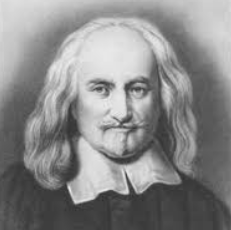
"I Authorize and give up my Right of Governing my selfe, to this Man, or to his Assembly of men, on this condition, that thou that give up thy Right to him, and Authorise all his Actionsin like manner." This done, the Multitude so united in one Person, is called a COMMON-WEALTH, in latine CIVITAS. This is the Generation of that LEVIATHAN, or rather (to speake more reverently) of that Mortall God, to which we owe under the Immortal God, our peace and defence.
▼
Source
The Second Part, Chapter 17, p. 87 (See also: Ten Commandments)

5 months ago
But oppression by your Mock-Superiors well shaken off, the grand problem yet remains to solve: That of finding government by your Real-Superiors! Alas, how shall we ever learn the solution of that, benighted, bewildered, sniffing, sneering, godforgetting unfortunates as we are? It is a work for centuries; to be taught us by tribulations, confusions, insurrections, obstructions; who knows if not by conflagration and despair! It is a lesson inclusive of all other lessons; the hardest of all lessons to learn.
5 months ago
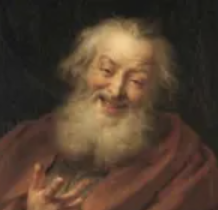
A life without a holiday is like a long journey without an inn to rest at.
5 months ago
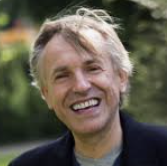
By far my greatest dread in life […] is that (some variant of) the Everett interpretation of Quantum Mechanics is true.
▼
Source
[https://www.hedweb.com/davdiary.htm Dave's Diary], BLTC Research, May 1996

5 months ago
Conservatism begins at home.
▼
Source
p. 394 (final words)
5 months ago
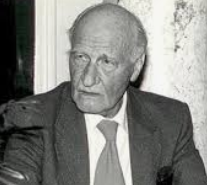
The statement is made with certainty: a festival that does not get its life from worship, even though the connection in human consciousness be ever so small, is not to be found. To be sure, since the French Revolution, people have tried over and over to create artificial festivals without any connection with religious worship, or even against such worship, such as the "Brutus Festival" or "Labor Day," but they all demonstrate, through the forced and narrow character of their festivity, what religious worship provides to a festival. Clearer than the light of day is the difference between the living, rooted trees of genuine cultic festival and our artificial festivals that resemble those "maypoles," cut at the roots, and carted here and there, to be planted for some definite purpose. Of course we may have to prepare ourselves for the possibility that we are only at the dawn of an age of artificial festivals. Were we [in Germany] prepared for the possibility that the official forces, and especially the bearers of political power, would artificially create the appearance of the festive with so huge an expense in external arrangements? And that this seductive, scarcely delectable appearance of artificial "holidays" would be so totally lacking in the essential quality, that true and ultimate harmony with the world? And that such holidays would in fact depend on the suppression of that harmony and derive their dangerous seduction from that very fact?
▼
Source
pp. 51–52 | In the three rhetorical questions that end this quote, Pieper alludes to the Nazis' elaborately stage-managed "festivals", in particular the Nuremberg Rally, the subject of Leni Riefenstahl's classic propaganda documentary, Triumph of the Will
5 months ago
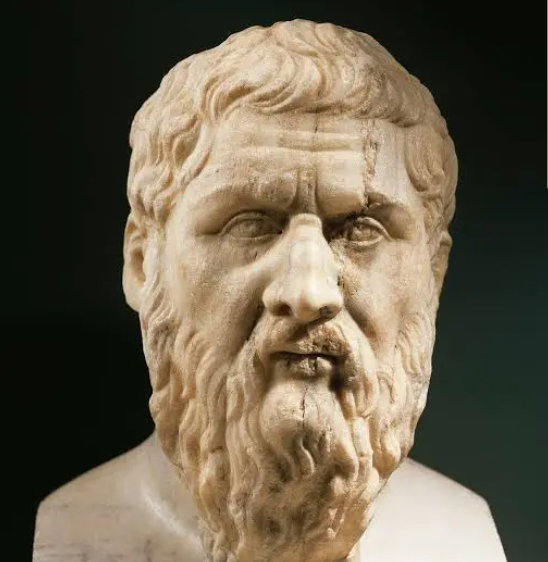
The beginning in every task is the chief thing.
▼
Source
variant: The beginning is the most important part of any work. (Jowett translation) | 377a

5 months ago
One hardly saves a world without ruling it.
5 months ago
The study of politics is a form of natural history. Thomas Hobbes loathed Aristotle’s politics, and in Leviathan followed Plato in modeling politics on geometry; but he admired Aristotle’s biology. One consequence of that “biological” style is important, not only because it was at odds with Hobbes’s—and Plato’s—hankering after political geometry. Aristotle claimed that political analysis should aim only “at as much precision as the subject matter permits.” Political wisdom cannot aspire to the precision of geometry, and must not pretend to. Aboriculture suggests an analogy: most trees grow best in firm soil with a moderate water supply; a few thrive with their roots in mud and water.
▼
Source
Alan Ryan, On Politics: A History of Political Thought: From Herodotus to the Present (2012), Ch. 3 : Aristotle: Politics Is Not Philosophy
5 months ago
Of America it would ill beseem any Englishman, and me perhaps as little as another, to speak unkindly, to speak unpatriotically, if any of us even felt so. Sure enough, America is a great, and in many respects a blessed and hopeful phenomenon. Sure enough, these hardy millions of Anglosaxon men prove themselves worthy of their genealogy... But as to a Model Republic, or a model anything, the wise among themselves know too well that there is nothing to be said... Their Constitution, such as it may be, was made here, not there... Cease to brag to me of America, and its model institutions and constitutions.
▼
Source
[http://www.ecn.bris.ac.uk/het/carlyle/latter.htm Latter Day Pamphlets], No. 1., p. 23, 24.
5 months ago
Humans already massively intervene in Nature, whether through habitat destruction, captive breeding programs for big cats, "rewilding", etc. So the question is not whether humans should "interfere", but rather what ethical principles should govern our interventions.
▼
Source
"[https://ieet.org/index.php/IEET2/more/pearce20130726 The Antispeciesist Revolution]", Institute for Ethics and Emerging Technologies, 26 Jul. 2013
5 months ago
The analytical equations, unknown to the ancient geometers, which Descartes was the first to introduce into the study of curves and surfaces, are not restricted to the properties of figures, and to those properties which are the object of rational mechanics; they extend to all general phenomena. There cannot be a language more universal and more simple, more free from errors and from obscurities, that is to say more worthy to express the invariable relations of natural things.Considered from this point of view, mathematical analysis is as extensive as nature itself; it defines all perceptible relations, measures times, spaces, forces, temperatures; this difficult science is formed slowly, but it preserves every principle which it has once acquired; it grows and strengthens itself incessantly in the midst of the many variations and errors of the human mind.Its chief attribute is clearness; it has no marks to express confused notions. It brings together phenomena the most diverse, and discovers the hidden analogies which unite them.
▼
Source
Preliminary Discourse, p.7 Note: often quoted as Mathematics [or mathematical analysis] compares the most diverse phenomena and discovers the secret analogies that unite them.
5 months ago
We can easily forgive a child who is afraid of the dark; the real tragedy of life is when men are afraid of the light.
▼
Source
This quotation, often attributed on the Internet to Plato, cannot be found in any of Plato's writings, nor can it be found in any published work anywhere until recent years. If it really were a quotation by Plato, then some author in the recorded literatu
5 months ago
There is only this swarm of dying creatures stricken with longevity, all the more hateful in that they are so good at organizing their agony.
▼
Source
p. 120, first American edition (1970)
5 months ago
Constitution,—the apex of all its intelligences and mighty instincts and dumb longings: it is I? William Conqueror's big gifts, and Edward's and Elizabeth's; Oliver's lightning soul, noble as Sinai and the thunders of the Lord: these are mine, I begin to perceive,—to a certain extent. These heroisms have I,—though rather shy of exhibiting them. These; and something withal of the huge beaver-faculty of our Arkwrights, Brindleys; touches too of the phoenix-melodies and sunny heroisms of our Shakspeares, of our Singers, Sages and inspired Thinkers all this is in me, I will hope,—though rather shy of exhibiting it on common occasions.
5 months ago
Much more seriously, in those traditional eco-systems that we chose to retain, millions of non-human animals will continue periodically to starve, die horribly of thirst and disease, or even get eaten alive. This is commonly viewed as "natural" and hence basically OK. It would indeed be comforting to think that in some sense this ongoing animal holocaust doesn't matter too much. We often find it convenient to act as though the capacity to suffer were somehow inseparably bound up with linguistic ability or ratiocinative prowess. Yet there is absolutely no evidence that this is the case, and a great deal that it isn't.
▼
Source
1.9 [https://www.hedweb.com/hedethic/hedon1.htm#taste The Taste of Depravity]
5 months ago
Our English careers to born genius are twofold. There is the silent or unlearned career of the Industrialisms, which are very many among us; and there is the articulate or learned career of the three professions, Medicine, Law (under which we may include Politics), and the Church. Your born genius, therefore, will first have to ask himself, Whether he can hold his tongue or cannot? True, all human talent, especially all deep talent, is a talent to do, and is intrinsically of silent nature; inaudible, like the Sphere Harmonies and Eternal Melodies, of which it is an incarnated fraction.
5 months ago
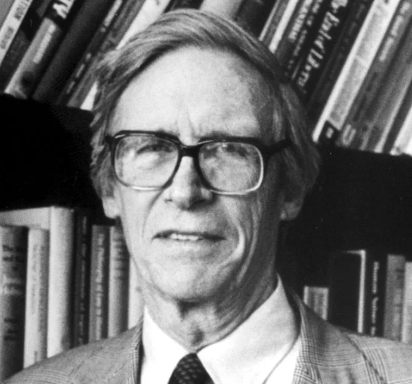
It may be expedient but it is not just that some should have less in order that others may prosper.
▼
Source
Chapter I, Section 3, pg. 15
5 months ago
The mind of man will never be able to contemplate the being, perfections, and providence of God without meeting with inexplicable difficulties. We may find sufficient reason for acquiescing in the darkness which involves these great subjects, but we must never expect to see them set in a perfectly clear light. But notwithstanding this, we may know enough of the divine being, and of his moral government, to make us much better and happier beings than we could be without such knowledge; and even the consideration of the insuperable difficulties referred to above is not without its use, as it tends to impress the mind with sentiments of reverence, humility, and submission.
▼
Source
Vol. I : Preface (1772)

5 months ago
But what has been the experience of the Russian socialist movement up to now? The most important and fruitful changes in its tactical policy during the last ten years have not been the inventions of several leaders and even less so of any central organizational organs. They have always been the spontaneous product of the movement in ferment.
5 months ago
When we are young, we take a certain pleasure in our infirmities. They seem so new, so rich! With age, they no longer surprise us, we know them too well. Now, without anything unexpected in them, they do not deserve to be endured.
5 months ago
The more I reflect on it, the more I must admire how completely nature had taught him; how completely he was devoted to his work, to the task of his life, and content to let all pass by unheeded that had not relation to this. It is a singular fact, for example, that though a man of such openness and clearness, he had never, I believe, read three pages of Burns's poems. Not even when all about him became noisy and enthusiastic, I the loudest, on that matter, did he feel it worth while to renew his investigation of it, or once turn his face towards it. The poetry he liked (he did not call it poetry) was truth, and the wisdom of reality. Burns, indeed, could have done nothing for him. As high a greatness hung over his world as over that of Burns — the ever-present greatness of the Infinite itself. Neither was he, like Burns, called to rebel against the world, but to labor patiently at his task there, uniting the possible with the necessary to bring out the real, wherein also lay an ideal.
5 months ago
Clearly when the liberties are left unrestricted they collide with one another.
▼
Source
Chapter IV, Section 32, p. 203
5 months ago
A grain of poetry suffices to season a century.
▼
Source
Dedication of the Statue of Liberty (1887)

5 months ago
If I had but a garden for a bower Wherein the roses of Damascus flower, How happy, with the Luzumiyat in hand, To pass the afternoon and sunset hour!
▼
Source
Clinton Scollard
5 months ago
Correct and accurate conclusions may be arrived at if we carefully observe the relation of the spheres of concepts, and only conclude that one sphere is contained in a third sphere, when we have clearly seen that this first sphere is contained in a second, which in its turn is contained in the third. On the other hand, the art of sophistry lies in casting only a superficial glance at the relations of the spheres of the concepts, and then manipulating these relations to suit our purposes, generally in the following way: — When the sphere of an observed concept lies partly within that of another concept, and partly within a third altogether different sphere, we treat it as if it lay entirely within the one or the other, as may suit our purpose.
▼
Source
Vol. I, Ch. 10, as translated by R. B. Haldane
5 months ago
Once we reject lyricism, to blacken a page becomes an ordeal: what's the use of writing in order to say exactly what we had to say?
5 months ago
As a literary artist he has great merits, beginning with the main one that he never wrote one dull line. How well-read, how adroit, what thousand arts in his one art of writing.
▼
Source
Ralph Waldo Emerson, in the introduction to Past and Present (1843).
5 months ago
No pleasure is in itself evil, but the things which produce certain pleasures entail annoyances many times greater than the pleasures themselves. (8)
▼
Source
Variant translation: No pleasure is itself a bad thing, but the things that produce some kinds of pleasure, bring along with them unpleasantness that is much greater than the pleasure itself.
5 months ago
What-is was not generated from what-is-not, because what-is-not cannot give rise to anything in addition to itself. This is the first enunciation of the principle "out of nothing, nothing comes to be,"? which was implicit in earlier Greek thought even as far back as Hesiod and which afterwards, because of Parmenides, became a touchstone for subsequent Greek cosmogonies.These arguments show that coming to be from what-is-not is impossible, which is... relevant in the first stage of a cosmogony. The arguments say nothing of more familiar cases of coming to be, which can be described in terms of changes among already existing things.
▼
Source
, Philosophy Before Socrates: An Introduction with Texts and Commentary Ch. 11. Parmenides of Elea, 11.8 LINES 12—13: ARGUMENT 3, p. 160. Footnote: This principle is frequently given in its Latin form, ex nihilo nihil fit.
5 months ago
Once I reveled in a destiny like no other joy I'd known: when the warden — reading my death sentence — wept.
▼
Source
I (Yo soy un hombre sincero) as translated by Esther Allen in José Martí : Selected Writings (2002), p. 273

5 months ago
The one thing we can say is that if Socrates really expected to get a definitive answer to his question, 'What is justice?' when talking to his friends on their way back to the Piraeus, he has been disappointed. It remains a contentious and disputed subject.
5 months ago
A man’s body and the needs of his body are now everywhere treated with a tender indulgence. Is the thinking mind then, to be the only thing that is never to obtain the slightest measure of consideration or protection, to say nothing of respect?
▼
Source
“On Noise”
5 months ago
Fear is the antidote to boredom: the remedy must be stronger than the disease.
5 months ago
The translation of "Wilhelm Meister," in 1824,[A] was the first real introduction of Goethe to the reading world of Great Britain. It appeared without the name of the translator, but its merits were too palpable to be overlooked, though some critics objected to the strong infusion of German phraseology which had been imported into the English version. This acquired idiom never left our author, even in his original works, although the "Life of Schiller," written but a few months before, is almost entirely free from the peculiarity.
▼
Source
With White, Andrew Dickson. [https://ia600302.us.archive.org/33/items/cu31924029541640/cu31924029541640.pdf On the Choice of Books: The Inaugural Address of Thomas Carlyle, Lord Rector of the University of Edinburgh, Reprinted From the Times, With Additio
5 months ago
Justice respects man as living in society, and is the common bond without which no society can subsist.
5 months ago
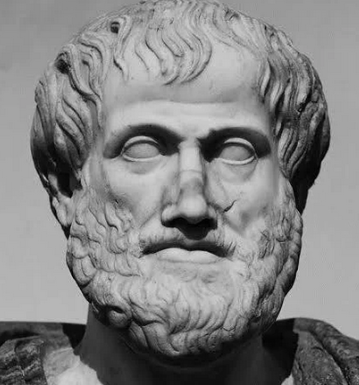
This opinion... appears to be ancient... that the one, excess and defect, are the principles of things... It is not... probable that there are more than three principles... [E]ssence is one certain genus of being: so that principles will differ from each other in prior and posterior alone, but not in genus, for in one genus there is always one contrariety, and all contrarieties appear to be referred to one. That there is neither one element, therefore, nor more than two or three, is evident.
▼
Source
Book I, Ch. VII, pp. 62-63.
5 months ago
Every human being has within him an ideal man, just as every piece of marble contains in a rough state a statue as beautiful as the one that Praxiteles the Greek made of the god Apollo.
5 months ago
A vine bears three grapes, the first of pleasure, the second of drunkenness, and the third of repentance.
▼
Source
As quoted in Diogenes Laertius, The Lives and Opinions of Eminent Philosophers, Chapter "Life of Anacharsis", 1702 edition, John Nicholson, p. 55.
5 months ago
The discovery of truth is prevented more effectively, not by the false appearance things present and which mislead into error, not directly by weakness of the reasoning powers, but by preconceived opinion, by prejudice.
▼
Source
Vol. 2, Ch. 1, § 17
5 months ago
God is what survives the evidence that nothing deserves to be thought.
5 months ago
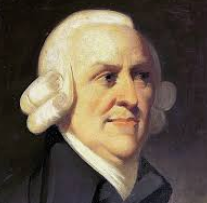
In every part of the universe we observe means adjusted with the nicest artifice to the ends which they are intended to produce; and in the mechanism of a plant, or animal body, admire how every thing is contrived for advancing the two great purposes of nature, the support of the individual, and the propagation of the species.
▼
Source
Section II, [https://knarf.english.upenn.edu/Smith/tms223.html Chap. III].
5 months ago
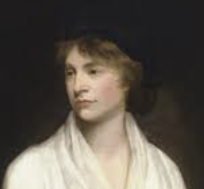
The rights and duties of man thus simplified, it seems almost impertinent to attempt to illustrate truths that appear so incontrovertible: yet such deeply rooted prejudices have clouded reason, and such spurious qualities have assumed the name of virtues, that it is necessary to pursue the course of reason as it has been perplexed and involved in error, by various adventitious circumstances, comparing the simple axiom with casual deviations.Men, in general, seem to employ their reason to justify prejudices, which they have imbibed, they cannot trace how, rather than to root them out. The mind must be strong that resolutely forms its own principles; for a kind of intellectual cowardice prevails which makes many men shrink from the task, or only do it by halves. Yet the imperfect conclusions thus drawn, are frequently very plausible, because they are built on partial experience, on just, though narrow, views.
▼
Source
Ch. 1
5 months ago
Out-of-date theories are not in principle unscientific because they have been discarded. That choice, however, makes it difficult to see scientific development as a process of accretion.

5 months ago
To affirm that humans thrive in many different ways is not to deny that there are universal human values. Nor is it to reject the claim that there should be universal human rights. It is to deny that universal values can only be fully realized in a universal regime. Human rights can be respected in a variety of regimes, liberal and otherwise. Universal human rights are not an ideal constitution for a single regime throughout the world, but a set of minimum standards for peaceful coexistence among regimes that will always remain different.
▼
Source
Two Faces of Liberalism (New Press, 2000, . 168 pages), ch. 1: Liberal Toleration (p. 21)
5 months ago
All men by nature desire to know. An indication of this is the delight we take in our senses; for even apart from their usefulness they are loved for themselves; and above all others the sense of sight. For not only with a view to action, but even when we are not going to do anything, we prefer sight to almost everything else. The reason is that this, most of all the senses, makes us know and brings to light many differences between things.
▼
Source
Metaphysics Book I, 980a.21: Opening paragraph of Metaphysics | Variant: All men by nature desire knowledge. | The first sentence is in the Oxford Dictionary of Scientific Quotations (2005), 21:10
5 months ago
Shouldn’t I join the ranks of philosophers and merely make unsubstantiated claims about the wonders of human consciousness? Shouldn’t I stop trying to do some science and keep my head down? Indeed not.
▼
Source
in Hendricks, V: “Feisty Fragments for Philosophy”, King’s College Publications, London,2004.

5 months ago
Jails and prisons are designed to break human beings, to convert the population into specimens in a zoo - obedient to our keepers, but dangerous to each other. In response, imprisoned men and women will invent and continually invoke various and sundry defenses. Consequently, two layers of existence can be encountered within almost every jail or prison. The first layer consists of the routines and behavior prescribed by the governing penal hierarchy. The second layer is the prisoner culture itself: the rules and standards of behavior that come from and are defined by the captives in order to shield themselves from the open or covert terror designed to break their spirits.
▼
Source
Chapter One, p. 53.
5 months ago
If you try to imagine, as nearly as you can, what an amount of misery, pain and suffering of every kind the sun shines upon in its course, you will admit that it would be much better if, on the earth as little as on the moon, the sun were able to call forth the phenomena of life; and if, here as there, the surface were still in a crystalline state.
▼
Source
"On the Sufferings of the World"
5 months ago
The only profound thinkers are the ones who do not suffer from a sense of the ridiculous.
CivilSimian.com created by AxiomaticPanic, CivilSimian, Kalokagathia