
4 months 3 weeks ago
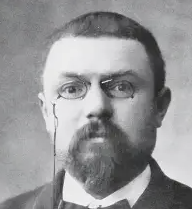
Is the position tenable, that certain phenomena, possible in Euclidean space, would be impossible in non-Euclidean space, so that experience, in establishing these phenomena, would directly contradict the non-Euclidean hypothesis? For my part I think no such question can be put. To my mind it is precisely equivalent to the following, whose absurdity is patent to all eyes: are there lengths expressible in meters and centimeters, but which can not be measured in fathoms, feet, and inches, so that experience, in ascertaining the existence of these lengths, would directly contradict the hypothesis that there are fathoms divided into six feet?
▼
Source
Ch. V: Experiment and Geometry (1905) [https://books.google.com/books?id=5nQSAAAAYAAJ Tr.] George Bruce Halstead
4 months 3 weeks ago
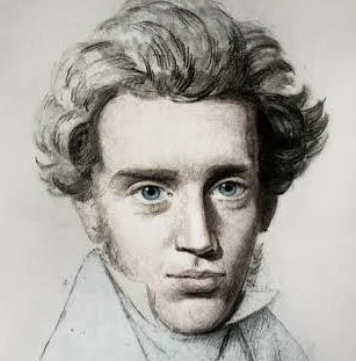
Seek first God's Kingdom, that is, become like the lilies and the birds, become perfectly silent — then shall the rest be added unto you.
▼
Source
The Lilies of the Field and the Birds of the Air (1849) | Alluding to words spoken by Jesus in the Sermon on the Mount
4 months 3 weeks ago
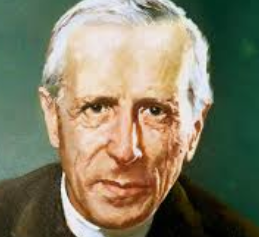
As a result of changes which, over the last century, have modified our empirically based pictures of the world and hence the moral value of many of its elements, the "human religious ideal" inclines to stress certain tendencies and to express itself in terms which seem, at first sight, no longer to coincide with the "christian religious ideal".
▼
Source
Preface, p. 43
4 months 3 weeks ago
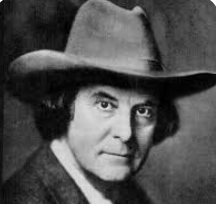
Woman's inaptitude for reasoning has not prevented her from arriving at truth; nor has man's ability to reason prevented him from floundering in absurdity.

4 months 3 weeks ago
To live one's love and hatred, to live that which one is means defeat, resignation, and death. The crimes of society, the hell that man has made or man become unconquerable cosmic forces.
▼
Source
p. 61
4 months 3 weeks ago
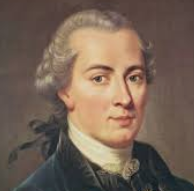
Since the narrower or wider community of the peoples of the earth has developed so far that a violation of rights in one place is felt throughout the world, the idea of a cosmopolitan right is not fantastical, high-flown or exaggerated notion. It is a complement to the unwritten code of the civil and international law, necessary for the public rights of mankind in general and thus for the realization of perpetual peace.
▼
Source
Perpetual Peace: A Philosophical Sketch (1795)
4 months 3 weeks ago
It is only through science and art that civilization is of value. Some have wondered at the formula: science for its own sake; an yet it is as good as life for its own sake, if life is only misery; and even as happiness for its own sake, if we do not believe that all pleasures are of the same quality...Every act should have an aim. We must suffer, we must work, we must pay for our place at the game, but this is for seeing's sake; or at the very least that others may one day see.
4 months 3 weeks ago
There was a time, and not so long ago, when one could score a success also here with a bit of irony, which compensated for all other deficiencies and helped one get through the world rather respectably, gave one the appearance of being cultured, of having a perspective on life, an understanding of the world, and to the initiated marked one as a member of an extensive intellectual freemasonry. Occasionally we still meet a representative of that vanished age who has preserved that subtle, sententious, equivocally divulging smile, that air of an intellectual courtier with which he has made his fortune in his youth and upon which he had built his whole future in the hope that he had overcome the world. Ah, but it was an illusion! His watchful eye looks in vain for a kindred soul, and if his days of glory were not still a fresh memory for a few, his facial expression would be a riddle to the contemporary age, in which he lives as a stranger and foreigner. Our age demands more; it demands, if not lofty pathos then at least loud pathos, if not speculation then at least conclusions, if not truth then at least persuasion, if not integrity then at least protestations of integrity, if not feeling then at least verbosity of feelings. Therefore it also coins a totally different kind of privileged faces. It will not allow the mouth to be defiantly compressed or the upper lip to quiver mischievously; it demands that the mouth be open, for how, indeed, could one imagine a true and genuine patriot who is not delivering speeches; how could one visualize a profound thinker's dogmatic face without a mouth able to swallow the whole world; how could one picture a virtuoso on the cornucopia of the living world without a gaping mouth? It does not permit one to stand still and to concentrate; to walk slowly is already suspicious; and how could one even put up with anything like that in the stirring period in which we live, in this momentous age, which all agree is pregnant with the extraordinary? It hates isolation; indeed, how could it tolerate a person's having the daft idea of going through life alone-this age that hand in hand and arm in arm (just like itinerant journeymen and soldiers) lives for the idea of community.
▼
Source
p. 246-247
4 months 3 weeks ago
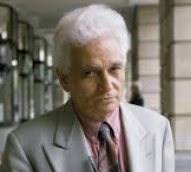
Amy Kofman: Have you read all the books in here?Derrida: No, only four of them. But I read those very, very carefully.
▼
Source
Derrida (2003 documentary), referring to his personal library
4 months 3 weeks ago
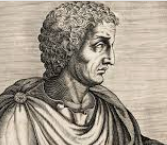
The human features and countenance, although composed of but some ten parts or little more, are so fashioned that among so many thousands of men there are no two in existence who cannot be distinguished from one another.
▼
Source
Book VII, sec. 8.
4 months 3 weeks ago
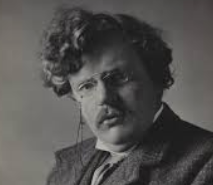
Impartiality is a pompous name for indifference, which is an elegant name for ignorance.
▼
Source
The Speaker (15 December 1900)
4 months 3 weeks ago
Many, and I think the determining, constitutive facts remain outside the reach of the operational concept. And by virtue of this limitation—this methodological injunction against transitive concepts which might show the facts in their true light and call them by their true name—the descriptive analysis of the facts blocks the apprehension of facts and becomes an element of the ideology that sustains the facts. Proclaiming the existing social reality as its own norm, this sociology fortifies in the individuals the “faithless faith” in the reality whose victims they are.
▼
Source
p. 119
4 months 3 weeks ago
Several actual worlds without one another are not, therefore, impossible by the very concept, as Wolf hastily concluded from the notion of a complex or multiplicity which he deemed sufficient to a whole, as such, but only on condition that there exist but one necessary cause of all things. If several are admitted, several worlds without one another will be possible in the strictest metaphysical sense.
4 months 3 weeks ago
Anxiety may be compared with dizziness. He whose eye happens to look down into the yawning abyss becomes dizzy. But what is the reason for this? It is just as much in his own eye as in the abyss, for suppose he had not looked down. Hence, anxiety is the dizziness of freedom, which emerges when the spirit wants to posit the synthesis and freedom looks down into its own possibility, laying hold of finiteness to support itself. Freedom succumbs to dizziness. Further than this, psychology cannot and will not go. In that very moment everything is changed, and freedom, when it again rises, sees that it is guilty. Between these two moments lies the leap, which no science has explained and which no science can explain. He who becomes guilty in anxiety becomes as ambiguously guilty as it is possible to become.
▼
Source
p. 61
4 months 3 weeks ago
Is the intellect to be regarded as autonomous and self-sufficient, as pursuing ends of its own, and as judging by standards of its own? or is it to be regarded as the servant of alien interests which impose their ends and standards upon it? The modern tendency has been towards the latter or practical interpretation of the knowing faculties.
4 months 3 weeks ago
A change of opinions is almost unknown in an elderly military man.
▼
Source
A Utopia of Usurers (1917)
4 months 3 weeks ago
Critical theory was sometimes teased for its aristocratic components, its disinclination to praise popular culture, jazz or Americanism, its sometimes overwhelming sense of cultural pessimism, and all these sentiments echo the larger and older traditions of aristocratic radicalism, for which the old world, in general, was better than the brashness and shock of the new. The European critique of modernity was born as a critique of the mass, mass society, mass production, mass migration, the mass man, the image of life based on the factory, on its regimentation and yesmen, the conformism of following orders. This was also Marcuse’s anxiety into the 1960s – that the lucid or erotic components of being had been submerged into dull regimes of compliance, consumption, and getting on. Perhaps this was the moment when sociology began to shifts its focus from the realm of production to that of consumption. Gramsci had already anticipated the cultural turn in marxian thirty years earlier.Marcuse was not the only high-profile critical theorist, though the fact that he remained in the USA after Horkheimer and Adorno returned to Germany placed him strategically to be more significantly influential into the 1960s. More, he wrote in jeremiad form, unlike the laconic and dense Adorno, anticipating, in this sense, the later popularity of Zygmunt Bauman, another critical Cassandra figure. The second generation of critical theory became associated especially with the work and figure of Jürgen Habermas, who turned back to the inspiration of Kantian universalism. Where Marcuse saw systemic closure and frustration, Habermas saw possibilities for change, reform, and democratization. His early work drew together Marxian and Weberian themes and filaments, again seeking a critical theory with a practical or emancipatory intention in the manner of Marx.
▼
Source
Peter Beilharz, "The Marxist Legacy", in Routledge International Handbook of Contemporary Social and Political Theory (2011) edited by Gerard Delanty and Stephen P. Turner
4 months 3 weeks ago
Is it reasonable to assume a purposiveness in all the parts of nature and to deny it to the whole?
▼
Source
Seventh Thesis
4 months 3 weeks ago
Lucid intervals and happy pauses.
▼
Source
History of King Henry VII, III (1622)
4 months 3 weeks ago
Mathematical Analysis is... the true rational basis of the whole system of our positive knowledge.
▼
Source
Bk. 1, chap. 1; as cited in: Robert Edouard Moritz. [https://archive.org/stream/memorabiliamathe00moriiala#page/81/mode/2up Memorabilia mathematica; or, The philomath's quotation-book], (1914), p. 224
4 months 3 weeks ago
Sin is man's destruction. Only the rust of sin can consume the soul-or eternally destroy it. For here indeed is the remarkable thing from which already that simple wise man of olden time derived a proof of the immortality of the soul, that the sickness of the soul (sin) is not like bodily sickness which kills the body. Sin is not a passage-way which a man has to pass through once, for from it one shall flee; sin is not (like suffering) the instant, but an eternal fall from the eternal, hence it is not ‘once’, and it cannot possibly be that its ‘once’ is no time. No, just as between the rich man in hell and Lazarus in Abraham's bosom there was a yawning gulf fixed, so is there also a yawning distinction between suffering and sin. Let us not confuse it, lest talk about suffering might become less frank-hearted, because it had also sin in mind, and this less frank-hearted talk might be boldly impudent inasmuch as it is talking this way about sin. This precisely is the Christian position, that there is this infinite distinction between evil and evil, as they are confusedly named; this precisely is the Christian characteristic, to talk of temporal sufferings ever more and more frank-heartedly, more triumphantly, more joyfully, because Christianity regarded, sin, and sin only, is destructive.
▼
Source
Søren Kierkegaard, Christian Discourses, The Joy of it – That We Suffer Only Once But Triumph Eternally. P. 108 Lowrie Translation 1961 Oxford University Press
4 months 3 weeks ago
The interpretation of a case is corroborated only by the successful continuation of a self-formative process, that is by the completion of self-reflection, and not in any unmistakable way by what the patient says or how he behaves
▼
Source
p. 266
4 months 3 weeks ago
We live in an age of artificial scarcity, maintained by ignorance and fear. The government has been paying farmers not to grow food for fifty years--while millions starve. Labor unions, business and government conspire to hold back the Microprocessor Revolution--because none of them know how to deal with the massive unemployment it will cause. (Fuller's books could tell them.) The utilities advertise continually that "solar power is at least forty years in the future" when my friend Karl Hess, and hundreds of others, already live in largely solar-powered houses. These propaganda advertisements are just a delaying action, because the utilities still haven't figured out how to put a meter between us and the sun.
▼
Source
Right Where You Are Sitting Now: Further Tales of the Illuminati. Berkeley, CA: Ronin Pub., 1993. p. 144.[http://books.google.com/books?id=ee8W8jQIQBQC&pg=PA144]
4 months 3 weeks ago
Every crusader is apt to go mad. He is haunted by the wickedness which he attributes to his enemies; it becomes in some sort a part of him.
▼
Source
Aldous Huxley, The Devils of Loudon Chatto & Windus, London, (1951), ch. 9, p. 274
4 months 3 weeks ago
Let me explain a little: Certain things are bad so far as they go, such as pain, and no one, not even a lunatic, calls a tooth-ache good in itself; but a knife which cuts clumsily and with difficulty is called a bad knife, which it certainly is not. It is only not so good as other knives to which men have grown accustomed. A knife is never bad except on such rare occasions as that in which it is neatly and scientifically planted in the middle of one's back. The coarsest and bluntest knife which ever broke a pencil into pieces instead of sharpening it is a good thing in so far as it is a knife. It would have appeared a miracle in the Stone Age. What we call a bad knife is a good knife not good enough for us; what we call a bad hat is a good hat not good enough for us; what we call bad cookery is good cookery not good enough for us; what we call a bad civilization is a good civilization not good enough for us. We choose to call the great mass of the history of mankind bad, not because it is bad, but because we are better. This is palpably an unfair principle. Ivory may not be so white as snow, but the whole Arctic continent does not make ivory black.
▼
Source
"Introduction"
4 months 3 weeks ago
Human reason is by nature architectonic.
▼
Source
B 502
4 months 3 weeks ago
They are ill discoverers that think there is no land, when they can see nothing but sea.
▼
Source
Book II, vii, 5
4 months 3 weeks ago
Editor’s Preface In this book, originating in the year 1848, the requirement for being a Christian is forced up by the pseudonymous author to the supreme ideality. Yet the requirement should indeed be stated, presented, and heard. From the Christian point of view, there ought to be no scaling down of the requirement, nor suppression of it-instead of a personal admission and confession. The requirement should be heard-and I understand what is said as spoken to me alone—so that I might learn not only to resort to grace but to resort to it in relation to the use of grace. S.K.
▼
Source
p. xii
4 months 3 weeks ago
Animals outline their territories with their excretions, humans outline their territories by ink excretions on paper.
▼
Source
Ch. 4 : The Anal Emotional Territiorial Circuit, p. 68
4 months 3 weeks ago
There has been a general trend in recent times toward a Unitarian mythology and the worship of one God. This is the tendency which it is customary to regard as spiritual progress. On what grounds? Chiefly, so far as one can see, because we in the Twentieth Century West are officially the worshippers of a single divinity. A movement whose consummation is Us must be progressive. Quod erat demonstrandum.
▼
Source
“One and Many,” p. 16
4 months 3 weeks ago
We are then able to answer in some manner the question, "Why have we no great men?" We have no great men chiefly because we are always looking for them. We are connoisseurs of greatness, and connoisseurs can never be great; we are fastidious, that is, we are small. When Diogenes went about with a lantern looking for an honest man, I am afraid he had very little time to be honest himself. And when anybody goes about on his hands and knees looking for a great man to worship, he is making sure that one man at any rate shall not be great.
▼
Source
Ch 1: "The Dickens Period"
4 months 3 weeks ago
Stuart was not dismayed by his sexual feelings about the boy.
▼
Source
The Good Apprentice (1985), p. 247.
4 months 3 weeks ago
The guidelines for achieving wisdom consist of three leading maxims: 1) Think for yourself; 2) (in communication with other people) Put yourself in the place of the other person; 3) Always think by remaining faithful to your own self.
▼
Source
Kant, Immanuel (1996), page 95
4 months 3 weeks ago
The human understanding when it has once adopted an opinion (either as being the received opinion or as being agreeable to itself) draws all things else to support and agree with it. And though there be a greater number and weight of instances to be found on the other side, yet these it either neglects and despises, or else by some distinction sets aside and rejects, in order that by this great and pernicious predetermination the authority of its former conclusions may remain inviolate.
▼
Source
Aphorism 46
4 months 3 weeks ago
As soon as the discourse is about a holy spirit, about believing in the holy spirit, how many do you think believe in that? Or when the discourse is about an evil spirit that should be renounced: how many do you think believe in such a thing? How can this be? Is it perhaps because the subject becomes too earnest when it is the holy spirit? For I can talk about, believe in, the spirit of the age, the spirit of the world, and the like and do not thereby need to think of anything specific. It is a kind of spirit, but I am not absolutely bound by what I say. And not being bound by what one says is highly prized.
▼
Source
Soren Kierkegaard, For Self-Examination, Hong p. 74
4 months 3 weeks ago
Logic is the last scientific ingredient of Philosophy; its extraction leaves behind only a confusion of non-scientific, pseudo problems.
▼
Source
p. 22
4 months 3 weeks ago
Christian philosophers have found no difficulty in justifying imperialism, war, the capitalist system, the use of torture, the censorship of the press and ecclesiastical tyrannies of every sort, from the tyranny of Rome to the tyrannies of Geneva and New England.
▼
Source
Ch. 14, p. 315 [2012 reprint]
4 months 3 weeks ago
We have passed the age of the demagogue, the man who has little to say and says it loud. We have come to the age of the mystagogue or don, the man who has nothing to say, but says it softly and impressively in an indistinct whisper.
▼
Source
"The Philosopher"
4 months 3 weeks ago
If the truth shall kill them, let them die.
▼
Source
Generally attributed to Kant on social media, this is actually from a quotation by Ayn Rand paraphrasing Kant. Cited in [http://books.google.com/books?id=d0tbAAAAMAAJ&q=%22If+the+truth+shall+kill+them,+let+them+die.%22&dq=%22If+the+truth+shall+kill+them,+
4 months 3 weeks ago
What then remains but that we still should cry Not to be born, or, being born, to die?
4 months 3 weeks ago
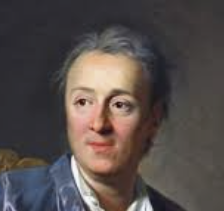
If you want me to believe in God, you must make me touch him.
▼
Source
Portraying a fictional conversation of Nicholas Saunderson with a priest, in ' Lettre sur les aveugles [Letter about the Blind] (1749), as quoted in Diderot and the Encyclopædists (1897) by John Morley, p. 92. Publication of this work resulted in Diderot
4 months 3 weeks ago
Kirk was an artist, a visionary, almost a prophet.
▼
Source
David Frum, “Russell Kirk” in The New Criterion (1994:16)
4 months 3 weeks ago
And suddenly I had an inkling of what it must feel like to be mad.
4 months 3 weeks ago
My friends, we will not go again or ape an ancient rage,Or stretch the folly of our youth to be the shame of age,
▼
Source
Ch. XXI: "The Road to Roundabout" ("The Rolling English Road", l. 19)
4 months 3 weeks ago
Superstition is more injurious to God than atheism.

4 months 3 weeks ago
What all these people are doing is not aggressive; they are inventing new possibilities of pleasure with strange parts of their body — through the eroticization of the body. I think it's ... a creative enterprise, which has as one of its main features what I call the desexualization of pleasure.
▼
Source
In reference to Sadism and Masochism, as quoted in Who's Who in Contemporary Gay & Lesbian History: From World War II to the Present Day (2001) by Robert Aldrich and Gary Wotherspoon

4 months 3 weeks ago
She was beautiful, with a beauty so severe and so solitary that at first it was startling. "Ah! If only there were two of me," she thought, "one doing the talking and one listening, one living and one watching, how I would love myself. I'd envy no one."
▼
Source
p. 5
4 months 3 weeks ago
By means of ever more effective methods of mind-manipulation, the democracies will change their nature; the quaint old forms— elections, parliaments, Supreme Courts and all the rest—will remain. The underlying substance will be a new kind of non-violent totalitarianism. All the traditional names, all the hallowed slogans will remain exactly what they were in the good old days. Democracy and freedom will be the theme of every broadcast and editorial—but democracy and freedom in a strictly Pickwickian sense. Meanwhile the ruling oligarchy and its highly trained elite of soldiers, policemen, thought-manufacturers and mind-manipulators will quietly run the show as they see fit.
▼
Source
Chapter 3, p. 25
4 months 3 weeks ago
Even the tyrant never rules by force alone; but mostly by fairy tales. And so it is with the modern tyrant, the great employer. The sight of a millionaire is seldom, in the ordinary sense, an enchanting sight: nevertheless, he is in his way an enchanter. As they say in the gushing articles about him in the magazines, he is a fascinating personality. So is a snake. At least he is fascinating to rabbits; and so is the millionaire to the rabbit-witted sort of people that ladies and gentlemen have allowed themselves to become.
▼
Source
p. 19
4 months 3 weeks ago
In any country where talent and virtue produce no advancement, money will be the national god. Its inhabitants will either have to possess money or make others believe that they do. Wealth will be the highest virtue, poverty the greatest vice. Those who have money will display it in every imaginable way. If their ostentation does not exceed their fortune, all will be well. But if their ostentation does exceed their fortune they will ruin themselves. In such a country, the greatest fortunes will vanish in the twinkling of an eye. Those who don't have money will ruin themselves with vain efforts to conceal their poverty. That is one kind of affluence: the outward sign of wealth for a small number, the mask of poverty for the majority, and a source of corruption for all.
CivilSimian.com created by AxiomaticPanic, CivilSimian, Kalokagathia