

4 months 4 weeks ago
Men, I say, never did believe idle songs, never risked their soul's life on allegories: men in all times, especially in early earnest times, have had an instinct for detecting quacks, for detesting quacks.
4 months 4 weeks ago
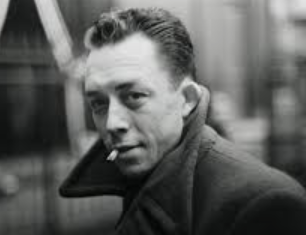
There is no fate that can not be surmounted by scorn. If the descent is thus sometimes performed in sorrow, it can also take place in joy. This word is not too much. Again I fancy Sisyphus returning toward his rock, and the sorrow was in the beginning.
4 months 4 weeks ago
They possess most gold and silver, by which war, like everything else, flourishes.
▼
Source
Book VI, 6.34; "they have abundance of gold and silver, and these make war, like other things, go smoothly" ([http://www.classicpersuasion.org/pw/thucydides/jthucbk6rv2.htm trans.] Benjamin Jowett)
4 months 4 weeks ago
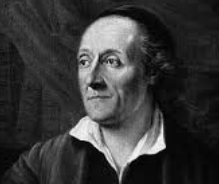
Say not you know another entirely, till you have divided an inheritance with him.
▼
Source
No. 157
4 months 4 weeks ago
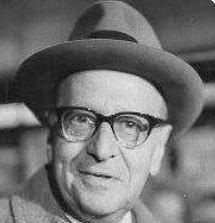
The pathfinders of modern thought did not derive what is good from the law. … Their role in history was not that of adapting their words and actions to the text of old documents or generally accepted doctrines: they themselves created the documents and brought about the acceptance of their doctrines.
▼
Source
p. 33.
4 months 4 weeks ago
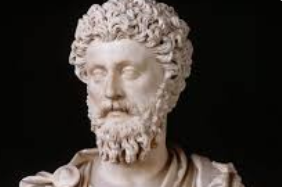
Words that everyone once used are now obsolete, and so are the men whose names were once on everyone's lips: Camillus, Caeso, Volesus, Dentatus, and to a lesser degree Scipio and Cato, and yes, even Augustus, Hadrian, and Antoninus are less spoken of now than they were in their own days. For all things fade away, become the stuff of legend, and are soon buried in oblivion. Mind you, this is true only for those who blazed once like bright stars in the firmament, but for the rest, as soon as a few clods of earth cover their corpses, they are 'out of sight, out of mind.' In the end, what would you gain from everlasting remembrance? Absolutely nothing. So what is left worth living for? This alone: justice in thought, goodness in action, speech that cannot deceive, and a disposition glad of whatever comes, welcoming it as necessary, as familiar, as flowing from the same source and fountain as yourself.
▼
Source
IV. 33, trans. Scot and David Hicks
4 months 4 weeks ago
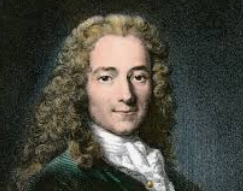
O unfortunates who sin without pleasure! in your errors be more reasonable ; be, at least, fortunate sinners. Since you must be damned, be damned for amiable faults.
▼
Source
p. 45
4 months 4 weeks ago
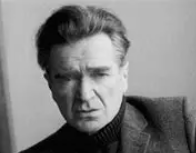
We replace God as best we can; for every god is good, provided he perpetuates in eternity our desire for a crucial solitude. . . .
4 months 4 weeks ago
We will not praise Mahomet's moral precepts as always of the superfinest sort; yet it can be said that there is always a tendency to good in them; that they are the true dictates of a heart aiming towards what is just and true.
4 months 4 weeks ago
The slave begins by demanding justice and ends by wanting to wear a crown. He must dominate in his turn.
4 months 4 weeks ago
Other incident throesThat nature's fragile vessel doth sustainIn life's uncertain voyage.
▼
Source
Timon, scene i
4 months 4 weeks ago
Every positive law, or every law simply and strictly so called, is set, directly or circuitously, by a sovereign person or body, to a member or members of the independent political society wherein that person or body is supreme.
▼
Source
p. 136-137
4 months 4 weeks ago
Philosophers and men of letters have done more for mankind than Orpheus, Hercules, or Theseus; for it is more meritorious and more difficult to wean men from their prejudices than to civilize the barbarian : It is harder to correct than to instruct.
▼
Source
p. 153
4 months 4 weeks ago
Each of us is born with a share of purity, predestined to be corrupted by our commerce with mankind, by that sin against solitude.
4 months 4 weeks ago
The built house seems all so fit,– everyway as it should be, as if it came there by its own law and the nature of things,– we forget the rude disorderly quarry it was shaped from. The very perfection of the house, as if Nature herself had made it, hides the builder's merit. Perfect, more perfect than any other man, we may call Shakspeare in this: he discerns, knows as by instinct, what condition he works under, what his materials are, what his own force and its relation to them is. It is not a transitory glance of insight that will suffice; it is deliberate illumination of the whole matter; it is a calmly seeing eye; a great intellect, in short. How a man, of some wide thing that he has witnessed, will construct a narrative, what kind of picture and delineation he will give of it,– is the best measure you could get of what intellect is in the man. Which circumstance is vital and shall stand prominent; which unessential, fit to be suppressed; where is the true beginning, the true sequence and ending? To find out this, you task the whole force of insight that is in the man. He must understand the thing; according to the depth of his understanding, will the fitness of his answer be.
4 months 4 weeks ago
In order to cease being a doubtful case, one has to cease being, that's all.
4 months 4 weeks ago
There is no disease so destructive as lust.
4 months 4 weeks ago
Everyone who achieves strives for totality, and the value of his achievement lies in that totality—that is, in the fact that the whole, undivided nature of a human being should be expressed in his achievement. But when determined by our society, as we see it today, achievement does not express a totality; it is completely fragmented and derivative. It is not uncommon for the community to be the site where a joint and covert struggle is waged against higher ambitions and more personal goals. ... The socially relevant achievement of the average person serves in the vast majority of cases to repress the original and nonderivative, inner aspirations of the human being.
4 months 4 weeks ago
My car and my adding machine understand nothing: they are not in that line of business.
4 months 4 weeks ago
Kuhn's revolution was not yet a Kuhnian revolution, although he dated his intention to write the book that became Structure to the time of his wrestle with Aristotle. What he needed was a historical exemplar. He found it in the Copernican revolution.
4 months 4 weeks ago
Nothing can be more contrary to religion and the clergy than reason and common sense.
▼
Source
Rien n'est plus contraire à la religion et au clergé qu'une tête sensée et raisonnable. — Paul-Henri Thiry, Baron d'Holbach, Théologie portative, ou Dictionnaire abrégé de la religion chrétienne (1768): Folie
4 months 4 weeks ago
The aphorism is cultivated only by those who have known fear in the midst of words, that fear of collapsing with all the words.
4 months 4 weeks ago
But this priviledge, is allayed by another; and that is, by the priviledge of Absurdity; to which no living creature is subject, but man only.
▼
Source
The First Part, Chapter 5, p. 20
4 months 4 weeks ago
The true University of these days is a Collection of Books.
4 months 4 weeks ago
All revolutions in modern times, Camus points out, have led to a reinforcement of the power of the State. "The strange and terrifying growth of the modern State can be considered as the logical conclusion of inordinate technical and philosophical ambitions, foreign to the true spirit of rebellion, but which nevertheless gave birth to the revolutionary spirit of our time. The prophetic dream of Marx and the over-inspired predictions of Hegel or of Nietzsche ended by conjuring up, after the city of God had been razed to the ground, a rational or irrational State, which in both cases, however, was founded on terror." --> ... The counterrevolutions of fascism only serve to reinforce the general argument. Camus shows the real quality of his thought in his final pages. It would have been easy, on the facts marshaled in this book, to have retreated into despair or inaction. Camus substitutes the idea of "limits." "We now know, at the end of this long inquiry into rebellion and nihilism, that rebellion with no other limits but historical expediency signifies unlimited slavery. To escape this fate, the revolutionary mind, if it wants to remain alive, must therefore, return again to the sources of rebellion and draw its inspiration from the only system of thought which is faithful to its origins: thought that recognizes limits." To illustrate his meaning Camus refers to syndicalism, that movement in politics which is based on the organic unity of the cell, and which is the negation of abstract and bureaucratic centralism. He quotes Tolain: "Les etres humains ne s'emancipent qu'au sein des groupes naturels" — human beings emancipate themselves only on the basis of natural groups. "The commune against the State... deliberate freedom against rational tyranny, finally altruistic individualism against the colonization of the masses, are, then, the contradictions that express once again the endless opposition of moderation to excess which has animated the history of the Occident since the time of the ancient world." This tradition of "mesure" belongs to the Mediterranean world, and has been destroyed by the excesses of German ideology and of Christian otherworldliness — by the denial of nature. Restraint is not the contrary of revolt. Revolt carries with it the very idea of restraint, and "moderation, born of rebellion, can only live by rebellion. It is a perpetual conflict, continually created and mastered by the intelligence.... Whatever we may do, excess will always keep its place in the heart of man, in the place where solitude is found. We all carry within us our places of exile, our crimes and our ravages. But our task is not to unleash them on the world; it is to fight them in ourselves and in others.
▼
Source
Sir Herbert Read, in his Foreword (1956), to The Rebel (1951)
4 months 4 weeks ago
Verily we know nothing. Truth is buried deep.
4 months 4 weeks ago
Anyone who attempts to gain a unified understanding of modern art as a whole is bound to suffer the uncomfortable sensation of having fallen into a thicket of brambles.
▼
Source
Chapter Three, The Testimony Of Modern Art, p. 37
4 months 4 weeks ago
Then arose the sect of the Gnostics—men who know — who laid claim to the possession of a perfect science, and who, if they were to be believed, had discovered the true formula for what philosophers called 'the Absolute.' But these speculative Gnostics were rejected by the conservative and orthodox Christians of their day as fiercely as their successors the Agnostics —men who don't know—are rejected by the orthodox in our own.
4 months 4 weeks ago
Doing what is for the good of the people, this must be the truest criterion of right government, in accordance with which the wise and good man will govern the affairs of his subjects. Just as the captain of a ship keeps watch for what is at any moment for the good of the vessel and the sailors, not by writing rules, but by making his science his law, and thus preserves his fellow voyagers, so may not a right government be established in the same way by men who could rule by this principle, making science more powerful than the laws? And whatever the wise rulers do, they can commit no error, so long as they maintain one great principle and by always dispensing absolute justice to them with wisdom and science are able to preserve the citizens and make them better than they were, so far as that is possible.
▼
Source
296d-297b
4 months 4 weeks ago
I am glad (sayes Eleutherius) to see the Vanity or Envy of the canting Chymists thus discover'd and chastis'd; and I could wish, that Learned Men would conspire together to make these deluding Writers sensible, that they must no longe[r] hope with Impunity to abuse the World. For whilst such Men are quietly permitted to publish Books with promising Titles, and therein to Assert what they please, and contradict others, and ev'n themselves as they please, with as little danger of being confuted as of being understood, they are encourag'd to get themselves a name, at the cost of the Readers, by finding that intelligent Men are wont for the reason newly mention'd, to let their Books and Them alone: And the ignorant and credulous (of which the number is still much greater then that of the other) are forward to admire most what they least understand.
4 months 4 weeks ago
The refutation of suicide: is it not inelegant to abandon a world which has so willingly put itself at the service of our melancholy?
4 months 4 weeks ago
That a man be willing, when others are so too, as farre-forth, as for Peace, and defence of himself he shall think it necessary, to lay down this right to all things; and be contented with so much liberty against other men, as he would allow other men against himself.
▼
Source
The First Part, Chapter 14, p. 64-65
4 months 4 weeks ago
To reconcile Despotism with Freedom:—well, is that such a mystery? Do you not already know the way? It is to make your Despotism just. Rigorous as Destiny; but just too, as Destiny and its Laws. The Laws of God: all men obey these, and have no 'Freedom' at all but in obeying them. The way is already known, part of the way;—and courage and some qualities are needed for walking on it!
4 months 4 weeks ago
In the weightiest matters we must go to school to the animals, and learn spinning and weaving from the spider, building from the swallow, singing from the birds,—from the swan and the nightingale, imitating their art.
4 months 4 weeks ago
The new world they envision is one in which liberal theories of the rule of law, the market economy, and individual rights—all of which evolved in the domestic context of national states such as Britain, the Netherlands, and America—are regarded as universal truths and considered the appropriate basis for an international regime that will make the independence of the national state unnecessary.
4 months 4 weeks ago
Now the code of life of the High Middle Ages said something entirely opposite to this: that it was precisely lack of leisure, an inability to be at leisure, that went together with idleness; that the restlessness of work-for-work's sake arose from nothing other than idleness. There is a curious connection in the fact that the restlessness of a self-destructive work-fanatacism should take its rise from the absence of a will to accomplish something.
▼
Source
p. 27
4 months 4 weeks ago
Socrates: Dear Pan and all the other Gods of this place, grant that I may be beautiful inside. Let all my external possessions be in friendly harmony with what is within. May I consider the wise man rich. As for gold, let me have as much as a moderate man could bear and carry with him. Do we need anything more, Phaedrus? For me that prayer is enough. Phaedrus: Let me also share in this prayer; for friends have all things in common.
▼
Source
279c
4 months 4 weeks ago
The influence of the new spirit... infused into the science by Boyle is seen in the general style of chemical literature at the end of the seventeenth century, when compared with that of the close of the sixteenth. The mysticism and obscurity of the alchemists were no longer tolerated.
4 months 4 weeks ago
For you who no longer possess it, freedom is everything, for us who do, it is merely an illusion.
4 months 4 weeks ago
For as there were Plants of Corn and Wine in small quantity Dispersed in the Fields and Woods, before men knew their vertue, or made use of them for their nourishment, or planted them apart in Fields,and also there have been divers true, generall, and profitable Speculations from the beginning; as being the naturall plants of humane Reason: But they were at first but few in number; men lived upon grosse Experience; there was no Method; that is to say, no Sowing, nor Planting of Knowledge by it self, apart from the Weeds, and common Plants of Errour and Conjecture: And the cause of it being the want of leasure from procuring the necessities of life, and defending themselves against their neighbours, it was impossible, till the erecting of great Common-wealths, it should be otherwise. Leisure is the mother of Philosophy; and Common-wealth, the mother of Peace, and Leisure: Where first were great and flourishing Cities, there was first the study of Philosophy.
▼
Source
The Fourth Part, Chapter 46, p. 368
4 months 4 weeks ago
Never till now, in the history of an Earth which to this hour nowhere refuses to grow corn if you will plough it, to yield shirts if you will spin and weave in it, did the mere manual two-handed worker (however it might fare with other workers) cry in vain for such "wages" as he means by "fair wages," namely food and warmth!
4 months 4 weeks ago
Today, empathetic intelligence entails sharing the sorrows of other sentient beings. In our posthuman future, will empathy consist entirely in sharing each other's joys?
▼
Source
[https://www.abolitionist.com/transhumanism/index.htm "What Is Empathetic Superintelligence?"] presentation, 29 Jan. 2011
4 months 4 weeks ago
To the eye of God there are no numbers: seeing all things at one time, he counts nothing.
▼
Source
As quoted in Physically Speaking: A Dictionary of Quotations on Physics and Astronomy (1997), p. 101.
4 months 4 weeks ago
A friend and a prudent friend, can help to shape a friend's decision. He does so by virtue of that love which makes the friend's problem his own, the friend's ego his own (so that after all it is not entirely "from outside"). For by virtue of that oneness which love can establish he is able to visualize the concrete situation calling for decision, visualize it from, as it were, the actual center of responsibility. Therefore it is possible for a friend - only for a friend and only for a prudent friend - to help with counsel and direction to shape a friend's decision or, somewhat in the manner of a judge, help to reshape it. Such geniune and prudent loving friendship (amor amicitiae) - which has nothing in common with sentimental intimacy, and indeed is rather imperiled by such intimacy - is the sine qua non for geniune spirtual guidance. For only this empowers another to offer the kind of direction which - almost! - conforms to the concrete situation in which the decision must be made.
4 months 4 weeks ago
The highest form of pure thought is in mathematics.
▼
Source
Also attributed on quote sites without a source, and can be found in some recent non-academic books but also without a source, and google books shows [https://www.google.com/search?q=%22highest+form+of+pure+thought%22&udm=36&tbs=cdr%3A1%2Ccd_min%3A1900%2C
4 months 4 weeks ago
Utopia is a mixture of childish rationalism and secularized angelism.
4 months 4 weeks ago
Tell me what kind of man governs a People, you tell me, with much exactness, what the net sum-total of social worth in that People has for some time been.
4 months 4 weeks ago
In future, nerve cell responsiveness to naturally occurring endogenous opioids can be increased via receptor enrichment in the brain too. In principle, we can modulate their lifelong "overexpression", intermittently heightened (or gently diminished) by whatever kinds of personal and environmental contingencies we judge fit. Both functionally and anatomically, our reward pathways can be made "bigger and better". But intelligent emotional self-mastery will involve re-engineering the mind-brain so we derive the most intense rewards from activities we deem most lastingly worthwhile: i.e. prioritising our higher-order desires over legacy first-order appetites. Natural selection has "encephalised" our emotions to benefit our genes. Rational agents can "re-encephalise" our emotions to benefit us.
▼
Source
"[https://www.superhappiness.com/ Utopian Neuroscience]", BLTC Research, 2019
4 months 4 weeks ago
All hereditary Government is in its nature tyranny. An heritable crown, or an heritable throne, or by what other fanciful name such things may be called, have no other significant explanation than that mankind are heritable property. To inherit a Government, is to inherit the people, as if they were flocks and herds.
▼
Source
The Rights of Man (1791)
4 months 4 weeks ago
The whole question of phenomena rests on the correct comprehension of old philosophies. Whither, then, should we turn, in our perplexity, but to the ancient sages, since, on the pretext of superstition, we are refused an explanation by the modern? Let us ask them what they know of genuine science and religion; not in the matter of mere details, but in all the broad conception of these twin truths — so strong in their unity, so weak when divided. Besides, we may find our profit in comparing this boasted modern science with ancient ignorance; this improved modern theology with the "Secret doctrines" of the ancient universal religion. Perhaps we may thus discover a neutral ground whence we can reach and profit by both. It is the Platonic philosophy, the most elaborate compend of the abstruse systems of old India, that can alone afford us this middle ground.
▼
Source
(Before the Veil, xi)
CivilSimian.com created by AxiomaticPanic, CivilSimian, Kalokagathia