
4 months 4 weeks ago
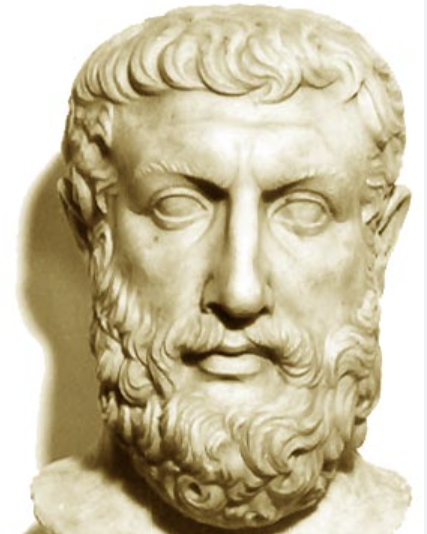
It is indifferent to me where I am to begin, for there shall I return again.
▼
Source
Frag. B 5, quoted by Proclus, Commentary on the Parmenides, 708
4 months 4 weeks ago
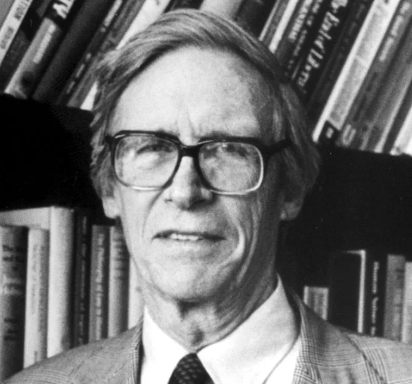
The extreme nature of dominant-end views is often concealed by the vagueness and ambiguity of the end proposed.
▼
Source
Chapter IX, Section 83, p. 554
4 months 4 weeks ago
To govern well, one must see things as they are.
4 months 4 weeks ago
If there exists one unique great imperial power which is always convinced that its most brutal interests coincide with the Good; if it is true that every year the USA spends more on their military budget than Russia, China, France, England and Germany put together; and if that Nation-State, devoted to military excess, has no public idol other than wealth, no allies other than servants, and no view of other peoples apart from an indifferent, commercial and cynical one; then the basic freedom of States, peoples and individuals consists in doing everything and thinking everything in order to escape, as much as possible, from the commandments, interventions and interference of that imperial power.
▼
Source
From Philosophy and the 'war against terrorism in Infinite Thought: truth and the return of philosophy. London: Continuum, 2003. .
4 months 4 weeks ago
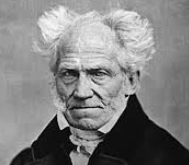
Boundless compassion for all living beings is the surest and most certain guarantee of pure moral conduct, and needs no casuistry. Whoever is filled with it will assuredly injure no one, do harm to no one, encroach on no man's rights; he will rather have regard for every one, forgive every one, help every one as far as he can, and all his actions will bear the stamp of justice and loving-kindness. … In former times the English plays used to finish with a petition for the King. The old Indian dramas close with these words: "May all living beings be delivered from pain." Tastes differ; but in my opinion there is no more beautiful prayer than this.
▼
Source
Part III, Ch. VIII, 4, [https://archive.org/stream/basisofmorality00schoiala#page/213/mode/2up pp. 213]-214 | First line often paraphrased as: Compassion is the basis of all morality.
4 months 4 weeks ago
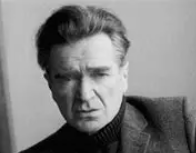
What are you waiting for in order to give up?

4 months 4 weeks ago
Perhaps I owe more to Thomas Carlyle than to any other writer. The philosophy of the "Sage of Chelsea" always appealed to me from the time I first opened Heroes and Hero Worship. Sartor Resartus is, I think, the book I would save from my library if my house was on fire and I could only escape with one book.
▼
Source
James Parker, contribution to 'Character Sketches. I—The Labour Party And The Books That Helped To Make It', The Review of Reviews, Vol. XXXIII (June 1906), p. 578
4 months 4 weeks ago
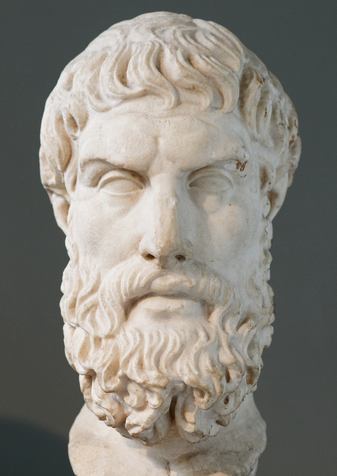
Pleasure, or pain, is not only good, or evil, in itself, but the measure of what is good or evil, in every object of desire or aversion; for the ultimate reason why we pursue one thing, and avoid another, is because we expect pleasure from the former, and apprehend pain from the latter. If we sometimes decline a present pleasure, it is not because we are averse to pleasure itself, but because we conceive, that in the present instance, it will be necessarily connected with a greater pain. In like manner, if we sometimes voluntarily submit to a present pain, it is because we judge that it is necessarily connected with a greater pleasure.
4 months 4 weeks ago
The great novelty in the poem of Parmenides is the method of argument. He... asks what is the common of all the views... and he finds... this is the existence of what is not. ...[C]an [this] be thought ...it cannot. If you think... you must think of something. Therefore there is no nothing. Philosophy had not yet learned to make the admission that a thing might be unthinkable and nevertheless exist. Only that can be which can be thought (fr. 5); for thought exists for the sake of what is (fr. 8, 34). ...[I]f we ... allow nothing but what we can understand, we come into direct conflict with the evidence of our senses, ...a world of change and decay. So much the worse for the senses, says Parmenides.
4 months 4 weeks ago
We are free, but not to be evil, not to be indifferent to human suffering, not to profit from the people, from the work created and sustained through their spirit of political association, while refusing to contribute to the political state that we profit from. We must say no once more. Man is not free to watch impassively the enslavement and dishonor of men, nor their struggles for liberty and honor.
4 months 4 weeks ago
Islam is the first school of social thought that recognizes the masses as the basis, the fundamental and conscious factor in determining history and society not the elect as Nietzsche thought, not the aristocracy and nobility as Plato claimed, nor great personalities as Carlyle and Emerson believed, not those of pure blood as Alexis Carrel imagined, not the priests or the intellectuals, but the masses.
▼
Source
p. 49; as cited in: Ali Mirsepassi (2000) Intellectual Discourse and the Politics of Modernization, p. 126.
4 months 4 weeks ago
The result of this mental dullness is that inner vacuity and emptiness that is stamped on innumerable faces and also betrays itself in a constant and lively attention to all events in the external world, even the most trivial. This vacuity is the real source of boredom and always craves for external excitement in order to set the mind and spirits in motion through something. Therefore in the choice thereof it is not fastidious, as is testified by the miserable and wretched pastimes to which people have recourse. … The principal result of this inner vacuity is the craze for society, diversion, amusement, and luxury of every kind which lead many to extravagance and so to misery. Nothing protects us so surely from this wrong turning as inner wealth, the wealth of the mind, for the more eminent it becomes, the less room does it leave for boredom. The inexhaustible activity of ideas, their constantly renewed play with the manifold phenomena of the inner and outer worlds, the power and urge always to make different combinations of them, all these put the eminent mind, apart from moments of relaxation, quite beyond the reach of boredom.
▼
Source
E. Payne, trans. (1974) Vol. 1, pp. 329–330
4 months 4 weeks ago
"What do you do from morning to night?" "I endure myself."
4 months 4 weeks ago
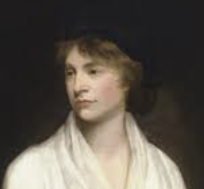
Nothing, I am sure, calls forth the faculties so much as the being obliged to struggle with the world; and this is not a woman's province in a married state. Her sphere of action is not large, and if she is not taught to look into her own heart, how trivial are her occupations and pursuits! What little arts engross and narrow her mind!
▼
Source
Thoughts on the Education of Daughters (1787), "Matrimony", p. 100
4 months 4 weeks ago
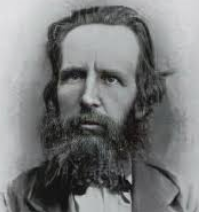
The longer I live, the more I feel that the simplest formula for the constancy of my fate is: on a lost watch.
▼
Source
Quoted by Harry Slochower in "Julius Bahnsen, Philosopher of Heroic Despair, 1830-1881" (1932), The Philosophical Review, 41(4), p. 372
4 months 4 weeks ago
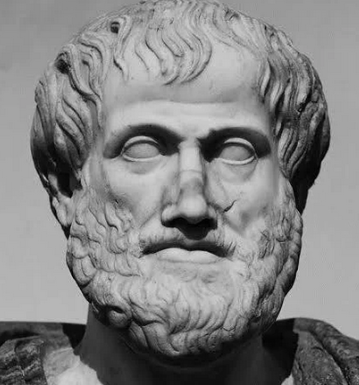
The infinite... happens to subsist in a way contrary to what is asserted by others: for the infinite is not that beyond which there is nothing, but it is that of which there is always something beyond. ...But that pertaining to which there is nothing beyond is perfect and whole. ...that of which nothing is absent pertaining to the parts ...the whole is that pertaining to which there is nothing beyond. But that pertaining to which something external is absent, that is not all ...But nothing is perfect which has not an end; and the end is a bound. On this account... Parmenides spoke better than Melissus: for the latter says that the infinite is a whole; but the former, that the whole is finite, and equally balanced from the middle: for to conjoin the infinite with the universe and the whole, is not to connect line with line.
▼
Source
Book III, Ch. IX, pp. 168-169.

4 months 4 weeks ago
My decision to join the Communist party emanated from my belief that the only true path of liberation for black people is the one that leads toward a complete and total overthrow of the capitalist class in this country and all its manifold institutional appendages which insure its ability to exploit the masses and enslave black people.
▼
Source
p. 483
4 months 4 weeks ago
A man’s face as a rule says more, and more interesting things, than his mouth, for it is a compendium of everything his mouth will ever say, in that it is the monogram of all this man’s thoughts and aspirations.
▼
Source
Vol. 2, Ch. 29, § 377
4 months 4 weeks ago
Impossible to accede to truth by opinions, for each opinion is only a mad perspective of reality.
4 months 4 weeks ago
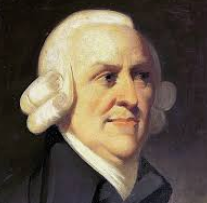
The virtue of frugality lies in a middle between avarice and profusion, of which the one consists in an excess, the other in a defect of the proper attention to the objects of self–interest.
▼
Source
Section II, Chap. I.
4 months 4 weeks ago
The preposterous distinction of rank, which render civilization a curse, by dividing the world between voluptuous tyrants and cunning envious dependents, corrupt, almost equally, every class of people, because respectability is not attached to the discharge of the relative duties of life, but to the station, and when the duties are not fulfilled, the affections cannot gain sufficient strength to fortify the virtue of which they are the natural reward. Still there are some loop-holes out of which a man may creep, and dare to think and act for himself; but for a woman it is an herculean task, because she has difficulties peculiar to her sex to overcome, which require almost super-human powers.
▼
Source
Ch. 9
4 months 4 weeks ago
By now it may be clear that the position I'm developing is a sort of post-Darwinian Kantianism.
▼
Source
p. 104; from "The Road since Structure" (1990)

4 months 4 weeks ago
If we are to put interrogators to work in defence of liberal values, their role in the community must receive proper recognition. They will require intensive counselling to overcome the inevitable traumas that this difficult work involves. They must be enabled to see themselves as dedicated workers in the cause of progress. Psychotherapy must be available to help them avoid the negative self-image from which some torturers have suffered in the past.
4 months 4 weeks ago
Scientists try to eliminate their false theories, they try to let them die in their stead. The believer—whether animal or man—perishes with his false beliefs.
▼
Source
Epistemology Without A Knowing Subject (1967)
4 months 4 weeks ago
Understand that all the evils from which you suffer, you yourselves cause by yielding to the suggestions by which emperors, kings, members of parliament, governors, officers, capitalists, priests, authors, artists, and all who need this fraud of patriotism in order to live upon your labour, deceive you!
▼
Source
Patriotism and Government
4 months 4 weeks ago
An exoteric book contains then two teachings: a popular teaching of an edifying character, which is in the foreground; and a philosophic teaching concerning the most important subject, which is indicated only between the lines.
▼
Source
p. 36
4 months 4 weeks ago
The third kind of life is the life of contemplation.
▼
Source
(Bk. 1, Chapter III)
4 months 4 weeks ago
On the whole, people tend to take prisons for granted. It is difficult to imagine life without them At the same time, there is reluctance to face the realities hidden within them, a fear of thinking about what happens inside them. Thus, the prison is present in our lives and, at the same time, it is absent from our lives. To think about this simultaneous presence and absence is to begin to acknowledge the part played by ideology in shaping the way we interact with our social surroundings. We take prisons for granted but are often afraid to face the realities they produce.
▼
Source
Chapter One
4 months 4 weeks ago
A man who has no mental needs, because his intellect is of the narrow and normal amount, is, in the strict sense of the word, what is called a philistine.
▼
Source
Personality; or, What a Man Is
4 months 4 weeks ago
Old age, after all, is merely the punishment for having lived.
4 months 4 weeks ago
Our merchants and master-manufacturers complain much of the bad effects of high wages in raising the price, and thereby lessening the sale of their goods both at home and abroad. They say nothing concerning the bad effects of high profits. They are silent with regard to the pernicious effects of their own gains. They complain only of those of other people.
▼
Source
Chapter IX, p. 117.
4 months 4 weeks ago
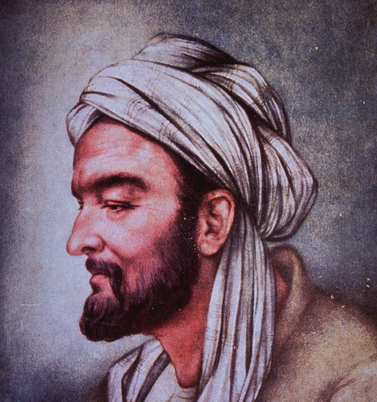
I prefer a short life with width to a narrow one with length.
▼
Source
As quoted in [http://books.google.com.bh/books?id=B8k3fsvGRyEC&lpg=PA85&dq=I%20prefer%20a%20short%20life%20with%20width%20to%20a%20narrow%20one%20with%20length&pg=PA85#v=onepage&q=I%20prefer%20a%20short%20life%20with%20width%20to%20a%20narrow%20one%20with
4 months 4 weeks ago
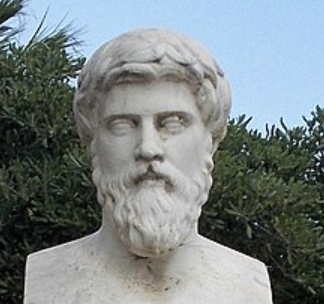
Phocion compared the speeches of Leosthenes to cypress-trees. "They are tall," said he, "and comely, but bear no fruit."
▼
Source
56 Phocion
4 months 4 weeks ago
From a Darwinian point of view, human beliefs are adaptations to our part of the world. No doubt much of what we believe must be roughly accurate, or else we would not have survived. But the beliefs we have evolved might latch on to the world only enough to help us stumble our way through it, and then only for the time being. Human belief-systems could be useful illusions, appearing and disappearing as they prove to be more or less advantageous in the random walk of natural selection. Might not evolution be one of these illusions? Scientific naturalism is the theory that human beliefs are evolutionary adaptations whose survival has nothing to do with their truth. But in that case scientific naturalism is self-defeating, since on its own premises scientific theories cannot be known to be true.
▼
Source
Cross-correspondences (p. 69)
4 months 4 weeks ago
I believe that there is, from the ethical point of view, no symmetry between suffering and happiness, or between pain and pleasure. Both the greatest happiness principle of the Utilitarians and Kant's principle 'Promote other people's happiness ..' seem to me (at least in their formulations) wrong on this point which, however, is not completely decidable by rational argument. (For the irrational aspect of ethical beliefs, see note 11 to the present chapter, and for the rational aspect, sections II and especially III of chapter 24). In my opinion (cp. note 6 (2) to chapter 5) human suffering makes a direct moral appeal, namely, the appeal for help, while there is no similar call to increase the happiness of a man who is doing well anyway. (A further criticism of the Utilitarian formula 'Maximize pleasure' is that it assumes, in principle, a continuous pleasure-pain scale which allows us to treat degrees of pain as negative degrees of pleasure. But, from the moral point of view, pain cannot be outweighed by pleasure, and especially not one man's pain by another man's pleasure. Instead of the greatest happiness for the greatest number, one should demand, more modestly, the least amount of avoidable suffering for all; and further, that unavoidable suffering—such as hunger in times of an unavoidable shortage of food—should be distributed as equally as possible.)
▼
Source
Vol. 1, Notes to the Chapters: Ch. 9, Note 2.
4 months 4 weeks ago
To attain this end we must secure a preponderance of virtue over vice and must endeavor to secure that the honest man may, even in this world, receive a lasting reward for his virtue. But in these great endeavors we are gravely hampered by the political institutions of today. What is to be done in these circumstances? To favor revolutions, overthrow everything, repel force by force?... No! We are very far from that. Every violent reform deserves censure, for it quite fails to remedy evil while men remain what they are, and also because wisdom needs no violence.
▼
Source
Book V, Ch. 7
4 months 4 weeks ago
The philosopher is ultimately compelled to transcend not merely the dimensions of common opinion, of political opinion, but the dimension of political life as such; for he is left to realize that the ultimate aim of political life cannot be reached by political life, but only by a life devoted to contemplation, to philosophy.
▼
Source
p. 91
4 months 4 weeks ago
Evils draw men together.
▼
Source
Book I, 1362b.39: quoting a proverb
4 months 4 weeks ago
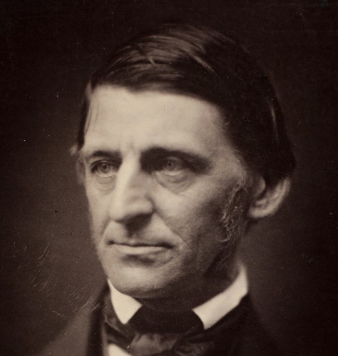
There is a freemasonry among the dull by which they recognize and are sociable with the dull, as surely as a correspondent tact in men of genius.
▼
Source
1827
4 months 4 weeks ago
We fight the same battles over and over again. They are never won for eternity, but in the process of struggling together, in community, we learn how to glimpse new possibilities that otherwise never would have become apparent to us, and in the process we expand and enlarge our very notion of freedom.
4 months 4 weeks ago
Hope is the dream of a waking man.
▼
Source
p. 187
4 months 4 weeks ago
Although I consider our political world to be the best of which we have any historical knowledge, we should beware of attributing this fact to democracy or to freedom. Freedom is not a supplier who delivers goods to our door. Democracy does not ensure that anything is accomplished — certainly not an economic miracle. It is wrong and dangerous to extol freedom by telling people that they will certainly be all right once they are free. How someone fares in life is largely a matter of luck or grace, and to a comparatively small degree perhaps also of competence, diligence, and other virtues. The most we can say of democracy or freedom is that they give our personal abilities a little more influence on our well-being.
4 months 4 weeks ago
While imprisoned in the shed Pierre had learned not with his intellect but with his whole being, by life itself, that man is created for happiness, that happiness is within him, in the satisfaction of simple human needs, and that all unhappiness arises not from privation but from superfluity. And now during these last three weeks of the march he had learned still another new, consolatory truth- that nothing in this world is terrible. He had learned that as there is no condition in which man can be happy and entirely free, so there is no condition in which he need be unhappy and lack freedom. He learned that suffering and freedom have their limits and that those limits are very near together....
▼
Source
Bk. XIV, ch. 12
4 months 4 weeks ago
We somehow believe that our point of view is superior, higher than those of the greatest minds—either because our point of view is that of our time, and our time, being later than the time of the greatest minds, can be presumed to be superior to their times; or else because we believe that each the greatest minds was right from his point of view, but not, as he claims, simply right.
▼
Source
“What is liberal education,” pp. 7-8
4 months 4 weeks ago
He needs no library, for he has not done thinking; no church, for he is himself a prophet; no statute book, for he hath the Lawgiver; no money, for he is value itself; no road, for he is at home where he is.
▼
Source
December 26, 1839
4 months 4 weeks ago
In many ways, she (Fannie Lou Hamer) paved the way for Barack Obama.
4 months 4 weeks ago
One grasps incomparably more things in boredom than by labor, effort being the mortal enemy of meditation.
4 months 4 weeks ago
If the importation of foreign cattle, for example, were made ever so free, so few could be imported, that the grazing trade of Great Britain could be little affected by it. Live cattle are, perhaps, the only commodity of which the transportation is more expensive by sea than by land.
▼
Source
Chapter II
4 months 4 weeks ago
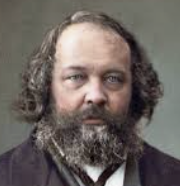
We wish, in a word, equality — equality in fact as a corollary, or rather, as primordial condition of liberty. From each according to his faculties, to each according to his needs; that is what we wish sincerely and energetically.
▼
Source
As quoted in The Old Order and the New (1890) by J. Morris Davidson
4 months 4 weeks ago
Nothing in all literature is so depressing as the “Dissertations” of the slave [Epictetus], unless it be the “Meditations” of the Emperor [Marcus Aurelius] ...[after some excerpts from the two books]..... In such passages we feel the proximity of Christianity and its dauntless martyrs; indeed were not the Christian ethic of self-denial, the Christian political ideal of an almost communistic brotherhood of man, and the Christian eschatology of the final conflagration of all the world, fragments of Stoic doctrine floating on the stream of thought? In Epictetus the Greco-Roman soul has lost its paganism, and is ready for a new faith".
CivilSimian.com created by AxiomaticPanic, CivilSimian, Kalokagathia