
4 months 4 weeks ago
The less somebody knows and understands himself the less great he is, however great may be his talent. For this reason our scientists are not great.
▼
Source
p. 51e

4 months 4 weeks ago
The law is an adroit mixture of customs that are beneficial to society, and could be followed even if no law existed, and others that are of advantage to a ruling minority, but harmful to the masses of men, and can be enforced on them only by terror.
▼
Source
"Words of a Rebel"; as quoted in The Heretic's Handbook of Quotations: Cutting Comments on Burning Issues (1992) by Charles Bufe, p. 26
4 months 4 weeks ago
The immense number and variety of the beautiful optical discoveries which we owe to Sir David Brewster makes the comparison in his case a very imperfect representation of his triumphs over nature; and that, besides his place in the history of the Theory of Optics, he must hold a most eminent position in the history of Optical Crystallography, whenever the discovery of a True Optical Theory of Crystals supplies us with the Epoch to which his labors in this field form so rich.
▼
Source
William Whewell (1859). History of the Inductive Sciences, D. Appleto. p. 133
4 months 4 weeks ago
When we reflect, that the Inquisition, by its restrictions, and authority, would have prevented the French revolution,—it is hard to say, whether the Sovereign, who, wholly, and without reserve, gave up this instrument, would not, in reality, be doing an injury to humanity.
▼
Source
p. 31
4 months 4 weeks ago
Look round the world: contemplate the whole and every part of it: You will find it to be nothing but one great machine, subdivided into an infinite number of lesser machines, which again admit of subdivisions, to a degree beyond what human senses and faculties can trace and explain. All these various machines, and even their most minute parts, are adjusted to each other with an accuracy, which ravishes into admiration all men, who have ever contemplated them. The curious adapting of means to ends, throughout all nature, resembles exactly, though it much exceeds, the productions of human contrivance; of human design, thought, wisdom, and intelligence.
▼
Source
Philo to Cleanthes, Part II
4 months 4 weeks ago
It is so characteristic, that just when the mechanics of reproduction are so vastly improved, there are fewer and fewer people who know how the music should be played.
▼
Source
p. 96
4 months 4 weeks ago
Each individual is a cosmos of organs, each organ is a cosmos of cells, each cell is a cosmos of infinitely small ones; and in this complex world, the well-being of the whole depends entirely on the sum of well-being enjoyed by each of the least microscopic particles of organized matter. A whole revolution is thus produced in the philosophy of life.

4 months 4 weeks ago
Pittacus said that half was more than the whole.
▼
Source
Pittacus, 2.
4 months 4 weeks ago
That brief, nervous, lucid style, stripped of phrases, robust of limb, did not at all recall the softness of the eighteenth century, nor the declamations of the latest French books: it was born and steeped in the breath of the Alps; it was virgin, it was young, it was harsh and savage; it had no human respect, it felt its solitude; it improvised depth and form all at once… That man was new among the enfants du siècle [children of the century].
▼
Source
Alphonse de Lamartine, Cours familier de littérature (1859), pp. 426–427
4 months 4 weeks ago
It is therefore important to discover whether there is any answer to Hume within the framework of a philosophy that is wholly or mainly empirical. If not, there is no intellectual difference between sanity and insanity. The lunatic who believes that he is a poached egg is to be condemned solely on the ground that he is in a minority, or rather—since we must not assume democracy—on the ground that the government does not agree with him. This is a desperate point of view, and it must be hoped that there is some way of escaping from it.
▼
Source
Bertrand Russell; A History of Western Philosophy, Book Three, Part I, Chapter 17. Hume
4 months 4 weeks ago
Think of past wars and of those that subjected people will have to wage to conquer the right to breathe freely, the wars for markets, the wars to create colonial empires. And in France we unfortunately know only too well that every war, victorious or not, is followed by slavery. And finally what is even worse than all that has just been enumerated, is the fact that the education we all receive from the State, at school and after, has so warped our minds that the very notion of freedom ends up by being lost, and disguised in servitude. It is a sad sight to see those who believe themselves to be revolutionaries unleashing their hatred on the anarchist — just because his views on freedom go beyond their petty and narrow concepts of freedom learned in the State school. And meanwhile, this spectacle is a reality. The fact is that the spirit of voluntary servitude was always cleverly cultivated in the minds of the young, and still is, in order to perpetuate the subjection of the individual to the State.
▼
Source
IX
4 months 4 weeks ago
Once when Bion was at sea in the company of some wicked men, he fell into the hands of pirates; and when the rest said, "We are undone if we are known,"—"But I," said he, "am undone if we are not known."
▼
Source
Bion, 3.
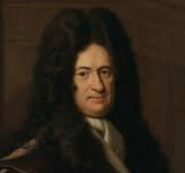
4 months 4 weeks ago
I have seen something of the project of M. de St. Pierre, for maintaining a perpetual peace in Europe. I am reminded of a device in a cemetery, with the words: Pax perpetua; for the dead do not fight any longer: but the living are of another humor; and the most powerful do not respect tribunals at all.
▼
Source
Letter 11 to Grimarest: Passages Concerning the Abbe de St. Pierre's 'Project for Perpetual Peace (June 1712). Taken from Leibniz: Political Writings (2nd Edition, 1988), Edited by Patrick Riley.
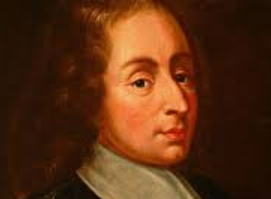
4 months 4 weeks ago
One, knowing the duties of man and being ignorant of his impotence, is lost in presumption, and that the other, knowing the impotence and being ignorant of the duty, falls into laxity; whence it seems that since the one leads to truth, the other to error, there would be formed from their alliance a perfect system of morals. But instead of this peace, nothing but war and a general ruin would result from their union; for the one establishing certainty, the other doubt, the one the greatness of man, the other his weakness, they would destroy the truths as well as the falsehoods of each other. So that they cannot subsist alone because of their defects, nor unite because of their opposition, and thus they break and destroy each other to give place to the truth of the Gospel. This it is that harmonizes the contrarieties by a wholly divine act, and uniting all that is true and expelling all that is false, thus makes of them a truly celestial wisdom in which those opposites accord that were incompatible in human doctrines.
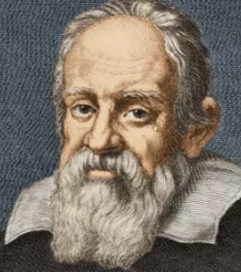
4 months 4 weeks ago
I would say here something that was heard from an ecclesiastic of the most eminent degree [probably Caesar Baronius]: "The intention of the Holy Ghost is to teach us how one goes to heaven, not how heaven goes."
▼
Source
Variant translation: I would say here something that was heard from an ecclesiastic of the most eminent degree: "That the intention of the Holy Spirit is to teach us how one goes to heaven, not how the heavens go."
4 months 4 weeks ago
In market gardening the soil is always made... Consequently, it is now a usual stipulation in the renting contracts of the Paris maraîcheres that the gardener may carry away his soil, down to a certain depth, when he quits his tenancy. He himself makes it, and when he moves to another plot he carts his soil away...
4 months 4 weeks ago
Asked from what country he came, he replied, "I am a citizen of the world."
▼
Source
Diogenes, 6.

4 months 4 weeks ago
The mind, like the body, has its contagious diseases and its scurvy. ...We catch everything from those with whom we come in contact; their gestures, their accent, etc.
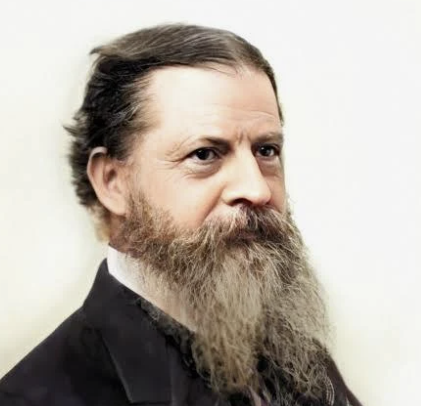
4 months 4 weeks ago
You are of all my friends the one who illustrates pragmatism in its most needful forms. You are a jewel of pragmatism.
▼
Source
Letter to William James (16 March 1903), published in The thought and character of William James, as revealed in unpublished correspondence and notes (1935) by Ralph Barton Perry, Vol. 2, p. 427
4 months 4 weeks ago
I would inquire of reasonable persons whether this principle: Matter is naturally wholly incapable of thought, and this other: I think, therefore I am, are in fact the same in the mind of Descartes, and in that of St. Augustine, who said the same thing twelve hundred years before. ...I am far from affirming that Descartes is not the real author of it, even if he may have learned it only in reading this distinguished saint; for I know how much difference there is between writing a word by chance without making a longer and more extended reflection on it, and perceiving in this word an admirable series of conclusions, which prove the distinction between material and spiritual natures, and making of it a firm and sustained principle of a complete metaphysical system, as Descartes has pretended to do. ...it is on this supposition that I say that this expression is as different in his writings from the saying in others who have said it by chance, as in a man full of life and strength, from a corpse.
▼
Source
see St. Augustine, Civitate Dei, 1. XI, c. xxvi
4 months 4 weeks ago
We seek not what God could have done but what He has done.… God could have caused birds to fly with bones of solid gold, with veins full of quicksilver, with flesh heavier than lead and very small and heavy wings, so as to better show His power … but He wanted to make their bones, flesh and feathers very light … to teach us that He likes simplicity and ease.
▼
Source
Notes in a copy of Jean-Baptiste Morin's "Famous and ancient problems of the earth's motion or rest, yet to be solved" (published 1631). Some English sources incorrectly attribute this to the Dialogue, concluding it (also inaccurately): "It is only to shi

4 months 4 weeks ago
The human being is not the lord of beings, but the shepherd of Being.
▼
Source
Letter on Humanism (1947)

4 months 4 weeks ago
Those who have nothing else to recommend them to the respect of others but only their blood, cry it up at a great rate, and have their mouths perpetually full of it. They swell and vapor, and you are sure to hear of their families and relations every third word.
▼
Source
p. 22 (Ancestry)
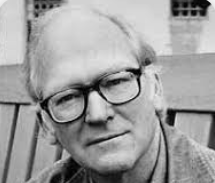
4 months 4 weeks ago
The dominant metaphor of conceptual relativism, that of differing points of view, seems to betray an underlying paradox. Different points of view make sense, but only if there is a common co-ordinate system on which to plot them; yet the existence of a common system belies the claim of dramatic incomparability.
▼
Source
Donald Davidson. "On the Very Idea," p. 184; as cited in: Johannes Brandl, Wolfgang Leopold Gombocz. The Mind of Donald Davidson. Rodopi, 1989, p. 152
4 months 4 weeks ago
How can a past idea be present?... it can only be going, infinitesimally past, less past than any assignable past date. We are thus brought to the conclusion that the present is connected to the past by a series of real infinitesimal steps.
4 months 4 weeks ago
It seems to be for the greater glory of Heidegger that all thinkers of the past twenty-five hundred years are found to have been so tragically off the track.
▼
Source
Marjorie Glicksman, "A Note on the Philosophy of Heidegger". The Journal of Philosophy, Vol 35 no 4, Feb 17, 1938, pp. 93-104.
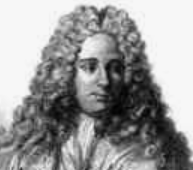
4 months 4 weeks ago
On the 15th of April 1744, I described the principle upon which the following work is based, in the public assembly of the Royal Academy of Sciences of Paris, as reported in the Acts of that academy.At the end of the same year, Professor Euler published his excellent book Methodus inveniendi lineas curvas maximi minimive proprietate gaudentes. In a supplement to his book, this illustrious geometer showed that, in the trajectory of a particle acted on by a central force, the velocity multiplied by the line element of the trajectory is minimized.This observation gave me great pleasure, as a beautiful application of my principle to the motion of the planets, which is determined by this principle.From the same principle, I will now try to derive higher and more important truths.
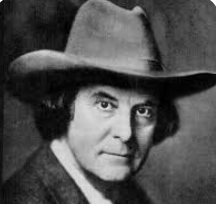
4 months 4 weeks ago
Mankind is governed by the worst — the strongest example of this is to be seen in American municipalities, but it is true of every government. We are governed by rogues who hold their grip upon us by and through statute law. Were it not for law the people could protect themselves against these thieves, but now we are powerless and are robbed legally. One mild form of coercion these rogues resort to is to call us unpatriotic when we speak the truth about them. Not long ago they would have cut off our heads. The world moves. Governments cannot be done away with instantaneously, but progress will come, as it has in the past by lessening the number of laws. We want less governing, and the ideal government will arrive when there is no government at all. So long as governments set the example of killing their enemies, private individuals will occasionally kill theirs. So long as men are clubbed, robbed, imprisoned, disgraced, hanged by the governing class, just so long will the idea of violence and brutality be born in the souls of men.

4 months 4 weeks ago
The concept of freedom, as the Philosophy of Right has shown, follows the pattern of free ownership. As a result, the history of the world that Hegel looks out upon exalts and enshrines the history of the middle-class, which based itself on this pattern. There is a stark truth in Hegel’s strangely certain announcement that history has reached its end. But it announces the funeral of a class, not of history. P. 227
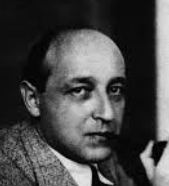
4 months 4 weeks ago
To-day, there are too many points of view of equal value and prestige, each showing the relativity of the other, to permit us to take any one position and to regard it as impregnable and absolute. Only this socially disorganized intellectual situation makes possible the insight, hidden until now by a generally stable social structure and the practicability of certain traditional norms, that every point of view is particular to a social situation.
4 months 4 weeks ago
A difficulty which confronts the synechistic philosophy is this. In considering personality, that philosophy is forced to accept the doctrine of a personal God; but in considering communication, it cannot but admit that if there is a personal God, we must have a direct perception of that person and indeed be in personal communication with him. Now, if that be the case, the question arises how it is possible that the existence of this being should ever have been doubted by anybody. The only answer that I can at present make is that facts that stand before our face and eyes and stare us in the face are far from being, in all cases, the ones most easily discerned. That has been remarked since time immemorial.
4 months 4 weeks ago
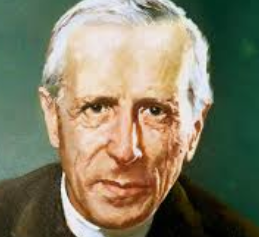
In sum, all the rest of this essay will be nothing but the story of the struggle in the universe between the unified multiple and the unorganized multitude: the full application of great Law of complexity and consciousness: a law that... implies a psychically convergent structure and curvature of the world.
4 months 4 weeks ago
Do not go out of your way to do good whenever it comes your way. Men who make a business of doing good to others are apt to hate others in the same occupation. Simply be filled with the thought of good, and it will radiate — you do not have to bother about it, any more than you need trouble about your digestion.
▼
Source
p. 71
4 months 4 weeks ago
If the individual were no longer compelled to prove himself on the market, as a free economic subject, the disappearance of this kind of freedom would be one of the greatest achievements of civilization. The technological processes of mechanization and standardization might release individual energy into a yet uncharted realm of freedom beyond necessity. The very structure of human existence would be altered; the individual would be liberated from the work world's imposing upon him alien needs and alien possibilities. The individual would be free to exert autonomy over a life that would be his own.
▼
Source
p. 2
4 months 4 weeks ago
Consider what effects that might conceivably have practical bearings you conceive the objects of your conception to have. Then, your conception of those effects is the whole of your conception of the object.
▼
Source
Vol. V, par. 438
4 months 4 weeks ago
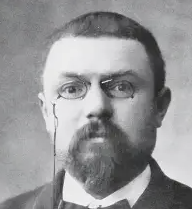
We have not a direct intuition of the equality of two intervals of time.
4 months 4 weeks ago
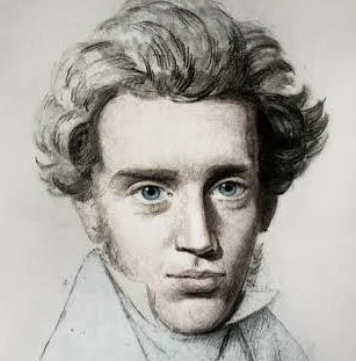
I have never worked as hard as now. I go for a brief walk in the morning. Then I come home and sit in my room without interruption until about three o'clock. My eyes can barely see. Then with my walking stick in hand I sneak off to the restaurant, but am so weak that I believe that if somebody were to call out my name, I would keel over and die. Then I go home and begin again. In my indolence during the past months I had pumped up a veritable shower bath, and now I have pulled the string and the ideas are cascading down upon me: healthy, happy, merry, gay, blessed children born with ease and yet all of them with the birthmark of my personality.
▼
Source
Letter from Berlin to Emil Boesen, May 25, 1843, Letter 82
4 months 4 weeks ago
In the "Alexandrian" explanation described above, the multiple from which evolution emerges is both secondary and sinful from its origin: it represents in fact (an idea that smacks of Manicheanism and the Hindu metaphysical systems) broken and pulverized unity. Starting from a very much more modern and completely different point of view, let us assert, as our original postulate, that, the multiple (that is, non-being, if taken in the pure state) being the only rational form of a creatable (creabile) nothingness, the creative act is comprehensible only as a gradual process of arrangement and unification, which amounts to accepting that to create is to unite. And, indeed, there is nothing to prevent our holding that union creates. To the objection that union presupposes already existing elements, I shall answer that physics has just shown us (in the case of mass) that experientially (and for all the protests of "common sense") the moving object exists only as the product of its motion.
▼
Source
[https://archive.org/stream/ChristianityAndEvolution/Christianity_and_Evolution#page/n191/mode/2up pp. 193–195]
4 months 4 weeks ago
Weak with nice sense, the chaste Mɪᴍᴏsᴀ stands,From each rude touch withdraws her timid hands;Oft as light clouds o’er-pass the Summer-glade,Alarm’d she trembles at the moving shade;And feels, alive through all her tender form,The whisper’d murmurs of the gathering storm;Shuts her sweet eye-lids to approaching night;And hails with freshen’d charms the rising light.Veil’d, with gay decency and modest pride,Slow to the mosque she moves, an eastern bride;There her soft vows unceasing love record,Queen of the bright seraglio of her Lord.—So sinks or rises with the changeful hourThe liquid silver in its glassy tower.So turns the needle to the pole it loves,With fine librations quivering as it moves.
▼
Source
[Mimosa], The Botanic Garden (1791), Part ii, Canto i, ll. 247-262.
4 months 4 weeks ago
The avant-garde and the beatniks share in the function of entertaining without endangering the good conscience of the men of good will.
▼
Source
p. 70
4 months 4 weeks ago
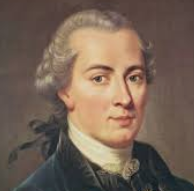
The death of dogma is the birth of morality.
▼
Source
As quoted in Faith Or Fact (1897) by Henry Moorehouse Taber, p. 86
4 months 4 weeks ago
In the external, patience is some third element that must be added, and, humanly speaking, it would be better if it were not needed; some days it is needed more, some days less, all according to fortune, whose debtor a person becomes, even though he gained ever so little, because only when he wants to gain patience does he become one's debtor.
▼
Source
' p. 168
4 months 4 weeks ago
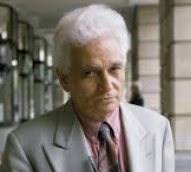
In writing what he does not speak, what he would never say and, in truth, would probably never even think, the author of the written speech is already entrenched in the posture of the sophist; the man of non-presence and non-truth. Writing is thus already on the scene. The incompatibility between written and the true is clearly announced at the moment Socrates starts to recount the way in which men are carried out themselves by pleasure, become absent from themselves, forget themselves and die in the thrill of song.
▼
Source
Plato's Pharmacy, Pharmacia
4 months 4 weeks ago
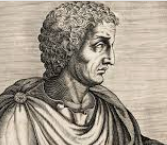
Let not things, because they are common, enjoy for that the less share of our consideration.
▼
Source
Book XIX, sec. 59.
4 months 4 weeks ago
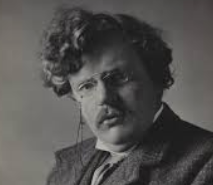
There is only one thing that it requires real courage to say, and that is a truism.
▼
Source
[http://books.google.com/books?id=PLpLAAAAMAAJ&q="There+is+only+one+thing+that+it+requires+real+courage+to+say+and+that+is+a+truism"&pg=PA17#v=onepage G. F. Watts] (1904)
4 months 4 weeks ago
Thought is led, by the situation of its objects, to measure their truth in terms of another logic, another universe of discourse. And this logic projects another mode of existence: the realization of the truth in the words and deeds of man. And inasmuch as this project involves man as societal animal,” the polis, the movement of thought has a political content. Thus, the Socratic discourse is political discourse inasmuch as it contradicts the established political institutions. The search for the correct definition, for the “concept” of virtue, justice, piety, and knowledge becomes a subversive undertaking, for the concept intends a new polis.
▼
Source
pp. 133-134
4 months 4 weeks ago
The third of this kind of principles is : matter neither originates nor perishes; all the changes in the world concern form only ; a postulate which on the recommendation of common sense has spread through all philosophical schools, not because it is to be taken as having been found so, or as having been demonstrated by arguments a priori, but because if we were to admit that matter itself is fleeting and transitory, nothing at all that is stable and lasting would be left any longer to serve for the explication of phenomena according to universal and perpetual laws, and hence nothing at all would be left for the exercise of the intellect.
4 months 4 weeks ago
To understand oneself in existence is the Christian principle, except that this self has received much richer and much more profound qualifications that are even more difficult to understand together with existing. The believer is a subjective thinker, and the difference, is only between the simple person and the simple wise person. Here again the oneself is not humanity in general, subjectivity in general, and other such things, whereas everything becomes easy inasmuch as the difficulty is removed and the whole matter is shifted over into the shadow play of abstraction.
▼
Source
Concluding Unscientific Postscript to Philosophical Fragments, Vol. I, Hong p. 353
4 months 4 weeks ago
The generally accepted computation is that 2½ acres of land are required to provide a minimum adequate diet for each person, by Western standards anyhow. On a vegetarian diet it has been estimated that 1½ acres per head may provide enough. The reason for this difference is that animals grazed for meat-eating purposes require about 15 times more land than is necessary to raise an equivalent amount of nutrition in the form of grains, vegetables and fruit for human consumption. This means that India, on a vegetarian diet, is living far more wisely within its own land resources than are the meat-eating peoples.
▼
Source
Which Way Lies Hope? An Examination of Capitalism, Communism, Socialism and Gandhiji's Programme (Ahmedabad: Navajivan Publishing House, 1952), [https://archive.org/stream/in.ernet.dli.2015.54786/2015.54786.Which-Way-Lies-Hope#page/n15/mode/2up p. 8].
4 months 4 weeks ago
Stupidity or reason? Oh, there was no choice now. It was imbecility every time.
▼
Source
The Gioconda smile, in Mortal Coils (1921)
CivilSimian.com created by AxiomaticPanic, CivilSimian, Kalokagathia