
4 months 4 weeks ago
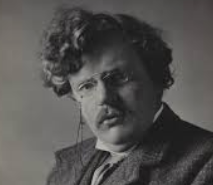
I do not believe in a fate that falls on men however they act; but I do believe in a fate that falls on them unless they act.
▼
Source
In The Illustrated London News (29 April 1922) | Collected in Generally Speaking (1929) "XX. On Holland"

4 months 4 weeks ago
Marcuse, Sartre, Colletti and Althusser were style-maestros of turgidity and never tried to rise to the flights of Marx and Engels in their inspired moments. Not one of them would choose a monosyllable if a longer word could be discovered or devised. Their Marxism, if not exactly pessimistic, was cramped and cautious. What is more, they were philosophers writing mainly for other philosophers. Only Marcuse became a genuine favourite of the thousands of students who rebelled in 1968 against ‘bourgeois society’ and university discipline, as well as the American war in Vietnam. He and his ideas were accorded a profile in Playboy magazine. (It is hard to imagine another Marxist theorist, except perhaps Marx himself, tolerating this without complaint.) Marcuse had grown popular because of the significance he attached to the students; it also did him no harm that he was willing to discuss the erotic as well as the socio-political.
▼
Source
Robert Service, Comrades: A History of World Communism (1968)
4 months 4 weeks ago
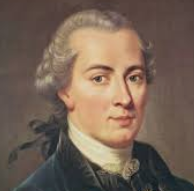
I maintain that in every special natural doctrine only so much science proper is to be met with as mathematics; for... science proper, especially of nature, requires a pure portion, lying at the foundation of the empirical, and based upon à priori knowledge of natural things. ...the conception should be constructed. But the cognition of the reason through construction of conceptions is mathematical. A pure philosophy of nature in general, namely, one that only investigates what constitutes a nature in general, may thus be possible without mathematics; but a pure doctrine of nature respecting determinate natural things (corporeal doctrine and mental doctrine), is only possible by means of mathematics; and as in every natural doctrine only so much science proper is to be met with therein as there is cognition à priori, a doctrine of nature can only contain so much science proper as there is in it of applied mathematics.
▼
Source
Preface, [https://books.google.com/books?id=OCJLAAAAMAAJ Tr.] Ernest Belfort Bax (1883)
4 months 4 weeks ago
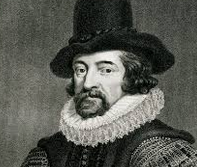
My mind is calm, for my fortune is not my felicity. I know I have clean hands and a clean heart, and I hope a clean house for friends or servants; but Job himself, or whoever was the justest judge, by such hunting for matters against him as hath been used against me, may for a time seem foul, especially in a time when greatness is the mark and accusation is the game.
▼
Source
Quoted by Thomas Fowler in "Francis Bacon 1561–1626 (1885)
4 months 4 weeks ago
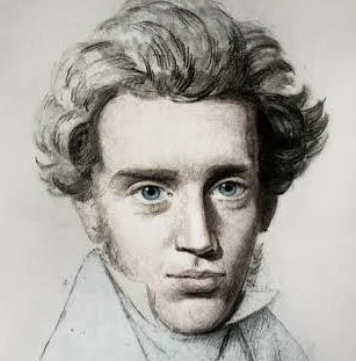
He was extremely important to his contemporaries, who wanted nothing more than to see in him the Expected One; they wanted almost to press it upon him and and to force him into the role - but that he then refuses to be that!
▼
Source
p. 60
4 months 4 weeks ago
Critical systems thinkers like Gerald Midgley identify three waves of systems thinking over the last 50 years or so. Early systems theorists (e.g. Bertalanffy) described systems in physical terms, resorting to metaphors from electronic computation or biology. This 'hard systems' tradition still has its advocates and practitioners... Subsequently the limits of the physical metaphor... were reached, and the secondwave of systems thinking developed. This 'soft systems thinking' employed social metaphors to develop appropriate systems approaches for human systems. The move to a more phenomenological, interpretative understanding of human systems, where meaning is central and is negotiated intersubjectively, parallels the new paradigm / crisis of social psychology of the 1970s. The Third wave, or critical systems school, in which Midgley locates himself, has drawn on the critical theory of Habermas, particularly in relation to theories of knowledge and of communicative rationality, and on the work of Foucault and followers on the nature of power.
▼
Source
Mark Burton (2003) "[http://users.cooptel.net/mark.burton/ReviewMidg.pdf Review Systemic Intervention: Philosophy, Methodology, and Practice MIDGLEY, G. (2000)]" in: Journal of Community and Applied Psychology 2003 13 (4) 330-333
4 months 4 weeks ago
No, they were not exactly automatons, but they did not know what they were doing. They take down a boy’s britches. They stare at his buttocks. They cane him until the buttocks bleed. And they believe this is virtue, because it is done in a school, and it becomes vice only if it is done in a place with a red lantern over the door.
▼
Source
The Widow's Son
4 months 4 weeks ago
Words are good servants but bad masters.
▼
Source
As quoted by Laura Huxley, in conversation with Alan Watts about her memoir This Timeless Moment (1968), in Pacifica Archives #BB2037 [sometime between 1968-1973])
4 months 4 weeks ago
The most unfathomable schools and sages have never attained to the gravity which dwells in the eyes of a baby of three months old. It is the gravity of astonishment at the universe, and astonishment at the universe is not mysticism, but a transcendent common-sense. The fascination of children lies in this: that with each of them all things are remade, and the universe is put again upon its trial. As we walk the streets and see below us those delightful bulbous heads, three times too big for the body, which mark these human mushrooms, we ought always primarily to remember that within every one of these heads there is a new universe, as new as it was on the seventh day of creation. In each of those orbs there is a new system of stars, new grass, new cities, a new sea.
▼
Source
"A Defence of Baby-Worship"
4 months 4 weeks ago
Morality is not properly the doctrine of how we may make ourselves happy, but how we may make ourselves worthy of happiness.
4 months 4 weeks ago
This misplacing hath caused a deficience, or at least a great improficience in the sciences themselves. For the handling of final causes, mixed with the rest in physical inquiries, hath intercepted the severe and diligent inquiry of all real and physical causes, and given men the occasion to stay upon these satisfactory and specious causes, to the great arrest and prejudice of further discovery. For this I find done not only by Plato, who ever anchoreth upon that shore, but by Aristotle, Galen, and others which do usually likewise fall upon these flats of discoursing causes.
▼
Source
Book VII, 7
4 months 4 weeks ago
To the contemporary, Christ can only say: I will offer myself as a sacrifice for the sins of the world and for yours also. Is this easier to believe now than when he has done it, has offered himself? Or is the comfort greater because of his saying that he will do it than it is because of his having done it? There is no greater love than this, that someone lays down his life for another, but when is it easier to believe, and when is the comfort greater: when the loving one says he will do it – or when he has done it? P. 159
4 months 4 weeks ago
Dr. Wilhelm Reich was condemned for unscientific claims by the Food and Drug Administration in 1956 because of his theories about sexual freedom and his discovery of an alleged "orgone" energy. He quickly became the most world-famous victim of the FDA's quest to impose One True Faith on medical practice in the United States, because the Feds not only destroyed all the equipment in Dr. Reich's experimental laboratory but burned all his books, too, in an incinerator, and then they put him in jail where he died of a heart attack. Since many disapprove of this unconstitutional way of silencing heresy, Dr. Reich has remained a center of controversy. … In addition to his bio-physical heresies, Dr. Reich vastly offended many people by his sociological theory, which holds that fascism is just an exaggerated form of the basic structure of sex-negative societies and has existed under other names in every civilization based on sexual repression. In this theory, the character and muscular armor of the average citizen — a submissive and frightened attitude anchored in body reflexes — causes the average person to want a strong authority figure above them. Tyranny, in this model, is not created by tyrants alone but by neurotic masses who want tyrants.
▼
Source
p. 361; some of Wilson's account of the suppression of Reich's ideas and work are slightly exaggerative: though an extensive store of Reich's books mentioning his concepts of orgone energy and the "orgone accumulators" of his laboratory were destroyed, th
4 months 4 weeks ago
Ever since his mother's second marriage Spandrell had always perversely made the worst of things, chosen the worst course, deliberately encouraged his own worst tendencies. It was with debauchery that he distracted his endless leisures. He was taking his revenge on her... He was spiting her, spiting himself, spiting God. He hoped there was a hell for him to go to and regretted his inability to believe in its existence. ...it was even exciting in those early days to know that one was doing something bad and wrong. But there is in debauchery something so intrinsically dull, something so absolutely and hopelessly dismal, that it is only the rarest beings, gifted with much less than the usual amount of intelligence and much more than the usual intensity of appetite, who can go on actively enjoying a regular course of vice or continue actively to believe in its wickedness. Most habitual debauchees are debauchees not because they enjoy debauchery, but because they are uncomfortable when deprived of it. Habit converts luxurious enjoyments into dull and daily necessities.
▼
Source
Ch. 17
4 months 4 weeks ago
The public does not like bad literature. The public likes a certain kind of literature and likes that kind of literature even when it is bad better than another kind of literature even when it is good.
▼
Source
Ch 5: "The Great Popularity"
4 months 4 weeks ago
Serious reflexion about one's own character will often induce a curious sense of emptiness; and if one knows another person well, one may sometimes intuit a similar void in him. (This is one of the strange privileges of friendship.)
▼
Source
Ch. 8, p. 119
4 months 4 weeks ago
The woman wants to dominate, the man wants to be dominated.
▼
Source
Kant, Immanuel (1996), page 220
4 months 4 weeks ago
Those who have handled sciences have been either men of experiment or men of dogmas. The men of experiment are like the ant, they only collect and use; the reasoners resemble spiders, who make cobwebs out of their own substance. But the bee takes a middle course: it gathers its material from the flowers of the garden and of the field, but transforms and digests it by a power of its own. Not unlike this is the true business of philosophy; for it neither relies solely or chiefly on the powers of the mind, nor does it take the matter which it gathers from natural history and mechanical experiments and lay it up in the memory whole, as it finds it, but lays it up in the understanding altered and digested. Therefore from a closer and purer league between these two faculties, the experimental and the rational (such as has never yet been made), much may be hoped.
▼
Source
Aphorism 95
4 months 4 weeks ago
Is not “Christendom” the most colossal attempt at serving God, not by following Christ, as He required, and suffering for the doctrine, but instead of that, by “building the sepulchers of the prophets and garnishing the tombs of the righteous.”
▼
Source
p. 121
4 months 4 weeks ago
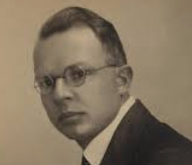
For me personally, Wittgenstein was perhaps the philosopher who, besides Russell and Frege, had the greatest influence on my thinking. The most important insight I gained from his work was the conception that the truth of logical statements is based only on their logical structure and on the meaning of the terms. Logical statements are true under all conceivable circumstances; thus their truth is independent of the contingent facts of the world. On the other hand, it follows that these statements do not say anything about the world and thus have no factual content.
▼
Source
p. 25 as cited in: M. J. Cresswell (2010) "[http://apacentral.org/necessity/Cresswell_Carnap.pdf Carnap's logic]"
4 months 4 weeks ago
Suso has even left a diagrammatic picture of the relations subsisting between Godhead, triune God and creatures. In this very curious and interesting drawing a chain of manifestation connects the mysterious symbol of the Divine Ground with the three Persons of the Trinity, and the Trinity in turn is connected in a descending scale with angels and human beings. These last, as the drawing vividly shows, may make one of two choices. They can either live the life of the outer man, the life of the separative selfhood; in which case they are lost (for, in the words of the Theologia Germanica, “nothing burns in hell but the self”). Or else they can identify themselves with the inner man, in which case it becomes possible for them, as Suso shows, to ascend again, through unitive knowledge, to the Trinity and even, beyond the Trinity, to the ultimate Unity of the Divine Ground.
4 months 4 weeks ago
But whenever one meets modern thinkers (as one often does) progressing toward a madhouse, one always finds, on inquiry, that they have just had a splendid escape from another madhouse. Thus, hundreds of people become Socialists, not because they have tried Socialism and found it nice, but because they have tried Individualism and found it particularly nasty.
▼
Source
'The New House,' pp. 161-162
4 months 4 weeks ago
Immanuel Kant was the first hippie in history.
▼
Source
Ayn Rand, [http://arc-tv.com/apollo-and-dionysus/ Apollo and Dionysus], Ford Hall Forum (1969)
4 months 4 weeks ago
For behavior, men learn it, as they take diseases, one of another.
▼
Source
In an essay by Ralph Waldo Emerson, "Solitude and Society" in The Atlantic Monthly, Vol. 1, (December 1857), p. 228, this follows a statement clearly attributed to Bacon, which might be a paraphrase. Without explicit citation, this is added to the parapgr
4 months 4 weeks ago
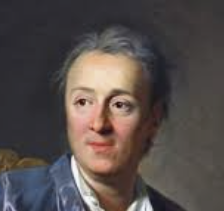
The wisest among us is very lucky never to have met the woman, be she beautiful or ugly, intelligent or stupid, who could drive him crazy enough to be fit to be put into an asylum.
▼
Source
Ceci n’est pas un conte [This Is No Tale] (1796),
4 months 4 weeks ago
A son is not a judge of his father, but the conscience of the father is in his son.
▼
Source
Book 1, part 1, ch. 5
4 months 4 weeks ago
Reflecting on my experience, I find myself agreeing with the eminent Cambridge philosopher, Dr. C. D. Broad, “that we should do well to consider much more seriously than we have hitherto been inclined to do the type of theory which Bergson put forward in connection with memory and sense perception. The suggestion is that the function of the brain and nervous system and sense organs is in the main eliminative and not productive. Each person is at each moment capable of remembering all that has ever happened to him and of perceiving everything that is happening everywhere in the universe. The function of the brain and nervous system is to protect us from being overwhelmed and confused by this mass of largely useless and irrelevant knowledge, by shutting out most of what we should otherwise perceive or remember at any moment, and leaving only that very small and special selection which is likely to be practically useful.” According to such a theory, each one of us is potentially Mind at Large. But in so far as we are animals, our business is at all costs to survive. To make biological survival possible, Mind at Large has to be funneled through the reducing valve of the brain and nervous system. What comes out at the other end is a measly trickle of the kind of consciousness which will help us to stay alive on the surface of this particular planet. To formulate and express the contents of this reduced awareness, man has invented and endlessly elaborated those symbol-systems and implicit philosophies which we call languages. Every individual is at once the beneficiary and the victim of the linguistic tradition into which he has been born—the beneficiary inasmuch as language gives access to the accumulated records of other people's experience, the victim in so far as it confirms him in the belief that reduced awareness is the only awareness and as it bedevils his sense of reality, so that he is all too apt to take his concepts for data, his words for actual things. That which, in the language of religion, is called “this world” is the universe of reduced awareness, expressed, and, as it were, petrified by language. The various “other worlds,” with which human beings erratically make contact are so many elements in the totality of the awareness belonging to Mind at Large. Most people, most of the time, know only what comes through the reducing valve and is consecrated as genuinely real by the local language. Certain persons, however, seem to be born with a kind of by-pass that circumvents the reducing valve. In others temporary by-passes may be acquired either spontaneously, or as the result of deliberate “spiritual exercises,” or through hypnosis, or by means of drugs. Through these permanent or temporary by-passes there flows, not indeed the perception “of everything that is happening everywhere in the universe” (for the by-pass does not abolish the reducing valve, which still excludes the total content of Mind at Large), but something more than, and above all something different from, the carefully selected utilitarian material which our narrowed, individual minds regard as a complete, or at least sufficient, picture of reality.
▼
Source
describing his experiment with mescaline, p. 22-24
4 months 4 weeks ago
I’ll read "Jack Redskin on the Quest" And feed my brain with better things.
▼
Source
A Ballade of a Book Reviewer
4 months 4 weeks ago
If exclusive privileges were not granted, and if the financial system would not tend to concentrate wealth, there would be few great fortunes and no quick wealth. When the means of growing rich is divided between a greater number of citizens, wealth will also be more evenly distributed; extreme poverty and extreme wealth would be also rare.
▼
Source
Article on Wealth

4 months 4 weeks ago
Navigation brought man face to face with the uncertainty of destiny, where each is left to himself and every departure might always be the last. The madman on his crazy boat sets sail for the other world, and it is from the other world that he comes when he disembarks. This enforced navigation is both rigorous division and absolute Passage, serving to underline in real and imaginary terms the liminal situation of the mad in medieval society. It was a highly symbolic role, made clear by the mental geography involved, where the madman was confined at the gates of the cities. His exclusion was his confinement, and if he had no prison other than the threshold itself he was still detained at this place of passage. In a highly symbolic position he is placed on the inside of the outside, or vice versa. A posture that is still his today, if we admit that what was once the visible fortress of social order is now the castle of our own consciousness.
▼
Source
Part One: 1. Stultifera Navis

4 months 4 weeks ago
You're unique like all other women.
▼
Source
Raimon to Regina, p. 55
4 months 4 weeks ago
An unexciting truth may be eclipsed by a thrilling falsehood.
▼
Source
Chapter 11 (p. 104)
4 months 4 weeks ago
The truth is that prohibitions might have done far less harm as prohibitions, if a vague association had not arisen, on some dark day of human unreason, between prohibition and progress. And it was the progress that did the harm, not the prohibition. Men can enjoy life under considerable limitations, if they can be sure of their limited enjoyments; but under Progressive Puritanism we can never be sure of anything. The curse of it is not limitation; it is unlimited limitation. The evil is not in the restriction; but in the fact that nothing can ever restrict the restriction. The prohibitions are bound to progress point by point; more and more human rights and pleasures must of necessity be taken away; for it is of the nature of this futurism that the latest fad is the faith of the future, and the most fantastic fad inevitably makes the pace. Thus the worst thing in the seventeenth-century aberration was not so much Puritanism as sectarianism. It searched for truth not by synthesis but by subdivision. It not only broke religion into small pieces, but it was bound to choose the smallest piece.
▼
Source
"Fads and Public Opinion"
4 months 4 weeks ago
How did they meet? By chance, like everybody … Where did they come from? From the nearest place. Where were they going? Do we know where we are going?
▼
Source
Prologue
4 months 4 weeks ago
If torture was so strongly embedded in legal practice, it was because it revealed truth and showed the operation of power. It assured the articulation of the written on the oral, the secret on the public, the procedure of investigation on the operation of the confession; it made it possible to reproduce the crime on the visible body of the criminal.
▼
Source
Chapter One, pp.55
4 months 4 weeks ago
Work almost always has a double aspect: it is a bondage, a wearisome drudgery; but it is also a source of interest, a steadying element, a factor that helps to integrate the worker with society. Retirement may be looked upon either as a prolonged holiday or as a rejection, a being thrown on to the scrap-heap.
▼
Source
Pt I, Ch. 4: Old age in present-day society, p. 263
4 months 4 weeks ago
Q: What's wrong with the world? A: I am.
▼
Source
Purportedly a response by Chesterton to the question posed around 1910 by the Times of London (along with other luminaries), but biographer Kevin Belmonte, in 'Defiant Joy: the Remarkable Life & Impact of G.K. Chesterton', was unable to verify. Belmonte s
4 months 4 weeks ago
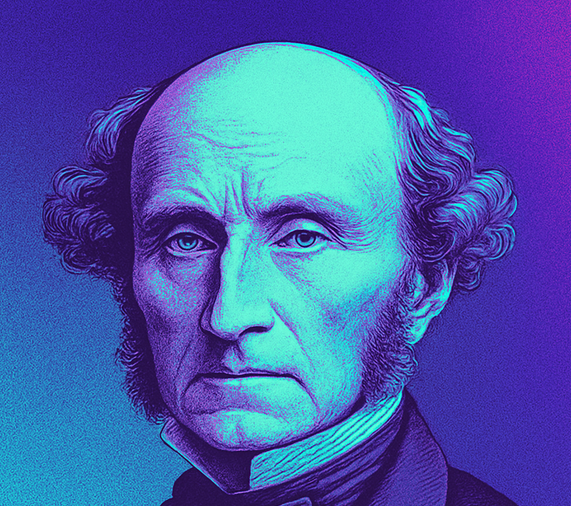
If all mankind minus one, were of one opinion, and only one person were of the contrary opinion, mankind would be no more justified in silencing that one person, than he, if he had the power, would be justified in silencing mankind.
▼
Source
Ch. II: Of the Liberty of Thought and Discussion
4 months 4 weeks ago
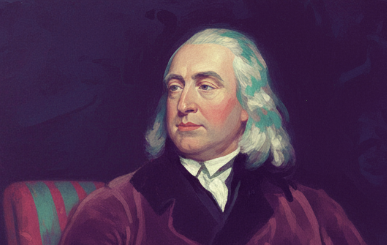
Pleasure is in itself a good; nay, even setting aside immunity from pain, the only good: pain is in itself an evil; and, indeed, without exception, the only evil; or else the words good and evil have no meaning. And this is alike true of every sort of pain, and of every sort of pleasure.
▼
Source
Ch. 10: Of Motives
4 months 4 weeks ago
The appearance in nineteenth-century psychiatry, jurisprudence, and literature of a whole series of discourses on the species and subspecies of homosexuality, inversion, pederasty, and "psychic hermaphroditism" made possible a strong advance of social controls into this area of "perversity"; but it also made possible the formation of a "reverse" discourse: homosexuality began to speak in its own behalf, to demand that its legitimacy or "naturality" be acknowledged, often in the same vocabulary, using the same categories by which it was medically disqualified.
▼
Source
Vol. I, p. 101

4 months 4 weeks ago
And now that the hour of departure is appointed to me, this is the hope with which I depart, and not I only, but every man that believes that he has his mind purified.
4 months 4 weeks ago
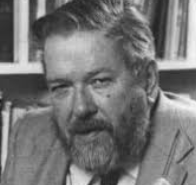
When we represent technology to ourselves through its own common sense we think of ourselves as picking and choosing in a supermarket, rather than within the analogy of the package deal. We have bought a package deal of far more fundamental novelness than simply a set of instruments under our control. It is a destiny which enfolds us in its own conceptions of instrumentality, neutrality and purposiveness.
▼
Source
p. 32
4 months 4 weeks ago
May it not be the fact that mankind, who after all are made up of single human beings, obtain a greater sum of happiness when each pursues his own, under the rules and conditions required by the good of the rest, than when each makes the good of the rest his only object, and allows himself no personal pleasures not indispensable to the preservation of his faculties? The regimen of a blockaded town should be cheerfully submitted to when high purposes require it, but is it the ideal perfection of human existence?
▼
Source
Auguste Comte and Positivism, p. 142
4 months 4 weeks ago
Ion is... a parrhesiastes, i.e., the sort... so valuable to democracy or monarchy since he is courageous enough to explain either to the demos or to the king just what the short-comings of their life really are.
4 months 4 weeks ago
It may be said, indeed, that without bones and muscles and the other parts of the body I cannot execute my purposes. But to say that I do as I do because of them, and that this is the way in which the mind acts, and not from the choice of the best, is a very careless and idle mode of speaking. I wonder that they cannot distinguish the cause from the condition, which the many, feeling about in the dark, are always mistaking and misnaming.

4 months 4 weeks ago
New York City is the Darwinist capital of the capitalist world.
4 months 4 weeks ago
I consequently remained long, and in a less degree have always remained, inexpert in anything requiring manual dexterity; my mind as well as my hands, did its work very lamely when it was applied, or ought to have been applied, to the practical details which, as they are the chief interest of life to the majority of men, are also the things in which whatever mental capacity they have, chiefly shows itself: I was constantly meriting reproof by inattention, inobservance, and general slackness of mind in matters of daily life. My father was the extreme opposite in these particulars: his senses and mental faculties were always on the alert; he carried decision and energy of character in his whole manner and into every action of life: and this, as much as his talents, contributed to the strong impression which he always made upon those with whom he came into personal contact. But the children of energetic parents, frequently grow up unenergetic, because they lean on their parents, and the parents are energetic for them.
▼
Source
([https://archive.org/details/autobiography01mill/page/36/mode/1up pp. 36–37])
4 months 4 weeks ago
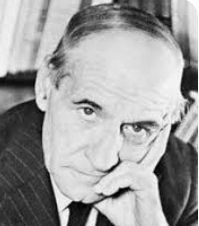
The mass-man would never have accepted authority external to himself had not his surroundings violently forced him to do so. As to-day, his surroundings do not so force him, the everlasting mass-man, true to his character, ceases to appeal to other authority and feels himself lord of his own existence. On the contrary the select man, the excellent man is urged, by interior necessity, to appeal from himself to some standard beyond himself, superior to himself, whose service he freely accepts.… Contrary to what is usually thought, it is the man of excellence, and not the common man who lives in essential servitude. Life has no savour for him unless he makes it consist in service to something transcendental. Hence he does not look upon the necessity of serving as an oppression. When, by chance, such necessity is lacking, he grows restless and invents some new standard, more difficult, more exigent, with which to coerce himself. This is life lived as a discipline — the noble life.
▼
Source
Chap. VII: Noble Life And Common Life, Or Effort And Inertia
4 months 4 weeks ago
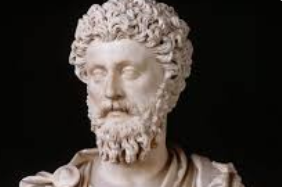
The longest-lived and the shortest-lived man, when they come to die, lose one and the same thing.
▼
Source
II, 14
4 months 4 weeks ago
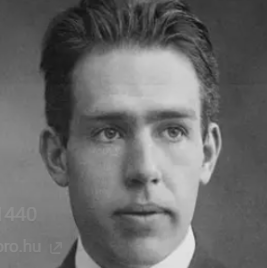
Some subjects are so serious that one can only joke about them.
▼
Source
As quoted in The Genius of Science: A Portrait Gallery (2000) by Abraham Pais, p. 24 | Some things are so serious that one can only joke about them. | Variant without any citation as to author in Denial is not a river in Egypt (1998) by Sandi Bachom, p. 8
CivilSimian.com created by AxiomaticPanic, CivilSimian, Kalokagathia