
4 months 4 weeks ago
The surest means of not losing your mind on the spot: remembering that everything is unreal, and will remain so...
4 months 4 weeks ago
Thus the labour of a manufacture adds, generally, to the value of the materials which he works upon, that of his own maintenance, and of his masters profits. The labour of a menial servant, on the contrary, adds to the value of nothing.
▼
Source
Chapter III, p. 364 (see Proverbs 14-23 KJV).
4 months 4 weeks ago
Hence, as Narcissus, by catching at the shadow, plunged himself in the stream and disappeared, so he who is captivated by beautiful bodies, and does not depart from their embrace, is precipitated, not with his body, but with his soul, into a darkness profound and repugnant to intellect (the higher soul), through which, remaining blind both here and in Hades, he associates with shadows.
▼
Source
First Ennead, Book VI, as translated by Thomas Taylor, [https://books.google.com/books?id=vEt0LaOue8IC The Eleusinian and Bacchic Mysteries: A Dissertation] (1891) pp. 43-44.
4 months 4 weeks ago
The measure of a man's life is the well spending of it, and not the length.
4 months 4 weeks ago
The evidence of science and history is that humans are only ever partly and intermittently rational, but for modern humanists the solution is simple: human beings must in future be more reasonable. These enthusiasts for reason have not noticed that the idea that humans may one day be more rational requires a greater leap of faith than anything in religion. Since it requires a miraculous breach in the order of things, the idea that Jesus returned from the dead is not as contrary to reason as the notion that human beings will in future be different from how they have always been.
▼
Source
An Old Chaos: Humanism and Flying Saucers (p. 75)
4 months 4 weeks ago
Happiness depends upon ourselves
▼
Source
An interpretative gloss of Aristotle's position in Nicomachean Ethics book 1 section 9, tacitly inserted by J. A. K. Thomson in his English translation The Ethics of Aristotle (1955). The original Greek at [https://www.perseus.tufts.edu/hopper/text?doc=Pe
4 months 4 weeks ago
Put in a nut-shell, my thesis amounts to this. The repeated attempts made by Rudolf Carnap to show that the demarcation between science and metaphysics coincides with that between sense and nonsense have failed. The reason is that the positivistic concept of 'meaning' or 'sense' (or of verifiability, or of inductive confirmability, etc.) is inappropriate for achieving this demarcation — simply because metaphysics need not be meaningless even though it is not science. In all its variations demarcation by meaninglessness has tended to be at the same time too narrow and too wide: as against all intentions and all claims, it has tended to exclude scientific theories as meaningless, while failing to exclude even that part of metaphysics which is known as 'rational theology'.
▼
Source
Ch 11. "The Demarcation between Science and Metaphysics." (Summary, p. 253)
4 months 4 weeks ago
The peculiar and amusing nature of those answers stems from the fact that modern history is like a deaf person who is in the habit of answering questions that no one has put to them. If the purpose of history be to give a description of the movement of humanity and of the peoples, the first question — in the absence of a reply to which all the rest will be incomprehensible — is: what is the power that moves peoples? To this, modern history laboriously replies either that Napoleon was a great genius, or that Louis XIV was very proud, or that certain writers wrote certain books. All that may be so and mankind is ready to agree with it, but it is not what was asked.
▼
Source
Vol 2, pt 5, p 236 — Selected Works, Moscow, 1869
4 months 4 weeks ago
It is safer to try to understand the low in the light of the high than the high in the light of the low. In doing the latter one necessarily distorts the high, whereas in doing the former one does not deprive the low of the freedom to reveal itself as fully as what it is.
▼
Source
p. 225
4 months 4 weeks ago
You shall have joy, or you shall have power, said God; you shall not have both.
▼
Source
October 1842

4 months 4 weeks ago
I’m not going to actually support either of the major candidates. But I do think we have to participate in the election... in our electoral system as it exists, neither party represents the future that we need in this country. Both parties remain connected to corporate capitalism. But the election will not so much be about who gets to lead the country to a better future, but rather how we can support ourselves and our own ability to continue to organize and place pressure on those in power. And I don’t think there’s a question about which candidate would allow that process to unfold... If we want to continue this work, we certainly need a person in office who will be more amenable to our mass pressure. And to me, that is the only thing that someone like a Joe Biden represents. But we have to persuade people to go out and vote to guarantee that the current occupant of the White House is forever ousted.
4 months 4 weeks ago
To have grazed every form of failure, including success.
4 months 4 weeks ago
Such taxes [upon the necessaries of life], when they have grown up to a certain height, are a curse equal to the barrenness of the earth and the inclemency of the heavens; and yet it is in the richest and most industrious countries that they have been most generally imposed. No other countries could support so great a disorder.
▼
Source
Chapter II, paragraph 36, p. 500.
4 months 4 weeks ago
Freedom is the absolute right of every human being to seek no other sanction for his actions but his own conscience, to determine these actions solely by his own will, and consequently to owe his first responsibility to himself alone.
▼
Source
As quoted in Anarchism: From Theory to Practice, Daniel Guérin, New York: NY, Monthly Review Press (1970) p. 31
4 months 4 weeks ago
British rule in India is the most sordid and criminal exploitation of one nation by another in all recorded history. I propose to show that England has year by year been bleeding India to the point of death, and that self-government of India by the Hindus could not within any reasonable probability, have worse results than the present form of alien domination.

4 months 4 weeks ago
Every body is in place; but nothing essentially incorporeal, or any thing of this kind, has any locality.
▼
Source
1
4 months 4 weeks ago
'[S]cientific knowledge' always remained sheer guesswork... controlled by criticism and experiment. ...[T]his assumption is sufficient for solving the problem of induction—called by Kant 'the problem of Hume'— without sacrificing empiricism...[i.e.,] without adopting a principle of induction and ascribing to it a priori validity. For guesses are not 'induced from observations' (although they may ...be suggested ...by observations). This ... allows us to accept ...(...without Russell's limits of empiricism) Hume's logical criticism of induction and to give up ...an inductive logic, for certainty, and even for probability, while continuing ...scientific search for truth.
4 months 4 weeks ago
The conscience of a man of our circle, if he retains but a scrap of it, cannot rest, and poisons all the comforts and enjoyments of life supplied to us by the labour of our brothers, who suffer and perish at that labour. And not only does every conscientious man feel this himself (he would be glad to forget it, but cannot do so in our age) but all the best part of science and art - that part which has not forgotten the purpose of its vocation - continually reminds us of our cruelty and of our unjustifiable position. The old firm justifications are all destroyed; the new ephemeral justifications of the progress of science for science's sake and art for art's sake do not stand the light of simple common sense. Men's consciences cannot be set at rest by new excuses, but only by a change of life which will make any justification of oneself unnecessary as there will be nothing needing justification.
4 months 4 weeks ago
But someone is bound to question ... by what right I regard as Ideological State Apparatuses, institutions which for the most part do not possess public status, but are quite simply private institutions. As a conscious Marxist, Gramsci already forestalled this objection in one sentence. The distinction between the public and the private is a distinction internal to bourgeois law, and valid in the (subordinate) domains in which bourgeois law exercises its ‘authority’. The domain of the State escapes it because the latter is ‘above the law’: the State, which is the State of the ruling class, is neither public nor private; on the contrary, it is the precondition for any distinction between public and private. The same thing can be said from the starting-point of our State Ideological Apparatuses. It is unimportant whether the institutions in which they are realized are ‘public’ or ‘private’. What matters is how they function.
▼
Source
p. 97
4 months 4 weeks ago
I had better never see a book than to be warped by its attraction clean out of my own orbit, and made a satellite instead of a system. The one thing in the world, of value, is the active soul.
▼
Source
par. 15

4 months 4 weeks ago
'Tis the hardest thing in the world to be a good Thinker, without being a strong Self-Examiner.
▼
Source
Vol. 1, p. 92; "Soliloquy: or Advice to an Author".
4 months 4 weeks ago
Despair, Suffering, Depression, Death
4 months 4 weeks ago
The inevitable lack of objectivity in political decisions, which is only the reflex to suppress the politically inherent friend-enemy antithesis, manifests itself in the regrettable forms and aspects of the scramble for office and the politics of patronage. The demand for depoliticalization which arises in this context means only the rejection of party politics, etc. The equation politics = party politics is possible whenever antagonisms among domestic political parties succeed in weakening the all-embracing political unit, the state.
4 months 4 weeks ago
Nothing but the most exemplary morals can give dignity to a man of small fortune.
▼
Source
Chapter I, Part III, Article III, p. 874.
4 months 4 weeks ago
At the present time a serious, strong state can have but one sound foundation — military and bureaucratic centralization. Between a monarchy and the most democratic republic there is only one essential difference: in the former, the world of officialdom oppresses and robs the people for the greater profit of the privileged and propertied classes, as well as to line its own pockets, in the name of the monarch; in the latter, it oppresses and robs the people in exactly the same way, for the benefit of the same classes and the same pockets, but in the name of the people’s will. In a republic a fictitious people, the "legal nation" supposedly represented by the state, smothers the real, live people. But it will scarcely be any easier on the people if the cudgel with which they are beaten is called the people's cudgel.
4 months 4 weeks ago
Time, subjectively, is the conscious sequence of perceptions.
▼
Source
Ch. 6 : Our Souls
4 months 4 weeks ago
Suppose a person entering a house were to feel heat on the porch, and going further, were to feel the heat increasing, the more they penetrated within. Doubtless, such a person would believe there was a fire in the house, even though they did not see the fire that must be causing all this heat. A similar thing will happen to anyone who considers this world in detail: one will observe that all things are arranged according to their degrees of beauty and excellence, and that the nearer they are to God, the more beautiful and better they are.
▼
Source
Art. 1
4 months 4 weeks ago
Some people steal from others, or defraud them, or enslave them, seizing their product and preventing them from living as they choose, or forcibly exclude others from competing in exchanges. None of these are permissible modes of transition from one situation to another.
▼
Source
Ch. 7 : Distributive Justice, Section I, The Entitlement Theory, p. 152
4 months 4 weeks ago
The Churches as Churches—as institutions affirming their own infallibility—are anti-Christian institutions. Between the Churches as such and Christianity, not only is there nothing in common except the name, but they are two quite opposite and opposing principles. The one represents pride, violence, self-assertion, immobility and death: the other humility, penitence, meekness, progress, and life.
▼
Source
Chapter III, Christianity Misunderstood by Believers
4 months 4 weeks ago
These conditions are simply these: viz., first, that each man shall do, towards every other, all that justice requires him to do; as, for example, that he shall pay his debts, that he shall return borrowed or stolen property to its owner, and that he shall make reparation for any injury he may have done to the person or property of another.The second condition is, that each man shall abstain from doing to another, anything which justice forbids him to do; as, for example, that he shall abstain from committing theft, robbery, arson, murder, or any other crime against the person or property of another.So long as these conditions are fulfilled, men are at peace, and ought to remain at peace, with each other.
▼
Source
Section I, p. 5–6
4 months 4 weeks ago
This is the value of the Communities; not what they have done, but the revolution which they indicate as on the way.
4 months 4 weeks ago
In organized groups such as the army or the Church there is either no mention of love whatsoever between the members, or it is expressed only in a sublimated and indirect way, through the mediation of some religious imagine in the love of whom the members unite and whose all-embracing love they are supposed to imitate in their attitude towards each other. ... It is one of the basic tenets of fascist leadership to keep primary libidinal energy on an unconscious level so as to divert its manifestations in a way suitable to political ends.
▼
Source
“Freudian Theory and the Pattern of Fascist Propaganda,” The Essential Frankfurt School Reader (1982), p. 123
4 months 4 weeks ago
Speak of the Gods as they are.
4 months 4 weeks ago
In death too, there is always something of the rich cat that lets the mouse run before devouring it
▼
Source
Traces (1930), p. 30
4 months 4 weeks ago
Now, sir, I stand here in the land where Adam Smith was born, the parent and patriarch of political economy—the man who first taught us that in our intercourse with other nations, as well as among ourselves, it was better to have our hands free than to have our hands and arms in manacles—who taught the great doctrines of Free Trade, and who has imbued the world with these doctrines.
▼
Source
William Ewart Gladstone, speech in Dundee (29 October 1890), quoted in A. W. Hutton and H. J. Cohen (eds.), The Speeches of The Right Hon. W. E. Gladstone on Home Rule, Criminal Law, Welsh and Irish Nationality, National Debt and the Queen's Reign, 1888–1
4 months 4 weeks ago
In order to correctly define art, it is necessary, first of all, to cease to consider it as a means to pleasure and consider it as one of the conditions of human life. ...Reflecting on it in this way, we cannot fail to observe that art is one of the means of affective communication between people.
4 months 4 weeks ago
Every Israelite has a duty to study whether he is poor or rich, whether healthy or suffering, whether young or very old and in failing strength, even if he is poor and supported by charity or begs from door to door.
▼
Source
Treatise 3: “The Study of the Torah,” Chapter 1, Section 8, H. Russell, trans. (1983), p. 51
4 months 4 weeks ago
Seeing only what is fair, Sipping only what is sweet, Thou dost mock at fate and care.
▼
Source
To the Humble Bee, st. 6
4 months 4 weeks ago
Words of the jargon sound as if they said something higher than what they mean.
▼
Source
p. 9
4 months 4 weeks ago
There will come a time when the proper education of children, by a glorified system of spontaneous education of choice, similar to the Montessori System, will be made possible. Children, as well as grown-ups, in their individual, glorified, drudgery-proof homes of Labrador, the tropics, the Orient, or where you will, to which they can pass with pleasure and expedition by means of ever-improving transportation, will be able to tune in their television and radio to the moving picture lecture of, let us say, President Lowell of Harvard; the professor of Mathematics of Oxford; of the doctor of Indian antiquities of Delhi, etc. Education by choice, with its marvelous motivating psychology of desire for truth, will make life ever cleaner and happier, more rhythmical and artistic.
4 months 4 weeks ago
Smith had no illusion that this would be easy to do, nor did he suffer from the delusion that such an exercise would, in any sense, be perfect. But he did have the conviction that the exercise could still be very useful, and the best should not be made into an enemy of the good.
▼
Source
Amartya Sen, “Values and Justice”, Journal of Economic Methodology, Vol. 19, No. 2, June 2012, 101–108.
4 months 4 weeks ago
Nekhludoff recalled his relations with the wife of the district commander, and a flood of shameful recollections came upon him. "There is a disgusting bestiality in man," he thought; "but when it is in a primitive state, one looks down upon and despises it, whether he is carried away with or withstands it. But when this same bestiality hides itself under a so-called aesthetic, poetic cover, and demands to be worshiped, then, deifying the beast, one gives himself up to it, without distinguishing between the good and the bad. Then it is horrible."
▼
Source
Ch. 73
4 months 4 weeks ago
We must consider the words, "the heavens were opened" (Ezek. i. 1); they give the key to the understanding of the whole. The figure of opening, also that of opening the gates, occurs frequently in the books of the prophets... When he commences to describe the firmament in detail, he says, "the firmament," without adding the words "the likeness of," for he says, "And I looked, and behold, in the firmament that was above the head of the cherubims there appeared over them as it were a sapphire stone, as the appearance of the likeness of a throne" (Ezek x. 1). Here the prophet speaks of "the firmament" and not of "the likeness of the firmament,"...
▼
Source
Ch.7
4 months 4 weeks ago
Nature magically suits the man to his fortunes, by making these the fruit of his character.
▼
Source
Fate
4 months 4 weeks ago
Some future directions and scenarios we touched upon were the possibilities of a world guaranteed annual income; the potential of fluidics as a source of energy; information and automation; the use of heat pollution from thermal electric plants to heat soil to improve crop output; the efficiency-gain by using gasoline or alcohol to run electric power plants and electricity to run cars; the production of alcohol from algae, farm wastes, or garbage and its substitution for gasoline in present-day combustion engines; the laser beam transmission of power and information; the amount of reinvestable time that will be available to mankind as a result of freeing him from the drudgery of having to earn a living (by bringing man to the bare maximum food and energy levels by the year 2000 we will have trillion more hours per year to reinvest into metaphysical regenerative functions); the increase of efficiency rates for power production and consumption, communication, transportation, etc., and the possible surplus and increase of efficiency through the stabilization of the population...
4 months 4 weeks ago
No amount of force will break an egg-shell if exerted on one side alone. So capital could not squeeze labor as long as labor was free to natural opportunities, and in a world where these natural materials and opportunities were as free to all as is the air to us, there could be no difficulty in finding employment, no willing hands conjoined with hungry stomachs, no tendency of wages toward the minimum on which the worker could barely live. In such a world we would no more think of thanking anybody for furnishing us employment than we here think of thanking anybody for furnishing us with appetites. That the Creator might have put us in the kind of world I have sought to imagine, as readily as in this kind of a world, I have no doubt. Why he has not done so may, however, I think, be seen. That kind of a world would be best for fools. This is the best for men who will use the intelligence with which they have been gifted. Of this, however, I shall speak hereafter. What I am now trying to do by asking my readers to endeavor to imagine a world in which natural opportunities were "as free as air," is to show that the barrier which prevents labor from freely using land is the nether millstone against which labor is ground, the true cause of the difficulties which are apparent through the whole industrial organization.
▼
Source
Ch. 13 : Unemployed Labor
4 months 4 weeks ago
We are on a mission: we are called to the cultivation of the earth.
▼
Source
Fragment No. 32; Variant translations: We are on a mission.We are called to form the earth. We are on a mission.We are called to educate the earth.

4 months 4 weeks ago
One whose intentions and thoughts are cultivated will disregard wealth and nobility. One whose greatest concern is for the Way and righteousness will take lightly kings and dukes. It is simply that when one examines oneself on the inside, external goods carry little weight. A saying goes, "The gentleman makes things his servants. The petty man is servant to things."
▼
Source
Readings in Classical Chinese Philosophy (2001), p. 263 | A similar phrase to the saying is found in the 3rd millennium BCE Sumerian text Instructions of Shuruppak by Šuruppak: "You should not serve things; things should serve you."[http://etcsl.orinst.ox
4 months 4 weeks ago
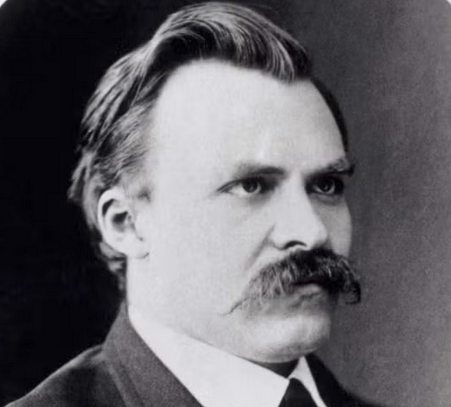
The horrible or the absurd is uplifting, because it is only seemingly horrible or absurd. The Dionysian power of enchantment here proves itself, even at the highest point of this vision of the world; all that is actual gives way to seeming and behind it is announced the unitary nature of the Will, wholly wrapped in the glory of wisdom and truth, in dazzling brilliance. Illusion, delusion is at its peak.
▼
Source
page 48
4 months 4 weeks ago
We measure the earth, sun, stars, and ocean depths. We burrow into the depths of the earth for gold. We search for rivers and mountains on the moon. We discover new stars and know their magnitudes. We sound the depths of gorges and build clever machines. Each day brings a new invention. What don't we think of! What can't we do! But there is something else, the most important thing of all, that we are missing. We do not know exactly what it is. We are like a small child who knows he does not feel well but cannot explain why. We are uneasy, because we know a lot of superfluous facts; but we do not know what is really important—ourselves.
▼
Source
p. 10
CivilSimian.com created by AxiomaticPanic, CivilSimian, Kalokagathia