
4 months 4 weeks ago
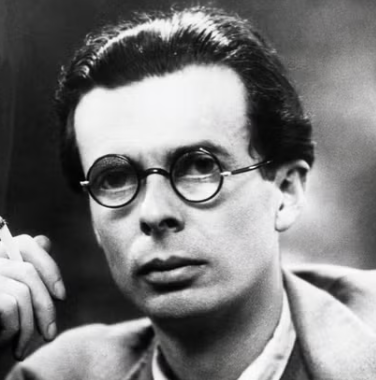
It is because we are predominantly purposeful beings that we are perpetually correcting our immediate sensations. But men are free not to be utilitarianly purposeful. They can sometime be artists, for example. In which case they may like to accept the immediate sensation uncorrected, because it happens to be beautiful.
▼
Source
“One and Many,” p. 11
4 months 4 weeks ago
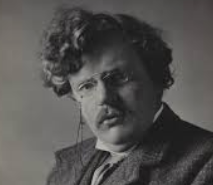
One of the actual and certain consequences of the idea that all men are equal is immediately to produce very great men.
▼
Source
Ch 1: "The Dickens Period"
4 months 4 weeks ago
To eat, teeth must meet.
▼
Source
The Sacred and Profane Love Machine (1974), p. 66.
4 months 4 weeks ago
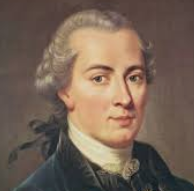
Collectively, the more civilized men are, the more they are actors. They assume the appearance of attachment, of esteem for others, of modesty, and of disinterestedness, without ever deceiving anyone, because everyone understands that nothing sincere is meant. Persons are familiar with this, and it is even a good thing that this is so in this world, for when men play these roles, virtues are gradually established, whose appearance had up until now only been affected. These virtues ultimately will become part of the actor's disposition. To deceive the deceiver in ourselves, or the tendency to deceive, is a fresh return to obedience[.]
▼
Source
Kant, Immanuel (1996), page 37
4 months 4 weeks ago
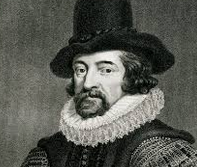
There are also Idols formed by the intercourse and association of men with each other, which I call Idols of the Market Place, on account of the commerce and consort of men there. For it is by discourse that men associate, and words are imposed according to the apprehension of the vulgar. And therefore the ill and unfit choice of words wonderfully obstructs the understanding. Nor do the definitions or explanations wherewith in some things learned men are wont to guard and defend themselves, by any means set the matter right. But words plainly force and overrule the understanding, and throw all into confusion, and lead men away into numberless empty controversies and idle fancies.
▼
Source
Aphorism 43
4 months 4 weeks ago
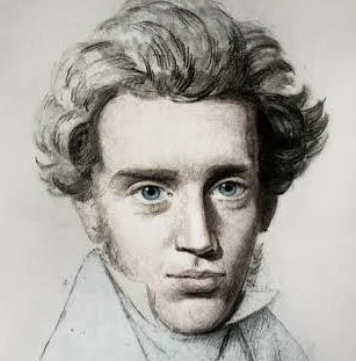
His life from the very beginning is a story of temptation; it is not only one particular period in his life, the forty days, that is the story of temptation – no his whole life is a story of temptation (just as it is also of suffering). Every moment of his life he is tempted – that is, he has this possibility in his power, to take his calling, his task, in vain.
▼
Source
Soren Kierkegaard, For Self-Examination, Hong p. 58-59
4 months 4 weeks ago
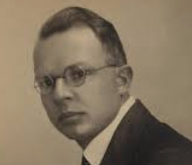
By the logical syntax of a language, we mean the formal theory of the linguistic forms of that language -- the systematic statement of the formal rules which govern it together with the development of the consequences which follow from these rules. A theory, a rule, a definition, or the like is to be called formal when no reference is made in it either to the meaning of the symbols (for examples, the words) or to the sense of the expressions (e.g. the sentences), but simply and solely to the kinds and order of the symbols from which the expressions are constructed.
▼
Source
p. 1
4 months 4 weeks ago
Wherever we turn we find that the real obstacles to peace are human will and feeling, human convictions, prejudices, opinions. If we want to get rid of war we must get rid first of all of its psychological causes. Only when this has been done will the rulers of the nations even desire to get rid of the economic and political causes.
▼
Source
Ch. 9, p. 138 [2012 reprint]
4 months 4 weeks ago
I must frankly say that Bernard Shaw always seems to me to use the word God not only without any idea of what it means, but without one moment's thought about what it could possibly mean. He said to some atheist, "Never believe in a God that you cannot improve on." The atheist (being a sound theologian) naturally replied that one should not believe in a God whom one could improve on; as that would show that he was not God.
▼
Source
"The Philosopher"
4 months 4 weeks ago
Experience without theory is blind, but theory without experience is mere intellectual play.
▼
Source
This is declared to be "an old Kantian maxim" in General Systems Vol. 7-8 (1962), p. 11, by the Society for the Advancement of General Systems Theory, but may simply be a paraphrase or summation of Kantian ideas. | Kant's treatment of the transcendental
4 months 4 weeks ago
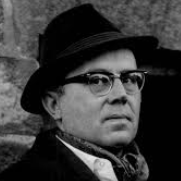
Cato said the best way to keep good acts in memory was to refresh them with new.
▼
Source
No. 247
4 months 4 weeks ago
When heaven and earth have passed away, perhaps the conservative mind and the libertarian mind may be joined in synthesis, but not until then.
4 months 4 weeks ago
To see ourselves as others see us is a most salutary gift. Hardly less important is the capacity to see others as they see themselves.
4 months 4 weeks ago
Men that are men again: Who goes home? Tocsin and trumpeter! Who goes home? For there's blood on the grass and blood on the foam, And blood on the body, when Man comes home. And a voice valedictory: Who is for victory? Who is for liberty? Who goes home?
▼
Source
Ch. XXI: "The Road to Roundabout" ("Who Goes Home?", by Patrick Dalroy)
4 months 4 weeks ago
The God of the Christians is a father who makes much of his apples, and very little of his children.
▼
Source
No. 16

4 months 4 weeks ago
One can say that the author is an ideological product, since we represent him as the opposite of his historically real function. (When a historically given function is represented in a figure that inverts it, one has an ideological production.) The author is therefore the ideological figure by which one marks the manner in which we fear the proliferation of meaning.
▼
Source
"What is an author?" (1984)

4 months 4 weeks ago
We were two of a kind, and our relationship would endure as long as we did: but it could not make up entirely for the fleeting riches to be had from encounters with different people.
▼
Source
On her relationship with Jean-Paul Sartre, as quoted in [http://www.theguardian.com/world/2005/jun/10/gender.politicsphilosophyandsociety "Did Simone de Beauvoir's open 'marriage' make her happy?"] by Lisa Appignanesi, in The Guardian (9 June 2005) and he
4 months 4 weeks ago
In the course of evolution nature has gone to endless trouble to see that every individual is unlike every other individual.... Physically and mentally, each one of us is unique. Any culture which, in the interests of efficiency or in the name of some political or religious dogma, seeks to standardize the human individual, commits an outrage against man's biological nature.
▼
Source
Chapter 3 (p. 21)
4 months 4 weeks ago
In a time of sceptic moths and cynic rusts, And fattened lives that of their sweetness tire In a world of flying loves and fading lusts, It is something to be sure of a desire. Lo, blessed are our ears for they have heard; Yea, blessed are our eyes for they have seen: Let the thunder break on man and beast and bird And the lightning. It is something to have been.
▼
Source
The Great Minimum
4 months 4 weeks ago
We are all instruments endowed with feeling and memory. Our senses are so many strings that are struck by surrounding objects and that also frequently strike themselves.
▼
Source
“Conversation Between D’Alembert and Diderot”
4 months 4 weeks ago
Is it surprising that prisons resemble factories, schools, barracks, hospitals, which all resemble prisons?
▼
Source
Discipline and Punish (1977) as translated by Alan Sheridan, p. 228
4 months 4 weeks ago
Sex pleasure in woman, as I have said, is a kind of magic spell; it demands complete abandon; if words or movements oppose the magic of caresses, the spell is broken.
▼
Source
Bk. 2, Pt.. 4, Ch. 3: Sexual Initiation. p. 396
4 months 4 weeks ago
I must comment briefly on Aldous Huxley's Island... Well I picked it up last night and just began rapidly leafing through it. What [her friend] sees in either of the Huxleys is quite beyond me...Running through what appears to be a completely confused and sort of nightmarish narrative, are stories of two women who were victims of breast cancer, including the deathbed scene of one of them!! Instead of being depressed, it made me so mad, I threw the book on the floor!
▼
Source
Rachel Carson, 1964 letter collected in Always, Rachel: The Letters of Rachel Carson and Dorothy Freeman (1994)
4 months 4 weeks ago
In the days when Stevenson's ancestors the Covenanters were fighting with the Cavaliers, a fine old Cavalier of the Episcopalian persuasion made a rather interesting remark; that the change he really hated was represented by saying 'The Lord' instead of 'Our Lord.' The latter implied affection, the former only fear; indeed he described the former succinctly as the talk of devils. And this is so far true that the very eloquent language in which the name of 'The Lord' has figured has generally been the language of might and majesty and even terror. And there really was implied in it in varying degrees the idea of glorifying God for His greatness rather than His goodness. And again there occurred the natural inversion of ideas. Since the Puritan was content to cry with the Moslem: 'God is great,' so the descendant of the Puritan is always a little inclined to cry with the Nietzschean: 'Greatness is God.' In some of the really evil extremes, this sentiment shaded darkly into a sort of diabolism.
▼
Source
Ch. V: "The Scottish Stories"
4 months 4 weeks ago
It might be plausibly maintained, that in almost every one of the leading controversies, past or present, in social philosophy, both sides were in the right in what they affirmed, though wrong in what they denied.
▼
Source
J. S. Mill, [http://books.google.gr/books?id=FyfPAAAAMAAJ&dq= Dissertations and discussions: political, philosophical, and historical, Volume 2], H. Holt, 1864, p. 11.
4 months 4 weeks ago
I am at heart more of a United-States-man than an Englishman.
▼
Source
Letter to Andrew Jackson (14 June 1830), quoted in Correspondence of Andrew Jackson, Volume 4, ed. David Maydole Matteson (1929), p. 146
4 months 4 weeks ago
There is no power relation without the correlative constitution of a field of knowledge, nor any knowledge that does not presuppose and constitute at the same time power relations

4 months 4 weeks ago
Anyone who holds a true opinion without understanding is like a blind man on the right road.
▼
Source
Plato, Republic, 506c
4 months 4 weeks ago
The dynamic element in my philosophy, taken as a whole, can be seen as an obstinate and untiring battle against the spirit of abstraction.
▼
Source
p. 1
4 months 4 weeks ago
The creed which accepts as the foundation of morals, Utility, or the Greatest Happiness Principle, holds that actions are right in proportion as they tend to promote happiness, wrong as they tend to produce the reverse of happiness. By happiness is intended pleasure, and the absence of pain; by unhappiness, pain, and the privation of pleasure.
▼
Source
Ch. 2
4 months 4 weeks ago
When a philosopher addresses himself to... a , and tells him... tyranny is incompatible with justice, then the philosopher speaks... and believes he is speaking the truth, and... takes a risk... That was Plato's situation with Dionysius in Syracuse... reference... Plato's Seventh Letter, and... The Life of Dion by Plutarch.
▼
Source
Ref: 1) , [https://archive.org/details/platosseventhlet0000edel/mode/2up Plato's seventh letter] (1966) 2) Plutarch, [https://archive.org/details/lifeofdion0000plut/page/n23/mode/2up Life of Dion]
4 months 4 weeks ago
When the feeling of pleasure or pain in the soul is most intense, all of us naturally suppose that the object of this intense feeling is then plainest and truest; but this is not the case. ...because each pleasure and pain is a sort of nail which nails and rivets the soul to the body, and engrosses her and makes her believe that to be true which the body affirms to be true; and from agreeing with the body and having the same delights she is obliged to have the same habits and ways, and is not likely ever to be pure at her departure to the world below, but is always saturated with the body; so that she soon [after death] sinks into another body and there germinates and grows, and has therefore no part in the communion of the divine and pure and simple.

4 months 4 weeks ago
—Poets and anarchists are always the first to go. —Where. —To the frontline. Wherever it is.
4 months 4 weeks ago
In the same year in which I began Latin, I made my first commencement in the Greek poet with the Iliad. After I had made some progress in this, my father put Pope's translation into my hands. It was the first English verse I had cared to read, and it became one of the books in which for many years I most delighted: I think I must have read it from twenty to thirty times through. I should not have thought it worth while to mention a taste apparently so natural to boyhood, if I had not, as I think, observed that the keen enjoyment of this brilliant specimen of narrative and versification is not so universal with boys, as I should have expected both à priori and from my individual experience.
▼
Source
([https://archive.org/details/autobiography01mill/page/10/mode/1up p. 10])
4 months 4 weeks ago
Now, apparently, many men are again feeling homesick for the herd. They devote themselves passionately to whatever there is left in them of the sheep. They want to march through life together, along the collective path, shoulder to shoulder, wool rubbing wool, and the head down. This is the reason why so many European peoples are looking for a shepherd and a sheep dog.
▼
Source
p. 170
4 months 4 weeks ago
Not to display anger or other emotions. To be free of passion and yet full of love.
▼
Source
I, 9 (Hays translation)
4 months 4 weeks ago
Isolated material particles are abstractions, their properties being definable and observable only through their interaction with other systems.
▼
Source
"Atomic Physics and the Description of Nature" (1934)
4 months 4 weeks ago
Michel Foucault once characterized Derrida's prose style to me as "obscurantisme terroriste." The text is written so obscurely that you can't figure out exactly what the thesis is (hence "obscurantisme") and then when one criticizes it, the author says, "Vous m'avez mal compris; vous êtes idiot" ["You did not understand; you are an idiot"] (hence "terroriste").
▼
Source
John Searle, "The Word Turned Upside Down", The New York Review of Books, Volume 30, Number 16, October 27, 1983
4 months 4 weeks ago
Let a man be of good cheer about his soul, who has cast away the pleasures and ornaments of the body as alien to him, and rather hurtful in their effects, and has followed after the pleasures of knowledge in this life; who has adorned the soul in her own proper jewels, which are temperance, and justice, and courage, and nobility, and truth—in these arrayed she is ready to go on her journey to the world below, when her time comes. You, Simmias and Cebes, and all other men, will depart at some time or other. Me already, as the tragic poet would say, the voice of fate calls.

4 months 4 weeks ago
One day humanity will play with law just as children play with disused objects, not in order to restore them to their canonical use but to free them from it for good.
▼
Source
Chapter Four, p. 64.
4 months 4 weeks ago
But Bentham's subject was Legislation, of which Jurisprudence is only the formal part: and at every page he seemed to open a clearer and broader conception of what human opinions and institutions ought to be, how they might be made what they ought to be, and how far removed from it they now are. When I laid down the last volume of the Traité, I had become a different being. The "principle of utility" understood as Bentham understood it, and applied in the manner in which he applied it through these three volumes, fell exactly into its place as the keystone which held together the detached and fragmentary component parts of my knowledge and beliefs. It gave unity to my conceptions of things. I now had opinions; a creed, a doctrine, a philosophy; in one among the best senses of the word, a religion; the inculcation and diffusion of which could be made the principal outward purpose of a life. And I had a grand conception laid before me of changes to be effected in the condition of mankind through that doctrine. The Traité de Législation wound up with what was to me a most impressive picture of human life as it would be made by such opinions and such laws as were recommended in the treatise.
▼
Source
([https://archive.org/details/autobiography01mill/page/66/mode/1up pp. 66-67])
4 months 4 weeks ago
It is necessary to insist upon this extraordinary but undeniable fact: experimental science has progressed thanks in great part to the work of men astoundingly mediocre, and even less than mediocre. That is to say, modern science, the root and symbol of our actual civilization, finds a place for the intellectually commonplace man and allows him to work therein with success.
▼
Source
Chapter XII: The Barbarism Of "Specialisation"
4 months 4 weeks ago
Each of us lives only now, this brief instant.
▼
Source
III, 10 (Hays translation)
4 months 4 weeks ago
I remember discussions with Bohr which went through many hours till very late at night and ended almost in despair; and when at the end of the discussion I went alone for a walk in the neighbouring park I repeated to myself again and again the question: Can nature possibly be so absurd as it seemed to us in these atomic experiments?
▼
Source
Werner Heisenberg in Physics and Philosophy (1958)
4 months 4 weeks ago
True wisdom comes to each of us when we realize how little we understand about life, ourselves, and the world around us.
▼
Source
Sometimes presented as a direct quote, this was actually Manuel J. Smith's own general description of Socrates' teachings in his 1974 book When I Say No, I Feel Guilty, on [https://books.google.com/books?id=HHmKDQAAQBAJ&pg=PA65#v=onepage&q&f=false p. 65 o
4 months 4 weeks ago
Second, we make no distinction between man and nature: the human essence of nature and the natural essence of man become one within nature in the form of production or industry, just as they do within the life of man as a species. Industry is then no longer considered from the extrinsic point of view of utility, but rather from the point of view of its fundamental identity with nature as production of man and by man.
▼
Source
The Desiring Machine

4 months 4 weeks ago
Ought I not to have been more careful to win the good opinion of others, more determined to conquer their hostility or indifference? It would have been a joy to me to be smiled upon, loved, encouraged, welcomed, and to obtain what I was so ready to give, kindness and goodwill. But to hunt down consideration and reputation — to force the esteem of others — seemed to me an effort unworthy of myself, almost a degradation. A struggle with unfavorable opinion has seemed to me beneath me, for all the while my heart has been full of sadness and disappointment, and I have known and felt that I have been systematically and deliberately isolated. Untimely despair and the deepest discouragement have been my constant portion. Incapable of taking any interest in my talents for their own sake, I let everything slip as soon as the hope of being loved for them and by them had forsaken me. A hermit against my will, I have not even found peace in solitude, because my inmost conscience has not been any better satisfied than my heart.
4 months 4 weeks ago
M. Comte soon left the St. Simonians, and I lost sight of him and his writings for a number of years. But the St. Simonians I continued to cultivate. I was kept au courant of their progress by one of their most enthusiastic disciples, M. ... I was introduced to their chiefs, Bazard and Enfantin, in 1830; and as long as their public teachings and proselytism continued, I read nearly everything they wrote. Their criticisms on the common doctrines of Liberalism seemed to me full of important truth; and it was partly by their writings that my eyes were opened to the very limited and temporary value of the old political economy, which assumes private property and inheritance as indefeasible facts, and freedom of production and exchange as the dernier mot of social improvement. The scheme gradually unfolded by the St. Simonians, under which the labour and capital of society would be managed for the general account of the community every individual being required to take a share of labour either as thinker, teacher, artist, or producer, all being classed according to their capacity, and remunerated according to their works, appeared to me a far superior description of Socialism to Owen's.
▼
Source
([https://archive.org/details/autobiography01mill/page/166/mode/1up pp. 166-167])
4 months 4 weeks ago
Without a strategic retreat into the self, without vigilant thought, human life is impossible. Call to mind all that mankind owes to certain great withdrawals into the self! It is no chance that all the great founders of religions preceded their apostolates by famous retreats. Buddha withdraws to the forest; Mahomet withdraws to his tent, and even there he withdraws from his tent by wrapping his head in his cloak; above all, Jesus goes apart into the desert for forty days.
▼
Source
p. 35
4 months 4 weeks ago
"Let your occupations be few," says the sage, "if you would lead a tranquil life."
▼
Source
Ὀλίγα πρῆσσε, φησίν, εἰ μέλλεις εὐθυμήσειν | IV, 24
CivilSimian.com created by AxiomaticPanic, CivilSimian, Kalokagathia