

4 months 4 weeks ago
When the feeling of pleasure or pain in the soul is most intense, all of us naturally suppose that the object of this intense feeling is then plainest and truest; but this is not the case. ...because each pleasure and pain is a sort of nail which nails and rivets the soul to the body, and engrosses her and makes her believe that to be true which the body affirms to be true; and from agreeing with the body and having the same delights she is obliged to have the same habits and ways, and is not likely ever to be pure at her departure to the world below, but is always saturated with the body; so that she soon [after death] sinks into another body and there germinates and grows, and has therefore no part in the communion of the divine and pure and simple.

4 months 4 weeks ago
—Poets and anarchists are always the first to go. —Where. —To the frontline. Wherever it is.
4 months 4 weeks ago
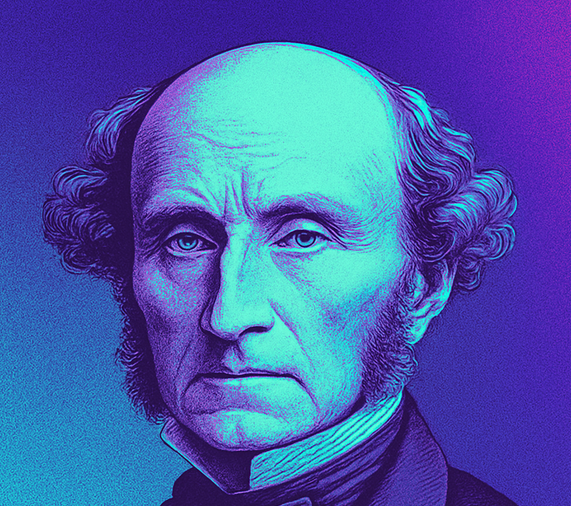
In the same year in which I began Latin, I made my first commencement in the Greek poet with the Iliad. After I had made some progress in this, my father put Pope's translation into my hands. It was the first English verse I had cared to read, and it became one of the books in which for many years I most delighted: I think I must have read it from twenty to thirty times through. I should not have thought it worth while to mention a taste apparently so natural to boyhood, if I had not, as I think, observed that the keen enjoyment of this brilliant specimen of narrative and versification is not so universal with boys, as I should have expected both à priori and from my individual experience.
▼
Source
([https://archive.org/details/autobiography01mill/page/10/mode/1up p. 10])
4 months 4 weeks ago
Now, apparently, many men are again feeling homesick for the herd. They devote themselves passionately to whatever there is left in them of the sheep. They want to march through life together, along the collective path, shoulder to shoulder, wool rubbing wool, and the head down. This is the reason why so many European peoples are looking for a shepherd and a sheep dog.
▼
Source
p. 170
4 months 4 weeks ago
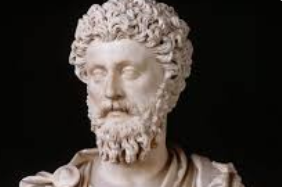
Not to display anger or other emotions. To be free of passion and yet full of love.
▼
Source
I, 9 (Hays translation)
4 months 4 weeks ago
Isolated material particles are abstractions, their properties being definable and observable only through their interaction with other systems.
▼
Source
"Atomic Physics and the Description of Nature" (1934)

4 months 4 weeks ago
Michel Foucault once characterized Derrida's prose style to me as "obscurantisme terroriste." The text is written so obscurely that you can't figure out exactly what the thesis is (hence "obscurantisme") and then when one criticizes it, the author says, "Vous m'avez mal compris; vous êtes idiot" ["You did not understand; you are an idiot"] (hence "terroriste").
▼
Source
John Searle, "The Word Turned Upside Down", The New York Review of Books, Volume 30, Number 16, October 27, 1983
4 months 4 weeks ago
Let a man be of good cheer about his soul, who has cast away the pleasures and ornaments of the body as alien to him, and rather hurtful in their effects, and has followed after the pleasures of knowledge in this life; who has adorned the soul in her own proper jewels, which are temperance, and justice, and courage, and nobility, and truth—in these arrayed she is ready to go on her journey to the world below, when her time comes. You, Simmias and Cebes, and all other men, will depart at some time or other. Me already, as the tragic poet would say, the voice of fate calls.

4 months 4 weeks ago
One day humanity will play with law just as children play with disused objects, not in order to restore them to their canonical use but to free them from it for good.
▼
Source
Chapter Four, p. 64.
4 months 4 weeks ago
But Bentham's subject was Legislation, of which Jurisprudence is only the formal part: and at every page he seemed to open a clearer and broader conception of what human opinions and institutions ought to be, how they might be made what they ought to be, and how far removed from it they now are. When I laid down the last volume of the Traité, I had become a different being. The "principle of utility" understood as Bentham understood it, and applied in the manner in which he applied it through these three volumes, fell exactly into its place as the keystone which held together the detached and fragmentary component parts of my knowledge and beliefs. It gave unity to my conceptions of things. I now had opinions; a creed, a doctrine, a philosophy; in one among the best senses of the word, a religion; the inculcation and diffusion of which could be made the principal outward purpose of a life. And I had a grand conception laid before me of changes to be effected in the condition of mankind through that doctrine. The Traité de Législation wound up with what was to me a most impressive picture of human life as it would be made by such opinions and such laws as were recommended in the treatise.
▼
Source
([https://archive.org/details/autobiography01mill/page/66/mode/1up pp. 66-67])
4 months 4 weeks ago
It is necessary to insist upon this extraordinary but undeniable fact: experimental science has progressed thanks in great part to the work of men astoundingly mediocre, and even less than mediocre. That is to say, modern science, the root and symbol of our actual civilization, finds a place for the intellectually commonplace man and allows him to work therein with success.
▼
Source
Chapter XII: The Barbarism Of "Specialisation"
4 months 4 weeks ago
Each of us lives only now, this brief instant.
▼
Source
III, 10 (Hays translation)
4 months 4 weeks ago
I remember discussions with Bohr which went through many hours till very late at night and ended almost in despair; and when at the end of the discussion I went alone for a walk in the neighbouring park I repeated to myself again and again the question: Can nature possibly be so absurd as it seemed to us in these atomic experiments?
▼
Source
Werner Heisenberg in Physics and Philosophy (1958)
4 months 4 weeks ago
True wisdom comes to each of us when we realize how little we understand about life, ourselves, and the world around us.
▼
Source
Sometimes presented as a direct quote, this was actually Manuel J. Smith's own general description of Socrates' teachings in his 1974 book When I Say No, I Feel Guilty, on [https://books.google.com/books?id=HHmKDQAAQBAJ&pg=PA65#v=onepage&q&f=false p. 65 o
4 months 4 weeks ago
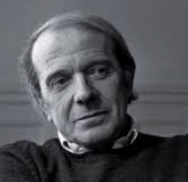
Second, we make no distinction between man and nature: the human essence of nature and the natural essence of man become one within nature in the form of production or industry, just as they do within the life of man as a species. Industry is then no longer considered from the extrinsic point of view of utility, but rather from the point of view of its fundamental identity with nature as production of man and by man.
▼
Source
The Desiring Machine

4 months 4 weeks ago
Ought I not to have been more careful to win the good opinion of others, more determined to conquer their hostility or indifference? It would have been a joy to me to be smiled upon, loved, encouraged, welcomed, and to obtain what I was so ready to give, kindness and goodwill. But to hunt down consideration and reputation — to force the esteem of others — seemed to me an effort unworthy of myself, almost a degradation. A struggle with unfavorable opinion has seemed to me beneath me, for all the while my heart has been full of sadness and disappointment, and I have known and felt that I have been systematically and deliberately isolated. Untimely despair and the deepest discouragement have been my constant portion. Incapable of taking any interest in my talents for their own sake, I let everything slip as soon as the hope of being loved for them and by them had forsaken me. A hermit against my will, I have not even found peace in solitude, because my inmost conscience has not been any better satisfied than my heart.
4 months 4 weeks ago
M. Comte soon left the St. Simonians, and I lost sight of him and his writings for a number of years. But the St. Simonians I continued to cultivate. I was kept au courant of their progress by one of their most enthusiastic disciples, M. ... I was introduced to their chiefs, Bazard and Enfantin, in 1830; and as long as their public teachings and proselytism continued, I read nearly everything they wrote. Their criticisms on the common doctrines of Liberalism seemed to me full of important truth; and it was partly by their writings that my eyes were opened to the very limited and temporary value of the old political economy, which assumes private property and inheritance as indefeasible facts, and freedom of production and exchange as the dernier mot of social improvement. The scheme gradually unfolded by the St. Simonians, under which the labour and capital of society would be managed for the general account of the community every individual being required to take a share of labour either as thinker, teacher, artist, or producer, all being classed according to their capacity, and remunerated according to their works, appeared to me a far superior description of Socialism to Owen's.
▼
Source
([https://archive.org/details/autobiography01mill/page/166/mode/1up pp. 166-167])
4 months 4 weeks ago
Without a strategic retreat into the self, without vigilant thought, human life is impossible. Call to mind all that mankind owes to certain great withdrawals into the self! It is no chance that all the great founders of religions preceded their apostolates by famous retreats. Buddha withdraws to the forest; Mahomet withdraws to his tent, and even there he withdraws from his tent by wrapping his head in his cloak; above all, Jesus goes apart into the desert for forty days.
▼
Source
p. 35
4 months 4 weeks ago
"Let your occupations be few," says the sage, "if you would lead a tranquil life."
▼
Source
Ὀλίγα πρῆσσε, φησίν, εἰ μέλλεις εὐθυμήσειν | IV, 24
4 months 4 weeks ago
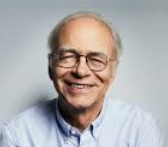
People do not feel in any way ashamed or guilty about spending money on new clothes or a new car instead of giving it to famine relief. (Indeed, the alternative does not occur to them.) This way of looking at the matter cannot be justified. When we buy new clothes not to keep ourselves warm but to look "well-dressed" we are not providing for any important need. We would not be sacrificing anything significant if we were to continue to wear our old clothes, and give the money to famine relief. By doing so, we would be preventing another person from starving. It follows from what I have said earlier that we ought to give money away, rather than spend it on clothes which we do not need to keep us warm. To do so is not charitable, or generous. Nor is it the kind of act which philosophers and theologians have called "supererogatory" - an act which it would be good to do, but not wrong not to do. On the contrary, we ought to give the money away, and it is wrong not to do so.

4 months 4 weeks ago
To have courage for whatever comes in life — everything lies in that.
▼
Source
As quoted in The Little Lamp (1981) by Eknath Easwaran, p. 80
4 months 4 weeks ago
Clever men will recognize and tolerate nothing but cleverness; every authority rouses their ridicule, every superstition amuses them, every convention moves them to contradiction. Only force finds favor in their eyes, and they have no toleration for anything that is not purely natural and spontaneous. And yet ten clever men are not worth one man of talent, nor ten men of talent worth one man of genius. And in the individual, feeling is more than cleverness, reason is worth as much as feeling, and conscience has it over reason. If, then, the clever man is not mockable, he may at least be neither loved, nor considered, nor esteemed. He may make himself feared, it is true, and force others to respect his independence; but this negative advantage, which is the result of a negative superiority, brings no happiness with it. Cleverness is serviceable for everything, sufficient for nothing.
▼
Source
16 February 1868
4 months 4 weeks ago
Reformers like Mill saw women's oppression as a 'relic of the past...discordant with the future and which must necessarily disappear.'
▼
Source
Maxine Molyneux Women's Movements in International Perspective: Latin America and Beyond (2000)
4 months 4 weeks ago
Nothing happens to anyone that he can't endure.
▼
Source
Nothing happens to anybody which he is not fitted by nature to bear. | V, 18 (Hays translation)
4 months 4 weeks ago
Living a minimally acceptable ethical life involves using a substantial part of our spare resources to make the world a better place. Living a fully ethical life involves doing the most good we can.
▼
Source
Preface (p. vii)
4 months 4 weeks ago
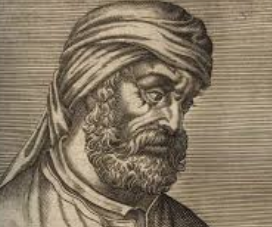
But the Christian verity has distinctly declared this principle, “God is not, if He is not one;” because we more properly believe that that has no existence which is not as it ought to be.
▼
Source
Book I, Chapter III.—The Unity of God. He is the Supreme Being, and There Cannot Be a Second Supreme.

4 months 4 weeks ago
There have been periods when our government continued free, with strong appearances of becoming absolute. Let it be your glory, my Lord, and that of the new generation springing up with you, that this government do not become absolute at any future period, with the appearances of being free.
▼
Source
p. 46
4 months 4 weeks ago
If you are distressed by anything external, the pain is not due to the thing itself, but to your estimate of it; and this you have the power to revoke at any moment.
▼
Source
VII, 11.
4 months 4 weeks ago
Herein also you ought to recognise the Paraclete in His character of Comforter, in that He excuses your infirmity from (the stringency of) an absolute continence.
▼
Source
Chapter 3
4 months 4 weeks ago
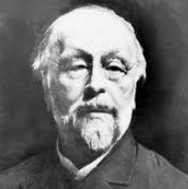
The production of a work of art is determined by the material and intellectual climate in which a man lives and dies.
▼
Source
Philosophy of Art (1865)
4 months 4 weeks ago
Every soul, the philosopher says, is involuntarily deprived of truth; consequently in the same way it is deprived of justice and temperance and benevolence and everything of the kind. It is most necessary to keep this in mind, for thus thou wilt be more gentle towards all.
▼
Source
VII, 63

4 months 4 weeks ago
Literary men are...a perpetual priesthood.
▼
Source
The State of German Literature.

4 months 4 weeks ago
The Prince himself has no distinction, either of garments, or of a crown; but is only distinguished by a sheaf of corn carried before him; as the high priest is also known by his being preceded by a person carrying a wax light.
▼
Source
Ch. 7 : Of Their Slaves, and of Their Marriages
4 months 4 weeks ago
Absolute atheism starts in an act of faith in reverse gear and is a full-blown religious commitment. Here we have the first internal inconsistency of contemporary atheism: it proclaims that all religion must necessarily vanish away, and it is itself a religious phenomena.
▼
Source
p. 106.
4 months 4 weeks ago
Language transcends us and yet, we speak.
▼
Source
p. 349
4 months 4 weeks ago
A man standing by a spring of clear, sweet water and cursing it. While the fresh water keeps on bubbling up. He can shovel mud into it, or dung, and the stream will carry it away, wash itself clean, remain unstained. (Hays translation)
▼
Source
Suppose that men kill thee, cut thee in pieces, curse thee. What then can these things do to prevent thy mind from remaining pure, wise, sober, just? For instance, if a man should stand by a limpid pure spring, and curse it, the spring never ceases sendin
4 months 4 weeks ago
It is no longer the moral, religious, spiritual condition of the people that is our concern, but their physical, practical, economical condition, as regulated by public laws.
4 months 4 weeks ago
O light! This is the cry of all the characters of ancient drama brought face to face with their fate. This last resort was ours, too, and I knew it now. In the middle of winter I at last discovered that there was in me an invincible summer.
▼
Source
Return to Tipasa (1954) | Variant translation: In the depths of winter, I finally learned that within me there lay an invincible summer. | As translated in Lyrical and Critical Essays (1968), p. 169; also in The Unquiet Vision : Mirrors of Man in Existent

4 months 4 weeks ago
When I found out this truth, that man in his original was a branch planted in God and that there was a continual influx from the stock to the Sion, I was much troubled at his corruptions, and wondered his fruits were not correspondent to his root. But when I was told he had tasted of an other tree, my admiration was quickly off, it being my chief care to reduce him to his first simplicity, and separate his mixtures of good & evil. But his fall had so bruised him in his best part, that his soul had no knowledge left to study him a cure. His punishment presently followed his trespass: "all things were hidden and oblivion, the mother of ignorance, entered in."

4 months 4 weeks ago
In Constructions that are equally Geometrical, the most simple are always to be preferr'd. This Law is so universal as to be without Exception. But Algebraick Expressions add nothing to the Simplicity of the Construction; the bare Descriptions of the Lines only are here to be consider'd and these alone were consider'd by those Geometricians who joyn'd a Circle with a right Line. And as these are easy or hard, the Construction becomes easy or hard: And therefore it is foreign to the Nature of the Thing, from any Thing else to establish Laws about Constructions. Either therefore let us, with the Antients, exclude all Lines besides the Circle, and perhaps the Conick Sections, out of Geometry, or admit all, according to the Simplicity of the Description. If the Trochoid were admitted into Geometry, we might, by its Means, divide an Angle in any given Ratio. Would you therefore blame those who should make Use of this Line... and contend that this Line was not defin'd by an Æquition, but that you must make use of such Lines as are defin'd by Æquations?
4 months 4 weeks ago
Disciplined inaction.
▼
Source
Review of the Causes of the Revolution of 1688 (1834), Chapter VII, paragraph 1.
4 months 4 weeks ago
Art thy not content that thou hast done something conformable to thy nature, and dost thou seek to be paid for it? Just as if the eye demanded recompense for seeing, or the feet for walking. For as these members are formed for a particular purpose... so also is man formed by nature to acts of benevolence.
▼
Source
IX, 42
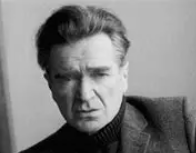
4 months 4 weeks ago
If I were to be totally sincere, I would say that I do not know why I live and why I do not stop living. The answer probably lies in the irrational character of life which maintains itself without reason.
4 months 4 weeks ago
Sarcasm I now see to be, in general, the language of the Devil; for which reason I have, long since, as good as renounced it.
▼
Source
Bk. II, ch. 4.
4 months 4 weeks ago
For the first time in a long time I thought about Maman. I felt as if I understood why at the end of her life she had taken a 'fiancé,' why she had played at beginning again. Even there, in that home where lives were fading out, evening was a kind of wistful respite. So close to death, Maman must have felt free then and ready to live it all again. Nobody, nobody had the right to cry over her. And I felt ready to live it all again too. As if the blind rage had washed me clean, rid me of hope; for the first time, in that night alive with signs and stars, I opened myself to the gentle indifference of the world. Finding it so much like myself — so like a brother, really — I felt I had been happy and that I was happy again. For everything to be consummated, for me to feel less alone, I had only to wish that there be a large crowd of spectators the day of my execution and that they greet me with cries of hate.
▼
Source
Variant translation: I, too, felt ready to start life all over again. It was as if that great rush of anger had washed me clean, emptied me of hope, and, gazing up at the dark sky spangled with its signs and stars, for the first time, the first, I laid my
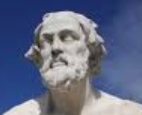
4 months 4 weeks ago
On the whole, however, the conclusions I have drawn from the proofs quoted may, I believe, safely be relied on. Assuredly they will not be disturbed either by the lays of a poet displaying the exaggeration of his craft, or by the compositions of the chroniclers that are attractive at truth's expense; the subjects they treat of being out of the reach of evidence, and time having robbed most of them of historical value by enthroning them in the region of legend.
▼
Source
Book I, 21-[1]
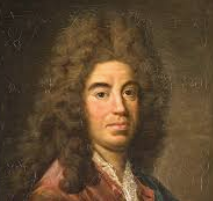
4 months 4 weeks ago
Profound ignorance makes a man dogmatical; he who knows nothing thinks he can teach others what he just now has learned himself; whilst he who knows a great deal can scarcely imagine any one should be unacquainted with what he says, and, therefore, speaks with more indifference.
▼
Source
76
4 months 4 weeks ago
The healthy eye ought to see all visible things and not to say, I wish for green things; for this is the condition of the diseased eye. And the healthy hearing and smelling ought to be ready to perceive all that can be heard and smelled. And the healthy stomach ought to be with respect to all food just as the mill with respect to all things which it is formed to grind. And accordingly the healthy understanding ought to be prepared for everything which happens; but that which says, Let my dear children live, and let all men praise whatever I may do, is an eye which seeks for green things, or teeth which seek for soft things.
▼
Source
X, 35
4 months 4 weeks ago
I don't understand how people can believe in God, even when I myself think of him everyday.
4 months 4 weeks ago
Under all speech that is good for anything there lies a silence that is better. Silence is deep as Eternity; speech is shallow as Time.
CivilSimian.com created by AxiomaticPanic, CivilSimian, Kalokagathia