
4 months 3 weeks ago
When I obey a rule, I do not choose. I obey the rule blindly.
▼
Source
§ 219

4 months 3 weeks ago
The principle that each group is entitled to its free development on its own lines is not inspired by any feeling of narrow communalism. There are communalisms and communalisms. A community which is inspired by feelings of ill-will towards other communities is low and ignoble. I entertain the highest respect for the customs, laws, religious and social institutions of other communities. Nay, it is my duty, according to the teaching of the Quran, even to defend their places of worship, if need be. Yet I love the communal group which is the source of my life and behaviour; and which has formed me what I am by giving me its religion, its literature, its thought, its culture, and thereby recreating its whole past as a living operative factor, in my present consciousness. Even the authors of the recognise the value of this higher aspect of communalism.
▼
Source
Sir Muhammad Iqbal’s 1930 Presidential Address to the 25th Session of the All-India Muslim League, Allahabad, 29 December 1930 (from [http://www.columbia.edu/itc/mealac/pritchett/00islamlinks/txt_iqbal_1930.html University of Columbia website]). Quoted by
4 months 3 weeks ago
An ounce of action is worth a ton of theory.
▼
Source
This expression is widely misattributed to Emerson in journalism, tweets, and memes on the internet. This quotation in an earlier phrasing of Jared Eliot's statement “It used to be the Saying of an old Man, That an Ounce of Experience is better than a Pou
4 months 3 weeks ago
If this were true, the population of the world would be at a stand-still. In truth, the rate of birth is slightly in excess of death. I would suggest that the next edition of your poem should read: “Every moment dies a man, every moment 1 1/16 is born.” Strictly speaking, the actual figure is so long I cannot get it into a line, but I believe the figure 1 1/16 will be sufficiently accurate for poetry.
▼
Source
New Scientist, 4 December 1958, pg.1428. | Comment in response to Alfred Tennyson’s poem Vision of Sin, which included the line Every moment dies a man, // every moment one is born.
4 months 3 weeks ago
To the mind of the ancients, who knew something of such matters, liberty and prosperity seemed hardly compatible, yet modern liberalism wants them together.
▼
Source
"The Irony of Liberalism"
4 months 3 weeks ago
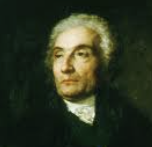
If sovereignty is not anterior to a people, at least these two ideas are collateral, since it takes a sovereign to make a people. It is as impossible to imagine a human society without a sovereign as a hive and a swarm without a queen, for a swarm, in virtue of the eternal laws of nature, exists in this way or it does not exist.
▼
Source
p. 53
4 months 3 weeks ago
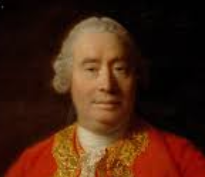
What would become of history, had we not a dependence on the veracity of the historian, according to the experience, what we have had of mankind?
▼
Source
§ 8.18

4 months 3 weeks ago
Pythagoras stands at the fountainhead of our culture. The ideas he set in motion were, according to Daniel Boorstin, "among the most potent in modern history," resulting directly in many of the pillars upon which the modern world is built. In particular, the very existence of science becomes possible only when it is realized that inner, purely subjective, mathematical forms have a resonance with the form and behavior of the external world — a Pythagorean perception. And a world at peace — that is to say, in a nuclear age, the survival of our planet — is predicated upon ideas of universal brotherhood to which Pythagoras, while not the sole author, made an enormous contribution. Even the seeming remoteness of Pythagorean teaching helps one to realize that the current world view, while it seems destined to dominate the planet, is fleeting and temporary and, like others before it, will pass.
4 months 3 weeks ago
You always hear people say that philosophy makes no progress and that the same philosophical problems which were already preoccupying the Greeks are still troubling us today. But people who say that do not understand the reason why it has to be so. The reason is that our language has remained the same and always introduces us to the same questions. ... I read: "philosophers are no nearer to the meaning of 'Reality' than Plato got,...". What a strange situation. How extraordinary that Plato could have got even as far as he did! Or that we could not get any further! Was it because Plato was so extremely clever?
▼
Source
p. 15e

4 months 3 weeks ago
Quite a few political economists advocate the thesis that a Robinson Crusoe — or what amounts to the same thing, a controlled economy — calculates in terms of profits and losses.
▼
Source
Otto Neurath (1935) "What is Meant by a Rational Economic Theory?" 1935/1987, p. 95; as cited in Cat (2014)
4 months 3 weeks ago
We are told of his mode of preparing an essay,—of the slow-growing medley of thoughts on a topic, at last brought out and strung at random, like a child's variegated beads.
▼
Source
Edmund Clarence Stedman, Poets of America (1885), p. 160
4 months 3 weeks ago
Miracles may be, for anything we know to the contrary, phenomena of a higher order of God's laws, superior to, and, under certain conditions, controlling the inferior order known to us as the ordinary laws of nature.
▼
Source
"Passages from the life of a philosopher", Appendix, p. 490
4 months 3 weeks ago
The idea of Christ is much older than Christianity.
▼
Source
The Idea of Christ in the Gospels (1946)
4 months 3 weeks ago
Do not listen to the reasoners; there has been too much reasoning in France, and reasoning has banished reason. Put aside your fears and reservations, and trust the infallible instinct of your conscience. Do you want to redeem yourselves in your own eyes? Do you want to acquire the right of self-esteem? Do you want to accomplish a sovereign act? . . . Recall your sovereign.
▼
Source
Chapter VIII, p. 76
4 months 3 weeks ago
But such is the nature of the human mind, that it always lays hold on every mind that approaches it; and as it is wonderfully fortified by an unanimity of sentiments, so is it shocked and disturbed by any contrariety. Hence the eagerness, which most people discover in a dispute; and hence their impatience of opposition, even in the most speculative and indifferent opinions.
▼
Source
Part I, Essay 8: Of Parties in General
4 months 3 weeks ago
Freud's fanciful pseudo-explanations (precisely because they are brilliant) perform a disservice. (Now any ass has these pictures available to use in "explaining" symptoms of an illness.
▼
Source
p. 55e

4 months 3 weeks ago
When we have but the will to do it, that very moment will Justice be done: that very instant the tyrants of the Earth shall bite the dust.
4 months 3 weeks ago
The proprietor of a pornographic book shop may be dimly conscious of a debt to the author of Areopagitica, but Milton is the last person he wants to see in his shop.
▼
Source
Popper and After: Four Modern Irrationalists, Oxford: Pergamon, 1982. Page 54.
4 months 3 weeks ago
Man, in wearing himself out his whole life long by saying: What is that! and what is that called! and what does that mean! is a big spectacle to himself if he wants to open his eyes. All his natural powers tending towards the truth, he never ceases looking for true names; he senses a language prior to that of Babel, and even of Eden.
▼
Source
p. 68
4 months 4 weeks ago
You need only look around you, replied PHILO, to satisfy yourself with regard to this question. A tree bestows order and organisation on that tree which springs from it, without knowing the order; an animal in the same manner on its offspring; a bird on its nest; and instances of this kind are even more frequent in the world than those of order, which arise from reason and contrivance. To say, that all this order in animals and vegetables proceeds ultimately from design, is begging the question; nor can that great point be ascertained otherwise than by proving, a priori, both that order is, from its nature, inseparably attached to thought; and that it can never of itself, or from original unknown principles, belong to matter.
▼
Source
Philo to Demea, Part VII
4 months 4 weeks ago
Three years after Einstein’s General Theory of Relativity was verified by Eddington, ending belief in fixed space and time, Ludwig Wittgenstein, one of the key figures of our period, published his Tractatus Logico-Philosophicus, which cumulatively over the decades tended to destroy confidence in philosophy as a guide to human reason. For half a century Wittgenstein’s influence on academic philosophy was immense. By the early 1990s doubts were raised about his sanity: was he a genius, or simply a madman? But by then much damage had been done. A leading Logical Positivist like Sir A.J. Ayer, who at the time of his death in 1989 was widely regarded as the world’s leading philosopher, remarked with some complacency that philosophy demonstrated that man was ignorant rather than knowledgeable: ‘[It] tends to show that we can’t really know lots of things which we think we know.’ Empirical popular knowledge, usually termed ‘common sense’, had been dismissed contemptuously by Bertrand Russell as ‘the metaphysics of savages’.
▼
Source
Paul Johnson, Modern Times: A History of the World from the 1920s to the 1980s, 1991
4 months 4 weeks ago
What economists call over-production is but a production that is above the purchasing power of the worker, who is reduced to poverty by Capital and State. Now, this sort of over-production remains fatally characteristic of the present capitalist production, because — Proudhon has already shown it — workers cannot buy with their salaries what they have produced and at the same time copiously nourish the swarm of idlers who live upon their work.The very essence of the present economic system is, that the worker can never enjoy the well-being he has produced, and that the number of those who live at his expense will always augment. The more a country is advanced in industry, the more this number grows. Inevitably, industry is directed, and will have to be directed, not towards what is needed to satisfy the needs of all, but towards that which, at a given moment, brings in the greatest temporary profit to a few. Of necessity, the abundance of some will be based on the poverty of others, and the straitened circumstances of the greater number will have to be maintained at all costs, that there may be hands to sell themselves for a part only of that which they are capable of producing; without which, private accumulation of capital is impossible!These characteristics of our economical system are its very essence. Without them, it cannot exist; for, who would sell his labor power for less than it is capable of bringing in, if he were not forced thereto by the threat of hunger?And those essential traits of the system are also its most crushing condemnation.

4 months 4 weeks ago
The saying, "Practice is everything," is Periander’s.
▼
Source
Periander, 6.
4 months 4 weeks ago
We accustom ourselves and our children to hypocrisy, to the practice of a double-faced morality. And since the brain is ill at ease among lies, we cheat ourselves with sophistry. Hypocrisy and sophistry become the second nature of the civilized man. But a society cannot live thus; it must return to truth or cease to exist.
▼
Source
Ch. 1 : Our Riches
4 months 4 weeks ago
He has not acquired a fortune; the fortune has acquired him.
▼
Source
Bion, 50.
4 months 4 weeks ago
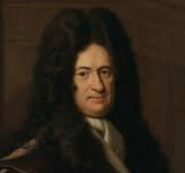
Thus there is nothing waste, nothing dead in the universe; no chaos, no confusions, save in appearence. We might compare this to the appearence of a pond in the distance, where we can see the confused movement and swarming of the fish, without distinguishing the fish themselves.Thus we are that each living body has a dominante entelechy, which in case of an animal is the soul, but the members of this living body are full of other living things, plants and animals, of which each has in turn ita dominant entelechy or soul.
▼
Source
Monadology (69-70).
4 months 4 weeks ago
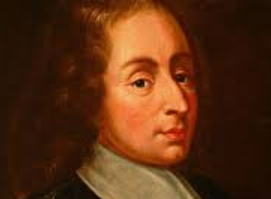
They [men] have corrupted this [God's supernatural] order by making profane things what they should make of holy things, because in fact, we believe scarcely any thing except which pleases us.
4 months 4 weeks ago
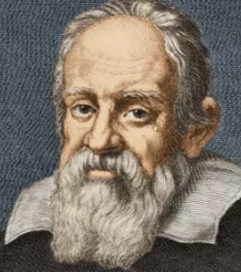
I cannot without great astonishment — I might say without great insult to my intelligence — hear it attributed as a prime perfection and nobility of the natural and integral bodies of the universe that they are invariant, immutable, inalterable, etc., while on the other hand it is called a great imperfection to be alterable, generable, mutable, etc. For my part I consider the earth very noble and admirable precisely because of the diverse alterations, changes, generations, etc. that occur in it incessantly. If, not being subject to any changes, it were a vast desert of sand or a mountain of jasper, or if at the time of the flood the waters which covered it had frozen, and it had remained an enormous globe of ice where nothing was ever born or ever altered or changed, I should deem it a useless lump in the universe, devoid of activity and, in a word, superfluous and essentially non-existent. This is exactly the difference between a living animal and a dead one; and I say the same of the moon, of Jupiter, and of all other world globes. The deeper I go in considering the vanities of popular reasoning, the lighter and more foolish I find them. What greater stupidity can be imagined than that of calling jewels, silver, and gold "precious," and earth and soil "base"? People who do this ought to remember that if there were as great a scarcity of soil as of jewels or precious metals, there would not be a prince who would not spend a bushel of diamonds and rubies and a cartload of gold just to have enough earth to plant a jasmine in a little pot, or to sow an orange seed and watch it sprout, grow, and produce its handsome leaves, its fragrant flowers, and fine fruit. It is scarcity and plenty that make the vulgar take things to be precious or worthless; they call a diamond very beautiful because it is like pure water, and then would not exchange one for ten barrels of water. Those who so greatly exalt incorruptibility, inalterability, etc. are reduced to talking this way, I believe, by their great desire to go on living, and by the terror they have of death. They do not reflect that if men were immortal, they themselves would never have come into the world. Such men really deserve to encounter a Medusa's head which would transmute them into statues of jasper or of diamond, and thus make them more perfect than they are.
▼
Source
Sagredo | Variant translation: I cannot without great wonder, nay more, disbelief, hear it being attributed to natural bodies as a great honor and perfection that they are impassable, immutable, inalterable, etc.: as conversely, I hear it esteemed a great
4 months 4 weeks ago
At present, when fraud and adulteration are exercised on such an immense scale in the manufacture of artificial manure, and the manufacture of manure is considered as a chemical process, when it ought to be considered as a physiological one, the gardener prefers to spend an unimaginable amount of labour rather than risk his crop by the use of a pompously labelled and unworthy drug. But it is a social obstacle which depends upon a want of knowledge and a bad social organisation, not upon physical causes.
4 months 4 weeks ago
The Stoics also teach that God is unity, and that he is called Mind and Fate and Jupiter, and by many other names besides.
▼
Source
Zeno, 68.
4 months 4 weeks ago
Let us not limit the resources of nature; they are infinite, especially when reinforced by great art.
4 months 4 weeks ago
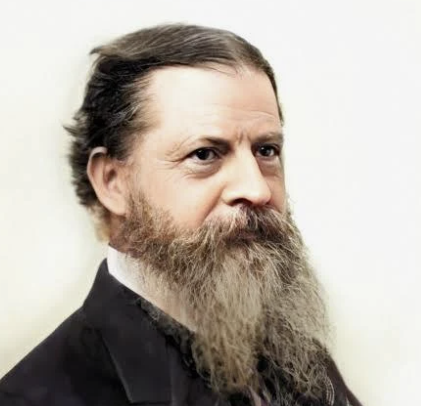
The entire universe is perfused with signs, if it is not composed exclusively of signs.
▼
Source
Quoted in Essays in Zoosemiotics (1990) by Thomas A. Sebeok ISSN 08385858 -->
4 months 4 weeks ago
The best books are those, which those who read them believe they themselves could have written.
4 months 4 weeks ago
I have never met a man so ignorant that I could not learn something from him.
▼
Source
As quoted in The Story of Civilization : The Age of Reason Begins, 1558-1648 (1935) by Will Durant, p. 605

4 months 4 weeks ago
Mathematics is as little a natural science as philosophy is one of the humanities. Philosophy in its essence belongs as little in the philosophical faculty as mathematics belongs to natural science. To house philosophy and mathematics in this way today seems to be a blemish or a mistake in the catalog of the universities. Plato put over the entrance to his Academy the words: "Let no one who has not grasped the mathematical enter here!" p. 69,75

4 months 4 weeks ago
Wise men mingle mirth with their cares, as a help either to forget or overcome them; but to resort to intoxication for the ease of one's mind is to cure melancholy by madness.
▼
Source
p. 268 (Intemperance)
4 months 4 weeks ago
Genius is often only the power of making continuous efforts. The line between failure and success is so fine that we scarcely know when we pass it — so fine that we are often on the line and do not know it. How many a man has thrown up his hands at a time when a little more effort, a little more patience, would have achieved success. As the tide goes clear out, so it comes clear in. In business sometimes prospects may seem darkest when really they are on the turn. A little more persistence, a little more effort, and what seemed hopeless failure may turn to glorious success. There is no failure except in no longer trying. There is no defeat except from within, no really insurmountable barrier save our own inherent weakness of purpose.
▼
Source
As quoted from Electrical Review (c. 1895) without further attribution in The Search for the North Pole (1896) by Evelyn Briggs Baldwin, p. 520, this was later published as part of various works by Hubbard, including FRA Magazine : A Journal of Affirmatio
4 months 4 weeks ago
Indeed, even this last moment will be recognized like the rest, at least, be just beginning to be so.
4 months 4 weeks ago
It is rather difficult to describe Heidegger’s face because he could never look straight into one’s eyes for long. His natural expression revealed a reflective brow, an inscrutable countenance, and downcast eyes, which now and again would cast a quick glance to assess the situation. Forced, in conversation, to look one straight in the face, he would appear reserved and insecure, for he lacked the gift of candid communication with other people. Hence his natural expression was one of cautious, peasant-sly mistrust
▼
Source
Karl Löwith, Heidegger’s colleague, as quoted in Ettinger, Hannah Arendt/Martin Heidegger, p. 11.
4 months 4 weeks ago
It is only mental habit that prevents us from realizing how miraculous it is that motion can be passed from one body to another. Once our eyes have opened, nothing is so striking. For those who have never thought about it, it doesn't seem mysterious; by contrast, those who have meditated on it may despair of ever understanding it.
4 months 4 weeks ago
Too often the reformer has been one who caused the rich to band themselves against the poor.
▼
Source
p. 14

4 months 4 weeks ago
When capitalism is negated, social processes no longer stand under the rule of blind natural laws. P. 318
4 months 4 weeks ago
It has become extremely questionable whether, in the flux of life, it is a genuinely worthwhile intellectual problem to seek to discover fixed and immutable ideas or absolutes. It is a more worthy intellectual task perhaps to learn to think dynamically and relationally rather than statically.
4 months 4 weeks ago
The next simplest feature that is common to all that comes before the mind, and consequently, the second category, is the element of Struggle.
▼
Source
Lecture II : The Universal Categories, § 2 : Struggle, CP 5.45
4 months 4 weeks ago
It will be easy for us once we receive the ball of yarn from Ariadne (love) and then go through all the mazes of the labyrinth (life) and kill the monster. But how many are there who plunge into life (the labyrinth) without taking that precaution?
▼
Source
Journal entry, August 1, 1835
4 months 4 weeks ago
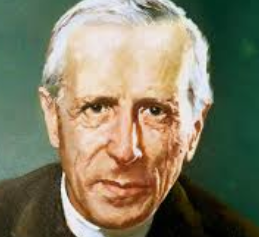
We realise... the fact and... reason for the diversity of animal behaviour. From the moment we regard evolution as... psychical transformation, we see... a multitude of forms of instincts each corresponding to a... solution of the problem of life. The 'psychical' make-up of an insect is not and cannot be that of a vertebrate ; nor can... that of a squirrel be that of a cat or... elephant: this in virtue of the positions... on the tree of life. ...We begin to see ...a gradation formed. If instinct is a variable dimension, the instincts will... create, beneath their complexity, a growing system. They will form as a whole a... fan-like structure in which the higher terms on each nervure are recognised... by a greater range of choice and depending on a better defined centre of coordination and consciousness. ...The 'psychical' make-up of a dog... is... superior to that of a mole or a fish. ...The upholders of the spiritual explanation have no need to be disconcerted when they see... in the higher animals (particularly in the great apes) ways and reactions which strangely recall... 'a reasoning soul'. If the story of life is no more than a movement of consciousness veiled by morphology, it is inevitable that... in the proximity of man, the 'psychical' make-ups seem to reach the borders of intelligence.
4 months 4 weeks ago
When you see a tomcat with his whiskers full of feathers, do not say "Canary!" — he'll take offense.
▼
Source
p. 159
4 months 4 weeks ago
Ideas, aspirations, and objectives that, by their content, transcend the established universe of discourse and action are either repelled or reduced to terms of this universe.
▼
Source
p. 12
4 months 4 weeks ago
The principle of interpretation says that "a sign is something by knowing which we know something more" (Peirce). The Peircean idea of semiosis is the idea of an infinite process of interpretation.
▼
Source
Umberto Eco, in Semiotics and the Philosophy of Language (1984), [O] : Introduction
4 months 4 weeks ago
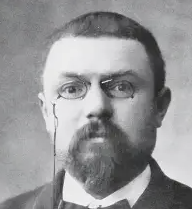
We should like to represent... the... universe, and... feel... we understood it. We... never can attain this representation: our weakness is too great. But... we desire... to conceive an infinite intelligence... which should see all, and... classify all in its time, as we classify, in our time, the little we see. ...This supreme intelligence would be only a ; infinite in one sense... limited in another, since it would have... imperfect recollection of the past... otherwise all recollections would be equally present... and for it there would be no time.
CivilSimian.com created by AxiomaticPanic, CivilSimian, Kalokagathia