
4 months 4 weeks ago
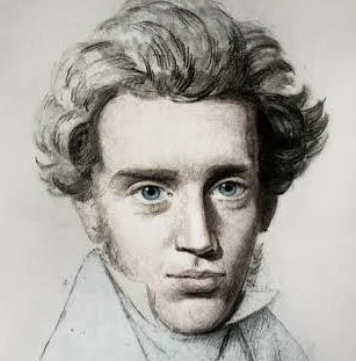
Since my earliest childhood a barb of sorrow has lodged in my heart. As long as it stays I am ironic — if it is pulled out I shall die.
▼
Source
1847
4 months 4 weeks ago
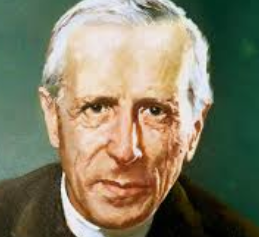
In every age, said scientist-philosopher Pierre Teilhard de Chardin, man has proclaimed himself at a turning point in history. " And to a certain extent, as he is advancing on a rising spiral, he has not been wrong. But there are moments when this impression of transformation becomes accentuated and is thus particularly justified." Teilhard prophesied the phenomenon central to this book: a conspiracy of men and women whose new perspective would trigger a critical contagion of change. Throughout history virtually all efforts to remake society began by altering its outward form and organization.
▼
Source
Marilyn Ferguson in The Aquarian Conspiracy, Chapter 1 (1980)
4 months 4 weeks ago
For if we may compare infinities, it would seem to require a greater infinity of power to cause the causes of effects, than to cause the effects themselves. This idea is analogous to the improving excellence observable in every part of the creation; such as in the progressive increase of the solid or habitable parts of the earth from water; and in the progressive increase of the wisdom and happiness of its inhabitants; and is consonant to the idea of our present situation being a state of probation, which by our exertion we may improve, and are consequently responsible for our actions.
▼
Source
Zoönomia, vol. 1 (1794).

4 months 4 weeks ago
The range of socially permissible and desirable satisfaction is greatly enlarged, but through this satisfaction, the Pleasure Principle is reduced—deprived of the claims which are irreconcilable with the established society. Pleasure, thus adjusted, generates submission.
▼
Source
p. 75
4 months 4 weeks ago
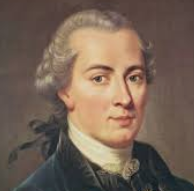
The force of the word World, as commonly used, of itself falls in with us. For no one will attribute accidents to the World as parts, but as determinations, states; hence the so-called world of the ego, unrestrained by the single substance and its accidents, is not very appositely called a World, unless, perhaps, an imaginary one.
4 months 4 weeks ago
If the ethical – that is, social morality – is the highest ... then no categories are needed other than the Greek philosophical categories.
▼
Source
Fear and Trembling, p. 55

4 months 4 weeks ago
When I say that this phase is necessary, the word phase is perhaps not the most rigorous one. It is not a question of a chronological phase, a given moment, or a page that one day simply will be turned, in order to go on to other things. The necessity of this phase is structural; it is the necessity of an interminable analysis: the hierarchy of dual oppositions always reestablishes itself. Unlike those authors whose death does not await their demise, the time for overturning is never a dead letter.
▼
Source
p. 41-42
4 months 4 weeks ago
There is nothing to write about, you say. Well, then, write and let me know just this,—that there is nothing to write about; or tell me in the good old style if you are well. That's right. I am quite well.
▼
Source
Letter 11, 1.
4 months 4 weeks ago
Without education, we are in a horrible and deadly danger of taking educated people seriously.
▼
Source
In The Illustrated London News (1905–1907)
4 months 4 weeks ago
The contemporary mathematical and symbolic logic is certainly very different from its classical predecessor, but they share the radical opposition to dialectical logic. In terms of this opposition, the old and the new formal logic express the same mode of thought. it is purged from that “negative” which loomed so large at the origins of logic and of philosophic thought — the experience of the denying, deceptive, falsifying power of the established reality. And with the elimination of this experience, the conceptual effort to sustain the tension between “is” and “ought”, and to subvert the established universe of discourse in the name of its own truth is likewise eliminated from all thought which is to be objective, exact, and scientific. For the scientific subversion of the immediate experience which establishes the truth of science as against that of immediate experience does not develop the concepts which carry in themselves the protest and the refusal. The new scientific truth which they oppose to the accepted one does not contain in itself the judgment that condemns the established reality. … In contrast, dialectical thought is and remains unscientific to the extent to which it is such judgment.
▼
Source
pp. 139-140
4 months 4 weeks ago
A public can only arrive at enlightenment slowly. Through revolution, the abandonment of personal despotism may be engendered and the end of profit-seeking and domineering oppression may occur, but never a true reform of the state of mind. Instead, new prejudices, just like the old ones, will serve as the guiding reins of the great, unthinking mass. All that is required for this enlightenment is freedom; and particularly the least harmful of all that may be called freedom, namely, the freedom for man to make public use of his reason in all matters. But I hear people clamor on all sides: Don't argue! The officer says: Don't argue, drill! The tax collector: Don't argue, pay! The pastor: Don't argue, believe!
4 months 4 weeks ago
The dead govern the living.
▼
Source
Le Catéchisme positiviste (1852)
4 months 4 weeks ago
Everyone who knows something about the dangers of reflection and the dangerous walk along the road of reflection also knows that it is dubious when a person, instead of getting out of the tension through resolution and action, becomes productive about his state in tension. Then there is no effort to get out of the state, but reflection fixes the situation for reflection and thereby fixes the man. The more richly thoughts and expressions offer themselves, the more briskly the productivity advances-in the wrong direction-the more dangerous it becomes and the more it hides from the person, concerned that his work, his extremely strenuous work, his very interesting (perhaps also for a third party who has a total view) work, is a work of bogging himself down deeper and deeper. That is, he does not work himself loose but works himself fast and becomes interesting to himself by reflecting on the tension and diverts himself with an utterly piecemeal productivity about detached details, with isolated short articles.
▼
Source
The Book of Adler, by Søren Kierkegaard, Hong 1998 p. 127

4 months 4 weeks ago
Indeed, it would probably be true to say that the fruit of metaphysical thought is not knowledge but understanding.
▼
Source
Metaphysics, [https://babel.hathitrust.org/cgi/pt?id=uc1.b4410806&seq=22 Introduction, p. 2]
4 months 4 weeks ago
ONE of the evil results of the political subjection of one people by another is that it tends to make the subject nation unnecessarily and excessively conscious of its past. Its achievements in the old great days of freedom are remembered, counted over and exaggerated by a generation of slaves, anxious to convince the world and themselves that they are as good as their masters. Slaves cannot talk of their present greatness, because it does not exist; and prophetic visions of the future are necessarily vague and unsatisfying. There remains the past. Out of the scattered and isolated facts of history it is possible to build up Utopias and Cloud Cuckoo Lands as variously fantastic as the New Jerusalems of prophecy. It is to the past — the gorgeous imaginary past of those whose present is inglorious, sordid, and humiliating — it is to the delightful founded-on-fact romances of history that subject peoples invariably turn. Thus, the savage and hairy chieftains of Ireland became in due course “the Great Kings of Leinster,” “the mighty Emperors of Meath.” Through centuries of slavery the Serbs remembered and idealised the heroes of Kossovo. And for the oppressed Poles, the mediaeval Polish empire was much more powerful, splendid, and polite than the Roman. The English have never been an oppressed nationality; they are in consequence most healthily unaware of their history. They live wholly in the much more interesting worlds of the present — in the worlds of politics and science, of business and industry. So fully, indeed, do they live in the present, that they have compelled the Indians, like the Irish at the other end of the world, to turn to the past. In the course of the last thirty or forty years a huge pseudo-historical literature has sprung up in India, the melancholy product of a subject people’s inferiority complex. Industrious and intelligent men have wasted their time and their abilities in trying to prove that the ancient Hindus were superior to every other people in every activity of life. Thus, each time the West has announced a new scientific discovery, misguided scholars have ransacked Sanskrit literature to find a phrase that might be interpreted as a Hindu anticipation of it. A sentence of a dozen words, obscure even to the most accomplished Sanskrit scholars, is triumphantly quoted to prove that the ancient Hindus were familiar with the chemical constitution of water. Another, no less brief, is held up as the proof that they anticipated Pasteur in the discovery of the microbic origin of disease. A passage from the mythological poem of the Mahabharata proves that they had invented the Zeppelin. Remarkable people, these old Hindus. They knew everything that we know or, indeed, are likely to discover, at any rate until India is a free country; but they were unfortunately too modest to state the fact baldly and in so many words. A little more clarity on their part, a little less reticence, and India would now be centuries ahead of her Western rivals. But they preferred to be oracular and telegraphically brief. It is only after the upstart West has repeated their discoveries that the modern Indian commentator upon their works can interpret their dark sayings as anticipations. On contemporary Indian scholars the pastime of discovering and creating these anticipations never seems to pall. Such are the melancholy and futile occupations of intelligent men who have the misfortune to belong to a subject race. Free men would never dream of wasting their time and wit upon such vanities. From those who have not shall be taken away even that which they have.
▼
Source
Jesting Pilate: An Intellectual Holiday (1926). pp. 141-143.
4 months 4 weeks ago
These are the days when the Christian is expected to praise every creed except his own.
▼
Source
In The Illustrated London News (11 August 1928)
4 months 4 weeks ago
Human reason has this peculiar fate that in one species of its knowledge it is burdened by questions which, as prescribed by the very nature of reason itself, it is not able to ignore, but which, as transcending all its powers, it is also not able to answer.
▼
Source
Preface, A vii
4 months 4 weeks ago
For a man to love again where he is loved, it is the charity of publicans contracted by mutual profit and good offices; but to love a man's enemies is one of the cunningest points of the law of Christ, and an imitation of the divine nature.
▼
Source
Of The Exaltation of Charity
4 months 4 weeks ago
Between God and man there is and remains an eternal, essential, qualitative difference. The paradoxical relationship (which, quite rightly, cannot be thought, but only believed) appears when God appoints a particular man to divine authority, in relation, be it carefully noted, to that which has entrusted to him.
▼
Source
P. 99
4 months 4 weeks ago
The creative faculty, the god-power, is not used here with anything less than literalness. When beauty was created by a godly mind, beauty existed, as surely as the paintings of Botticelli or the concerti of Vivaldi exist. When mercy was created, mercy existed. When guilt was created, guilt existed. Out of a meaningless and pointless existence, we have made meaning and purpose; but since this creative act happens only when we relax after great strain, we feel it as 'pouring into us' from elsewhere. Thus, we do not know our own godhood and we are perpetually swindled by those who assure us that it is indeed elsewhere, but they can give us access to it, for a reasonable fee. And when we as a species were ignorant enough to be duped in that way, the swindlers went one step further, invented original sin and other horrors of that sort, and made us even more 'dependent' upon them.
▼
Source
The Historical Illuminatus as spoken by Sigismundo Celine
4 months 4 weeks ago
Be gentle with them, Timothy. They want to be free, but they don't know how. Teach them. Reassure them.
▼
Source
Reported to be Huxley's last words to Timothy Leary, which Huxley whispered from his deathbed. Quoted in
4 months 4 weeks ago
'My country, right or wrong' is a thing that no patriot would think of saying, except in a desperate case. It is like saying, 'My mother, drunk or sober'.
▼
Source
"A Defence of Patriotism"
4 months 4 weeks ago
We can only learn to love by loving.
▼
Source
The Bell (1958), ch. 19; 2001, p. 219.
4 months 4 weeks ago
He [Jesus] combines all duties (1) in one universal rule (which includes within itself both the inner and the outer moral relations of men), namely: Perform your duty for no motive other than unconditioned esteem for duty itself, i.e., love God (the Legislator of all duties) above all else; and (2) in a particular rule, that, namely, which concerns man’s external relation to other men as universal duty: Love every one as yourself, i.e., further his welfare from good-will that is immediate and not derived from motives of self-advantage. These commands are not mere laws of virtue but precepts of holiness which we ought to pursue, and the very pursuit of them is called virtue. Accordingly he destroys the hope of all who intend to wait upon this moral goodness quite passively, with their hands in their laps, as though it were a heavenly gift which descends from on high. He who leaves unused the natural predisposition to goodness which lies in human nature (like a talent entrusted to him) in lazy confidence that a higher moral influence will no doubt supply the moral character and completeness which he lacks, is confronted with the threat that even the good which, by virtue of his natural predisposition, he may have done, will not be allowed to stand him in stead because of this neglect (XXV, 29).
▼
Source
Book IV, Part 1, Section 1, “The Christian religion as a natural religion”
4 months 4 weeks ago
Man, being the servant and interpreter of Nature, can do and understand so much and so much only as he has observed in fact or in thought of the course of nature. Beyond this he neither knows anything nor can do anything.
▼
Source
Aphorism 1
4 months 4 weeks ago
I do not know, my listener, what your crime, your guilt, your sins are, but surely we are all more or less of the guilt of loving only little. Take comfort, then, in these words just as I take comfort in them. P. 173-174
4 months 4 weeks ago
Discretion, like the hole in a doughnut, does not exist except as an area left open by a surrounding belt of restriction. It is therefore a relative concept. It always makes sense to ask, "Discretion under which standards?" or "Discretion as to which authority?"
▼
Source
Taking Rights Seriously (1978), p. 31
4 months 4 weeks ago
If we could sniff or swallow something that would, for five or six hours each day, abolish our solitude as individuals, atone us with our fellows in a glowing exaltation of affection and make life in all its aspects seem not only worth living, but divinely beautiful and significant, and if this heavenly, world-transfiguring drug were of such a kind that we could wake up next morning with a clear head and an undamaged constitution-then, it seems to me, all our problems (and not merely the one small problem of discovering a novel pleasure) would be wholly solved and earth would become paradise.
▼
Source
Wanted, A New Pleasure
4 months 4 weeks ago
I cannot understand the people who take literature seriously; but I can love them, and I do. Out of my love I warn them to keep clear of this book. It is a collection of crude and shapeless papers upon current or rather flying subjects; and they must be published pretty much as they stand. They were written, as a rule, at the last moment; they were handed in the moment before it was too late, and I do not think that our commonwealth would have been shaken to its foundations if they had been handed in the moment after. They must go out now, with all their imperfections on their head, or rather on mine; for their vices are too vital to be improved with a blue pencil, or with anything I can think of, except dynamite. Their chief vice is that so many of them are very serious; because I had no time to make them flippant. It is so easy to be solemn; it is so hard to be frivolous.
▼
Source
"The Case for the Ephemeral"
4 months 4 weeks ago
There’s something in her archness, not a tone I’d normally think to emulate, but there’s something delicious in it. Her people might be murdering and raping but really they’re thinking about what goodness is in the world, bizarre juxtapositions of that kind.
▼
Source
Louise Glück [https://www.pw.org/content/internal_tapestries Interview] (2014)
4 months 4 weeks ago
There must be a seed of every good thing in the character of men, otherwise no one can bring it out. Lacking that, analogous motives, honor, etc., are substituted. Parents are in the habit of looking out for the inclinations, for the talents and dexterity, perhaps for the disposition of their children, and not at all for their heart or character.
▼
Source
Part III : Selection on Education from Kant's other Writings, Ch. I Pedagogical Fragments, # 13
4 months 4 weeks ago
Truth will sooner come out from error than from confusion.
▼
Source
Aphorism 20
4 months 4 weeks ago
If you label me, you negate me.
▼
Source
As attributed in Cosmopolitan, January 1974, p. 36. | Variants: | I am no part of a whole, I am not integrated, not included. To put me in this whole you imagine is to negate me. | Attributed as part of Kierkegaard's response to Hegel in the article [http
4 months 4 weeks ago
Burke, could he see our century, never would concede that a consumption-society is the end for which Providence has prepared man.
4 months 4 weeks ago
Many Catholic mystics have affirmed that, at a certain stage of that contemplative prayer in which, according to the most authoritative theologians, the life of Christian perfection ultimately consists, it is necessary to put aside all thought of the Incarnation as distracting from the higher knowledge of that which has been incarnated. From this fact have arisen misunderstandings in plenty and a number of intellectual difficulties.
4 months 4 weeks ago
Marriage is a duel to the death, which no man of honour should decline.
▼
Source
Michael Moon in Part II, ch. IV
4 months 4 weeks ago
”Prussia,” remarked Mirabeau, ”is not a state with an army, but an army with a state.” And the state, which was run with the efficiency and soullessness of a factory, became all; the people were little more than cogs in the machinery. Individuals were taught not only by the kings and the drill sergeants but by the philosophers that their role in life was one of obedience, work, sacrifice and duty. Even Kant preached that duty demands the suppression of human feeling…
▼
Source
William L. Shirer, The Rise and Fall of the Third Reich: A History of Nazi Germany, chapter 4: “The Mind of Hitler and the Roots of the Third Reich”
4 months 4 weeks ago
The best doctor is the one you run for and can't find.
▼
Source
As quoted in Selected Thoughts from the French: XV Century - XX Century, with English Translations (1913) by James Raymond Solly, p. 67
4 months 4 weeks ago
Integrity has a high psychological and philosophical value, for many people it is a highest value, it associate with health of soul. Dualism, contradiction, torments of hesitation - is something of illness, integrity is health, people strive for it instinctively.
▼
Source
Ch.17 (In Russian, Последняя книга,1999,
4 months 4 weeks ago
I was seeing what Adam had seen on the morning of his creation — the miracle, moment by moment, of naked existence.
▼
Source
Pages 160-61
4 months 4 weeks ago
To-morrow is the time I get my pay —My uncle’s sword is hanging in the hall —I see a little cloud all pink and grey —Perhaps the rector’s mother will not call —I fancy that I heard from Mr. GallThat mushrooms could be cooked another way —I never read the works of Juvenal —I think I will not hang myself to-day.The world will have another washing day;The decadents decay; the pedants pall;And H. G. Wells has found that children play,And Bernard Shaw discovered that they squall;Rationalists are growing rational —And through thick woods one finds a stream astray,So secret that the very sky seems small —I think I will not hang myself to-day.
▼
Source
A Ballade of Suicide, sts. 2 and 3
4 months 4 weeks ago
Genius is present in every age, but the men carrying it within them remain benumbed unless extraordinary events occur to heat up and melt the mass so that it flows forth.

4 months 4 weeks ago
If our intention now is to reveal classical unreason on its own terms, outside of its ties with dreams and error, it must be understood not as a form of reason that is somehow diseased, lost or mad, but quite simply as reason dazzled.
▼
Source
Part Two: 2. The Transcendence of Delirium

4 months 4 weeks ago
What did today's sacrifices matter: the Universe lay ahead in the future. What did burnings at the stake and massacres matter? The Universe was somewhere else, always somewhere else! And it isn't anywhere: there are only men, men eternally divided.
▼
Source
p. 201
4 months 4 weeks ago
No Dutch, no English, and therefore no planters, no coolie labour, no cash crops, no systematic exhaustion of our soil. Also no whisky, no Calvinism, no syphilis, no foreign administrators. We were left to go our own way and take responsibility for our own affairs.
4 months 4 weeks ago
If there is one fact we really can prove, from the history that we really do know, it is that despotism can be a development, often a late development and very often indeed the end of societies that have been highly democratic. A despotism may almost be defined as a tired democracy. As fatigue falls on a community, the citizens are less inclined for that eternal vigilance which has truly been called the price of liberty; and they prefer to arm only one single sentinel to watch the city while they sleep.
4 months 4 weeks ago
All students of man and society who possess that first requisite for so difficult a study, a due sense of its difficulties, are aware that the besetting danger is not so much of embracing falsehood for true, as of mistaking part of the truth for the whole.
▼
Source
“Coleridge”. London and Westminster Review. (March 1840)
4 months 4 weeks ago
It is said that desire is a product of the will, but the converse is in fact true: will is a product of desire.
▼
Source
"Will, Freedom”
4 months 4 weeks ago
It proved necessary, therefore, to control these illicit practices and introduce new legislation to cover them. The offenses had to be properly defined and more surely punished; out of this mass of irregularities, sometimes tolerated and sometimes punished with a severity out of all proportion to the offense, one had to determine what was an intolerable offense, and the offenders had to be apprehended and punished. With the new forms of capital accumulation, new relations of production and the new legal status of property, all the popular practices that belonged, either in a silent, everyday, tolerated form, or in a violent form, to the illegality of rights were reduced by force to an illegality of property. In that movement which transformed a society of juridico-political levies into a society of the appropriation of the means and products of labour, theft tended to become the first of the great loopholes in legality. Or, to put it another way, the economy of illegalities was restructured with the development of capitalist society. The illegality of property was separated from the illegality of rights. This distinction represents a class opposition because, on the one hand, the illegality that was to be most accessible to the lower classes was that of property – the violent transfer of ownership – and because, on the other, the bourgeoisie was to reserve to itself the illegality of rights: the possibility of getting round its own regulations and its own laws, of ensuring for itself an immense sector of economic circulation by a skillful manipulation of gaps in the law – gaps that were foreseen by its silences, or opened up by de facto tolerance. And this great redistribution of illegalities was even to be expressed through a specialization of the legal circuits: for illegalities of property – for theft – there were the ordinary courts and punishments; for the illegalities of rights – fraud, tax evasion, irregular commercial operations – special legal institutions applied with transactions, accommodations, reduced fines, etc. The bourgeoisie reserved to itself the fruitful domain of the illegality of rights. And at the same time as this split was taking place, there emerged the need for a constant policing concerned essentially with this illegality of property. It became necessary to get rid of the old economy of the power to punish, based on the principles of the confused and inadequate multiplicity of authorities, the distribution and concentration of the power correlative with actual inertia and inevitable tolerance, punishments that were spectacular in their manifestations and haphazard in their application. It became necessary to define a strategy and techniques of punishment in which an economy of continuity and permanence would replace that of expenditure and excess. In short, penal reform was born at the point of junction between the struggle against the super-power of the sovereign and that against the infra-power of acquired and tolerated illegalities.
▼
Source
Chapter Two, Generalized Punishment, pp.87
4 months 4 weeks ago
Society cares about the individual only in so far as he is profitable. The young know this. Their anxiety as they enter in upon social life matches the anguish of the old as they are excluded from it.
▼
Source
Conclusion, p. 543
CivilSimian.com created by AxiomaticPanic, CivilSimian, Kalokagathia