
4 months 3 weeks ago
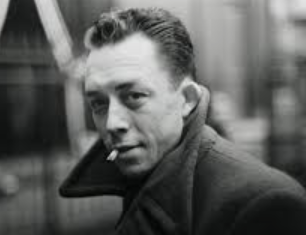
So many men are deprived of grace. How can one live without grace? One has to try it and do what Christianity never did: be concerned with the damned.
4 months 3 weeks ago
The Thracian people, like the bloodiest of the barbarians, being ever most murderous when it has nothing to fear.
▼
Source
Book VII, 7.29-[4]
4 months 3 weeks ago
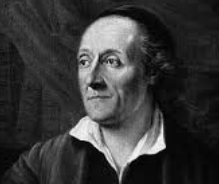
The more honesty a man has, the less he affects the air of a saint — the affectation of sanctity is a blotch on the face of piety.
▼
Source
No. 200
4 months 3 weeks ago
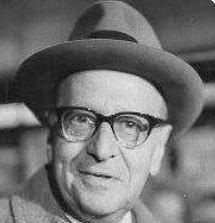
The significance of God, cause, number, substance or soul consists, as James asserts, in nothing but the tendency of the given concept to make us act or think. If the world should reach a point at which it ceases to care not only about such metaphysical entities but also about murders perpetrated behind closed frontiers or simply in the dark, one would have to conclude that the concepts of such murders have no meaning, that they represent no ‘distinct ideas’ or truths, since they do not make any ‘sensible difference to anybody.’
▼
Source
describing the pragmatist view, pp. 46-47.
4 months 3 weeks ago
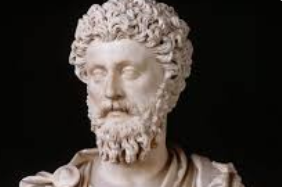
The Emperor Cæsar Marcus Aurelius Antoninus, Germanicus, Parthicus, Sarmaticus, to the People of Rome, and to the sacred Senate greeting: I explained to you my grand design, and what advantages I gained on the confines of Germany, with much labour and suffering, in consequence of the circumstance that I was surrounded by the enemy; I myself being shut up in Carnuntum by seventy-four cohorts, nine miles off. And the enemy being at hand, the scouts pointed out to us, and our general Pompeianus showed us that there was close on us a mass of a mixed multitude of 977,000 men, which indeed we saw; and I was shut up by this vast host, having with me only a battalion composed of the first, tenth, double and marine legions. Having then examined my own position, and my host, with respect to the vast mass of barbarians and of the enemy, I quickly betook myself to prayer to the gods of my country. But being disregarded by them, I summoned those who among us go by the name of Christians. And having made inquiry, I discovered a great number and vast host of them, and raged against them, which was by no means becoming; for afterwards I learned their power. Wherefore they began the battle, not by preparing weapons, nor arms, nor bugles; for such preparation is hateful to them, on account of the God they bear about in their conscience. Therefore it is probable that those whom we suppose to be atheists, have God as their ruling power entrenched in their conscience. For having cast themselves on the ground, they prayed not only for me, but also for the whole army as it stood, that they might be delivered from the present thirst and famine. For during five days we had got no water, because there was none; for we were in the heart of Germany, and in the enemy's territory. And simultaneously with their casting themselves on the ground, and praying to God (a God of whom I am ignorant), water poured from heaven, upon us most refreshingly cool, but upon the enemies of Rome a withering hail. And immediately we recognised the presence of God following on the prayer -- a God unconquerable and indestructible. Founding upon this, then, let us pardon such as are Christians, lest they pray for and obtain such a weapon against ourselves. And I counsel that no such person be accused on the ground of his being a Christian. But if any one be found laying to the charge of a Christian that he is a Christian, I desire that it be made manifest that he who is accused as a Christian, and acknowledges that he is one, is accused of nothing else than only this, that he is a Christian; but that he who arraigns him be burned alive. And I further desire, that he who is entrusted with the government of the province shall not compel the Christian, who confesses and certifies such a matter, to retract; neither shall he commit him. And I desire that these things be confirmed by a decree of the Senate. And I command this my edict to be published in the Forum of Trajan, in order that it may be read. The prefect Vitrasius Pollio will see that it be transmitted to all the provinces round about, and that no one who wishes to make use of or to possess it be hindered from obtaining a copy from the document I now publish.
▼
Source
Saint Justin Martyr, The First Apology of Justin Martyr (c. 155 A.D.)
4 months 3 weeks ago
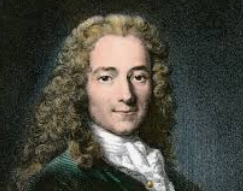
A republic is not founded on virtue, but on the ambition of its citizens.
▼
Source
p. 57
4 months 3 weeks ago
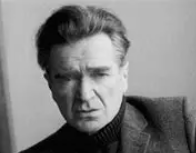
Espousing the melancholy of ancient symbols, I would have freed myself.

4 months 3 weeks ago
I should say sincerity, a deep, great, genuine sincerity, is the first characteristic of all men in any way heroic.
4 months 3 weeks ago
Nothing can discourage the appetite for divinity in the heart of man.
4 months 3 weeks ago
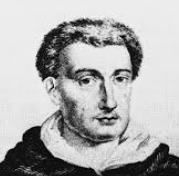
I learn more from the anatomy of an ant or a blade of grass...than from all the books which have been written since the beginning of time. This is so, since I have begun...to read the book of God...the model according to which I correct the human books which have been copied badly and arbitrarily and without attention to the things that are written in the original book of the Universe.
▼
Source
"Letter of 1607", as cited by Eisenstein, Elizabeth L., 2012, The Printing Revolution in Early Modern Europe, Cambridge University Press, p. 218.
4 months 3 weeks ago
One can imagine a computer simulation of the action of peptides in the hypothalamus that is accurate down to the last synapse. But equally one can imagine a computer simulation of the oxidation of hydrocarbons in a car engine or the action of digestive processes in a stomach when it is digesting pizza. And the simulation is no more the real thing in the case of the brain than it is in the case of the car or the stomach. Barring miracles, you could not run your car by doing a computer simulation of the oxidation of gasoline, and you could not digest pizza by running the program that simulates such digestion. It seems obvious that a simulation of cognition will similarly not produce the effects of the neurobiology of cognition.
▼
Source
"Is the Brain’s Mind a Computer Program?", Scientific American (January 1990).
4 months 3 weeks ago
Most of the pathetic scenes in almost everybody's life are scenes unnoted by anyone and totally disregarded by the person in question.
▼
Source
A Glastonbury Romance (1932; 1955) p. 849
4 months 3 weeks ago
With the world, do not resort to injuries, but only to irony and gayety: injury revolts, while irony makes one reflect, and gayety disarms.
▼
Source
p. 180
4 months 3 weeks ago
Man starts over again everyday, in spite of all he knows, against all he knows.
4 months 3 weeks ago
At bottom, it is the Poet's first gift, as it is all men's, that he have intellect enough. He will be a Poet if he have: a Poet in word; or failing that, perhaps still better, a Poet in act. Whether he write at all; and if so, whether in prose or in verse, will depend on accidents: who knows on what extremely trivial accidents, — perhaps on his having had a singing-master, on his being taught to sing in his boyhood! But the faculty which enables him to discern the inner heart of things, and the harmony that dwells there (for whatsoever exists has a harmony in the heart of it, or it would not hold together and exist), is not the result of habits or accidents, but the gift of Nature herself; the primary outfit for a Heroic Man in what sort soever. To the Poet, as to every other, we say first of all, See. If you cannot do that, it is of no use to keep stringing rhymes together, jingling sensibilities against each other, and name yourself a Poet; there is no hope for you. If you can, there is, in prose or verse, in action or speculation, all manner of hope. The crabbed old Schoolmaster used to ask, when they brought him a new pupil, 'But are ye sure he's not a dunce?' Why, really one might ask the same thing, in regard to every man proposed for whatsoever function; and consider it as the one inquiry needful: Are ye sure he's.
4 months 3 weeks ago
Truth, like light, blinds. Falsehood, on the contrary, is a beautiful twilight that enhances every object.
4 months 3 weeks ago
We know nothing accurately in reality, but [only] as it changes according to the bodily condition, and the constitution of those things that flow upon [the body] and impinge upon it.
▼
Source
Freeman (1948), p. 142
4 months 3 weeks ago
A curious paradox: people have only the narrowest private interest in mind when they act, yet they are at the same time more than ever determined in their behavior by the instincts of the mass. ... The diversity of individual goals is immaterial in face of the identity of the determining forces.
▼
Source
p. 451
4 months 3 weeks ago
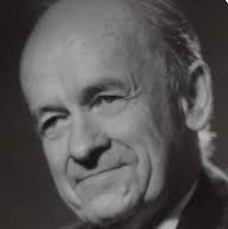
I have only one real message in this lecture, and that is: consciousness is a biological phenomenon, like photosynthesis, digestion, mitosis—you know all the biological phenomena—and once you accept that, most, if not all about the hard problems of consciousness simply evaporate.
4 months 3 weeks ago
The innovator, however, must in the first place be discontented, he must doubt the value of what he is doing or question the accepted ways of doing it. And secondly, he must be prepared to take fresh paths, to venture into fields where he is by no means expert. This is true, at least, of major forms of innovation; they make it possible for other men to be expert, but are not themselves forms of expertise. Freud was not an expert psycho-analyst; before Freud wrote there was no such thing; he created the standards by which psycho-analysts are judged expert. Neither was Marx an expert in interpreting history in economic terms nor Darwin an expert in evolutionary biology. If a man is trained, purely and simply, to be expert and contented in a particular task he will not innovate; Freud would have remained an anatomist, Marx a philosopher, Darwin a field-naturalist.
▼
Source
p. 282.
4 months 3 weeks ago
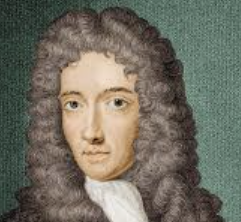
And that you may know... what kind of writings I mean, I shall name to you the learned Gassendus his little Syntagma of Epicuruss philosophy, and that most ingenious gentleman Monsieur Descartes his principles of philosophy. For though I purposely refrained, though not altogether from transiently consulting about a few particulars, yet from seriously and orderly reading over those excellent (though disagreeing) books, or so much as Sir Francis Bacon's Novum Organum, that I might not be prepossessed with any theory or principles, till I had spent some time in trying what things themselves would incline me to think; yet beginning now to allow myself to read those excellent books, I find by the little I have read in them already, that if I had read them before I began to write, I might have enriched the ensuing essays with divers truths, which they now want, and have explicated divers things much better than I fear I have done.
4 months 3 weeks ago
Mock on, mock on, Voltaire Rousseau;Mock on, mock on, 'tis all in vain!You throw the sand against the wind,And the wind blows it back again.
▼
Source
William Blake, Poems from Blake's Notebook, "Mock On" (1800-1803)
4 months 3 weeks ago
Death poses a problem which replaces all the others. What is deadly to philosophy, to the naive belief in the hierarchy of perplexities.
4 months 3 weeks ago
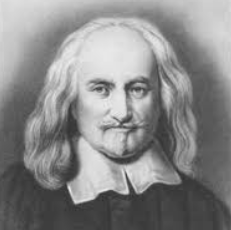
But Aversion wee have for things, not only which we know have hurt us; but also that we do not know whether they will hurt us, or not.
▼
Source
The First Part, Chapter 6, p. 24
4 months 3 weeks ago
I esteem the modern error, That all goes by self-interest and the checking and balancing of greedy knaveries, and that in short, there is nothing divine whatever in the association of men, a still more despicable error, natural as it is to an unbelieving century, than that of a "divine right" in people called Kings. I say, Find me the true Konning, King, or Able-man, and he has a divine right over me.
4 months 3 weeks ago
He who intends to enjoy life should not be busy about many things, and in what he does should not undertake what exceeds his natural capacity. On the contrary, he should have himself so in hand that even when fortune comes his way, and is apparently ready to lead him on to higher things, he should put her aside and not o'erreach his powers. For a being of moderate size is safer than one that bulks too big.
4 months 3 weeks ago
The will to power is weakness as well as strength, and the more it is cut off and isolated from the rest of the human personality, the more desperate, in its weakness, it can become.
▼
Source
Chapter Six, The Flight From Laputa, p. 121
4 months 3 weeks ago
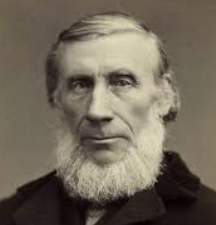
Discussion, therefore, is one of the motive powers of life, and, as such, is not to be deprecated.
4 months 3 weeks ago
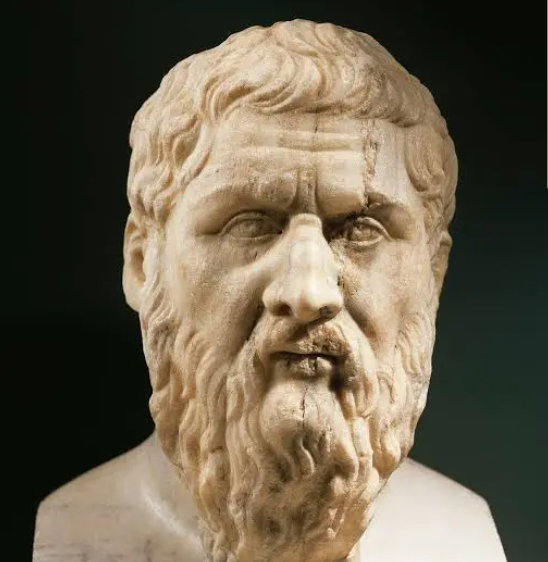
The whole business of the kingly weaving is comprised in this and this alone: in never allowing the self-restrained characters to be separated from the courageous, but in weaving them together by common beliefs and honors and dishonors and opinions and interchanges of pledges, thus making of them a smooth and, as we say, well-woven fabric, and then entrusting to them in common forever the offices of the state.
▼
Source
310e-311a
4 months 3 weeks ago
It is somewhat strange to me, that neither the Spagyrists themselves, nor yet their Adversaries, should have taken notice that Chymists have rather supposed than evinced, that the Analysis of bodies by fire, or even that at least some Analysis is the onely instrument of investigating what Ingredients mixt bodies are made up of, since in divers cases That may be discovered by Composition as well as by Resolution; as it may appear, that consists of metalline parts (whether Martial, or Venereal, or both) associated by Coagulation with ones, one may, I say, discover this as well by making true Vitriol with Spirit (improperly called Oil) of Sulphur, or that of Salt, as by distilling or Resolving Vitriol by the fire.
4 months 3 weeks ago
We always love . . . despite; and that "despite" covers an infinity.
4 months 3 weeks ago
And the Science of them, is the true and onely Moral Philosophy. For Moral Philosophy is nothing else but the Science of what is Good, and Evill, in the conversation, and Society of mankind. Good, and Evill, are names that signify our Appetites, and Aversions; which in different tempers, customes, and doctrines of men, are different:
▼
Source
The First Part, Chapter 15, p. 79
4 months 3 weeks ago
Man, little as he may suppose it, is necessitated to obey superiors. He is a social being in virtue of this necessity; nay he could not be gregarious otherwise. He obeys those whom he esteems better than himself, wiser, braver; and will forever obey such; and even be ready and delighted to do it.
4 months 3 weeks ago
Of all things the worst to teach the young is dalliance, for it is this that is the parent of those pleasures from which wickedness springs.
4 months 3 weeks ago
[I]n the wake of the growth of the animal-rights movement, there has recently arisen a hitherto unfelt need to demonise and demean our non-human victims - and those who try to help them - now that our previously well-nigh unquestioned right to kill and exploit them is being challenged. Bloodsports enthusiasts, for instance, currently spend a lot of time cataloguing the alleged depredations of our victims on the environment. Recreational animal-killers go to extraordinarily lengths to avoid admitting that they themselves enjoy hunting and killing other creatures for fun. But then until a few years ago such rationalisations seemed scarcely called for. Selfish DNA had honed our intuitions so that the most agonising bloodshed seemed simply "natural".
▼
Source
"[http://www.animal-rights-library.com/texts-m/pearce01.htm The Post-Darwinian Transition]", The Animal Rights Library, 1996
4 months 3 weeks ago
Philosophers often make the mistake of supposing that a subject is worthy of study only if it is found always and everywhere. But many of the most profound and important things are not found everywhere. This is because artifice, which is the alteration of untamed nature, is itself a part of man's nature.
▼
Source
p. 189
4 months 3 weeks ago
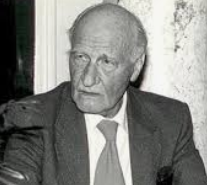
Let us now pose the question again: is recourse to the "human" really enough to preserve and firmly ground the reality of leisure? I intend to show that such recourse to mere Humanism is not enough.It could be said that the heart of leisure consists in "festival." In festival, or celebration, all three conceptual elements come together as one: the relaxation, the effortlessness, the ascendancy of "being at leisure" […] over mere function.
▼
Source
p. 50
4 months 3 weeks ago
Beholding beauty with the eye of the mind, he will be enabled to bring forth, not images of beauty, but realities (for he has hold not of an image but of a reality), and bringing forth and nourishing true virtue to become the friend of God and be immortal, if mortal man may.
▼
Source
212
4 months 3 weeks ago
A people represents not so much an aggregate of ideas and theories as of obsessions.
4 months 3 weeks ago
Thomas Hobbes was the first sociobiologist, two hundred years before Darwin.
▼
Source
Daniel Dennett, Darwin's Dangerous Idea, p. 453
4 months 3 weeks ago
All great peoples are conservative; slow to believe in novelties; patient of much error in actualities; deeply and forever certain of the greatness that is in law, in custom once solemnly established, and now long recognized as just and final.
4 months 3 weeks ago
I predict we will abolish suffering throughout the living world. Our descendants will be animated by gradients of genetically pre-programmed well-being that are orders of magnitude richer than today's peak experiences.
▼
Source
Quoted in Ethics Matters (2012) by Peter and Charlotte Vardy, p. 114
4 months 3 weeks ago
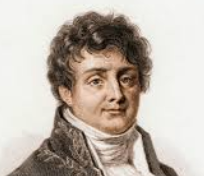
I regarded these events as the customary disturbances of a state in which a new usurper tends to pluck the sceptre from his predecessor. ...As the natural ideas of equality were developed it was possible to conceive the sublime hope of establishing among us a free government exempt from kings and priests and to free from this double yoke the long usurped soil of Europe. I readily became enamored of this cause... the greatest and most beautiful which any nation has ever undertaken. ...You will judge whether it is I or my adversaries who are terrorists and persecutors. ...I accuse them of having violated ...all the rules of natural justice, of being ignorant and evil, of profaning the words of humanity and justice in invoking them, just as tyranny was organized in the name of liberty. Finally, of having given themselves up to a boundless revolutionary fury which ought to cover then with disgrace and scorn.
▼
Source
Letter to Edmé Pierre Alexanre Villetard (June/July, 1795) from prison, as quoted by , Joseph Fourier—The Man and the Physicist (1975) pp. 280-285 (also see p. 27).
4 months 3 weeks ago
Necessity is the mother of invention.
▼
Source
Commonly misattributed due to Benjamin Jowett's popular idiomatic translation (1871) of Plato's Republic, Book II, 369c as "The true creator is necessity, who is the mother of our invention." Jowett's translation is noted for injecting flowery, if n
4 months 3 weeks ago
We are all secularised anarchists today.
4 months 3 weeks ago
In the lowest broad strata of the population, equally as in the highest and narrowest, are produced men of every kind of genius; man for man, your chance of genius is as good among the millions as among the units;—and class for class, what must it be! From all classes, not from certain hundreds now but from several millions, whatsoever man the gods had gifted with intellect and nobleness, and power to help his country, could be chosen: O Heavens, could,—if not by Tenpound Constituencies and the force of beer, then by a Reforming Premier with eyes in his head, who I think might do it quite infinitely better. Infinitely better. For ignobleness cannot, by the nature of it, choose the noble: no, there needs a seeing man who is himself noble, cognizant by internal experience of the symptoms of nobleness.
4 months 3 weeks ago
The Hedonistic Imperative outlines how genetic engineering and nanotechnology will abolish suffering in all sentient life.This project is ambitious but technically feasible. It is also instrumentally rational and ethically mandatory. The metabolic pathways of pain and malaise evolved only because they once served the fitness of our genes. They will be replaced by a different sort of neural architecture. States of sublime well-being are destined to become the genetically pre-programmed norm of mental health. The world's last aversive experience will be a precisely dateable event.Two hundred years ago, powerful synthetic pain-killers and surgical anesthetics were unknown. The notion that physical pain could be banished from most people's lives would have seemed absurd. Today most of us in the technically advanced nations take its routine absence for granted. The prospect that what we describe as psychological pain, too, could ever be banished is equally counter-intuitive. The feasibility of its abolition turns its deliberate retention into an issue of social policy and ethical choice.
▼
Source
[https://www.hedweb.com/hedab.htm Abstract]
4 months 3 weeks ago
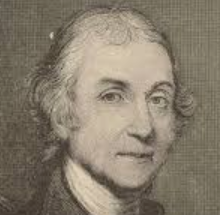
The history of philosophy enjoys, in some measure, the advantages both of civil and natural history, whereby it is relieved from what is most tedious and disgusting in both. Philosophy exhibits the powers of nature, discovered and directed by human art. It has, therefore, in some measure, the boundless variety with the amazing uniformity of the one, and likewise every thing that is pleasing and interesting in the other. And the idea of continual rise and improvement is conspicuous in the whole study, whether we be attentive to the part which nature, or that which men are acting in the great scene. It is here that we see the human understanding to its greatest advantage, grasping at the noblest objects, and increasing its own powers, by acquiring to itself the powers of nature, and directing them to the accomplishment of its own views; whereby the security, and happiness of mankind are daily improved. Human abilities are chiefly conspicuous in adapting means to ends, and in deducing one thing from another by the method of analogy; and where may we find instances of greater sagacity, than in philosophers diversifying the situations of things, in order to give them an opportunity of showing their mutual relations, affections, and influences; deducing one truth and one discovery from another, and applying them all to the useful purposes of human life. If the exertion of human abilities, which cannot but form a delightful spectacle for the human imagination, give us pleasure, we enjoy it here in a higher degree than while we are contemplating the schemes of warriors, and the stratagems of their bloody art.
▼
Source
Preface, pp. iv-v.
4 months 3 weeks ago
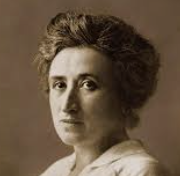
The times when the centre of gravity of political development and the crystallising agent of capitalist contradictions lay on the European continent, are long gone by. To-day Europe is only a link in the tangled chain of international connections and contradictions.
4 months 3 weeks ago
The skeptic is the least mysterious man in the world, and yet, starting from a certain moment, he no longer belongs to this world.
CivilSimian.com created by AxiomaticPanic, CivilSimian, Kalokagathia