

4 months 3 weeks ago
Human rights are not just cultural or legal constructions, as fashionable western relativists are fond of claiming. They are universal values. To deny the benefits of the new regime of rights to other cultures is to patronise them in a way that is reminiscent of the colonial era. If the new regime on torture is good enough for the US, who can say that it is not good for everyone?
4 months 3 weeks ago
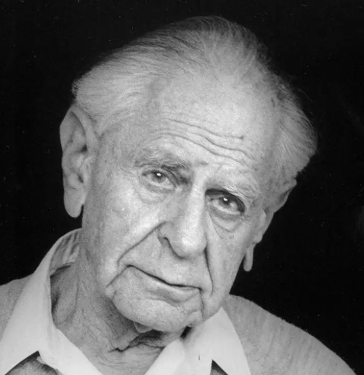
If we are uncritical we shall always find what we want: we shall look for, and find, confirmations, and we shall look away from, and not see, whatever might be dangerous to our pet theories. In this way it is only too easy to obtain what appears to be overwhelming evidence in favor of a theory which, if approached critically, would have been refuted.
▼
Source
The Poverty of Historicism (1957) Ch. 29 The Unity of Method
4 months 3 weeks ago
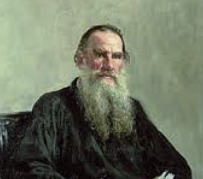
It will be said, "Patriotism has welded mankind into states, and maintains the unity of states." But men are now united in states; that work is done; why now maintain exclusive devotion to one's own state, when this produces terrible evils for all states and nations? For this same patriotism which welded mankind into states is now destroying those same states. If there were but one patriotism say of the English only then it were possible to regard that as conciliatory, or beneficent. But when, as now, there is American patriotism, English, German, French, Russian, all opposed to one another, in this event, patriotism no longer unites, but disunites.
▼
Source
Patriotism and Government
4 months 3 weeks ago
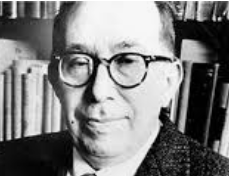
Writings are naturally accessible to all who can read. Therefore a philosopher who chose the second way could expound only such opinions as were suitable for the nonphilosophic majority: all of his writings would have to be, strictly speaking, exoteric. These opinions would not be in all respects consonant with truth. Being a philosopher, that is, hating "the lie in the soul" more than anything else, he would not deceive himself about the fact that such opinions are merely "likely tales," or "noble lies," or "probable opinions," and would leave it to his philosophic readers to disentangle the truth from its poetic or dialectic presentation. But he would defeat his purpose if he indicated clearly which of his statements expressed a noble lie, and which the still more noble truth.
▼
Source
p. 35
4 months 3 weeks ago
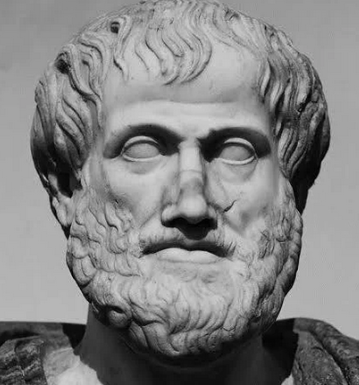
Men seem to pursue honour in order that they may believe themselves to be good. Accordingly, they seek to be honoured by the wise, and by those who know them well, and on the score of virtue; it is clear, therefore, that in their opinion at any rate, virtue is superior to honour. Perhaps, then, one ought to say that virtue rather than honour is the end of the political life; yet even virtue is plainly too imperfect: for it seems that a man might have all the virtues and yet be asleep, or fail to achieve anything all his life; moreover, such a person may suffer the greatest evils and misfortunes. And no one, in this case, would call a man, who passed his life in this manner, happy, except for argument's sake.
▼
Source
(Bk. 1, Chapter III)
4 months 3 weeks ago
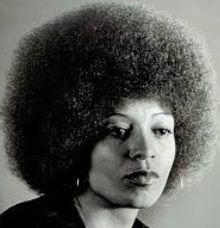
There are now thirty-three prisons, thirty eight camps, sixteen community correctional facilities, and five tiny prisoner mother facilities in California. In 2002, there were 157,979 people incarcerated in these institutions, including approximately twenty thousand people whom the state holds for immigration violations.
▼
Source
Chapter One
4 months 3 weeks ago
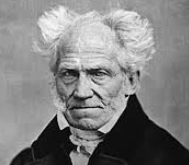
As my own father was sick, and miserably tied to his invalid's chair, he would have been abandoned had not an old servant performed for him a so-called service of love. My mother gave parties while he was perishing in solitude, and amused herself while he was suffering bitter agonies
▼
Source
Schopenhauer and the Wild Years of Philosophy by Rüdiger Safranski (trans. Ewald Osers)

4 months 3 weeks ago
All morning, I did nothing but repeat: "Man is an abyss, man is an abyss." — I could not, alas, find anything better.
4 months 3 weeks ago
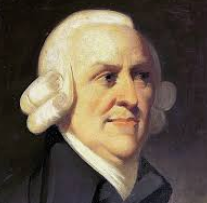
A great stock, though with small profits, generally increases faster than a small stock with great profits. Money, says the proverb, makes money. When you have a little, it is often easier to get more. The great difficulty is to get that little.
▼
Source
Chapter IX, p. 111.
4 months 3 weeks ago
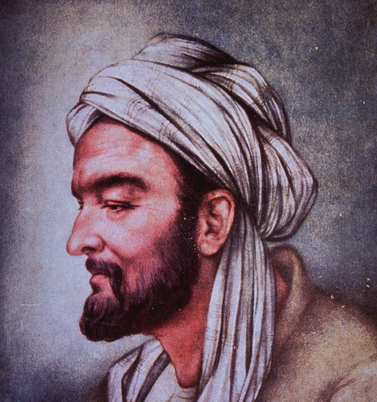
God, the supreme being, is neither circumscribed by space, nor touched by time; he cannot be found in a particular direction, and his essence cannot change. The secret conversation is thus entirely spiritual; it is a direct encounter between God and the soul, abstracted from all material constraints.
▼
Source
As quoted in 366 Readings From Islam (2000), edited by Robert Van der Weyer
4 months 3 weeks ago
Once when Phocion had delivered an opinion which pleased the people,… he turned to his friend and said, "Have I not unawares spoken some mischievous thing or other?"
▼
Source
55 Phocion
4 months 3 weeks ago
The basis of the [[scientific method|[scientific] method]] is a belief in natural uniformity – if two events are regularly connected in our observations we can conclude that they obey a universal law. But this is not a conclusion we reach by observation. No amount of evidence can demonstrate the existence of laws of nature, since new experience can always overturn them. Science rests on the belief that the future will be like the past; but that belief is rationally groundless. This is not a new line of thinking. David Hume argued that the expectation that the future will be like the past, which is the basis of induction, is a matter of habit. Hume wanted to show that since miracles transgress known laws of nature it was unreasonable to accept reports of them, in the Bible or anywhere else. But his arguments against induction showed that the laws of nature could not in fact be known, so events that seemed impossible could happen at any time. The upshot was that faith in miracles returned by the back door of sceptical doubt.
▼
Source
Cross-correspondences (p. 68)
4 months 3 weeks ago
Although my own position is, I believe, clearly enough implied in the text, I may perhaps briefly formulate what seems to me the most important principles of humanitarian and equalitarian ethics. (1) Tolerance towards all who are not intolerant and who do not propagate intolerance. ... This implies, especially, that the moral decisions of others should be treated with respect, as long as such decisions do not conflict with the principle of tolerance. (2) The recognition that all moral urgency has its basis in the urgency of suffering or pain. I suggest, for this reason, to replace the utilitarian formula 'Aim at the greatest amount of happiness for the greatest number', or briefly, 'Maximize happiness' by the formula 'The least amount of avoidable suffering for all', or briefly, 'Minimize suffering'. Such a simple formula can, I believe, be made one of the fundamental principles (admittedly not the only one) of public policy. (The principle 'Maximize happiness', in contrast, seems to be apt to produce a benevolent dictatorship.) We should realize that from the moral point of view suffering and happiness must not be treated as symmetrical; that is to say, the promotion of happiness is in any case much less urgent than the rendering of help to those who suffer, and the attempt to prevent suffering. (The latter task has little to do with 'matters of taste', the former much.)
▼
Source
Vol. 1, Notes to the Chapters: Ch. 5, Note 6.
4 months 3 weeks ago
It is not sufficient to observe our mysteries in the seclusion of our lodge—we must act—act! We are drowsing, but we must act. (Pierre raised his notebook and began to read.) For the dissemination of pure truth and to secure the triumph of virtue," he read, "we must cleanse men from prejudice, diffuse principles in harmony with the spirit of the times, undertake the education of the young, unite ourselves in indissoluble bonds with the wisest men, boldly yet prudently overcome superstitions, infidelity, and folly, and form of those devoted to us a body linked together by unity of purpose and possessed of authority and power.
4 months 3 weeks ago
The adjective “political” in “political philosophy” designates not so much the subject matter as a manner of treatment; from this point of view, I say, “political philosophy” means primarily not the philosophic study of politics, but the political, or popular, treatment of philosophy, or the political introduction to philosophy—the attempt to lead qualified citizens, or rather their qualified sons, from the political life to the philosophic life.
▼
Source
p. 93
4 months 3 weeks ago
It is absurd to hold that a man ought to be ashamed of being unable to defend himself with his limbs but not of being unable to defend himself with reason when the use of reason is more distinctive of a human being than the use of his limbs.
▼
Source
Book I, 1355b.1
4 months 3 weeks ago
The cup of life is not so shallow That we have drained the best That all the wine at once we swallow And lees make all the rest.
▼
Source
1827
4 months 3 weeks ago
Demand for women’s studies, like demand for black studies, Chicano/Latino, Asian American, Native American studies, are linked to larger quest for equality, justice, freedom. We are interested not in race and gender (and class and sexuality and disability) per se, by themselves, but primarily as they have been acknowledged as conditions for hierarchies of power, so that we can transform them into intertwined vectors of struggle for freedom.
4 months 3 weeks ago
Liars ... when they speak the truth they are not believed.
4 months 3 weeks ago
The true Enlightenment thinker, the true rationalist, never wants to talk anyone into anything. No, he does not even want to convince; all the time he is aware that he may be wrong. Above all, he values the intellectual independence of others too highly to want to convince them in important matters. He would much rather invite contradiction, preferably in the form of rational and disciplined criticism. He seeks not to convince but to arouse — to challenge others to form free opinions.
4 months 3 weeks ago
“They must understand that we can only lose by taking the offensive. Patience and time are my warriors, my champions,” thought Kutúzov. He knew that an apple should not be plucked while it is green. It will fall of itself when ripe, but if picked unripe the apple is spoiled, the tree is harmed, and your teeth are set on edge.
▼
Source
Bk XIII, Ch. 17
4 months 3 weeks ago
It is as absurd to expect members of philosophy departments to be philosophers as it is to expect members of art departments to be artists.
▼
Source
“What is liberal education,” p. 7
4 months 3 weeks ago
Man exists for his own sake and not to add a laborer to the state.
▼
Source
November 15, 1839
4 months 3 weeks ago
I also think it's important for us to think forward and to imagine future history in a way that is not restrained by our own lifetimes. Oftentimes people say, well, if it takes that long, I'll be dead. So what? Everybody dies, right? And if people who were involved in the struggle against slavery-I'm thinking about people like Frederick Douglass, or Ida B. Wells in the struggle against lynching if they had that very narrow individualistic sense of their own contributions, where would we be today? And so we have to learn how to imagine the future in terms that are not restricted to our own lifetimes.
4 months 3 weeks ago
If I were asked to summarize as briefly as possible my vision of things, to reduce it to its most succinct expression, I should replace words with an exclamation point, a definitive !
4 months 3 weeks ago
In manufactures, a very small advantage will enable foreigners to undersell our own workmen, even in the home market. It will require a very great one to enable them to do so in the rude produce of the soil. If the free importation of foreign manufactures were permitted, several of the home manufactures would probably suffer, and some of them, perhaps, go to ruin altogether, and a considerable part of the stock and industry at present employed in them, would be forced to find out some other employment. But the freest importation of the rude produce of the soil could have no such effect upon the agriculture of the country.
▼
Source
Chapter II
4 months 3 weeks ago
It is the peculiarity of privilege and of every privileged position to kill the intellect and heart of man. The privileged man, whether he be privileged politically or economically, is a man depraved in intellect and heart.
▼
Source
As quoted in "Socialism" article of ', 9th edition (1887), edited by with assistance of , Vol. 22, p. 216, '
4 months 3 weeks ago
[after quoting from Lucretius] In the face of warfare and inevitable death, there is no wisdom but in ataraxia, “to look on all things with a mind at peace"." Here, clearly, the old pagan joy of life is gone, and an almost exotic spirit touches a broken lyre. History, which is nothing if not humorous, was never so facetious as when she gave to this abstemious and epic pessimist the name of Epicurean.
4 months 3 weeks ago
The idea that consciousness is a mystery is a prejudice inherited from monotheism. The early seventeenth-century French philosopher René Descartes believed that animals other than humans are insensate machines. Obviously, this was a restatement in rationalist terms of the Christian belief that only humans have souls. Even if mind and matter were categorically distinct, that would not mean humans alone have minds. It was reported that in order to test his theories, Descartes used to throw animals out of the window and observe their reactions. Looking at behaviour of this kind, one might reasonably conclude that humans are the senseless machines.
▼
Source
Freedom for Über-Marionettes: What Science Won't Tell You (p. 151)
4 months 3 weeks ago
The doctrine that there is as much science in a subject as... mathematics in it, or as much... measurement or 'precision' in it, rests upon... misunderstanding.
4 months 3 weeks ago
One can only live while one is intoxicated with life; as soon as one is sober it is impossible not to see that it is all a mere fraud and a stupid fraud!
▼
Source
Ch. 4 | Variant: It is possible to live only as long as life intoxicates us; once we are sober we cannot help seeing that it is all a delusion, a stupid delusion.
4 months 3 weeks ago
Class instinct is subjective and spontaneous. ... To arrive at proletarian class positions, the class instinct of proletarians only needs to be educated; the class instinct of the petty bourgeoisie, and hence of intellectuals, has, on the contrary, to be revolutionized.
▼
Source
p. 2
4 months 3 weeks ago
Give me health and a day, and I will make the pomp of emperors ridiculous.
▼
Source
Beauty

4 months 3 weeks ago
How comes it to pass then, that we appear such Cowards in reasoning, and are so afraid to stand the Test of Ridicule?
▼
Source
Vol. 1, p. 11; "A Letter Concerning Enthusiasm".
4 months 3 weeks ago
Antinatalism
4 months 3 weeks ago
The concept of the state presupposes the concept of the political.
4 months 3 weeks ago
The directors of such [joint-stock] companies, however, being the managers rather of other people's money than of their own, it cannot well be expected, that they should watch over it with the same anxious vigilance with which the partners in a private copartnery frequently watch over their own.... Negligence and profusion, therefore, must always prevail, more or less, in the management of the affairs of such a company.
▼
Source
Chapter I, Part III, Article I, orig.p. 233.
4 months 3 weeks ago
All religions, with their gods, their demigods, and their prophets, their messiahs and their saints, were created by the credulous fancy of men who had not attained the full development and full possession of their faculties. Consequently, the religious heaven is nothing but a mirage in which man, exalted by ignorance and faith, discovers his own image, but enlarged and reversed — that is, divinized. The history of religion, of the birth, grandeur, and decline of the gods who have succeeded one another in human belief, is nothing, therefore, but the development of the collective intelligence and conscience of mankind.
4 months 3 weeks ago
Middle age begins with marriage; for then work and responsibility replace carefree play, passion surrenders to the limitations of social order, and poetry yields to prose.
▼
Source
Ch. 3 : On Middle Age

4 months 3 weeks ago
Since the Jews may not licitly keep those things which they have extorted from others through usury, the consequence is also that if you [rulers] receive these things from them, neither may you licitly keep them.[…] You should restore them to those to whom the Jews themselves are morally bound to make restitution.
▼
Source
art. 1
4 months 3 weeks ago
Some anarchists have claimed not merely that we would be better off without a state, but that any state necessarily violates people's moral rights and hence is intrinsically immoral. Our starting point then, though nonpolitical, is by intention far from nonmoral. Moral philosophy sets the background for, and boundaries of, political philosophy. What persons may and may not do to one another limits what they may do through the apparatus of a state, or do to establish such an apparatus.
▼
Source
Ch. 1 : Why State of Nature Theory?; Political Philosophy, p. 6
4 months 3 weeks ago
The Quakers sent me books, from which I learnt how they had, years ago, established beyond doubt the duty for a Christian of fulfilling the command of non-resistance to evil by force, and had exposed the error of the Church's teaching in allowing war and capital punishment.
▼
Source
Chapter I, The Doctrine of Non-resistance to Evil by Force has been Professed by a Minority of Men from the Very Foundation of Christianity
4 months 3 weeks ago
That it is a perfect absurdity to suppose that any body of men would ever take a man's money without his consent, for any such object as they profess to take it for, viz., that of protecting him; for why should they wish to protect him, if he does not wish them to do so? To suppose that they would do so, is just as absurd as it would be to suppose that they would take his money without his consent, for the purpose of buying food or clothing for him, when he did not want it.
4 months 3 weeks ago
That which is best about conservatism, that which, though it cannot be expressed in detail, inspires reverence in all, is the Inevitable.
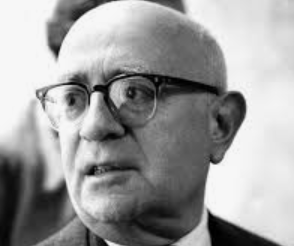
4 months 3 weeks ago
Fear and destructiveness are the major emotional sources of fascism, eros belongs mainly to democracy.
▼
Source
The Authoritarian Personality (1950), p. 976, co-written with Else Frenkel-Brunswik, Daniel Levinson, and Nevitt Sanford
4 months 3 weeks ago
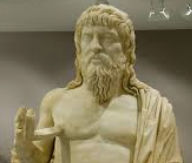
Now Euxenus realized that he was attached to a lofty ideal, and asked him at what point he would begin it. Apollonius answered: "At the point at which physicians begin, for they, by purging the bowels of their patients prevent some from being ill at all, and heal others." And having said this he declined to live upon a flesh diet, on the ground that it was unclean, and also that it made the mind gross; so he partook only of dried fruits and vegetables, for he said that all the fruits of the earth are clean. And of wine he said that it was a clean drink because it is yielded to men by so well-domesticated a plant as the vine; but he declared that it endangered the mental balance and system and darkened, as with mud, the ether which is in the soul. After then having thus purged his interior, he took to walking without shoes by way of adornment and clad himself in linen raiment, declining to wear any animal product.
▼
Source
Philostratus, Life of Apollonius, translation by F.C. Conybeare, Book 1, § 8. [http://www.livius.org/sources/content/philostratus-life-of-apollonius/ Full text online at Livius.org].
4 months 3 weeks ago
About this time two others, men of great talents and learning, promoted the cause of the injured Africans, by the manner in which they introduced them to notice in their respective works. Dr. Adam Smith, in his Theory of Moral Sentiments, had, so early as the year 1759, held them up in an honourable, and their tyrants in a degrading light. "There is not a Negro from the coast of Africa, who does not, in this respect, possess a degree of magnanimity which the soul of his sordid master is too often scarce capable of conceiving. Fortune never exerted more cruelly her empire over mankind, than when she subjected those nations of heroes to the refuse of the gaols of Europe, to wretches who possess the virtue neither of the countries they came from, nor of those they go to, and whose levity, brutality, and baseness so justly expose them to the contempt of the vanquished." And now, in 1776, in his Wealth of Nations he showed in a forcible manner (for he appealed to the interest of those concerned,) the dearness of African labour; or the impolicy of employing slaves.
▼
Source
Thomas Clarkson The History of the Rise, Progress, and Accomplishment of the Abolition of the African Slave-Trade by the British Parliament, p. 75 (1808) [https://books.google.com/books?id=mfVeAAAAcAAJ&pg=PA75][http://www.gutenberg.org/ebooks/10633]
4 months 3 weeks ago
One man does not assert the truth which he knows, because he feels himself bound to the people with whom he is engaged; another, because the truth might deprive him of the profitable position by which he maintains his family; a third, because he desires to attain reputation and authority, and then use them in the service of mankind; a fourth, because he does not wish to destroy old sacred traditions; a fifth, because he has no desire to offend people; a sixth, because the expression of the truth would arouse persecution, and disturb the excellent social activity to which he has devoted himself. One serves as emperor, king, minister, government functionary, or soldier, and assures himself and others that the deviation from truth indispensable to his condition is redeemed by the good he does. Another, who fulfils the duties of a spiritual pastor, does not in the depths of his soul believe all he teaches, but permits the deviation from truth in view of the good he does. A third instructs men by means of literature, and notwithstanding the silence he must observe with regard to the whole truth, in order not to stir up the government and society against himself, has no doubt as to the good he does. A fourth struggles resolutely with the existing order as revolutionist or anarchist, and is quite assured that the aims he pursues are so beneficial that the neglect of the truth, or even of the falsehood, by silence, indispensable to the success of his activity, does not destroy the utility of his work. In order that the conditions of a life contrary to the consciousness of humanity should change and be replaced by one which is in accord with it, the outworn public opinion must be superseded by a new and living one. And in order that the old outworn opinion should yield its place to the new living one, all who are conscious of the new requirements of existence should openly express them. And yet all those who are conscious of these new requirements, one in the name of one thing, and one in the name of another, not only pass them over in silence, but both by word and deed attest their exact opposites.
▼
Source
Ch. 17
4 months 3 weeks ago
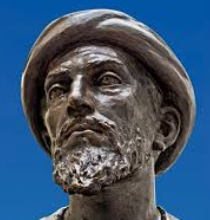
It is forbidden to dwell in the vicinity of any of those with an evil tongue, and all the more to sit with them and listen to their words.
▼
Source
Chapter 7, Section 6, pp. 51-52
4 months 3 weeks ago
But these young scholars who invade our hills, Bold as the engineer who fells the wood, And travelling often in the cut he makes, Love not the flower they pluck, and know it not, And all their botany is Latin names.
▼
Source
Blight, st. 2
CivilSimian.com created by AxiomaticPanic, CivilSimian, Kalokagathia