
4 months 3 weeks ago
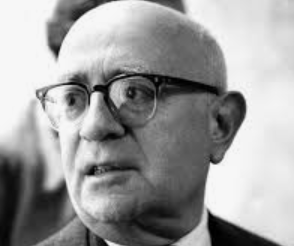
Being, in whose name Heidegger’s philosophy increasingly concentrates itself, is for him—as a pure self-presentation to passive consciousness—just as immediate, just as independent of the mediations of the subject as the facts and the sensory data are for the positivists. In both philosophical movements thinking becomes a necessary evil and is broadly discredited. Thinking loses its element of independence. The autonomy of reason vanishes: the part of reason that exceeds the subordinate reflection upon and adjustment to pre-given data. With it, however, goes the conception of freedom and, potentially, the self-determination of human society.
▼
Source
p. 9
4 months 3 weeks ago
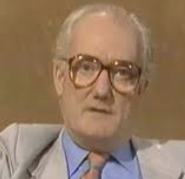
As Voltaire once remarked, "It is the privilege of the real genius, especially one who opens up a new path, to make great mistakes with impunity." The Copernican revolution brought about by Kant was, I think, the most important single turning point in the history of philosophy. For that reason there has been, ever since, a watershed in understanding between those who have taken his work on board and those who have not. For a good many of the problems he uncovered, the solutions he put forward have not stood the test of time, but his uncovering of the problems remains the most illuminating thing a philosopher has ever done. Because of the fundamental character of these problems, and because Kant did not solve them, confronting them has been the most important challenge to philosophy ever since.
▼
Source
p. 157
4 months 3 weeks ago
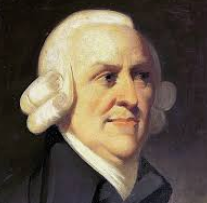
Most economists now recognize climate change as a market failure, but only a few understand it as part of the larger pattern of environmental destruction that scientists have labelled the 'Great Acceleration'. Capitalism as currently practised has imperilled the existence of millions of planetary species, as well as the health and well-being of billions of humans. It also threatens the prosperity that it was intended to create. Challenging 250 years of dominant economic thinking, the climate crisis has shown that the unrestrained pursuit of self-interest does not serve the common good. It has shown, in the words of economist Joseph Stiglitz, that Adam Smith's invisible hand - the idea that free markets lead to efficiency as if consciously guided - is invisible because it is not there'. And it has proved, in the words of Pope Francis, that 'technological products are not neutral, for they create a framework which ends up conditioning lifestyles and shaping social possibilities along the lines dictated by the interests of certain powerful groups'.
▼
Source
Naomi Oreskes in The Climate Book edited by Greta Thunberg (2022)
4 months 3 weeks ago
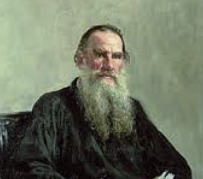
In the depth of his soul he knew that his action was so base, abominable and cruel that, with that action upon his conscience, not only would he have no right to condemn others but he should not be able to look others in the face, to say nothing of considering himself the good, noble, magnanimous man he esteemed himself. And he had to esteem himself as such in order to be able to continue to lead a valiant and joyous life. And there was but one way of doing so, and that was not to think of it. This he endeavored to do.
▼
Source
Ch. 18
4 months 3 weeks ago
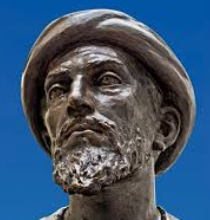
Know that this Universe, in its entirety, is nothing else but one individual being; that is to say, the outermost heavenly sphere, together with all included therein, is as regards individuality beyond all question a single being like Said and Omar. The variety of its substances—I mean the substances of that sphere and all its component parts—is like the variety of the substances of a human being: just as, e.g., Said is one individual, consisting of various solid substances, such as flesh, bones, sinews of various humours, and of various spiritual elements; in like manner this sphere in its totality is composed of the celestial orbs, the four elements and their combinations; there is no vacuum whatever therein, but the whole space is filled up with matter. Its centre is occupied by the earth, earth is surrounded by water, air encompasses the water, fire envelopes the air, and this again is enveloped by the fifth substance (quintessence). These substances form numerous spheres, one being enclosed within another so that no intermediate empty space, no vacuum, is left. One sphere surrounds and closely joins the other. All the spheres revolve with constant uniformity, without acceleration or retardation; that is to say, each sphere retains its individual nature as regards its velocity and the peculiarity of its motion; it does not move at one time quicker, at another slower. Compared with each other, however, some of the spheres move with less, others with greater velocity. The outermost, all-encompassing sphere, revolves with the greatest speed; it completes its revolution in one day, and causes every thing to participate in its motion, just as every particle of a thing moves when the entire body is in motion; for all existing beings stand in the same relation to that sphere as a part of a thing stands to the whole. These spheres have not a common centre; the centres of some of them are identical with the centre of the Universe, while those of the rest are different from it. Some of the spheres have a motion independent of that of the whole Universe, constantly revolving from East to West, while other spheres move from West to East. The stars contained in those spheres are part of their respective orbits; they are fixed in them, and have no motion of their own, but participating in the motion of the sphere of which they are a part, they themselves appear to move. The entire substance of this revolving fifth element is unlike the substance of those bodies which consist of the other four elements, and are enclosed by the fifth element.
4 months 3 weeks ago
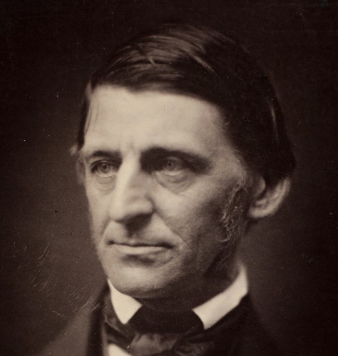
I find the Englishman to be him of all men who stands firmest in his shoes. They have in themselves what they value in their horses, — mettle and bottom.
▼
Source
Manners
4 months 3 weeks ago
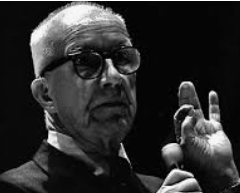
I find all of our world society is operating exclusively in parts. We know this because the word synergy is unknown popularly and it is the only word that means “behavior of wholes unpredicted by behavior of their parts.” This proves that society does not even think that it has a need for such a word. This discloses that society does not think that there are behaviors of wholes unpredicted by the parts. It thinks statistics and probability are all that we need but if “probability” and “statistics” were of any power at all we could not have a stock market or gambling for we would know exactly how things are coming out and no one would bet against the probability.
4 months 3 weeks ago
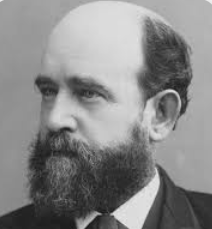
It is impossible to read the works of the economists who since the time of Smith have endeavored to build up and elucidate the science of political economy without seeing how, over and over again, they stumble over the law of wages without once recognizing it. Yet, "if it were a dog it would bite them!" Indeed, it is difficult to resist the impression that some of them really saw this law of wages, but, fearful of the practical conclusions to which it would lead, preferred to ignore and cover it up, rather than use it as the key to problems which without it are so perplexing. A great truth to an age which has rejected and trampled on it, is not a word of peace, but a sword!
4 months 3 weeks ago
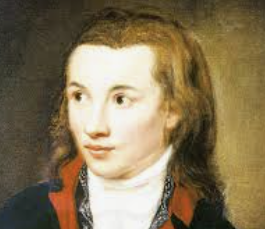
Philosophy ... bears witness to the deepest love of reflection, to absolute delight in wisdom.
▼
Source
“Logological Fragments,” Philosophical Writings, M. Stolijar, trans. (Albany: 1997) #12

4 months 3 weeks ago
The person attempting to travel two roads at once will get nowhere.
▼
Source
Quoted in: Errick A. Ford (2010) Iron Sharpens Iron: Wisdom of the Ages, p. 48
4 months 3 weeks ago
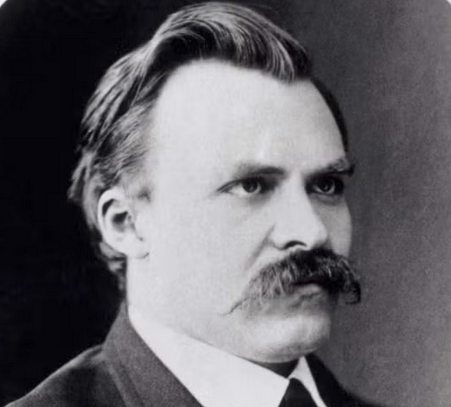
Freier Wille ohne Fatum ist ebenso wenig denkbar, wie Geist ohne Reelles, Gutes ohne Böses.
▼
Source
Free will without fate is no more conceivable than spirit without matter, good without evil. | "Fatum und Geschichte," April 1862
4 months 3 weeks ago
The inherent contradiction of human life has now reached an extreme degree of tension: on the one side there is the consciousness of the beneficence of the law of love, and on the other the existing order of life which has for centuries occasioned an empty, anxious, restless, and troubled mode of life, conflicting as it does with the law of love and built on the use of violence. This contradiction must be faced, and the solution will evidently not be favourable to the outlived law of violence, but to the truth which has dwelt in the hearts of men from remote antiquity: the truth that the law of love is in accord with the nature of man. But men can only recognize this truth to its full extent when they have completely freed themselves from all religious and scientific superstitions and from all the consequent misrepresentations and sophistical distortions by which its recognition has been hindered for centuries.
▼
Source
VI
4 months 3 weeks ago
We suffer from the evils which we, by our own free will, inflict on ourselves and ascribe them to God, who is far from being connected with them!
▼
Source
Ch.12
4 months 3 weeks ago
Make yourself necessary to somebody. Do not make life hard to any.
▼
Source
Considerations by the Way
4 months 3 weeks ago
Synergy means behavior of integral, aggregate, whole systems unpredicted by behaviors of any of their components or subassemblies of their components taken separately from the whole.
▼
Source
[http://www.rwgrayprojects.com/synergetics/s01/p0100.html 102.00]
4 months 3 weeks ago
Why should charity be offered the unemployed? It is not alms they ask. They are insulted and embittered and degraded by being forced to accept as paupers what they would gladly earn as workers. What they ask is not charity, but the opportunity to use their own labor in satisfying their own wants. Why can they not have that? It is their natural right. He who made food and clothing and shelter necessary to man's life has also given to man, in the power of labor, the means of maintaining that life; and when, without fault of their own, men cannot exert that power, there is somewhere a wrong of the same kind as denial of the right of property and denial of the right of life — a wrong equivalent to robbery and murder on the grandest scale. Charity can only palliate present suffering a little at the risk of fatal disease. For charity cannot right a wrong; only justice can do that. Charity is false, futile, and poisonous when offered as a substitute for justice.
▼
Source
p. 179
4 months 3 weeks ago
I do not think it necessary for salvation to know Christ according to the flesh : but with regard to the Eternal Son of God, that is the Eternal Wisdom of God, which has manifested itself in all things and especially in the human mind, and above all in Christ Jesus, the case is far otherwise. For without this no one can come to a state of blessedness, inasmuch as it alone teaches, what is true or false, good or evil. And, inasmuch as this wisdom was made especially manifest through Jesus Christ, as I have said, his disciples preached it, in so far as it was revealed to them through him, and thus showed that they could rejoice in that spirit of Christ more than the rest of mankind. The doctrines added by certain churches, such as that God took upon himself human nature, I have expressly said that I do not understand; in fact, to speak the truth, they seem to me no less absurd than would a statement, that a circle had taken upon itself the nature of a square. This I think will be sufficient explanation of my opinions concerning the three points mentioned. Whether it will be satisfactory to Christians you will know better than I.
▼
Source
Letter 21 (73) to Henry Oldenburg, November (1675) | Variant translation: The eternal wisdom of God … has shown itself forth in all things, but chiefly in the mind of man, and most of all in Jesus Christ.
4 months 3 weeks ago
Nature too remains, so far as we have yet come, ever a frightful Machine of Death: everywhere monstrous revolution, inexplicable vortices of movement; a kingdom of Devouring, of the maddest tyranny; a baleful Immense: the few light-points disclose but a so much the more appalling Night, and terrors of all sorts must palsy every observer.

4 months 3 weeks ago
Anger begins in folly, and ends in repentance.
▼
Source
As quoted in Treasury of Thought: Forming an Encyclopædia of Quotations from Ancient and Modern Authors (1894) by Maturin Murray Ballou
4 months 3 weeks ago
The beautiful exists just as little as the true. In every case it is a question of the conditions of preservation of a certain type of man: thus the herd-man will experience the value feeling of the true in different things than will the overman.
▼
Source
Sec. 804 (Notebook W II 2. Fall 1887, KGW VIII, 2.220-1, KSA 12.554-5)
4 months 3 weeks ago
South Africa never had a reading culture and yet, throughout its history, some books have had great power they found their way into the right hands. Mandela was not an intellectual reader, reading for the sake of reading, but he found books useful. He found novels useful. As President he would stop his driver so that he could buy some novel at the bookshop. "One book that I returned to many times was Tolstoy's great work, War and Peace," he wrote. "I was particularly taken with the portrait of General Kutuzov, whom everyone at the Russian court underestimated." For Mandela, Kutuzov "made his decisions on a visceral understanding of his men and his people." He was prepared to sacrifice the city of Moscow when it became necessary. Mandela even compared Kutuzov with King Shaka, who was also uninterested in making a stand to defend mere buildings. ... On the face of it, Kutuzov is a surprising choice for Mandela's admiration. Even for Tolstoy, "this simple, modest, and therefore truly majestic figure could not fit into that false form of the European hero, the imaginary ruler of the people, which history has invented." Thanks to his capacity of acceptance, and in accordance with the biological needs of life within him, Kutuzov irresponsibly dozes through a council of war on the eve of battle. He despises "both knowledge and intelligence. . . . He despised them with his old age, with his experience of life." Despite the war, he remains embedded in ordinary pursuits which are, nevertheless, incidental: "All the rest was for him only the habitual acting out of life. His conversations with the staff, his letters to Mme de Staël, which he wrote from Tarutino, his reading of novels, distribution of rewards, correspondence with Petersburg, and so on, were the same habitual acting out of and submission to life." Key for Mandela was the strategy of retirement and passivity that Tolstoy's Kutuzov applied so thoroughly as to surrender to the overwhelming force of collective and unplanned life. He saw that "circumstances are sometimes stronger than we are," resembling Lincoln, who accepted that "events have controlled me." His principal weapons were not military. "'Patience and time, these are my mighty warriors!' thought Kutuzov," who "used all his powers to keep the Russian army from useless battles."
▼
Source
Imraan Coovadia, in [https://nplusonemag.com/online-only/online-only/mandela-and-tolstoy/ "Mandela and Tolstoy" (9 December 2013)]
4 months 3 weeks ago
Third Theory.—According to this theory, there is nothing in the whole Universe... that is due to chance; everything is the result of will, intention, and rule. It is a matter of course that he who rules must know. The Mohametan Ashariyah adhere to this theory, notwithstanding evident absurdities implied in it. ...The Ashariyah were therefore compelled to assume that motion and rest of living beings are predestined, and that it is not in the power of a man to do a certain thing or to leave it undone. ...It follows also from this theory, that precepts are perfectly useless, since the people to whom any law is given... can neither do what they are commanded nor abstain from what they are forbidden. ...According to this theory, it must also be assumed that the actions of God have no final cause. All these absurdities are admitted by the Ashariyah for the purpose of saving this theory.
▼
Source
Ch.17
4 months 3 weeks ago
He thought it happier to be dead, To die for Beauty, than live for bread.
▼
Source
Beauty
4 months 3 weeks ago
All previous revolutions have been political—in them the have-not majority has attempted revengefully to pull down the economically advantaged minority. If realized, this historically greatest design revolution will joyously elevate all humanity to unprecedented heights.
4 months 3 weeks ago
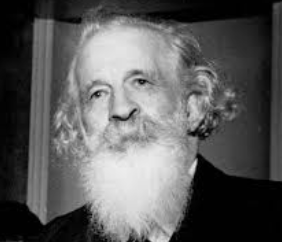
Literary imagination is an aesthetic object offered by a writer to a lover of books.
▼
Source
A Retrospective Glance at the Lifework of a Master of Books
4 months 3 weeks ago
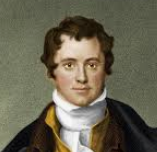
After a series of revolutions in its manufacture, sodium, having been produced from time to time on a manufacturing scale by a variety of metallurgical methods involving purely thermal processes of reduction and distillation, entirely dissociated from electricity, we should have now got back to the very principle of the process which first brought the metal to light. And that this has been industrially possible is entirely owing to another of Davy's discoveries - possibly indeed the greatest of them all—Michael Faraday.
4 months 3 weeks ago
Never was he seen languid or exhausted, never out of spirits or out of humor.
▼
Source
Ludwig Tieck, as quoted in Fragments from German Prose Writers (1841) translated by Sarah Austin, p. 305
4 months 3 weeks ago
Many words befall men, mean and noble alike; do not be astonished by them, nor allow yourself to be constrained. If a lie is told, bear with it gently. But whatever I tell you, let it be done completely. Let no one persuade you by word or deed to do or say whatever is not best for you.
▼
Source
As quoted in Divine Harmony: The Life and Teachings of Pythagoras by John Strohmeier and Peter Westbrook. (1999)
4 months 3 weeks ago
A moral system valid for all is basically immoral.
▼
Source
Generally attributed to Nietzsche, this is a quotation from Curtis Cate's Friedrich Nietzsche: A Biography (2003) and is the author's interpretation of Nietzsche's Aphorism 221 (Beyond Good and Evil)
4 months 3 weeks ago
The Death of Ivan Ilyich
4 months 3 weeks ago
The philosophers likewise assume that in Nature there is nothing in vain, so that everything that is not the product of human industry serves a certain purpose, which may be known or unknown to us.
▼
Source
Ch.25
4 months 3 weeks ago
Don't waste yourself in rejection, nor bark against the bad, but chant the beauty of the good.
▼
Source
Success
4 months 3 weeks ago
Humanity is now experiencing history's most difficult evolutionary transformation.
4 months 3 weeks ago
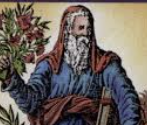
Just as without the monad there is in general no composition of anything, so also without it there is no knowledge of anything whatsoever, since it is a pure light, most authoritative over everything in general, and it is sun-like and ruling, so that in each of these respects it resembles God, and especially because it has the power of making things cohere and combine, even when they are composed of many ingredients and are very different from one another, just as he made this universe harmonious and unified out of things which are likewise opposed.
▼
Source
On the Monad
4 months 3 weeks ago
Take not thine enemy for thy friend; nor thy friend for thine enemy!
4 months 3 weeks ago
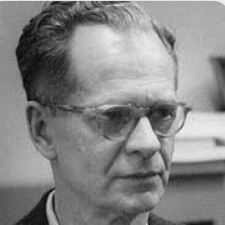
Suppose that an engineer is presented with a device whose functioning he does not understand, and suppose that through experiment he can obtain information about input-output relations of this device. He would not hesitate, if rational, to construct a theory of the internal states of the device and to test it against further evidence. ... By objecting, a priori, to this research strategy, Skinner merely condemns his strange variety of “behavioral science” to continued ineptitude.
▼
Source
Noam Chomsky, "[http://www.nybooks.com/articles/1971/12/30/the-case-against-bf-skinner/ The Case Against B. F. Skinner]", The New York Review of Books, December 30, 1971
4 months 3 weeks ago
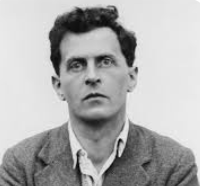
It is clear that the causal nexus is not a nexus at all.
▼
Source
Journal entry (12 October 1916), p. 84e
4 months 3 weeks ago
I don't believe there is a “calling” to mystical experience. I think that what is rather ambiguously called mysticism is nothing more than the experience of the spirit, or rather the experience of the truest and deepest reality of man: something that each of us is “called” to accomplish if we want to become what we really are. Of course, this requires a precise willingness not to be satisfied with the relative, to move towards the Absolute _ therefore a strong religious and philosophical need _ , but this also seems to me to be something absolutely “normal,” even if, perhaps, it is not so from a statistical point of view, so to speak.
4 months 3 weeks ago
Every book is a quotation; and every house is a quotation out of all forests and mines and stone-quarries; and every man is a quotation from all his ancestors.
▼
Source
Quotation and Originality
4 months 3 weeks ago
It is true that our everyday view of the world is not quite naively realistic, but that is what it would like to be. Common-sense is naively realistic wherever it does not think that there is some positive reason why it should cease to be so. And this is so in the vast majority of its perceptions. When we see a tree we think that it is really green and really waving about in precisely the same way as it appears to be. We do not think of our object of perception being 'like' the real tree, we think that what we perceive is the tree, and that it is just the same at a given moment whether it be perceived or not, except that what we perceive may be only a part of the real tree.
▼
Source
Perception, Physics, and Reality : An Enquiry into the Information that Physical Science can Supply about the Real (1914), Ch. 1 : On The Arguments Against Naïf Realism Independent of the Causal Theory of Perception
4 months 3 weeks ago
I suddenly stopped and looked out at the sea and thought, my God, how beautiful this is … for 26 years I had never really looked at it before.
▼
Source
On his greater appreciation of the scenery of the world, after his near-death experience, as quoted in "Did atheist philosopher see God when he 'died'?" by William Cash, in National Post (3 March 2001).
4 months 3 weeks ago
It is difficulties that show what men are.
▼
Source
Book I, ch. 24, § 1.
4 months 3 weeks ago
If one examines the reasons for the persecution of the best minds of different nations, and compares the reasons for the persecution and banishment of Pythagoras, Anaxagoras, Socrates, Plato, and others, one can observe that in each case the accusations and reasons for banishment were almost identical and unfounded. But in the following centuries full exoneration came, as if there had never been any defamation. It would be correct to conclude that such workers were too exalted for the consciousness of their contemporaries, and the sword of the executioner was ever ready to cut off a head held high. Pericles was recognized in his time only after people had reduced him to a sorry state. Only in that state could his fellow citizens accept him as an equal! A book should be written about the causes of the persecution of great individuals. By comparing the causes is it possible to trace the evil will.
▼
Source
Agni Yoga, Supermundane, (1938), 222.
4 months 3 weeks ago
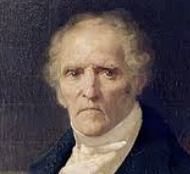
Nowhere is there more constancy and more unanimity than among the French to subordinate that sex which they pretend to honor so highly.
▼
Source
The Theory of Social Organization
4 months 3 weeks ago
For remember that in general we don't use language according to strict rules — it hasn't been taught us by means of strict rules, either.
▼
Source
p. 25
4 months 3 weeks ago
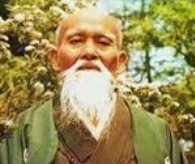
In a real battle, atemi is seventy percent, technique is thirty percent.
▼
Source
As quoted in Total Aikido (1997) by Gōzō Shioda, p. 24
4 months 3 weeks ago
It is sublime as night and a breathless ocean. It contains every religious sentiment, all the grand ethics, which visit in turn each noble poetic mind .... It is of no use to put away the book if I trust myself in the woods or in a boat upon the pond. Nature makes a Brahmin of me presently: eternal compensation, unfathomable power, unbroken silence .... This is her creed. Peace, she saith to me, and purity and absolute abandonment - these panaceas expiate all sin and bring you to the beatitude of the Eight Gods.
▼
Source
Quoted in Nani Ardeshir Palkhivala, India's Priceless Heritage, 1st ed. (Bombay: Bharatiya Vidya Bhavan, 1980) pp. 9-24
4 months 3 weeks ago
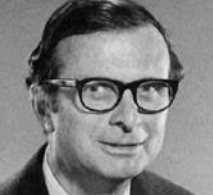
We are always obliged to think about the larger system. If we fail to do this, then our thinking becomes fallacious.
▼
Source
p. 27
4 months 3 weeks ago
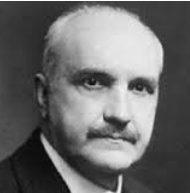
That life is worth living is the most necessary of assumptions and, were it not assumed, the most impossible of conclusions.
4 months 3 weeks ago
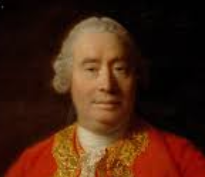
Does a man of sense run after every silly tale of hobgoblins or fairies, and canvass particularly the evidence? I never knew anyone, that examined and deliberated about nonsense who did not believe it before the end of his enquiries.
▼
Source
Letters
CivilSimian.com created by AxiomaticPanic, CivilSimian, Kalokagathia