
4 months 3 weeks ago
Confusion of sapience with sentience can be ethically catastrophic.
▼
Source
[https://www.hedweb.com/social-media/2016.html Social Media Unsorted Postings 2016]
4 months 3 weeks ago
It is difficult to know how far the atmosphere influences the mean temperature of the globe... It is to... M. de Saussure that we are indebted for a capital experiment which appears to throw... light on this... The theory of the instrument is... 1st... the acquired heat is concentrated, because it is not dissipated immediately by renewing the air; 2d, that the heat of the sun, has properties different from those of invisible heat... The rays... are transmitted in considerable quantity through the glass plates... They heat the air and the partitions which contain it. Their heat thus communicated ceased to be luminous, and preserves only the properties of non-luminous radiating heat. In this state it cannot pass through the plate of glass covering the vessel. ...It is necessary to consider attentively this order of facts, and the results of the calculus when we would ascertain the influence of the atmosphere and waters upon the thermometrical state of our globe.
4 months 3 weeks ago
[I]n my early manhood I learned to respect ignorance, to regard ignorance as an object of legitimate interest and reflection; and as I say, a sort of unconsidered preparation for this attitude of mind appears to have run back almost to my infancy. Moreover, when I got around to read Plato, I found that he reinforced and copper-fastened the notion which experience had already rather forcibly suggested, that direct attempts to overcome and enlighten ignorance are a doubtful venture; the notion that it is impossible, as one of my friends puts it, to tell anybody anything which in a very real sense he does not already know. It seemed extraordinary that this should be so. Nevertheless, there it was; and apparently no one could give,—certainly no one, not even Plato, did give,—any more intelligent and satisfying reason why it should be so than I could give; and I could give none at all.
▼
Source
Albert Jay Nock, Memoirs of a Superflous Man (NY: Harper and Brothers, 1943), pp. 16–17
4 months 3 weeks ago
Legislative reform and revolution are not different methods of historic development that can be picked out at the pleasure from the counter of history, just as one chooses hot or cold sausages. Legislative reform and revolution are different factors in the development of class society. They condition and complement each other, and are at the same time reciprocally exclusive, as are the north and south poles, the bourgeoisie and proletariat.
▼
Source
Ch. 8

4 months 3 weeks ago
Why don't I kill myself? If I knew exactly what keeps me from doing so, I should have no more questions to ask myself since I should have answered them all.

4 months 3 weeks ago
Talk never yet could guide any man's or nation's affairs; nor will it yours, except towards the Limbus Patrum, where all talk, except a very select kind of it, lodges at last.
4 months 3 weeks ago
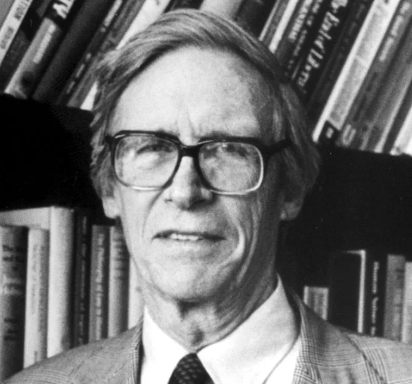
An intuitionist conception of justice is, one might say, but half a conception.
▼
Source
Chapter I, Section 8, pg. 41
4 months 3 weeks ago
The unity of God is a doctrine on which the greatest stress is laid in the whole system of revelation. To guard this most important article was the principal object of the Jewish religion; and, notwithstanding the proneness of the Jews to idolatry, at length it fully answered its purpose in reclaiming them, and in impressing the minds of many persons of other nations in favour of the same fundamental truth. The Jews were taught by their prophets to expect a Messiah, who was to be descended from the tribe of Judah, and the family of David, — a person in whom themselves and all the nations of the earth should be blessed; but none of their prophets gave them an idea of any other than a man like themselves in that illustrious character, and no other did they ever expect, or do they expect to this day. Jesus Christ, whose history answers to the description given of the Messiah by the prophets, made no other pretensions; referring all his extraordinary power to God, his Father, who, he expressly says, spake and acted by him, and who raised him from the dead: and it is most evident that the apostles, and all those who conversed with our Lord before and after his resurrection, considered him in no other light than simply as "a man approved of God, by wonders and signs which God did by him."
▼
Source
Part I : The History of Opinions Relating to Jesus Christ, Introduction
4 months 3 weeks ago
But here is the "ego" of the Russian revolutionary again! Pirouetting on its head, it once more proclaims itself to be the all-powerful director of history — this time with the title of His Excellency the Central Committee of the Social Democratic Party of Russia.
4 months 3 weeks ago
The first thinker was, without a doubt, the first man obsessed by why. An unaccustomed mania, not at all contagious: rare indeed are those who suffer from it, who are a prey to questioning, and who can accept no given because they were born in consternation.
4 months 3 weeks ago
Religion was the pole-star for my father. Rude and uncultivated as he otherwise was, it made him and kept him "in all points a man." Oh! when I think that all the area in boundless space he had seen was limited to a circle of some fifty miles' diameter (he never in his life was farther or elsewhere so far from home as at Craigenputtoch), and all his knowledge of the boundless time was derived from his Bible and what the oral memories of old men could give him, and his own could gather; and yet, that he was such, I could take shame to myself. I feel to my father — so great though so neglected, so generous also towards me — a strange tenderness, and mingled pity and reverence peculiar to the case, infinitely soft and near my heart. Was he not a sacrifice to me? Had I stood in his place, could he not have stood in mine, and more? Thou good father! well may I forever honor thy memory. Surely that act was not without its reward. And was not nature great, out of such materials to make such a man?
4 months 3 weeks ago
An intolerant sect has no right to complain when it is denied an equal liberty. … A person’s right to complain is limited to principles he acknowledges himself.
▼
Source
p. 217
4 months 3 weeks ago
Poetry is the work of the bard and of the people who inspire him.
▼
Source
Poesia (1891)
4 months 3 weeks ago
If the establishment of the thesis 'mathematics is ontology' is the basis of this book, it is in no way its goal.
▼
Source
Introduction
4 months 3 weeks ago
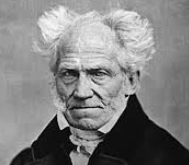
We see in tragedy the noblest men, after a long conflict and suffering, finally renounce forever all the pleasure of life and the aims till then pursued so keenly, or cheerfully and willingly give up life itself.
▼
Source
Book 1
4 months 3 weeks ago
We say: he has no talent, only tone. But tone is precisely what cannot be invented — we're born with it. Tone is an inherited grace, the privilege some of us have of making our organic pulsations felt — tone is more than talent, it is its essence.
4 months 3 weeks ago
He was a teacher and a prophet in the Jewish sense of the word. The prophecies of Isaiah and Jeremiah have become a part of the permanent spiritual inheritance of mankind, because events proved that they had interpreted correctly the signs of their own times, and their prophecies were fulfilled. Carlyle, like them, believed that he had a special message to deliver to the present age. Whether he was correct in that belief, and whether his message was a true message, remains to be seen. He has told us that our most cherished ideas of political liberty, with their kindred corollaries, are mere illusions, and that the progress which has seemed to go along with them is a progress towards anarchy and social dissolution. If he was wrong, he has misused his powers. The principles of his teaching are false. He has offered himself as a guide upon a road of which he had no knowledge; and his own desire for himself would be the speediest oblivion both of his person and his works. If, on the other hand, he has been right; if, like his great predecessors, he has read truly the tendencies of this modern age of ours, and his teaching is authenticated by facts, then Carlyle, too, will take his place among the inspired seers, and he will shine on, another fixed star in the intellectual sky.Time only can show how this will be.
▼
Source
James Anthony Froude, Thomas Carlyle: A History of the First Forty Years of His Life, 1795–1835, Vol. I (1882), pp. xv-xvi
4 months 3 weeks ago
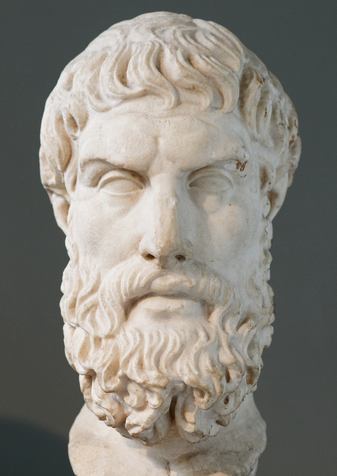
The flesh receives as unlimited the limits of pleasure; and to provide it requires unlimited time. But the mind, intellectually grasping what the end and limit of the flesh is, and banishing the terrors of the future, procures a complete and perfect life, and we have no longer any need of unlimited time. Nevertheless the mind does not shun pleasure, and even when circumstances make death imminent, the mind does not lack enjoyment of the best life.
4 months 3 weeks ago
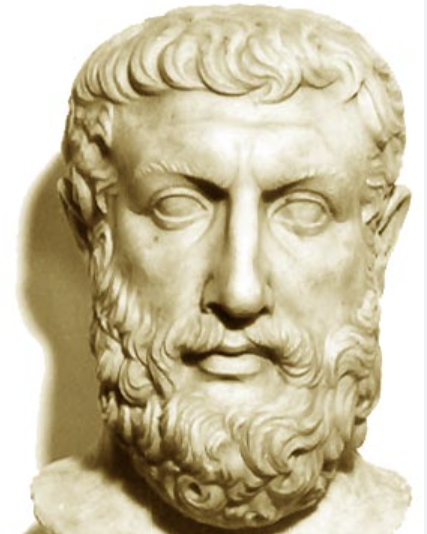
If I accede to Parmenides there is nothing left but the One; if I accede to Zeno, not even the One is left.
▼
Source
Seneca the Younger, as quoted in "Zeno", in The Presocratics (1966) edited by Philip Wheelwright, p. 106
4 months 3 weeks ago
My poems please the brave: My poems, short and sincere, Have the force of steel Which forges swords.
▼
Source
V

4 months 3 weeks ago
As his life and death suggest, Cicero was addicted to Roman politics; he wrote beautifully about the pleasures of a quiet life in the countryside, but hankered for the hurly-burly of the Senate and the courts. His political theory is reflective but far from dispassionate.
4 months 3 weeks ago
If, while hurrying ostensibly to the temple of truth, we hand the reins over to our personal interests which look aside at very different guiding stars, for instance at the tastes and foibles of our contemporaries, at the established religion, but in particular at the hints and suggestions of those at the head of affairs, then how shall we ever reach the high, precipitous, bare rock whereon stands the temple of truth?
▼
Source
E. Payne, trans. (1974) Vol. 1, pp. 22–23
4 months 3 weeks ago
Two enemies — the same man divided.
4 months 3 weeks ago
The sky was dark, the night was black, obscurity reigned, the gleam of the wolves eyes was the only light that came to sight, the howling of the jackal was the only sound to be heard, conspiracies were in the making while slanderers and the malicious were busily chattering
▼
Source
Quote in: Ali Rahnema An Islamic Utopian: A Political Biography of Ali Shariati. (2000), p. 258 | Rahnema commented that "Shariati did not believe he had any chance of returning to Ershad and evaluated his situation in a poetical and macabre fashion".
4 months 3 weeks ago
Our moral virtues benefit mainly other people; intellectual virtues, on the other hand, benefit primarily ourselves; therefore the former make us universally popular, the latter unpopular.
4 months 3 weeks ago
Paradise was unendurable, otherwise the first man would have adapted to it; this world is no less so, since here we regret paradise or anticipate another one. What to do? Where to go? Do nothing and go nowhere, easy enough.
4 months 3 weeks ago
The infinite is in capacity. That, however, which is infinite in capacity is not to be assumed as that which is infinite in energy. ...It has its being in capacity, and in division and diminution. ...It is always possible to assume something beyond it. It does not, however, on this account surpass every definite magnitude; as in division it surpasses every definite magnitude, and will be less.
▼
Source
Book III, Ch. VIII, pp. 164-166.
4 months 3 weeks ago
[On Schopenhauer:] I went away conscious that I had seen not only a genius-of ideas, but also a character of the most genuine sublimity . . I felt myself . . . transported into a new existence. Francis of Assisi and the other heroes of asceticism had become my ideals.
▼
Source
Quoted by Harry Slochower in "Julius Bahnsen, Philosopher of Heroic Despair, 1830-1881" (1932), The Philosophical Review, 41(4), p. 372
4 months 3 weeks ago
I am a Communist because I am convinced that the reason we have been forcefully compelled to eke out an existence at the very lowest level of American society has to do with the nature of capitalism. If we are going to rise out of our oppression, our poverty, if we are going to cease being the targets of the racist-minded mentality of racist policemen, we will have to destroy the American capitalist system. We will have to obliterate a system in which a few wealthy capitalists are guaranteed the privilege of becoming richer and richer, whereas the people who are forced to work for the rich, and especially Black people, never take any significant step forward.
▼
Source
p. 483
4 months 3 weeks ago
In our monogamous part of the world, to marry means to halve one’s rights and double one’s duties.
▼
Source
Vol. 2, Ch. 27, § 370 | Variant translation: To marry is to halve your rights and double your duties.
4 months 3 weeks ago
Even when nothing happens, everything seems too much for me. What can be said, then, in the presence of an event, any event?
4 months 3 weeks ago
The man who esteems himself as he ought, and no more than he ought, seldom fails to obtain from other people all the esteem that he himself thinks due. He desires no more than is due to him, and he rests upon it with complete satisfaction.
▼
Source
Section III.
4 months 3 weeks ago
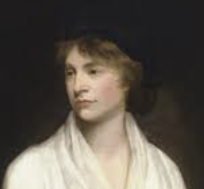
It is vain to expect virtue from women till they are in some degree independent of men; nay, it is vain to expect that strength of natural affection which would make them good wives and mothers. Whilst they are absolutely dependent on their husbands they will be cunning, mean, and selfish.
▼
Source
Ch. 9
4 months 3 weeks ago
A scientific theory is usually felt to be better than its predecessors not only in the sense that it is a better instrument for discovering and solving puzzles but also because it is somehow a better representation of what nature is really like. One often hears that successive theories grow ever closer to, or approximate more and more closely to, the truth. Apparently generalizations like that refer not to the puzzle-solutions and the concrete predictions derived from a theory but rather to its ontology, to the match, that is, between the entities with which the theory populates nature and what is “really there.”Perhaps there is some other way of salvaging the notion of ‘truth’ for application to whole theories, but this one will not do. There is, I think, no theory-independent way to reconstruct phrases like ‘really there’; the notion of a match between the ontology of a theory and its “real” counterpart in nature now seems to me illusive in principle. Besides, as a historian, I am impressed with the implausability of the view. I do not doubt, for example, that Newton’s mechanics improves on Aristotle’s and that Einstein’s improves on Newton’s as instruments for puzzle-solving. But I can see in their succession no coherent direction of ontological development. On the contrary, in some important respects, though by no means in all, Einstein’s general theory of relativity is closer to Aristotle’s than either of them is to Newton’s.
4 months 3 weeks ago
Human rights are not just cultural or legal constructions, as fashionable western relativists are fond of claiming. They are universal values. To deny the benefits of the new regime of rights to other cultures is to patronise them in a way that is reminiscent of the colonial era. If the new regime on torture is good enough for the US, who can say that it is not good for everyone?
4 months 3 weeks ago
Men seem to pursue honour in order that they may believe themselves to be good. Accordingly, they seek to be honoured by the wise, and by those who know them well, and on the score of virtue; it is clear, therefore, that in their opinion at any rate, virtue is superior to honour. Perhaps, then, one ought to say that virtue rather than honour is the end of the political life; yet even virtue is plainly too imperfect: for it seems that a man might have all the virtues and yet be asleep, or fail to achieve anything all his life; moreover, such a person may suffer the greatest evils and misfortunes. And no one, in this case, would call a man, who passed his life in this manner, happy, except for argument's sake.
▼
Source
(Bk. 1, Chapter III)
4 months 3 weeks ago
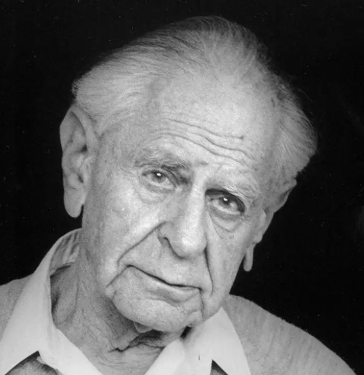
If we are uncritical we shall always find what we want: we shall look for, and find, confirmations, and we shall look away from, and not see, whatever might be dangerous to our pet theories. In this way it is only too easy to obtain what appears to be overwhelming evidence in favor of a theory which, if approached critically, would have been refuted.
▼
Source
The Poverty of Historicism (1957) Ch. 29 The Unity of Method
4 months 3 weeks ago
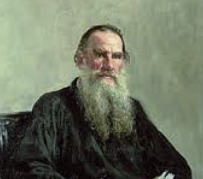
It will be said, "Patriotism has welded mankind into states, and maintains the unity of states." But men are now united in states; that work is done; why now maintain exclusive devotion to one's own state, when this produces terrible evils for all states and nations? For this same patriotism which welded mankind into states is now destroying those same states. If there were but one patriotism say of the English only then it were possible to regard that as conciliatory, or beneficent. But when, as now, there is American patriotism, English, German, French, Russian, all opposed to one another, in this event, patriotism no longer unites, but disunites.
▼
Source
Patriotism and Government
4 months 3 weeks ago
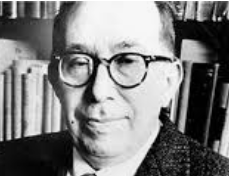
Writings are naturally accessible to all who can read. Therefore a philosopher who chose the second way could expound only such opinions as were suitable for the nonphilosophic majority: all of his writings would have to be, strictly speaking, exoteric. These opinions would not be in all respects consonant with truth. Being a philosopher, that is, hating "the lie in the soul" more than anything else, he would not deceive himself about the fact that such opinions are merely "likely tales," or "noble lies," or "probable opinions," and would leave it to his philosophic readers to disentangle the truth from its poetic or dialectic presentation. But he would defeat his purpose if he indicated clearly which of his statements expressed a noble lie, and which the still more noble truth.
▼
Source
p. 35
4 months 3 weeks ago
There are now thirty-three prisons, thirty eight camps, sixteen community correctional facilities, and five tiny prisoner mother facilities in California. In 2002, there were 157,979 people incarcerated in these institutions, including approximately twenty thousand people whom the state holds for immigration violations.
▼
Source
Chapter One
4 months 3 weeks ago
As my own father was sick, and miserably tied to his invalid's chair, he would have been abandoned had not an old servant performed for him a so-called service of love. My mother gave parties while he was perishing in solitude, and amused herself while he was suffering bitter agonies
▼
Source
Schopenhauer and the Wild Years of Philosophy by Rüdiger Safranski (trans. Ewald Osers)
4 months 3 weeks ago
All morning, I did nothing but repeat: "Man is an abyss, man is an abyss." — I could not, alas, find anything better.
4 months 3 weeks ago
A great stock, though with small profits, generally increases faster than a small stock with great profits. Money, says the proverb, makes money. When you have a little, it is often easier to get more. The great difficulty is to get that little.
▼
Source
Chapter IX, p. 111.
4 months 3 weeks ago
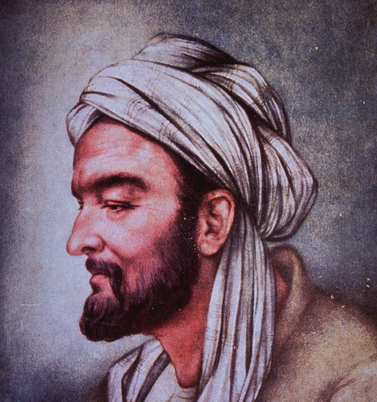
God, the supreme being, is neither circumscribed by space, nor touched by time; he cannot be found in a particular direction, and his essence cannot change. The secret conversation is thus entirely spiritual; it is a direct encounter between God and the soul, abstracted from all material constraints.
▼
Source
As quoted in 366 Readings From Islam (2000), edited by Robert Van der Weyer
4 months 3 weeks ago
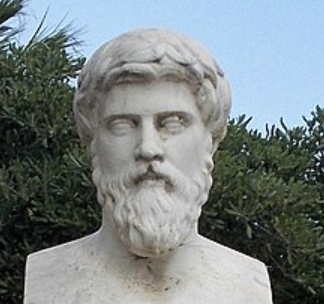
Once when Phocion had delivered an opinion which pleased the people,… he turned to his friend and said, "Have I not unawares spoken some mischievous thing or other?"
▼
Source
55 Phocion
4 months 3 weeks ago
The basis of the [[scientific method|[scientific] method]] is a belief in natural uniformity – if two events are regularly connected in our observations we can conclude that they obey a universal law. But this is not a conclusion we reach by observation. No amount of evidence can demonstrate the existence of laws of nature, since new experience can always overturn them. Science rests on the belief that the future will be like the past; but that belief is rationally groundless. This is not a new line of thinking. David Hume argued that the expectation that the future will be like the past, which is the basis of induction, is a matter of habit. Hume wanted to show that since miracles transgress known laws of nature it was unreasonable to accept reports of them, in the Bible or anywhere else. But his arguments against induction showed that the laws of nature could not in fact be known, so events that seemed impossible could happen at any time. The upshot was that faith in miracles returned by the back door of sceptical doubt.
▼
Source
Cross-correspondences (p. 68)
4 months 3 weeks ago
It is absurd to hold that a man ought to be ashamed of being unable to defend himself with his limbs but not of being unable to defend himself with reason when the use of reason is more distinctive of a human being than the use of his limbs.
▼
Source
Book I, 1355b.1
4 months 3 weeks ago
Although my own position is, I believe, clearly enough implied in the text, I may perhaps briefly formulate what seems to me the most important principles of humanitarian and equalitarian ethics. (1) Tolerance towards all who are not intolerant and who do not propagate intolerance. ... This implies, especially, that the moral decisions of others should be treated with respect, as long as such decisions do not conflict with the principle of tolerance. (2) The recognition that all moral urgency has its basis in the urgency of suffering or pain. I suggest, for this reason, to replace the utilitarian formula 'Aim at the greatest amount of happiness for the greatest number', or briefly, 'Maximize happiness' by the formula 'The least amount of avoidable suffering for all', or briefly, 'Minimize suffering'. Such a simple formula can, I believe, be made one of the fundamental principles (admittedly not the only one) of public policy. (The principle 'Maximize happiness', in contrast, seems to be apt to produce a benevolent dictatorship.) We should realize that from the moral point of view suffering and happiness must not be treated as symmetrical; that is to say, the promotion of happiness is in any case much less urgent than the rendering of help to those who suffer, and the attempt to prevent suffering. (The latter task has little to do with 'matters of taste', the former much.)
▼
Source
Vol. 1, Notes to the Chapters: Ch. 5, Note 6.
4 months 3 weeks ago
It is not sufficient to observe our mysteries in the seclusion of our lodge—we must act—act! We are drowsing, but we must act. (Pierre raised his notebook and began to read.) For the dissemination of pure truth and to secure the triumph of virtue," he read, "we must cleanse men from prejudice, diffuse principles in harmony with the spirit of the times, undertake the education of the young, unite ourselves in indissoluble bonds with the wisest men, boldly yet prudently overcome superstitions, infidelity, and folly, and form of those devoted to us a body linked together by unity of purpose and possessed of authority and power.
4 months 3 weeks ago
The adjective “political” in “political philosophy” designates not so much the subject matter as a manner of treatment; from this point of view, I say, “political philosophy” means primarily not the philosophic study of politics, but the political, or popular, treatment of philosophy, or the political introduction to philosophy—the attempt to lead qualified citizens, or rather their qualified sons, from the political life to the philosophic life.
▼
Source
p. 93
CivilSimian.com created by AxiomaticPanic, CivilSimian, Kalokagathia