
4 months 3 weeks ago
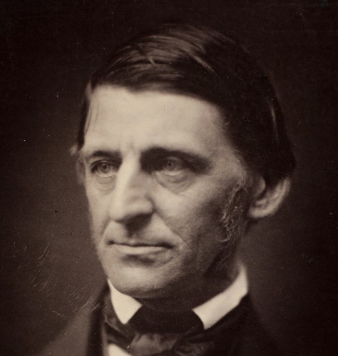
The cup of life is not so shallow That we have drained the best That all the wine at once we swallow And lees make all the rest.
▼
Source
1827

4 months 3 weeks ago
Demand for women’s studies, like demand for black studies, Chicano/Latino, Asian American, Native American studies, are linked to larger quest for equality, justice, freedom. We are interested not in race and gender (and class and sexuality and disability) per se, by themselves, but primarily as they have been acknowledged as conditions for hierarchies of power, so that we can transform them into intertwined vectors of struggle for freedom.

4 months 3 weeks ago
To dream of an enterprise of demolition that would spare none of the traces of the original Big Bang.
4 months 3 weeks ago
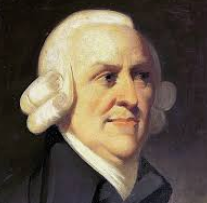
The great affair, we always find, is to get money.
▼
Source
Chapter I, p. 460.
4 months 3 weeks ago
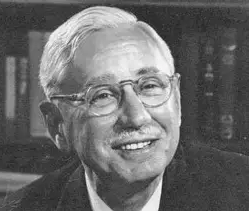
Civilization exists by geological consent, subject to change without notice.
▼
Source
"What is Civilization?" Ladies' Home Journal, LXIII (January, 1946)
4 months 3 weeks ago
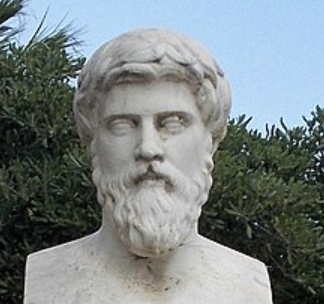
[Plutarch's Parallel Lives contain] so many beautiful and serious discourses throughout, derived from the deepest and most hidden secrets of moral and natural philosophy, so many wise warnings, and fruitful advice.
▼
Source
Jacques Amyot, Plutarch, Les vies des hommes illustres (Paris, 1565 [second edition of Amyot's version]), quoted in Peter Burke, 'A Survey of the Popularity of Ancient Historians, 1450–1700', History and Theory, Vol. 5, No. 2 (1966), p. 142

4 months 3 weeks ago
In Kleist’s essay humans are caught between the graceful automatism of the puppet and the conscious freedom of a god. The jerky, stuttering quality of their actions comes from their feeling that they must determine the course of their lives. Other animals live without having to choose their path through life. Whatever uncertainty they may feel sniffing their way through the world is not a permanent condition; once they reach a place of safety, they are at rest. In contrast, human life is spent anxiously deciding how to live.
▼
Source
The Faith of Puppets: Leopardi and the Souls of Machines (p.25-6)
4 months 3 weeks ago
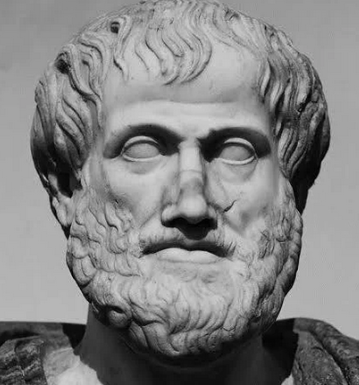
I do believe for certain, that he [Aristotle] first procured, by the help of the senses, such experiments and observations as he could, to assure him as much as was possible of the conclusion, and that he afterwards sought out the means how to demonstrate it; for this is the usual course in demonstrative sciences. And the reason thereof is, because when the conclusion is true, by the help of the resolutive method, one may hit upon some proposition before demonstrated, or come to some principle known per se; but if the conclusion be false, a man may proceed in infinitum, and never meet with any truth already known.
▼
Source
Galileo Galilei, Dialogue Concerning the Two Chief World Systems, Salusbury translation (1661) p. 37 as quoted by Edwin Arthur Burtt, The Metaphysical Foundations of Modern Physical Science (1925)
4 months 3 weeks ago
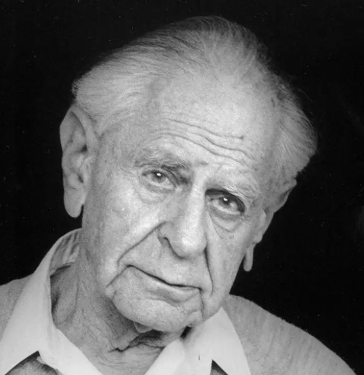
Darwinism is not a testable scientific theory, but a metaphysical research program.
▼
Source
Unsourced variant: Evolution is not a fact. Evolution doesn't even qualify as a theory or as a hypothesis. It is a metaphysical research program, and it is not really testable science.
4 months 3 weeks ago
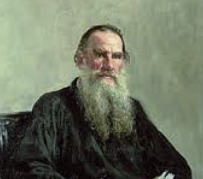
Respect was invented to cover the empty place where love should be.
▼
Source
(voice of Anna) C. Garnett, trans. (New York: 2003), Part 7, Chapter 24 p. 685
4 months 3 weeks ago
In my opinion, the only serious attempt to “save” Americans from cultural relativism has come from the students of Leo Strauss.
▼
Source
James R. Flynn, Where Have All the Liberals Gone? Race, Class, and Ideals in America (2008) Chapter 8. William James and Leo Strauss
4 months 3 weeks ago
All the thoughts of a turtle are turtle.
▼
Source
1855
4 months 3 weeks ago
For more on this historic moment, we are spending the hour with the legendary activist and scholar Angela Davis, professor emerita at the University of California, Santa Cruz. For half a century, Angela Davis has been one of the most influential activists and intellectuals in the United States, an icon of the Black liberation movement. Angela Davis’s work around issues of gender, race, class and prisons has influenced critical thought and social movements across several generations. She’s a leading advocate for prison abolition, a position informed by her own experience as a prisoner and a fugitive on the FBI’s top 10 wanted list more than 40 years ago. Once caught, she faced the death penalty in California. After being acquitted on all charges, she’s spent her life fighting to change the criminal justice system.
▼
Source
Amy Goodman, [https://www.democracynow.org/2020/6/12/angela_davis_on_abolition_calls_to Angela Davis on Abolition, Calls to Defund Police, Toppled Racist Statues & Voting in 2020 Election, Democracy Now,] (12 June 2020)
4 months 3 weeks ago
Without will, no conflict: no tragedy among the abulic. Yet the failure of will can be experienced more painfully than a tragic destiny.
4 months 3 weeks ago
The government of an exclusive company of merchants is, perhaps, the worst of all governments for any country whatever.
▼
Source
Chapter VII, Part Second, p. 619.
4 months 3 weeks ago
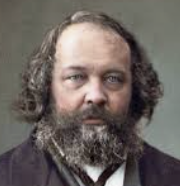
The peoples' revolution .... will arrange its revolutionary organisation from the bottom up and from the periphery to the centre, in keeping with the principle of liberty.
4 months 3 weeks ago
Power dements even more than it corrupts, lowering the guard of foresight and raising the haste of action.
▼
Source
Ch. IV : The Convention: September 21, 1792 - October 26, 1795, Part V : The Reign of Terror: September 17, 1793 - July 28, 1794, § 4 : The Revolution Eats Its Children

4 months 3 weeks ago
The order of authority derives from God, as the Apostle says [in Romans 13:1-7]. For this reason, the duty of obedience is, for the Christian, a consequence of this derivation of authority from God, and ceases when that ceases. But, as we have already said, authority may fail to derive from God for two reasons: either because of the way in which authority has been obtained, or in consequence of the use which is made of it. There are two ways in which the first may occur. Either because of a defect in the person, if he is unworthy; or because of some defect in the way itself by which power was acquired, if, for example, through violence, or simony or some other illegal method.
▼
Source
in Aquinas: Selected Political Writings (Basil Blackwell: 1974), p. 183

4 months 3 weeks ago
Porphyry wrote in just about every branch of learning practiced at the time but only a portion of his large output is extant. Porphyry was an influential thinker. He applied Neoplatonism to pagan religion and other spheres and is as such a key figure the promulgation of Neoplatonic thought. … His name was ‘Malcus’, ‘king’ in his native tongue, hence he became ‘Basileus’ (‘king’) in Greek. He, however, calls himself Porphyry, which supposedly was a common name in Tyre, the city of purple, and is commonly known under that name. … In reality we do not know anything with certainty about where he lived in the latter half of his life. He may have been Iamblichus' teacher. The evidence for this, however, is not beyond dispute. It is clear, though, that Iamblichus was strongly influenced by Porphyry, even if he turned vehemently against him.
▼
Source
Eyjólfur Emilsson, in [http://plato.stanford.edu/entries/porphyry/ "Porphyry" at Stanford Encyclopedia of Philosophy (2005)]
4 months 3 weeks ago
I referred above to the Popperian school as a school, and yet it was not until I came to Sydney from London that I fully realised the extent to which I had been in a school. I found, to my surprise, that there were philosophers influenced by Wittgenstein or Quine or Marx who thought that Popper was quite wrong on many issues, and some who even thought that his views were positively dangerous. I think I have learnt much from that experience. One of the things that I have learnt is that on a number of major issues Popper is indeed wrong, as is argued in the latter portions of this book. However, this does not alter the fact that the Popperian approach is infinitely better than the approach adopted in most philosophy departments that I have encountered.
▼
Source
Alan Chalmers (1976), Preface to the first edition, What is this thing called Science?
4 months 3 weeks ago
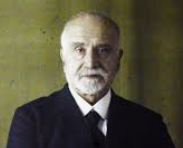
The condition of life to which people of the well-to-do classes are accustomed is that of an abundant production of various articles necessary for their comfort and pleasure, and these things are obtained only thanks to the existence of factories and works organized as at present. And, therefore, discussing the improvement of the workers' position, the men of science belonging to the well- to-do classes always have in view only such improvements as will not do away with the system of factory-production and those conveniences of which they avail themselves.
▼
Source
Chapter V: Why Learned Economists Assert What Is False
4 months 3 weeks ago
The primitive mentality is a condition of the human mind, and not a stage in its historical development.
▼
Source
Quoted in François-Bernard Mâche (1983, 1992). Music, Myth and Nature, or The Dolphins of Arion (Musique, mythe, nature, ou les Dauphins d'Arion, trans. Susan Delaney). Harwood Academic Publishers. .
4 months 3 weeks ago
We will walk on our own feet; we will work with our own hands; we will speak our own minds...A nation of men will for the first time exist, because each believes himself inspired by the Divine Soul which also inspires all men.
▼
Source
par. 43
4 months 3 weeks ago
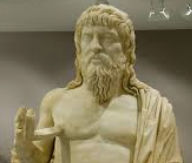
Approve and pursue the kind that is in accordance with nature. But avoid the kind that claims to be inspired: people like that about tell lies about Gods, and urge us to do many foolish things.
▼
Source
Attributed to Apollonius. Quoted from Ram Swarup (2000). On Hinduism: Reviews and reflections, Chapter India and Greece
4 months 3 weeks ago
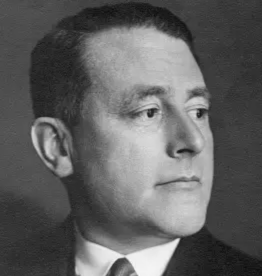
A science that observes the laws of causation, and so is value-free, threatens human freedom and man’s religious, ethical, and legal responsibility. The philosophy of values raised to that challenge, in the sense that it opposed a sphere of values, as a realm of ideal valuations, to a sphere of being that was only causally understood. It was an attempt to assert the human being as a free, responsible creature, indeed not in itself, but at least, in its valuation, what one called value. That attempt was put forth as a positivistic substitute for the metaphysical.
4 months 3 weeks ago
All registers which, it is acknowledged, ought to be kept secret, ought certainly never to exist.
▼
Source
Chapter II, Part II, Appendix to Articles I and II, p. 935.
4 months 3 weeks ago
Though the framework is libertarian and laissez-faire, individual communities within it need not be, and perhaps no community within it will choose to be so. Thus, the characteristics of the framework need not pervade the individual communities. In this laissez-faire system it could turn out that though they are permitted, there are no actually functioning "capitalist" institutions; or that some communities have them and others don't or some communities have some of them, or what you will.
▼
Source
Ch. 10 : A Framework for Utopia; The Framework as Utopian Common Ground, p. 320
4 months 3 weeks ago
All state obligations are against the conscience of a Christian: the oath of allegiance, taxes, law proceedings and military service.
▼
Source
Chapter VII, Significance of Compulsory Service
4 months 3 weeks ago
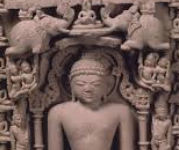
Desistance from sin makes one entirely happy.
▼
Source
As quoted in Religion and culture of the Jains (1975) by Jyotiprasāda Jaina, p. 187.
4 months 3 weeks ago
Life is too short to waste The critic bite or cynic bark, Quarrel, or reprimand; 'Twill soon be dark; Up! mind thine own aim, and God speed the mark!
▼
Source
To J. W., st. 4
4 months 3 weeks ago
The blessing that the market does not ask about birth is paid for in the exchange society by the fact that the possibilities conferred by birth are molded to fit the production of goods that can be bought on the market.
▼
Source
E. Jephcott, trans., p. 9

4 months 3 weeks ago
Once, Socrates was a sort of patron saint of philosophers. It was understood that philosophy was a way of questioning, musing, ruminating, living—a way of being a person.
▼
Source
p. xi
4 months 3 weeks ago
Upon the whole, I have always considered him, both in his lifetime and since his death, as approaching as nearly to the idea of a perfectly wise and virtuous man, as perhaps the nature of human frailty will permit.
▼
Source
On David Hume, in a letter To William Strachan, Esq., Kirkaldy, Fifeshire (9 November 1776).
4 months 3 weeks ago
So the majority of the highest classes of that age, even the popes and ecclesiastics, really believed in nothing at all. They did not believe in the Church doctrine, for they saw its insolvency; but neither could they follow Francis of Assisi, Kelchitsky, and most of the sectarians in acknowledging the moral, social teaching of Christ, for that undermined their social position. And so these people remained without any religious view of life. And, having none, they could have no standard with which to estimate what was good and what was bad art, but that of personal enjoyment.
4 months 3 weeks ago
You must know that if a person, who has attained a certain degree of perfection, wishes to impart to others, either orally or in writing, any portion of the knowledge which he has acquired of these subjects, he is utterly unable to be as systematic and explicit as he could be in a science of which the method is well known. The same difficulties which he encountered when investigating the subject for himself will attend him when endeavouring to instruct others: viz., at one time the explanation will appear lucid, at another time, obscure: this property of the subject appears to remain the same both to the advanced scholar and to the beginner. For this reason, great theological scholars gave instruction in all such matters only by means of metaphors and allegories.
4 months 3 weeks ago
Things added to things, as statistics, civil history, are inventories. Things used as language are inexhaustibly attractive.
▼
Source
Plato; or, The Philosopher
4 months 3 weeks ago
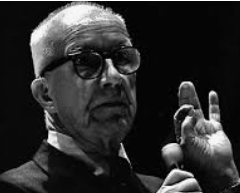
Thinking is a momentary dismissal of irrelevancies.
▼
Source
Utopia or Oblivion: The Prospects of Humanity (1969)
4 months 3 weeks ago
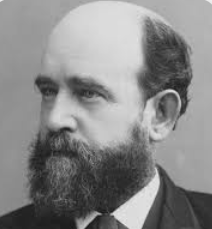
Poverty is a crime. I do not mean that it is a crime to be poor. Murder is a crime; but it is not a crime to be murdered; and a man who is in poverty, I look upon, not as a criminal in himself, so much as the victim of a crime for which others, as well perhaps as himself, are responsible.
▼
Source
The Crime of Poverty (1885)
4 months 3 weeks ago
Here is the picture of this Old Master: a quiet, awkward, forceful Scotchman, whose philosophy has entered everywhere into the life of politics and become a world-force in thought; an impracticable Commissioner of Customs, who has left for the instruction of statesmen the best theory of taxation; an unbusiness-like professor, who established the science of business; a man of books, who is universally honored by men of action; plain, eccentric, learned, inspired. The things that strike us most about him are, his boldness of conception and wideness of outlook, his breadth and comprehensiveness of treatment, and his carefully clarified and beautified style.
▼
Source
Woodrow Wilson, 'An Old Master', The New Princeton Review, Vol. VI. 1888. July—September—November (1888), p. 219
4 months 3 weeks ago
The reason for the astonishing fact that a majority of working people submit to a handful of idlers who control their labour and their very lives is always and everywhere the same — whether the oppressors and oppressed are of one race or whether, as in India and elsewhere, the oppressors are of a different nation. This phenomenon seems particularly strange in India, for there more than two hundred million people, highly gifted both physically and mentally, find themselves in the power of a small group of people quite alien to them in thought, and immeasurably inferior to them in religious morality. ... the reason lies in the lack of a reasonable religious teaching which, by explaining the meaning of life would supply a supreme law for the guidance of conduct, and would replace the more than dubious precepts of pseudoreligion and pseudoscience and the immoral conclusions deduced from them, commonly called "civilization."
▼
Source
I
4 months 3 weeks ago
This gift... which God gave us in order to enable us to perfect ourselves, to learn and to teach, must not be employed in doing that which is for us most degrading and perfectly disgraceful... Those who employ the faculty of thinking and speaking in the service of that sense which is no honour to us, who think more than necessary of drink and love, or even sing of these things; they employ and use the divine gift in acts of rebellion against the Giver, and in transgression of his commandments.
▼
Source
Ch.8
4 months 3 weeks ago
I have been quoted as saying captious things about travel; but I mean to do justice. I think, there is a restlessness in our people, which argues want of character. All educated Americans, first or last, go to Europe; — perhaps, because it is their mental home, as the invalid habits of this country might suggest. An eminent teacher of girls said, "the idea of a girl's education, is, whatever qualifies them for going to Europe." Can we never extract this tape-worm of Europe from the brain of our countrymen?
▼
Source
Culture
4 months 3 weeks ago
We are in an age that assumes the narrowing trends of specialization to be logical, natural, and desirable. Consequently, society expects all earnestly responsible communication to be crisply brief. . . . In the meantime, humanity has been deprived of comprehensive understanding. Specialization has bred feelings of isolation, futility, and confusion in individuals. It has also resulted in the individual's leaving responsibility for thinking and social action to others. Specialization breeds biases that ultimately aggregate as international and ideological discord, which, in turn, leads to war.
4 months 3 weeks ago
When we consider that labor is the producer of all wealth, is it not evident that the impoverishment and, dependence of labor are abnormal conditions resulting from restrictions and usurpations, and that instead of accepting protection, what labor should demand is freedom. That those who advocate any extension of freedom choose to go no further than suits their own special purpose is no reason why freedom itself should be distrusted.
▼
Source
Ch. 2
4 months 3 weeks ago
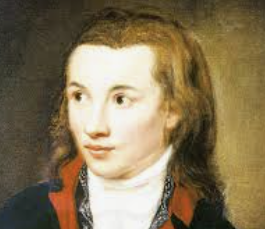
The normal present connects the past and the future through limitation. Contiguity results, crystallization by means of solidification. There also exists, however, a spiritual present that identifies past and future through dissolution, and this mixture is the element, the atmosphere of the poet.
▼
Source
Fragment No. 109

4 months 3 weeks ago
By the air which I breathe, and by the water which I drink, I will not endure to be blamed on account of this discourse.
▼
Source
As reported by Heraclides Ponticus (c. 360 BC), and Diogenes Laërtius, in Lives and Opinions of Eminent Philosophers, "Pythagoras", Sect. 6, in the translation of C. D. Yonge (1853)
4 months 3 weeks ago
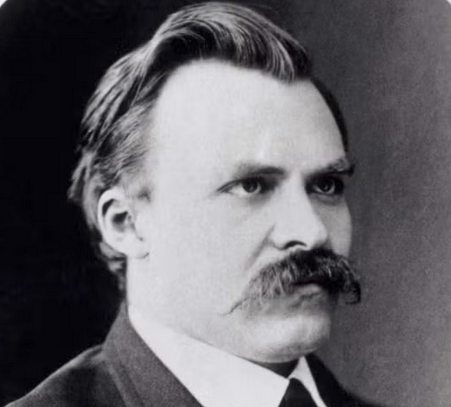
Do not forget, man, consumed by lust:you—are the stone, the desert, are death ...
4 months 3 weeks ago
When a person inflates his own importance, he does not see his own sins; and his sins get bigger right along with him.
▼
Source
p. 108
4 months 3 weeks ago
The question, "What is the purpose thereof?" cannot be asked about anything which is not the product of an agent; therefore we cannot ask what is the purpose of the existence of God.
▼
Source
Ch.13
4 months 3 weeks ago
The young men were born with knives in their brain, a tendency to introversion, self-dissection, anatomizing of motives.
▼
Source
p. 530, col. 2
CivilSimian.com created by AxiomaticPanic, CivilSimian, Kalokagathia