
4 months 3 weeks ago
This is not a visible revolution and it is not political. You're dealing with the invisible world of technology....Politics is absolutely hopeless. That's why everything has gone wrong. You have ninety-nine percent of the people thinking "politics," and hollering and yelling. And that won't get you anywhere. Hollering and yelling won't get you across the English Channel. It won't reach from continent to continent; you need electronics for that, and you have to know what you're doing. Evolution has been at work doing all these things so it is now possible. Nobody has consciously been doing it. The universe is a lot bigger than you and me. We didn't invent it. If you take all the machinery in the world and dump it in the ocean, within months more than half of all humanity will die and within another six months they'd almost all be gone; if you took all the politicians in the world, put them in a rocket, and sent them to the moon, everyone would get along fine.
4 months 3 weeks ago
A word is a bud attempting to become a twig. How can one not dream while writing? It is the pen which dreams. The blank page gives the right to dream.
▼
Source
Introduction, sect. 6
4 months 3 weeks ago
Nothing is so fatal to the progress of the human mind as to suppose that our views of science are ultimate; that there are no mysteries in nature; that our triumphs are complete, and that there are no new worlds to conquer.
▼
Source
In David Knight, Humphry Davy: Science & Power (1998) p. 87
4 months 3 weeks ago
We can conceive of various kinds of democracy. But my intention is not to treat of every kind, but of that only, "wherein all, without exception, who owe allegiance to the laws of the country only, and are further independent and of respectable life, have the right of voting in the supreme council and of filling the offices of the dominion."
▼
Source
Ch. 11, Of Democracy
4 months 3 weeks ago
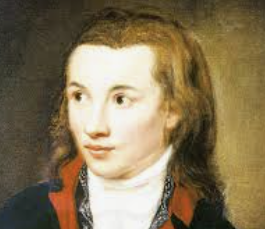
Nature is an Æolian Harp, a musical instrument; whose tones again are keys to higher strings in us.

4 months 3 weeks ago
The wind is blowing, adore the wind.
▼
Source
Symbol 8
4 months 3 weeks ago
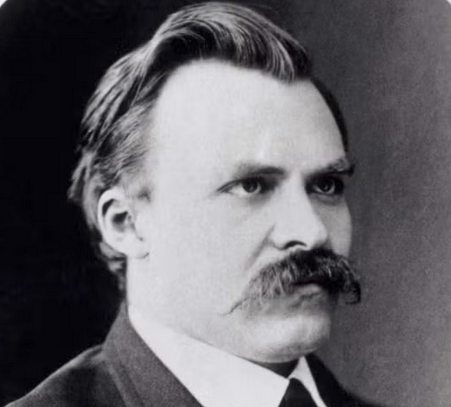
The good generally displeases us when it is beyond our ken.
4 months 3 weeks ago
Tostoy's message has not grown out-of-date. In the present "end of an age" when fear and anxiety and collective crime have expanded beyond even Tolstoy's conception of the possibilities, these essays come to us with prophetic force and urgency. He strides like a giant over all the pettifogging economists and politicians and confronts us with his unanswerable accusations, his scorn and his love of life and humanity.
▼
Source
Herbert Read, in a review of "Essays from Tula" by Tolstoy, in Freedom (13 November 1948)
4 months 3 weeks ago
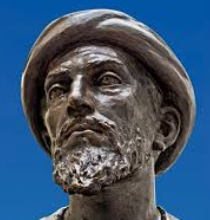
The difference between that which is ascribed to God and that which is ascribed to man is expressed in the words... "And your ways are not my ways."
▼
Source
Ch.20, (Is. lv. 8-9)
4 months 3 weeks ago
Wilt thou seal up the avenues of ill? Pay every debt, as if God wrote the bill!
▼
Source
Quatrains, Suum Cuique
4 months 3 weeks ago
Up to now, the world of politics doesn't know that. That's why all nations are dependent on armaments, why we have the arms race.
4 months 3 weeks ago
Not frequently man from man.
▼
Source
As quoted in the translation of Thomas Taylor (1818); This has been interpreted as being an exhortation to moderation in homosexual liaisons.
4 months 3 weeks ago
In trying to solve the terrifying problems that face us in the world today, we naturally turn to the things we do best. We play from strength, and our strength is science and technology. To contain a population explosion, we look for better methods of birth control. Threatened by a nuclear holocaust, we build bigger deterrent forces and anti-ballistic missile systems. We try to stave off world famine with new foods and better ways of growing them. Improved sanitation and medicine will, we hope, control disease; better housing and transportation will solve the problems of the ghettos, and new ways of reducing or disposing of waste will stop the pollution of the environment. We can point to remarkable achievements in all these fields, and it is not surprising that we should try to extend them. But things grow steadily worse, and it is disheartening to find that technology itself is increasingly at fault. Sanitation and medicine have made the problems of population more acute, war has acquired a new horror with the invention of nuclear weapons, and the affluent pursuit of happiness is largely responsible for pollution. As Darlington has said, ‘Every new source from which man has increased his power on the earth has been used to diminish the prospects of his successors. All his progress has been at the expense of damage to his environment which he cannot repair and could not foresee.’
▼
Source
Beyond Freedom and Dignity (1971), Chapter 1: "A Technology of Behaviour".
4 months 3 weeks ago
Don't get involved in partial problems, but always take flight to where there is a free view over the whole single great problem, even if this view is still not a clear one.
▼
Source
Journal entry (1 November 1914)
4 months 3 weeks ago
By following entirely the guidance of lust, in the manner of fools, man loses his intellectual energy, injures his body, and perishes before his natural time; sighs and cares multiply; there is an increase of envy, hatred, and warfare, for the purpose of taking what another possesses. The cause of all this is the circumstance that the ignorant considers physical enjoyment as an object to be sought for its own sake. God in His wisdom has therefore given us such commandments as would counteract that object, and prevent us altogether from directing our attention to it, and has debarred us from everything that leads only to excessive desire and to lust. This is an important thing included in the objects of our Law.
▼
Source
Ch.33
4 months 3 weeks ago
The imagination is not a talent of some men but is the health of every man.
▼
Source
Poetry and Imagination
4 months 3 weeks ago
Every child has an enormous drive to demonstrate competence. If humans are not required to earn a living to be provided survival needs, many are going to want very much to be productive, but not at those tasks they did not choose to do but were forced to accept in order to earn money. Instead, humans will spontaneously take upon themselves those tasks that world society really needs to have done.
4 months 3 weeks ago
If people differ in an absolutely general way in their estimations of epistemic relevance, and if we follow the holism of meaning and individuate intentional states by way of the totality of their epistemic bonds, the consequence will be that two people (or, for that matter, two temporal sections of the same person) will never be in the same intentional state. Therefore, two people can never be subsumed under the same intentional generalizations. And, therefore, intentional generalization can never be successful. And, therefore again, there is no hope for an intentional psychology.
▼
Source
Fodor & E. Lepore (1992) Holism: A Shopper's Guide, Blackwell.
4 months 3 weeks ago
In a word, neither death, nor exile, nor pain, nor anything of this kind is the real cause of our doing or not doing any action, but our inward opinions and principles.
▼
Source
Book I, ch. 11, § 33.
4 months 3 weeks ago
The best and greatest winning is a true friend; and the greatest loss is the loss of time.
4 months 3 weeks ago
I am my world. (The microcosm.) (5.63)
▼
Source
Original German: Ich bin meine welt (Der Mikrokosmos.)
4 months 3 weeks ago
A philosophical essay leaves much to the reader, often saying too little for fear of saying too much; its attention is concentrated, but it does not stay to cross all the ts of the argument; its mood is cautious without being defensive; it is personal but never merely 'subjective'; it does not dissemble the conditionality of the conclusions it throws up and although it may enlighten it does not instruct. It is, in short, a well-considered intellectual adventure recollected in tranquility.
▼
Source
Preface
4 months 3 weeks ago
Every man is a new method.
▼
Source
"The Natural History of Intellect", p. 28
4 months 3 weeks ago
The systems approach to problems does not mean that the most generally formulated problem must be solved in one research project. However desirable this may be, it is seldom possible to realize it in practice. In practice, parts of the total problem are usually solved in sequence. In many cases the total problem cannot be formulated in advance but the solution of one phase of it helps define the next phase. For example, a production control project may require determination of the most economic production quantities of different items. Once these are found it may turn out that these quantities cannot be produced on the available equipment in the available time. This, then, gives rise to a new problem whose solution will affect the solution obtained in the first phase.
▼
Source
p. 7
4 months 3 weeks ago
What is the first business of one who practices philosophy? To get rid of self-conceit. For it is impossible for anyone to begin to learn that which he thinks he already knows.
▼
Source
Book II, ch. 17, § 1.
4 months 3 weeks ago
Let us suppose that we have set the problem of finding a solution to the equation \scriptstyle x^2=2. \, This is a problem for which the Babylonians around 1700 BC found the excellent approximation \scriptstyle \sqrt{2}. ...This is the identical problem which Pythagoras asserted had no fractional solution and in whose honor he was supposed to have sacrificed a hecatomb of oxen—the problem which caused the existentialist crisis in ancient Greek mathematics. The \scriptstyle \sqrt{2} exists (as the diagonal of the unit square); yet it does not exist (as a fraction)!
▼
Source
, , The Mathematical Experience (1980) p. 180
4 months 3 weeks ago
The Turks teach women that they have no souls, and are unworthy to enter paradise. The French would persuade them that they have no intellects, and are not made to engage in mental labors, and to tread the paths of art and science.
▼
Source
The Theory of Social Organization
4 months 3 weeks ago
People are deeply imbedded in philosophical, i.e., grammatical confusions. And to free them presupposes pulling them out of the immensely manifold connections they are caught up in.
▼
Source
Ch. 9 : Philosophy, p. 185
4 months 3 weeks ago
Your spirit is the true shield.
4 months 3 weeks ago
Never self-possessed, or prudent, love is all abandonment.
▼
Source
p. 158
4 months 3 weeks ago
Design, properly viewed, is an enormous liberation of the intellectual spirit, for it challenges this spirit to an unbounded speculation about possibilities.
▼
Source
p. 13; cited in Jong S. Jun, Frank P. Sherwood (2007) The Social Construction of Public Administration. p. 76
4 months 3 weeks ago
Art like life should be free, since both are experimental.
▼
Source
Ch. IX.: Justification of Art
4 months 3 weeks ago
I am first affrighted and confounded with that forelorn solitude, in which I am plac'd in my philosophy, and fancy myself some strange uncouth monster, who not being able to mingle and unite in society, has been expell'd all human commerce, and left utterly abandon'd and disconsolate. Fain wou'd I run into the crowd for shelter and warmth; but cannot prevail with myself to mix with such deformity. I call upon others to join me, in order to make a company apart; but no one will hearken to me. Every one keeps at a distance, and dreads that storm, which beats upon me from every side. I have expos'd myself to the enmity of all metaphysicians, logicians, mathematicians, and even theologians; and can I wonder at the insults I must suffer? I have declar'd my disapprobation of their systems; and can I be surpriz'd, if they shou'd express a hatred of mine and of my person? When I look abroad, I foresee on every side, dispute, contradiction, anger, calumny and detraction. When I turn my eye inward, I find nothing but doubt and ignorance. All the world conspires to oppose and contradict me; tho' such is my weakness, that I feel all my opinions loosen and fall of themselves, when unsupported by the approbation of others. Every step I take is with hesitation, and every new reflection makes me dread an error and absurdity in my reasoning. For with what confidence can I venture upon such bold enterprises, when beside those numberless infirmities peculiar to myself, I find so many which are common to human nature? Can I be sure, that in leaving all established opinions I am following truth; and by what criterion shall I distinguish her, even if fortune shou'd at last guide me on her foot-steps? After the most accurate and exact of my reasonings, I can give no reason why I shou'd assent to it; and feel nothing but a strong propensity to consider objects strongly in that view, under which they appear to me. Experience is a principle, which instructs me in the several conjunctions of objects for the past. Habit is another principle, which determines me to expect the same for the future; and both of them conspiring to operate upon the imagination, make me form certain ideas in a more intense and lively manner, than others, which are not attended with the same advantages. Without this quality, by which the mind enlivens some ideas beyond others (which seemingly is so trivial, and so little founded on reason) we cou'd never assent to any argument, nor carry our view beyond those few objects, which are present to our senses. Nay, even to these objects we cou'd never attribute any existence, but what was dependent on the senses; and must comprehend them entirely in that succession of perceptions, which constitutes our self or person. Nay farther, even with relation to that succession, we cou'd only admit of those perceptions, which are immediately present to our consciousness, nor cou'd those lively images, with which the memory presents us, be ever receiv'd as true pictures of past perceptions. The memory, senses, and understanding are, therefore, all of them founded on the imagination, or the vivacity of our ideas.
▼
Source
Part 4, Section 7
4 months 3 weeks ago
Everything has two handles, the one by which it may be carried, the other by which it cannot. If your brother acts unjustly, don't lay hold on the action by the handle of his injustice, for by that it cannot be carried; but by the opposite, that he is your brother, that he was brought up with you; and thus you will lay hold on it, as it is to be carried. (43).
4 months 3 weeks ago
Number, its kinds; the first kind, intellectual in the divine mind.Number is of two kinds, the Intellectual (or immateriall) and the Scientiall. The intellectuall is that eternal substance of number, which Pythagoras in his discourse concerning the Gods asserted to be the principle most providentiall of all Heaven and Earth, and the nature that is betwixt them. Moreover, it is the root of divine Beings, and of gods, & of Dæmons. This is that which he termed the principle, fountain,and root of all things, and defined it to be that which before all things exists in the divine mind; from which and out of which all things are digested into order, and remain numbred by an indissolube series.For all things which are ordered in the world by nature according to an artificiall course in part and in whole appear to be distinguished and adorn'd by Providence and the All-creating Mind, according to Number; the exemplar being established by applying (as the reason of the principle before the impression of things) the number præxistent in the Intellect of God, maker of the world. This only in intellectual, & wholly immaterial, really a substance according to which as being the most exact artificiall reason, all things are perfected, Time, Heaven, Motion, the Stars and their various revolutions....The other kind of number, Scientiall; its principles.Scientiall Number is that which Pythagoras defines the extension and production into act of the seminall reasons which are in the Monad, or a heap of Monads, or a progressian of multitude beginning from Monad, and a regression ending in Monad.
▼
Source
Thomas Stanley, The History of Philosophy, the Third and Last Volume, in Five Parts. (1660) [https://books.google.com/books?id=xBr_KocBWUwC The First Part, Containing the Italick Sect.] pp.54-55
4 months 3 weeks ago
In morals, truth is but little prized when it is a mere sentiment, and only attains its full value when realized in the world as fact.
▼
Source
Ch. 5.
4 months 3 weeks ago
One can mistrust one's own senses, but not one's own belief. If there were a verb meaning "to believe falsely," it would not have any significant first person, present indicative.
▼
Source
Pt II, p. 162

4 months 3 weeks ago
Democracy is a system where people are counted but not weighed.
▼
Source
Zarb-i-Kalim (The Rod of Moses) (1935) | This specific wording as quoted in Voices of Resurgent Islam (1983), Oxford University Press, John Esposito, p. 180 | Variant rendering: "Democracy is a system in which heads are counted but not weighed." As quoted
4 months 3 weeks ago
When it is dark enough, you can see the stars.
▼
Source
Widely attributed to Ralph Waldo Emerson on the internet; however, a presumably definitive source of Emerson's works at http://www.rwe.org fails to confirm any occurrence of this phrase across his works. This phrase is found in remarks attributed to Charl
4 months 3 weeks ago
It appears to me, that any explanation of the cheapness of manufactured articles, as consequent upon the division of labour, would be incomplete if the following principle were omitted to be stated.
4 months 3 weeks ago
Only the dead have seen the end of war.
▼
Source
"Tipperary"
4 months 3 weeks ago
Government is a true religion: it has its dogmas, its mysteries, and its ministers. To annihilate it or submit it to the discussion of each individual is the same thing; it lives only through national reason, that is to say through political faith, which is a creed.
▼
Source
p. 87
4 months 3 weeks ago
... no testimony is sufficient to establish a miracle, unless the testimony be of such a kind, that its falsehood would be more miraculous, than the fact, which it endeavors to establish.
▼
Source
Section 10 : Of Miracles Pt. 1
4 months 3 weeks ago
It seems to me that they do well to study mathematics, and it is not at all strange that they have correct knowledge about each thing, what it is. For if they knew rightly the nature of the whole, they were also likely to see well what is the nature of the parts. About geometry, indeed, and arithmetic and astronomy, they have handed us down a clear understanding, and not least also about music. For these seem to be sister sciences; for they deal with sister subjects, the first two forms of being.
▼
Source
Archytas of Tarentum, On Harmony (ca. 400 BC) as quoted in Nicomachus of Gerasa: Introduction to Arithmetic (ca. 100 AD) [https://archive.org/details/NicomachusIntroToArithmetic Tr.] (1926)
4 months 3 weeks ago
Men are like handsome race horses who first bite the bit and later like it, and rearing under the saddle a while soon learn to enjoy displaying their harness and prance proudly beneath their trappings. Men will grow accustomed to the idea that they have always been in subjection, that their fathers lived in the same way; they will think they are obliged to suffer this evil, and will persuade themselves by example and imitation of others, finally investing those who order them around with proprietary rights, based on the idea that it has always been that way. There are always a few, better endowed than others, who feel the weight of the yoke and cannot restrain themselves from attempting to shake it off: these are the men who never become tamed under subjection and who always, like Ulysses on land and sea constantly seeking the smoke of his chimney, cannot prevent themselves from peering about for their natural privileges and from remembering their ancestors and their former ways. These are in fact the men who, possessed of clear minds and far-sighted spirit, are not satisfied, like the brutish mass, to see only what is at their feet, but rather look about them, behind and before, and even recall the things of the past in order to judge those of the future, and compare both with their present condition. These are the ones who, having good minds of their own, have further trained them by study and learning. Even if liberty had entirely perished from the earth, such men would invent it. For them slavery has no satisfactions, no matter how well disguised.
▼
Source
Part 2
4 months 3 weeks ago
Nothing is so difficult as not deceiving oneself.
▼
Source
p. 34e

4 months 3 weeks ago
At first the Vienna Circle analysed ‘physics’ in a narrower sense almost exclusively; now psychology, biology,sociology. The task of this movement is unified science and nothing less.
▼
Source
p. 52
4 months 3 weeks ago
To know who I am is a species of knowing where I stand. My identity is defined by the commitments and identifications which provide the frame or horizon within which I can try to determine from case to case what is good, or valuable, or what ought to be done, or what I endorse or oppose. In other words, it is the horizon within which I am capable of taking a stand.
▼
Source
Sources of the Self: The Making of the Modern Identity (ed. Cambridge University Press, 1992) - ISBN: 9780521429498
4 months 3 weeks ago
Books are “imaginative rehearsals for living,” stated novelist George Santayana. They are also a great equalizer in a diverse society. Book reading helps prepare a child for mental liberation from ignorance, fear, and falsehood.
▼
Source
[https://www.csmonitor.com/Commentary/the-monitors-view/2020/0622/The-lockdown-s-lesson-in-reading-books-aloud The lockdown’s lesson in reading books aloud, Christian Science Monitor] (22 June 2020)
4 months 3 weeks ago
The return to order will not be painful, because it will be natural and because it will be favoured by a secret force whose action is wholly creative. We will see precisely the opposite of what we have seen. Instead of these violent commotions, painful divisions, and perpetual and desperate oscillations, a certain stability, and indefinable peace, a universal well-being will announce the presence of sovereignty. There will be no shocks, no violence, no punishment even, except those which the true nation will approve. Even crime and usurpation will be treated with a measured severity, with a calm justice that belongs to legitimate power only. The king will bind up the wounds of the state with a gentle and paternal hand. In conclusion, this is the great truth with which the French cannot be too greatly impressed: the restoration of the monarchy, what they call the counter-revolution, will be not a contrary revolution, but the contrary of revolution.
▼
Source
Chapter X, p. 105
CivilSimian.com created by AxiomaticPanic, CivilSimian, Kalokagathia