
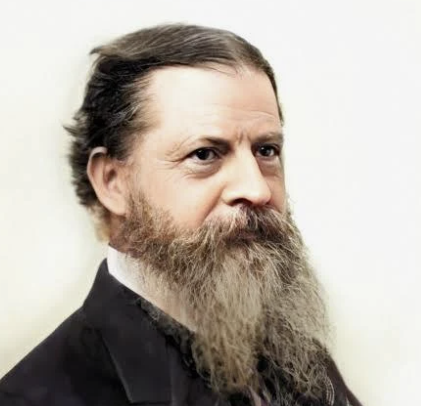
4 months 3 weeks ago
The third category of which I come now to speak is precisely that whose reality is denied by nominalism. For although nominalism is not credited with any extraordinarily lofty appreciation of the powers of the human soul, yet it attributes to it a power of originating a kind of ideas the like of which Omnipotence has failed to create as real objects, and those general conceptions which men will never cease to consider the glory of the human intellect must, according to any consistent nominalism, be entirely wanting in the mind of Deity.
▼
Source
Lecture II : The Universal Categories, §3. Laws: Nominalism, CP 5.62
4 months 3 weeks ago
The ones who are preoccupied by logic are above all; to read their works, one is tempted to believe they have advanced only step by step, after the manner of a Vauban who pushes on his trenches against the place besieged, leaving nothing to chance. The others are guided by intuition and, at the first stroke, make quick but sometimes precarious conquests, like bold cavalrymen of the advance guard.
▼
Source
quoted in Jacques Hadamard, An essay on the psychology of invention in the mathematical field (1954), pp. 106.
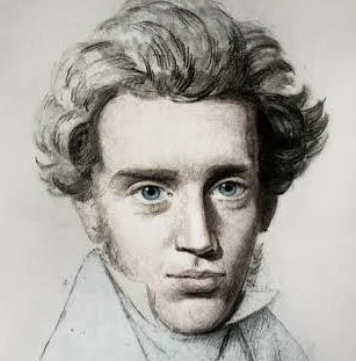
4 months 3 weeks ago
I have just now come from a party where I was its life and soul; witticisms streamed from my lips, everyone laughed and admired me, but I went away — yes, the dash should be as long as the radius of the earth's orbit ——————————— and wanted to shoot myself.
▼
Source
March 1836
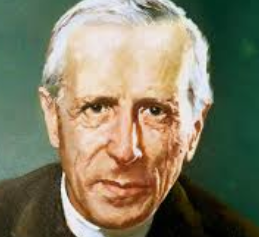
4 months 3 weeks ago
If there were no internal propensity to unite, even at a prodigiously rudimentary level—indeed in the molecule itself—it would be physically impossible for love to appear higher up, with us, in hominized form. . . . Driven by the forces of love, the fragments of the world seek each other so that the world may come into being.
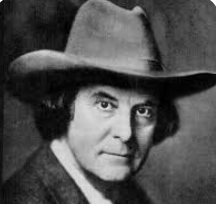
4 months 3 weeks ago
Making men live in three worlds at once — past, present and future has been the chief harm organized religion has done.

4 months 3 weeks ago
The slaves of developed industrial civilization are sublimated slaves.
▼
Source
p. 32
4 months 3 weeks ago
One of the greatest philosophers of all time.
▼
Source
Karl Popper, Objective Knowledge: An Evolutionary Approach (1972), p. 212
4 months 3 weeks ago
When an astronomer tells me that some stellar phenomenon, which his telescope reveals to him at this moment, happened... fifty years ago... I... ask... how he has measured the velocity of light.
4 months 3 weeks ago
Job endured everything — until his friends came to comfort him, then he grew impatient.
▼
Source
1849

4 months 3 weeks ago
Il n'y a pas de hors-texte.
▼
Source
Of Grammatology (1967). G. Spivak translated this as "There is nothing outside the text," which Derrida opponents have characterized to mean that nothing exists but language. Later scholarship has translated it as "There is no outside-of-text" or "There i

4 months 3 weeks ago
The world, and whatever that be which we call the heavens, by the vault of which all things are enclosed, we must conceive to be a deity, to be eternal, without bounds, neither created nor subject at any time to destruction. To inquire what is beyond it is no concern of man; nor can the human mind form any conjecture concerning it.
▼
Source
Book II, sec. 1.
4 months 3 weeks ago
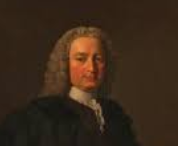
That Action is best, which procures the greatest Happiness for the greatest Numbers; and that worst, which, in like manner, occasions Misery.
▼
Source
An Inquiry into the Original of our Ideas of Beauty and Virtue (1725) Treatise II, Section 3
4 months 3 weeks ago
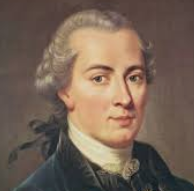
When the whole is at stake, there is no crime except that of rejecting the whole, or not defending it. … Those who identify themselves with the whole, who are installed as the leaders and defenders of the whole can make mistakes, but they cannot do wrong—they are not guilty. They may become guilty again when this identification no longer holds, when they are gone.
▼
Source
pp. 82-83
4 months 3 weeks ago
Let the letters a b c denote the three angular points of a rectilineal triangle. If the point did move continuously over the lines ab, bc, ca, that is, over the perimeter of the figure, it would be necessary for it to move at the point b in the direction ab, and also at the same point b in the direction bc. These motions being diverse, they cannot be simultaneous. There-fore, the moment of presence of the movable point at vertex b, considered as moving in the direction ab, is different from the moment of presence of the movable point at the same vertex b, considered as moving in the same direction bc. But between two moments there is time; therefore, the movable point is present at point b for some time, that is, it rests. Therefore it does not move continuously, which is contrary to the assumption. The same demonstration is valid for motion over any right lines including an assignable angle. Hence a body does not change its direction in continuous motion except by following a line no part of which is straight, that is, a curve, as Leibnitz maintained.
4 months 3 weeks ago
And how does the God's existence emerge from the proof? Does it follow straightway, without any breach of continuity? Or have we not here an analogy to the behavior of the little Cartesian dolls? As soon as I let go of the doll it stands on its head. As soon as I let it go – I must therefore let it go. So also with the proof. As long as I keep my hold on the proof, i.e., continue to demonstrate, the existence does not come out, if for no other reason than that I am engaged in proving it; but when I let the proof go, the existence is there. But this act of letting go is surely also something; it is indeed a contribution of mine. Must not this also be taken into the account, this little moment, brief as it may be – it need not be long, for it is a leap. However brief this moment, if only an instantaneous now, this "now" must be included in the reckoning.
▼
Source
p. 32
4 months 3 weeks ago
How can one be late to the end of history? A question for today. It is serious because it obliges one to reflect again, as we have been doing since Hegel, on what happens and deserves the name of event, after history; it obliges one to wonder if the end of history is but the end of a certain concept of history.
▼
Source
Injunctions of Marx

4 months 3 weeks ago
God is not the name of God, but an opinion about Him.
▼
Source
The Ring (c. 120). | If "The Ring" refers to the work "The Ring of Sixtus", it is highly unlikely that these quotes are attributed correctly. It is widely believed that "The Ring of Sixtus" was written by a Pythagorean philosopher.
4 months 3 weeks ago
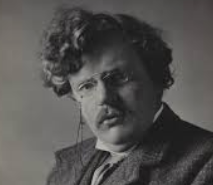
When learned men begin to use their reason, then I generally discover that they haven't got any.
▼
Source
In The Illustrated London News (7 November 1908)
4 months 3 weeks ago
The apparatus defeats its own purpose if its purpose is to create a humane existence on the basis of a humanized nature.
▼
Source
pp. 145-146
4 months 3 weeks ago
Reason in a creature is a faculty of widening the rules and purposes of the use of all its powers far beyond natural instinct; it acknowledges no limits to its projects. Reason itself does not work instinctively, but requires trial, practice, and instruction in order gradually to progress from one level of insight to another. Therefore a single man would have to live excessively long in order to learn to make full use of all his natural capacities. Since Nature has set only a short period for his life, she needs a perhaps unreckonable series of generations, each of which passes its own enlightenment to its successor in order finally to bring the seeds of enlightenment to that degree of development in our race which is completely suitable to Nature’s purpose. This point of time must be, at least as an ideal, the goal of man’s efforts, for otherwise his natural capacities would have to be counted as for the most part vain and aimless. This would destroy all practical principles, and Nature, whose wisdom must serve as the fundamental principle in judging all her other offspring, would thereby make man alone a contemptible plaything.
▼
Source
Second Thesis | Paraphrased variant: Reason does not work instinctively, but requires trial, practice, and instruction in order to gradually progress from one level of insight to another.
4 months 3 weeks ago
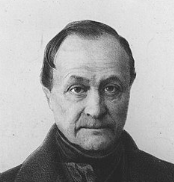
The first condition of unity is a subjective principle; and this principle in the Positive system is the subordination of the intellect to the heart: Without this the unity that we seek can never be placed on a permanent basis, whether individually or collectively. It is essential to have some influence sufficiently powerful to produce convergence amid the heterogeneous and often antagonistic tendencies of so complex an organism as ours.
▼
Source
p. 24
4 months 3 weeks ago
For as only one thing is necessary, and as the theme of the talk is the willing of only one thing: hence the consciousness before God of one's eternal responsibility to be an individual is that one thing necessary.
▼
Source
Søren Kierkegaard, Purity of Heart is to Will One Thing, 1847 p. 197-198
4 months 3 weeks ago
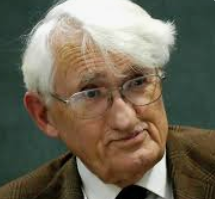
As historical and social beings we find ourselves always already in a linguistically structured lifeworld. In the forms of communication through which we reach an understanding with one another about something in the world and about ourselves, we encounter a transcending power. Language is not a kind of private property. No one possesses exclusive rights over the common medium of the communicative practices we must intersubjectively share. No single participant can control the structure, or even the course, of processes of reaching understanding and self-understanding. How speakers and hearers make use of their communicative freedom to take yes- or no-positions is not a matter of their subjective discretion. For they are free only in virtue of the binding force of the justifiable claims they raise towards one another. The logos of language embodies the power of the intersubjective, which precedes and grounds the subjectivity of speakers.
▼
Source
Habermas (2003) The Future of Human Nature. p. 10
4 months 3 weeks ago
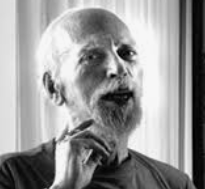
Guerrilla ontology The basic technique of all my books. Ontology is the study of being; the guerrilla approach is to so mix the elements of each book that the reader must decide on each page 'How much of this is real and how much is a put-on?'"
▼
Source
The Illuminati Papers (1980), p. 2
4 months 3 weeks ago
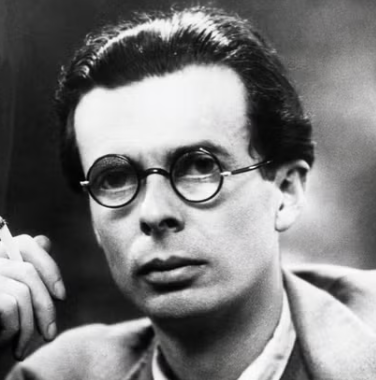
History teaches us that war is not inevitable. Once again, it is for us to choose whether we use war or some other method of settling the ordinary and unavoidable conflicts between groups of men.
▼
Source
What Are You Going To Do About It? The case for constructive peace (1936)
4 months 3 weeks ago
The modern world seems to have no notion of preserving different things side by side, of allowing its proper and proportionate place to each, of saving the whole varied heritage of culture. It has no notion except that of simplifying something by destroying nearly everything.
▼
Source
"Holding on to Romanticism", in The Illustrated London News (2 May 1931)
4 months 3 weeks ago
That all our knowledge begins with experience there can be no doubt. For how is it possible that the faculty of cognition should be awakened into exercise otherwise than by means of objects which affect our senses, and partly of them selves produce representations, partly rouse our powers of understanding into activity, to compare, to connect, or to separate these, and so to convert the raw material of our sensuous impressions into a knowledge of objects, which is called experience? In respect of time, therefore, no knowledge of ours is antecedent to experience, but begins with it. But though all our knowledge begins with experience, it by no means follows, that all arises out of experience. For, on the contrary, it is quite possible that our empirical knowledge is a compound of that which we receive through impressions, and that which the faculty of cognition supplies from itself (sensuous impressions giving merely the occasion)... It is, therefore, a question which requires close investigation, and is not to be answered at first sight,—whether there exists a knowledge altogether independent of experience, and even of all sensuous impressions? Knowledge of this kind is called à priori, in contradistinction to empirical knowledge which has its sources à posteriori, that is, in experience.
▼
Source
B 1
4 months 3 weeks ago
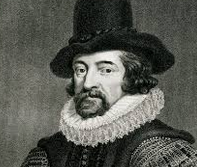
Let great authors have their due, as time, which is the author of authors, be not deprived of his due, which is, further and further to discover truth.
▼
Source
Book I, iv, 10
4 months 3 weeks ago
The greatest danger, that of losing one's own self, may pass off as quietly as if it were nothing; every other loss, that of an arm, a leg, five dollars, a wife etc., is sure to be noticed.
4 months 3 weeks ago
Each mans spills the drink he loves.
▼
Source
Cosmic Trigger II
4 months 3 weeks ago
Defined in psychological terms, a fanatic is a man who consciously over-compensates a secret doubt.
▼
Source
"The Substitutes for Religion, The Religion of Sex"
4 months 3 weeks ago
"Bosh," he said, "On what else is the whole world run but immediate impressions? What is more practical? My friend, the philosophy of this world may be founded on facts, but its business is run on spiritual impressions and atmospheres."
▼
Source
Ch. 2 "The Painful Fall of a Great Reputation"
4 months 3 weeks ago
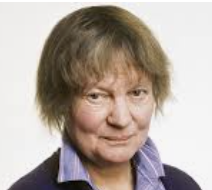
Happiness is a matter of one's most ordinary everyday mode of consciousness being busy and lively and unconcerned with self. To be damned is for one's ordinary everyday mode of consciousness to be unremitting agonising preoccupation with self.
▼
Source
The Nice and the Good (1968), ch. 22.
4 months 3 weeks ago
Even if a civil society were to be dissolved by the consent of all its members (e.g., if a people inhabiting an island decided to separate and disperse throughout the world), the last murderer remaining in prison would first have to be executed, so that each has done to him what his deeds deserve and blood guilt does not cling to the people for not having insisted upon this punishment; for otherwise the people can be regarded as collaborators in his public violation of justice.
▼
Source
Kt6:333
4 months 3 weeks ago
There are and can be only two ways of searching into and discovering truth. The one flies from the senses and particulars to the most general axioms, and from these principles, the truth of which it takes for settled and immovable, proceeds to judgment and to the discovery of middle axioms. And this way is now in fashion. The other derives axioms from the senses and particulars, rising by a gradual and unbroken ascent, so that it arrives at the most general axioms last of all. This is the true way, but as yet untried.
▼
Source
Aphorism 19
4 months 3 weeks ago
The person who is going to preach ought to live in the Christian thoughts and ideas: they ought to be his daily life. If so – this is the view of Christianity – then you, too, will have eloquence enough and precisely that which is needed when you speak extemporaneously without specific preparation. However, it is fallacious eloquence if someone, without otherwise occupying himself with, without living in these thoughts, once in a while sits down and laboriously collects such thoughts, perhaps in the field of literature, and then works them into a well-composed discourse, which is then committed to memory and delivered superbly, with respect both to voice and diction and gestures.
▼
Source
Soren Kierkegaard, For Self-Examination, Hong p. 10
4 months 3 weeks ago
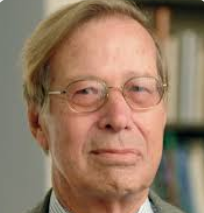
We want to live decent, worthwhile lives, lives we can look back on with pride not shame. We want our communities to be fair and good and our laws to be wise and just. These are enormously difficult goals, in part because the issues at stake are complex and puzzling. When we are told that whatever convictions we do struggle to reach cannot in any case be true or false, or objective, or part of what we know, or that they are just moves in a game of language, or just steam from the turbines of our emotions, or just experimental projects we should try for size, to see how we get on, or just invitations to thoughts that we might find diverting or amusing or less boring than the ways we used to think, we must reply that these denigrating suggestions are all false, just bad philosophy. But these are pointless, unprofitable, wearying interruptions, and we must hope that the leaden spirits of our age, which nurture them, soon lift.
▼
Source
Objectivity and Truth: You'd Better Believe It. Published on Philosophy & Public Affairs, Vol. 25, No. 2 (Spring, 1996), pp. 87--139.
4 months 3 weeks ago
The poet is, etymologically, the maker. Like all makers, he requires a stock of raw materials — in his case, experience. Now experience is not a matter of having actually swum the Hellespont, or danced with the dervishes, or slept in a doss-house. It is a matter of sensibility and intuition, of seeing and hearing the significant things, of paying attention at the right moments, of understanding and co-ordinating. Experience is not what happens to a man; it is what a man does with what happens to him. It is a gift for dealing with the accidents of existence, not the accidents themselves. By a happy dispensation of nature, the poet generally possesses the gift of experience in conjunction with that of expression. What he says so well is therefore intrinsically of value.
▼
Source
p. 5
4 months 3 weeks ago
For fear of the newspapers politicians are dull, and at last they are too dull even for the newspapers. The speeches in our time are more careful and elaborate, because they are meant to be read, and not to be heard. And exactly because they are more careful and elaborate, they are not so likely to be worthy of a careful and elaborate report. They are not interesting enough. So the moral cowardice of modern politicians has, after all, some punishment attached to it by the silent anger of heaven. Precisely because our political speeches are meant to be reported, they are not worth reporting. Precisely because they are carefully designed to be read, nobody reads them.
▼
Source
"On the Cryptic and the Elliptic"
4 months 3 weeks ago
In the metaphysical elements of aesthetics the various nonmoral feelings are to be made use of; in the elements of moral metaphysics the various moral feelings of men, according to the differences in sex, age, education, and government, of races and climates, are to be employed.
▼
Source
Part III : Selection on Education from Kant's other Writings, Ch. I Pedagogical Fragments, # 58
4 months 3 weeks ago
Hope is a good breakfast, but it is a bad supper.
▼
Source
No. 36
4 months 3 weeks ago
For all its critical analysis philosophy has not yet managed to root out its psychopaths. What do we have psychiatric diagnosis for? That grizzler Kierkegaard also belongs in this galere.
▼
Source
Carl Jung, Personal letter to Arnold Künzli, 28 February 1943, as included in C.G. Jung Letters, Volume I, 1906-1950 at p. 331.

4 months 3 weeks ago
If a man acknowledges no authority, he sets himself up as Cain, and before long he is struck down by nemesis, which follows upon hubris.
4 months 3 weeks ago
There's only one corner of the universe you can be certain of improving, and that's your own self.
4 months 3 weeks ago
He did not know the way things were going: he was too Victorian to understand the Victorian epoch. He did not know enough ignorant people to have heard the news.
▼
Source
On William Makepeace Thackeray Ch. II: The Great Victorian Novelists (p. 65)
4 months 3 weeks ago
Kantian ethics
4 months 3 weeks ago
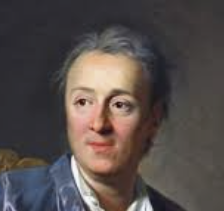
I am beginning to feel that I am growing old; soon, I shall have to eat mush like children. I shall no longer be able to speak, which will be a rather great advantage for others and but a small inconvenience for myself.... The time in which I count in years is gone; that in which I count in days is here.... I had thought that the fibers of the heart would grow callous with age, it's not at all the case. I am not sure that my sensitivity hasn't increased; everything moves me, affects me.... To fade out between a man feeling your pulse and another bothering your head; not to know where one comes from, why one came, where one is going ...
▼
Source
Letter to his sister Denise, as quoted in Diderot, Reason and Resonance (1982) by Élisabeth de Fontenay, pp. 270–271

4 months 3 weeks ago
Marxism exists in nineteenth-century thought as a fish exists in water; that is, it ceases to breathe anywhere else.
▼
Source
As quoted by , The lives of Michel Foucault (1993) p. 177. Citing 'Les Intellectuels et le Pouvoir', Le'Arc 49, 1972, pp. 3-10. Discussion with Gilles Deleuze, (4 March 1972). Reprinted, Le Nouvel Observateur, (8 May 1972) pp. 68-70. Tr. 'Intellectuals an

4 months 3 weeks ago
Self-knowledge is no guarantee of happiness, but it is on the side of happiness and can supply the courage to fight for it. Psychiatrists have told me that they give The Second Sex to their women patients to read, and not merely to intellectual women but to lower-middle-class women, to office workers and women working in factories. 'Your book was a great help to me. Your book saved me,' are the words I have read in letters from women of all ages and all walks of life. If my book has helped women, it is because it expressed them, and they in their turn gave it its truth. Thanks to them, it is no longer a matter for scandal and concern. During these last ten years the myths that men created have crumbled, and many women writers have gone beyond me and have been far more daring than I. Too many of them for my taste take sexuality as their only theme; but at least when they write about it they now present themselves as the eye-that-looks, as subject, consciousness, freedom.
▼
Source
Force of Circumstances Vol. III (1963) as translated by Richard Howard (1968)
4 months 3 weeks ago
I mean, a genuinely productive society. I mean you could produce plenty of goods without much freedom, but I think the whole sort of creative life of man is ultimately impossible without a considerable measure of individual freedom, of initiative, creation, all these things which we value, and I think value properly, are impossible without a large measure of freedom.
CivilSimian.com created by AxiomaticPanic, CivilSimian, Kalokagathia