
4 months 3 weeks ago
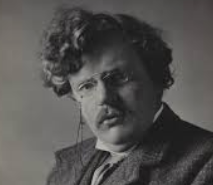
And above the ships are palaces of brown, black-bearded chiefs,And below the ships are prisons, where with multitudinous griefs,Christian captives sick and sunless, all a labouring race repinesLike a race in sunken cities, like a nation in the mines.
▼
Source
Lepanto
4 months 3 weeks ago
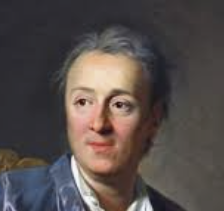
If there is one realm in which it is essential to be sublime, it is in wickedness. You spit on a petty thief, but you can’t deny a kind of respect for the great criminal.

4 months 3 weeks ago
To sum up all these steps, each of which is very lengthy and complex, we will have put the game of truth back in the network of constraints and dominations. Truth, I should say rather, the system of truth and falsity, will have revealed the face it turned away from us for so long and which is that of its violence.
▼
Source
p. 4

4 months 3 weeks ago
Try to stay a man amongst men … There's no other hope for you.
▼
Source
Marianne to Raimon
4 months 3 weeks ago
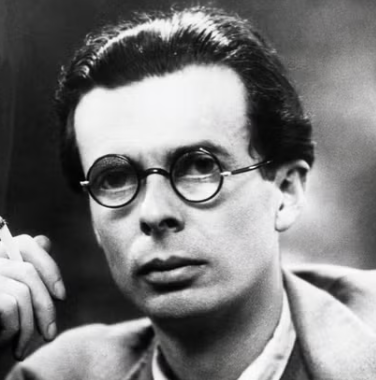
An intellectual is a person who has discovered something more interesting than sex.
▼
Source
As quoted without citation in Discovering Evolutionary Ecology: Bringing Together Ecology And Evolution (2006) by Peter J. Mayhew, p. 24
4 months 3 weeks ago
'You do believe it,' he said. 'You do believe everything. We all believe everything, even when we deny everything. The denyers believe. The unbelievers believe. Don't you feel in your heart that these contradictions do not really contradict: that there is a cosmos that contains them all? The soul goes round upon a wheel of stars and all things return; perhaps Strake and I have striven in many shapes, beast against beast and bird against bird, and perhaps we shall strive for ever. But since we seek and need each other, even that eternal hatred is an eternal love. Good and evil go round in a wheel that is one thing and not many. Do you not realize in your heart, do you not believe behind all your beliefs, that there is but one reality and we are its shadows; and that all things are but aspects of one thing: a centre where men melt into Man and Man into God?' 'No,' said Father Brown.
4 months 3 weeks ago
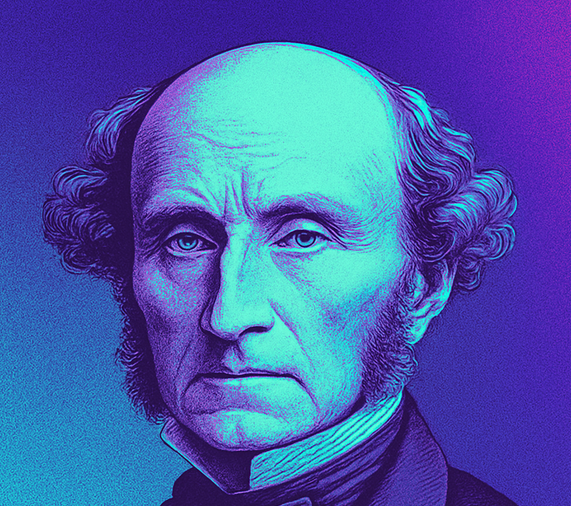
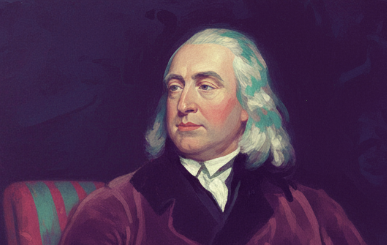
It is not because men's desires are strong that they act ill; it is because their consciences are weak.
▼
Source
On Liberty (1859)
4 months 3 weeks ago
To what shall the character of utility be ascribed, if not to that which is a source of pleasure?
▼
Source
Théorie des peines et des récompenses (1811); translation by Richard Smith, The Rationale of Reward, J. & H. L. Hunt, London, 1825, Bk. 3, Ch. 1
4 months 3 weeks ago
Of course it would not do for the church to allow a man to die in peace who had added to the intellectual wealth of the world. The moment Diderot was dead, Catholic priests began painting and recounting the horrors of his expiring moments. They described him as overcome with remorse, as insane with fear; and these falsehoods have been repeated by the Protestant world, and will probably be repeated by thousands of ministers after we are dead. The truth is, he had passed his threescore years and ten. He had lived for seventy-one years. He had eaten his supper. He had been conversing with his wife. He was reclining in his easy chair. His mind was at perfect rest. He had entered, without knowing it, the twilight of his last day. Above the horizon was the evening star, telling of sleep. The room grew still and the stillness was lulled by the murmur of the street. There were a few moments of perfect peace. The wife said, "He is asleep." She enjoyed his repose, and breathed softly that he might not be disturbed. The moments wore on, and still he slept. Lovingly, softly, at last she touched him. Yes, he was asleep. He had become a part of the eternal silence.
▼
Source
Robert Green Ingersoll in "Diderot" in The Great Infidels (1881); The Works of Robert G. Ingersoll Vol. III (1900), p. 367
4 months 3 weeks ago
A great prison structure was planned, whose different levels would correspond exactly to the levels of the centralized administration. The scaffold, where the body of the tortured criminal had been exposed to the ritually manifested force of the sovereign, the punitive theatre in which the representation of punishment was permanently available to the social body, was replaced by a great enclosed, complex and hierarchized structure that was integrated into the very body of the state apparatus.
▼
Source
Chapter Three, The Gentle Way in Punishment

4 months 3 weeks ago
It would be better for me... that multitudes of men should disagree with me rather than that I, being one, should be out of harmony with myself.
▼
Source
Gorgias, 482c
4 months 3 weeks ago
Is there such a thing as being? What is it? etc. Yet immediately an abyss opens under my feet: I who ask these questions about being, how can I be sure that I exist? Yet surely I, who formulate this problem should be able to remain outside it - before or beyond it? Clearly this is not so. The more I consider it the more I find that this problem tends inevitably to invade the proscenium from which it is excluded in theory: it is only by means of a fiction that Idealism in its traditional form seeks to maintain on the margin of being the consciousness which asserts or denies it.
4 months 3 weeks ago
We need not suppose that when power resides in an exclusive class, that class will knowingly and deliberately sacrifice the other classes to themselves: it suffices that, in the absence of its natural defenders, the interest of the excluded is always in danger of being overlooked: and, when looked at, is seen with very different eyes from those of the persons whom it directly concerns.
▼
Source
Ch. III: The Ideally Best Polity
4 months 3 weeks ago
Parrhesia is ordinarily translated into English by "free speech"... the parrhesiastes is the one who uses parrhesia, i.e., the one who speaks the truth.
4 months 3 weeks ago
Now the compound or composite may be supposed to be naturally capable of being dissolved in like manner as being compounded; but that which is uncompounded, and that only, must be, if anything is, indissoluble. ...And the uncompounded may be assumed to be the same and unchanging, where the compound is always changing and never the same? ...Is that idea or essence, which in the dialectical process we define as essence of true existence—whether essence of equality, beauty, or anything else: are these essences, I say, liable at times to some degree of change? or are they each of them always what they are, having the same simple, self-existent and unchanging forms, and not admitting of variation at all, or in any way, or at any time?

4 months 3 weeks ago
I want to take poetry to walk other genres. I want poetry to walk through other genres. When I started writing, this was my main concern: get out of poetry. Let poetry walk the streets of New York. Make her cosmopolitan. See the world. Not in these estrofas, not in these stanzas, which are camisas de fuerza.I have to get out of poetry. I have to do what James Joyce did to the novel: he took the novel out of the novel.
▼
Source
[https://www.academia.edu/36916781/A_Graphic_Revolution_Talking_Poetry_and_Politics_with_Giannina_Braschi “A Graphic Revolution Talking Poetry & Politics with Giannina Braschi”] in Chiricú Journal (2018)
4 months 3 weeks ago
Landlords... grow richer, as it were in their sleep, without working, risking, or economizing.
▼
Source
Book V, Chapter 1, Section 5
4 months 3 weeks ago
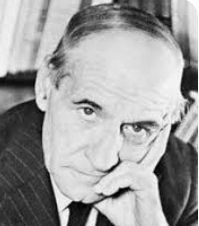
Life cannot wait until the sciences may have explained the universe scientifically. We cannot put off living until we are ready. The most salient characteristic of life is its coerciveness: it is always urgent, "here and now" without any possible postponement. Life is fired at us point-blank. And culture, which is but its interpretation, cannot wait any more than can life itself.
▼
Source
Original: "La vida no puede esperar a que las ciencias expliquen científicamente el Universo. No se puede vivir ad kalendas graecas. El atributo más esencial de la existencia es su perentoriedad: la vida es siempre urgente. Se vive aquí y ahora sin posibl
4 months 3 weeks ago
The hope may be entertained that some practitioner of the "sociology of knowledge" will one day have an interesting story to tell about -why the work of Michel Foucault generated such wide enthusiasm among certain intellectual elites for several decades in the latter half of the twentieth century. One or two hypotheses of my own may be hazarded. What is interesting about Foucault's unique rhetoric is that he steadfastly resists pronouncing explicit moral-political judgments, yet of course he is judging all the time. Foucault refuses to come clean on his normative commitments, but rather "insinuates" them throughout his work. This constitutes a kind of radical-left positivism that is somehow potently attractive to what I will call the hyper-liberal ethos of late modernity. The idea here is that one must avoid at all costs spelling out a normative vision, since it would ineluctably become the ground for a repressive regime of "normalization." This is clearly connected to the negativism one associates with postmodern writers.
▼
Source
Ronald Beiner, "Foucault's hyper‐liberalism", Critical Review: A Journal of Politics and Society (1995)
4 months 3 weeks ago
For after death, as they say, the genius of each individual, to whom he belonged in life, leads him to a certain place in which the dead are gathered together for judgment, whence they go into the world below, following the guide who is appointed to conduct them from this world to the other; and when they have there received their due and remained their time, another guide brings them back again after many revolutions of ages.

4 months 3 weeks ago
If human beings were or had to be this or that substance, this or that destiny, no ethical experience would be possible... This does not mean, however, that humans are not, and do not have to be, something, that they are simply consigned to nothingness and therefore can freely decide whether to be or not to be, to adopt or not to adopt this or that destiny (nihilism and decisionism coincide at this point). There is in effect something that humans are and have to be, but this is not an essence nor properly a thing: It is the simple fact of one's own existence as possibility or potentiality.
▼
Source
Ch. 11 : Ethics
4 months 3 weeks ago
He thought human life a poor thing at best, after the freshness of youth and of unsatisfied curiosity had gone by. This was a topic on which he did not often speak, especially, it may be supposed, in the presence of young persons: but when he did, it was with an air of settled and profound conviction. He would sometimes say, that if life were made what it might be, by good government and good education, it would be worth having: but he never spoke with anything like enthusiasm even of that possibility.
▼
Source
([https://archive.org/details/autobiography01mill/page/48/mode/1up p. 48])
4 months 3 weeks ago
The form most contradictory to human life that can appear among the human species is the "self-satisfied man."
▼
Source
Chapter XI: The Self-Satisfied Age
4 months 3 weeks ago
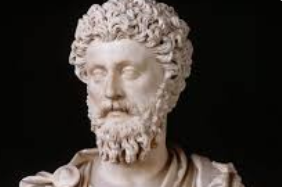
Be not unwilling in what thou doest, neither selfish nor unadvised nor obstinate; let not over-refinement deck out thy thought; be not wordy nor a busybody.
▼
Source
III, 5
4 months 3 weeks ago
Prediction is very difficult, especially about the future.
▼
Source
As quoted in Teaching and Learning Elementary Social Studies (1970) by Arthur K. Ellis, [https://books.google.com/books?id=87iRaPyukx8C&focus=searchwithinvolume&q=%22prediction+is+very+difficult%22 p. 431] | The above quote is also attributed to various h
4 months 3 weeks ago
Know thyself.
▼
Source
This statement actually predates Socrates, and was used as an Inscription at the Oracle of Delphi. It is a saying traditionally ascribed to one of the "Seven Sages of Greece", notably Solon, but accounts vary as to whom. Socrates himself is reported to ha
4 months 3 weeks ago
Instead of gambling on the eternal impossibility of the revolution and on the fascist return of a war-machine in general, why not think that a new type of revolution is in the course of becoming possible, and that all kinds of mutating, living machines conduct wars, are combined and trace out a plane of consistence which undermines the plane of organization of the World and the States?
▼
Source
from Dialogues with Claire Parnet, p. 147 [emphasis in original].
4 months 3 weeks ago
It may be argued that writers stick to their convictions and serve only the truth, and that they only approve and support governmental conduct when they judge it to be in the interests of the governed. We accept that. We know that even those writers working under the eyes and under the influence of the Government always work, or at least claim to work only for society as a whole, and would be offended if it were thought otherwise. Nevertheless, we are convinced that the governed know better than anyone what they want and what is in their interest. We believe that government is at least an unnecessary intermediary between those who think about the public interest and those who feel it, between political writers and industry.
4 months 3 weeks ago
The question was, whether, if the reformers of society and government could succeed in their objects, and every person in the community were free and in a state of physical comfort, the pleasures of life, being no longer kept up by struggle and privation, would cease to be pleasures.
▼
Source
([https://archive.org/details/autobiography01mill/page/145/mode/1up pp. 145-146])
4 months 3 weeks ago
Man is a substantial emigrant on a pilgrimage of being, and it is accordingly meaningless to set limits to what he is capable of being.
▼
Source
“Man has no nature”
4 months 3 weeks ago
Many the lumps of frankincense on the same altar; one falls there early and another late, but it makes no difference.
▼
Source
IV, 15

4 months 3 weeks ago
To be honest, I was somewhat disappointed... It's had effects around the margins, of course, but they have mostly been minor. When I wrote it, I really thought the book would change the world. I know it sounds a little grand now, but at the time the sixties still existed for us. It looked as if real changes were possible, and I let myself believe that this would be one of them. All you have to do is walk around the corner to McDonald's to see how successful I have been.
▼
Source
Quoted by Michael Specter on the impact of the book Animal Liberation, "[http://www.michaelspecter.com/1999/09/the-dangerous-philosopher/ The Dangerous Philosopher]", The New Yorker, 6 September 1999.
4 months 3 weeks ago
Keep your friends close, and your enemies closer.
▼
Source
This has often been attributed to Sun Tzu and sometimes to Petrarch. It comes most directly from a line spoken by Michael Corleone in The Godfather Part II (1974), written by Mario Puzo and Francis Ford Coppola: | My father taught me many things here. He

4 months 3 weeks ago
Let us be true: this is the highest maxim of art and of life, the secret of eloquence and of virtue, and of all moral authority.
▼
Source
17 December 1854
4 months 3 weeks ago
I never knew a finer, tenderer, more sensitive or modest soul among the sons of men. There never was a more generous creature than he, nor a more modest.
▼
Source
Thomas Carlyle, response to Mill's death, quoted in Letters of Charles Eliot Norton, with Biographical Comment by His Daughter Sara Norton and M.A. DeWolfe Howe, Volume I (1913), pp. 495–496
4 months 3 weeks ago
How easy it is to repel and to wipe away every impression which is troublesome or unsuitable, and immediately to be in all tranquility.
▼
Source
To shrug it all off and wipe it clean--every annoyance and distraction--and reach utter stillness. Child's play. (Hays translation) | V, 2
4 months 3 weeks ago
Human social institutions can effect the course of human evolution. Just as climate-change, food supply, predators, and other natural forces of selection have molded our nature, so too can our culture.
▼
Source
Chapter 6, A New Understanding Of Ethics, p. 172

4 months 3 weeks ago
I strongly recommend that all read the autobiography of St. Theresa. In spite of the fact that this work went through the "spiritual" censorship of the Church, some amazing pages have been preserved. By propagating the dogma of Jesus Christ as the only begotten Son of God, the Church contradicts the very sense of the prayer given to us by Jesus Christ himself, "Our Father which art in heaven." And also the words of the Scriptures, "So God created man in his own image." (Genesis 1:27) Thus, by claiming the exclusiveness of sonship and divine origin for Jesus Christ, the Church, by that very claim, forever divorced him from mankind. From this came a whole train of grave events; the exclusion of Jesus Christ from the life of humanity, the obliteration of his human Sacrifice and the awful suggestion implying that the death of Christ on the Cross saved humanity from "original" sin (?!) and from all subsequent sins.
▼
Source
Helena Roerich, in Letters of Helena Roerich II, (2 April 1936)

4 months 3 weeks ago
One party [the Whigs] had given their whole attention, during several years, to the project of enriching themselves, and impoverishing the rest of the nation; and, by these and other means, of establishing their dominion under the government and with the favour of a family, who were foreigners, and therefore might believe, that they were established on the throne by the good will and strength of this party alone. This party in general were so intent on these views, and many of them, I fear, are so still, that they did not advert in time to the necessary consequences of the measures they abetted: nor did they consider, that the power they raised, and by which they hoped to govern their country, would govern them with the very rod of iron they forged, and would be the power of a prince or minister, not that of a party long.
▼
Source
pp. 20-21
4 months 3 weeks ago
My path was not the normal one of professors of philosophy. I did not intend to become a doctor of philosophy by studying philosophy (I am in fact a doctor of medicine) nor did I by any means, intend originally to qualify for a professorship by a dissertation on philosophy. To decide to become a philosopher seemed as foolish to me as to decide to become a poet. Since my schooldays, however, I was guided by philosophical questions. Philosophy seemed to me the supreme, even the sole, concern of man. Yet a certain awe kept me from making it my profession.
4 months 3 weeks ago
I can control my thoughts as necessary; then how can I be troubled? (Hays translation)
▼
Source
VII, 2
4 months 3 weeks ago
If, also, He exercised no right of power even over His own followers, to whom He discharged menial ministry; if, in short, though conscious of His own kingdom, He shrank back from being made a king, He in the fullest manner gave His own an example for turning coldly from all the pride and garb, as well of dignity as of power. For if they were to be used, who would rather have used them than the Son of God? What kind and what number of fasces would escort Him? what kind of purple would bloom from His shoulders? what kind of gold would beam from His head, had He not judged the glory of the world to be alien both to Himself and to His? Therefore what He was unwilling to accept, He has rejected; what He rejected, He has condemned; what He condemned, He has counted as part of the devil’s pomp. For He would not have condemned things, except such as were not His; but things which are not God’s, can be no other’s but the devil’s. If you have forsworn “the devil’s pomp,” know that whatever there you touch is idolatry. Let even this fact help to remind you that all the powers and dignities of this world are not only alien to, but enemies of, God; that through them punishments have been determined against God’s servants; through them, too, penalties prepared for the impious are ignored. But “both your birth and your substance are troublesome to you in resisting idolatry.” For avoiding it, remedies cannot be lacking; since, even if they be lacking, there remains that one by which you will be made a happier magistrate, not in the earth, but in the heavens.
▼
Source
Chapter XVIII, Dress as Connected with Idolatry
4 months 3 weeks ago
Lord Bolingbroke, one of the ablest men who ever lived, was a firm and uncompromising Tory, and he advocated triennial Parliaments. He said that without this there was no security for the people, no integrity for the constitution.
▼
Source
Benjamin Disraeli, speech in High Wycombe (27 November 1832), quoted in Selected Speeches of the late Right Honourable the Earl of Beaconsfield: Volume II, ed. T. E. Kebbel (1882), p. 7
4 months 3 weeks ago
Everywhere and at all times it is in thy power piously to acquiesce in thy present condition, and to behave justly to those who are about thee, and to exert thy skill upon thy present thoughts, that nothing shall steal into them without being well examined.
▼
Source
VII, 54

4 months 3 weeks ago
A well-written Life is almost as rare as a well-spent one.
▼
Source
Richter (1827).
4 months 3 weeks ago
This hath not offended the king.
▼
Source
As he drew his beard aside upon placing his head on the block, as quoted in Apothegms by Francis Bacon, no. 22
4 months 3 weeks ago
Nothing is more vain than to seek to unite men by a philosophic minimum.
▼
Source
p. 262.
4 months 3 weeks ago
It is not fit that I should give myself pain, for I have never intentionally given pain even to another.
▼
Source
VIII, 42
4 months 3 weeks ago
Has any man, or any society of men, a truth to speak, a piece of spiritual work to do; they can nowise proceed at once and with the mere natural organs, but must first call a public meeting, appoint committees, issue prospectuses, eat a public dinner; in a word, construct or borrow machinery, wherewith to speak it and do it. Without machinery, they were hopeless, helpless.
4 months 3 weeks ago
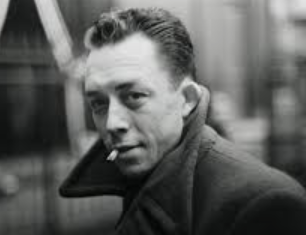
A novel is never anything but a philosophy put into images. And in a good novel, the whole of the philosophy has passed into the images. But if once the philosophy overflows the characters and action, and therefore looks like a label stuck on the work, the plot loses its authenticity and the novel its life. Nevertheless, a work that is to last cannot dispense with profound ideas. And this secret fusion between experiences and ideas, between life and reflection on the meaning of life, is what makes the great novelist.
▼
Source
Review of Nausea by Jean-Paul Sartre, published in the newspaper Alger Républicain (20 October 1938), p. 5; reprinted in Selected Essays and Notebooks, translated and edited by Philip Thody
CivilSimian.com created by AxiomaticPanic, CivilSimian, Kalokagathia