
4 months 3 weeks ago
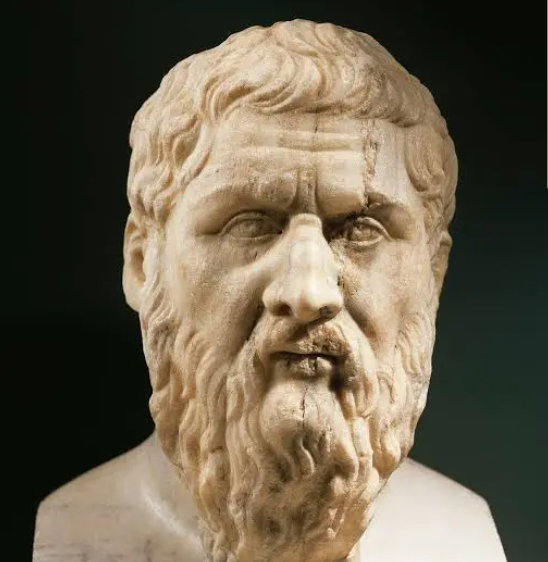
Then we may begin by assuming that there are three classes of men—lovers of wisdom, lovers of honor, lovers of gain?
▼
Source
[https://en.wikisource.org/wiki/The_Republic_of_Plato/Book_9 Jowett translation], p. 284

4 months 3 weeks ago
The more we try to wrest ourselves from our ego, the deeper we sink into it.
4 months 3 weeks ago
When Hobbes referred to the dire state of human beings in having ‘nasty, brutish and short’ lives, he also pointed, in the same sentence, to the disturbing adversity of being ‘solitary’. Escape from isolation may not only be important for the quality of human life, it can also contribute powerfully to understanding and responding to the other deprivations from which human beings suffer. There is surely a basic strength here which is complementary to the engagement in which theories of justice are involved.
▼
Source
Amartya Sen, The Idea of Justice, 2009; Ch. 18. Justice and the World

4 months 3 weeks ago
The fine arts once divorcing themselves from truth are quite certain to fall mad, if they do not die.
▼
Source
Latter Day Pamphlet, No. 8.
4 months 3 weeks ago
A few centuries from now, if involuntary suffering still exists in the world, the explanation for its persistence won't be that we've run out of computational resources to phase out its biological signature, but rather that rational agents – for reasons unknown – will have chosen to preserve it.
▼
Source
"[https://io9.gizmodo.com/the-radical-plan-to-eliminate-earths-predatory-species-1613342963 The Radical Plan to Phase out Earth's Predatory Species]", io9, 30 Jul. 2014
4 months 3 weeks ago
The question of terrestrial temperature, one of the most remarkable and difficult in natural philosophy... I have... condensed in a single essay... the results of this theory. The analytical details... I have already published. I was specially desirous of presenting... a complete view of the phenomena and the mathematical relations... between them.
4 months 3 weeks ago
And now that these unpleasant necessities are candidly written down, it remains to do willing homage to the power and profundity of Plato’s conception. Essentially he is right–is he not?–what this world needs is to be ruled by its wisest men. It is our business to adapt his thought to our own times and today we must take democracy for granted: we cannot limit the suffrage as Plato proposed; but we can put restrictions on the holding of office, and in this way secure that mixture of democracy and aristocracy which Plato seems to have in mind. We may accept without quarrel his contention that statesmen should be as specifically and thoroughly trained as physicians; we might establish departments of political science and administration in our universities; and when these departments have begun to function adequately we might make men ineligible for nomination to political office unless they were graduates of such political schools. We might even make every man eligible for an office who had been trained for it, and thereby eliminate entirely that complex system of nominations in which the corruption of our democracy has its seat; let the electorate choose any man who, properly trained and qualified, announces himself as a candidate. In this way democratic choice would be immeasurably wider than now, when Tweedledum and Tweedledee stage their quadrennial show and sham. Only one amendment would be required to make quite democratic this plan for the restriction of office to graduates in administrative technique; and that would be such equality of educational opportunity as would open to all men and women, irrespective of the means of their parents, the road to university training and political advancement. It would be very simple to have and counties and states offer scholarships to all graduates of grammar school, high school and who had shown. a certain standard’ of ability, and whose parents were financially unable to see them through the next stage of the educational process. That would be a democracy worthy of the name.
▼
Source
Will Durant, The Story of Philosophy: The Lives and Opinions of the World's Greatest Philosophers (1926), reprinted in Simon & Schuster/Pocket Books, 1991.
4 months 3 weeks ago
The self-discipline of the Social Democracy is not merely the replacement of the authority of bourgeois rulers with the authority of a socialist central committee. The working class will acquire the sense of the new discipline, the freely assumed self-discipline of the Social Democracy, not as a result of the discipline imposed on it by the capitalist state, but by extirpating, to the last root, its old habits of obedience and servility.
▼
Source
[http://www.marxists.org/archive/luxemburg/1904/questions-rsd/ch01.htm Organizational Questions of the Russian Social Democracy] (1904)
4 months 3 weeks ago
“Meeting, after several years, someone we used to know as a child, the first glance almost always suggests that some great disaster must have befallen him” Leopardi, quoted by cioran.
4 months 3 weeks ago
The crop of spiritual talent that is born to you, of human nobleness and intellect and heroic faculty, this is infinitely more important than your crops of cotton or corn, or wine or herrings or whale-oil, which the Newspapers record with such anxiety every season.
4 months 3 weeks ago
It's easy to convince oneself that things can't really be that terrible, that the horror I allude to is being overblown, that what is going on elsewhere in space-time is somehow less real than the here-and-now, or that the good in the world somehow offsets the bad. Yet however vividly one thinks one can imagine what agony, torture or suicidal despair must be like, the reality is inconceivably worse. The force of "inconceivably" is itself largely inconceivable here. Blurry images of Orwell's "Room 101" can barely even hint at what I'm talking about. Even if one's ancestral namesakes [aka "younger self"] underwent great pain, then the state-dependence of memories means that much of pain's sheer dreadfulness is semantically, cognitively and emotionally inaccessible in the here-and-now. So this manifesto's rhapsodies on the incredible joys that do indeed lie ahead tend to belie its underlying seriousness of purpose. For the biological strategy is propounded here in deadly moral earnest.
▼
Source
2.7 [https://www.hedweb.com/hedethic/hedon2.htm#negative Why Be Negative?]
4 months 3 weeks ago
Governors will never be awed by the voice of the people, so long as it is a mere voice, without overt-acts.
▼
Source
Section II, "Of Political Liberty"
4 months 3 weeks ago
The socialist system of society should only be, and can only be, an historical product, born out of the school of its own experiences, born in the course of its realization, as a result of the developments of living history, which – just like organic nature of which, in the last analysis, it forms a part – has the fine habit of always producing along with any real social need the means to its satisfaction, along with the task simultaneously the solution. However, if such is the case, then it is clear that socialism by its very nature cannot be decreed or introduced by ukase. It has as its prerequisite a number of measures of force – against property, etc. The negative, the tearing down, can be decreed; the building up, the positive, cannot. New Territory. A thousand problems. Only experience is capable of correcting and opening new ways.
▼
Source
Chapter Six, "The Problem of Dictatorship"
4 months 3 weeks ago
Speech and silence. We feel safer with a madman who talks than with one who cannot open his mouth.
4 months 3 weeks ago
If you find many people who are hard and indifferent to you in a world that you consider to be unhospitable and cruel—as often, indeed, happens to a tender-hearted, stirring young creature—you will also find there are noble hearts who will look kindly on you, and their help will be precious to you beyond price.
4 months 3 weeks ago
To each according to his threat advantage does not count as a principle of justice.
▼
Source
Chapter III, Section 24, pg. 141
4 months 3 weeks ago
Life on earth is a hand-to-hand mortal combat... between the law of love and the law of hate.
▼
Source
Letter (1881), as quoted in The Conscience of Worms and the Cowardice of Lions : Cuban Politics and Culture in an American Context (1993) by Irving Louis Horowit, p. 11
4 months 3 weeks ago
The holy fights by Moslem heroes fought,The saintly works by Christian hermits wroughtAnd those of Jewry or of Sabian creed—Their valour reaches not the Indian's deedWhom zeal and awe religiously inspire To cast his body on the flaming pyre.
▼
Source
From Nicholson, R. A., Studies in Islamic Poetry (1921)
4 months 3 weeks ago
And now that I have allowed myself the jest to which in this two-sided life hardly any page can be too serious to grant a place, I part with the book with deep seriousness, in the sure hope that sooner or later it will reach those to whom alone it can be addressed; and for the rest, patiently resigned that the same fate should, in full measure, befall it, that in all ages has, to some extent, befallen all knowledge, and especially the weightiest knowledge of the truth, to which only a brief triumph is allotted between the two long periods in which it is condemned as paradoxical or disparaged as trivial. The former fate is also wont to befall its author. But life is short, and truth works far and lives long: let us speak the truth.
▼
Source
:s:The World as Will and Representation/Preface to the First Edition, last paragraph. | Mostly quoted rather incorrectly as: All truth passes through three stages. First, it is ridiculed. Second, it is violently opposed. Third, it is accepted as being sel
4 months 3 weeks ago
Having destroyed all my connections, burned my bridges, I should feel a certain freedom, and in fact I do. One so intense I am afraid to rejoice in it.
4 months 3 weeks ago
There was the puissant voice of Carlyle; so sorely strained, over-used, and mis-used since, but then fresh, comparatively sound, and reaching our hearts with true, pathetic eloquence. Who can forget the emotion of receiving in its first freshness such a sentence as that sentence of Carlyle upon Edward Irving, then just dead: ‘Scotland sent him forth a herculean man; our mad Babylon wore and wasted him with all her engines,—and it took her twelve years!’
▼
Source
Matthew Arnold, Discourses in America (1885), pp. 142-143
4 months 3 weeks ago
The Greek tradition was a complete contrast to that of the Far East. ...the Greeks placed logic at the pinnacle of human thinking. Their sceptical attitude towards the wielding of 'non-being' as some sort of 'something' that could be subject to logical development was exemplified by Parmenides' influential arguments against the concept of empty space. ...He maintained that you can only speak about what is: what is not cannot be thought of, and what cannot be thought of cannot be. ...more unexpected was the further conclusion that time, motion nor change could exist either.
▼
Source
John D. Barrow, The Book of Nothing (2009) chapter one "Zero—The Whole Story" p. 40
4 months 3 weeks ago
Why then in Britain has secularism become seen to be hostile to religion? Because neutrality is too often assumed to require the bleaching out of all traces of faith, excluding religious belief and discourse from public life. But it doesn't, and we can see why by appeal to the notion of public reason, articulated most clearly by the late political philosopher John Rawls. Rawls was quite clear that the religious have no obligation at all to keep their faith entirely to themselves. "Reasonable comprehensive doctrines, religious or non-religious, may be introduced in public political discussion at any time," he wrote, "provided that in due course proper political reasons – and not reasons given solely by comprehensive doctrines – are presented that are sufficient to support whatever the comprehensive doctrines are said to support."
▼
Source
Julian Baggini, in [http://www.guardian.co.uk/world/2012/feb/14/is-religion-really-under-threat?INTCMP=SRCH "Is religion really under threat?" in The Guardian (14 February 2012)]
4 months 3 weeks ago
America began to suffer, and still suffers, from the tiresome task of reconciling the hostile and discordant elements it inherited from the despotic and perverse colonizer, and the imported methods and ideas which have been retarding logical government because they are lacking in local realities. Thrown out of gear for three centuries by a power which denied men the right to use their reason, the continent disregarded or closed its ears to the unlettered throngs that helped bring it to redemption, and embarked on a government based on reason-a reason belonging to all for the common good, not the university brand of reason over the peasant brand. The problem of independence did not lie in a change of forms but in change of spirit.
4 months 3 weeks ago
We live in a contradiction, a brutal state of affairs, profoundly inegalitarian – where all existence is evaluated in terms of money alone – is presented to us as ideal. To justify their conservatism, the partisans of the established order cannot really call it ideal or wonderful. So instead, they have decided to say that all the rest is horrible. Sure, they say, we may not live in a condition of perfect Goodness. But we’re lucky that we don’t live in a condition of Evil. Our democracy is not perfect. But it’s better than the bloody dictatorships. Capitalism is unjust. But it’s not criminal like Stalinism. We let millions of Africans die of AIDS, but we don’t make racist nationalist declarations like Milosevic. We kill Iraqis with our airplanes, but we don’t cut their throats with machetes like they do in Rwanda, etc.
▼
Source
From ' by , 2009. p.5
4 months 3 weeks ago
The view of things [called Pantheism] … — that all plurality is only apparent, that in the endless series of individuals, passing simultaneously and successively into and out of life, generation after generation, age after age, there is but one and the same entity really existing, which is present and identical in all alike; — this theory … may be carried back to the remotest antiquity. It is the alpha and omega of the oldest book in the world, the sacred Vedas, whose dogmatic part, or rather esoteric teaching, is found in the Upanishads. There, in almost every page this profound doctrine lies enshrined; with tireless repetition, in countless adaptations, by many varied parables and similes it is expounded and inculcated. That such was, moreover, the fount whence Pythagoras drew his wisdom, cannot be doubted … That it formed practically the central point in the whole philosophy of the Eleatic School, is likewise a familiar fact. Later on, the New Platonists were steeped in the same … In the ninth century we find it unexpectedly appearing in Europe. It kindles the spirit of no less a divine than Johannes Scotus Erigena, who endeavours to clothe it with the forms and terminology of the Christian religion. Among the Mohammedans we detect it again in the rapt mysticism of the Sufi. In the West Giordano Bruno cannot resist the impulse to utter it aloud; but his reward is a death of shame and torture. And at the same time we find the Christian Mystics losing themselves in it, against their own will and intention, whenever and wherever we read of them! Spinoza's name is identified with it.
▼
Source
Part IV, Ch. 2, [https://archive.org/stream/basisofmorality00schoiala#page/269/mode/2up pp. 269]-272
4 months 3 weeks ago
Everything turns on pain; the rest is accessory, even nonexistent, for we remember only what hurts. Painful sensations being the only real ones, it is virtually useless to experience others.
4 months 3 weeks ago
Liberty he attached less importance to than economic security: in that a true man of the people. "Liberty, I am told, is a divine thing. Liberty, when it becomes the 'Liberty to die by starvation' is not so divine." It is here that Carlyle links up with the socialist trend of thought in his age.
▼
Source
A. L. Rowse, ‘Carlyle's Past and Present’, The English Spirit: Essays in History and Literature (1944), p. 227
4 months 3 weeks ago
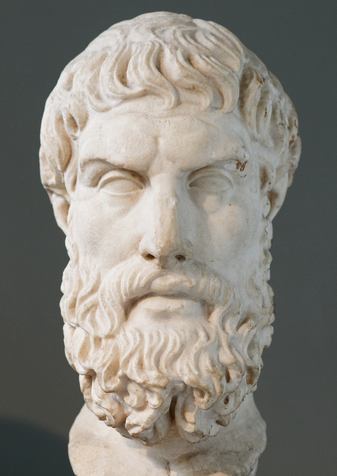
A prudent man, in order to secure his tranquility, will consult his natural disposition in the choice of his plan of life. If, for example, he be persuaded that he should be happier in a state of marriage than in celibacy, he ought to marry; but if he be convinced that matrimony would be an impediment to his happiness, he ought to remain single.
4 months 3 weeks ago
The appearances of multiplicity and motion, empty space and time, are illusions.
4 months 3 weeks ago
For if they imagine infinite spaces of time before the world, during which God could not have been idle, in like manner they may conceive outside the world infinite realms of space, in which, if any one says that the Omnipotent cannot hold His hand from working, will it not follow that they must adopt Epicurus' dream of innumerable worlds? with this difference only, that he asserts that they are formed and destroyed by the fortuitous movements of atoms, while they will hold that they are made by God's hand, if they maintain that, throughout the boundless immensity of space, stretching interminably in every direction round the world, God cannot rest, and that the worlds which they suppose Him to make cannot be destroyed. ... there is no place beside the world ...no time before the world.
▼
Source
Augustine of Hippo, The City of God, Book XI, Ch. 5 "That We Ought Not to Seek to Comprehend the Infinite Ages of Time Before the World, Nor the Infinite Realms of Space"
4 months 3 weeks ago
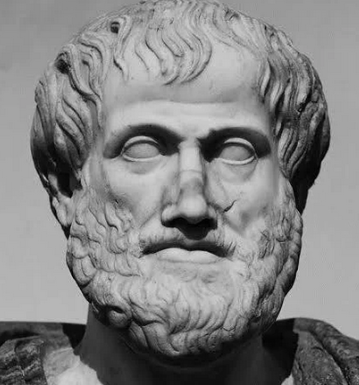
Let us consider, with respect to causes, what they are, and how many there are in number... this also must be done by us in discoursing concerning generation and corruption, and all physical mutation... knowing the principles of these...Cause... is after one manner said to be that, from which, being inherent, something is produced... But after another manner cause is form and paradigm (and this is the definition of the essence of a thing) and the genera of this. ...But it happens... that there are also many causes of the same thing, and this is not from accident. ...seed, a physician, he who consults, and, in short, he who makes, are all of them causes, as that whence the principle of mutation, or permanency, or motion is derived. ...It is, however, necessary always to investigate the supreme cause of every thing ...Further still, it is necessary to investigate the genera of genera; and the particulars of particulars... We should also explore the capacities of the capabilities, and the energizers of the things affected by energy.
▼
Source
Book II, Ch. III, pp. 107-113.
4 months 3 weeks ago
Man is not an image engraved on a silver dollar, with covetous eyes, licking lips and a diamond pin on a silver dickey. Man is a living duty, a depository of powers that he must not leave in a brute state. Man is a wing.
4 months 3 weeks ago
Most atheists, if they worship anything, worship something which really exists but is not worthy of worship.
▼
Source
p. 84
4 months 3 weeks ago
Newspapers are the second hand of history. This hand, however, is usually not only of inferior metal to the other hands, it also seldom works properly.
▼
Source
Vol. 2, Ch. 19, § 233
4 months 3 weeks ago
To have failed in everything, always, out of a love of discouragement.
4 months 3 weeks ago
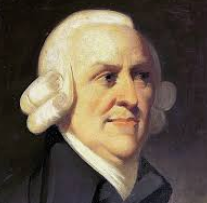
Let us suppose that the great empire of China, with all its myriads of inhabitants, was suddenly swallowed up by an earthquake, and let us consider how a man of humanity in Europe, who had no sort of connection with that part of the world, would be affected upon receiving intelligence of this dreadful calamity. He would, I imagine, first of all, express very strongly his sorrow for the misfortune of that unhappy people, he would make many melancholy reflections upon the precariousness of human life, and the vanity of all the labours of man, which could thus be annihilated in a moment. He would too, perhaps, if he was a man of speculation, enter into many reasonings concerning the effects which this disaster might produce upon the commerce of Europe, and the trade and business of the world in general. And when all this fine philosophy was over, when all these humane sentiments had been once fairly expressed, he would pursue his business or his pleasure, take his repose or his diversion, with the same ease and tranquillity, as if no such accident had happened. The most frivolous disaster which could befall himself would occasion a more real disturbance. If he was to lose his little finger to-morrow, he would not sleep to-night; but, provided he never saw them, he will snore with the most profound security over the ruin of a hundred millions of his brethren, and the destruction of that immense multitude seems plainly an object less interesting to him, than this paltry misfortune of his own. To prevent, therefore, this paltry misfortune to himself, would a man of humanity be willing to sacrifice the lives of a hundred millions of his brethren, provided he had never seen them? Human nature startles with horror at the thought, and the world, in its greatest depravity and corruption, never produced such a villain as could be capable of entertaining it. But what makes this difference? When our passive feelings are almost always so sordid and so selfish, how comes it that our active principles should often be so generous and so noble? When we are always so much more deeply affected by whatever concerns ourselves, than by whatever concerns other men; what is it which prompts the generous, upon all occasions, and the mean upon many, to sacrifice their own interests to the greater interests of others? It is not the soft power of humanity, it is not that feeble spark of benevolence which Nature has lighted up in the human heart, that is thus capable of counteracting the strongest impulses of self-love. It is a stronger power, a more forcible motive, which exerts itself upon such occasions. It is reason, principle, conscience, the inhabitant of the breast, the man within, the great judge and arbiter of our conduct.
▼
Source
Chap. III.
4 months 3 weeks ago
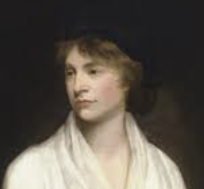
Till women are more rationally educated, the progress in human virtue and improvement in knowledge must receive continual checks.
▼
Source
Ch. 3
4 months 3 weeks ago
Few people who are not actually practitioners of a mature science realize how much mop-up work of this sort a paradigm leaves to be done or quite how fascinating such work can prove in the execution.
▼
Source
p. 24 (2012 ed.)

4 months 3 weeks ago
Terror is not now, if it ever was, something that comes to us from outside. It is a part of the society in which we live. Both liberals and neoconservatives believe terrorism can be dealt with by removing its causes. The truth is less reassuring. Al-Qaeda has mutated into a decentralised, often locally based type of apocalyptic terrorism and, in this new guise, seems to be acquiring a formidable momentum.
▼
Source
[http://www.guardian.co.uk/uk/2005/jul/10/july7.terrorism "Look out for the enemy within,"] The Observer (2005-07-10)
4 months 3 weeks ago
Those who assert that the mathematical sciences say nothing of the beautiful or the good are in error. For these sciences say and prove a great deal about them; if they do not expressly mention them, but prove attributes which are their results or definitions, it is not true that they tell us nothing about them. The chief forms of beauty are order and symmetry and definiteness, which the mathematical sciences demonstrate in a special degree.
▼
Source
Book XIII, 1078a.33
4 months 3 weeks ago
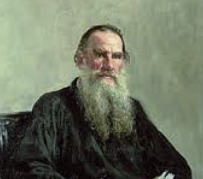
Error is the force that welds men together; truth is communicated to men only by deeds of truth. Only deeds of truth, by introducing light into the conscience of each individual, can dissolve the cohesion of error, and detach men one by one from the mass united together by the cohesion of error.
▼
Source
My Religion (1884), Ch. 12
4 months 3 weeks ago
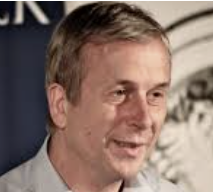
I was born human. But this was an accident of fate - a condition merely of time and place. I believe it's something we have the power to change.
▼
Source
in Kevin Warwick "Cyborg 1.0", Wired, pp.145-151, February 2000.

4 months 3 weeks ago
If Black people had simply accepted a status of economic and political inferiority, the mob murders would probably have subsided. But because vast numbers of ex-slaves refused to discard their dreams of progress, more than ten thousand lynchings occurred during the three decades following the war.
4 months 3 weeks ago
If two men who were friends in their youth meet again when they are old, after being separated for a life-time, the chief feeling they will have at the sight of each other will be one of complete disappointment at life as a whole; because their thoughts will be carried back to that earlier time when life seemed so fair as it lay spread out before them in the rosy light of dawn, promised so much — and then performed so little.
▼
Source
"On the Sufferings of the World"
4 months 3 weeks ago
Eternity is absence.
4 months 3 weeks ago
The natural price, therefore, is, as it were, the central price, to which the prices of all commodities are continually gravitating.
▼
Source
Chapter VII, p. 69.
4 months 3 weeks ago
I firmly believe there does not exist her equal in the world. I know from experience we were formed to make each other happy. I have not the least expectation that I can now ever know happiness again.
▼
Source
William Godwin, in a letter to Thomas Holcroft, after his wife's death, as quoted in William Godwin : His Friends and Contemporaries (1876) by Charles Kegan Paul
4 months 3 weeks ago
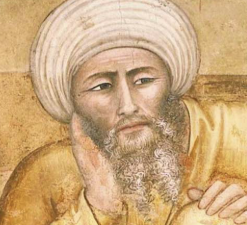
The world is divided into men who have wit and no religion and men who have religion and no wit.
▼
Source
This was declared without citation to have been attributed to Avicenna in A Rationalist Encyclopaedia : A Book of Reference on Religion, Philosophy, Ethics, and Science (1950), by Joseph McCabe, p. 43; it was also later wrongly attributed to Averroes in T
4 months 3 weeks ago
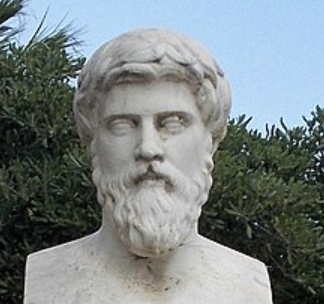
Being nimble and light-footed, his father encouraged him to run in the Olympic race. "Yes," said he, "if there were any kings there to run with me."
▼
Source
41 Alexander
CivilSimian.com created by AxiomaticPanic, CivilSimian, Kalokagathia