
4 months 3 weeks ago
So little pains do the vulgar take in the investigation of truth, accepting readily the first story that comes to hand.
▼
Source
Variant translation: "...the search for truth strains the patience of most people, who would rather believe the first things that come to hand." Translation by Paul Woodruff. | Book I, 1.20-[3]
4 months 3 weeks ago
To speak and to offend is with some people but one and the same thing; they are biting and bitter; their words are steeped in gall and wormwood; sneers as well as insolent and insulting words flow from their lips. It had been well for them had they been born mute or stupid; the little vivacity and intelligence they have prejudices them more than dullness does others; they are not always satisfied with giving sharp answers, they often attack arrogantly those who are present, and damage the reputation of those who are absent; they butt all round like rams — for rams, of course, must use their horns. We therefore do not expect, by our sketch of them, to change such coarse, restless, and stubborn individuals. The best thing a man can do is to take to his heels as soon as he perceives them, without even turning round to look behind him.
▼
Source
27
4 months 3 weeks ago
A little time, and thou shalt close thy eyes; and him who has attended thee to thy grave, another soon will lament.
▼
Source
X, 34

4 months 3 weeks ago
Time is heavy sometimes; imagine how heavy eternity must be.

4 months 3 weeks ago
There is no heroic poem in the world but is at bottom a biography, the life of a man; also, it may be said, there is no life of a man, faithfully recorded, but is a heroic poem of its sort, rhymed or unrhymed.
4 months 3 weeks ago
Existence is illusory and it is eternal.
▼
Source
Kirilov
4 months 3 weeks ago
The fate of those of their neighbours who had already rebelled and had been subdued was no lesson to them; their own prosperity could not dissuade them from affronting danger; but blindly confident in the future, and full of hopes beyond their power though not beyond their ambition, they declared war and made their decision to prefer might to right, their attack being determined not by provocation but by the moment which seemed propitious. The truth is that great good fortune coming suddenly and unexpectedly tends to make a people insolent; in most cases it is safer for mankind to have success in reason than out of reason; and it is easier for them, one may say, to stave off adversity than to preserve prosperity.
▼
Source
Book III, 3.39-[3]
4 months 3 weeks ago
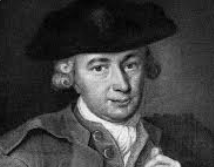
Poetry is the mother-tongue of the human race.
▼
Source
Sämtliche Werken, ed. Josef Nadler (Vienna: Verlag Herder, 1949-1957), vol. II, p. 197.
4 months 3 weeks ago
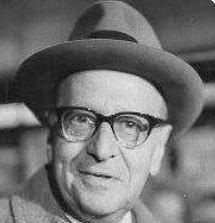
The blessing that the market does not ask about birth is paid for in the exchange society by the fact that the possibilities conferred by birth are molded to fit the production of goods that can be bought on the market.
▼
Source
E. Jephcott, trans., p. 9.
4 months 3 weeks ago
Never regard something as doing you good if it makes you betray a trust or lose your sense of shame or makes you show hatred, suspicion, ill-will or hypocrisy or a desire for things best done behind closed doors.
▼
Source
III. 7, trans. Gregory Hays
4 months 3 weeks ago
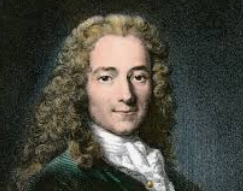
This new patriarch Fox said one day to a justice of peace, before a large assembly of people. "Friend, take care what thou dost; God will soon punish thee for persecuting his saints." This magistrate, being one who besotted himself every day with bad beer and brandy, died of apoplexy two days after; just as he had signed a mittimus for imprisoning some Quakers. The sudden death of this justice was not ascribed to his intemperance; but was universally looked upon as the effect of the holy man's predictions; so that this accident made more Quakers than a thousand sermons and as many shaking fits would have done. Cromwell, finding them increase daily, was willing to bring them over to his party, and for that purpose tried bribery; however, he found them incorruptible, which made him one day declare that this was the only religion he had ever met with that could resist the charms of gold. The Quakers suffered several persecutions under Charles II; not upon a religious account, but for refusing to pay the tithes, for "theeing" and "thouing" the magistrates, and for refusing to take the oaths enacted by the laws. At length Robert Barclay, a native of Scotland, presented to the king, in 1675, his "Apology for the Quakers"; a work as well drawn up as the subject could possibly admit. The dedication to Charles II, instead of being filled with mean, flattering encomiums, abounds with bold truths and the wisest counsels. "Thou hast tasted," says he to the king, at the close of his "Epistle Dedicatory," "of prosperity and adversity: thou hast been driven out of the country over which thou now reignest, and from the throne on which thou sittest: thou hast groaned beneath the yoke of oppression; therefore hast thou reason to know how hateful the oppressor is both to God and man. If, after all these warnings and advertisements, thou dost not turn unto the Lord, with all thy heart; but forget Him who remembered thee in thy distress, and give thyself up to follow lust and vanity, surely great will be thy guilt, and bitter thy condemnation. Instead of listening to the flatterers about thee, hearken only to the voice that is within thee, which never flatters. I am thy faithful friend and servant, Robert Barclay." The most surprising circumstance is that this letter, though written by an obscure person, was so happy in its effect as to put a stop to the persecution.
4 months 3 weeks ago
To win the guilty kiss of a saint, I'd welcome the plague as a blessing
4 months 3 weeks ago
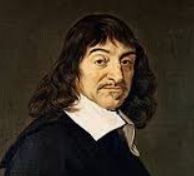
An optimist may see a light where there is none, but why must the pessimist always run to blow it out?
▼
Source
Michel de Saint-Pierre, as quoted in Cryptograms and Spygrams (1981) by Norma Gleason, p. 106; attributed to Descartes in The Athlete's Way : Training Your Mind and Body to Experience the Joy of Exercise (2008) by Christopher Bergland, p. 271.
4 months 3 weeks ago
For the Norse people, the Man now named Odin, and Chief Norse God, we fancy, was such a man. A Teacher, and Captain of soul and of body; a Hero, of worth immeasurable; admiration for whom, transcending the known bounds, became adoration. Has he not the power of articulate Thinking; and many other powers, as yet miraculous? So, with boundless gratitude, would the rude Norse heart feel. Has he not solved for them the sphinx-enigma of this Universe; given assurance to them of their own destiny there? By him they know now what they have to do here, what to look for hereafter. Existence has become articulate, melodious by him; he first has made Life alive!—We may call this Odin, the origin of Norse Mythology: Odin, or whatever name the First Norse Thinker bore while he was a man among men. His view of the Universe once promulgated, a like view starts into being in all minds; grows, keeps ever growing, while it continues credible there. In all minds it lay written, but invisibly, as in sympathetic ink; at his word it starts into visibility in all. Nay, in every epoch of the world, the great event, parent of all others, is it not the arrival of a Thinker in the world—!
4 months 3 weeks ago
Query: How to contrive not to waste one's time? Answer: By being fully aware of it all the while. Ways in which this can be done: By spending one's days on an uneasy chair in a dentist's waiting room; by remaining on one's balcony all a Sunday afternoon; by travelling by the longest and least-convenient train routes, and of course standing all the way; by queueing at the box-office of theatres and then not booking a seat.
4 months 3 weeks ago
The dead lay unburied, and each man as he recognized a friend among them shuddered with grief and horror; while the living whom they were leaving behind, wounded or sick, were to the living far more shocking than the dead, and more to be pitied than those who had perished.
▼
Source
Book VII, 7.75-[3]
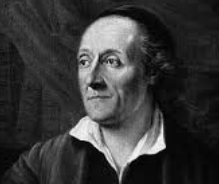
4 months 3 weeks ago
Superstition always inspires littleness, religion grandeur of mind: the superstitious raises beings inferior to himself to deities.
▼
Source
No. 342
4 months 3 weeks ago
Pragmatism … reflects with almost disarming candor the spirit of the prevailing business culture, the very same attitude of ‘being practical’ as counter to which philosophical meditation as such was conceived.
▼
Source
p. 52.
4 months 3 weeks ago
He who lives in harmony with himself lives in harmony with the universe.
▼
Source
Attributed in The Life You Were Born to Live : Finding Your Life Purpose (1995) by Dan Millman, Pt. 2, Ch. 2 : Cooperation and Balance
4 months 3 weeks ago
Paradise was made for tender hearts; hell, for loveless hearts.
▼
Source
p. 81
4 months 3 weeks ago
Bach: a scale of tears upon which our desires for God ascend.
4 months 3 weeks ago
From of old, a thousand thoughts, in his pilgrimings and wanderings, had been in this man: What am I? What is this unfathomable Thing I live in, which men name Universe? What is Life; what is Death? What am I to believe? What am I to do? The grim rocks of Mount Hara, of Mount Sinai, the stern sandy solitudes answered not. The great Heaven rolling silent overhead, with its blue-glancing stars, answered not. There was no answer. The man's own soul, and what of God's inspiration dwelt there, had to answer!
4 months 3 weeks ago
Whatever we may do, excess will always keep its place in the heart of man, in the place where solitude is found. We all carry within us our places of exile, our crimes and our ravages. But our task is not to unleash them on the world; it is to fight them in ourselves and in others.
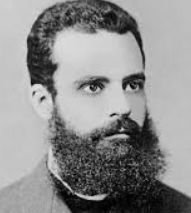
4 months 3 weeks ago
The economic and social theories used by those who take part in the social struggle ought to be judged not by their objective value but primarily for their effectiveness in arousing emotions. The scientific refutation of them which can be made is useless, however correct it may be objectively.
▼
Source
p. 94.
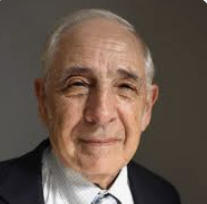
4 months 3 weeks ago
I once had a conversation with a famous French philosopher who's a friend of mine. And I said to him, "Why the hell do you write so badly? Pourquoi tu écris si mal?" ... And this was Michel Foucault. He was a very smart guy and wrote a lot of very good stuff but in general he just wrote badly. When you heard him give a lecture in Berkeley, it was perfectly clear, just as clear as I am. ... And he said, "Well, in France, it would be regarded as somewhat childish and naive if you wrote clearly. ... In France you've got to have 10% incomprehensible." Otherwise people won't think it's deep. They won't think you're a profound thinker.
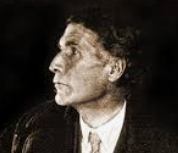
4 months 3 weeks ago
They are at least proof of the inalienable part played, in the functioning of our complex vision, by sensation as an organ of research. But they have a further interest. They are an illuminating revelation of the inherent character and personal bias of the individual soul who is philosophizing. I suppose to a great many minds what we call "the universe" presents itself as a colossal circle, without any circumference, filled with an innumerable number of material objects floating in some thin attenuated ether. I suppose the centre of this circle with no circumference is generally assumed to be the "self" or "soul" of the person projecting this particular image.
▼
Source
Chapter I
4 months 3 weeks ago
It takes twenty years to bring man from the state of embryo, and from that of a mere animal, as he is in his first infancy, to the point when his reason begins to dawn. It has taken thirty centuries to know his structure; it would take eternity to know something of his soul: it takes but an instant to kill him.
▼
Source
p. 211
4 months 3 weeks ago
So long as man is protected by madness he functions and flourishes, but when he frees himself from the fruitful tyranny of fixed ideas, he is lost, ruined.
4 months 3 weeks ago
All this of Liberty and Equality, Electoral suffrages, Independence and so forth, we will take, therefore, to be a temporary phenomenon, by no means a final one. Though likely to last a long time, with sad enough embroilments for us all, we must welcome it, as the penalty of sins that are past, the pledge of inestimable benefits that are coming.
4 months 3 weeks ago
When the imagination sleeps, words are emptied of their meaning: a deaf population absent-mindedly registers the condemnation of a man. ... there is no other solution but to speak out and show the obscenity hidden under the verbal cloak.

4 months 3 weeks ago
Immoderate desire is the mark of a child, not a man.
▼
Source
Freeman (1948), p. 152 | Variant: It is childish, not manly, to have immoderate desires.
4 months 3 weeks ago
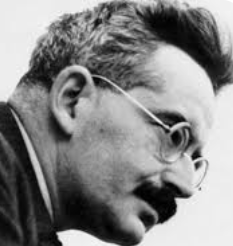
The true picture of the past flits by. The past can be seized only as an image which flashes up at the instant when it can be recognized and is never seen again.
▼
Source
V
4 months 3 weeks ago
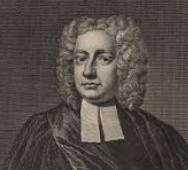
It is to Sir Isaac Newton's Application of Geometry to Philosophy, that we owe the routing of this Army of Goths and Vandals in the philosophical World; which he has enriched with more and greater Discoveries, than all the Philosophers that went before him: And has laid such Foundations for future Acquisitions, that even after his Death, his Works still promote natural Knowledge. Before Sir Isaac, we had but wild Guesses at the Cause of the Motion of the Comets and Planets round the Sun', but now he has clearly deduced them from the universal Laws of Attraction (the Existence of which he has proved beyond Contradiction) and has shewn, that the seeming Irregularities of the Moon, which Astronomers were unable to express in Numbers, are but the just Consequences of the Actions of the Sun and Earth upon it, according to their different Positions. His Principles clear up all Difficulties of the various Phænomena of the Tides; and the true Figure of the Earth is now plainly shewn to be a flatted Spheroid higher at the Equator than the Poles, notwithstanding many Assertions and Conjectures to the contrary.
▼
Source
p. vi: Preface
4 months 3 weeks ago
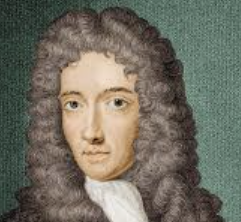
For it has been truly observed by a great philosopher, that truth does more easily emerge out of error than confusion.
4 months 3 weeks ago
Italy had a Renaissance, and Germany had a Reformation, but France had Voltaire; he was for his country both Renaissance and Reformation, and half the Revolution. He carried on the antiseptic scepticism of Montaigne, and the healthy earthy humor of Rabelais; he fought superstition and corruption more savagely and effectively than Luther or Erasmus, Calvin or Knox or Melanchthon; he helped to make the powder with which Mirabeau and Marat, Danton and Robespierre blew up the Old Regime... No, never has a writer had in his lifetime such influence. Despite exile, imprisonment, and the suppression of almost everyone of his books by the minions of church and state, he forged fiercely a path for his truth, until at last kings, popes and emperors catered to him, thrones trembled before him, and half the world listened to catch his every word. It was an age in which many things called for a destroyer. "Laughing lions must come," said Nietzsche; well, Voltaire came, and "annihilated with laughter." He and Rousseau were the two voices of a vast process of economic and political transition from feudal aristocracy to the rule of the middle class...He was happy in his garden, planting fruit trees which he did not expect to see flourish in his lifetime. When an admirer praised the work he had done for posterity he answered, "Yes, I have planted 4000 trees." He rejects all systems, and suspects that "every chief of a sect in philosophy has been a little of a quack." "The further I go, the more I am confirmed in the idea that systems of metaphysics are for philosophers what novels are for women." "It is only charlatans who are certain. We know nothing of first principles. It is truly extravagant to define God, angels, and minds, and to know precisely why God formed the world, when we do not know why we move our arms at will. Doubt is not a very agreeable state, but certainty is a ridiculous one."
▼
Source
Will Durant, The Story of Philosophy
4 months 3 weeks ago
We suffer: the external world begins to exist . . . ; we suffer to excess: it vanishes. Pain instigates the world only to unmask its unreality.
4 months 3 weeks ago
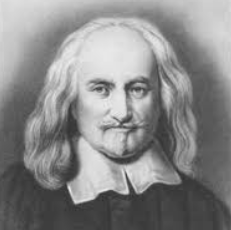
For there is no such thing as perpetual Tranquility of mind, while we live here; because Life it selfe is but Motion, and can never be without Desire, nor without Feare, no more than without Sense.
▼
Source
The First Part, Chapter 6, p. 29 (See also: Rene Girard)
4 months 3 weeks ago
We shall either learn to know a Hero, a true Governor and Captain, somewhat better, when we see him; or else go on to be forever governed by the Unheroic;—had we ballot-boxes clattering at every street-corner, there were no remedy in these.
4 months 3 weeks ago
Many who have not learned wisdom live wisely, and many who do the basest deeds can make most learned speeches.
4 months 3 weeks ago
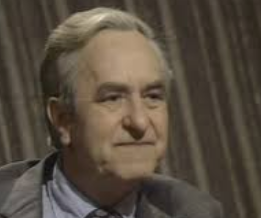
That existence has meaning, finally, only as the liberty to say No, and by saying No to create a world.
▼
Source
Chapter Ten, Sartre, p. 217
4 months 3 weeks ago
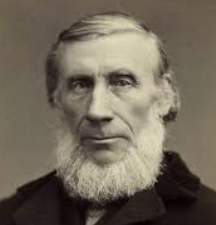
Religion lives not by the force and aid of dogma, but because it is ingrained in the nature of man. ...the moulds have been broken and reconstructed over and over again, but the molten ore abides in the ladle of humanity.
4 months 3 weeks ago
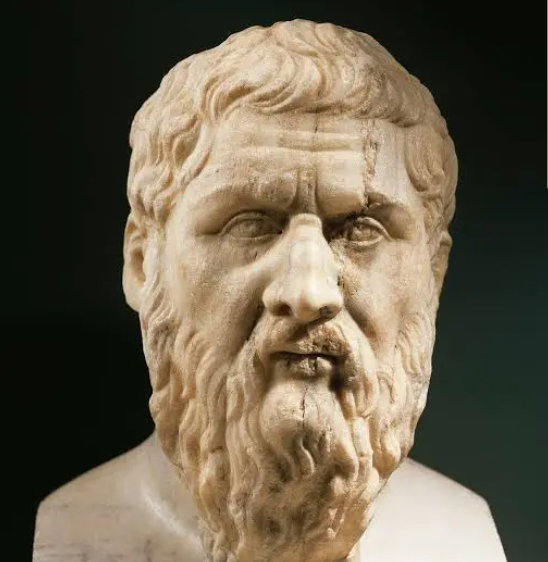
Parmenides: If anyone, with his mind fixed on all these objections and others like them, denies the existence of ideas of things, and does not assume an idea under which each individual thing is classed, he will be quite at a loss, since he denies that the idea of each thing is always the same, and in this way he will utterly destroy the power of carrying on discussion... Then what will become of philosophy? To what can you turn, if these things are unknown?
▼
Source
135b-c
4 months 3 weeks ago
After the death of Bacon, one of the most distinguished Englishmen was certainly Boyle, who, if compared with his contemporaries, may be said to rank immediately below Newton, though of course very inferior to him as an original thinker.
▼
Source
Henry Thomas Buckle, History of Civilization in England (1887) [http://books.google.com/books?id=PsQIAQAAIAAJ Vol.1] from the second London edition
4 months 3 weeks ago
Only optimists commit suicide, the optimists who can no longer be . . . optimists. The others, having no reason to live, why should they have any to die?
4 months 3 weeks ago
For all uniting of strength by private men, is, if for evil intent, unjust; if for intent unknown, dangerous to the Publique, and unjustly concealed.
▼
Source
The Second Part, Chapter 22, p. 122 (See also: Secret society)
4 months 3 weeks ago
The latest Gospel in this world is, Know thy work and do it. 'Know thyself:' long enough has that poor 'self' of thine tormented thee; thou wilt never get to 'know' it, I believe! Think it not thy business, this of knowing thyself; thou art an unknowable individual: know what thou canst work at; and work at it, like a Hercules! That will be thy better plan.
4 months 3 weeks ago
Men achieve tranquillity through moderation in pleasure and through the symmetry of life. Want and superfluity are apt to upset them and to cause great perturbations in the soul. The souls that are rent by violent conflicts are neither stable nor tranquil. One should therefore set his mind upon the things that are within his power, and be content with his opportunities, nor let his memory dwell very long on the envied and admired of men, nor idly sit and dream of them. Rather, he should contemplate the lives of those who suffer hardship, and vividly bring to mind their sufferings, so that your own present situation may appear to you important and to be envied, and so that it may no longer be your portion to suffer torture in your soul by your longing for more. For he who admires those who have, and whom other men deem blest of fortune, and who spends all his time idly dreaming of them, will be forced to be always contriving some new device because of his [insatiable] desire, until he ends by doing some desperate deed forbidden by the laws. And therefore one ought not to desire other men's blessings, and one ought not to envy those who have more, but rather, comparing his life with that of those who fare worse, and laying to heart their sufferings, deem himself blest of fortune in that he lives and fares so much better than they. Holding fast to this saying you will pass your life in greater tranquillity and will avert not a few of the plagues of life—envy and jealousy and bitterness of mind.
4 months 3 weeks ago
As the neurobiological basis of feeling and emotion is unravelled, and the human genome decoded and rewritten, it will become purely an issue of post-human decision whether negative modes of consciousness are generated in any form or texture whatsoever.
▼
Source
"[https://www.paradise-engineering.com/heav2.htm The Hedonistic Imperative: Heaven on Earth]", BLTC Research
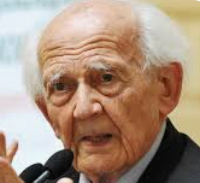
4 months 3 weeks ago
Gradually, like so many others in my position, I came to the conclusion that there was a yawning gap between the official word and the practice ... so I became a revisionist, rejecting the official version of Marxism.
▼
Source
From an interview with Aida Edemariam, as cited in [https://www.theguardian.com/books/2007/apr/28/academicexperts.highereducation "Professor with a past"], The Guardian (28 April 2007)
4 months 3 weeks ago
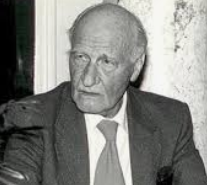
When the physicist poses the question, "What does it mean to do physics?" or "What is research in physics?" — his question is a preliminary question. Clearly, when you ask a question like that, and try to answer it, you are not "doing physics." Or rather you are no longer doing physics. But when you ask yourself, "What does it mean to do philosophy?" then you actually are "doing philosophy" — this is not at all a "preliminary" question but a truly philosophical one: you are right at the heart of the business.
▼
Source
p. 63
CivilSimian.com created by AxiomaticPanic, CivilSimian, Kalokagathia