

6 months 2 weeks ago
Nature is an Æolian Harp, a musical instrument; whose tones again are keys to higher strings in us.
3 months 2 weeks ago
National defense through war always involves some degree of national defeat. This paradox has been with us from the very beginning of our republic. Militarization in defense of freedom reduces the freedom of the defenders. There is a fundamental inconsistency between war and freedom.
8 months 2 weeks ago
Of course, I had to own that he was right; I didn't feel much regret for what I'd done. Still, to my mind, he overdid it, and I'd have liked to have a chance of explaining to him, in a quite friendly, almost affectionate way, that I have never been able to really regret anything in all my life. I've always been far too much absorbed in the present moment, or the immediate future, to think back.
7 months 2 weeks ago
The second doctrine of the Perennial Philosophy - that it is possible to know the Divine Ground by a direct intuition higher than discursive reasoning - is to be found in all the great religions of the world. A philosopher who is content merely to know about the ultimate Reality - theoretically and by hearsay - is compared by Buddha to a herdsman of other men's cows. Mohammed uses an even homelier barnyard metaphor. For him the philosopher who has not realized his metaphysics is just an ass bearing a load of books. Christian, Hindu, Taoist teachers wrote no less emphatically about the absurd pretensions of mere learning and analytic reasoning.

8 months 6 days ago
Christ is not valued at all unless He be valued above all.
▼
Source
source
p. 395

3 months 2 weeks ago
If we demonstrate this moving principle, if we show that matter, far from being as indifferent as it is supposed to be, to movement and to rest, ought to be regarded as an active, as well as a passive substance, what resource can be left to those who have made its essence consist in extension?
▼
Source
source
Ch. V Concerning the Moving Force of Matter


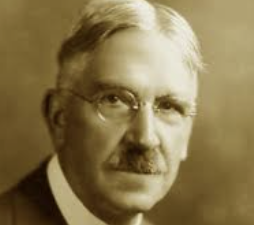
6 months 1 week ago
Surrender of individuality by the many to someone who is taken to be a superindividual explains the retrograde movement of society. Dictatorships and totalitarian states, and belief in the inevitability of this or that result coming to pass are, strange as it may sound, ways of denying the reality of time and the creativeness of the individual.
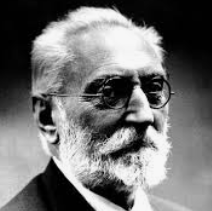
6 months 1 week ago
And if it is grievous to be doomed one day to cease to be, perhaps it would be more grievous still to go on being always oneself, and no more than oneself, without being able to be at the same time other, without being able to be at the same time everything else, without being able to be all.

7 months 2 weeks ago
[Mortals] say of some temporal suffering, "No future bliss can make up for it," not knowing Heaven, once attained, will work backwards and turn even that agony into a glory. And of some sinful pleasure they say "Let me have but this and I'll take the consequences": little dreaming how damnation will spread back and back into their past and contaminate the pleasure of the sin. Both processes begin even before death.
▼
Source
source
Ch. 9
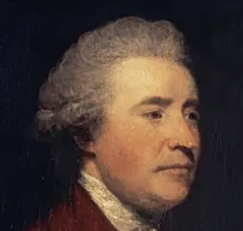
6 months 3 weeks ago
Tyrants seldom want pretexts.
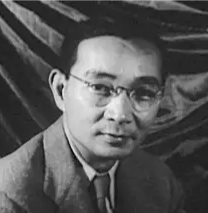
3 months 4 weeks ago
It is important that man dreams, but it is perhaps equally important that he can laugh at his own dreams.
▼
Source
source
Ch. I : The Awakening, pp. 4-5
4 months 2 weeks ago
Many instructional arrangements seem "contrived", but there is nothing wrong with that. It is the teacher's function to contrive conditions under which students learn. Their relevance to a future usefulness need not be obvious. It is a difficult assignment. The conditions the teacher arranges must be powerful enough to compete with those under which the student tends to behave in distracting ways.
▼
Source
source
Free and Happy Student in The Phi Delta Kappan (September 1973); later published in Reflections on Behaviorism and Society

7 months 1 week ago
Speciesism is an attitude of prejudice towards beings because they're not members of our species, so just as racism means that you're prejudiced against beings who are not members of your race and sexism means you're prejudiced against people of the other sex. So we humans tend to be speciesist in we think that any being that is a member of the species homo sapien just automatically has a higher moral status and is more important than any being that is a member of any other species, irrespective of the actual characteristics of those beings.
▼
Source
source
Peter Singer - The Genius of Darwin: The Uncut Interviews - Richard Dawkins, 2009.
5 months 2 weeks ago
All of the new media have enriched our perceptions of language and older media. They are to the man-made environment what species are to biology.
▼
Source
source
(p. 84)
4 months 1 day ago
Do you suppose that God takes himself seriously? I know a Zen master, Joshu Sasaki, who has let it be known that the best form of meditation is to stand up with your hands on your hips and roar with laughter for ten minutes every morning. I have heard of a sophisticated shaman-type fellow who used to cure ringworm on cows just by pointing at the scars and laughing. Truly religious people always make jokes about their religion; their faith is so strong that they can afford it. Much of the secret of life consists in knowing how to laugh, and also how to breathe.
▼
Source
source
p. 6
5 months 1 week ago
We are all such accidents. We do not make up history and culture. We simply appear, not by our own choice. We make what we can of our condition with the means available. We must accept the mixture as we find it - the impurity of it, the tragedy of it, the hope of it.
▼
Source
source
Great Jewish Short Stories, introduction to the Dell paperback edition
3 months 2 weeks ago
Look beneath the surface; let not the several quality of a thing nor its worth escape thee.
▼
Source
source
VI, 3
3 months 4 weeks ago
No wild beasts are such enemies to mankind as are most of the Christians in their deadly hatred of one another.
▼
Source
source
Reported in Ammianus, Res gestae, bk. 22, ch. 5, sec. 4
5 months 3 weeks ago
Those who used to sacrifice animals did not take them for beasts. And even the Middle Ages, which condemned and punished them in due form, was in this way much closer to them than we are, we who are filled with horror at this practice. They held them to be guilty: which was a way of honoring them. We take them for nothing, and it is on this basis that we are "human" with them. We no longer sacrifice them, we no longer punish them, and we are proud of it, but it is simply that we have domesticated them, worse: that we have made of them a racially inferior world, no longer even worthy of our justice, but only of our affection and social charity, no longer worthy of punishment and of death, but only of experimentation and extermination like meat from the butchery.
▼
Source
source
"The Animals: Territory and Metamorphoses," pp. 134-135
7 months 2 weeks ago
Defined in psychological terms, a fanatic is a man who consciously over-compensates a secret doubt.
▼
Source
source
"The Substitutes for Religion, The Religion of Sex"

4 months 1 week ago
There is no heroic poem in the world but is at bottom a biography, the life of a man; also, it may be said, there is no life of a man, faithfully recorded, but is a heroic poem of its sort, rhymed or unrhymed.
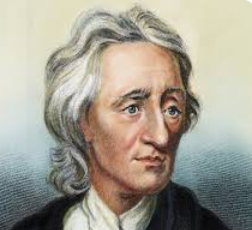
7 months 3 weeks ago
He that knows anything, knows this, in the first place, that he need not seek long for instances of his ignorance.
▼
Source
source
Book IV, Ch. 3, sec. 22
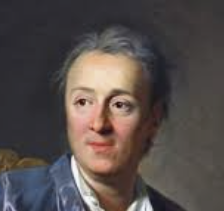
6 months 3 weeks ago
I have often seen an actor laugh off the stage, but I don't remember ever having seen one weep.
▼
Source
source
"Paradox on Acting" (1830), as quoted in Selected Writings (1966) edited by Lester G. Crocker
4 months 6 days ago
If a concept lacks an essence, nothing will ever be found that completely fits that concept. If you are lacking in the concept of human being, it will immediately expose that you are something individual, something that cannot be expressed by the term human being, thus, in every instance, an individual human being.
▼
Source
source
Landstreicher, p. 16
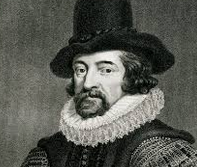
7 months 4 weeks ago
Like strawberry wives, that laid two or three great strawberries at the mouth of their pot, and all the rest were little ones.
▼
Source
source
No. 54

3 months 4 weeks ago
Man is constituted as a speculative being; he contemplates the world, and the objects around him, not with a passive indifferent eye, but as a system disposed with order and design.
5 months 3 weeks ago
I will argue that in the literal sense the programmed computer understands what the car and the adding machine understand, namely, exactly nothing.

6 months 2 weeks ago
I react like everyone else, even like those I most despise; but I make up for it by deploring every action I commit, good or bad.
3 months 2 weeks ago
Let opinion be taken away, and no man will think himself wronged. If no man shall think himself wronged, then is there no more any such thing as wrong.
▼
Source
source
IV. 7, trans. Méric Casaubon

7 months 2 days ago
Friends share all things.
▼
Source
source
As quoted in Lives and Opinions of Eminent Philosophers, "Pythagoras", Sect. 10
8 months 6 days ago
If there is something more excellent than the truth, then that is God; if not, then truth itself is God.
8 months 1 week ago
Self-sufficiency is the greatest of all wealth.
7 months 1 week ago
Rather, we heirs of Enlightenment think of enemies of liberal democracy like Nietzsche or Loyola as, to use Rawls's word, "mad." We do so because there is no way to see them as fellow citizens of our constitutional democracy, people whose life plans might, given ingenuity and good will, be fitted in with those of other citizens. They are crazy because the limits of sanity are set by what we can take seriously. This, in turn, is determined by our upbringing, our historical situation.
6 months 1 week ago
Conduct, practice, is the proof of doctrine, theory. "If any man will do His will - the will of Him that sent me," said Jesus, "he shall know of the doctrine, whether it be of God or whether I speak of myself" (John vii. 17); and there is a well known saying of Pascal: "Begin by taking holy water and you will end by becoming a believer." And pursuing a similar train of thought, Johann Jakob Moser, the pietist, was of the opinion that no atheist or naturalist had the right to regard the Christian religion as void of truth so long as he had not put it to the proof by keeping its precepts and commandments.
▼
Source
source
(Ritschl, Geschichte des Pietismus, book viii., 43)
7 months 2 weeks ago
Need and struggle are what excite and inspire us; our hour of triumph is what brings the void. Not the Jews of the captivity, but those of the days of Solomon's glory are those from whom the pessimistic utterances in our Bible come.
▼
Source
source
"Is Life Worth Living?"
5 months 2 weeks ago
If wine is to withdraw its most poetic countenance, the sun of the white dinner-cloth, a deity to be invoked by two or three, all fervent, hushing their talk, degusting tenderly, and storing reminiscences-for a bottle of good wine, like a good act, shines ever in the retrospect-if wine is to desert us, go thy ways, old Jack!
▼
Source
source
Pt. I, ch. III
7 months 3 weeks ago
There cannot any one moral Rule be propos'd, whereof a Man may not justly demand a Reason.
▼
Source
source
Book I, Ch. 3, sec. 4

4 months 1 week ago
India will teach us the tolerance and gentleness of mature mind, understanding spirit and a unifying, pacifying love for all human beings.

6 months 3 weeks ago
Égalité is an expression of envy. It means, in the real heart of every Republican, " No one shall be better off than I am;" and while this is preferred to good government, good government is impossible.
▼
Source
source
Conversation with Nassau William Senior, 22 May 1850 Nassau, p. 94
6 months 2 weeks ago
How can a past idea be present?... it can only be going, infinitesimally past, less past than any assignable past date. We are thus brought to the conclusion that the present is connected to the past by a series of real infinitesimal steps.

6 months 2 days ago
It seems as if the female spirit of the world were mourning everlastingly over blessings, not lost, but which she has never had, and which, in her discouragement she feels that she never will have, they are so far off.

6 months 1 week ago
All art is the struggle to be, in a particular sort of way, virtuous.
▼
Source
source
The Black Prince (1973); 2003, p. 181.

4 months 1 week ago
Philosophy is a hypothetical interpretation of the unknown (as in metaphysics), or of the inexactly known (as in ethics or political philosophy); it is the front trench in the siege of truth.
CivilSimian.com created by AxiomaticPanic, CivilSimian, Kalokagathia