


3 months 2 weeks ago
Descartes, a genius made to blaze new paths and to go astray in them, supposed with some other philosophers that God is the only efficient cause of motion, and that every instant He communicates motion to all bodies. But this opinion is but an hypothesis which he tried to adjust to the light of faith; and in so doing he was no longer attempting to speak as a philosopher or to philosophers. Above all he was not addressing those who can be convinced only by the force of evidence.
▼
Source
source
Ch. V Concerning the Moving Force of Matter
6 months ago
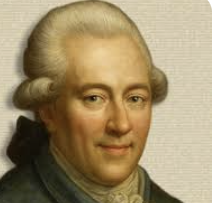
The most dangerous untruths are truths moderately distorted.
▼
Source
source
H 7 Variant translation: The most dangerous untruths are truths slightly distorted.
6 months 2 weeks ago
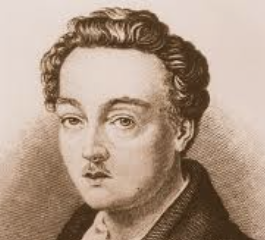
The power of the people and the power of reason are one.
▼
Source
source
Act III.
8 months 2 weeks ago
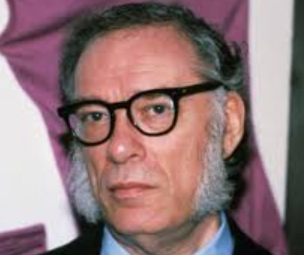
It is by the Imperial Capital that contemporaries (and posterity, too) judge an Empire, and its magnificence impresses them mightily and leads them to judge the Emperor a great man and hero, even though it may all be based on robbery, and though the provinces of the Empire may be sunk in misery.
6 months 3 days ago
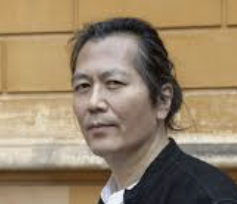
Logos is powerless without the force of eros.
7 months 3 weeks ago
Every substance is as a world apart, independent of everything else except God.
▼
Source
source
Discours de métaphysique, 1686
7 months 2 weeks ago
It is a political axiom that power follows property.
▼
Source
source
Chapter 12 (p. 113)
3 months 2 weeks ago
The Utopianism of the standpoint which expects an era of peace and retrenchment of militarism in the present social order is plainly revealed in the fact that it is having recourse to project making. For it is typical of Utopian strivings that, in order to demonstrate their practicability, they hatch "practical" recipes with the greatest possible details. To this also belongs the project of the "United States of Europe" as a basis for the limitation of international militarism.

7 months 2 weeks ago
I am sorry that my convictions do not allow me to repeat my friend's offer, said one of the others. But I have had to abandon the humanitarian and egalitarian fancies. His name was Mr. Neo-Classical.
▼
Source
source
Pilgrim's Regress 89

6 months 3 days ago
There certainly is self division. The man who watches a woman undressing has the red eyes of an ape; yet the man who sees two young lovers, really alone for the first time, who brings out all the pathos, the tenderness and uncertainty when he tells about it, is no brute; he is very much human. And the ape and the man exist in one body; and when the ape's desires are about to be fulfilled, he disappears and is succeeded by the man, who is disgusted with the ape's appetite.
▼
Source
source
Chapter one, The Country of the Blind
8 months 5 days ago
Men are disturbed, not by things, but by the principles and notions which they form concerning things.
▼
Source
source
(5). (Enchiridion 5)
5 months 2 weeks ago
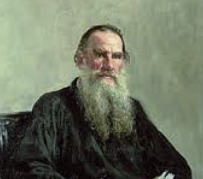
The positivist philosophy of Comte and the I doctrine deduced from it that humanity is an organism, and Darwin's doctrine of a law of the struggle for existence that is supposed to govern life, with the differentiation of various breeds of people which follows from it, and the anthropology, biology, and sociology of which people are now so fond-all have the same aim. These have all become favourite sciences because they serve to justify the way in which people free themselves from the human obligation to labour, while consuming the fruits of other people's labour.
7 months 2 weeks ago
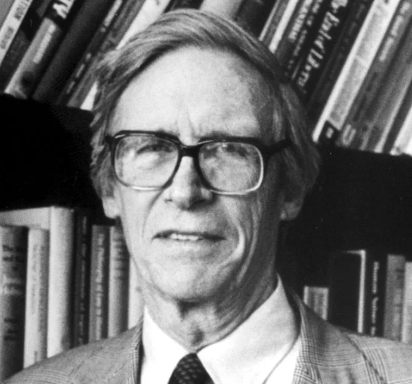
We must choose for others as we have reason to believe they would choose for themselves if they were at the age of reason and deciding rationally.
▼
Source
source
Chapter IV, Section 33, p. 209
6 months 1 week ago
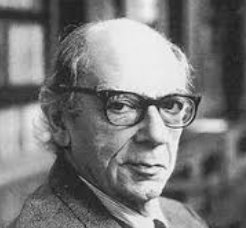
If, as I believe, the ends of men are many, and not all of them are in principle compatible with each other, then the possibility of conflict - and of tragedy - can never wholly be eliminated from human life, either personal or social. The necessity of choosing between absolute claims is then an inescapable characteristic of the human condition. This gives its value to freedom as Acton conceived of it - as an end in itself, and not as a temporary need, arising out of our confused notions and irrational and disordered lives, a predicament which a panacea could one day put right.
6 months 1 week ago
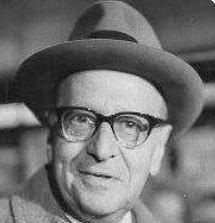
Reason has never really directed social reality, but now reason has been so thoroughly purged of any specific trend or preference that it has finally renounced even the task of passing judgment on man's actions and way of life. Reason has turned them over for ultimate sanction to the conflicting interests to which our world actually seems abandoned.
▼
Source
source
p. 9.


6 months 1 week ago
Suffering is a spiritual thing. It is the most immediate revelation of consciousness, and it may be that our body was given us simply in order that suffering might be enabled to manifest itself. A man who had never known suffering, either in greater or less degree, would scarcely possess consciousness of himself. The child first cries at birth when the air, entering into his lungs and limiting him, seems to say to him: You have to breathe me in order to live!
6 months 3 days ago
The everyday world demands our attention, and prevents us from sinking into ourselves. As a romantic, I have always resented this: I like to sink into myself. The problems and anxieties of living make it difficult. Well, now I had an anxiety that referred to something inside of me, and it reminded me that my inner world was just as real and important as the world around me.
▼
Source
source
p. 39
5 months 2 weeks ago
If a poor person envies a rich person, he is no better than the rich person.
▼
Source
source
p. 89
3 months 2 weeks ago
The idea of creating a national bank I do not concur in, because it seems now decided that Congress has not that power (although I sincerely wish they had it exclusively), and because I think there is already a vast redundancy rather than a scarcity of paper medium.
▼
Source
source
Letter to Thomas Law, 1813. FE 9:433
6 months 1 week ago
Fanaticism consists in redoubling your efforts when you have forgotten your aim.
6 months 2 days ago
The sick individual finds himself at home with all other similarly sick individuals. The whole culture is geared to this kind of pathology. The result is that the average individual does not experience the separateness and isolation the fully schizophrenic person feels. He feels at ease among those who suffer from the same deformation; in fact, it is the fully sane person who feels isolated in the insane society - and he may suffer so much from the incapacity to communicate that it is he who may become psychotic. In the context of this study the crucial question is whether the hypothesis of a quasi-autistic or of low-grade schizophrenic disturbance would help us to explain some of the violence spreading today.
▼
Source
source
p. 395
6 months 6 days ago
What one needs to do at every moment of one's life is to put an end to the old world and to begin a new world.
6 months 6 days ago
In organized groups such as the army or the Church there is either no mention of love whatsoever between the members, or it is expressed only in a sublimated and indirect way, through the mediation of some religious imagine in the love of whom the members unite and whose all-embracing love they are supposed to imitate in their attitude towards each other. ... It is one of the basic tenets of fascist leadership to keep primary libidinal energy on an unconscious level so as to divert its manifestations in a way suitable to political ends.
▼
Source
source
"Freudian Theory and the Pattern of Fascist Propaganda," The Essential Frankfurt School Reader (1982), p. 123
7 months 3 weeks ago
Change alone is eternal, perpetual, immortal.
▼
Source
source
Unverified attribution noted in Respectfully Quoted: A Dictionary of Quotations (1993), ed. Suzy Platt, Library of Congress, p. 39;
7 months 2 weeks ago
Nor mourn the unalterable Days That Genius goes and Folly stays.
▼
Source
source
In Memoriam E. B. E., st. 9
6 months 1 week ago
A man is a man to the extent that he is a superman. A man should be defined by the sum of those tendencies which impel him to surpass the human condition.
▼
Source
source
Introduction
6 months 6 days ago
It is not in a person's nature to desire what he already has. Desire is a tendency, the start of a movement toward something, toward a point from which one is absent. If, at the very outset, this movement doubles back on itself toward its point of departure, a person turns round and round like a squirrel in a cage or a prisoner in a condemned cell. Constant turning soon produces revulsion. All workers, especially though not exclusively those who work under inhumane conditions, are easily the victims of revulsion, exhaustion and disgust and the strongest are often the worst affected.
▼
Source
source
p. 245
4 months 1 day ago
In an autobiography one must surely be allowed to boast, just for fun. I have, at a range of twenty feet, shot the tobacco out of a cigarette and left the paper intact. At a range of thirty feet, I have split a target, edge towards me, with an air pistol. I am also the world's champion in a game called "You Are the Target," in which anyone better than I would be dead. The game is to shoot an arrow straight up and see how near to you it can be allowed to land. You have to watch its fall very carefully, but I have had it hit the ground exactly between my feet. Of course, there were no witnesses. Had there been, they would forcefully have discouraged the experiment. I was using a fifty-five pound bow.
▼
Source
source
p. 18
7 months 3 weeks ago
If it be said, that an Omnipotent Creator, though under no necessity of employing contrivances such as man must use, thought fit to use them in order to leave traces that would enable man to recognize his creative hand, the answer is that this equally implies a limit to his omnipotence. For if he wanted men to know that they themselves and the world are his work, he, being omnipotent, had only to will that they should be aware of it.
▼
Source
source
pages 177-178;Early Modern Texts page 16
3 months 3 weeks ago
Love responsibility. Say: "It is my duty, and mine alone, to save the earth. If it is not saved, then I alone am to blame." Love each man according to his contribution in the struggle. Do not seek friends; seek comrades-in-arms.
6 months 1 week ago
Therefore whoever hears these sayings of Mine, and does them, I will liken him to a wise man who built his house on the rock: and the rain descended, the floods came, and the winds blew and beat on that house; and it did not fall, for it was founded on the rock.
6 months 2 weeks ago
Sometimes I had an overwhelming urge to speak, not about that, but only to hint that there were some curious things about me which no one knew of. I wanted to find out whether other people had undergone similar experiences. I never succeeded in discovering so much as a trace of them in others. As a result, I had the feeling that I was either outlawed or elect, accursed or blessed.
▼
Source
source
p. 41

5 months 1 week ago
If we consider merely the subtlety of disquisition, the force of imagination, the perfect energy and elegance of expression, which characterise the great works of Athenian genius, we must pronounce them intrinsically most valuable; but what shall we say when we reflect that from hence have sprung, directly or indirectly, all the noblest creations of the human intellect; that from hence were the vast accomplishments, and the brilliant fancy of Cicero; the withering fire of Juvenal; the plastic imagination of Dante; the humour of Cervantes; the comprehension of Bacon; the wit of Butler; the supreme and universal excellence of Shakspeare? All the triumphs of truth and genius over prejudice and power, in every country and in every age, have been the triumphs of Athens. Wherever a few great minds have made a stand against violence and fraud, in the cause of liberty and reason, there has been her spirit in the midst of them; inspiring, encouraging, consoling.
▼
Source
source
p. 178
6 months 2 weeks ago
On condition that you protect my rights, I will protect your rights. How, then, does some party obtain the right to claim the protection of the other? Evidently, by actually protecting the rights of the other. But if this is so, no party will ever obtain a strictly legal claim to the protection of the other.
▼
Source
source
P. 220
7 months 3 weeks ago
The difference between the most dissimilar characters, between a philosopher and a common street porter, for example, seems to arise not so much from nature, as from habit, custom, and education.
▼
Source
source
Chapter II, p. 17.
6 months 3 days ago
The reason that people take selfies is not narcissism. Rather, it is inner emptiness. There is no meaning to stabilize the ego. Faced with its inner emptiness, the ego constantly produces itself.

6 months 1 week ago
The radical empiricist onslaught ... provides the methodological justification for the debunking of the mind by the intellectuals-a positivism which, in its denial of the transcending elements of Reason, forms the academic counterpart of the socially required behavior.
▼
Source
source
p. 13
7 months 1 week ago
When people laughed at him because he walked backward beneath the portico, he said to them: "Aren't you ashamed, you who walk backward along the whole path of existence, and blame me for walking backward along the path of the promenade?"
▼
Source
source
Stobaeus, iii. 4. 83
5 months 3 weeks ago
I don't think there would be many jokes, if there weren't constant frustration and fear and so forth. It's a response to bad troubles like crime.
▼
Source
source
Interview Public Radio International
7 months 2 weeks ago
We must plan for freedom, and not only for security, if for no other reason than that only freedom can make security secure.
▼
Source
source
Vol. 2, Ch. 21 "An Evaluation of the Prophecy"
6 months 2 weeks ago
Accordingly, time logically supposes a continuous range of intensity of feeling. It follows then, from the definition of continuity, that when any particular kind of feeling is present, an infinitesimal continuum of all feelings differing infinitesimally from that, is present.
7 months 2 weeks ago
To be ignorant of the past is to remain a child.
▼
Source
source
Cicero
5 months 2 weeks ago
I shall doubtless outlive some troublesome desires; but I am in no hurry about that; nor, when the time comes, shall I plume myself on the immunity just in the same way, I do not greatly pride myself on having outlived my belief in the fairy tales of Socialism. Old people have faults of their own; they tend to become cowardly, niggardly, and suspicious. Whether from the growth of experience or the decline of animal heat, I see that age leads to these and certain other faults; and it follows, of course, that while in one sense I hope I am journeying towards the truth, in another I am indubitably posting towards these forms and sources of error.
▼
Source
source
Crabbed Age and Youth.
7 months 4 weeks ago
For my own part, I may desire in general to be other than I am; I may condemn and dislike my whole form, and beg of Almighty God for an entire reformation, and that He will please to pardon my natural infirmity: but I ought not to call this repentance, methinks, no more than the being dissatisfied that I am not an angel or Cato. My actions are regular, and conformable to what I am and to my condition; I can do no better; and repentance does not properly touch things that are not in our power; sorrow does.. I imagine an infinite number of natures more elevated and regular than mine; and yet I do not for all that improve my faculties, no more than my arm or will grow more strong and vigorous for conceiving those of another to be so.
▼
Source
source
Ch. 2
6 months 1 week ago
Under the rule of a repressive whole, liberty can be made into a powerful instrument of domination. The range of choice open to the individual is not the decisive factor in determining the degree of human freedom, but what can be chosen and what is chosen by the individual.
▼
Source
source
p. 7
6 months 3 days ago
You've got the temperament of a scholar, and you live on your own and write books. You don't have anything to do with civilization. You've been in London a few days and you can't wait to get back home. But how about the people who can't write books -- people there's no outlet for in this civilization? What about your new men who don't know what to do?
▼
Source
source
p. 200
5 months 2 weeks ago
When the evolutionary process shifts from biology to software technology the body becomes the old hardware environment. The human body is now a probe, a laboratory for experiments.
▼
Source
source
(p. 180)
8 months 3 days ago
Whilst in speaking of human things, we say that it is necessary to know them before we can love them...the saints on the contrary say in speaking of divine things that it is necessary to love them in order to know them, and that we only enter truth through charity.
CivilSimian.com created by AxiomaticPanic, CivilSimian, Kalokagathia